Your dashboard just lit up. Here’s exactly what that warning means, whether your car is safe to drive, and what to do next — in plain English.
Quick Answer
StabiliTrak is GM’s electronic stability control system. When the “Service StabiliTrak” warning appears, it means the system has detected a fault and is temporarily disabled. Your car is generally still safe to drive — you just won’t have electronic traction assistance until it’s fixed. The most common causes are a faulty wheel speed sensor or low battery voltage.
What Is StabiliTrak, Exactly?
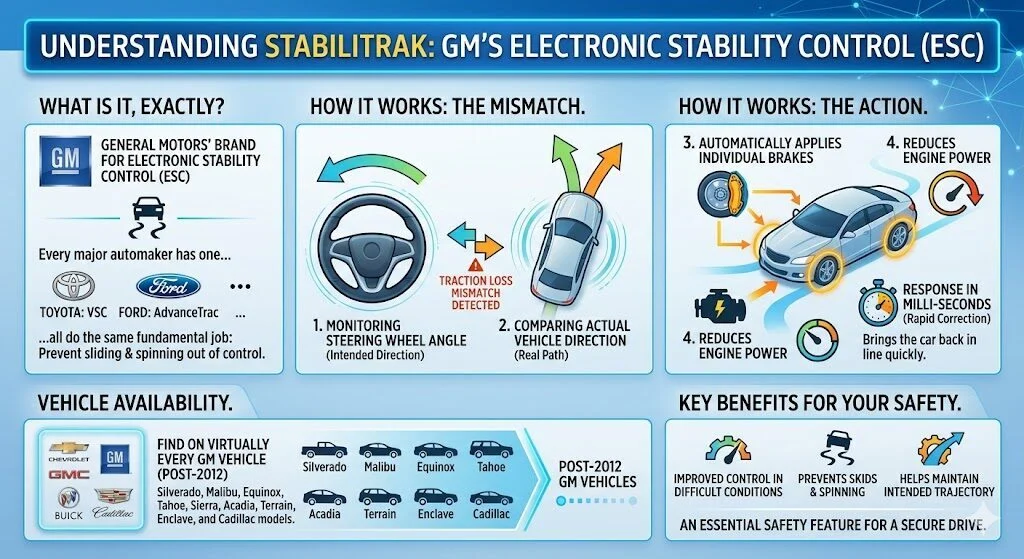
StabiliTrak is General Motors’ brand name for their Electronic Stability Control (ESC) system. Every major automaker has one — Toyota calls theirs VSC, Ford calls theirs AdvanceTrac — but they all do the same fundamental job: keep your vehicle from sliding or spinning out of control.
The system works by monitoring your steering wheel angle and comparing it to the direction your vehicle is actually traveling. If there’s a mismatch (meaning you’re losing traction), StabiliTrak automatically applies individual brakes and reduces engine power to bring the car back in line — all within milliseconds.
You’ll find StabiliTrak on virtually every GM vehicle made after 2012, including Chevy Silverado, Malibu, Equinox, Tahoe, GMC Sierra, Acadia, Terrain, Buick Enclave, and Cadillac models.
Is It Safe to Keep Driving?
This is probably the first question on your mind — and the answer in most cases is yes, you can continue driving. When StabiliTrak displays a warning, the system disables itself. Your brakes, engine, and transmission continue to function normally.
Think of it like this: drivers operated vehicles for decades without electronic stability control. Your car has simply reverted to that baseline. You still have full braking power, power steering, and ABS. You just won’t have the computer automatically correcting a slide.
However, use extra caution in rain, snow, or on gravel roads where traction loss is more likely. If the warning appeared alongside a check engine light, reduced engine power, or a hard shift, pull over safely and investigate further before continuing a long drive.
The 4 Most Common Causes
In my 18 years working on GM trucks and SUVs, these are the triggers I see over and over. About 80% of “Service StabiliTrak” warnings come down to one of these four issues:

1. Faulty Wheel Speed Sensor
Each wheel has a sensor that reports its rotational speed. Road debris, corrosion, or a damaged wire can cause misreadings. This is the #1 trigger — and typically costs $150–$300 to replace.

2. Steering Angle Sensor
Located behind the steering wheel, this sensor tells the computer which direction you intend to go. If it loses calibration (common after a wheel alignment), it triggers the warning.
3. Low Battery Voltage
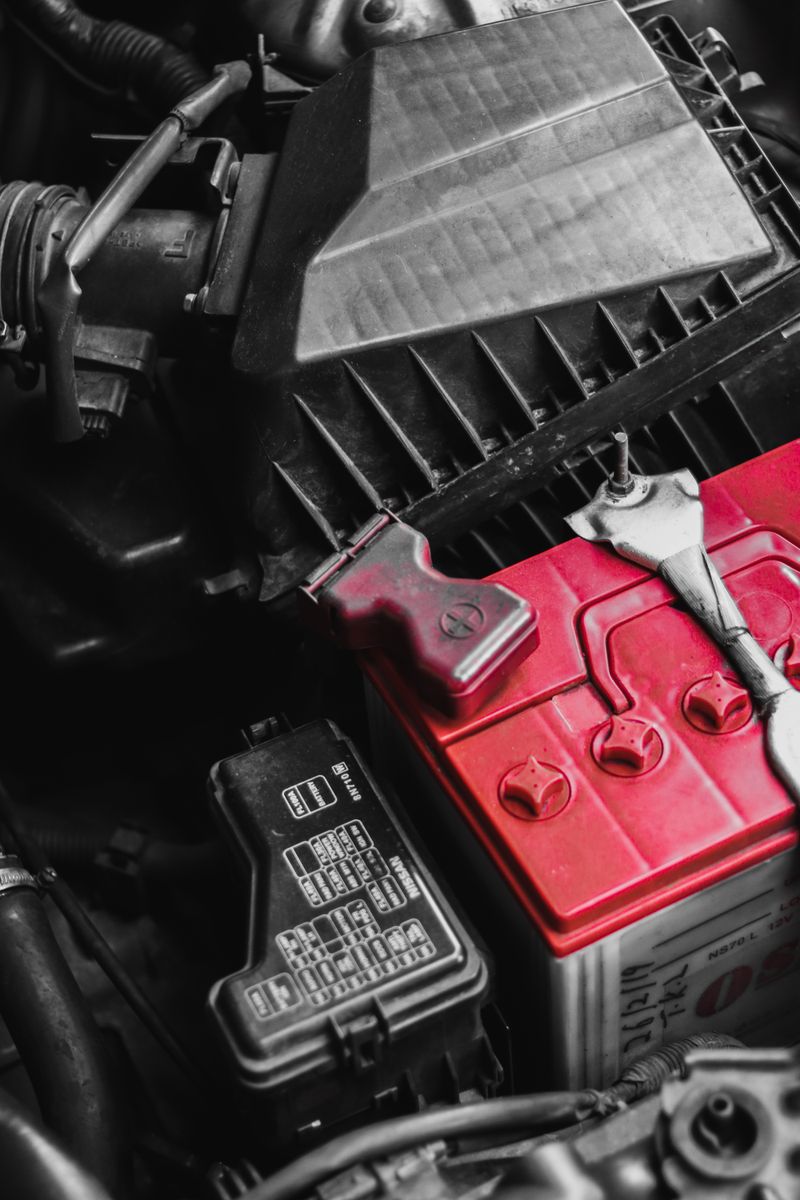
A weak or dying battery can’t supply consistent voltage to the stability control module. This is especially common in cold weather. If your battery is 3+ years old, test it first — it’s the cheapest fix.
4. Body Control Module Glitch
Sometimes the computer just needs a reboot. A software hiccup or a momentary voltage spike can throw a false code. A simple reset (below) often clears this one permanently.
How to Reset StabiliTrak (Step-by-Step)
Before spending money at a shop, try this hard reset to rule out a temporary computer glitch. This works on most GM vehicles from 2007 onward:
- Turn off your vehicle completely and remove the key from the ignition (or press the start button to fully power down).
- Open the hood and locate the negative (−) battery terminal — it has a black cable.
- Using a 10mm wrench, loosen and disconnect the negative terminal. Wait a full 15 minutes.
- Reconnect the terminal, tighten it securely, and close the hood.
- Start the vehicle and drive for 10–15 minutes. If the light doesn’t return, it was likely a one-time glitch. If it comes back, you’ll need a diagnostic scan.
When You Should See a Mechanic
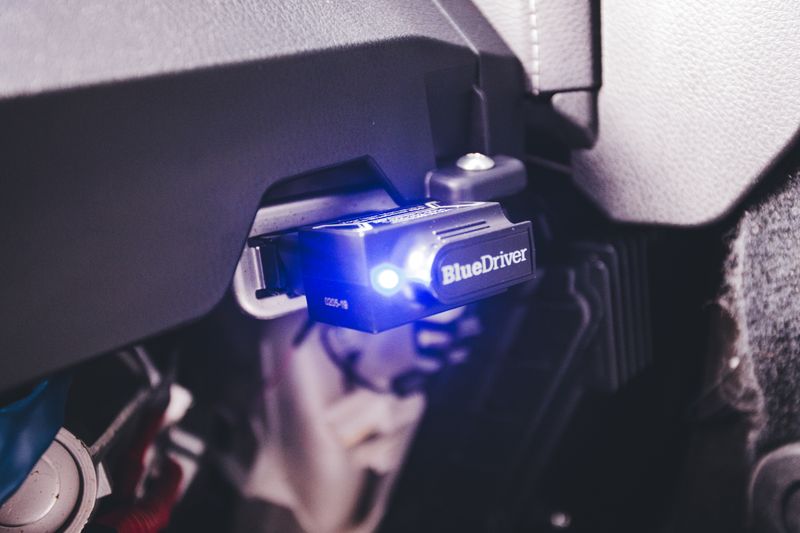
If the reset didn’t clear the warning, or if the light returned within a few days, it’s time for a professional diagnosis. An OBD2 scanner will pull the specific diagnostic trouble code (DTC) — common ones include C0035 (wheel speed sensor), C0131 (steering angle), and P0562 (low voltage). Many auto parts stores will read codes for free.
⚠️ See a mechanic immediately if: the warning appeared with “Reduced Engine Power,” your steering feels heavy or unresponsive, you hear grinding from the brakes, or your ABS light is also illuminated. These combinations can indicate a more serious issue.
Frequently Asked Questions
Can I turn StabiliTrak off manually?
Yes — most GM vehicles have a button (often labeled with a car-with-squiggly-lines icon) that disables traction control. However, this won’t clear a “Service StabiliTrak” warning caused by a hardware fault. The button is meant for situations like rocking out of snow.
How much does it cost to fix StabiliTrak?
It depends on the root cause. A wheel speed sensor replacement runs $150–$300 at an independent shop. A steering angle sensor recalibration is often under $100. A battery replacement is $100–$200. The most expensive scenario — a faulty EBCM (electronic brake control module) — can run $800–$1,200 with labor.
Will my car pass inspection with the StabiliTrak light on?
It depends on your state. Some states only check for a lit check engine light (MIL). Others inspect all dashboard warnings including stability control. Check your local DMV requirements — but regardless, it’s wise to fix it for your own safety.
Why does the warning appear intermittently?
An intermittent warning usually points to a loose connector or corroded wiring — the sensor works sometimes but not always. Temperature changes can expand and contract the connection. This is actually good news: it means the sensor itself may be fine and you just need a wire repair ($50–$100).
Also read traction control and warning light guides
Also read triangle warning light in car