
A clutch is the essential connection between a manual car’s engine and gearbox. Here is what it does, how it works, and the warning signs that deserve a closer look.
The clutch lets engine power meet the gearbox only when you need it to.
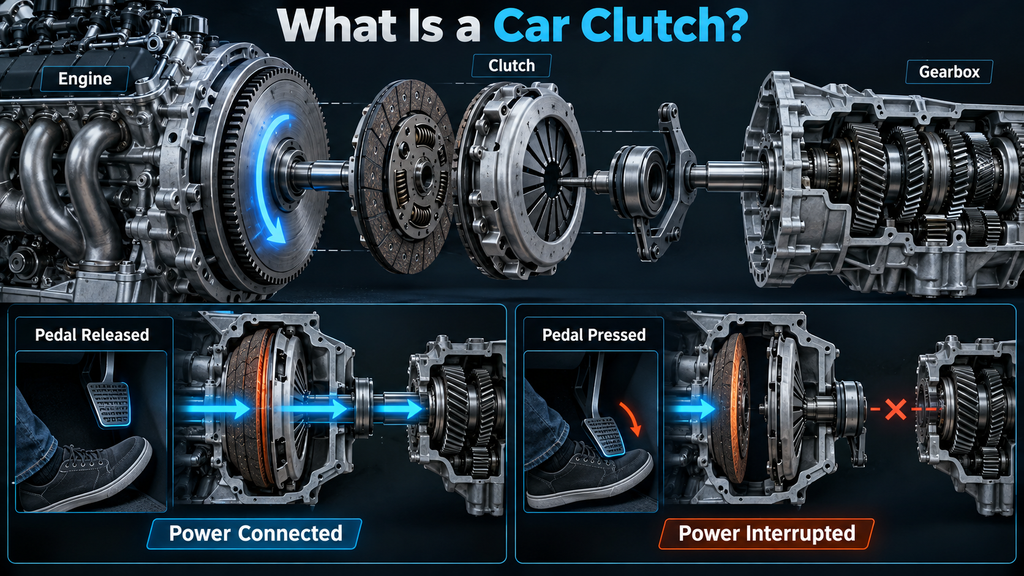
With the pedal released, the clutch clamps together and sends engine torque toward the wheels. Pressing the pedal temporarily separates that connection so you can stop or change gear without forcing the transmission to carry engine power.
Where a clutch sits in a manual car
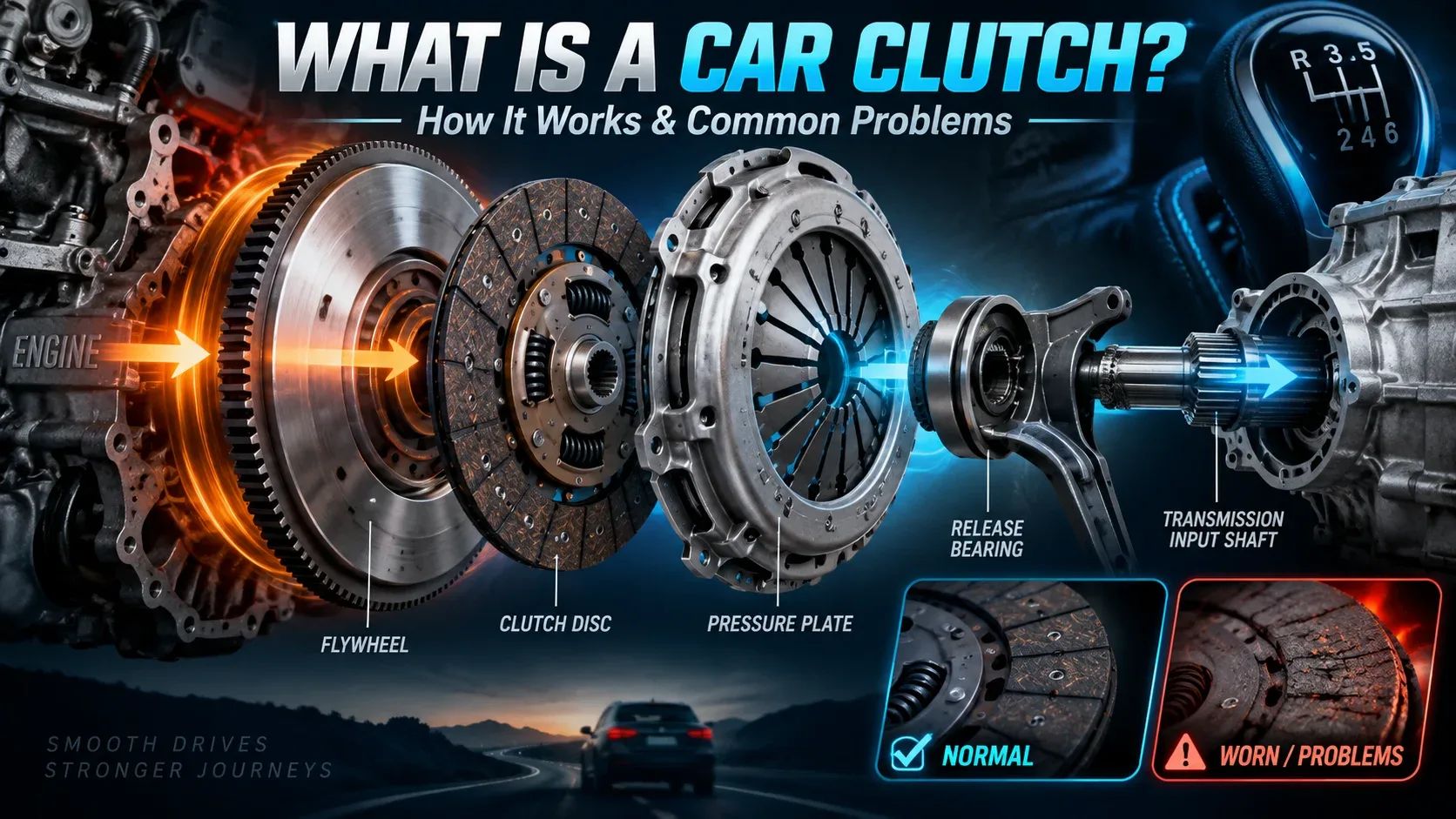
The clutch sits inside the bellhousing, at the point where the rear of the engine meets the front of the transmission. The flywheel is bolted to the engine crankshaft, while the clutch disc is splined to the gearbox input shaft. When the pressure plate clamps the disc against the flywheel, the engine and gearbox turn together.
What changes when you press and release the pedal
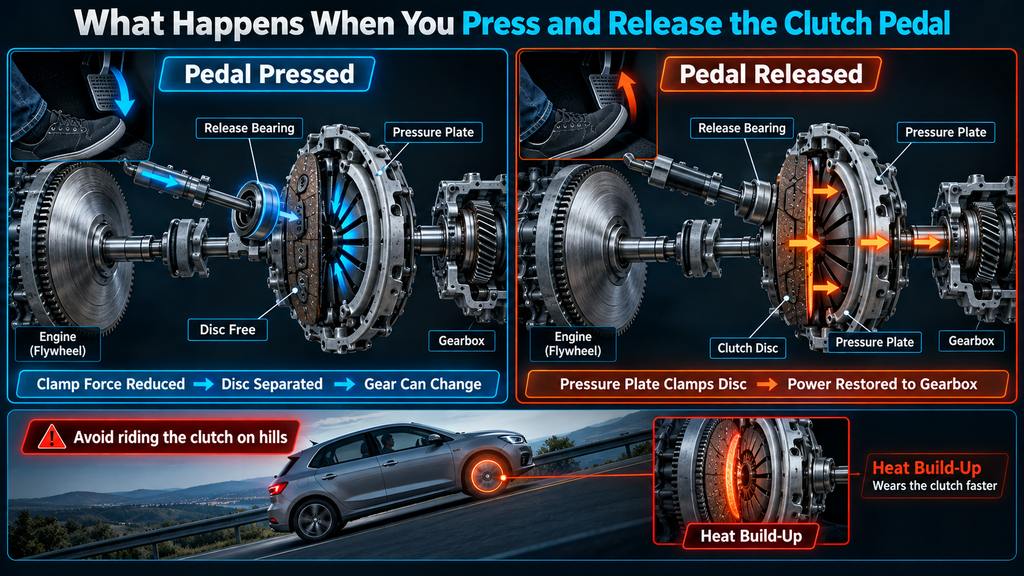
Pressing the clutch pedal operates a cable or hydraulic system. That movement pushes a release bearing against the pressure plate’s diaphragm spring, reducing its clamping force. The clutch disc can then spin independently of the flywheel so a new gear can be selected. Releasing the pedal restores the clamp and reconnects engine power to the gearbox.
Driver habit note
Holding a car on a hill with the clutch partly engaged creates unnecessary heat. Use the brake or parking brake instead, then let the clutch engage decisively when moving away.
The main parts working as one system
A clutch is more than one replaceable part. The flywheel provides a friction surface and stores rotational energy. The disc transfers torque through its friction linings and splined hub. The pressure plate supplies the clamping force, while the release bearing and pedal system control when that force is reduced.

Common clutch problems start as clues, not conclusions
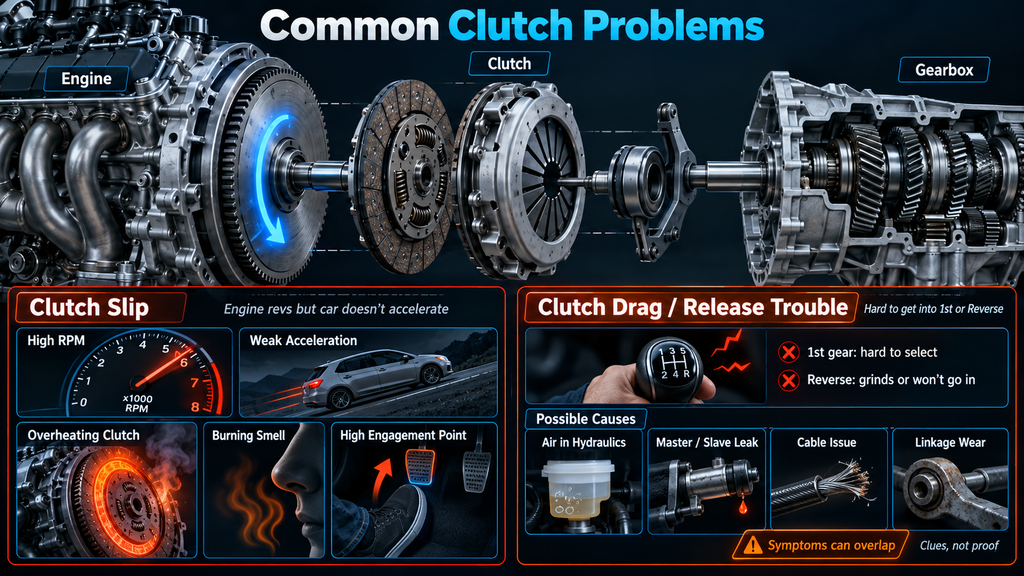
The same feeling can have several possible causes. A worn clutch disc, weak pressure plate, hydraulic fault, cable issue, release-bearing problem, mount fault, or transmission issue can overlap in the way it feels from the driver’s seat.
Clutch slip
Engine revs may rise without matching acceleration, especially uphill or in a higher gear. A burning smell after pulling away, weak pull under load, or an unusually high engagement point can also be useful clues.
Clutch drag or release trouble
Difficulty selecting first gear or reverse can mean the clutch is not releasing fully. Air in the hydraulics, a leaking master or slave cylinder, cable adjustment, linkage wear, or internal transmission faults can all play a part.
How a suspected clutch fault is diagnosed
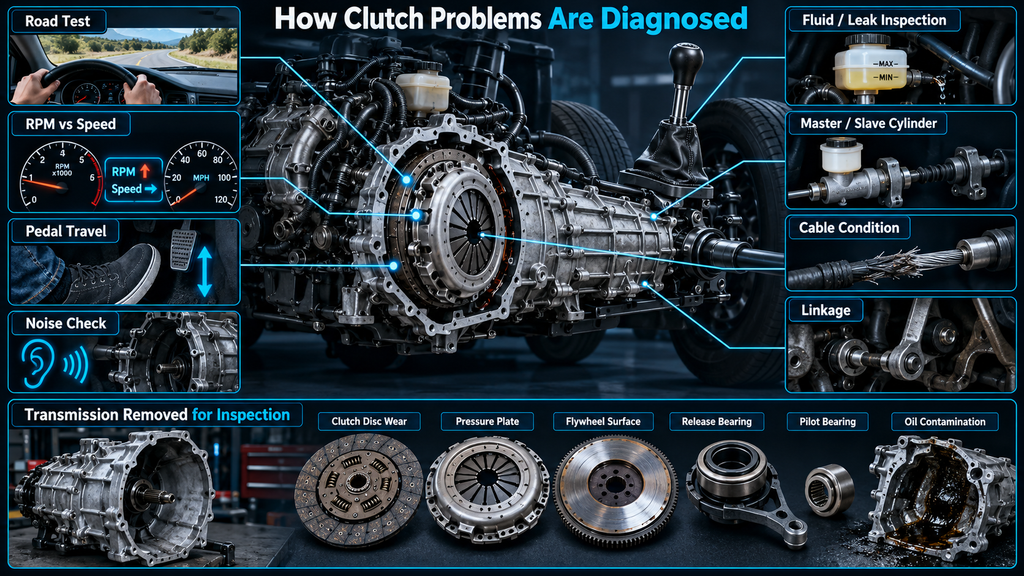
A technician begins with the vehicle history and an inspection, then uses targeted checks to separate clutch wear from release-system or gearbox problems. A safe road test can compare engine RPM with vehicle speed under load. RPM rising sharply without proportional acceleration makes clutch slip more likely.
- Inspect fluid level, leaks around the master and slave cylinders, pedal travel, cable condition, and linkage movement where applicable.
- Listen for when a noise occurs. A sound heard only when the pedal is pressed can involve the release bearing, while idle rattle can have several other causes.
- If transmission removal is justified, inspect disc wear, pressure-plate condition, flywheel surface, release hardware, pilot bearing, and any oil contamination.
Does every clutch problem need a full replacement?
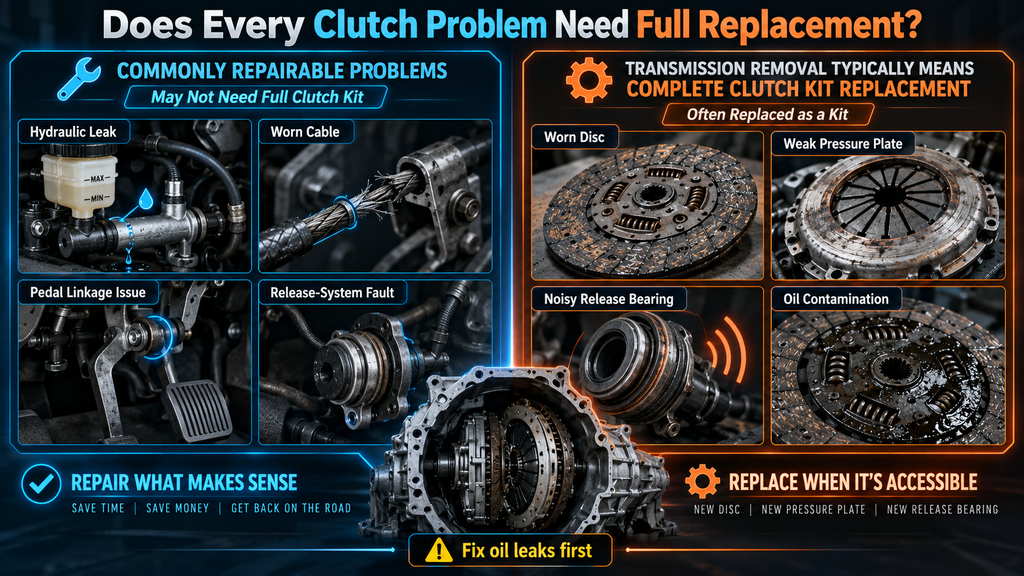
No. A hydraulic leak, worn cable, damaged pedal linkage, or release-system fault may be repairable without replacing the friction disc. But when the transmission must be removed for a worn disc, weak pressure plate, noisy bearing, or contamination, workshops often fit a complete clutch kit because labour is substantial.
Ask what evidence confirms slip, drag, judder, or release-system failure before authorising work. Repair engine or gearbox oil leaks before installing friction parts, or a replacement clutch may soon begin to slip again.
Car clutch questions, answered
How long does a car clutch last?
There is no fixed mileage. Clutch life depends on vehicle design, traffic, load, towing, driving habits, and repeated pedal slipping. Some clutches last beyond 100,000 kilometres, while hard use or contamination can shorten life considerably.
Can a worn clutch damage other components?
Continued driving with serious clutch slip can create excess heat and damage the friction disc, pressure plate, and flywheel surface. A noisy bearing, failed hydraulic system, or damaged dual-mass flywheel can also lead to a larger repair if left unchecked.
Why does my car shake when I release the clutch?
This is often called clutch judder. Possible causes include a contaminated or uneven disc, heat-damaged flywheel or pressure plate, worn engine or transmission mounts, release-system problems, or other drivetrain faults. Inspection is needed to identify the actual cause.