
Was there really a VW Phaeton limousine? A fact-first guide to factory long-wheelbase cars, rare stretch conversions, engines, dimensions, and collector context.
Volkswagen built factory long-wheelbase Phaetons, but not a mainstream production stretch limousine.
The Volkswagen Phaeton was sold in standard-wheelbase and long-wheelbase form. In many European markets, “limousine” simply means a formal four-door sedan, so a Phaeton LWB may be described as a limousine without being a stretched coach. Genuine extra-long examples are generally specialist conversions or one-offs and should be verified individually.
What does “Volkswagen Phaeton limousine” actually mean?
Searches for “volkswagen limousine phaeton” and “vw phaeton limousine” often combine several different ideas. The Phaeton itself was Volkswagen’s full-size luxury sedan, positioned above the Passat and built from 2002 to 2016. It was developed to compete with the Mercedes-Benz S-Class, BMW 7 Series, and Audi A8 rather than with mainstream executive cars.
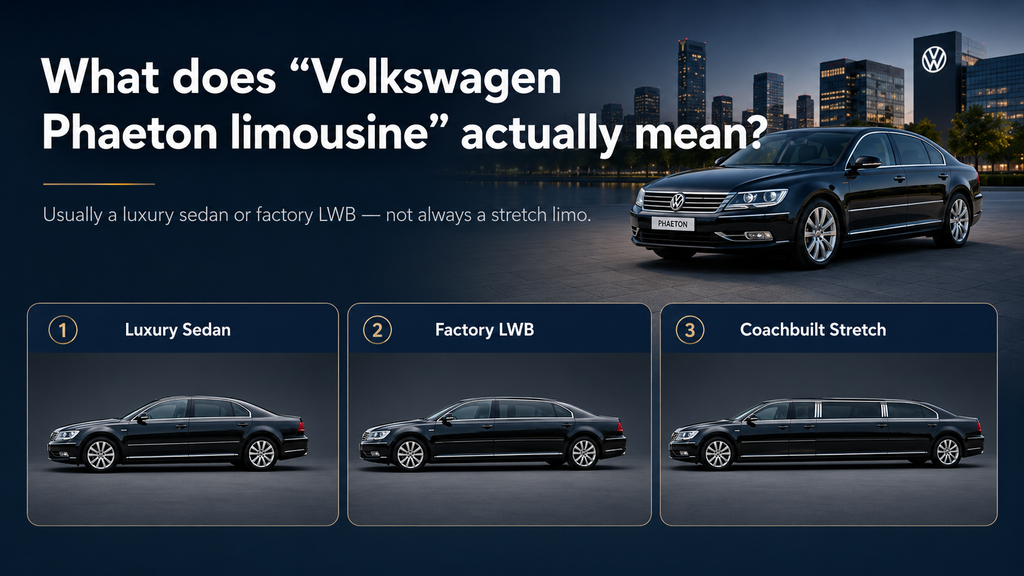
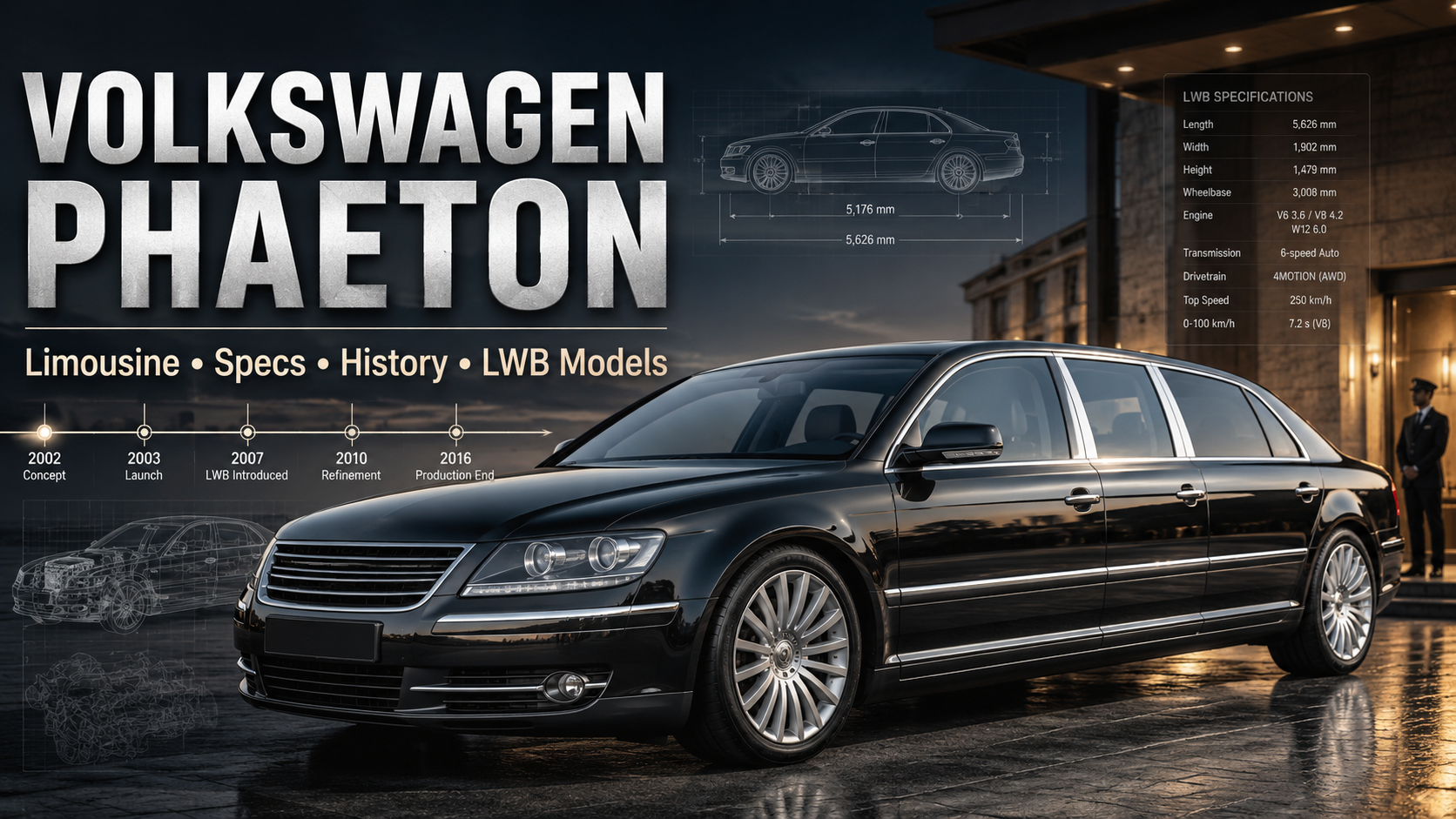
Volkswagen offered a factory long-wheelbase version, commonly identified as the Phaeton LWB. Its extra length was concentrated between the axles to benefit rear-seat space. That is materially different from a conventional stretch limousine, where a coachbuilder inserts a much larger central section and may add a divider, extra seating, or additional doors.
Luxury sedan / limousine
In European usage, limousine can simply describe a formal three-box sedan. This is the most common meaning in Phaeton listings.
Factory LWB Phaeton
A Volkswagen-built long-wheelbase sedan with approximately 120 mm of extra wheelbase and a more accommodating rear compartment.
Coachbuilt stretch
A rare, separately modified vehicle. It should not be assumed to be a Volkswagen factory product without provenance.
Phaeton LWB dimensions and key specifications
The figures below describe commonly published first-generation Phaeton dimensions. Equipment, engine, model year, and regional paperwork can alter weights, power ratings, and available specifications, so use a vehicle identification number and market-specific brochure when assessing an individual car.
| Measurement | Standard-wheelbase Phaeton | Long-wheelbase Phaeton | Why it matters |
|---|---|---|---|
| Overall length | About 5,059 mm | About 5,179 mm | The LWB is around 120 mm longer overall. |
| Wheelbase | About 2,881 mm | About 3,001 mm | The additional wheelbase principally serves the rear cabin. |
| Width | About 1,903 mm | About 1,903 mm | The body remains full-width luxury-sedan scale. |
| Typical drivetrain layout | Front engine; many versions with 4MOTION AWD | Front engine; many versions with 4MOTION AWD | Specific engines and transmissions varied by market and year. |
Specification note: published figures can differ slightly according to facelift, wheel and tyre package, measurement standard, and source. The 120 mm LWB increase is the central, consistently reported distinction.
Why Volkswagen built the Phaeton
The Phaeton was an unusually ambitious project: a Volkswagen engineered to occupy the highest executive-sedan class while retaining restrained branding. Built in Dresden’s Transparent Factory, it emphasized quietness, all-weather capability, detailed craftsmanship, and high-speed stability. Its subtle styling and premium price limited volume, but those same qualities now make it one of the brand’s most intriguing modern flagships.
2002
Phaeton launches
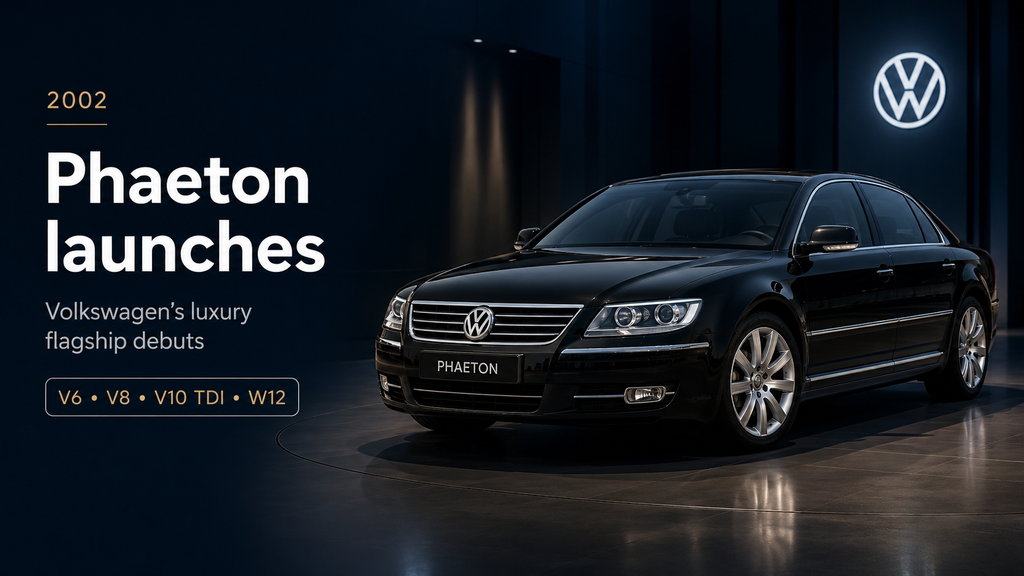
Volkswagen introduces its luxury flagship with V6, V8, V10 TDI, and W12 options depending on the market.
2003–2004
LWB model arrives
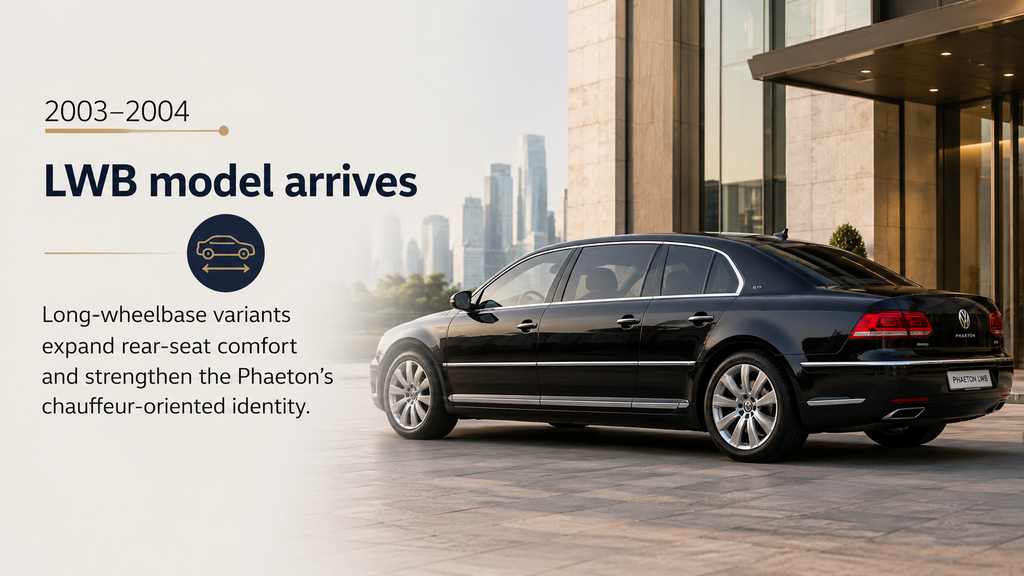
Long-wheelbase variants expand rear-seat comfort and strengthen the Phaeton’s chauffeur-oriented identity.
2007–2011
Successive updates
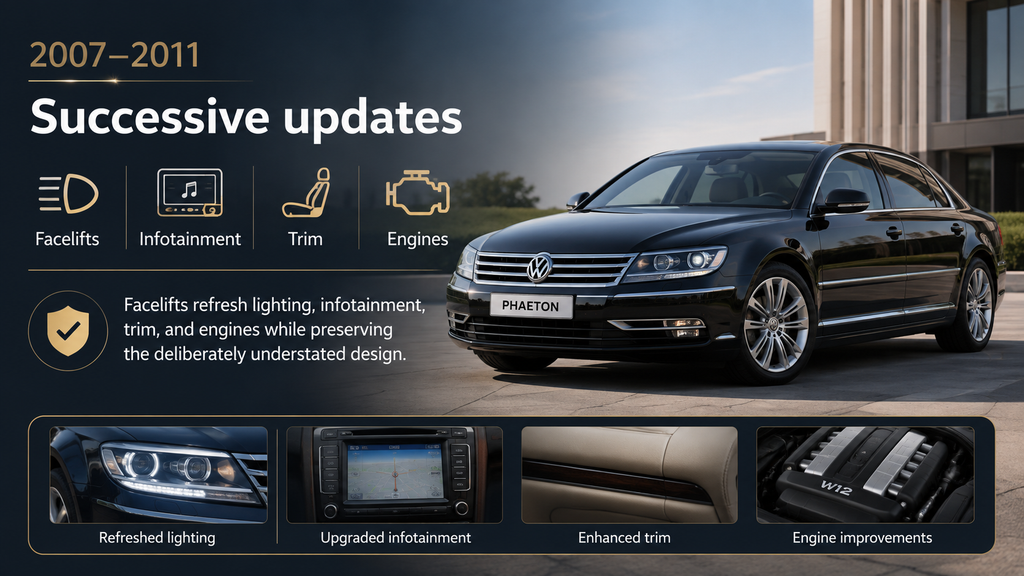
Facelifts refresh lighting, infotainment, trim, and engines while preserving the deliberately understated design.
2016
Production concludes
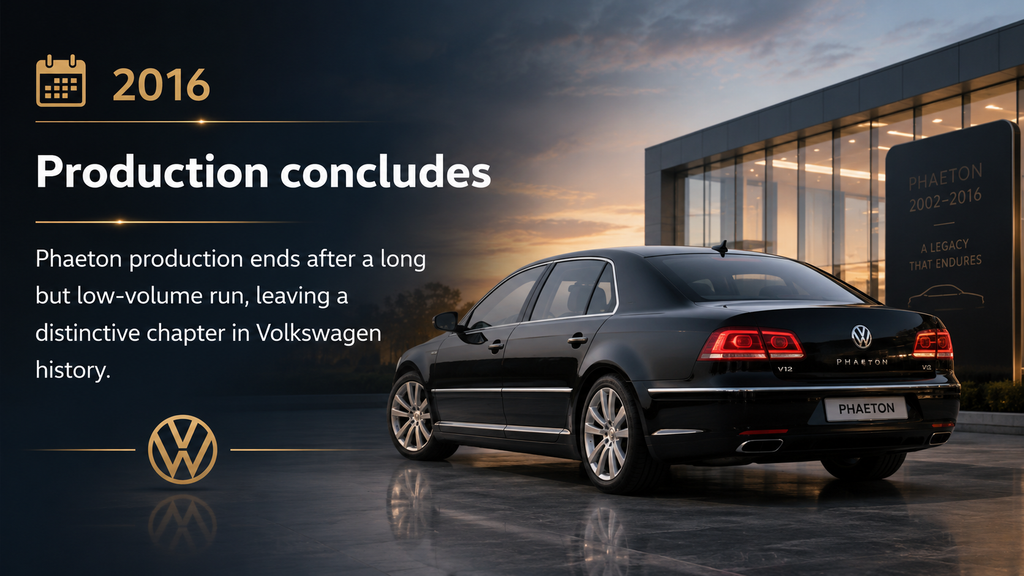
Phaeton production ends after a long but low-volume run, leaving a distinctive chapter in Volkswagen history.
What the extra wheelbase changed inside
The LWB Phaeton was intended to make the rear compartment a more credible executive space. The additional wheelbase translates primarily into more rear legroom, which matters most when the car is chauffeur-driven or when tall adults occupy the rear seats.
Available luxury equipment varied widely, but period cars could include deeply adjustable leather seating, rear climate controls, premium audio, wood trim, soft-close features, four-zone climate control, and comfort-focused suspension tuning. Treat individual equipment lists as car-specific rather than universal.
Engine range: from V6 diesel to W12 flagship
The Phaeton’s engine catalogue is one reason it remains so fascinating. Availability changed over time and was not identical in every country. The figures below are broad period-reference context, not a substitute for a market-specific technical data sheet.
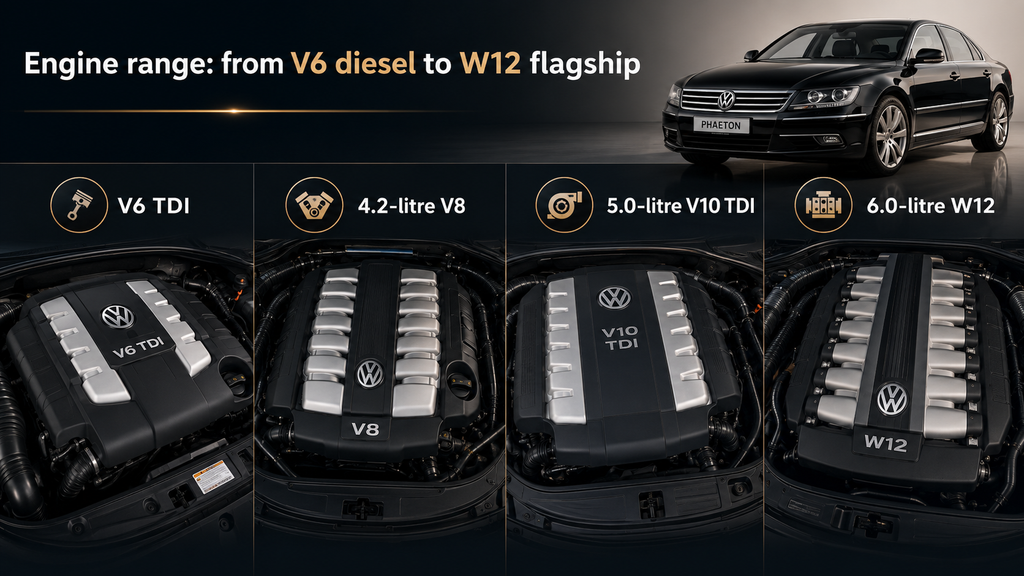
V6 TDI
Later diesel Phaetons offered strong low-end torque and more realistic fuel economy for long-distance use. Output varied by generation, commonly around the 225–245 PS range in later applications.
4.2-litre V8
The petrol V8 gave the Phaeton conventional flagship performance, typically quoted around 335 PS in early European specifications, often paired with 4MOTION all-wheel drive.
5.0-litre V10 TDI
A remarkable high-torque diesel option in early years, generally cited at about 313 PS and 750 Nm. It is charismatic but complex, making documented specialist maintenance especially important.
6.0-litre W12
The halo engine, commonly quoted at 420 PS in Phaeton form. W12 models are particularly rare and prestigious, but their purchase price should be weighed against significant fuel, parts, and labour exposure.
How the Phaeton compared with established luxury sedans
The Phaeton was engineered into formidable company. It shared much of the all-weather, technology-rich ambition of its premium peers, but its Volkswagen badge and understated profile gave it a uniquely discreet personality. For some buyers, that was its greatest appeal; for others, it made the original price difficult to justify.
Mercedes-Benz
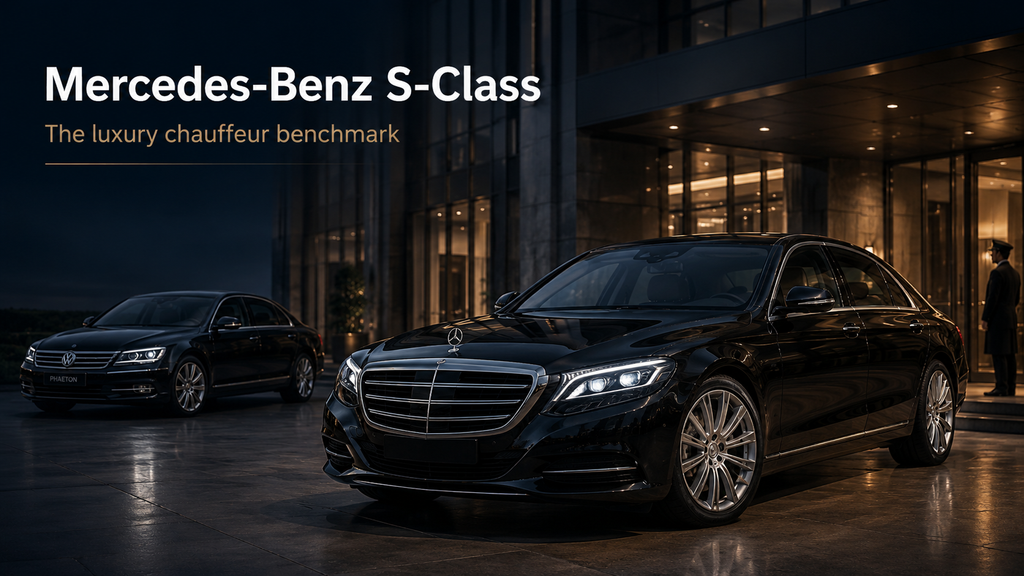
The benchmark for overt luxury and chauffeur appeal. The Phaeton offered comparable seriousness but much less visible status signalling.
BMW 7 Series
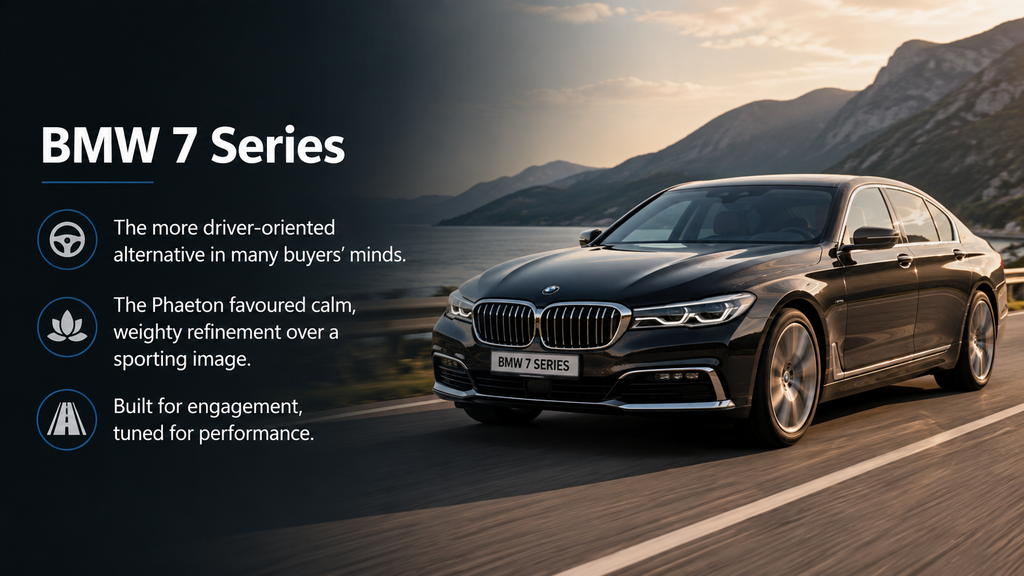
The more driver-oriented alternative in many buyers’ minds. The Phaeton favoured calm, weighty refinement over a sporting image.
Audi A8
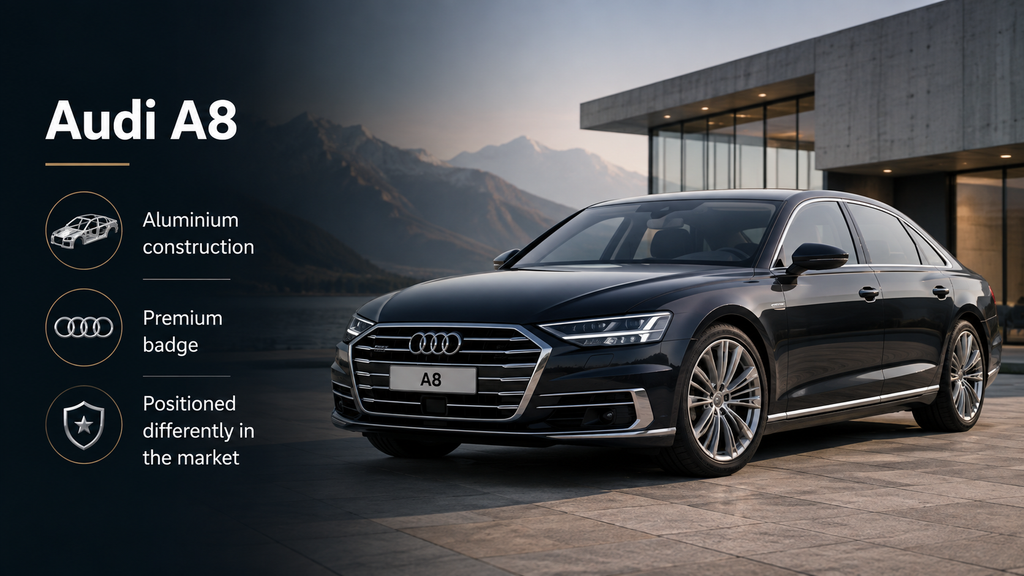
A close technical cousin in group terms, though the A8’s aluminium construction and premium badge positioned it differently in the market.
Is a Phaeton limousine rare or collectible today?
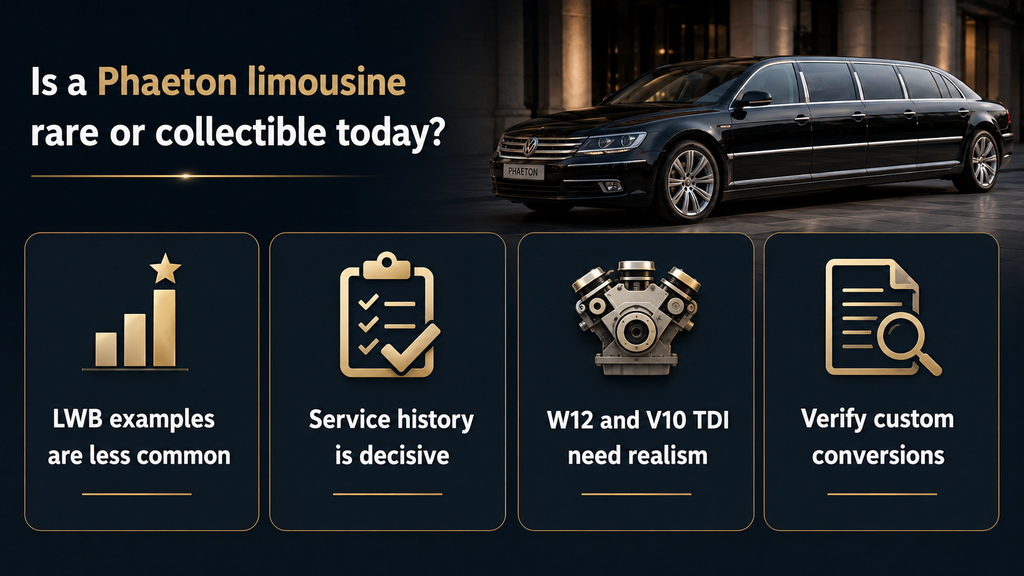
LWB examples are less common
Factory long-wheelbase cars were not as common as standard-wheelbase examples in many markets. Rarity alone does not establish value; provenance, condition, and specification matter more.
Service history is decisive
These are complex luxury cars. Air suspension, climate systems, electronics, drivetrain components, and engine-specific work can be expensive when neglected.
W12 and V10 TDI need realism
The most unusual engines are compelling enthusiast choices, but specialist inspection and a meaningful maintenance reserve are sensible before purchase.
Verify custom conversions
For a stretched Phaeton, seek conversion invoices, engineering documentation, registration evidence, and clear photographs. Do not rely only on a seller’s description of “factory limousine.”
Volkswagen Phaeton limousine FAQ
Did Volkswagen officially build a Phaeton limousine?
Volkswagen officially built a long-wheelbase Phaeton, and European sources may call that type of luxury sedan a limousine. That does not mean Volkswagen sold a conventional multi-row stretch limousine as a regular production model. Verify any unusual extra-long vehicle separately.
How much longer is the Phaeton LWB?
The factory long-wheelbase Phaeton is commonly listed as approximately 120 mm longer in wheelbase and overall length than the standard-wheelbase model. The added space is directed toward improved rear-seat accommodation rather than a dramatically altered exterior profile.
Which markets received the long-wheelbase Phaeton?
Availability depended on year, engine, and local sales strategy. LWB examples are most often associated with markets where chauffeur-driven luxury sedans had stronger demand, including parts of Europe and China. Confirm a specific market with period brochures or an official parts catalogue.
Is a VW Phaeton LWB a good collector car?
It can be an appealing enthusiast collectible because of its engineering ambition, discreet design, low production volume, and unusual engines. However, collectibility does not remove ownership risk. The best candidates are complete, well-documented cars supported by a knowledgeable specialist.