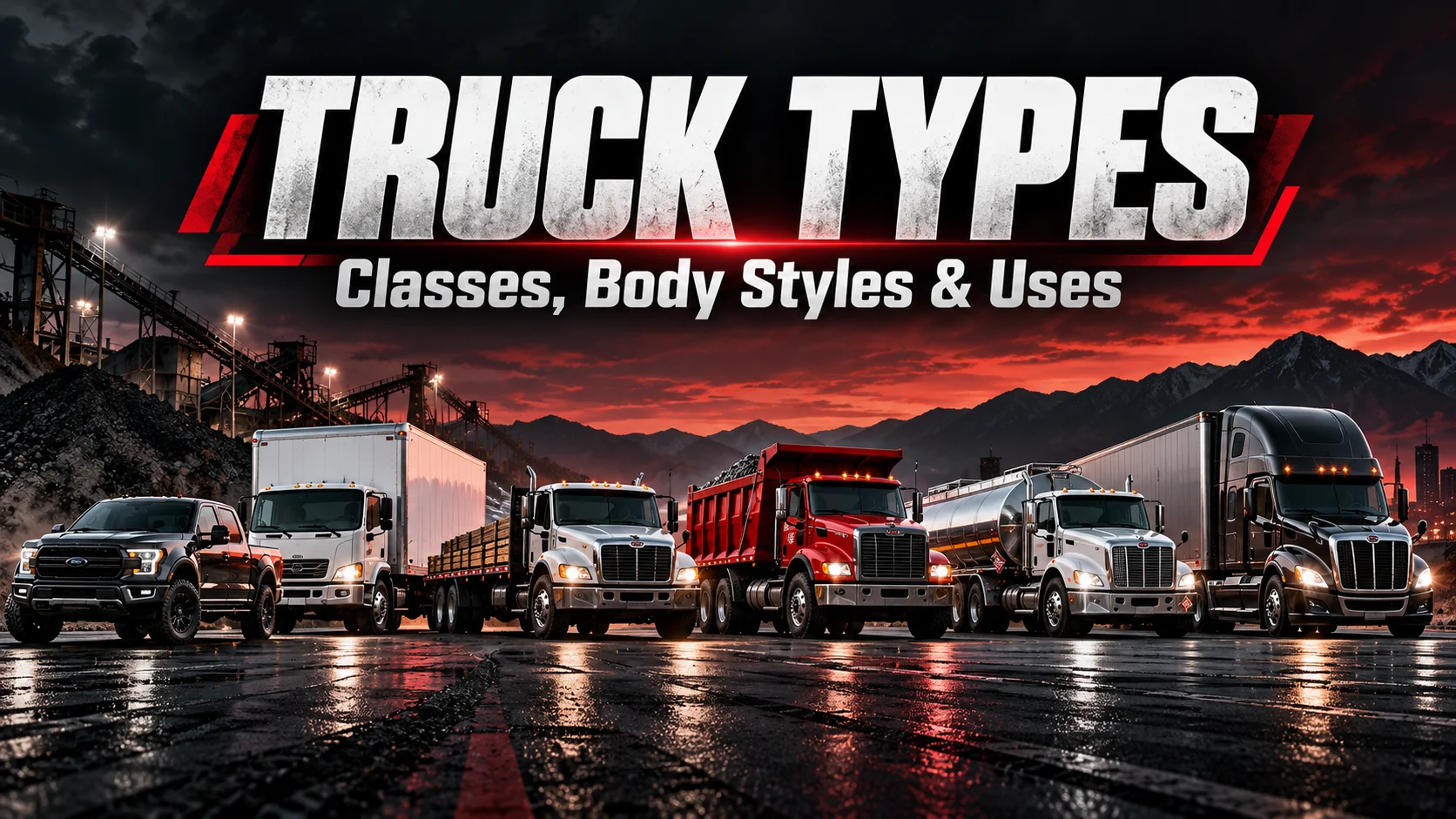

There is more than one way to define a category of trucks. Trucks may be grouped by weight, body style, cargo type, or the job they are designed to do. Understanding these systems makes it easier to compare the many types of trucks used for personal driving, local delivery, construction, towing, agriculture, and long-haul freight.
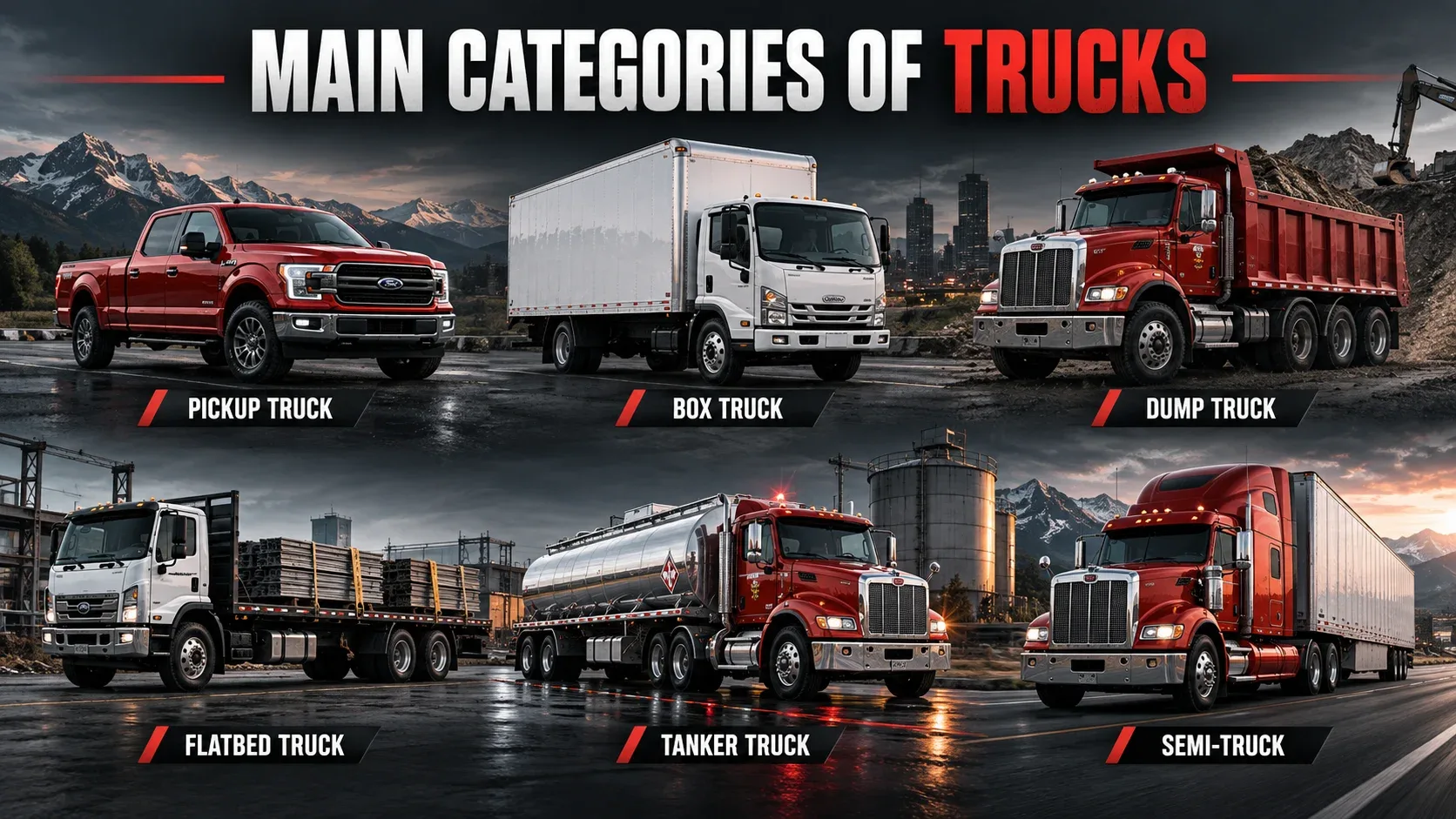
What Are the Main Categories of Trucks?
There is no single universal list of truck types because the same vehicle can be classified in several ways. The most useful approach is to look at three broad categories.
By Weight or Class
Trucks may be described as light-duty, medium-duty, or heavy-duty. In the United States, trucks are also commonly grouped into GVWR Classes 1 through 8.
By Body Style
Examples include pickup trucks, box trucks, flatbeds, dump trucks, tankers, tow trucks, and tractor-trailers.
By Purpose
Trucks can also be categorized by their job, such as delivery, construction, towing, refrigerated transport, farming, emergency response, or freight hauling.
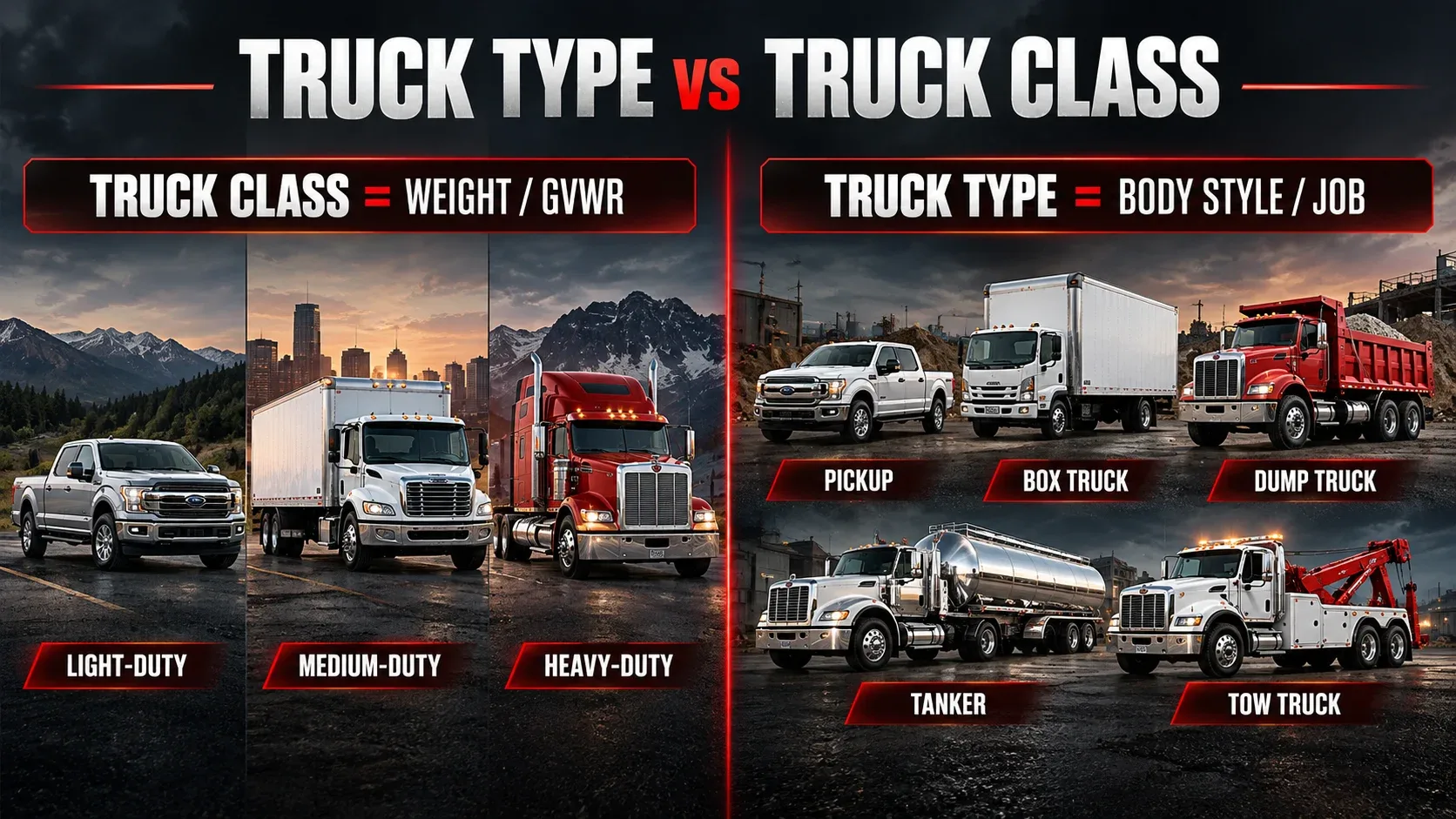
Truck Type vs Truck Class: What Is the Difference?
The words truck type and truck class are sometimes used as though they mean the same thing, but they describe different characteristics.
Truck Class
Class generally refers to a weight-based classification. In the U.S., the common Class 1 through Class 8 system is based on Gross Vehicle Weight Rating, or GVWR.
Truck Type
Type describes the vehicle’s body style, configuration, or function, such as pickup, dump truck, flatbed, tanker, or semi-truck.
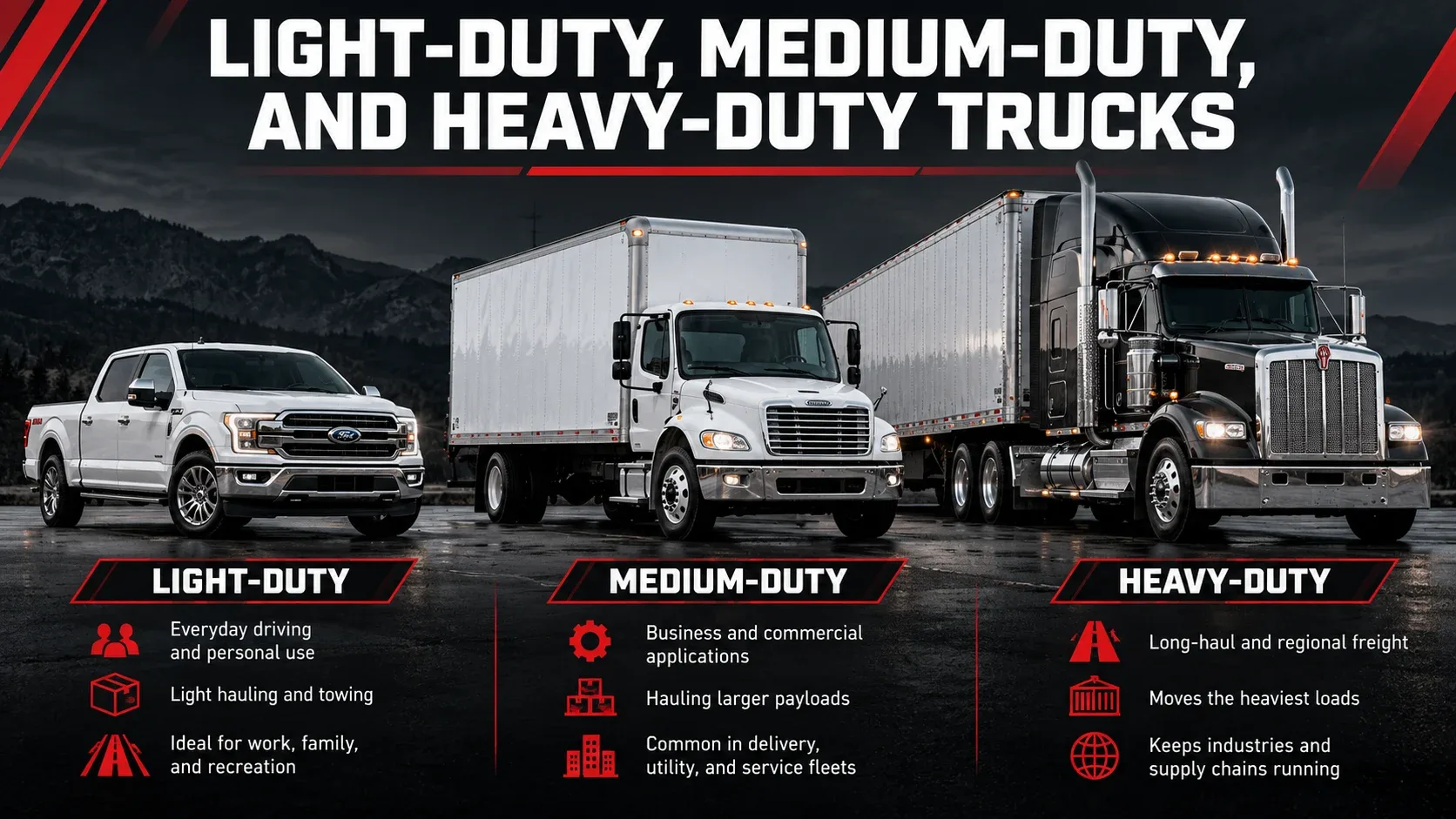
Light-Duty, Medium-Duty, and Heavy-Duty Trucks
One of the easiest ways to understand the different truck types is to group them into light-, medium-, and heavy-duty categories.
Light-Duty Trucks
Light-duty trucks are commonly used for personal transport, trades, light hauling, landscaping, and towing smaller trailers.
Examples: compact pickups, midsize pickups, many full-size pickups.
Medium-Duty Trucks
Medium-duty vehicles are common in local delivery, moving, utility work, municipal service, and construction.
Examples: box trucks, larger delivery trucks, utility trucks.
Heavy-Duty Trucks
Heavy-duty trucks are built for demanding commercial work, large payloads, long-distance freight, and specialized hauling.
Examples: highway tractors, large dump trucks, heavy haulers.
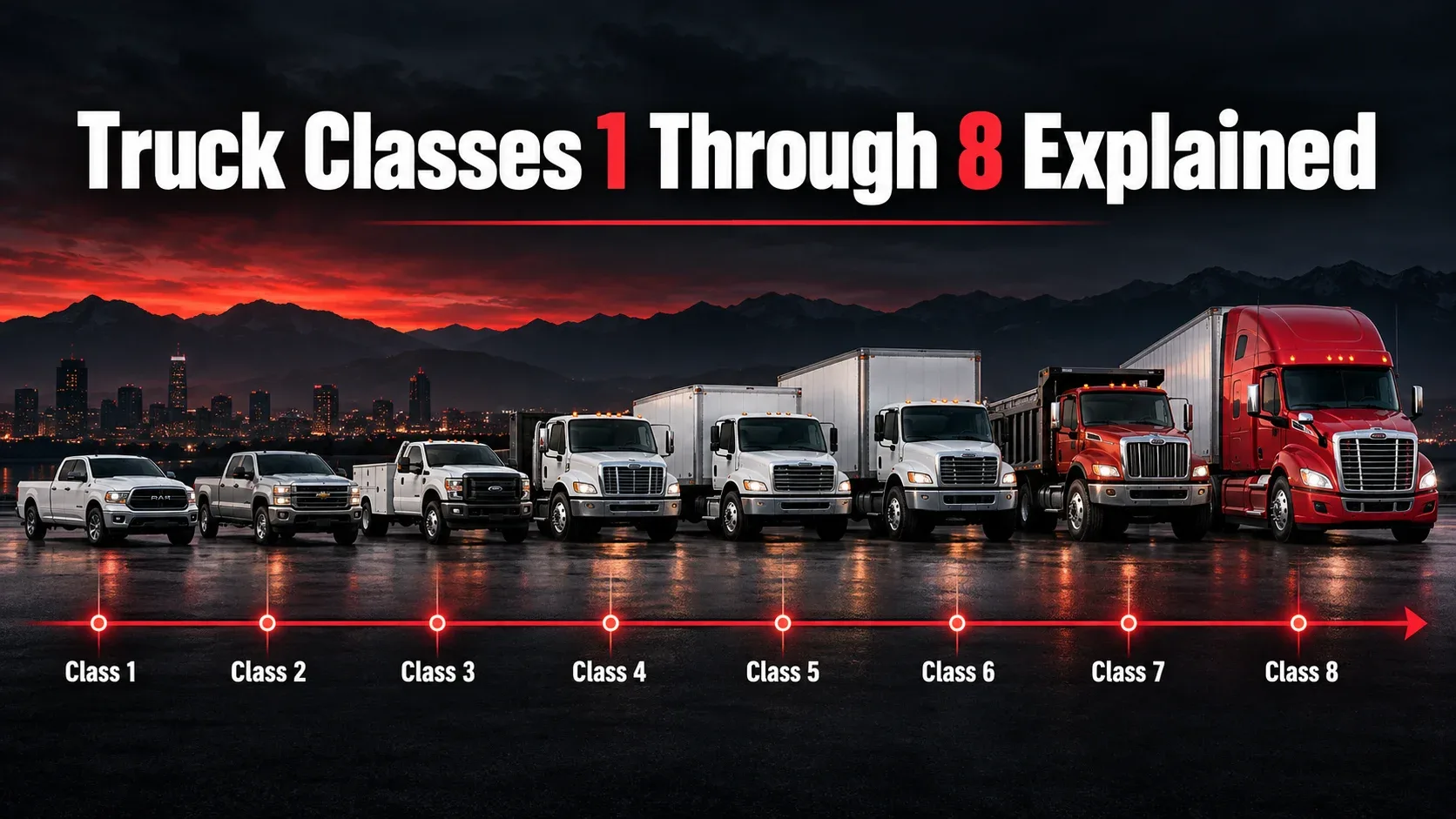
Truck Classes 1 Through 8 Explained
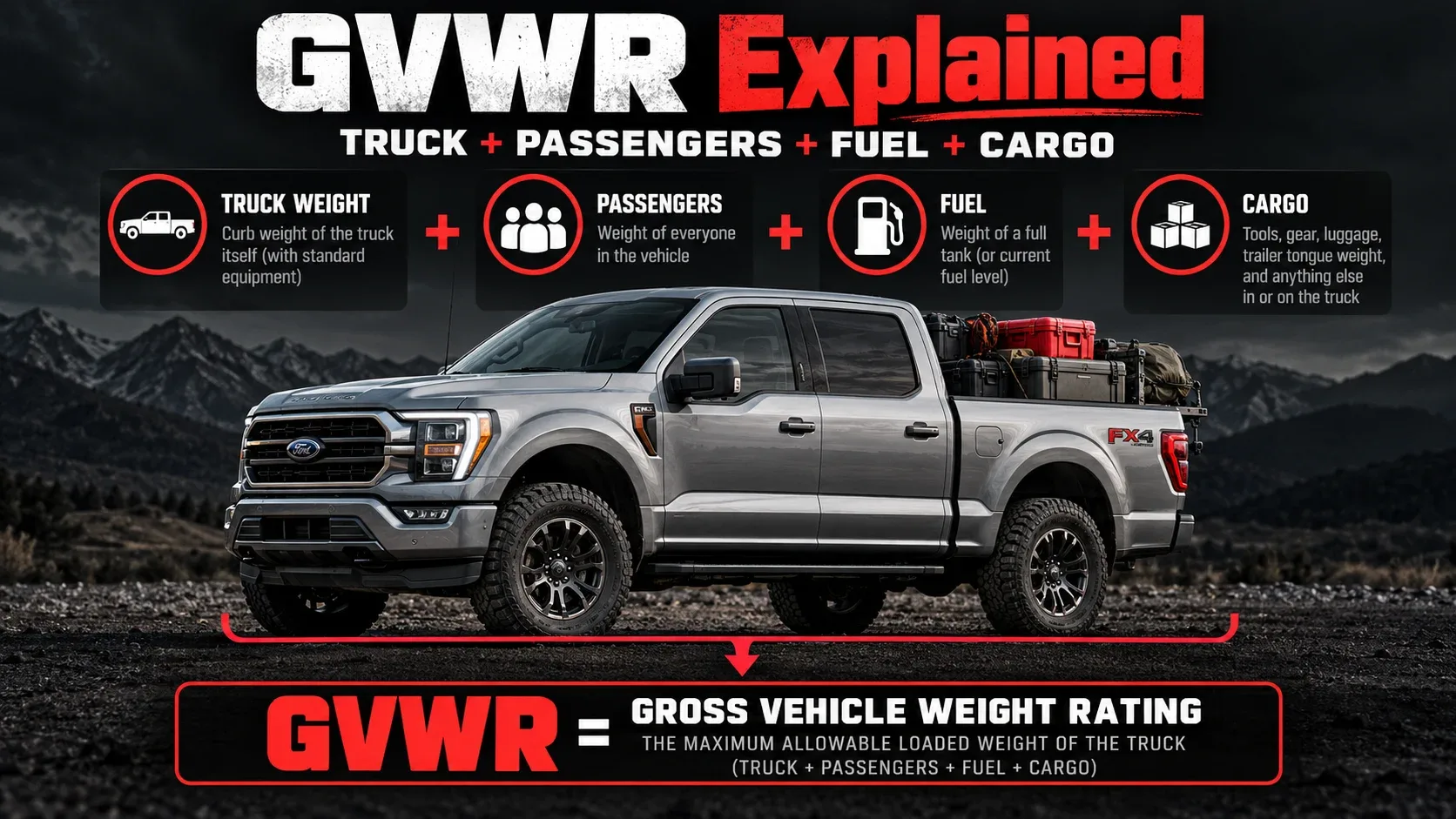
In the United States, trucks are commonly divided into eight GVWR classes. GVWR is the maximum rated weight of the vehicle when loaded, including the vehicle itself, occupants, fuel, cargo, and installed equipment.
| Class | GVWR | General Category | Common Examples |
|---|---|---|---|
| Class 1 | 6,000 lb or less | Light-duty | Small pickups and similar light vehicles |
| Class 2 | 6,001–10,000 lb | Light-duty | Full-size pickups, larger vans |
| Class 3 | 10,001–14,000 lb | Light/medium commercial | Heavy-duty pickups, chassis cabs |
| Class 4 | 14,001–16,000 lb | Medium-duty | Small box and delivery trucks |
| Class 5 | 16,001–19,500 lb | Medium-duty | Delivery, utility and service trucks |
| Class 6 | 19,501–26,000 lb | Medium-duty | Larger box, beverage and utility trucks |
| Class 7 | 26,001–33,000 lb | Heavy-duty | Large straight trucks and vocational trucks |
| Class 8 | Over 33,000 lb | Heavy-duty | Highway tractors, large dump trucks, heavy haulers |
What Is GVWR and Why Does It Matter?
Gross Vehicle Weight Rating (GVWR) is the maximum total operating weight assigned to a vehicle by its manufacturer. It is not simply the empty weight of the truck.
GVWR includes the truck, passengers, fluids, installed equipment, and cargo. This number helps determine a vehicle’s weight class and may also affect licensing, operating rules, registration, and commercial requirements depending on jurisdiction.
Pickup Trucks
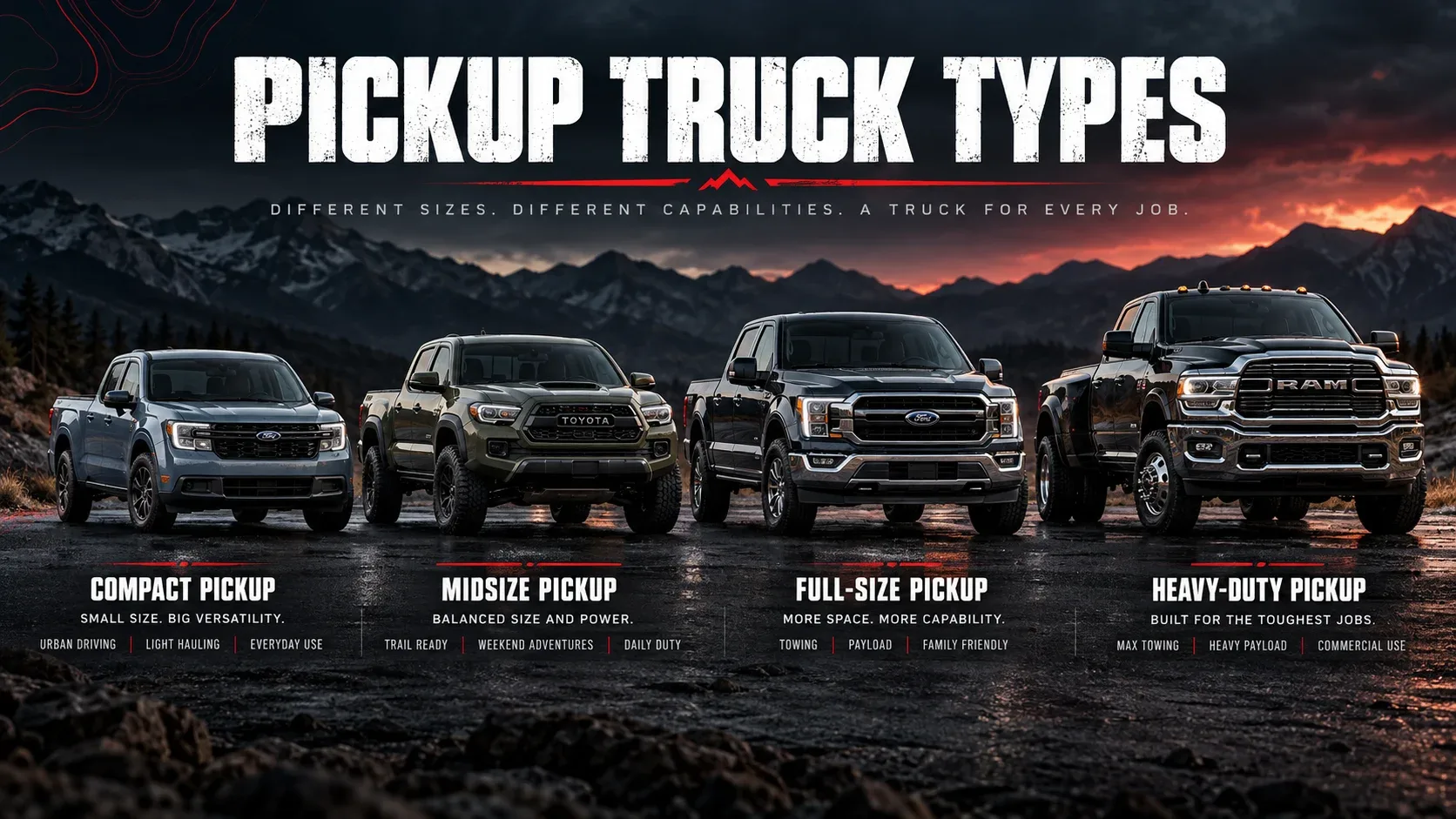
Pickup trucks are among the most familiar types of trucks. They combine a passenger cab with an open cargo bed and are used for personal transport, construction, towing, farming, recreation, and commercial work.
Compact Pickup
Smaller footprint for lighter hauling and everyday driving.
Midsize Pickup
Balances passenger comfort, bed space, towing, and maneuverability.
Full-Size Pickup
Provides greater payload and towing ability for work and recreation.
Heavy-Duty Pickup
Designed for demanding towing, commercial work, and higher payload requirements.
Chassis Cab Trucks
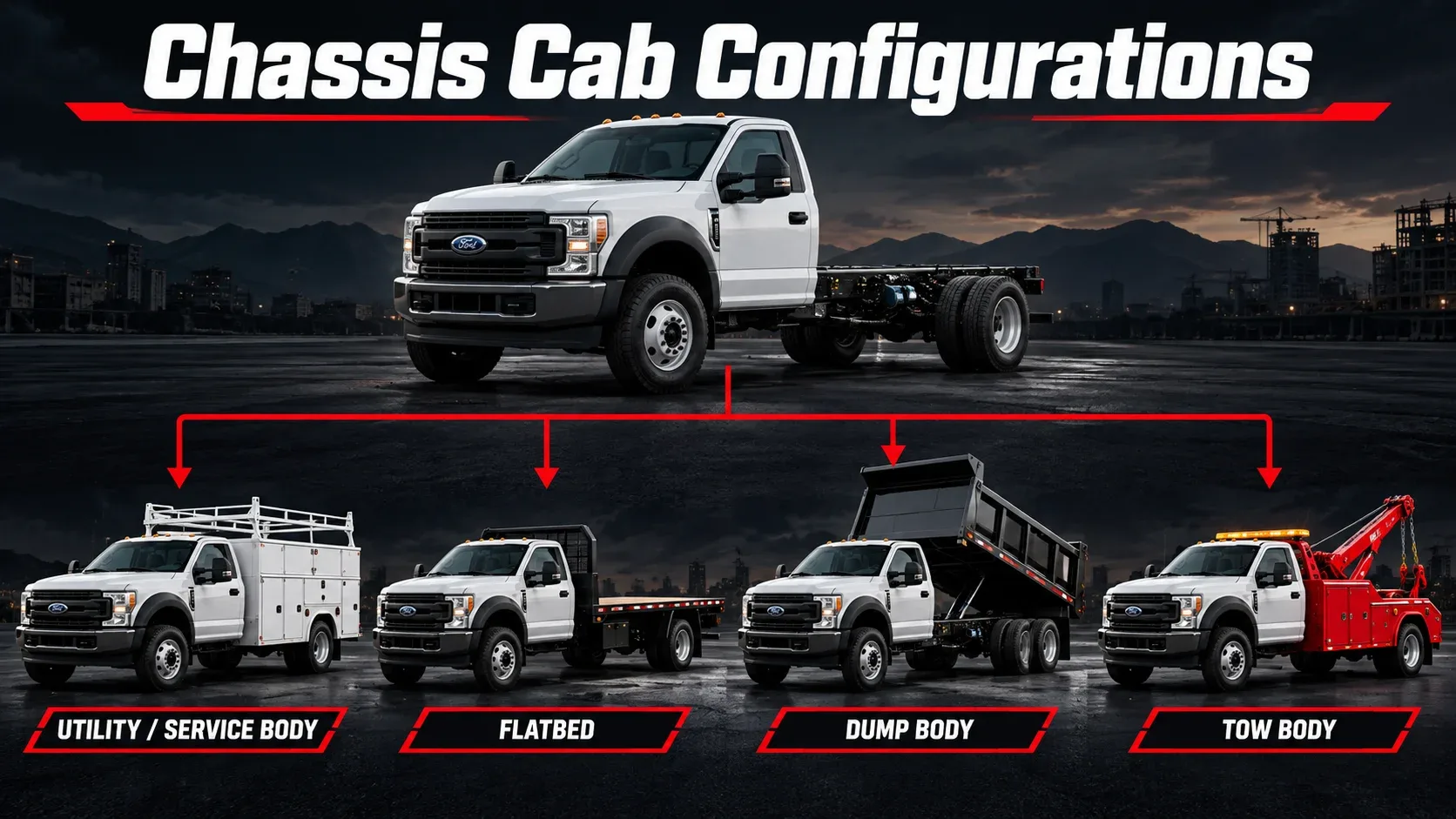
A chassis cab is supplied with the cab, engine, drivetrain, and exposed rear frame, allowing a specialized body to be installed for a particular job.
Common chassis-cab bodies include:
- Utility/service body
- Flatbed
- Dump body
- Tow body
- Ambulance or emergency body
Box Trucks and Straight Trucks
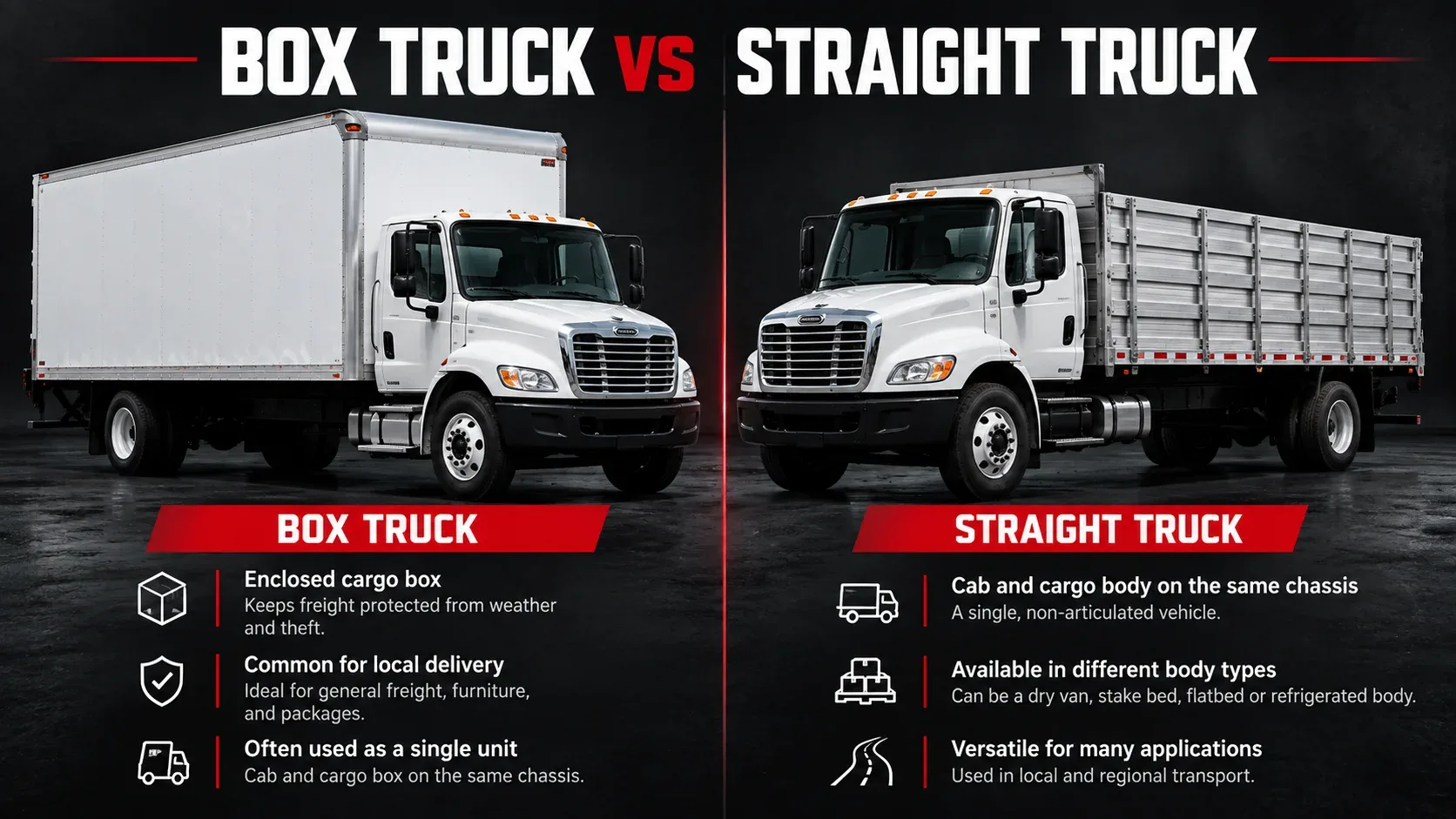
A box truck has an enclosed rectangular cargo body mounted behind the cab. It is commonly used by movers, parcel companies, furniture retailers, and local freight operators.
A straight truck is a broader category in which the cab and cargo body are mounted on the same chassis. Many box trucks are straight trucks, but a straight truck can also use other body styles.
Box Truck
Enclosed cargo box designed for protected freight and local deliveries.
Straight Truck
Cab and cargo body share one vehicle chassis rather than using a separate tractor and trailer.
Flatbed Trucks
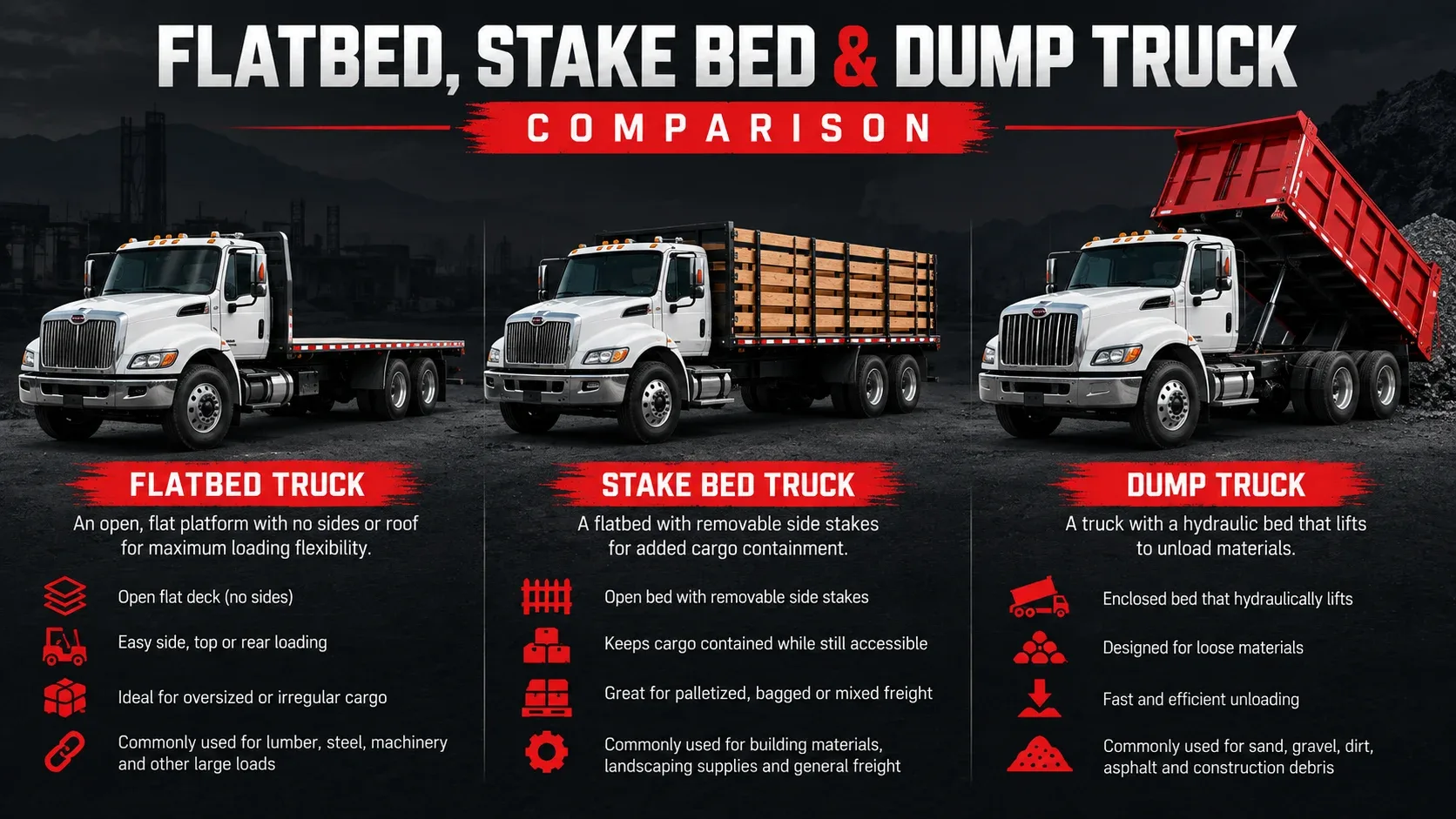
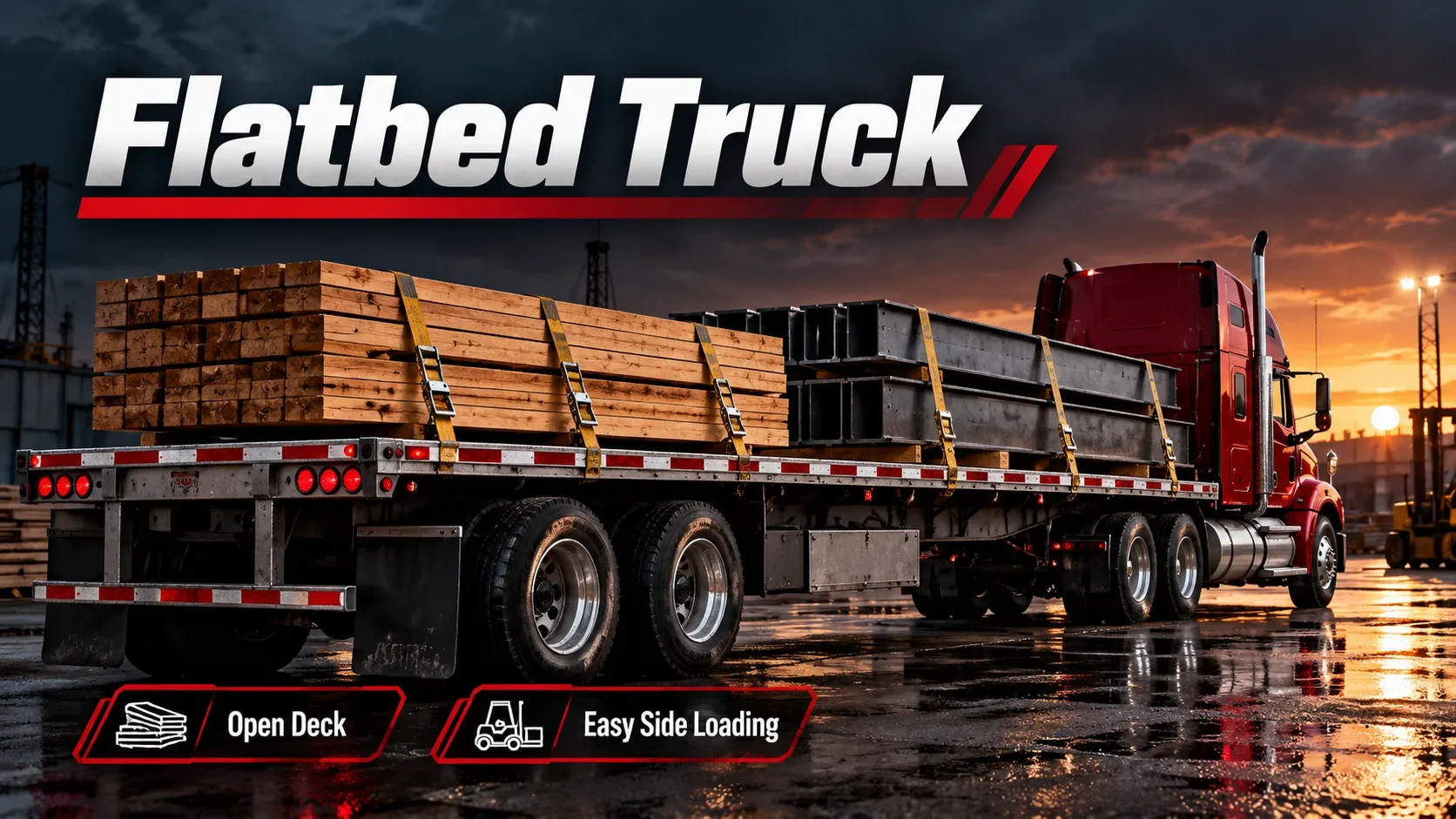
A flatbed truck uses an open cargo platform without a permanent enclosed box. This gives forklifts, cranes, and loaders easy access from the sides and rear.
Common uses include:
- Lumber and building materials
- Steel and pipe
- Construction equipment
- Machinery
- Large or unusually shaped cargo
Stake Bed Trucks
A stake bed truck is similar to a flatbed but has removable vertical stakes or side panels. These sides help contain cargo while still allowing easier loading than a fully enclosed truck.
Stake beds are common for landscaping, agriculture, building materials, equipment, and general commercial hauling.
Dump Trucks
Dump trucks carry loose material in a body that can be raised hydraulically to unload. Different dump configurations are used depending on the job and operating environment.
Typical cargo:
- Soil
- Sand
- Gravel
- Asphalt
- Demolition debris