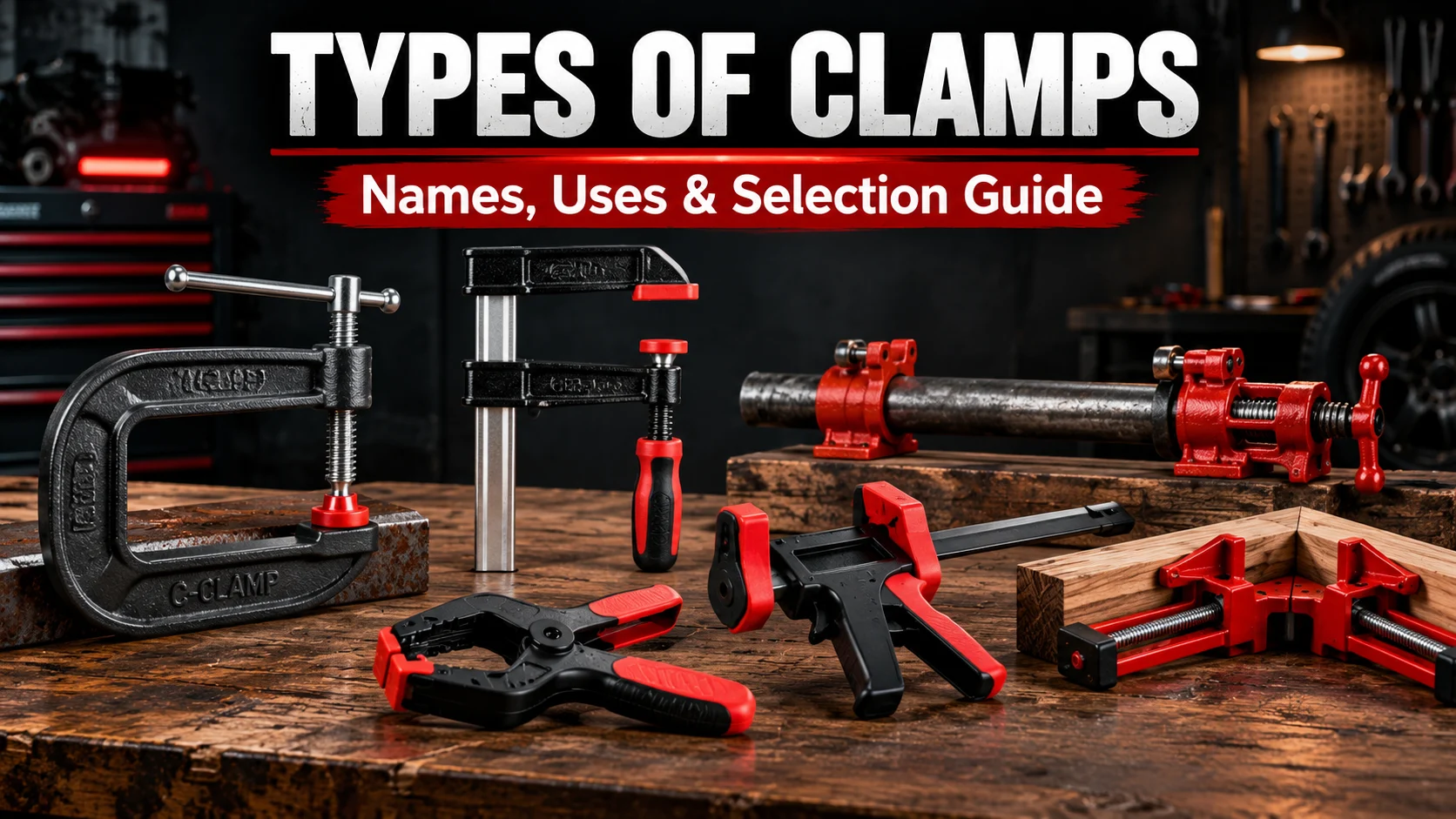
There are many types of clamps, and each is designed for a different kind of holding, positioning, gluing, welding, or assembly work. Choosing the right clamp depends on the material, workpiece size, shape, required pressure, and how quickly you need to secure the job.
Quick Answer
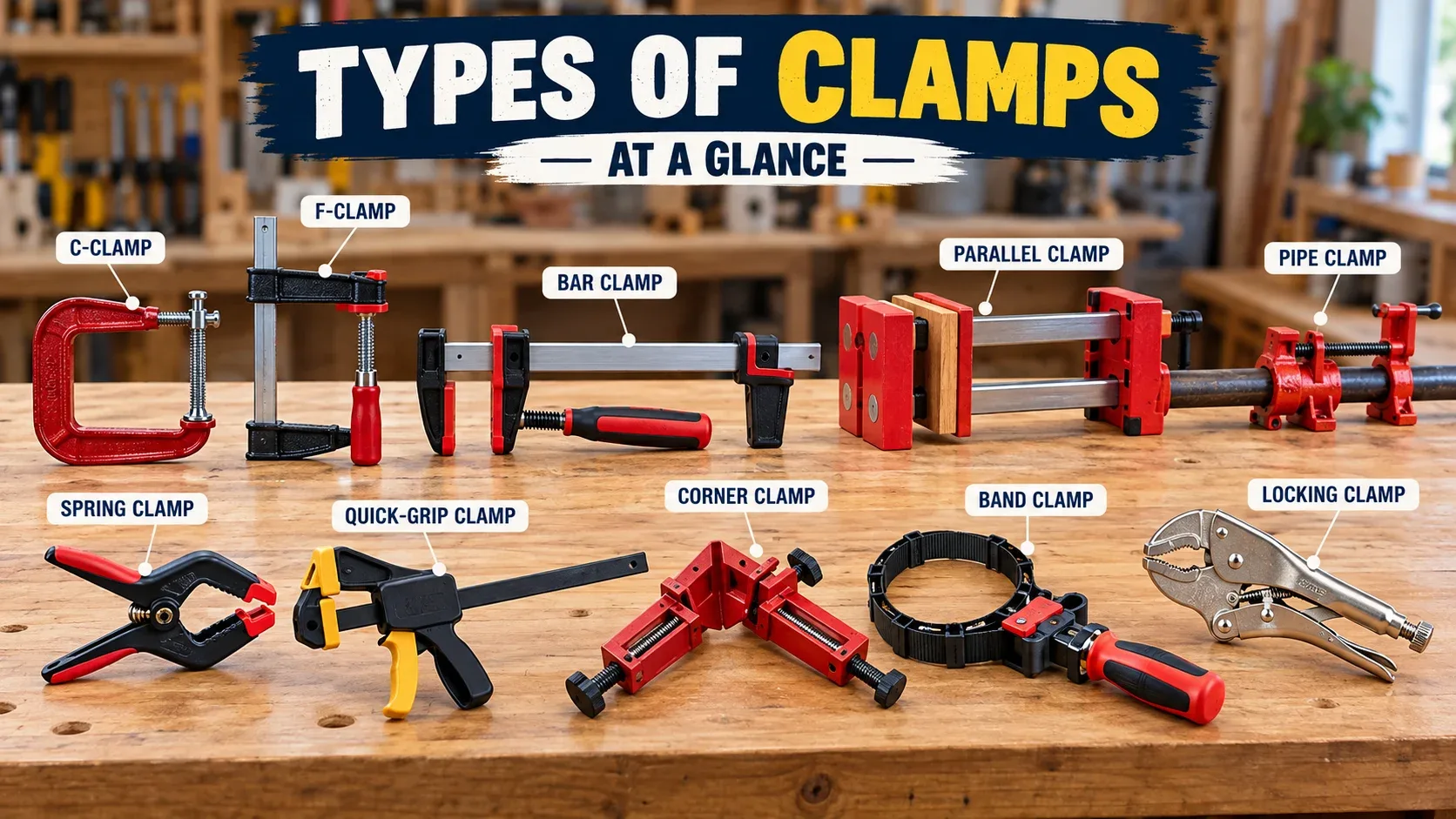
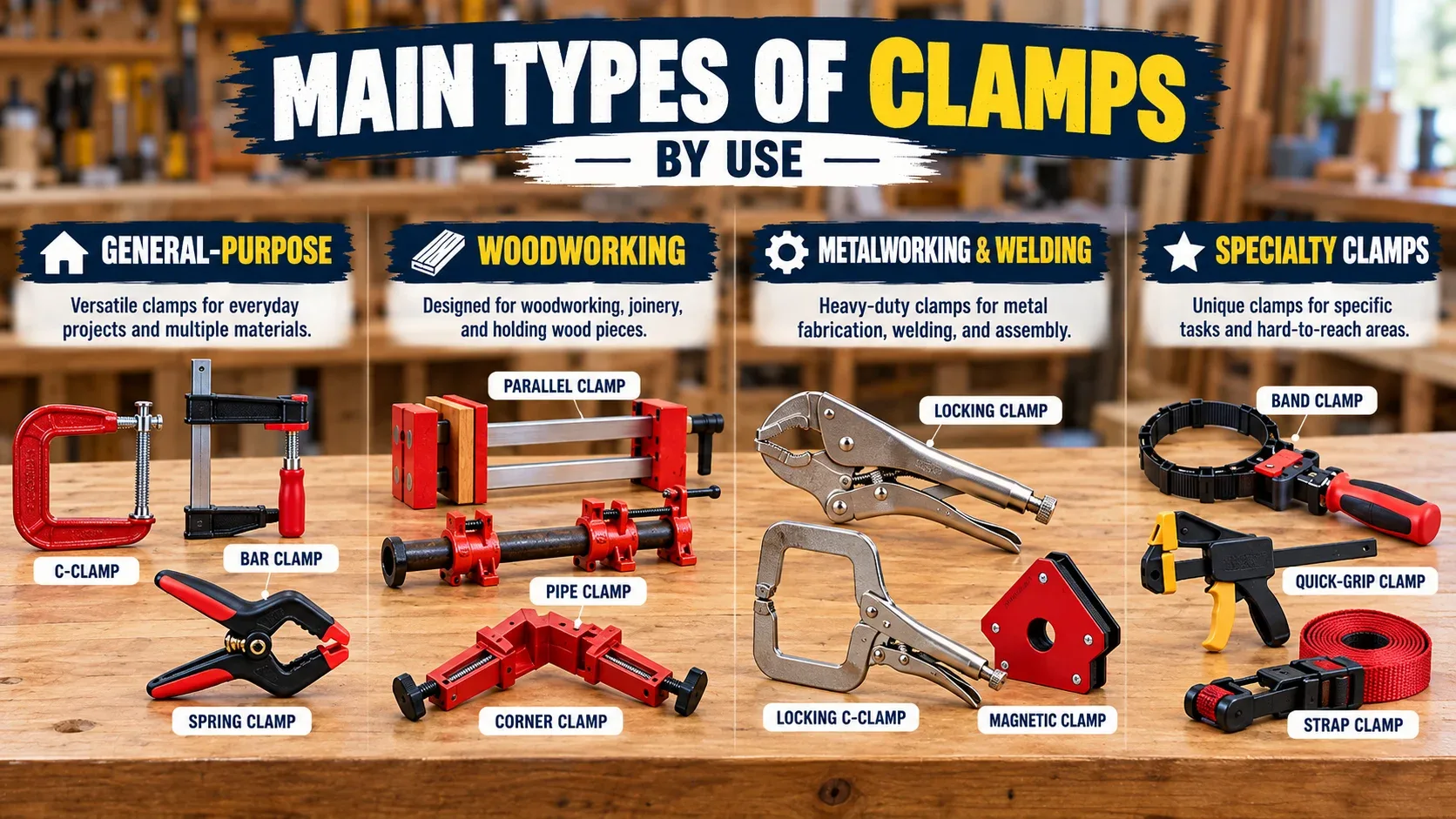
Common clamp types include C-clamps, F-clamps, bar clamps, parallel clamps, pipe clamps, spring clamps, quick-grip clamps, corner clamps, band clamps, locking clamps, and welding clamps.
Types of Clamps at a Glance
Main Types of Clamps by Use
1. C-Clamp
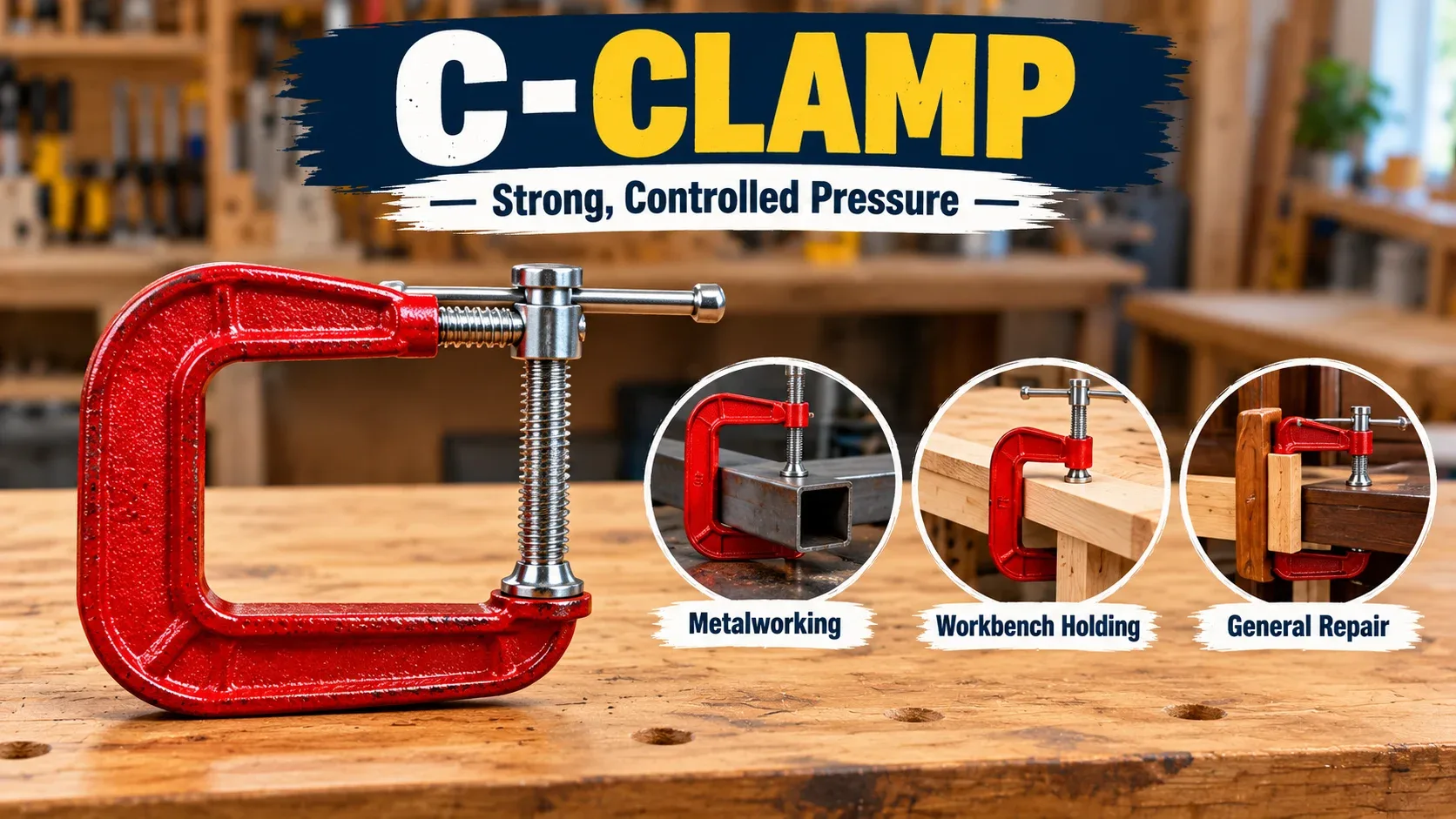
A C-clamp has a rigid C-shaped frame with a threaded screw that moves one jaw toward the other. It is one of the most recognizable and versatile clamp designs.
2. F-Clamp
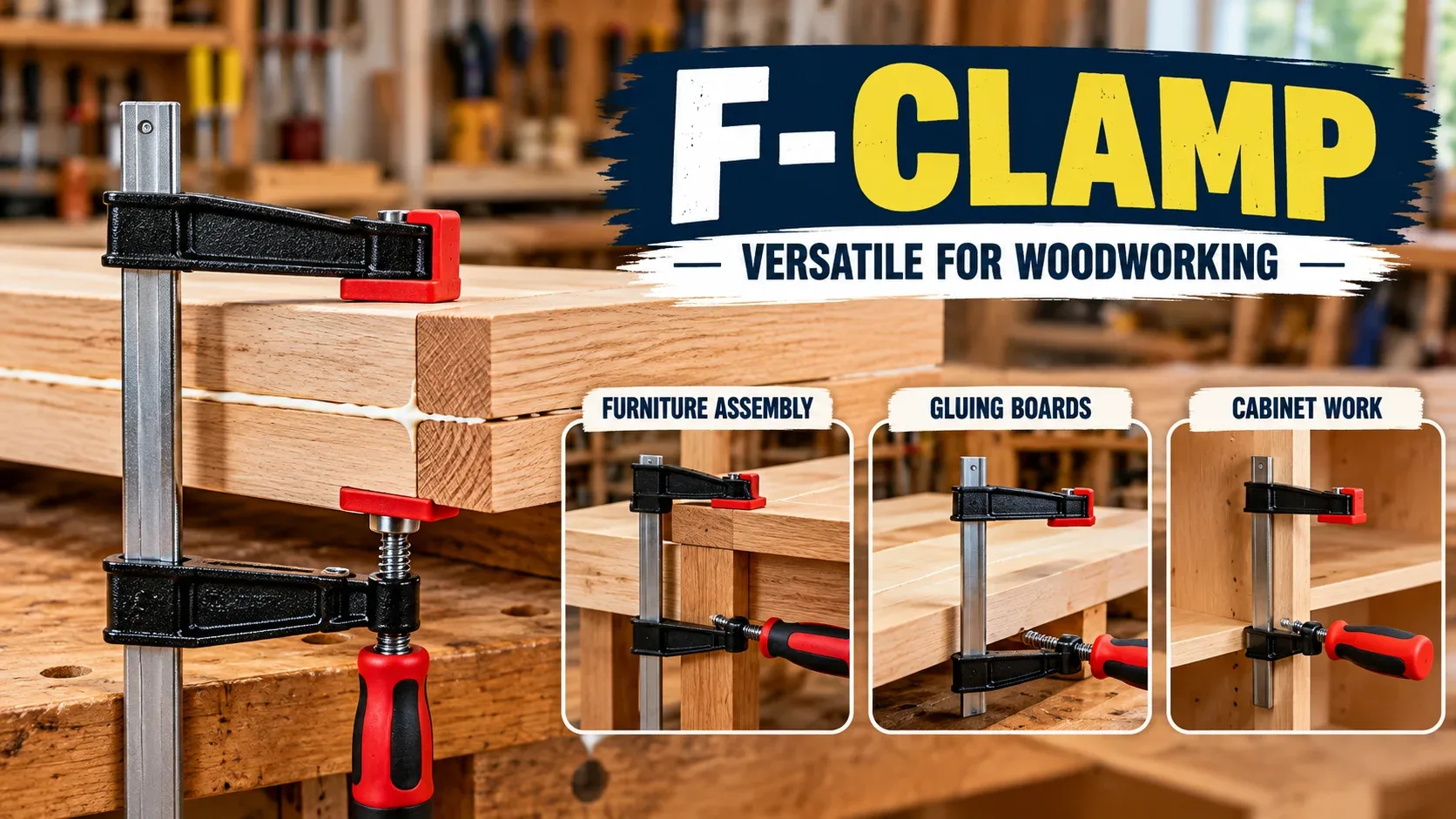
An F-clamp uses a fixed jaw at one end of a long bar and a movable jaw that slides along the bar. It provides a larger opening than a typical C-clamp.
3. Bar Clamp
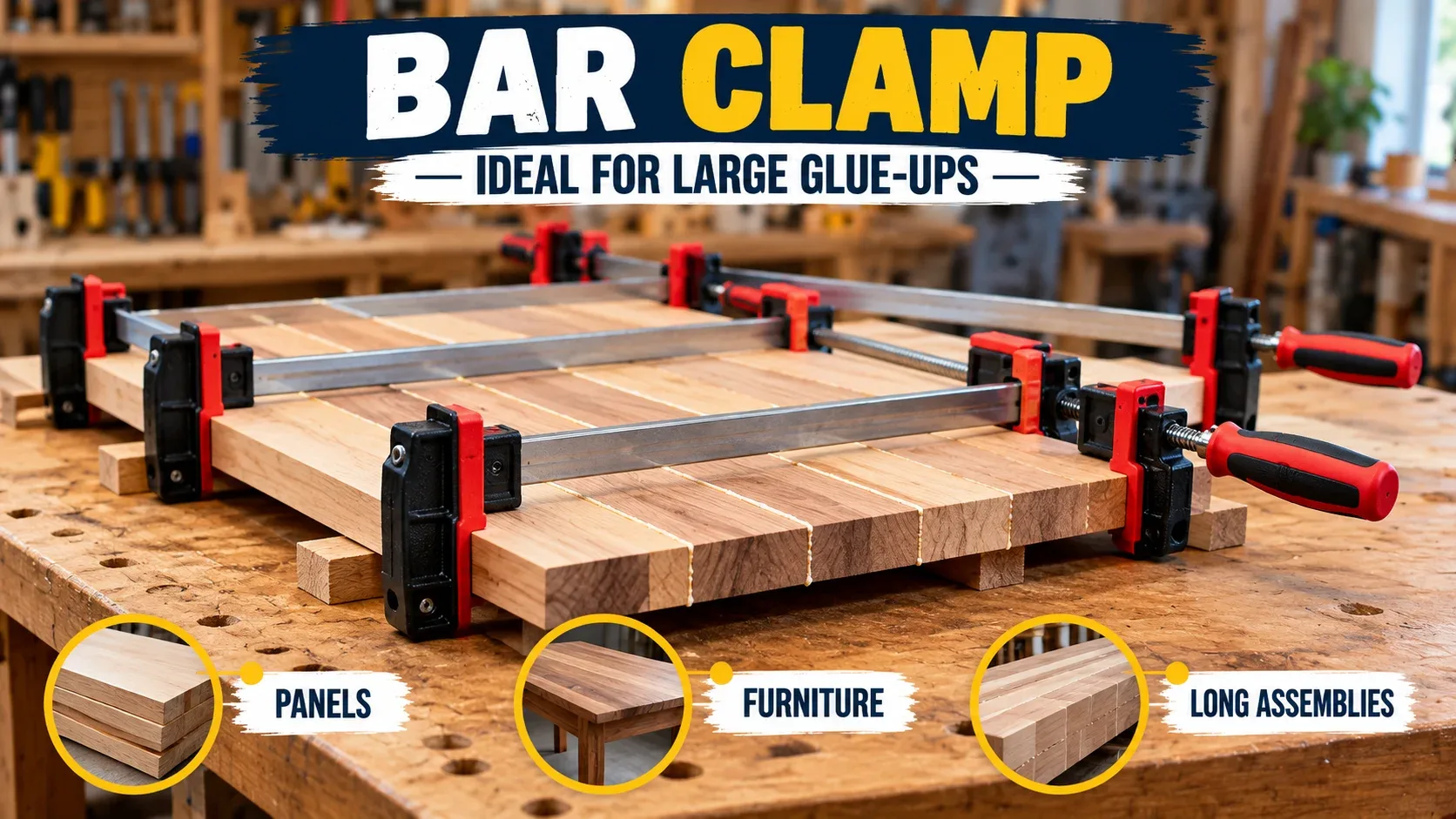
A bar clamp uses a long metal bar with jaws that can be positioned at different points along its length. It is especially useful for clamping wide workpieces.
4. Parallel Clamp
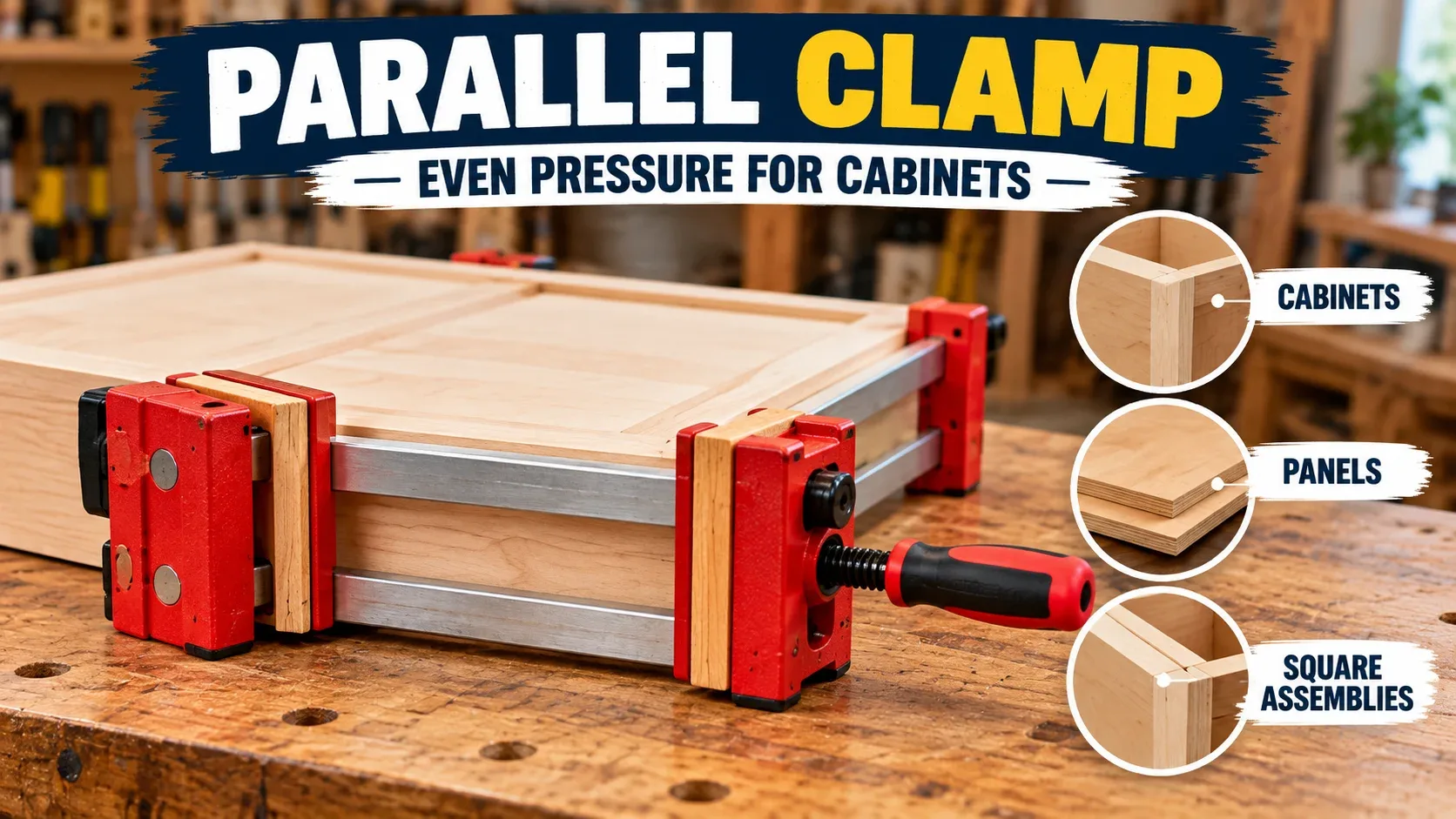
A parallel clamp is designed so its large jaws remain approximately parallel as pressure is applied, helping distribute force evenly.
5. Pipe Clamp
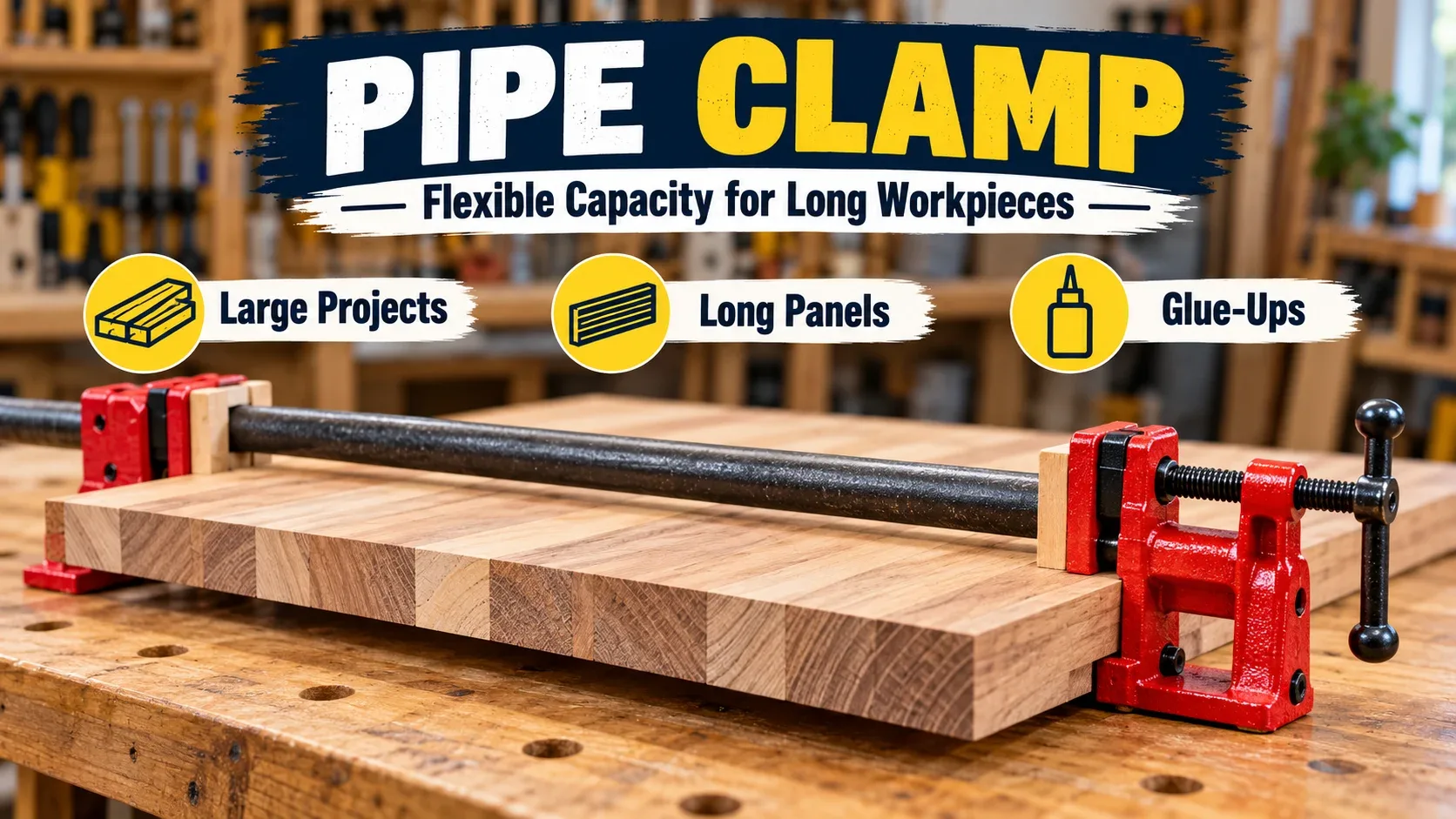
A pipe clamp consists of clamp heads mounted on a length of metal pipe. Its main advantage is flexible capacity for long workpieces.
6. Sash Clamp
A sash clamp is a long, rigid clamp commonly used for doors, frames, cabinets, and large woodworking assemblies.
7. Spring Clamp
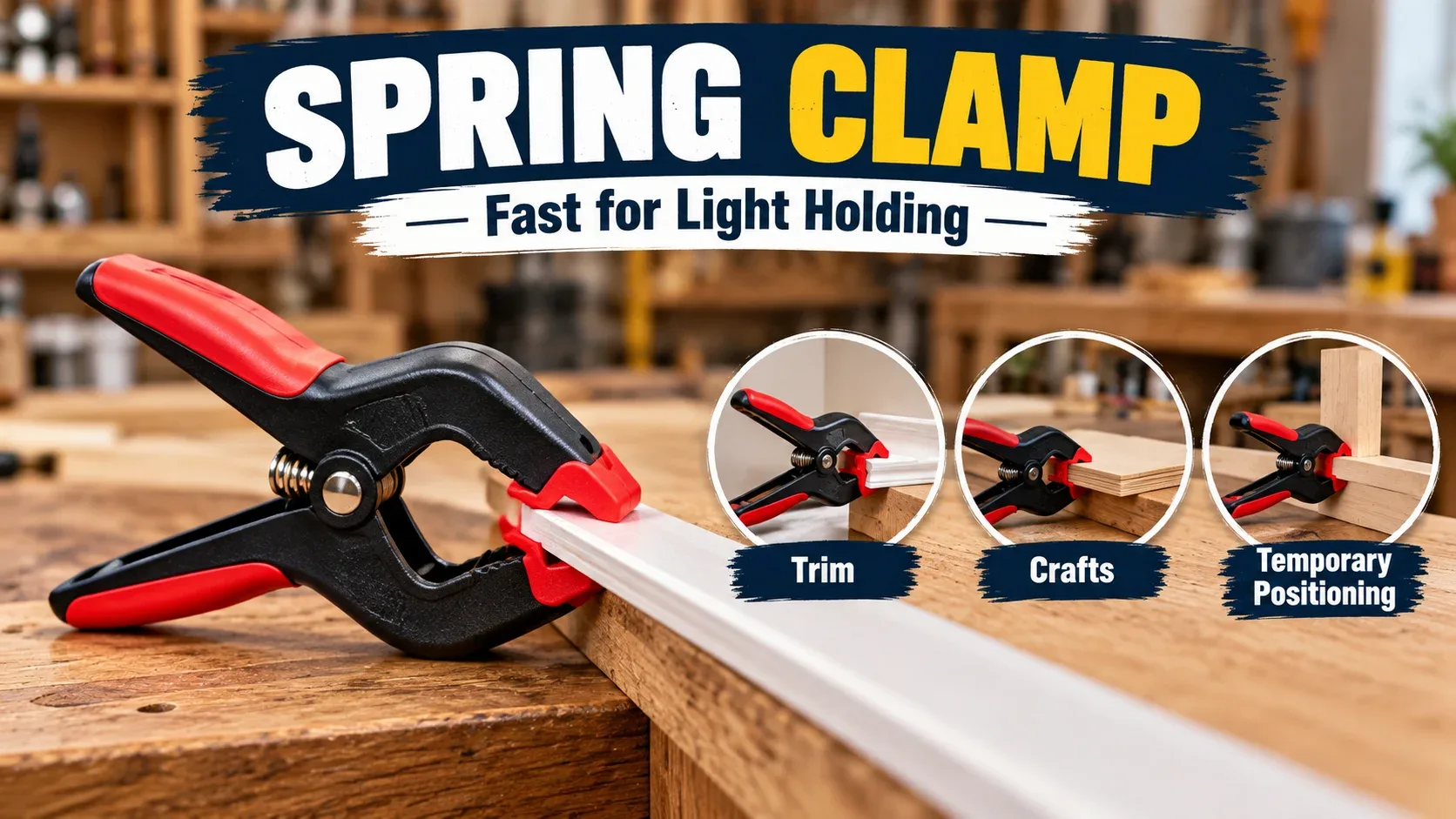
A spring clamp uses spring tension to close its jaws automatically. It is fast, simple, and well suited to lightweight holding tasks.
8. Quick-Grip or Trigger Clamp
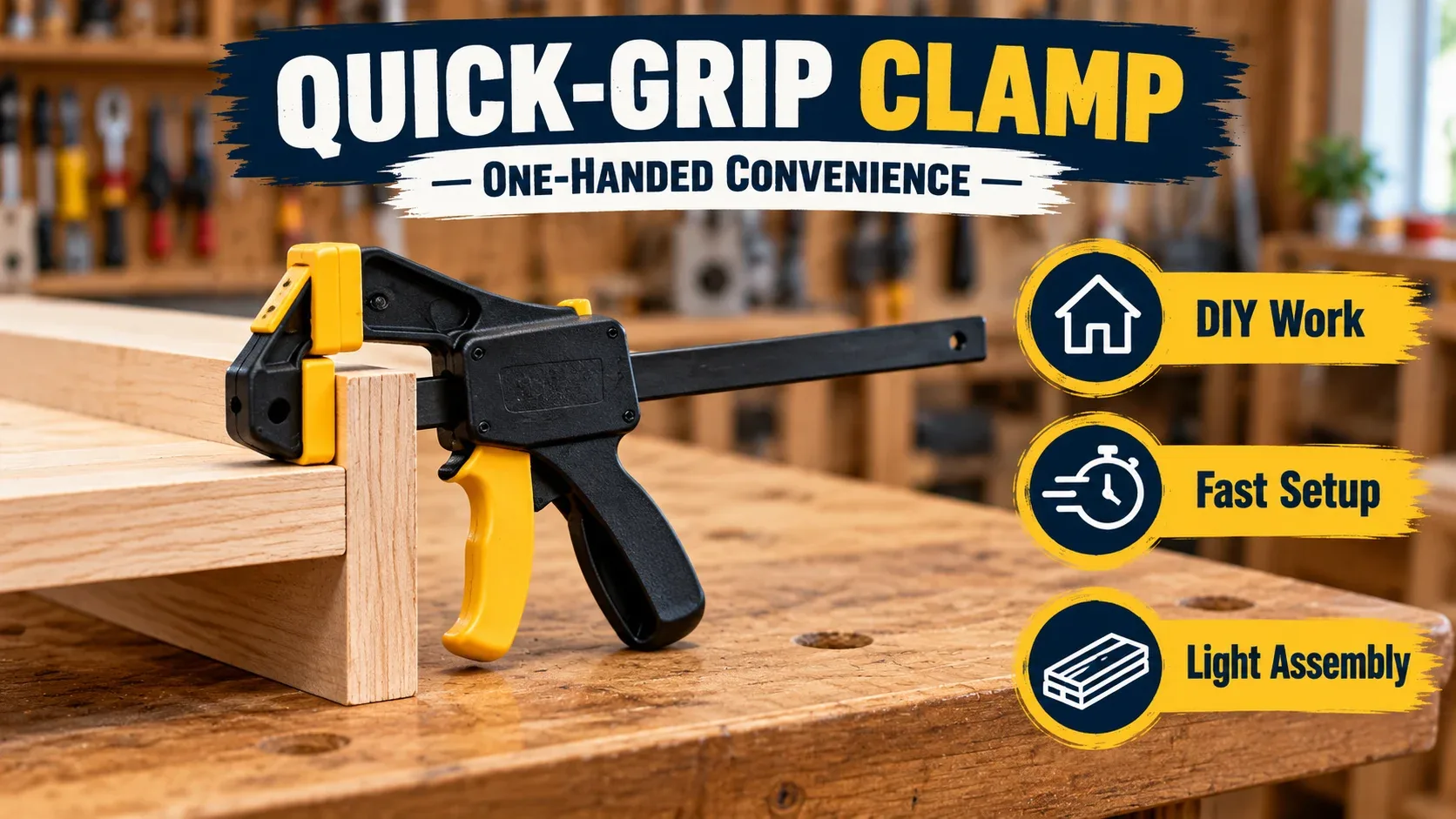
A quick-grip clamp, sometimes called a trigger clamp, uses a handle or trigger mechanism to move the jaw along a bar. Many can be operated with one hand.
9. Hand-Screw Clamp
A hand-screw clamp typically uses two wooden jaws controlled by two threaded handles and works well on irregular or tapered pieces.
10. Corner Clamp
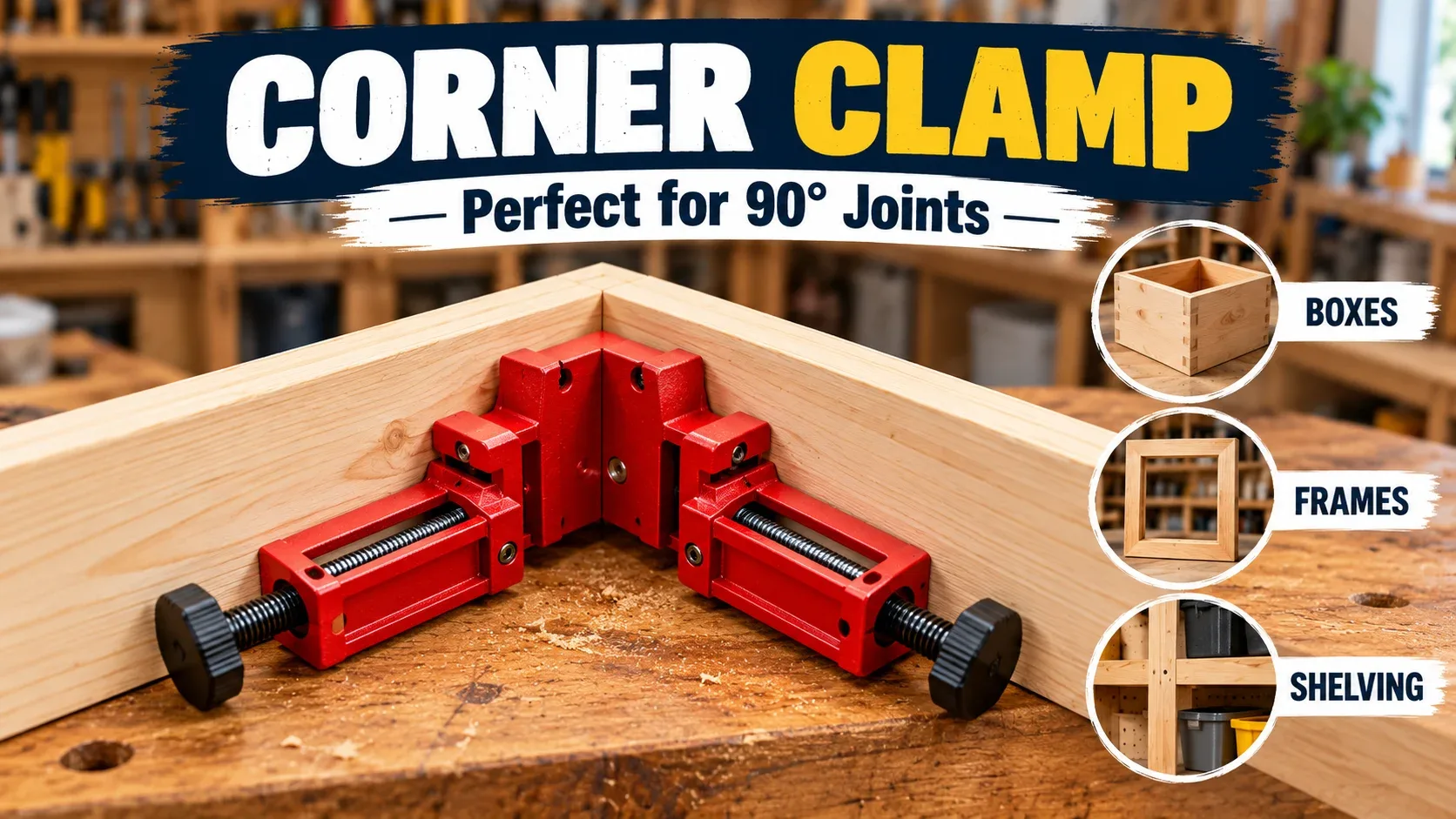
A corner clamp holds two workpieces at approximately 90 degrees while they are glued, screwed, nailed, or otherwise joined.
11. Miter Clamp
A miter clamp is designed to secure angled joints, particularly 45-degree joints commonly used in trim and frames.
12. Band or Strap Clamp
A band clamp uses a flexible strap instead of rigid jaws and is useful for frames, round objects, and irregular shapes.
13. Edge Clamp
An edge clamp applies pressure to the edge of a board or panel rather than only clamping across its width.
14. Locking Clamp
A locking clamp uses a locking mechanism similar to locking pliers and is widely used in metalworking and fabrication.
15. Welding Clamp
Welding clamps are designed to keep metal components positioned correctly before and during welding.
16. Toggle Clamp
A toggle clamp uses a lever mechanism that quickly locks into position and is common on jigs and fixtures.
17. Bench Clamp
A bench clamp secures a workpiece directly to a workbench or compatible work surface.
18. Drill-Press Clamp
A drill-press clamp holds a workpiece securely against a drill-press table so it cannot spin or shift.
19. Sheet-Metal Clamp
A sheet-metal clamp is designed to grip thin metal securely and spread pressure across the workpiece.
20. Hose Clamp
A hose clamp secures a flexible hose around a fitting or connection and is commonly used in automotive and plumbing applications.
How to Choose the Right Clamp
Choose a clamp based on material, jaw capacity, throat depth, clamping force, workpiece shape, and how quickly you need to adjust it.
Clamp Safety Tips
- Inspect clamps before use.
- Keep fingers away from pinch points.
- Use clamps suitable for the required load.
- Secure work properly before drilling or cutting.
- Keep clamps clear of moving tools.
Bottom Line
There is no universal clamp for every job. Choose the clamp that provides the right capacity, reach, pressure, and jaw design for the workpiece.