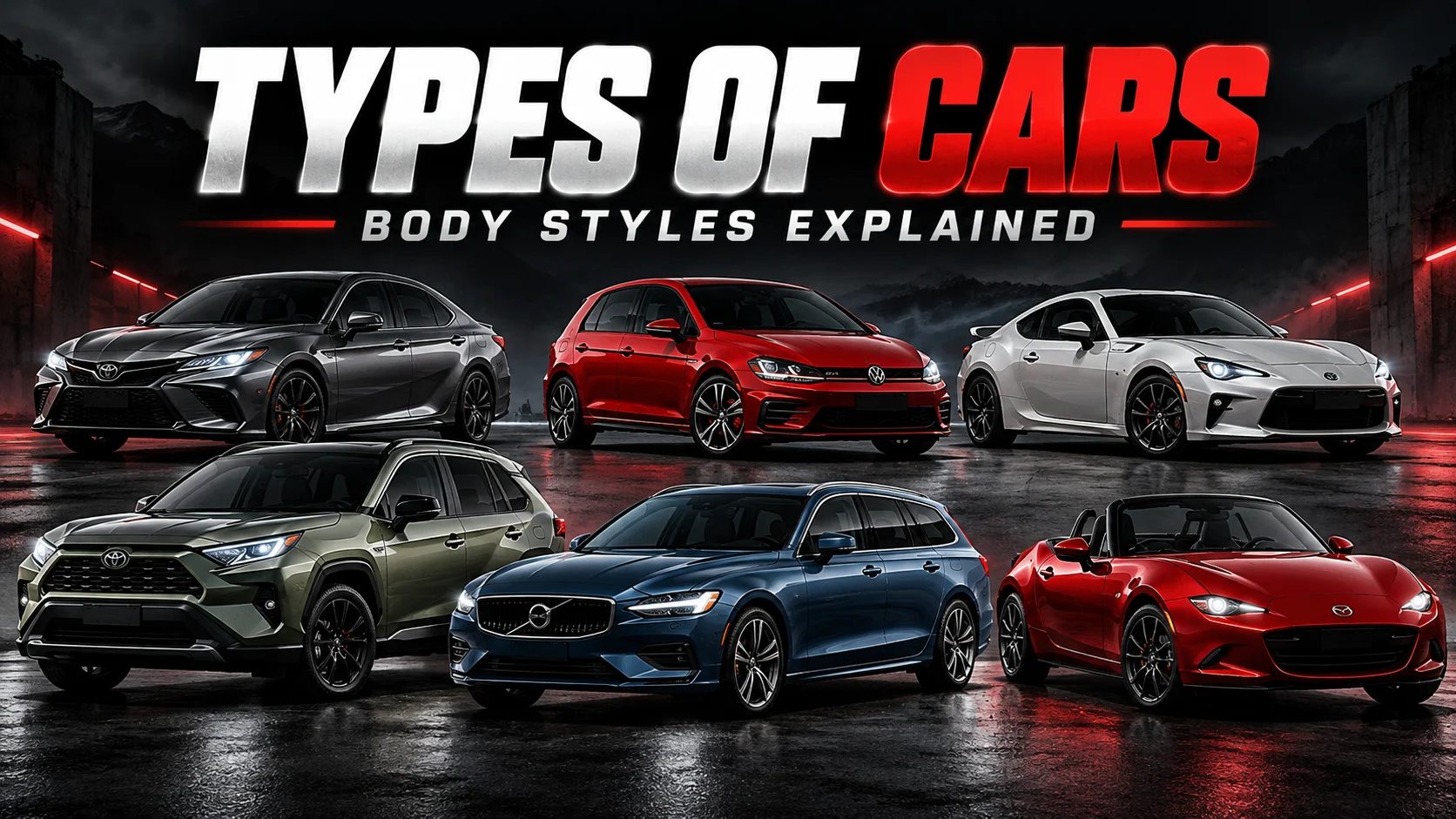

Understanding a vehicle type car means looking at more than one characteristic. Cars can be grouped by body style, size, purpose, drivetrain, and powertrain. This guide explains the most common types of vehicles and helps you tell one body style of car from another.
What Are the Main Types of Cars?
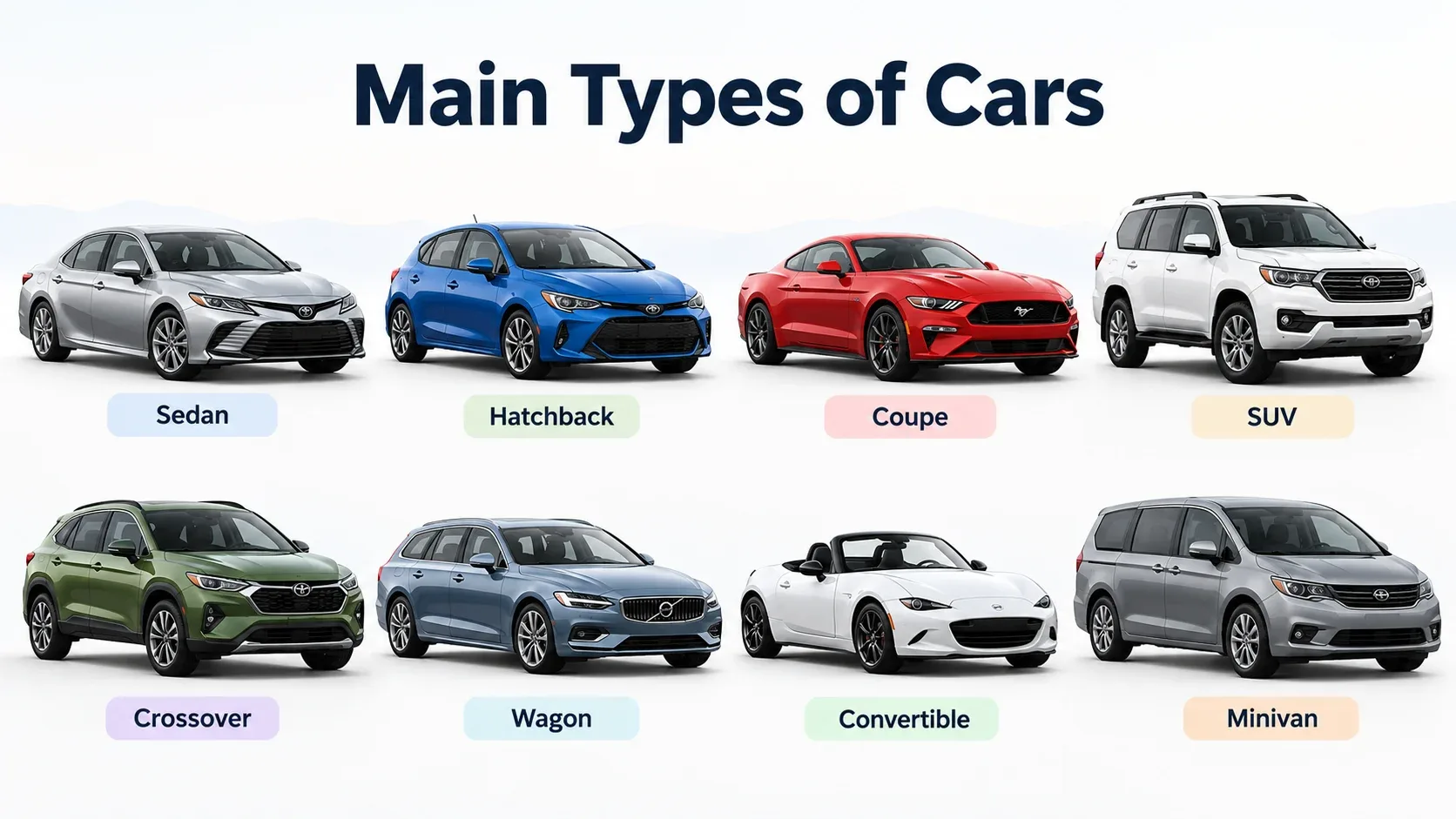
The most familiar type of cars are usually described by their body shape and practical layout.
Sedan
Passenger-focused car with a separate trunk.
Hatchback
Rear hatch opens upward for flexible cargo access.
Coupe
Traditionally a sporty two-door body style.
SUV
Taller vehicle with greater passenger and cargo versatility.
Crossover
SUV-like vehicle commonly built on a passenger-car-style platform.
Wagon
Car-like vehicle with an extended roof and larger cargo area.
Convertible
Vehicle with a retractable or removable roof.
Minivan
Family-focused vehicle with large passenger space and sliding doors.
What Does Vehicle Type Mean?
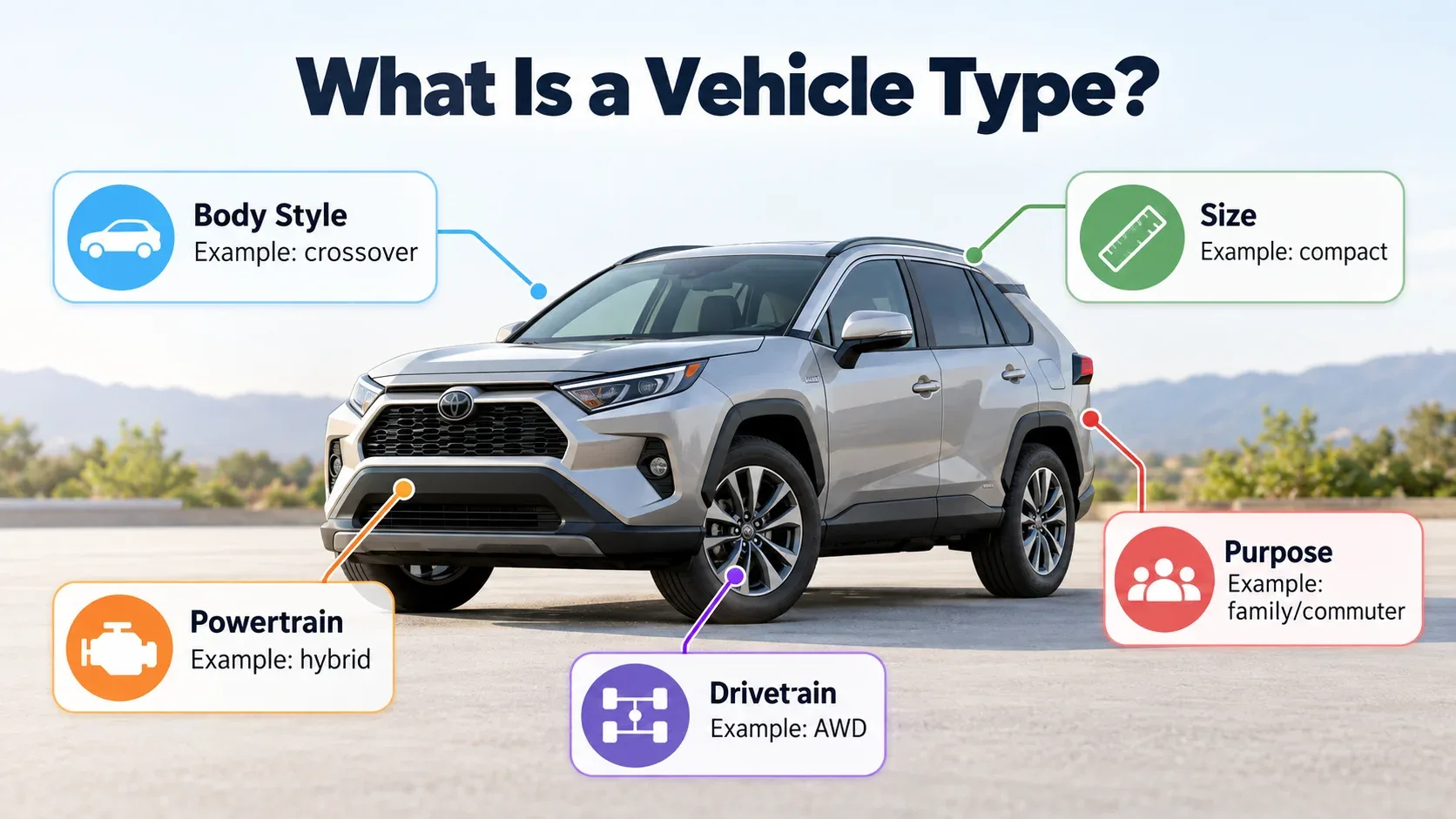
The phrase vehicle type car can refer to several different ways of classifying a vehicle. Body style is only one part of the picture.
Body Style
Sedan, hatchback, coupe, wagon, SUV, convertible and similar shapes.
Size
Subcompact, compact, midsize or full-size.
Purpose
Commuting, family transport, performance, utility or luxury.
Powertrain
Gasoline, diesel, hybrid, plug-in hybrid or electric.
Drivetrain
Front-wheel drive, rear-wheel drive, AWD or 4WD.
Construction
Unibody or, in some utility vehicles, body-on-frame.
What Is a Car Body Style?
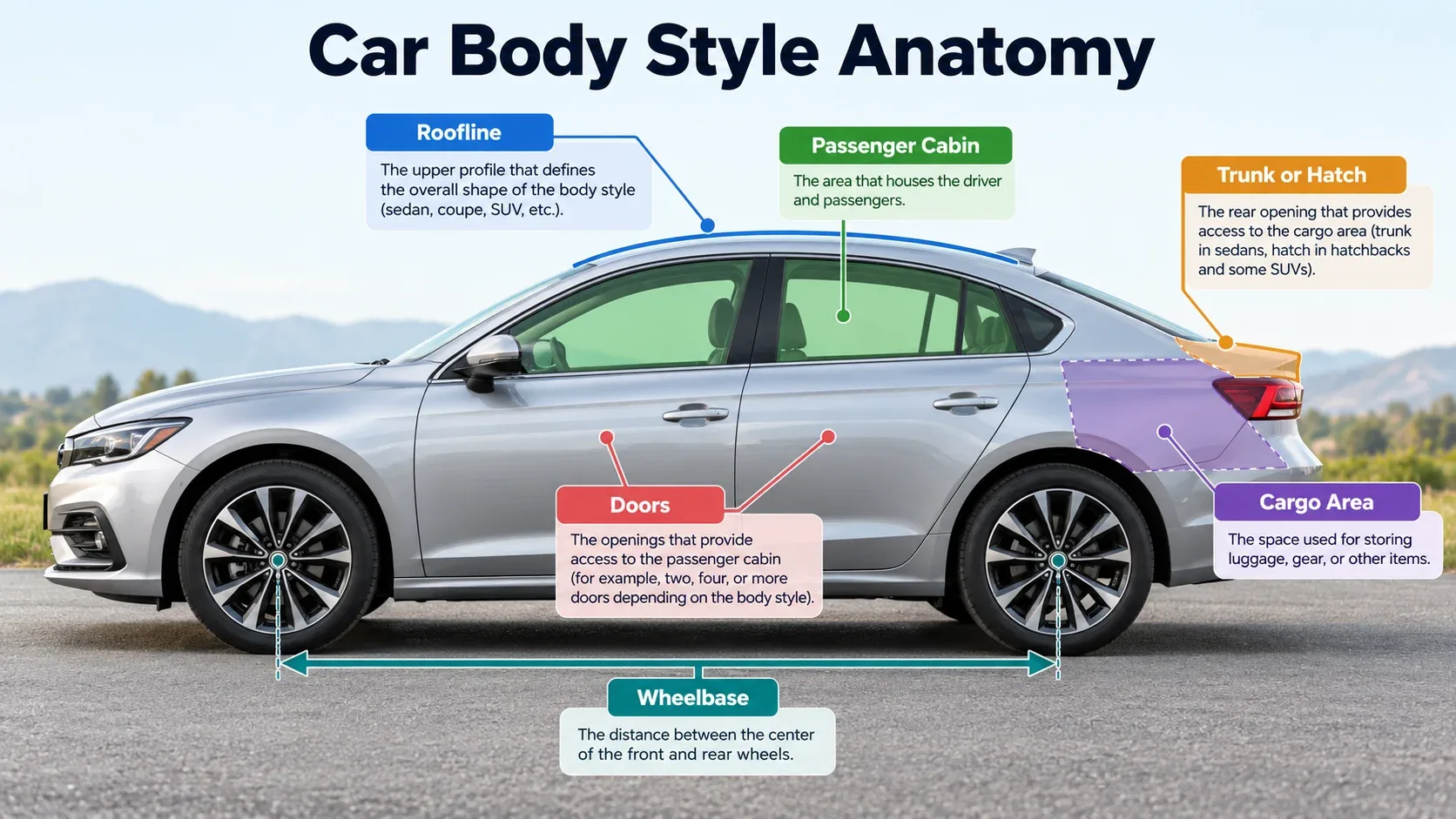
A body style of car describes the general shape and layout of the vehicle’s passenger and cargo areas.
Important body-style features include:
- Number and arrangement of doors
- Roof shape
- Trunk or hatch design
- Passenger compartment layout
- Cargo area configuration
- Vehicle ride height
Sedan
A sedan traditionally has an enclosed passenger compartment and a separate trunk. Most modern sedans have four doors and seating for four or five people.
Typical uses:
- Daily commuting
- Family transportation
- Business travel
- Highway driving
Hatchback
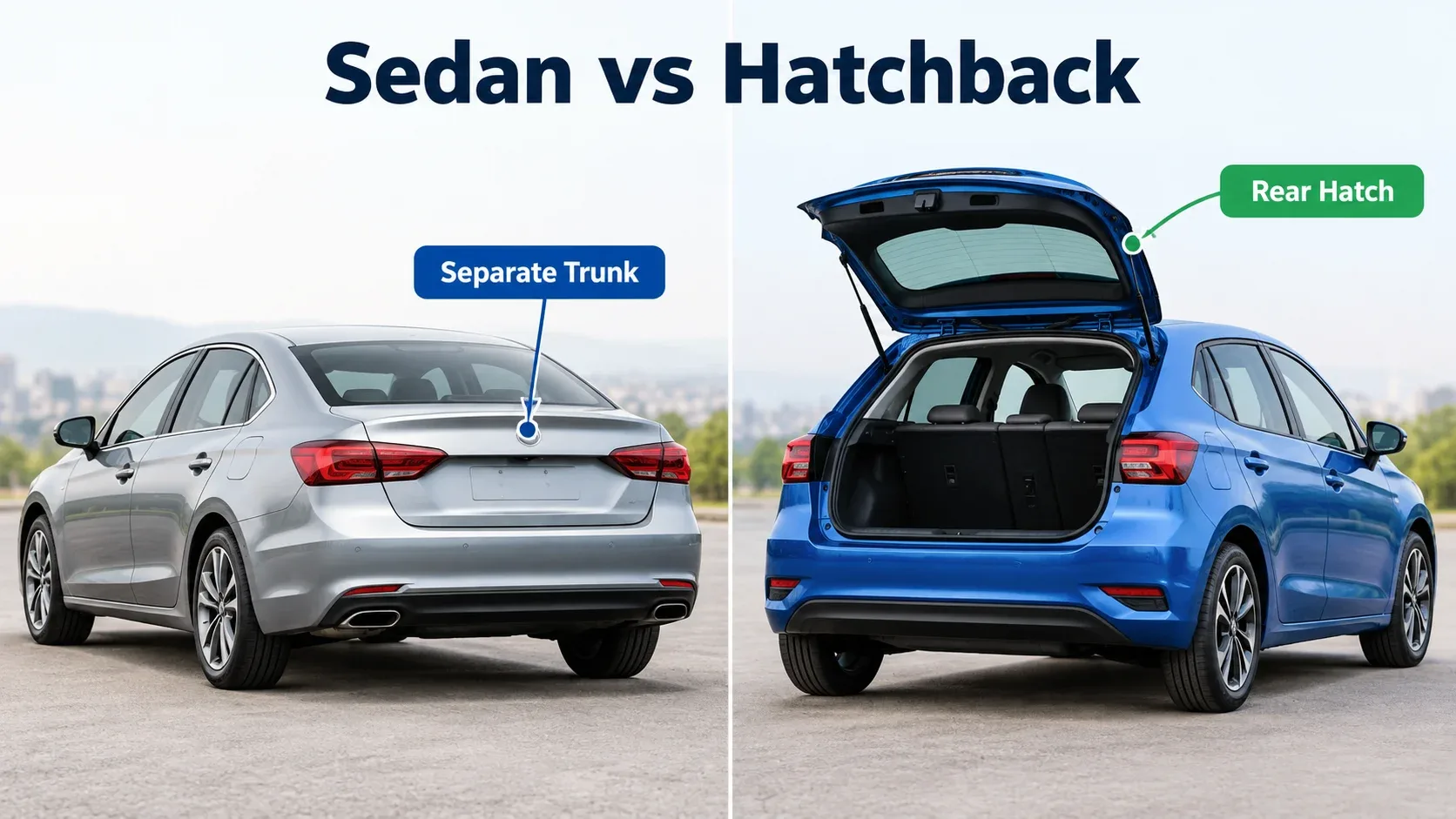
A hatchback uses a large rear door that includes the rear window and swings upward. This opening gives direct access to the cargo area from the rear.
Because the rear seats often fold down, hatchbacks can offer more cargo flexibility than similarly sized traditional sedans.
Sedan vs Hatchback
| Feature | Sedan | Hatchback |
|---|---|---|
| Rear Opening | Separate trunk lid | Large rear hatch |
| Cargo Area | Separated from cabin | Connected to passenger area |
| Cargo Flexibility | Moderate | Usually higher |
| Typical Use | Commuting, family, business | City driving, commuting, flexible cargo |
Coupe
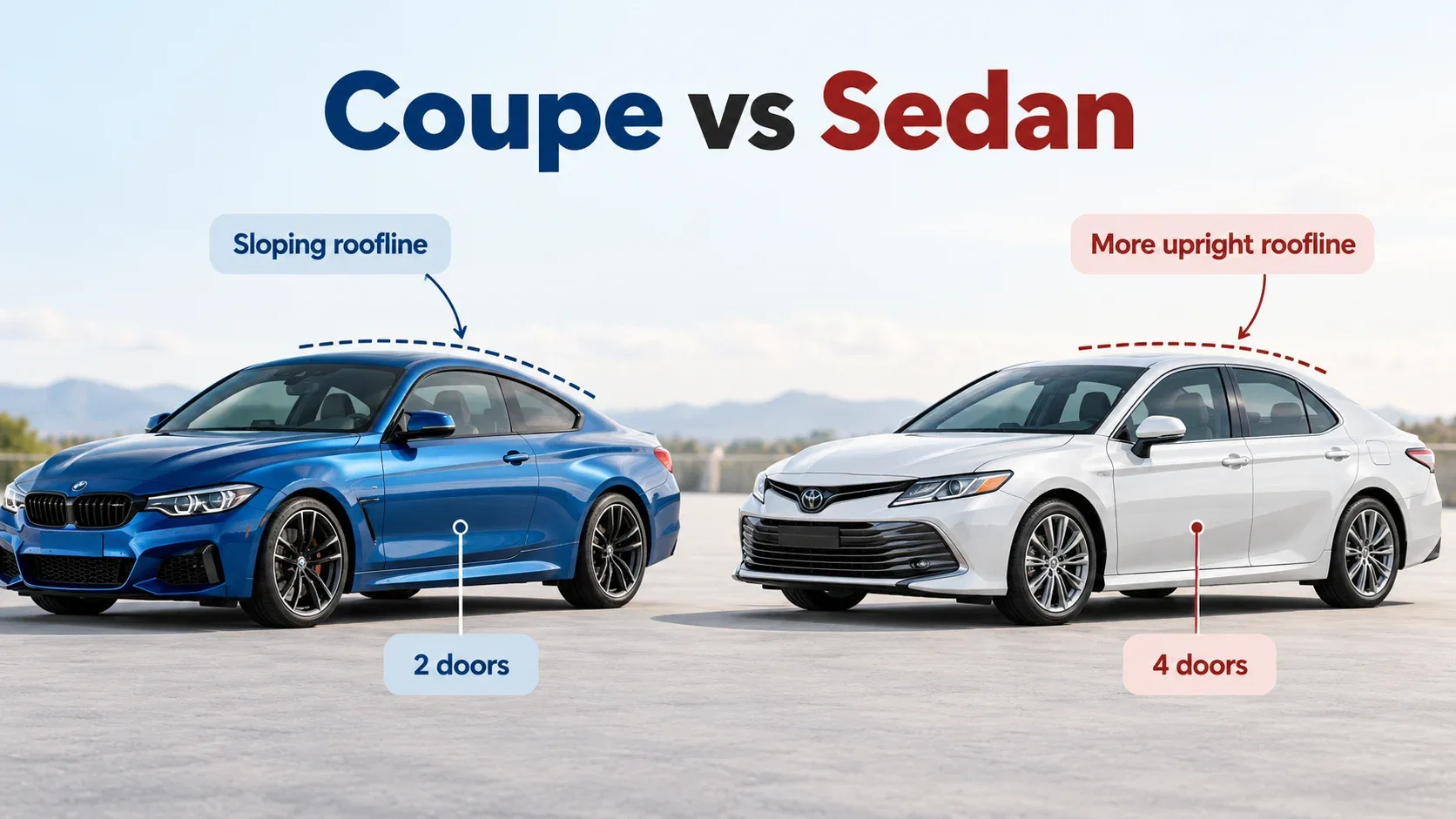
A coupe traditionally describes a car with two doors, a fixed roof, and a sportier profile than a comparable sedan.
Modern automakers sometimes use the word “coupe” for four-door vehicles or SUVs with sloping rooflines, so the term is not always applied strictly.
Coupe vs Sedan
Coupe
- Traditionally two doors
- Often sportier roofline
- May have tighter rear-seat access
- Often style or performance focused
Sedan
- Usually four doors
- Greater rear-seat access
- Separate trunk
- Often more family oriented
SUV
Sport utility vehicles generally have taller bodies, higher seating positions, and greater passenger and cargo capacity than traditional passenger cars.
SUVs come in many sizes, including compact, midsize and full-size models. Some use all-wheel drive or four-wheel drive, while others are front-wheel drive.
Crossover
A crossover combines SUV-like styling and practicality with construction commonly associated with passenger cars.
Crossovers typically use unibody construction, where the body and underlying structure are integrated rather than mounted on a separate truck-style frame.
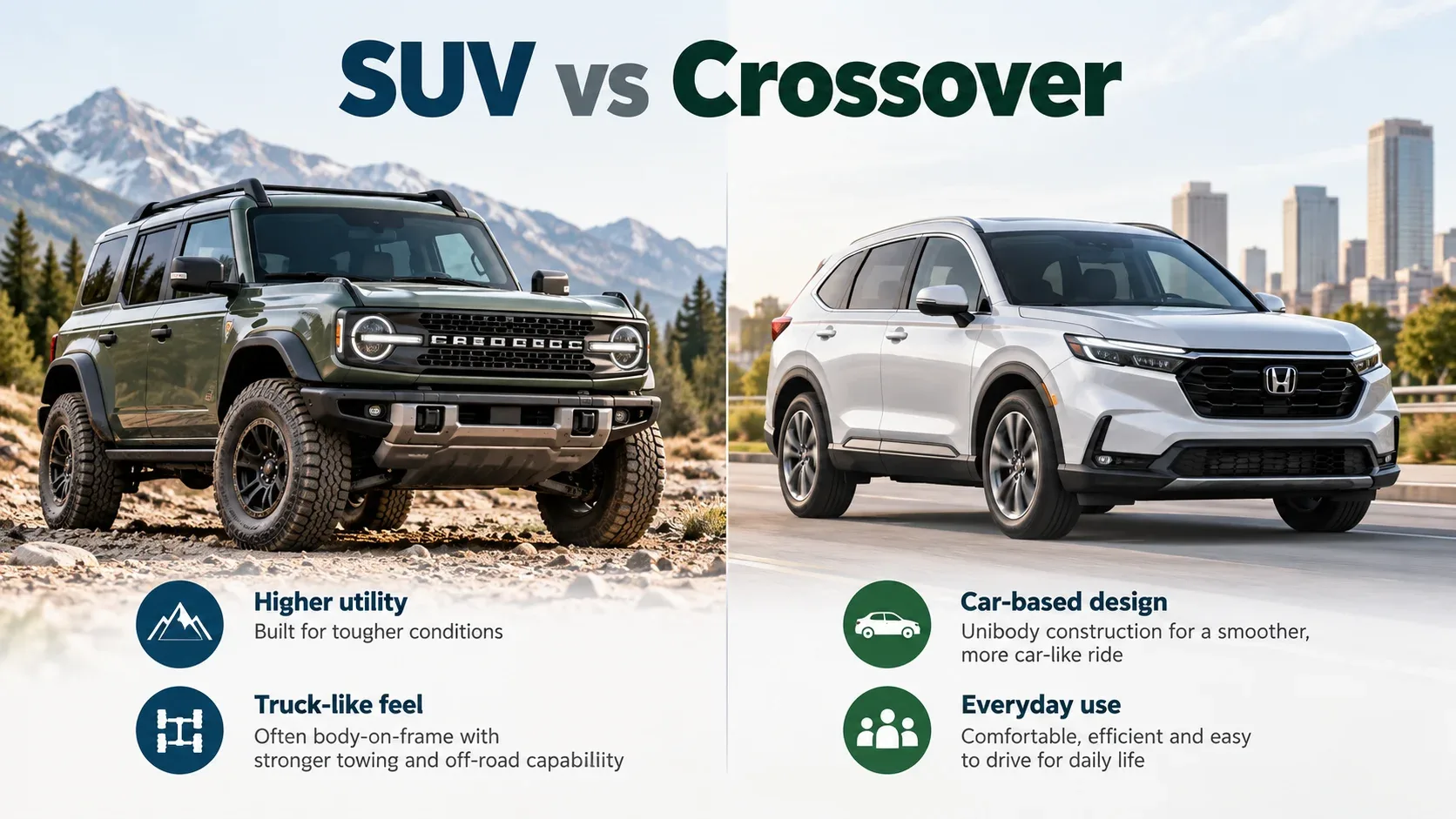
SUV vs Crossover
The distinction is not always consistent because manufacturers use the terms differently in marketing. Traditionally, however, a crossover is generally associated with passenger-car-style unibody construction.
| Feature | Crossover | Traditional SUV |
|---|---|---|
| Common Construction | Unibody | May use body-on-frame |
| Driving Feel | Often more car-like | May feel more truck-like |
| Typical Focus | Everyday family use | Utility, towing, off-road capability |
| Terminology | Often marketed as SUV | Also marketed as SUV |
Station Wagon
A station wagon usually combines a passenger-car platform with an extended roofline and a larger rear cargo area.
Compared with many SUVs, wagons typically sit lower to the ground and provide a more car-like driving position.
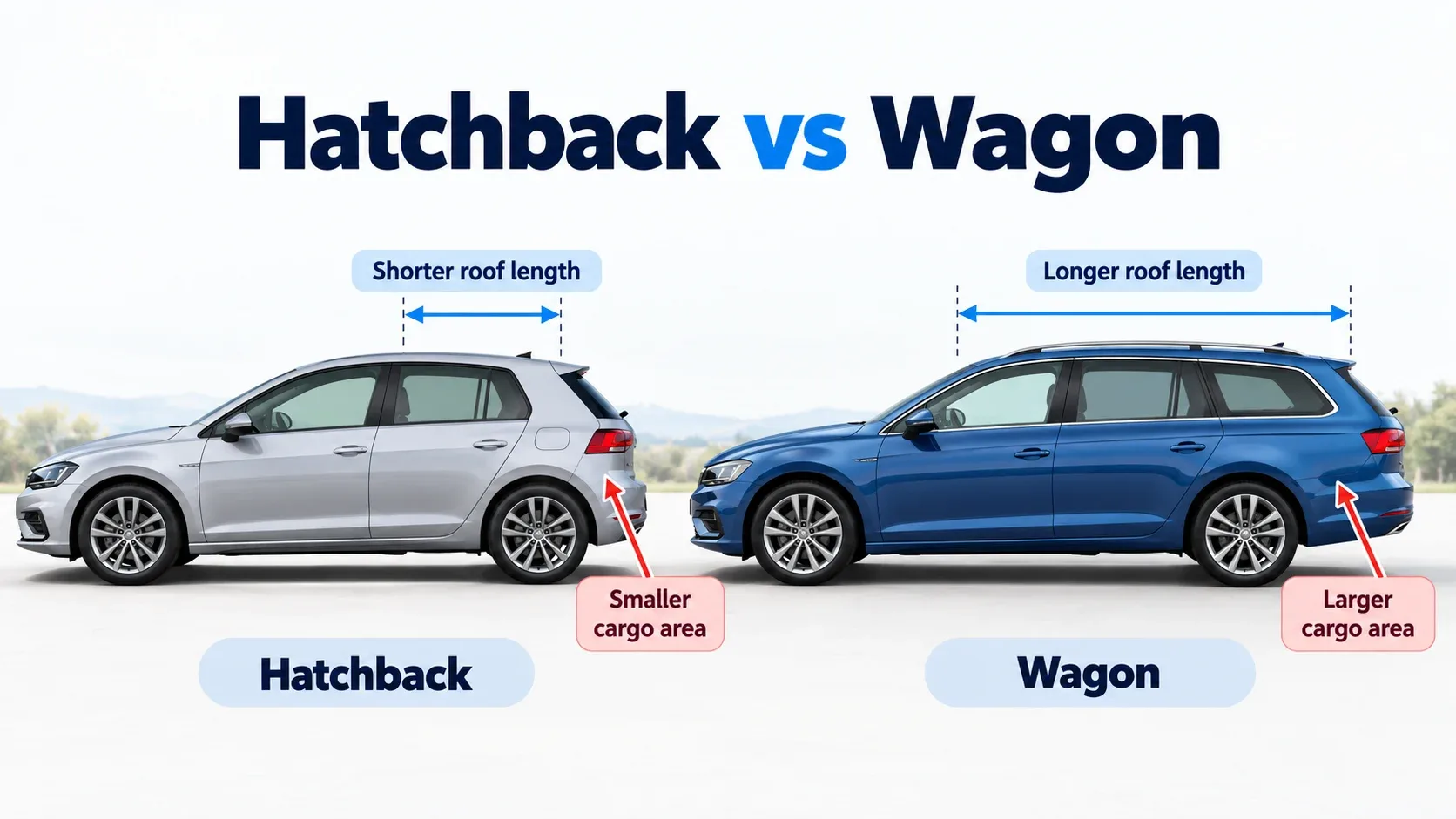
Hatchback vs Wagon
Hatchbacks and wagons both use rear hatches, but their proportions usually differ.
Hatchback
Usually has a shorter rear overhang and more compact cargo area.
Station Wagon
Usually has a longer roof and extended cargo area behind the rear seats.
Convertible
A convertible has a roof that can be folded, retracted, or removed. Depending on the vehicle, the roof may be fabric or a retractable hardtop.
Common convertible styles include:
- Soft-top convertible
- Retractable hardtop
- Roadster
- Cabriolet
Minivan / MPV
Minivans and multi-purpose vehicles prioritize passenger space and interior flexibility. Many minivans have sliding rear doors and three rows of seating.
Their low floor height, wide door openings, and configurable seats make them especially practical for families.
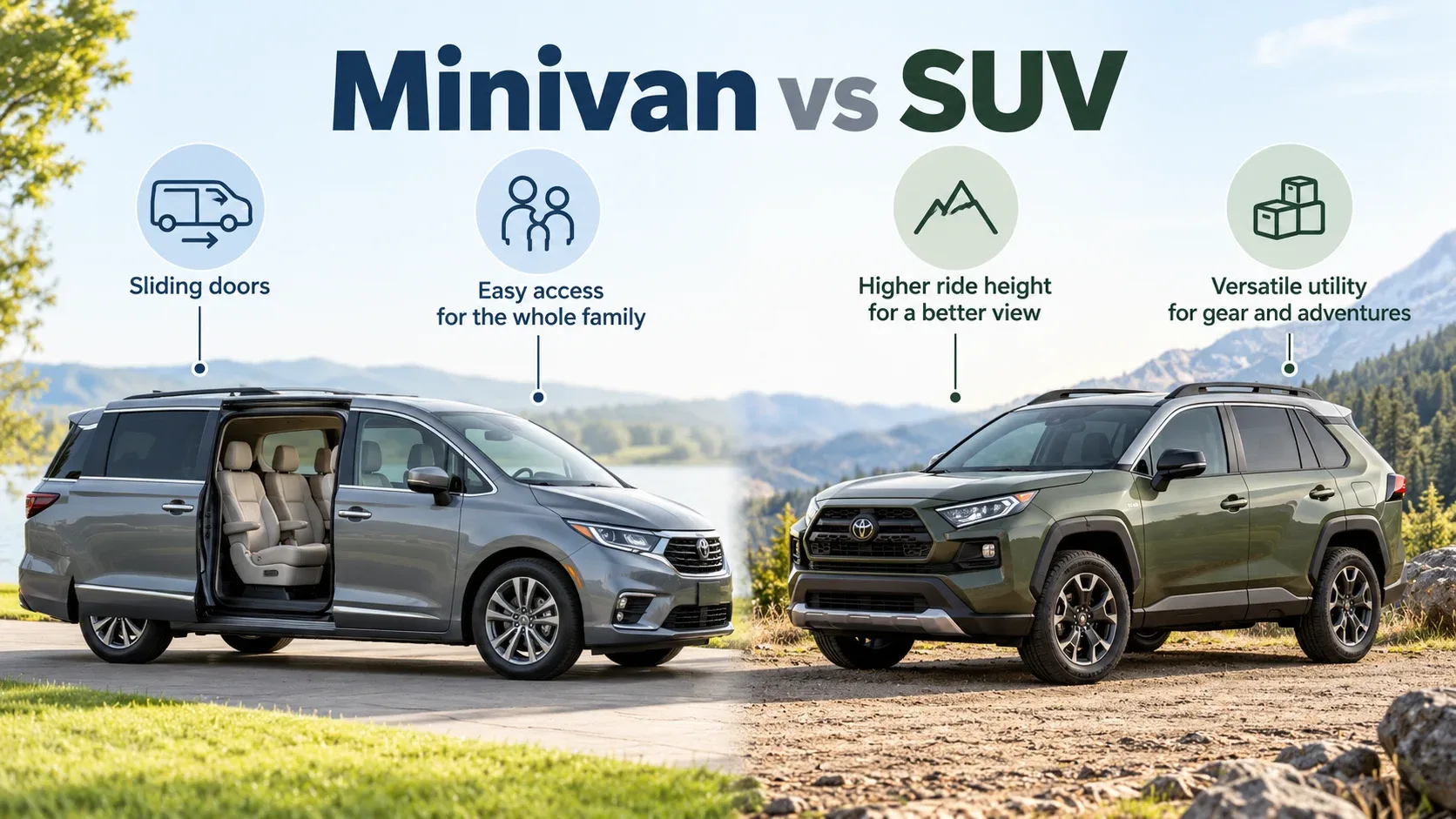
Minivan vs SUV
| Feature | Minivan | SUV |
|---|---|---|
| Rear Doors | Often sliding | Usually hinged |
| Passenger Access | Usually excellent | Varies by size |
| Third-Row Practicality | Often very good | Varies widely |
| Ride Height | Generally lower | Generally higher |
| Typical Focus | Family practicality | Family, utility, style, towing |
Pickup Truck
A pickup truck has a passenger cab and an open cargo bed. Although people sometimes use “car” casually for any road vehicle, a pickup is normally classified as a light truck rather than a passenger-car body style.
Pickups are designed around hauling and towing, although many modern models also serve as everyday family vehicles.
Sports Cars
A sports car is usually defined more by performance purpose than by one specific body style.
Sports cars may be:
- Coupes
- Convertibles
- Roadsters
Their design typically emphasizes handling, acceleration, steering response, and driver engagement.
Fastback, Liftback, Roadster and Other Specialty Styles
Fastback
Describes a roofline that slopes smoothly toward the rear of the vehicle.
Liftback
Often looks sedan-like but uses a large rear hatch that includes the rear glass.
Roadster
Traditionally a small, open-top, two-seat sports car.
Shooting Brake
A sporty body style combining coupe-like design with an extended cargo area.
Microcar / City Car
Very small vehicle designed for urban driving, parking and efficiency.
Limousine
Extended passenger-focused vehicle designed to provide additional rear seating space.
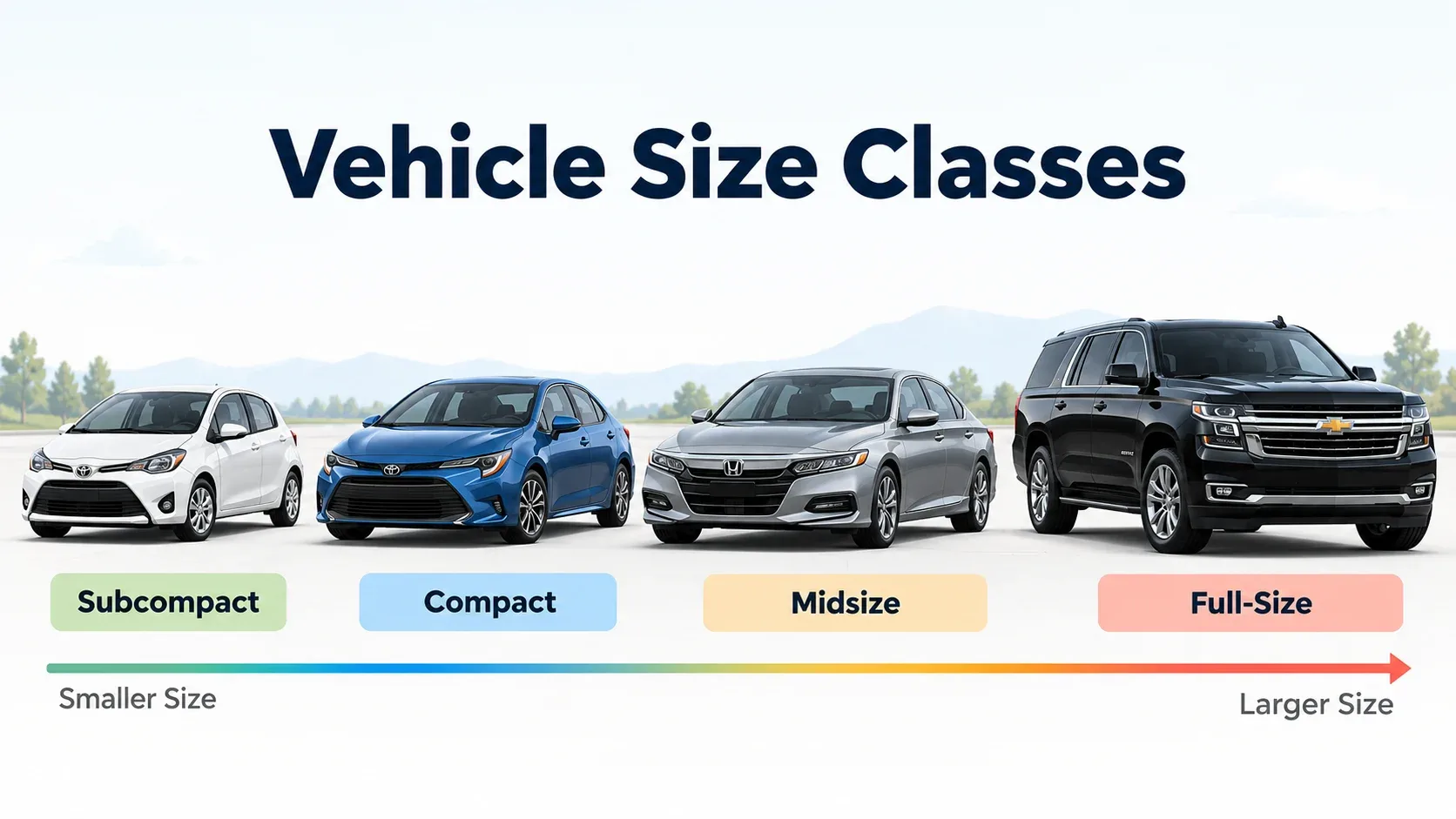
Vehicle Size Classes
Size class and body style are different things. A sedan can be compact, midsize, or full-size, just as an SUV can exist in several size categories.
Subcompact
Small footprint, often optimized for city use.
Compact
Balances size, passenger space and fuel efficiency.
Midsize
More passenger and cargo space than compact models.
Full-Size
Largest mainstream size category with greater interior space.
Body Style vs Size vs Powertrain
One of the most important ideas when comparing the many varieties of cars is that body style, size, drivetrain, and powertrain describe different characteristics.
| Classification | Example | What It Describes |
|---|---|---|
| Body Style | Crossover | Shape and layout |
| Size | Compact | Overall vehicle size category |
| Powertrain | Hybrid | How the vehicle creates propulsion |
| Drivetrain | AWD | Which wheels receive power |
| Purpose | Family / commuter | Typical intended use |
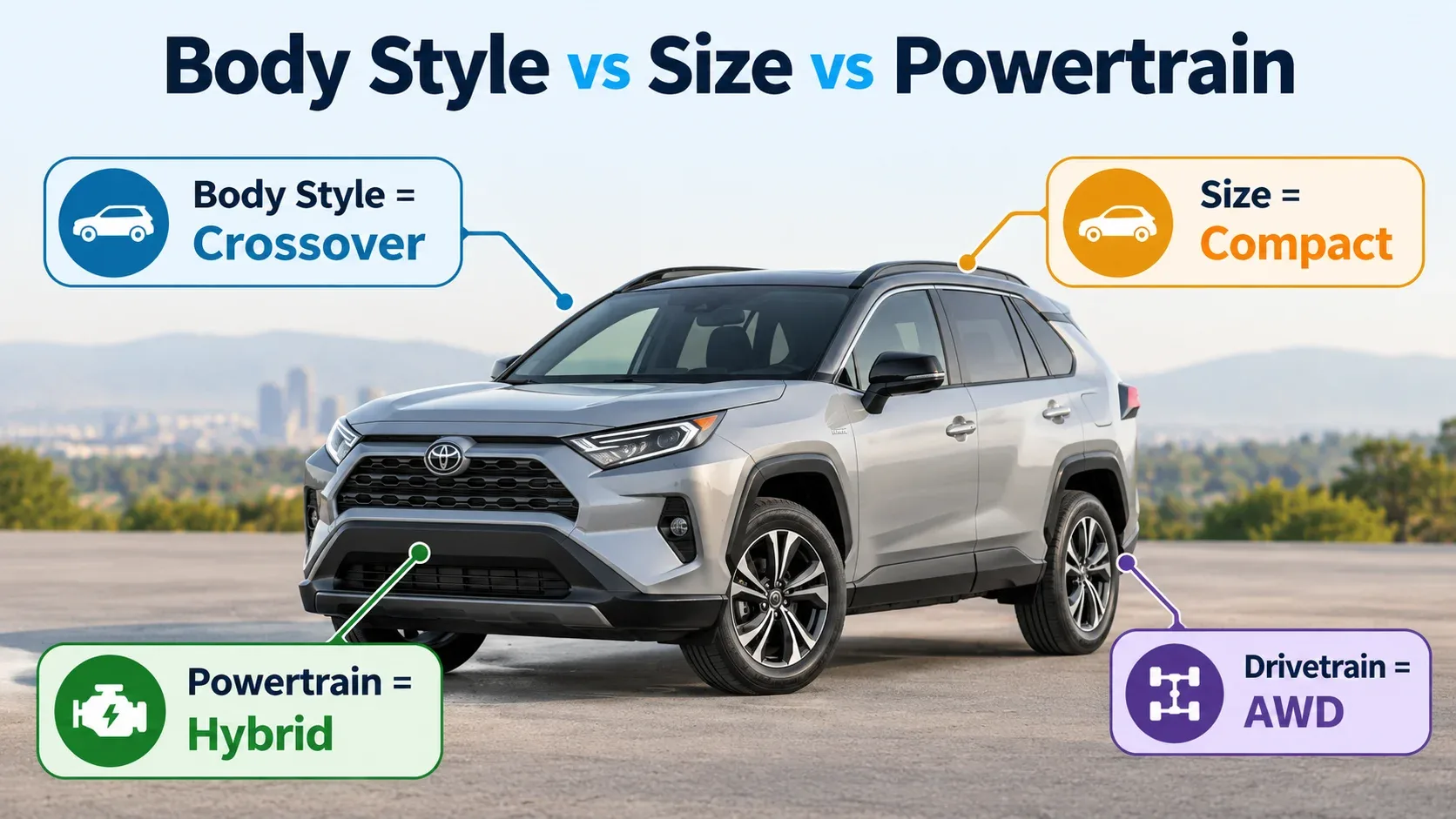
Gas, Hybrid and Electric Are Powertrains, Not Body Styles
Gasoline, hybrid and electric describe how a vehicle is powered. They do not define its body style.
For example:
- An electric vehicle can be a sedan.
- An electric vehicle can be a crossover.
- A hybrid can be an SUV.
- A gasoline vehicle can be a hatchback.
Different Varieties of Cars by Use
Another useful way to organize the different varieties of cars is by what drivers typically use them for.
Commuter Cars
Typically prioritize comfort, efficiency, and easy daily driving.
Family Cars
Prioritize passenger space, safety, cargo room, and easy access.
Performance Cars
Emphasize acceleration, handling, braking, and driver engagement.
Luxury Cars
Focus on comfort, materials, technology, refinement, and premium features.
City Cars
Small size and maneuverability make them practical in dense urban areas.
Utility Vehicles
Prioritize cargo, towing, passenger capacity, or rough-road capability.
Major Car Types Comparison
| Car Type | Main Feature | Passenger Space | Cargo Flexibility | Typical Use |
|---|---|---|---|---|
| Sedan | Separate trunk | Good | Moderate | Commuting / family |
| Hatchback | Rear hatch | Good | High | City / everyday |
| Coupe | Sporty profile | Low to moderate | Moderate | Style / performance |
| SUV | Taller body | High | High | Family / utility |
| Crossover | Car-based SUV-like layout | High | High | Everyday / family |
| Wagon | Extended roof | High | High | Family / cargo |
| Convertible | Retractable roof | Usually lower | Lower | Recreation |
| Minivan | Sliding doors / 3 rows | Very high | Very high | Family |
| Pickup | Open cargo bed | Varies | Very high for cargo | Work / towing |
Common Car Body Style Mistakes
How to Identify a Car’s Body Style
- Look at the roofline.
- Check whether the rear opens as a trunk lid or full hatch.
- Count the passenger doors, but do not rely on door count alone.
- Look at the cargo area behind the rear seats.
- Compare ride height and overall proportions.
- Check whether the vehicle has an open cargo bed.
- Remember that manufacturer marketing names may blur traditional definitions.
Frequently Asked Questions
What are the main types of cars?
Common car types include sedans, hatchbacks, coupes, SUVs, crossovers, wagons, convertibles, minivans, and sports cars.
What does body style of car mean?
Car body style describes the vehicle’s overall shape and the way its passenger and cargo areas are arranged.
What is the difference between a sedan and hatchback?
A sedan normally has a separate trunk, while a hatchback has a large rear hatch that opens into the passenger and cargo area.
What is the difference between an SUV and crossover?
Crossovers generally use passenger-car-style unibody construction, while some traditional SUVs use body-on-frame construction. However, marketing terminology is not always consistent.
Is a coupe always a two-door car?
Traditionally, coupes are associated with two doors, but some manufacturers now use the term for four-door models with coupe-like rooflines.
Is an electric vehicle a type of car body style?
No. Electric describes the vehicle’s powertrain. An EV can be a sedan, hatchback, crossover, SUV, pickup, or another body style.
What is the difference between a hatchback and wagon?
A wagon usually has a longer roof and extended rear cargo area, while a hatchback is generally shorter and more compact.
Can one vehicle belong to more than one category?
Yes. A vehicle might simultaneously be a compact crossover, hybrid, AWD vehicle, and family car.
Final Takeaway
Understanding the many varieties of cars becomes much easier when you separate body style, size, powertrain, drivetrain, and purpose.
- Body style describes the vehicle’s shape and layout.
- Size class describes how large the vehicle is.
- Powertrain describes how the vehicle is powered.
- Drivetrain describes which wheels receive power.
- Purpose describes what the vehicle is mainly designed to do.
A sedan, hatchback, SUV, crossover, wagon, or minivan can also be compact, midsize, gasoline-powered, hybrid, electric, front-wheel drive, or all-wheel drive. That is why understanding each classification separately gives a much clearer picture of the different types of vehicles.