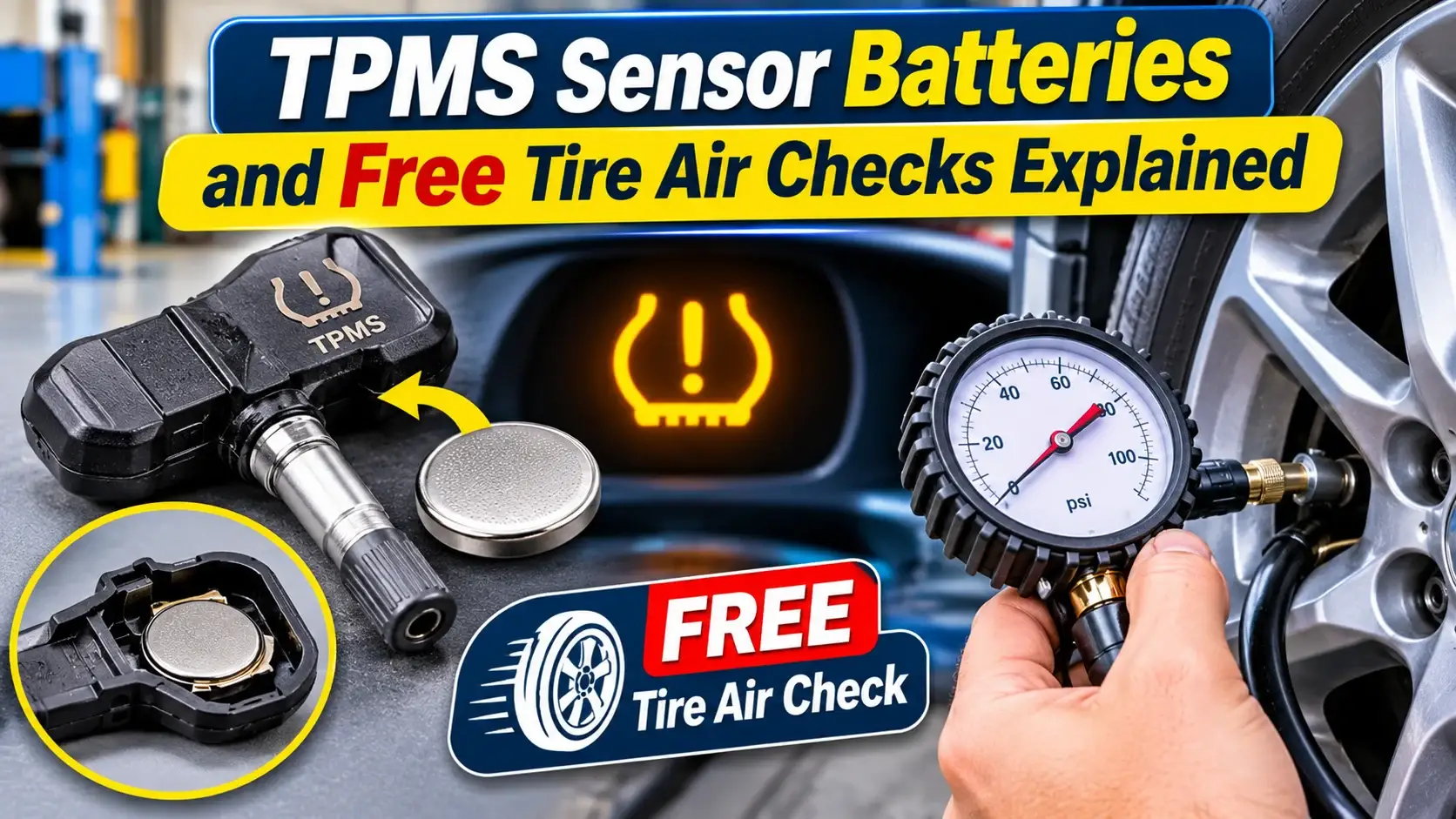
A tire pressure warning light does not always mean your tire is flat. Sometimes your tires simply need more air. Other times, a faulty sensor or depleted TPMS battery may be responsible.
If you are looking for Discount Tire free air services or wondering whether there is a battery in a tire pressure sensor, the answers are straightforward. Discount Tire provides free tire pressure checks and inflation, while most direct TPMS sensors contain sealed batteries that eventually require sensor replacement.
This guide explains how the free air service works, how TPMS sensor batteries operate, how long they last, and what to do when your dashboard warning will not go away.
Quick Answer: Free Air Checks and TPMS Sensor Batteries
Free tire air: Discount Tire checks and adjusts tire pressure at no charge. You do not need to purchase tires or schedule an appointment.
TPMS battery: Direct tire pressure sensors have internal batteries that commonly last around 6–10 years, depending on the sensor and conditions.
Failed battery: Most internal TPMS batteries cannot be replaced separately. A technician normally replaces the complete sensor and performs any required programming or relearn.
Does Discount Tire Offer Free Air Checks?
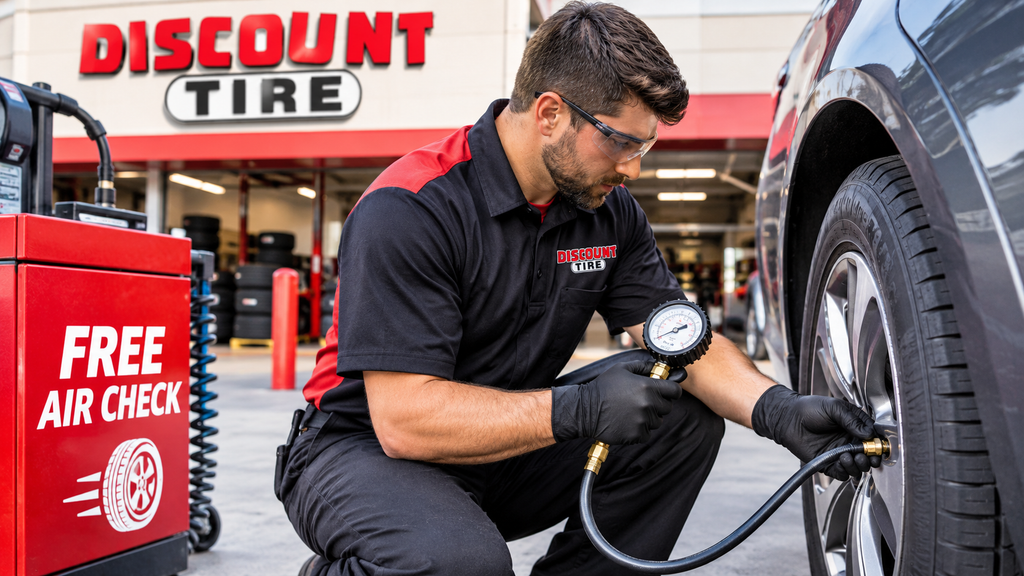
Yes. Discount Tire offers free tire air pressure checks and inflation at its U.S. stores. The service is available regardless of where you purchased your tires.
You can visit during regular store hours, follow the signs for the designated Air Check lane, and have a technician inspect your tire pressures. No appointment is required for this basic service.
What Happens During a Free Tire Air Check?
The service normally includes the following:
- A technician measures your tires’ current air pressure.
- The recommended pressure is determined from your vehicle’s specifications.
- Air is added or adjusted as needed.
- The technician performs a brief visual tread and tire-condition check.
- You are informed if additional inspection may be necessary.
The air check is generally a quick drive-up service, although busy periods may create a wait.
Does Discount Tire Check TPMS Lights for Free?
Discount Tire also advertises complimentary basic TPMS checks and warning-light resets. However, more involved diagnostics, sensor programming, valve repairs, or replacement parts may have separate charges.
If your tire pressure is correct but the warning persists, ask the store what its initial inspection covers and request an estimate before approving additional work.
What Is the Correct Tire Pressure for Your Car?
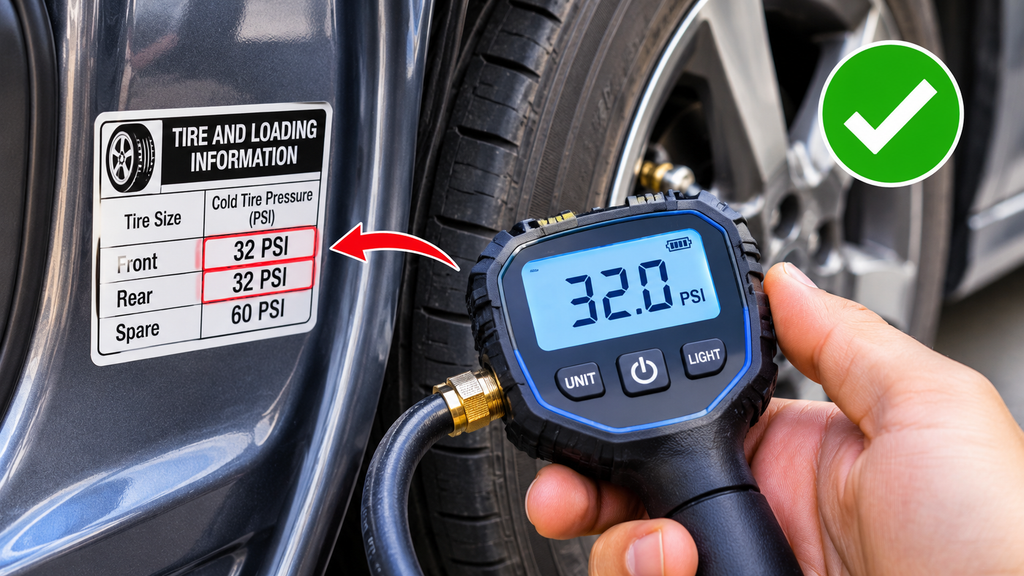
Your correct tire pressure is usually listed on a sticker inside the driver’s door jamb or in the owner’s manual.
Use the recommended cold tire pressure, measured before driving or after the tires have cooled sufficiently. The maximum pressure printed on the tire sidewall is not the vehicle’s recommended inflation setting.
Why Checking Tire Pressure Matters
Underinflated tires can increase rolling resistance, accelerate tire wear, affect handling, and generate excessive heat. Overinflation can also affect handling and lead to uneven wear.
Cold weather commonly reduces tire pressure. A warning that appears on a cold morning may be caused by falling pressure rather than a defective sensor.
The National Highway Traffic Safety Administration recommends checking tires monthly with an accurate pressure gauge, even when the vehicle has TPMS.
Is There a Battery in a Tire Pressure Sensor?
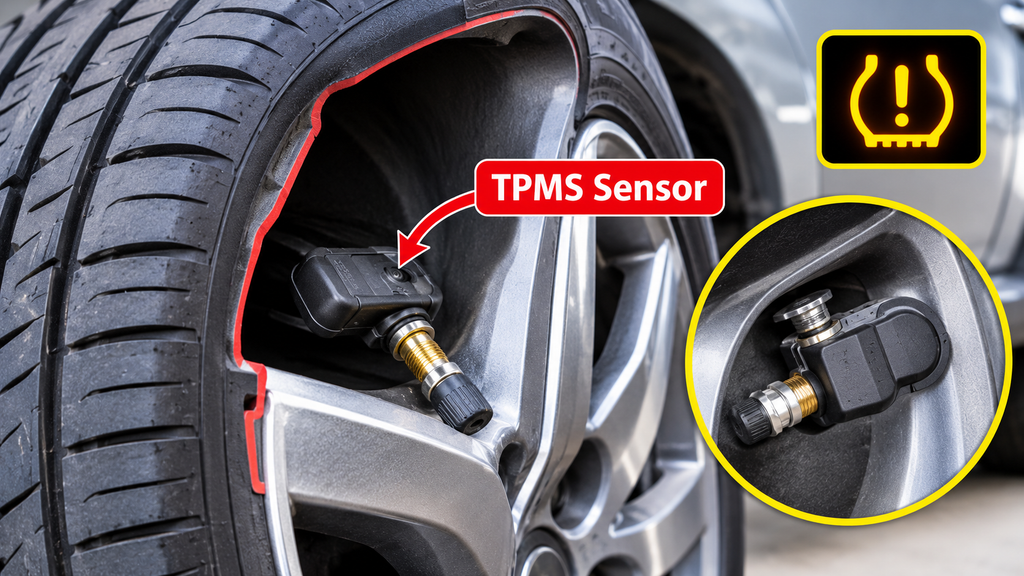
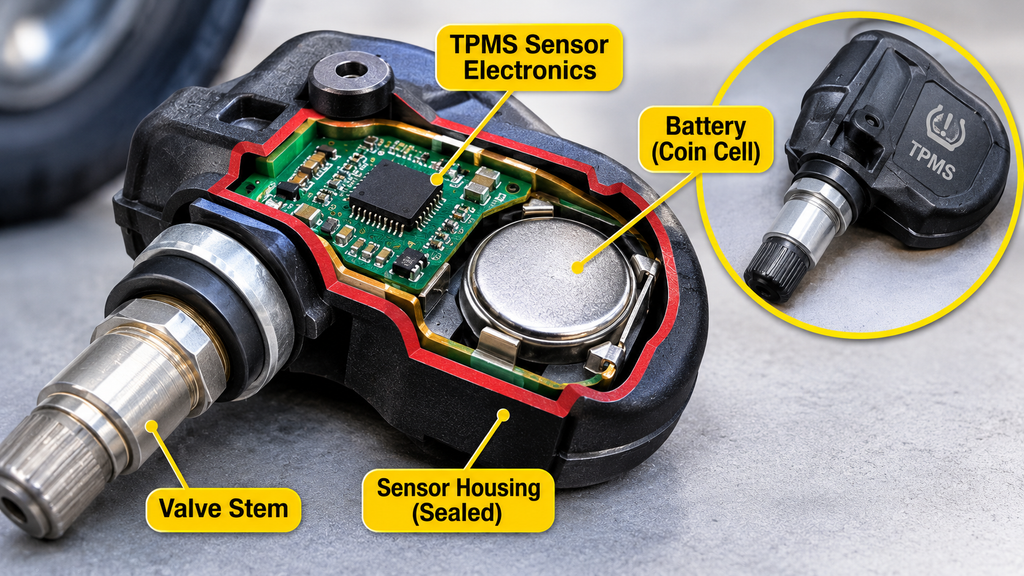
Yes, direct TPMS sensors contain small internal batteries. These sensors are usually mounted inside the tire-and-wheel assembly, often attached to the valve stem.
The sensor measures tire pressure and transmits information wirelessly to the vehicle’s monitoring system. Its internal battery powers the electronics and wireless communication.
Direct TPMS vs. Indirect TPMS
Not every vehicle uses battery-powered sensors inside the wheels.
| Feature | Direct TPMS | Indirect TPMS |
|---|---|---|
| How it works | Measures pressure inside the tire | Uses wheel-speed information to estimate underinflation |
| Battery in wheel sensor | Yes | No separate tire-pressure sensor battery |
| Common service | Sensor testing, replacement or relearn | Calibration and related system diagnosis |
Where Is the Sensor Battery Located?
In direct TPMS, the battery is sealed within the sensor housing behind the wheel rim. It is not accessible from the outside through the valve cap.
Removing a tire is generally necessary to replace a failed wheel-mounted sensor.
How Long Does a TPMS Sensor Battery Last?
The battery inside a tire pressure sensor commonly lasts approximately 6–10 years. Some sensors last longer, while others fail earlier.
Battery life depends on sensor design, operating conditions, transmission behavior, and age. There is no universal replacement interval that applies to every vehicle.
Can You Replace Only the TPMS Battery?
In most original-equipment and replacement direct TPMS sensors, the battery is sealed inside the electronic assembly and is not designed to be replaced separately.
When it reaches the end of its service life, the usual professional solution is to replace the sensor assembly.
Do not confuse the sensor’s sealed battery with serviceable components such as the valve core, valve cap, sealing grommet, or valve stem. Those parts may be available separately through a TPMS service kit, depending on the sensor design.
Signs of a Dead TPMS Sensor Battery
A failed sensor battery can prevent the sensor from transmitting pressure information. However, warning lights do not identify battery failure with certainty.
Similar symptoms can result from sensor damage, incompatible wheels, communication faults, or incomplete sensor registration after tire service.
Low Tire Pressure vs. TPMS Malfunction
| Warning | Possible Meaning | What to Do |
|---|---|---|
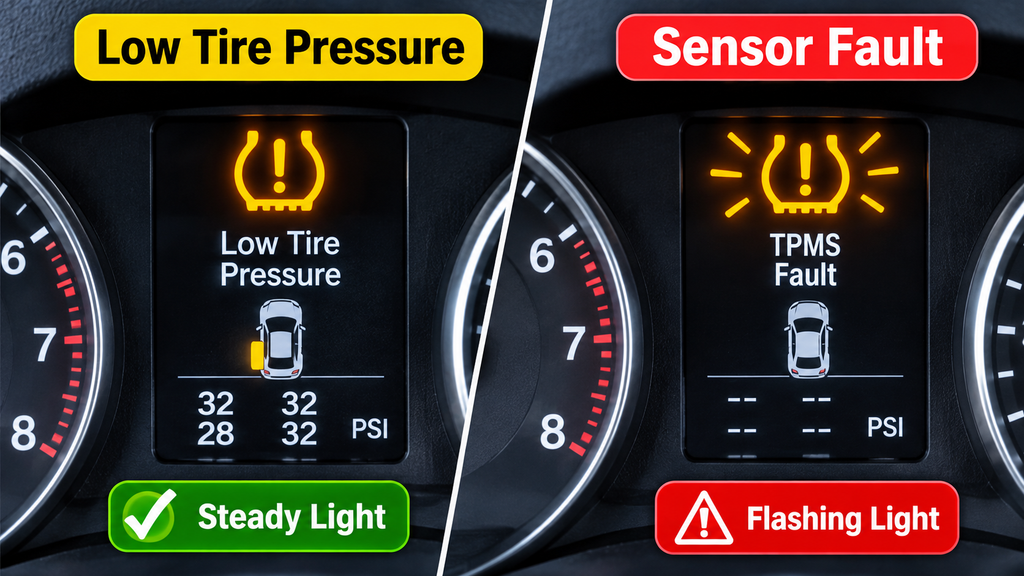
| Steady TPMS light | One or more tires may be underinflated | Check actual tire pressures |
| Flashes for 60–90 seconds, then stays on | Possible monitoring system malfunction | Check pressure and arrange TPMS diagnosis |
| Warning returns after inflation | Possible slow leak, reset requirement, or malfunction | Inspect tires and follow vehicle-specific instructions |
This warning pattern is described by NHTSA for U.S. TPMS-equipped vehicles. Consult the owner’s manual for your exact vehicle.
How Is a Failed TPMS Sensor Battery Repaired?
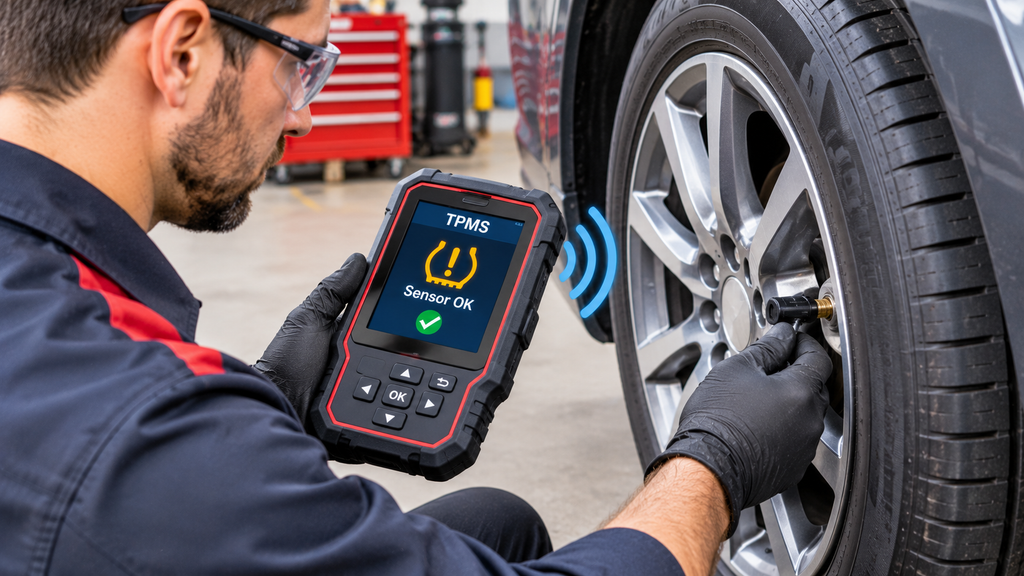
If the pressure is correct but the TPMS warning persists, a technician can use a compatible diagnostic or sensor activation tool to identify communication problems.
Professional Sensor Replacement Process
- Test the sensors: Check whether each wheel-mounted sensor communicates correctly.
- Confirm the fault: Determine whether the problem involves the sensor, battery, programming, or another component.
- Replace the sensor if necessary: Remove the tire from the wheel and install a compatible replacement assembly.
- Perform a relearn: Program or register the sensor when required by the vehicle.
- Verify operation: Check tire pressure, sensor communication, and warning-light status.
Does Resetting TPMS Fix a Dead Battery?
No. A reset or relearn can correct certain calibration or sensor-registration problems, but it cannot restore power to a depleted internal battery.
If a sensor has stopped transmitting because its battery is exhausted, replacing the sensor is usually necessary.
Free Air Check vs. TPMS Sensor Replacement: What’s the Cost?
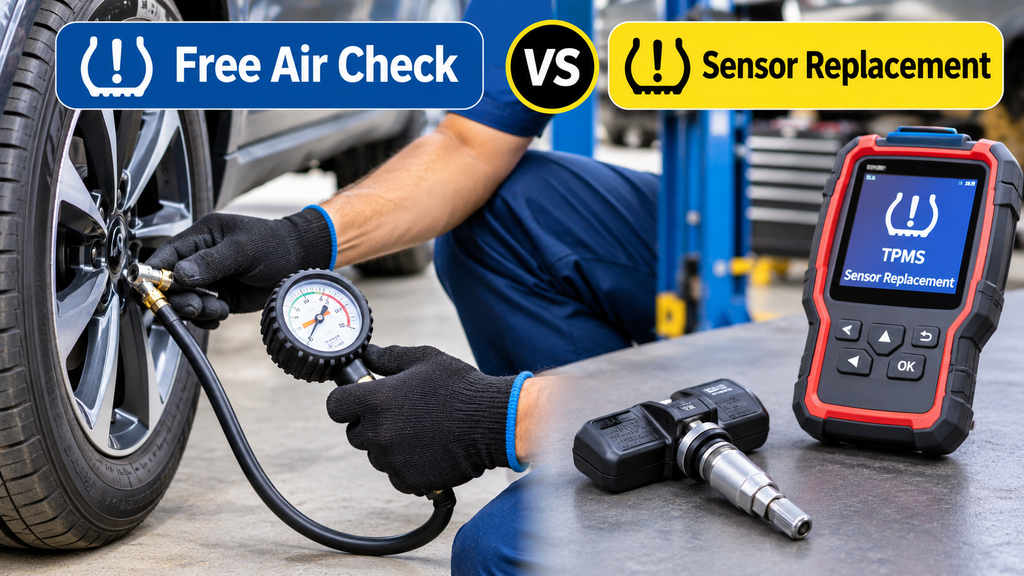
Free tire inflation and TPMS sensor replacement are different services. Drivers should understand the difference before visiting a tire shop.
| Service | Discount Tire Pricing Guidance |
|---|---|
| Tire air-pressure check | Free |
| Tire inflation | Free |
| Basic TPMS warning check | Generally complimentary; confirm local policy |
| Advanced diagnostics or programming | May involve a service charge |
| Replacement TPMS sensor | Price varies by vehicle and sensor |
TPMS replacement prices depend on sensor compatibility, parts, labor, and programming requirements. Ask for an itemized quote before authorizing replacement.
Some sensors previously purchased through Discount Tire may qualify for a specific sensor battery-life guarantee. Eligibility depends on the purchase and applicable guarantee terms, so free air service alone should not be interpreted as free sensor replacement.
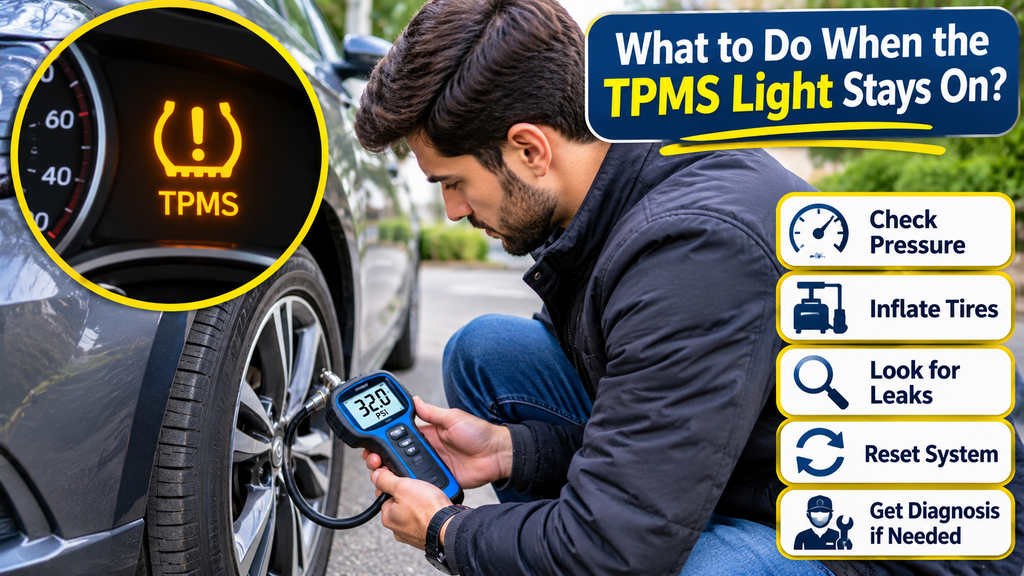
What Should You Do When the TPMS Light Stays On?
Follow these steps before assuming the sensor battery has failed.
A Simple TPMS Troubleshooting Checklist
- Check for immediate danger. If a tire is visibly flat, rapidly losing air, or affecting handling, stop safely and arrange assistance.
- Measure actual tire pressure. Use a reliable gauge and compare the reading with the driver’s door-jamb placard.
- Correct the pressure. Inflate according to the manufacturer’s cold-pressure specification.
- Look for recurring air loss. A puncture or leaking valve stem can cause repeated warnings.
- Follow reset instructions. Some vehicles require calibration or driving after pressure adjustment.
- Arrange diagnosis if necessary. If pressures are correct but the light flashes or remains on, have the TPMS checked.
Is It Safe to Drive With a Faulty TPMS Sensor?
A vehicle may still drive normally with a TPMS malfunction, but the system might not reliably warn you when a tire loses pressure.
Manually check tire pressure until the monitoring system is repaired. Never assume the tires are correctly inflated just because they look normal.
If the warning is accompanied by severe pressure loss, vibration, unusual handling, or visible tire damage, stop in a safe location rather than continuing to drive.
Frequently Asked Questions
Does Discount Tire fill tires with air for free?
Yes. Discount Tire offers free tire pressure checks and inflation during store hours, without requiring a tire purchase.
Do I need an appointment for Discount Tire free air?
No. You can normally drive into the designated Air Check lane during regular operating hours.
Does every tire pressure sensor have a battery?
No. Direct TPMS sensors use internal batteries, while indirect TPMS systems estimate underinflation using wheel-speed information and do not have separate pressure sensors inside the tires.
Can I change the battery inside a TPMS sensor myself?
Most TPMS sensor batteries are sealed and not designed for separate replacement. A professional typically replaces the entire sensor assembly.
How do I know if my TPMS battery is dead?
A sensor that no longer communicates may have a depleted battery, but other faults are possible. A TPMS activation tool and proper diagnosis are needed to identify the cause.
Will adding air turn off the TPMS light?
It may turn off after properly inflating the tires if low pressure caused the warning. Some vehicles require a reset or driving cycle. Adding air will not repair a failed sensor battery.
Does Discount Tire replace TPMS sensor batteries for free?
Free air checks do not include routine replacement of failed sensor assemblies. A qualifying sensor purchased under an applicable Discount Tire guarantee may have separate coverage. Confirm eligibility and charges with the store.
Should I replace all four TPMS sensors together?
Not necessarily. If one sensor fails, a technician can check the remaining sensors. Replacing additional aging sensors may reduce future visits, but it is not always required.
Final Takeaway
Discount Tire’s free tire air checks are a convenient way to confirm that your tires are inflated correctly. No purchase or appointment is necessary for the basic pressure-check service.
However, if your warning light continues after the tires have been properly inflated, the problem may involve a faulty TPMS sensor, its sealed internal battery, or another monitoring-system issue.
Start with the tire pressure, then diagnose the sensor. This approach helps avoid unnecessary replacement and ensures a genuine tire-pressure problem is not overlooked.