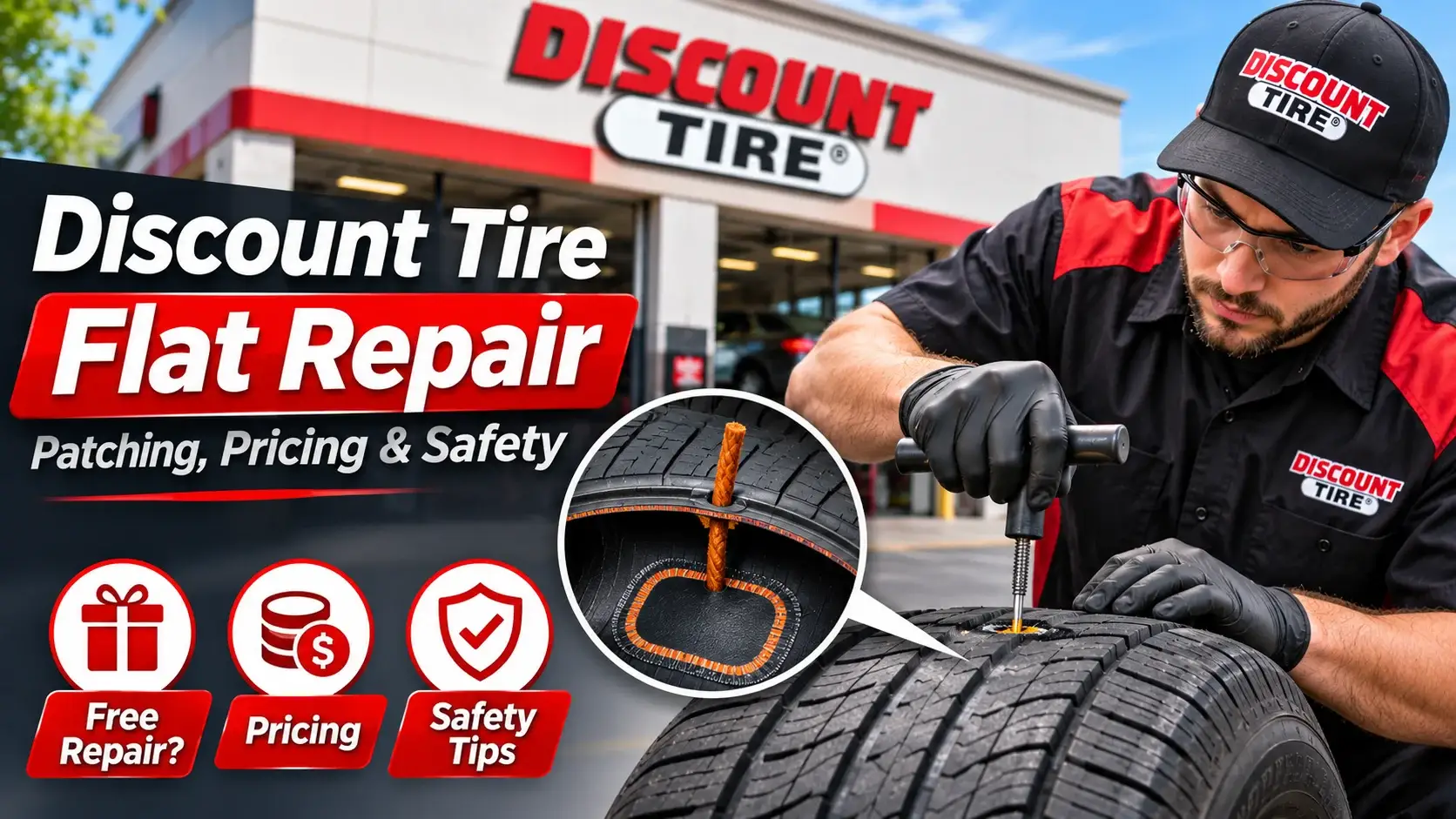
A nail in your tire does not always mean you need a replacement. If the puncture is small and located in a repairable part of the tread, a professional repair may restore the tire to service.
But does Discount Tire patch tires for free? Yes. Discount Tire offers free flat tire repairs for eligible punctures, even when you purchased your tires somewhere else. The tire must first pass an inspection to confirm that repairing it is safe.
This guide explains Discount Tire flat repair pricing, which punctures qualify, how the patching process works, how long a visit might take, and when tire replacement is necessary.
Quick Answer: Is Discount Tire Flat Repair Free?
Yes. Discount Tire repairs most safely repairable punctures at no charge, regardless of where the tire was originally purchased. Technicians inspect the tire before approving the repair. Damage to the shoulder, sidewall, or internal structure may require replacement instead.
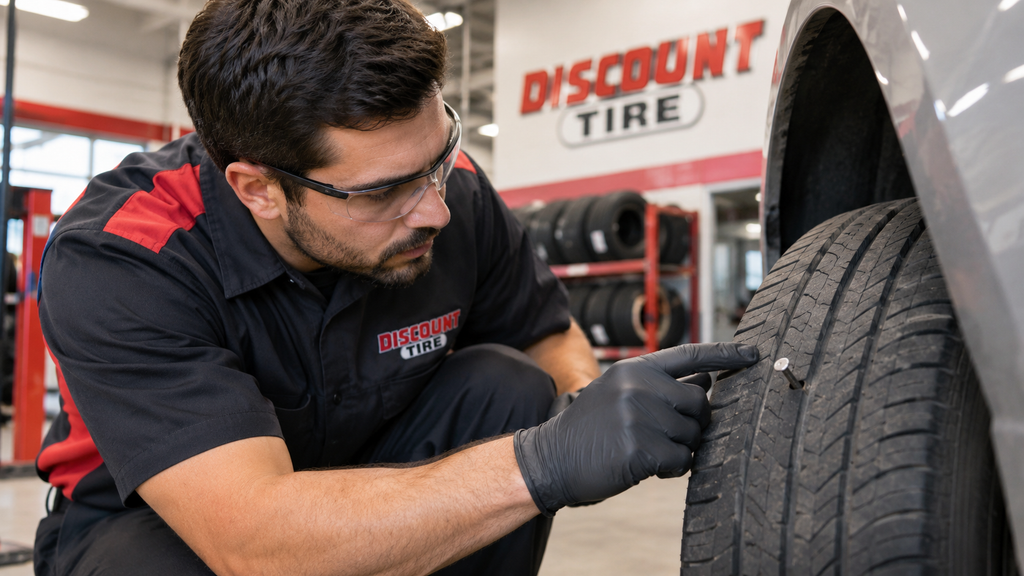
Does Discount Tire Patch Tires for Free?
Discount Tire’s published policy states that free flat repair is available for qualifying punctures. You do not need to have purchased the tire from Discount Tire, and a new tire purchase is not required.
What Is Included in the Free Repair?
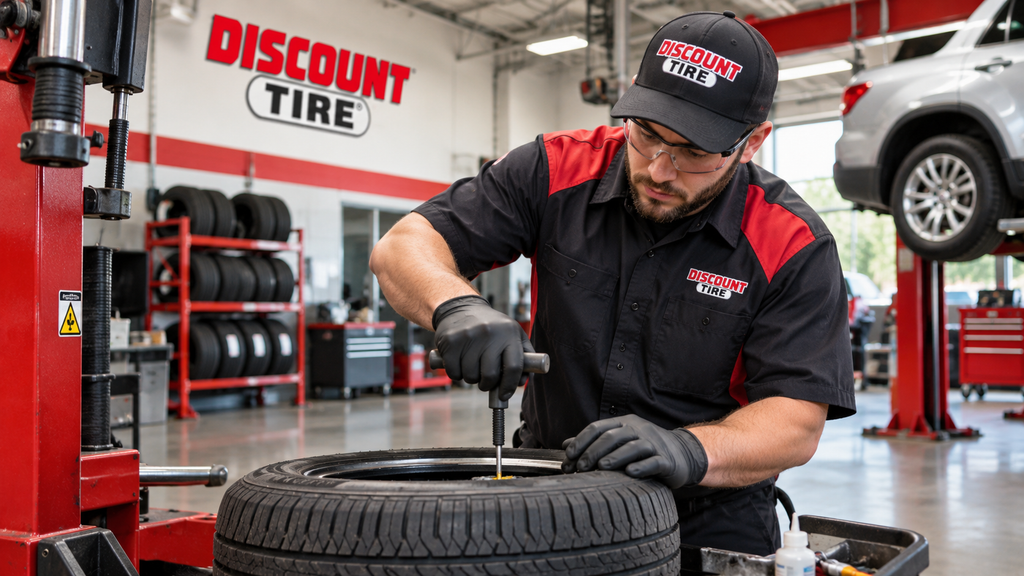
For a tire that passes inspection, the service normally involves checking the damage, removing the tire from the wheel, performing an internal patch-and-plug repair, and checking for leaks before returning the tire to service.
Discount Tire also advertises free tire safety inspections and air-pressure checks.
When Might You Have to Pay?
The free repair policy does not mean every tire problem has a free solution. If a tire is unsafe to repair, you may need to purchase a replacement. Other repairs, components, or services outside the standard flat-repair offering may also have separate charges.
| Service | Typical Cost Policy |
|---|---|
| Eligible puncture repair | Free |
| Tire safety inspection | Free |
| Air pressure check | Free |
| Replacement tire | Paid unless applicable protection covers it |
| Separate TPMS or component replacement | Ask the store for a quote |
For a specific service or unusual wheel-and-tire combination, confirm the price with your local store before authorizing additional work.
What Tire Damage Can Discount Tire Repair?
The location and size of a puncture are major factors in deciding whether a tire can be repaired. Discount Tire follows U.S. Tire Manufacturers Association (USTMA) repair recommendations.
Repairable Punctures
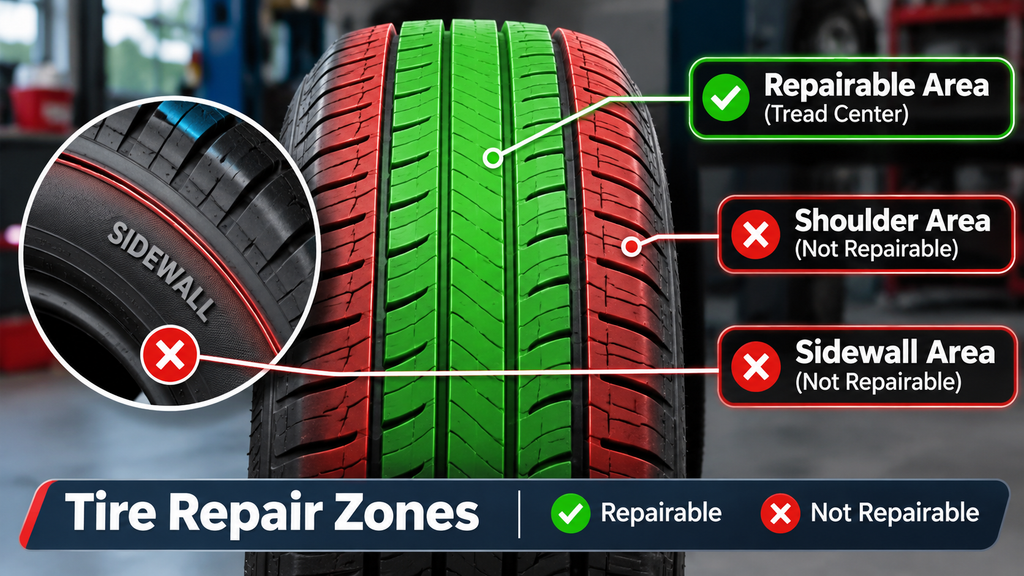
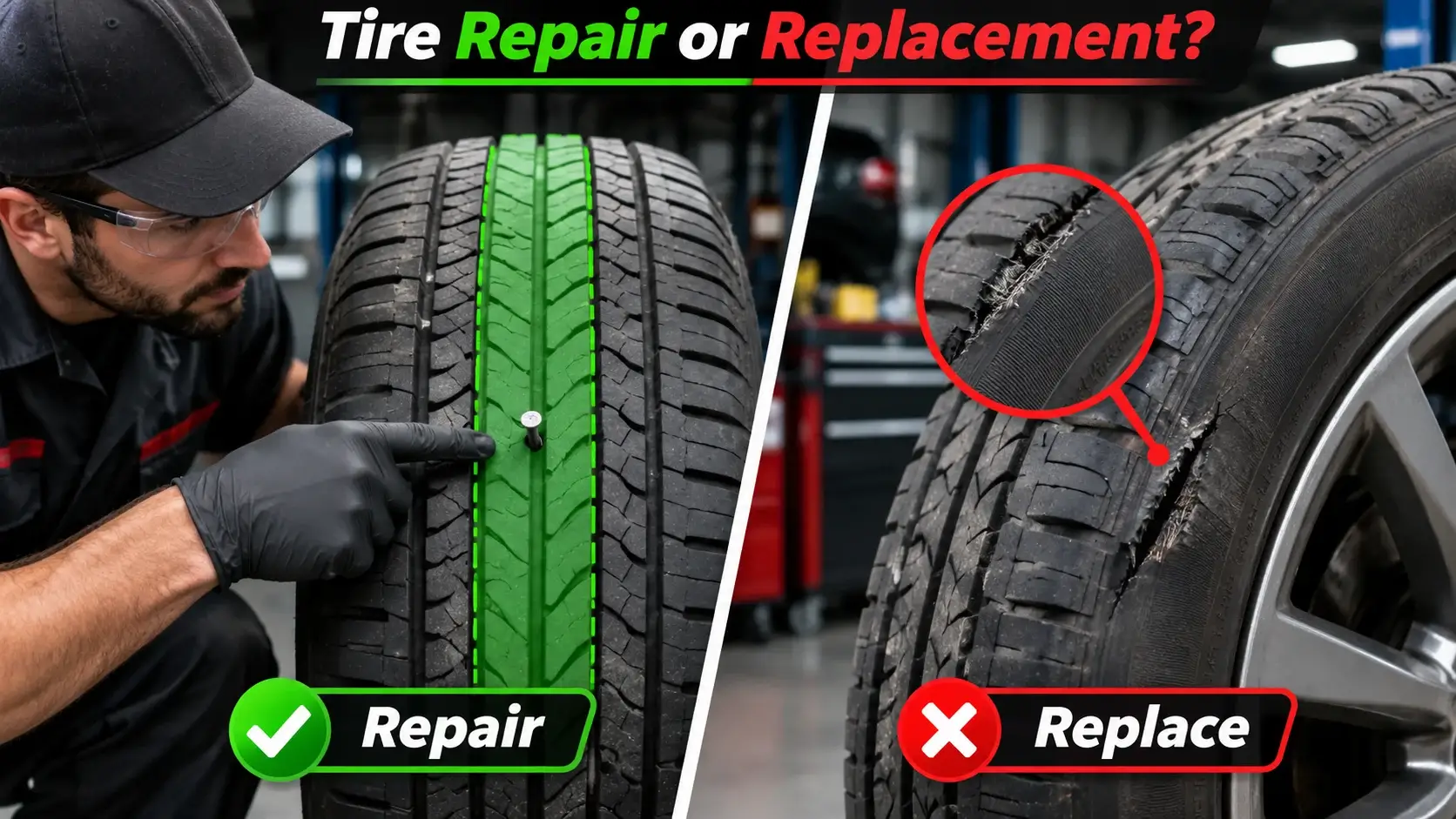
A tire may qualify when the puncture is confined to the designated central tread repair area, measures no more than ¼ inch (6 mm) in diameter, and has not caused other structural or internal damage.
A small nail or screw in the center of the tread is a common example, but the technician must still inspect the tire before deciding.
When a Tire Cannot Be Patched
Some types of damage make a conventional puncture repair unsafe:
- Sidewall punctures, cuts, or bulges.
- Shoulder damage or punctures extending into the belt-edge area.
- Punctures larger than ¼ inch (6 mm).
- Damage caused by driving on a flat or severely underinflated tire.
- Repairs that would overlap an existing repair.
- Internal structural damage or an existing improper repair.
- Excessively worn or otherwise unsafe tires.
What About Run-Flat Tires?
Run-flat tires may have additional inspection and repair restrictions. Their repairability depends on the tire manufacturer’s policy, the extent of any low-pressure driving, and the inspection findings. Some run-flat tires cannot be safely repaired after pressure loss.
How Does Discount Tire Repair a Flat Tire?
A proper tire repair at Discount Tire is more than pushing a plug into the visible hole. The tire must be taken off the wheel for a complete inspection and an internal repair.
The Professional Repair Process
- Inspect the puncture: The technician identifies the injury location, size, and possible air-loss cause.
- Remove the tire: The tire is dismounted so the inner liner and internal structure can be inspected.
- Confirm repair eligibility: Unsafe damage, overlapping repairs, and other disqualifying conditions are checked.
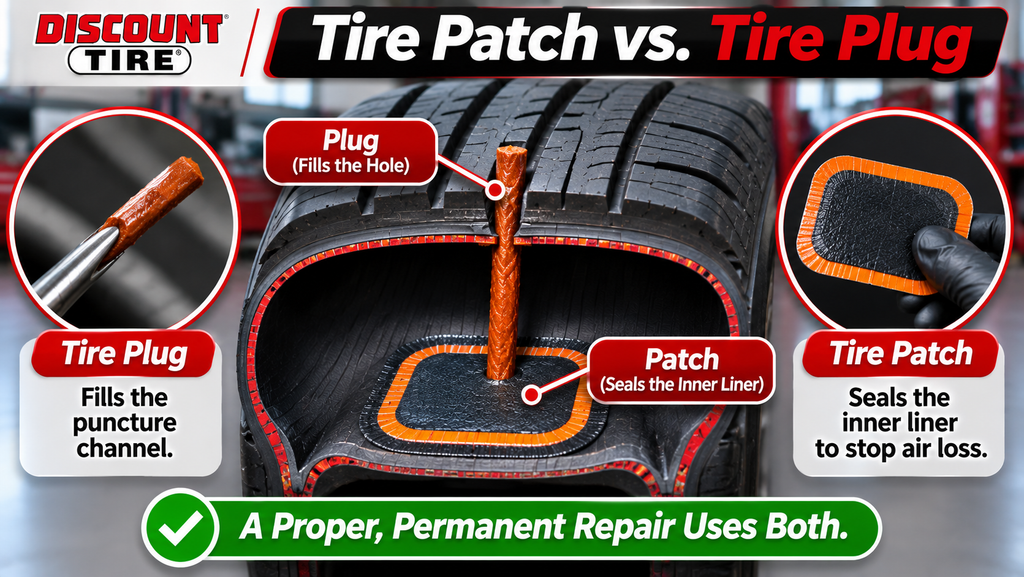
- Apply the repair: A rubber stem fills the puncture channel while a patch seals the inner liner.
- Reassemble and verify: The tire is remounted, checked for leaks, balanced as part of the published repair process, and returned to service if satisfactory.
Discount Tire Patch vs. Tire Plug
A tire plug fills the puncture channel, while an internal patch seals the inner liner. Both functions are required for a proper permanent puncture repair under USTMA recommendations.
A combination repair unit can accomplish both. An exterior-only plug or a patch used alone is not considered an acceptable permanent repair under these guidelines.
How Long Does Discount Tire Flat Repair Take?
The actual repair time and total store visit can vary. Tire condition, damage complexity, store workload, staffing, and whether a replacement is necessary all affect the timeline.
Because the technician must remove and inspect the tire, do not assume that a proper repair will be finished in only a few minutes.
Can You Walk In Without an Appointment?
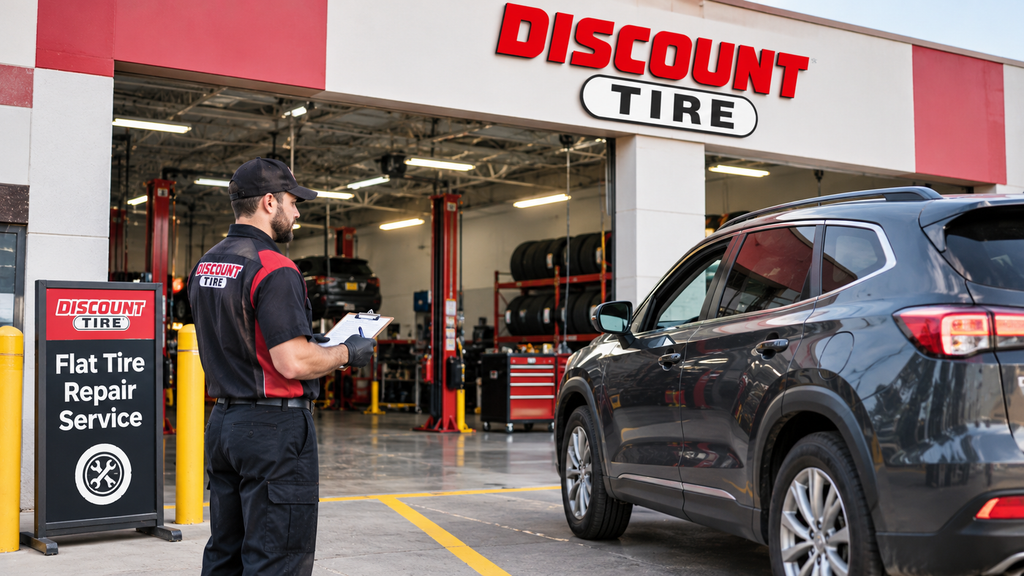
Yes. Discount Tire accepts walk-ins for flat repairs, but scheduling an appointment is recommended if you want to reduce waiting time.
Is It Safe to Drive With a Flat or Patched Tire?
Before the Tire Is Repaired
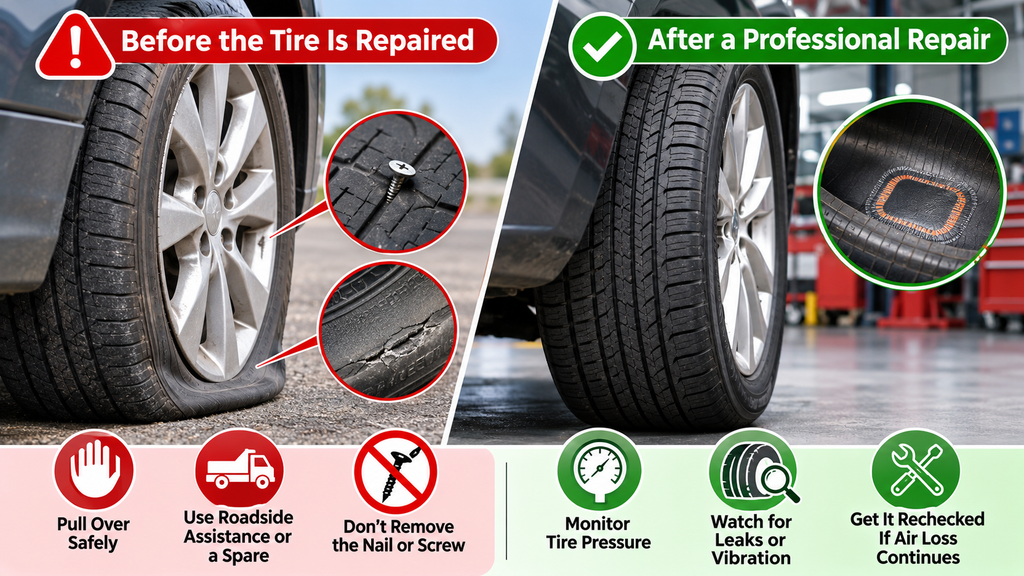
If a tire is flat, losing air rapidly, visibly damaged, or causing unusual handling, pull over safely. Continuing to drive can damage the sidewalls and internal structure, potentially turning a repairable puncture into a tire that must be replaced.
Use roadside assistance or an approved spare tire when appropriate. If you find a nail or screw, avoid pulling it out on the roadside simply to inspect the hole; doing so may cause faster air loss.
After a Professional Repair
A tire that has passed inspection and received an approved internal repair can generally return to normal service, subject to the tire manufacturer’s restrictions.
Monitor tire pressure and watch for recurring leaks, vibration, or handling changes. If the tire continues losing air, have it inspected again rather than repeatedly inflating it and continuing to drive.
Free Flat Repair vs. Discount Tire Road Hazard Certificates
The free flat-repair service and Discount Tire’s optional Certificate for Repair, Refund or Replacement are different offerings.
| Free Flat Repair | Optional Certificate |
|---|---|
| Available for eligible repairable punctures | Additional protection purchased for qualifying tires |
| No previous tire purchase required | Coverage depends on certificate terms and eligibility |
| Does not automatically pay for replacement | May cover qualifying nonrepairable damage |
Check the current certificate agreement before purchasing. Free puncture repair is not a substitute for optional road-hazard replacement protection.
What Should You Do Before Visiting Discount Tire?
Use this quick checklist to prepare for a repair visit:
- Stop driving if the tire is flat or unsafe.
- Check tire pressure only when it is safe to do so.
- Do not remove a nail or screw unnecessarily.
- Remember whether you drove on the tire while it was underinflated.
- Tell the technician about tire sealant or previous puncture repairs.
- Check the store’s operating hours and consider making an appointment.
- Ask for the inspection findings if replacement is recommended.
How to Decide Between Repair and Replacement
If the puncture is small, within the approved tread area, and the tire is otherwise sound, professional repair may be appropriate. If there is structural, sidewall, shoulder, or extensive internal damage, replacement is the safer decision.
Frequently Asked Questions
Does Discount Tire patch tires for free?
Yes. Discount Tire offers free patch-and-plug repairs for punctures that meet applicable safety and repairability guidelines, including tires purchased elsewhere.
Can Discount Tire repair a tire with a nail?
Often, yes. A small nail puncture in the approved tread area may qualify, provided the tire has no additional damage and passes an internal inspection.
Does Discount Tire repair sidewall punctures?
No. Sidewall and shoulder punctures fall outside the generally approved puncture-repair area and normally require tire replacement.
Can Discount Tire repair a tire I bought elsewhere?
Yes. The retailer’s published free flat-repair policy does not require the tire to have been purchased at Discount Tire.
Does Discount Tire use patches or plugs?
Discount Tire describes an internal patch-and-plug procedure that seals both the puncture channel and the tire’s inner liner.
How long will a tire patch last?
A properly performed repair can remain serviceable, but no repair has a guaranteed lifespan. Tire condition, manufacturer restrictions, driving conditions, and later damage all matter.
Does Discount Tire fix run-flat tires?
Some run-flat tires may be eligible for repair, but others have manufacturer restrictions. A technician must determine whether inspection and the tire’s specific policy allow repair.
What if the tire cannot be repaired?
Discount Tire can explain why the tire failed inspection and discuss compatible replacement options. Replacement costs and any applicable protection coverage should be confirmed before purchase.
Final Verdict: Is Discount Tire Flat Repair Worth It?
Discount Tire’s free flat repair is worth considering when you have a small, repairable tread puncture. It provides professional inspection and an approved internal repair process without requiring you to purchase new tires.
However, safety comes first. If the puncture is outside the repairable area, the tire has been damaged by low-pressure driving, or an inspection reveals structural problems, replacement may be necessary.
Bottom line: Get the tire inspected, use free repair when it is safe, and never choose a patch over replacement merely to save money.