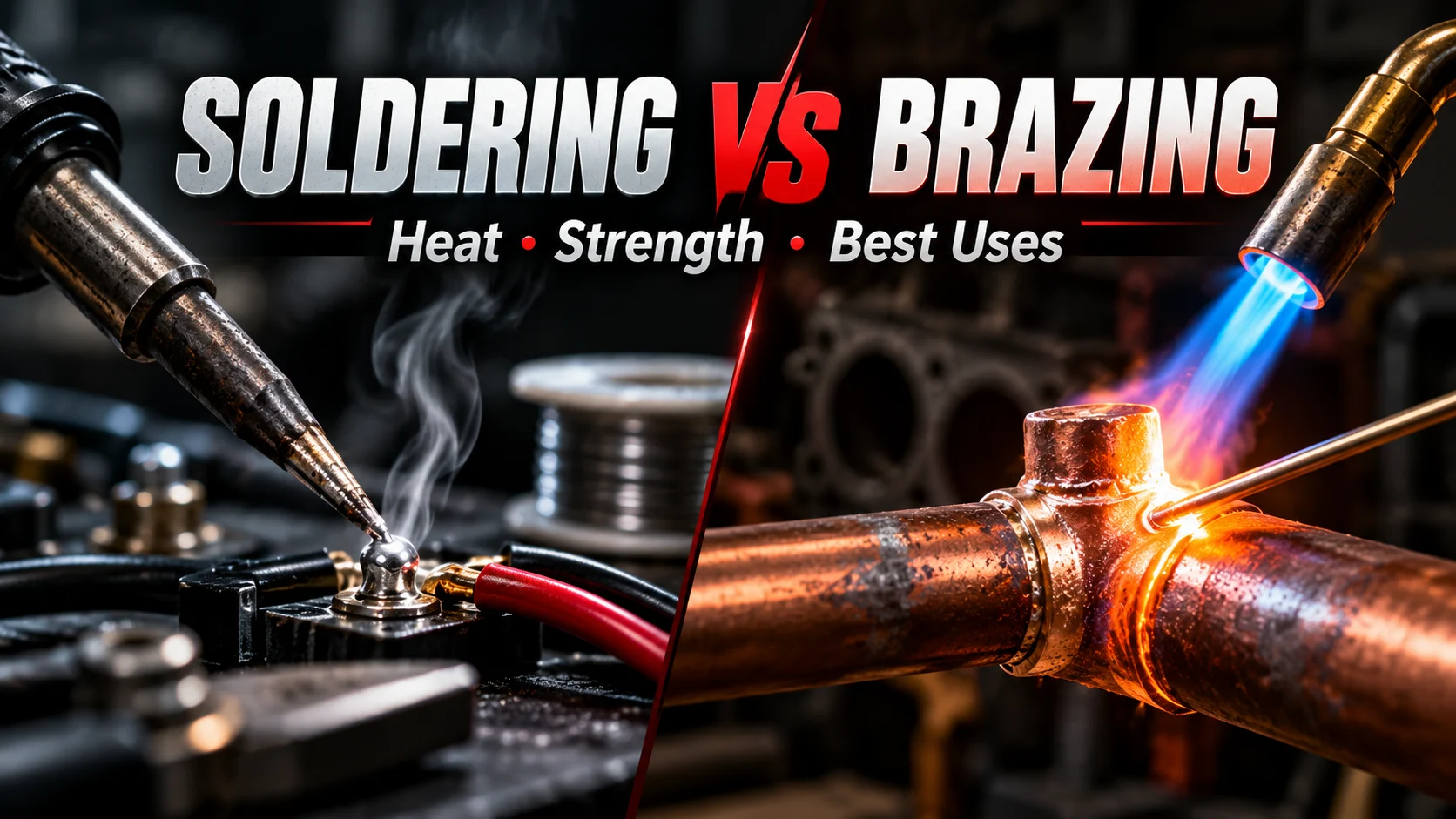
If you are trying to decide whether to solder or braze a metal joint, the right choice depends on the material, required strength, working temperature, joint design, and the conditions the finished part will face. Both methods join metals with a filler material, but they operate at different temperatures and suit different types of work.
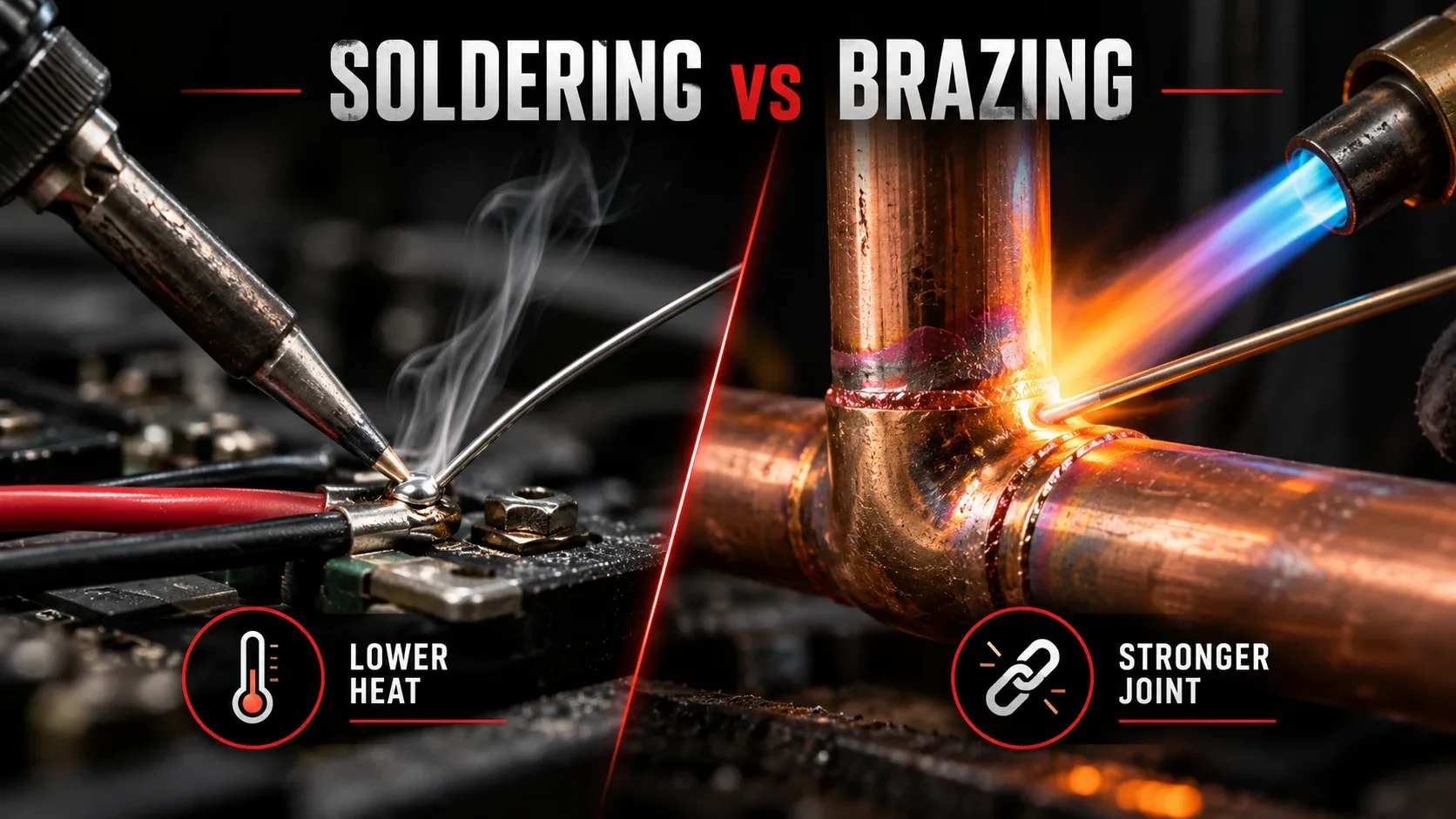
Soldering vs Brazing at a Glance
| Factor | Soldering | Brazing |
|---|---|---|
| Filler-metal melting temperature | Below about 450°C / 840°F | Above about 450°C / 840°F |
| Base metal melted? | No | No |
| Typical strength | Lower | Generally higher |
| Heat input | Lower | Higher |
| Common tools | Soldering iron or small torch | Torch, furnace, or induction heating |
| Common uses | Electronics, light plumbing, small repairs | HVAC, refrigeration, automotive, fabrication |
| Heat resistance | Lower | Higher |
What Is Soldering?
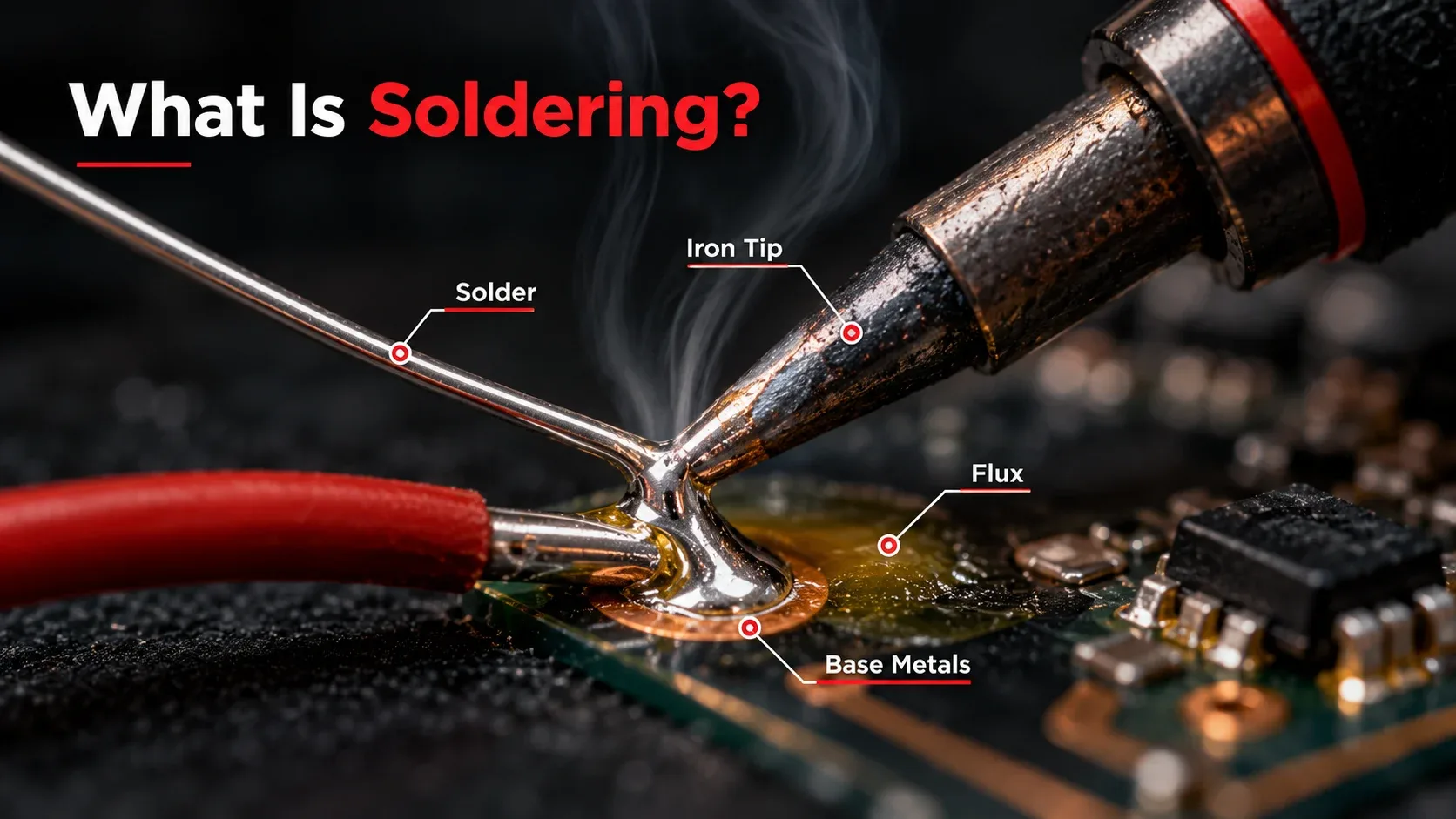
Soldering is a joining process in which a filler alloy called solder is melted between two metal surfaces. The base metals remain solid while the molten solder wets the surfaces and forms a bond as it cools.
Because soldering uses relatively low heat, it is useful for parts that could be damaged or distorted by higher temperatures. This is one reason it is widely used in electrical and electronic work.
Common Uses of Soldering
- Printed circuit boards
- Electrical wires and terminals
- Certain copper plumbing joints
- Jewelry and decorative metalwork
- Stained glass
- Small sheet-metal repairs
What Is Brazing?
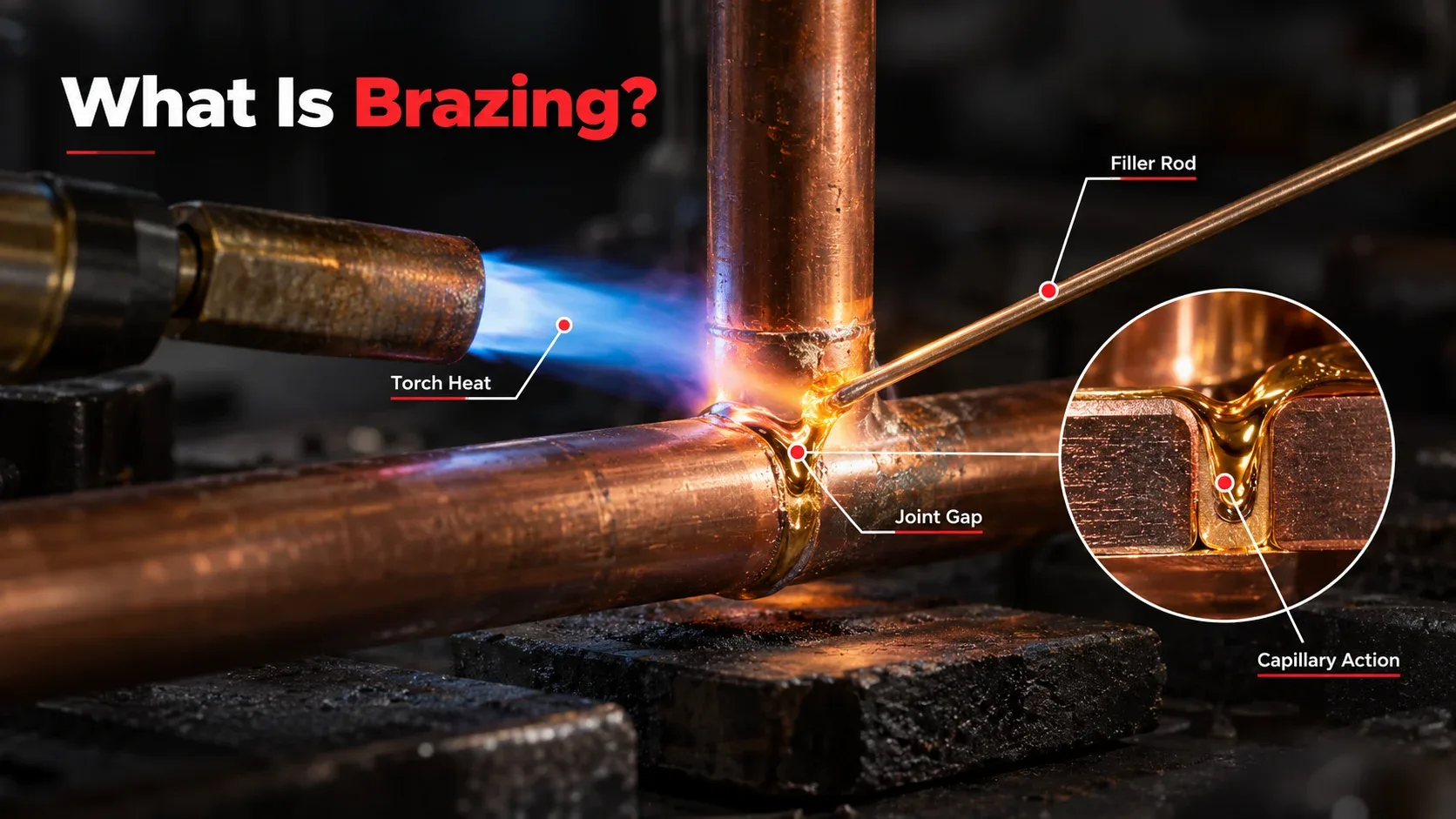
Brazing also joins metals using a filler material, but the filler alloy melts above approximately 450°C / 840°F. The base metals normally remain below their own melting temperatures.
When a brazed joint is properly prepared and heated, molten filler can flow through a narrow joint gap by capillary action. After cooling, it forms a strong metal-to-metal bond.
Common Uses of Brazing
- HVAC and refrigeration tubing
- Copper and brass fittings
- Automotive components
- Metal fabrication
- Carbide tool tips
- Bicycle and tubular assemblies
- Industrial piping systems
Soldering vs Brazing: What Is the Main Difference?
The main technical difference between soldering and brazing is the melting temperature of the filler material.
Soldering
Uses filler metals that melt below approximately 450°C / 840°F.
Brazing
Uses filler metals that melt above approximately 450°C / 840°F.
Soldering vs Brazing Temperature
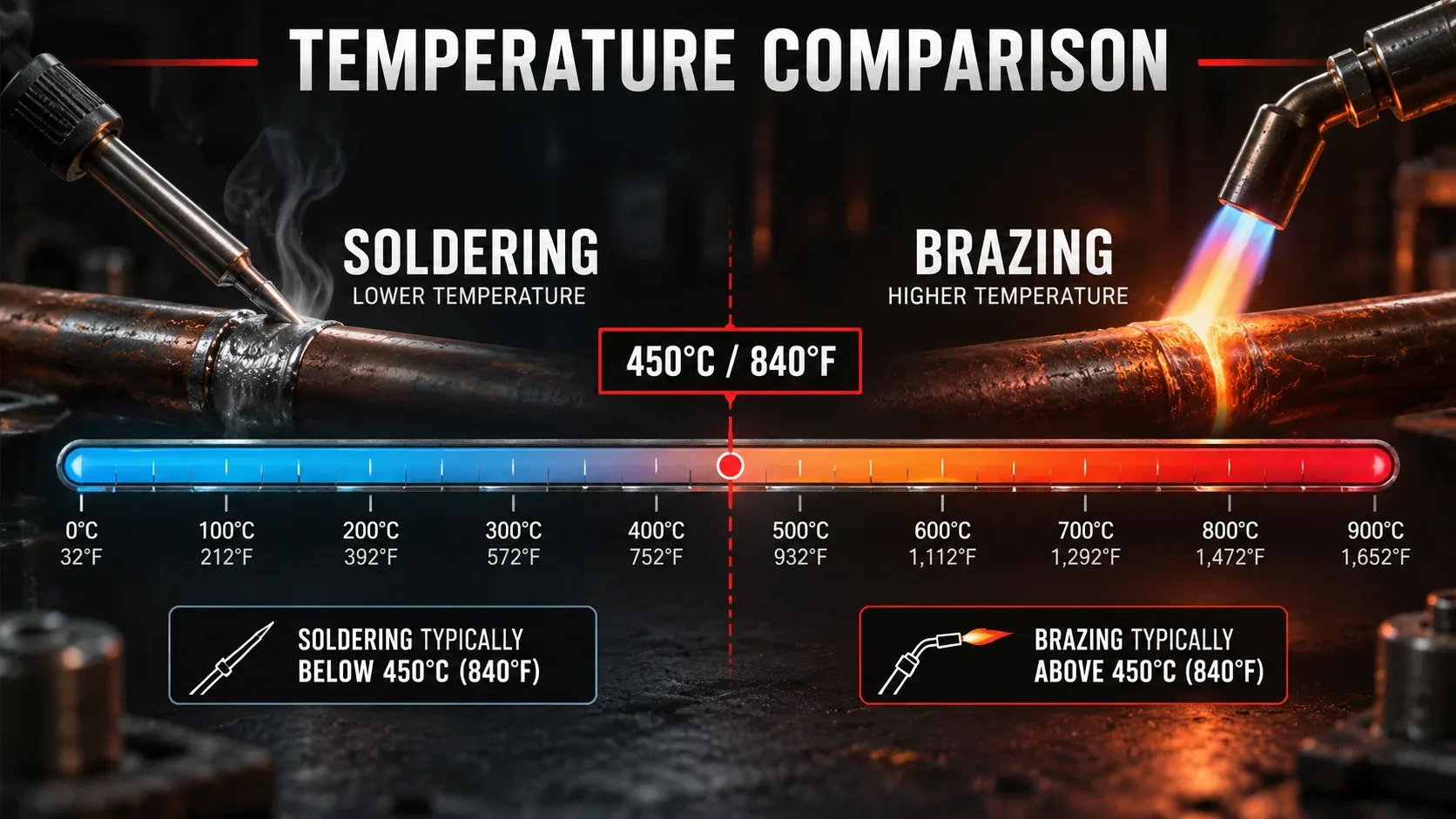
Temperature is one of the most important factors when deciding whether to solder or braze.
Soldering Temperature
Solder alloys melt at relatively low temperatures. The exact melting range depends on the alloy. Electronic solder, lead-free solder, and plumbing solder can all have different working temperatures.
This lower heat input makes soldering particularly useful around circuit boards, thin materials, insulation, and other heat-sensitive components.
Brazing Temperature
Brazing requires more heat because its filler metals melt above the soldering range. Silver-based, copper-phosphorus, and other brazing alloys each have their own recommended working temperatures.
The flame itself may be much hotter than the filler metal’s melting point. Good brazing technique involves heating the joint evenly instead of simply melting the filler directly with the flame.
Is Brazing Stronger Than Soldering?
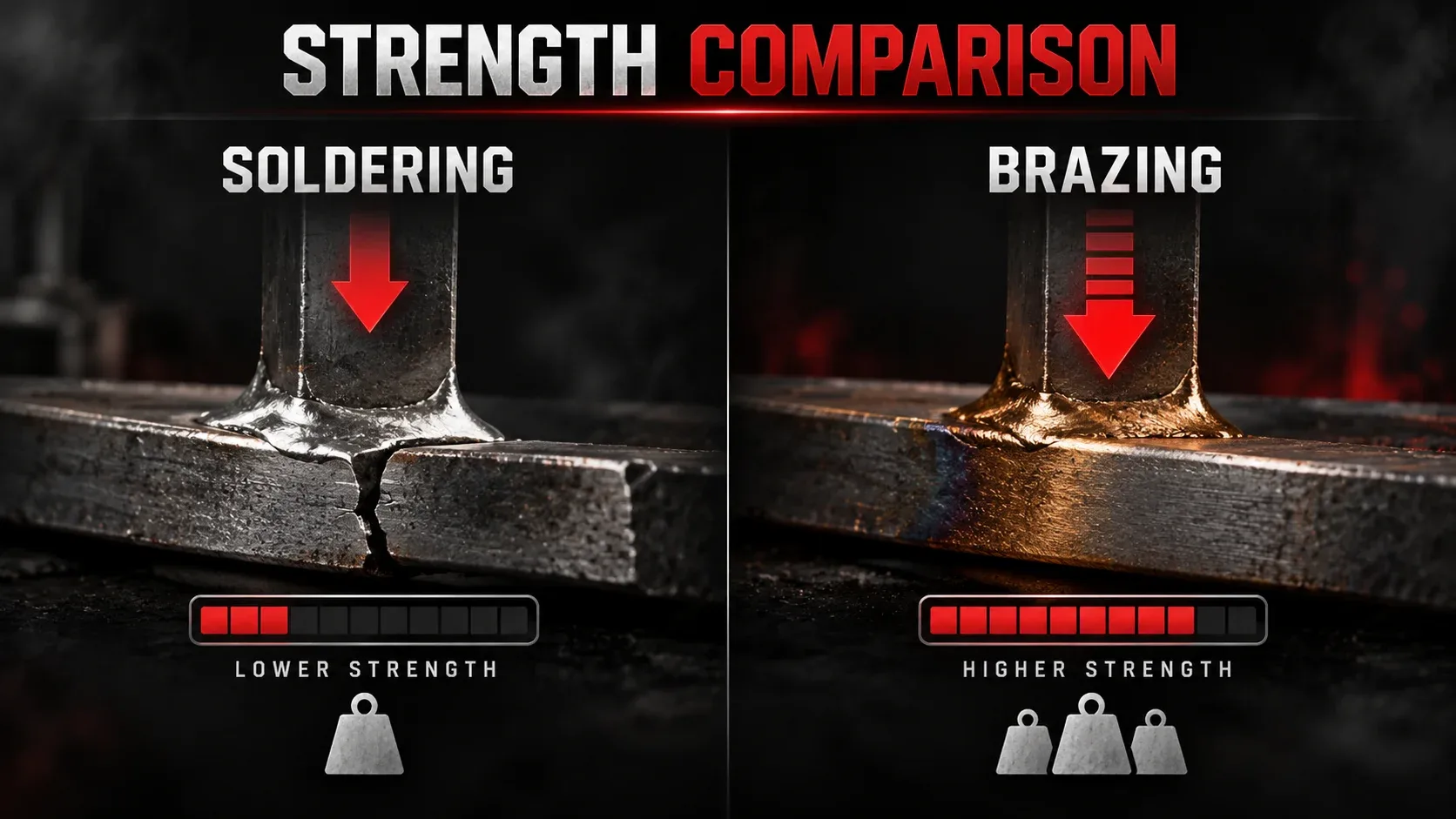
In many comparable applications, a properly designed brazed joint can withstand greater mechanical loads than a soldered joint. However, that does not mean brazing is always the better choice.
Joint strength depends on several factors:
- Base metal
- Filler alloy
- Joint geometry
- Joint clearance
- Surface preparation
- Flux selection
- Heat control
- Operating temperature
- Vibration and mechanical load
What Determines Joint Strength?
Joint Design
Joint shape has a major effect on strength. A lap joint provides a larger bonding area than a simple butt joint and can distribute loads more effectively.
Joint Clearance
Brazing relies heavily on capillary action. If the joint gap is too wide or too narrow for the selected filler metal, the alloy may not flow correctly.
Surface Preparation
Grease, paint, corrosion, and oxidation can prevent proper wetting. Surfaces should be thoroughly cleaned before soldering or brazing.
Correct Filler Metal
The filler must be compatible with the metals being joined and the environment in which the finished joint will operate.
Heat Control
Too little heat can prevent proper flow. Too much heat can burn flux, increase oxidation, distort parts, or damage nearby components.
Should You Solder or Braze?
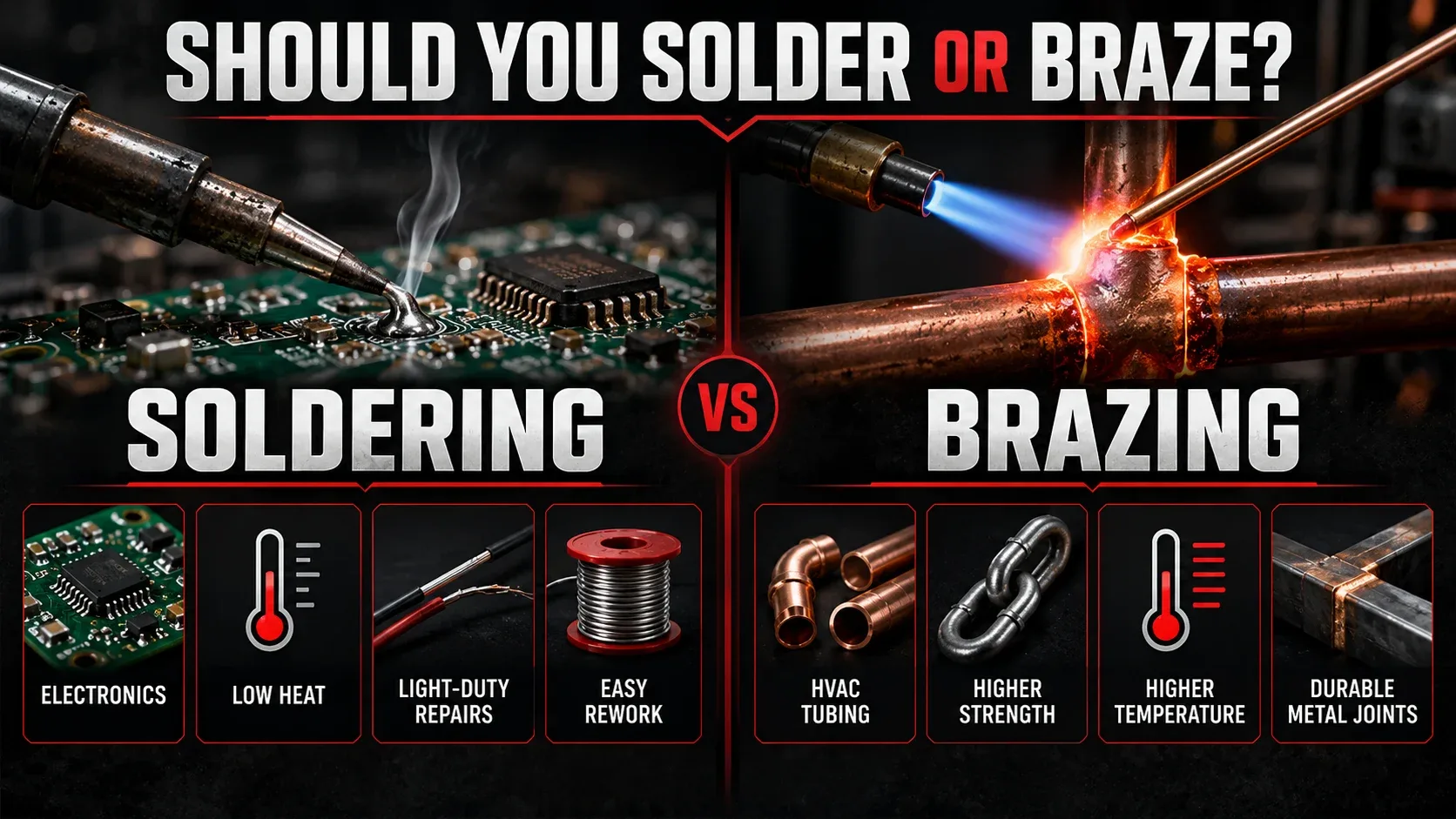
Choose Soldering When
- You are working with electronics.
- The component is sensitive to high heat.
- The joint carries relatively light loads.
- Easy rework or repair is desirable.
- A lower-temperature process is preferred.
Choose Brazing When
- You need greater joint strength.
- The assembly faces higher temperatures.
- You are working on HVAC or refrigeration tubing.
- The joint may experience vibration.
- You are joining suitable dissimilar metals.
Should You Solder or Braze Copper?
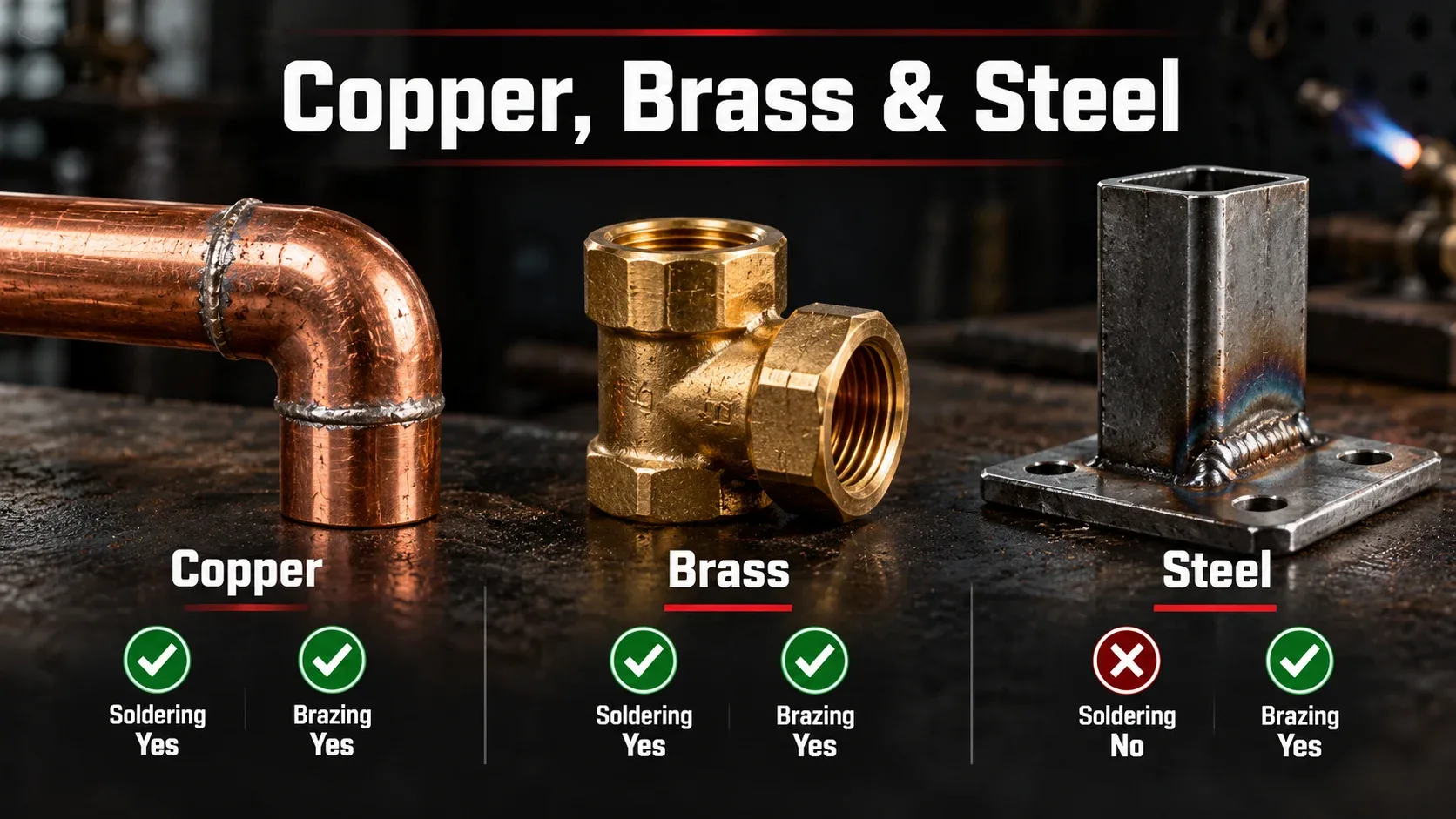
Copper can be joined using either process. The correct choice depends on what the copper assembly will be used for.
When Soldering Copper May Be Suitable
- Certain household plumbing connections
- Low-temperature copper assemblies
- Light-duty repairs
- Applications where local codes permit soldering
When Brazing Copper May Be Better
- HVAC and refrigeration lines
- Higher operating temperatures
- Higher-pressure systems
- Joints that require more mechanical strength
Should You Solder or Braze Brass?
Brass can often be joined by either soldering or brazing. Soldering may be appropriate for decorative work and light-duty repairs, while brazing is usually preferred when greater strength is required.
Careful temperature control is important because excessive heat can affect certain brass alloys and alter their surface or material properties.
Can You Solder or Braze Steel?
Steel can sometimes be soldered, but brazing is often more practical when a stronger joint is required without melting the base steel.
Brazing may be used for brackets, tubular frames, tools, automotive parts, and other fabricated components.
Best Uses for Soldering and Brazing
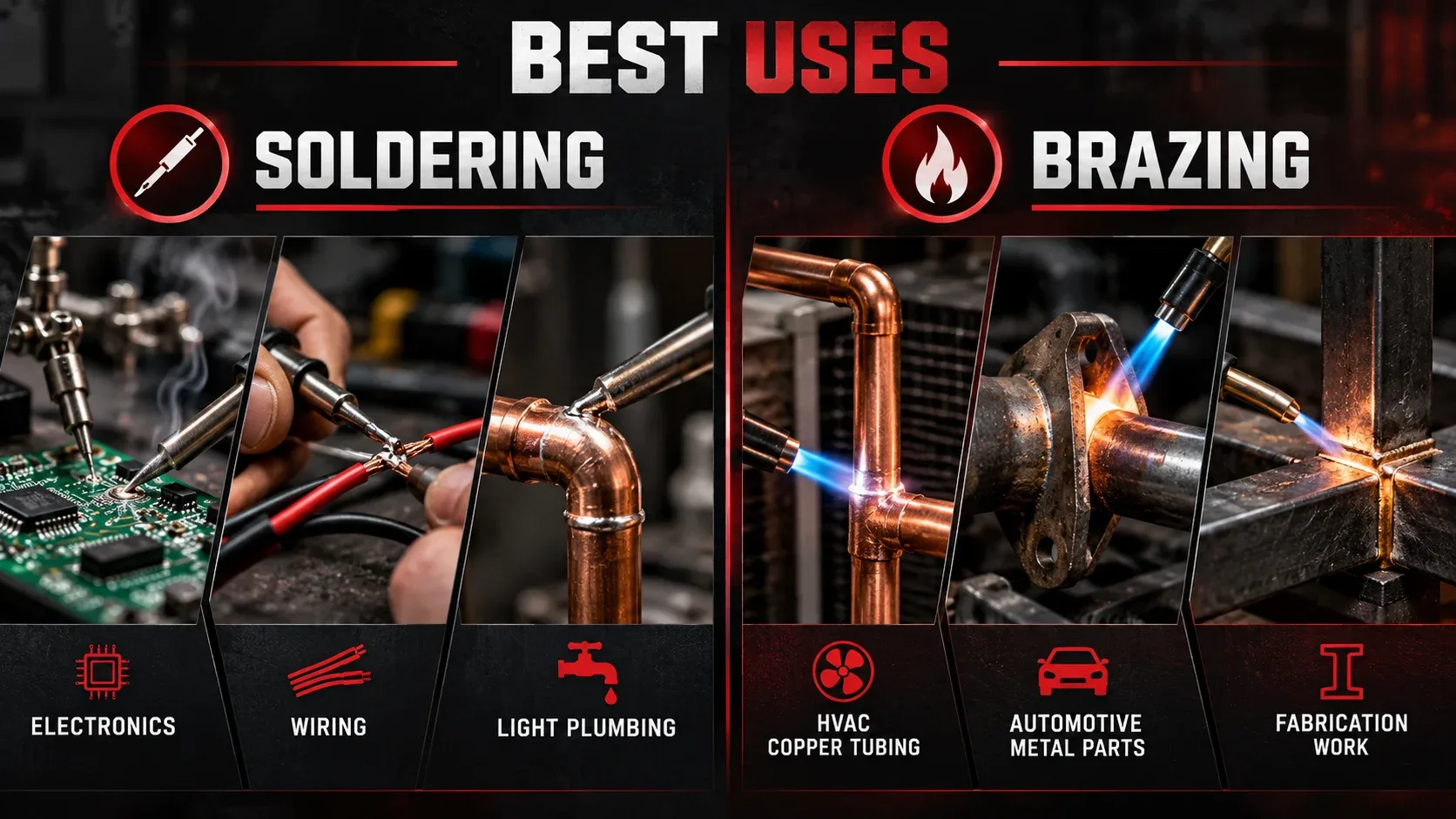
Best Uses for Soldering
Electronics
Soldering creates electrically conductive joints while limiting heat around sensitive components.
Electrical Connections
Wires, terminals, and small electrical connectors are commonly soldered where appropriate.
Light Plumbing
Some copper plumbing systems use soldered joints where codes and application requirements permit.
Jewelry and Crafts
Controlled heat makes soldering useful for many small decorative and precision assemblies.
Best Uses for Brazing
HVAC Systems
Brazing is widely used for copper refrigeration lines and related equipment.
Automotive Parts
Brazing can be useful for selected fittings, brackets, and assemblies requiring increased strength.
Metal Fabrication
Brazing can join thin metal sections without melting the base material.
Tool Manufacturing
Carbide cutting tips are often brazed onto steel holders because the method can join dissimilar materials effectively.
Advantages and Disadvantages of Soldering
Advantages
- Lower working temperature
- Simple equipment for many applications
- Reduced risk of heat distortion
- Ideal for many electrical joints
- Relatively easy for beginners to learn
- Convenient for repair and rework
Limitations
- Lower mechanical strength in many applications
- Lower service-temperature capability
- Not suitable for many structural joints
- May not withstand severe vibration or loading
Advantages and Disadvantages of Brazing
Advantages
- Can create strong metal joints
- Can join certain dissimilar metals
- Base metals usually remain solid
- Useful for thin components
- Higher service-temperature capability than typical soldered joints
- Works well with many complex joint shapes
Limitations
- Requires more heat
- Greater burn and fire risk
- Requires better heat control
- Equipment and filler metals may cost more
- Excess heat can damage or distort components
Tools and Materials for Soldering and Brazing
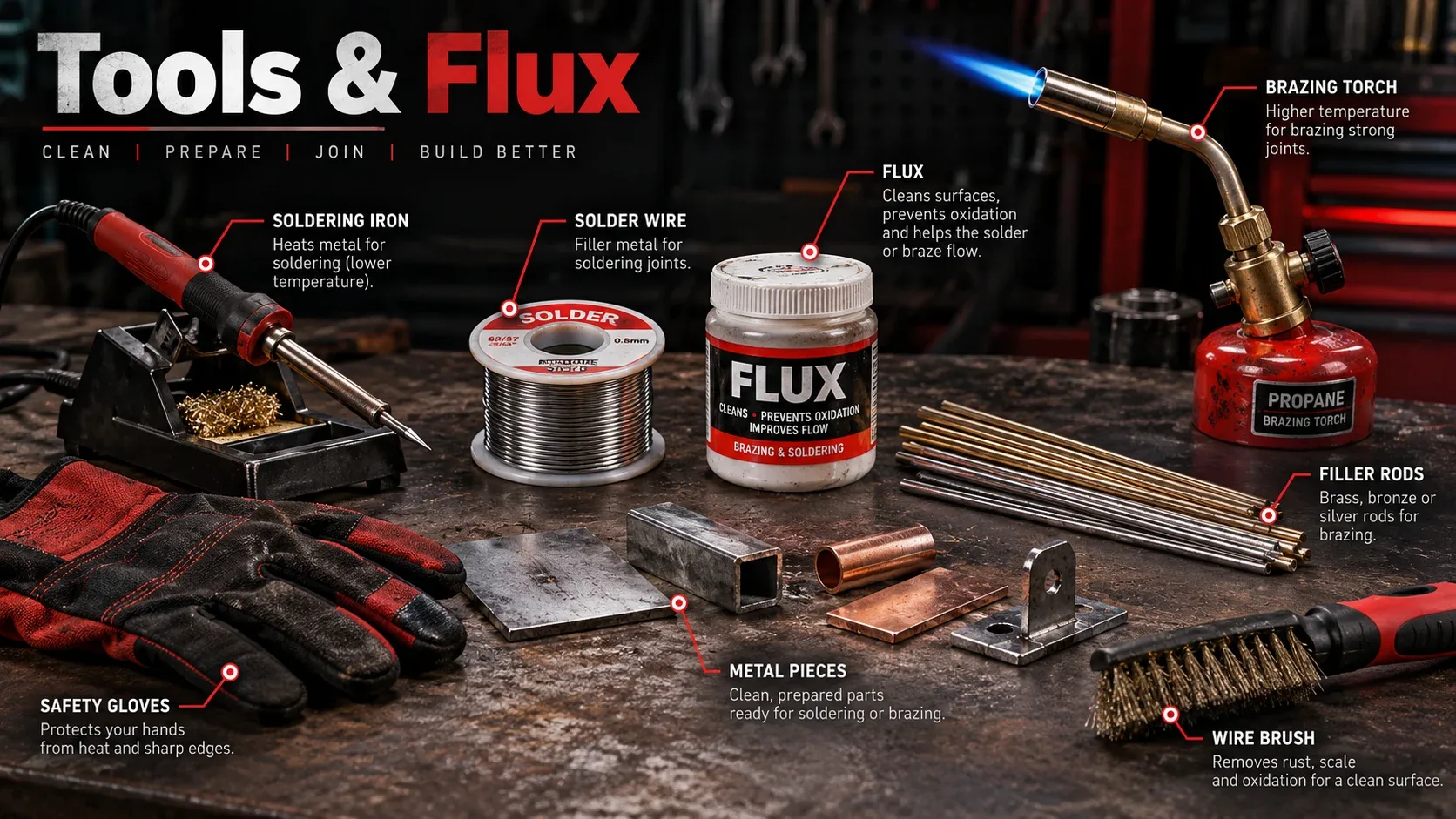
Soldering Equipment
- Soldering iron or suitable torch
- Solder alloy
- Compatible flux
- Cleaning brush or abrasive
- Heat-resistant work surface
- Suitable eye and hand protection
Brazing Equipment
- Suitable torch or heating system
- Brazing filler rod or wire
- Compatible flux where required
- Wire brush or abrasive
- Fire-resistant work surface
- Suitable eye and hand protection
Why Flux Matters in Soldering and Brazing
Flux helps control oxidation and improves the ability of molten filler metal to wet the surfaces being joined.
A suitable flux can help:
- Remove surface oxides
- Reduce further oxidation during heating
- Improve filler-metal wetting
- Support smoother filler flow
The correct flux depends on both the filler metal and the base materials. Some filler alloys or specialized processes may not require a separate flux.
Common Soldering and Brazing Mistakes
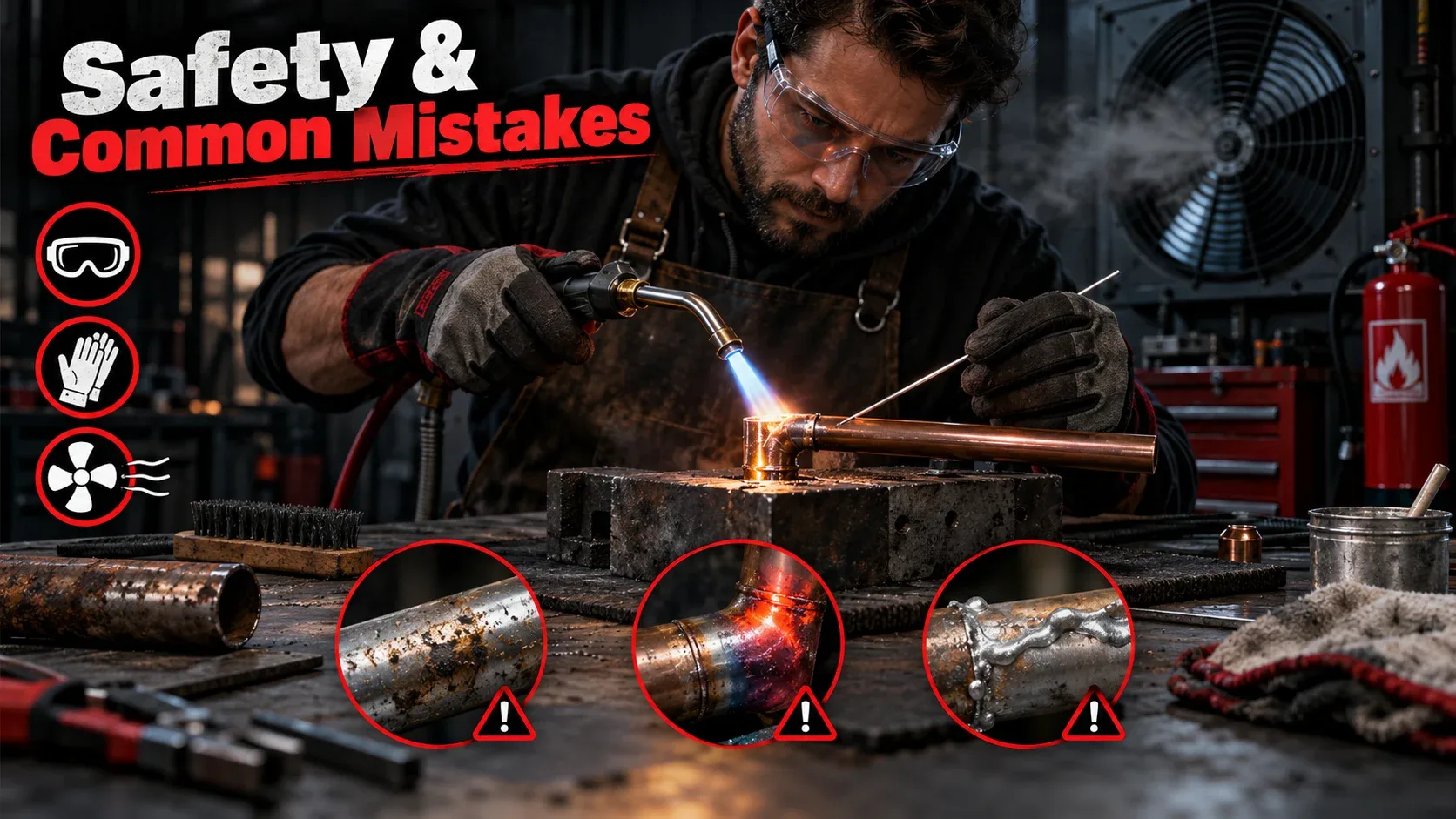
- Not cleaning the joint: Dirt, oil, corrosion, and oxidation can prevent proper bonding.
- Choosing the wrong filler: The filler alloy must be compatible with the base materials.
- Heating only the filler: The joint itself should normally provide the heat that melts the filler.
- Overheating the flux: Excessive heat can burn the flux and reduce its effectiveness.
- Using too little heat: The filler may bead up instead of flowing properly.
- Incorrect joint clearance: Poor spacing can reduce capillary action.
- Moving the joint too early: Let the filler fully solidify before disturbing the assembly.
- Judging strength by appearance alone: A neat-looking joint is not always a strong joint.
Soldering and Brazing Safety
Both processes involve heat, molten metals, chemicals, and potentially harmful fumes. Safe work practices should always be followed.
- Work in a well-ventilated space.
- Wear suitable eye protection.
- Use appropriate gloves when handling hot materials.
- Keep flammable materials away from the work area.
- Treat recently heated metal as hot even if it does not glow.
- Follow safety instructions for flux and filler materials.
- Never heat sealed or pressurized containers.
Soldering vs Brazing vs Welding
| Process | Base Metal Usually Melts? | Relative Heat | Typical Strength |
|---|---|---|---|
| Soldering | No | Low | Lower |
| Brazing | No | Medium to high | Moderate to high |
| Welding | Usually yes | High | Often high |
No single process is automatically best. The right choice depends on the material, joint design, strength requirements, operating conditions, and applicable standards.
Solder or Braze? Quick Decision Guide
| Application | Typical Choice |
|---|---|
| Electronics | Solder |
| Electrical connectors | Solder |
| Light-duty copper plumbing | Often solder, where permitted |
| HVAC refrigerant tubing | Usually braze |
| Higher mechanical loads | Consider brazing |
| Heat-sensitive components | Consider soldering |
| Structural or safety-critical parts | Follow manufacturer or engineering specifications |
Frequently Asked Questions
Is brazing stronger than soldering?
Brazed joints are generally stronger than soldered joints in comparable applications, but actual strength depends on the materials, filler alloy, joint design, preparation, and technique.
At what temperature does brazing start?
Brazing uses filler metals that melt above approximately 450°C or 840°F.
Can I braze with a propane torch?
A propane torch may be suitable for some small brazing jobs, but larger assemblies or higher-temperature filler metals may require a more powerful heat source.
Can you solder instead of braze?
Sometimes, but only if the soldered joint can safely handle the required temperature, load, pressure, and vibration.
Should copper pipe be soldered or brazed?
Both methods can be used. Soldering is common in some plumbing applications, while brazing is widely used in refrigeration, HVAC, and higher-demand systems.
Can stainless steel be brazed?
Yes. Stainless steel can be brazed with a suitable filler alloy, proper surface preparation, compatible flux or atmosphere, and controlled heat.
Does brazing melt the base metal?
No. In normal brazing, only the filler metal melts while the base metals remain solid.
Is silver solder actually soldering or brazing?
It depends on the alloy. Some products commonly called silver solder actually meet the definition of brazing filler because they melt above 450°C / 840°F.
Is brazing as strong as welding?
Brazing can provide strong joints for many applications, but brazing and welding form joints differently. Their performance depends on material, design, filler, and service conditions.
Which is easier for beginners?
Basic soldering is generally easier for beginners because it uses lower heat and simpler equipment. Brazing usually requires more careful heat control and joint preparation.
Solder or Braze: Which One Should You Choose?
Choose soldering when lower heat, electrical conductivity, easy rework, or light-duty joining is most important. Choose brazing when you need greater strength, higher temperature resistance, or better durability under mechanical load.
When deciding whether to solder or braze, consider:
- The base material
- Required joint strength
- Operating temperature
- Joint design
- Pressure and vibration
- Relevant codes and manufacturer specifications
The best method is not simply the one that uses more heat. It is the process that safely delivers the performance required by the finished joint.