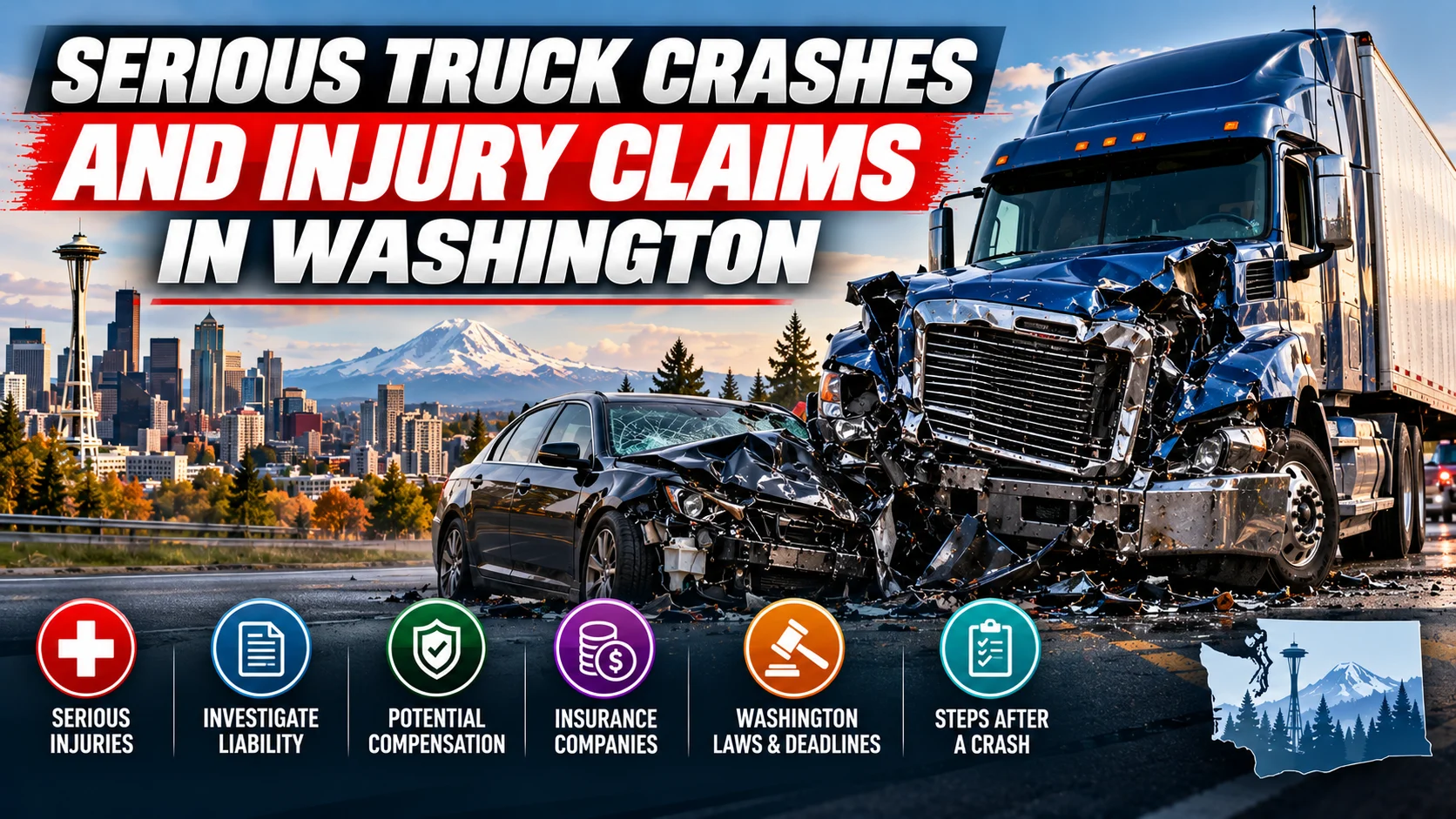

A collision involving a commercial truck can change a person’s life in seconds. Large trucks can cause severe injuries because of their size, weight, and stopping distance. After a crash, injured people may face medical treatment, missed work, vehicle damage, and long-term physical problems. Understanding truck accident legal help in Washington can help an injured person understand what steps may matter when seeking compensation.
Why Truck Crashes Can Cause Serious Injuries
Truck crashes can be different from ordinary passenger vehicle collisions. A tractor-trailer, delivery truck, or other large commercial vehicle may weigh many times more than a passenger car. A collision can therefore produce significant forces, even when the vehicles are traveling at moderate speeds.
Washington roads carry commercial traffic through cities, highways, ports, and rural areas. Interstate routes such as I-5 and I-90 are heavily used by trucks moving freight across Washington and between states. Crashes may happen because of driver distraction, fatigue, unsafe lane changes, speeding, poor vehicle maintenance, overloaded cargo, or dangerous road conditions.
The cause of a truck collision matters because more than one party may have played a role. Depending on the facts, potential sources of responsibility can include the truck driver, trucking company, maintenance provider, cargo loader, vehicle manufacturer, or another motorist.
Common Injuries After a Washington Truck Crash
The size and weight of commercial trucks can make injuries particularly serious. People involved in Washington truck crashes may suffer broken bones, spinal injuries, internal injuries, burns, traumatic brain injuries, or damage to the neck and back.
Some injuries are obvious immediately. Others may become more noticeable over the following days or weeks. For example, symptoms from a head or soft tissue injury may not fully appear at the scene.
Medical evaluation is important after a serious crash. Medical records can also help document the connection between the collision and the treatment that follows. Keeping copies of bills, prescriptions, test results, treatment notes, and other records can make it easier to understand the financial impact of an injury claim.
Determining Who Was Responsible
Truck accident claims often require a careful review of what happened before, during, and after the collision. A police report may provide useful information, but it may not answer every question.
Evidence can include photographs, videos, witness statements, vehicle damage, medical records, electronic records, driver logs, inspection documents, maintenance records, and information about the truck’s cargo. Commercial vehicle records may also help establish whether the driver or company followed applicable safety requirements.
Washington uses comparative fault rules in civil cases involving multiple parties. Under RCW 4.22.070, the percentage of fault may be assigned among the parties whose conduct contributed to the damages. Washington Legislature: RCW 4.22.070 This means an injury claim can involve a detailed examination of the conduct of everyone involved.
What Compensation May Be Available?
The value of a Washington truck accident claim depends on the individual facts and the losses involved. There is no single amount that applies to every collision.
Potential damages may include reasonable medical expenses, future medical care, lost income, reduced earning capacity, property damage, and compensation for pain and suffering when supported by the applicable law and evidence.
Serious injuries can create costs that continue long after the initial emergency treatment. A person who cannot return to the same job may face financial losses for months or years. Someone with a permanent injury may also require ongoing treatment, rehabilitation, medication, or assistance with daily activities.
A complete claim should consider both current losses and reasonably supported future losses. This is one reason it can be important to gather records early instead of relying only on the first hospital bill or repair estimate.
Why Evidence Matters After a Truck Collision
Evidence can become harder to obtain as time passes. Vehicles may be repaired or sold, witnesses may become difficult to locate, and records may not remain available forever.
The Washington Department of Licensing explains that collision information involving commercial vehicles can remain on driving records for 10 years. Washington Department of Licensing: Driving Records While a driving record is only one potential source of information, commercial vehicle records can be useful when examining the circumstances surrounding a crash.
Photos taken at the scene can also be valuable. If possible, injured people or their families should preserve photographs of vehicle damage, road conditions, traffic signs, visible injuries, and other relevant details. Witness contact information should also be kept.
Dealing With Insurance Companies
After a serious Washington truck crash, an insurance company may contact an injured person to discuss the collision. Insurance representatives may request information, statements, medical records, or authorization to access other documents.
It is important to understand what is being requested before signing documents or agreeing to a settlement. A quick settlement may not account for medical treatment that has not yet been completed or losses that have not yet been calculated.
Truck crashes can also involve several insurance policies. The driver’s personal coverage, a trucking company’s commercial policy, and other policies may become relevant depending on the circumstances. Determining which policies apply can require a detailed review of the parties and their roles.
Washington Deadlines Can Matter
Injury claims are subject to legal deadlines, and the applicable deadline depends on the type of claim and the circumstances. Washington’s limitation statutes are contained in Chapter 4.16 RCW, with specific rules applying to different types of legal actions.
Because deadlines can affect the ability to bring a lawsuit, an injured person should not assume there is unlimited time to act. Special circumstances can also affect how a deadline is calculated. Getting legal information early can help protect important rights while evidence is still available.
Steps to Take After a Serious Truck Crash
After a major truck collision, safety and medical care should come first. Once immediate concerns are addressed, several practical steps may help protect important evidence.
First, seek appropriate medical care and follow the treatment plan provided by medical professionals. Next, keep records of treatment, expenses, missed work, and other losses. Preserve photographs, videos, insurance correspondence, and crash-related documents. Avoid deleting messages, posts, photographs, or other information connected to the collision.
It is also helpful to avoid guessing about fault when speaking with insurers or others. A truck crash may involve facts that are not immediately known at the scene.
Protecting Your Rights After a Washington Truck Crash
A serious truck collision can create physical, financial, and personal challenges that continue well beyond the date of the crash. Washington injury claims may involve multiple parties, extensive evidence, insurance coverage questions, and legal deadlines.
Understanding the process early can help an injured person make informed decisions. Whether the collision involved a tractor-trailer, delivery truck, commercial vehicle, or another large truck, the circumstances should be examined carefully before a claim is resolved.
For people dealing with the aftermath of a serious truck crash, documenting injuries, preserving evidence, understanding potential sources of responsibility, and learning about available legal options can provide a clearer path forward.