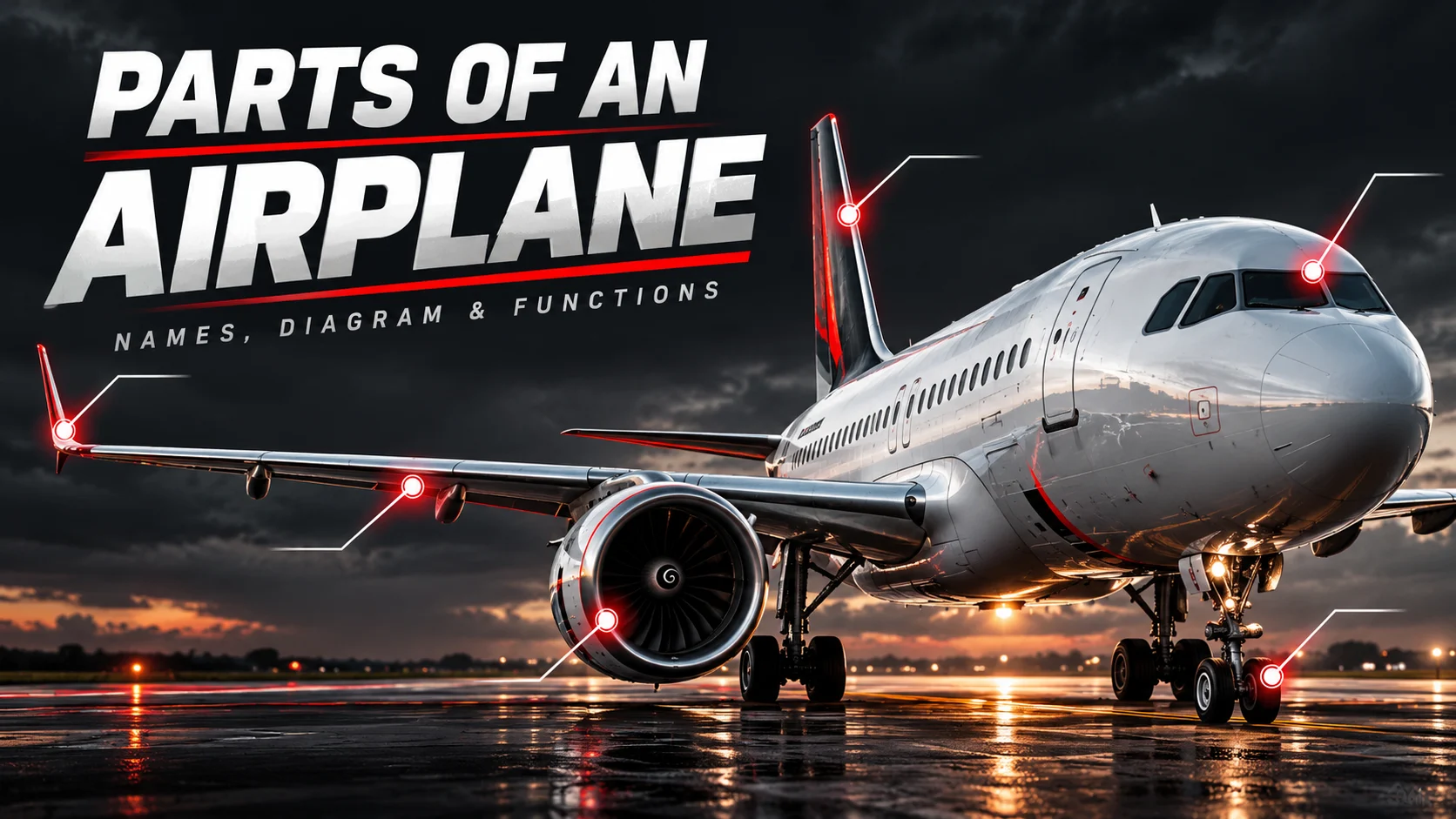

Understanding the parts of an airplane becomes much easier when you know what each component is called, where it is located, and what function it performs. From the fuselage and wings to the engines, landing gear, rudder, elevators, and ailerons, every major part contributes to the airplane’s structure, stability, movement, or control.
This beginner-friendly guide explains the main airplane parts in simple language and shows how they work together during taxiing, takeoff, flight, and landing.
What Are the Main Parts of an Airplane?
Most conventional airplanes share several major structural and control components. Although aircraft designs vary, many of the basic parts serve similar purposes.
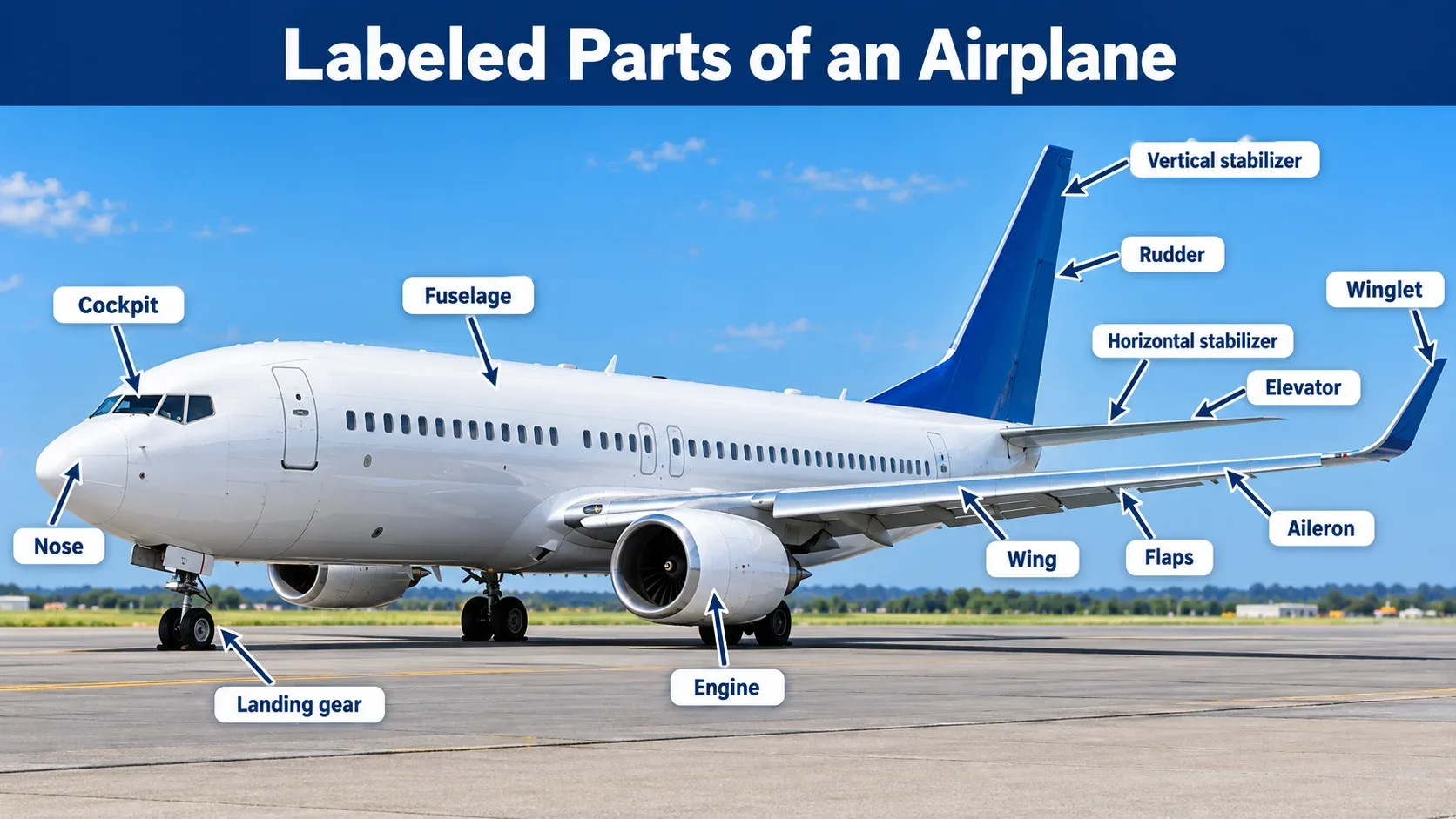
Labeled Parts of an Airplane Diagram
A labeled airplane diagram is one of the easiest ways to understand where each component is located. On a typical airplane, the fuselage runs through the center, the wings extend from either side, the cockpit is near the front, and the tail assembly sits at the rear.
1. Fuselage: The Main Body of an Airplane
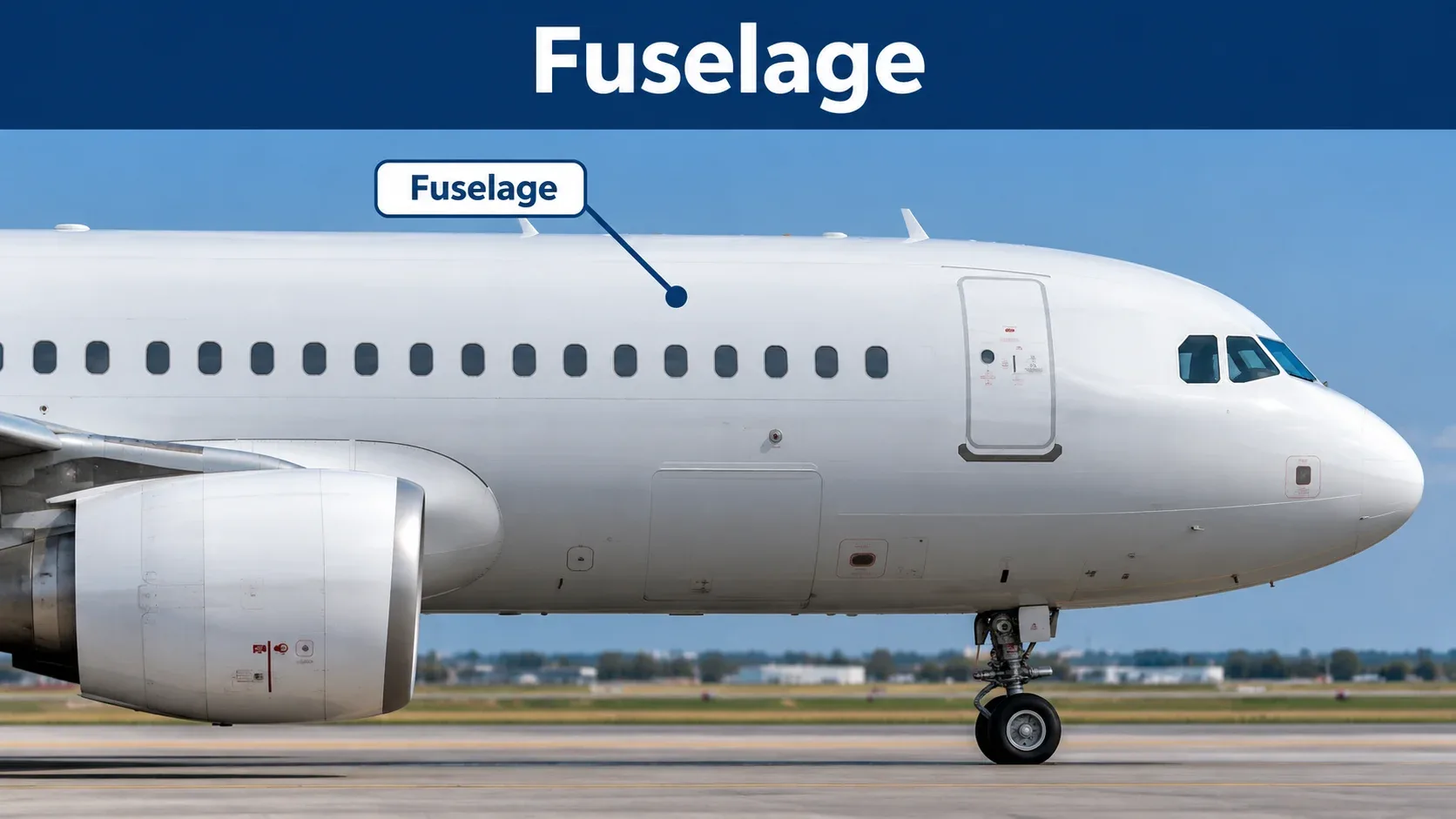
The fuselage is the main body of an airplane. It connects many major aircraft components, including the wings, cockpit, and tail assembly.
Depending on the aircraft, the fuselage may contain passengers, crew, cargo, avionics, equipment compartments, and other aircraft systems.
2. Cockpit: Where Pilots Control the Aircraft
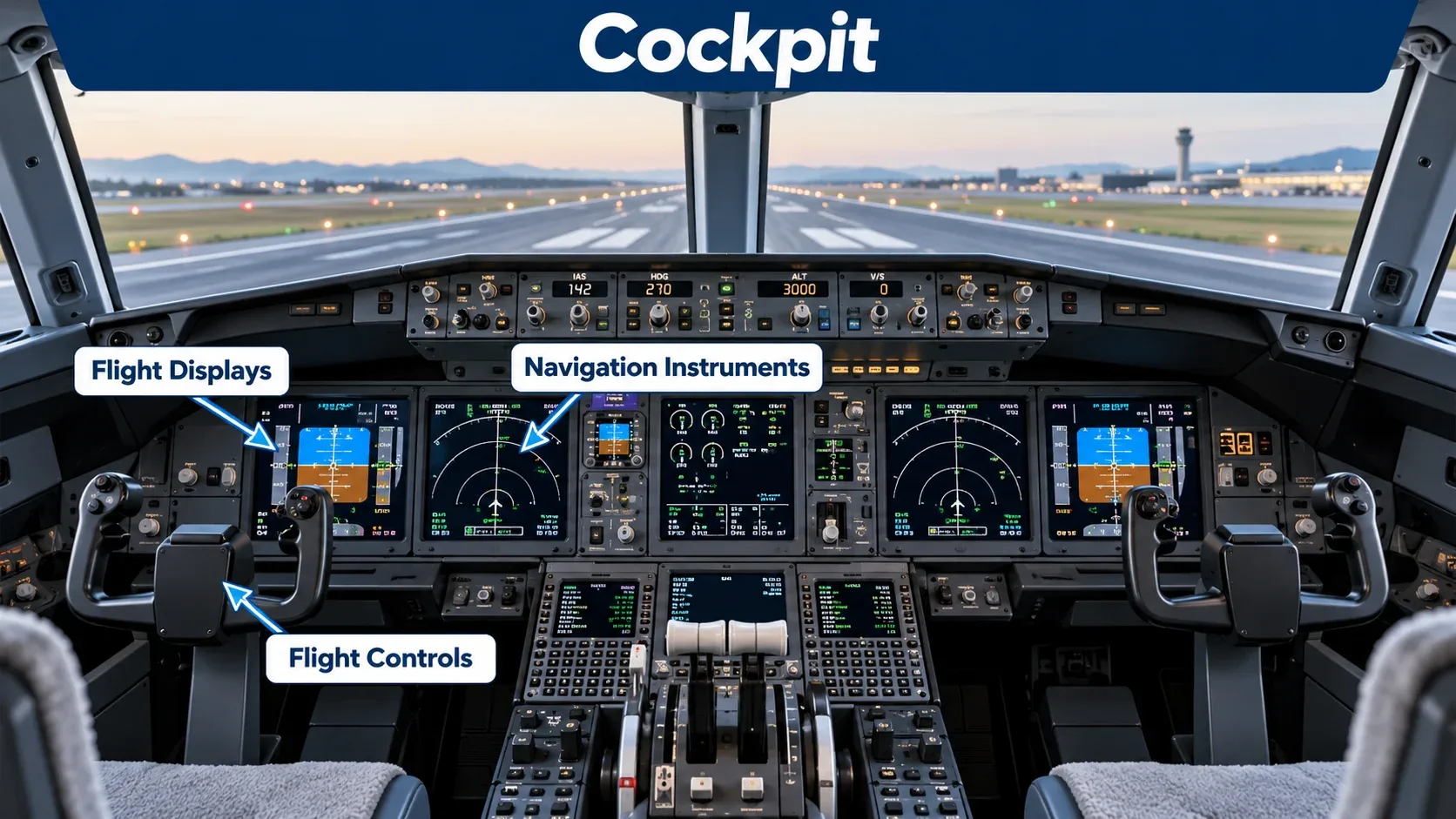
The cockpit, often called the flight deck on larger aircraft, is the area where pilots operate the airplane.
It contains flight instruments, navigation equipment, communication systems, engine controls, and primary flight controls.
3. Wings: The Main Lift-Producing Surfaces
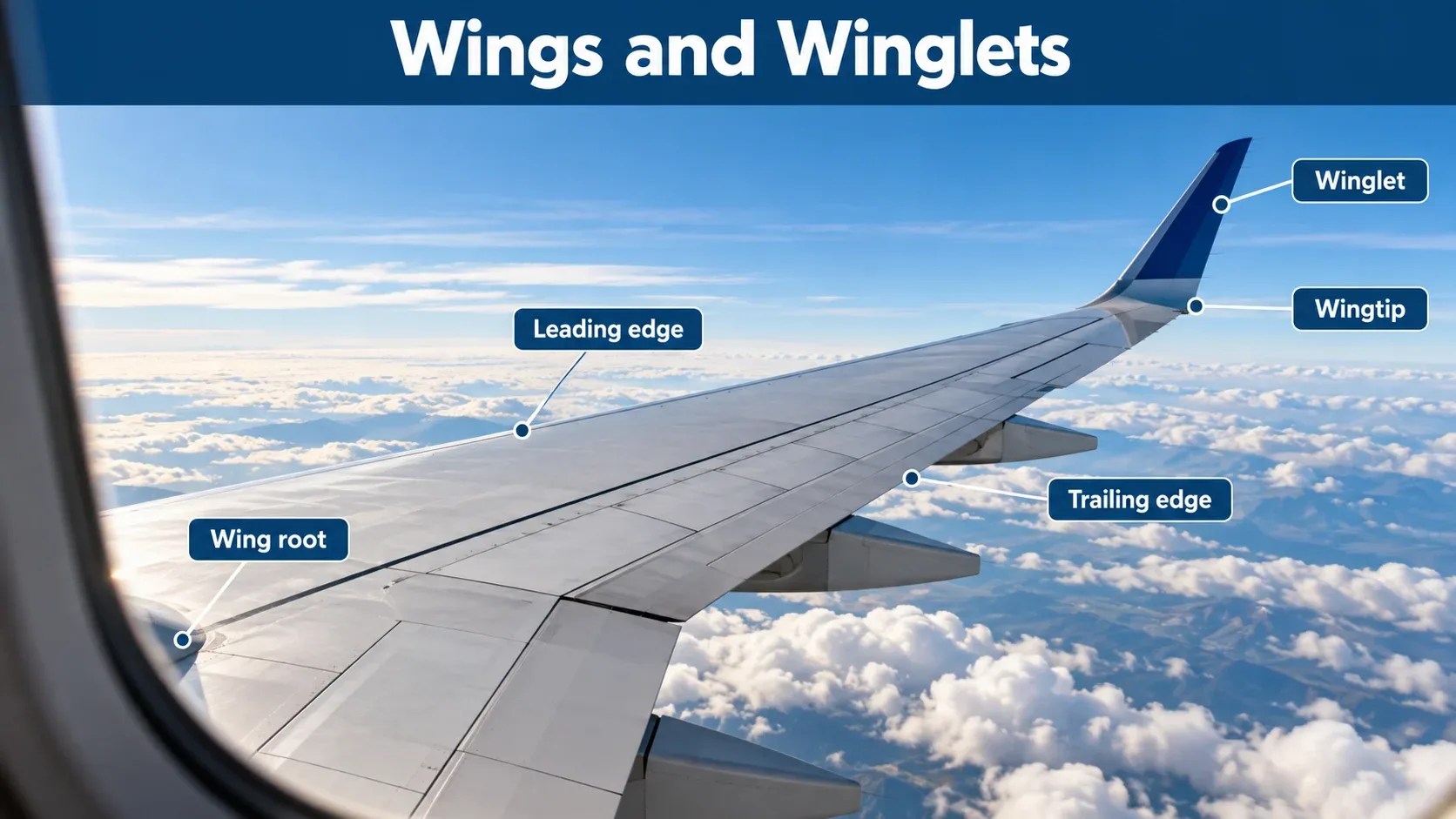
The wings are among the most important parts of an airplane. Their main aerodynamic role is to help generate lift as air flows around them while the aircraft moves forward.
Leading Edge
The front edge of the wing that first meets the airflow.
Trailing Edge
The rear edge of the wing where many control surfaces are mounted.
Wing Root
The area where the wing joins the fuselage.
Wingtip
The outer end of the wing, farthest from the fuselage.
4. Winglets: Structures at the Wingtips
Winglets are specially shaped structures located near the tips of some airplane wings. Their purpose is generally to reduce aerodynamic losses associated with wingtip vortices and improve aerodynamic efficiency.
5. Engines: What Provides Thrust
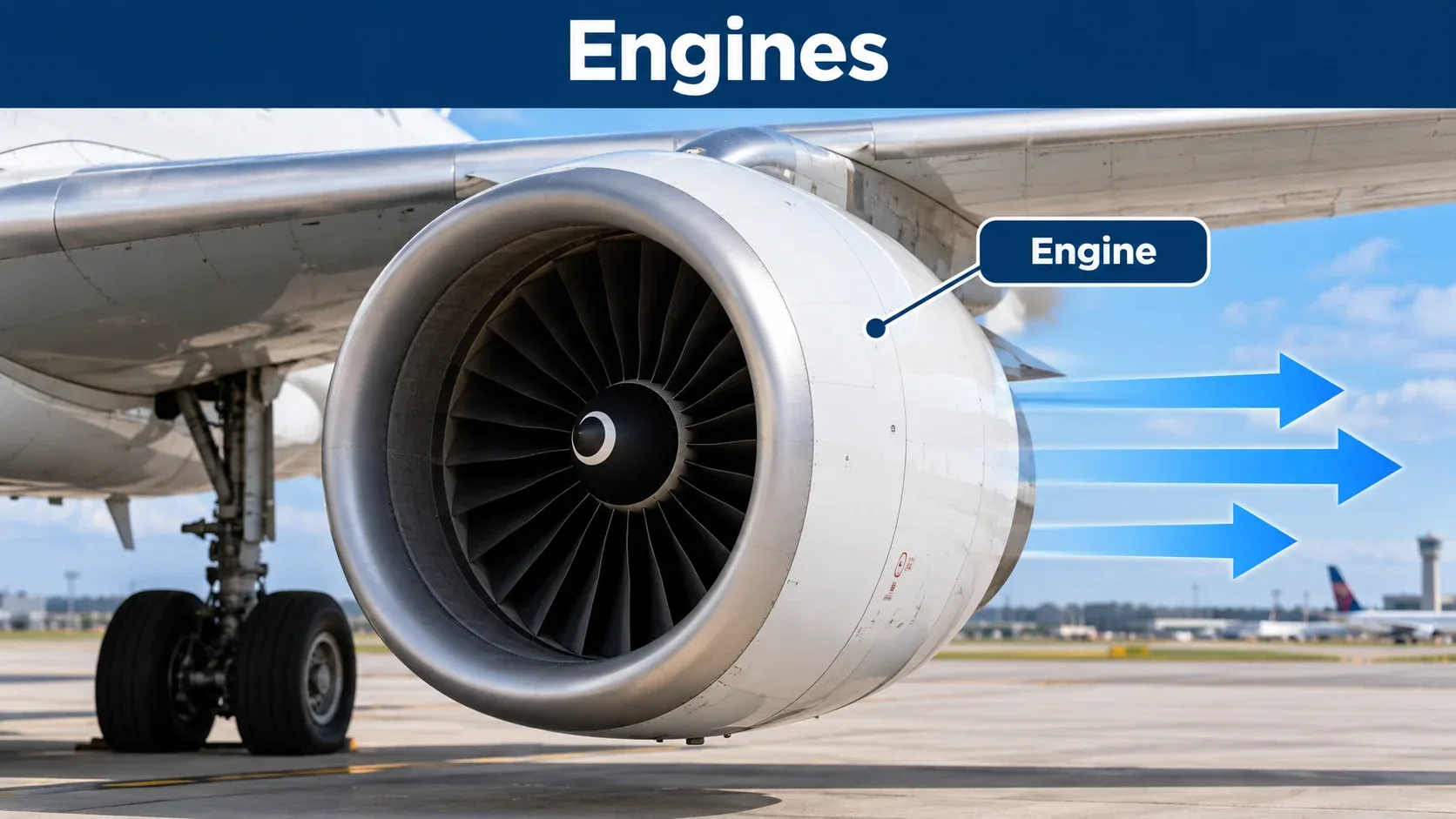
Airplane engines are part of the propulsion system and provide the force needed to move the aircraft through the air.
6. Landing Gear: Supporting the Airplane on the Ground
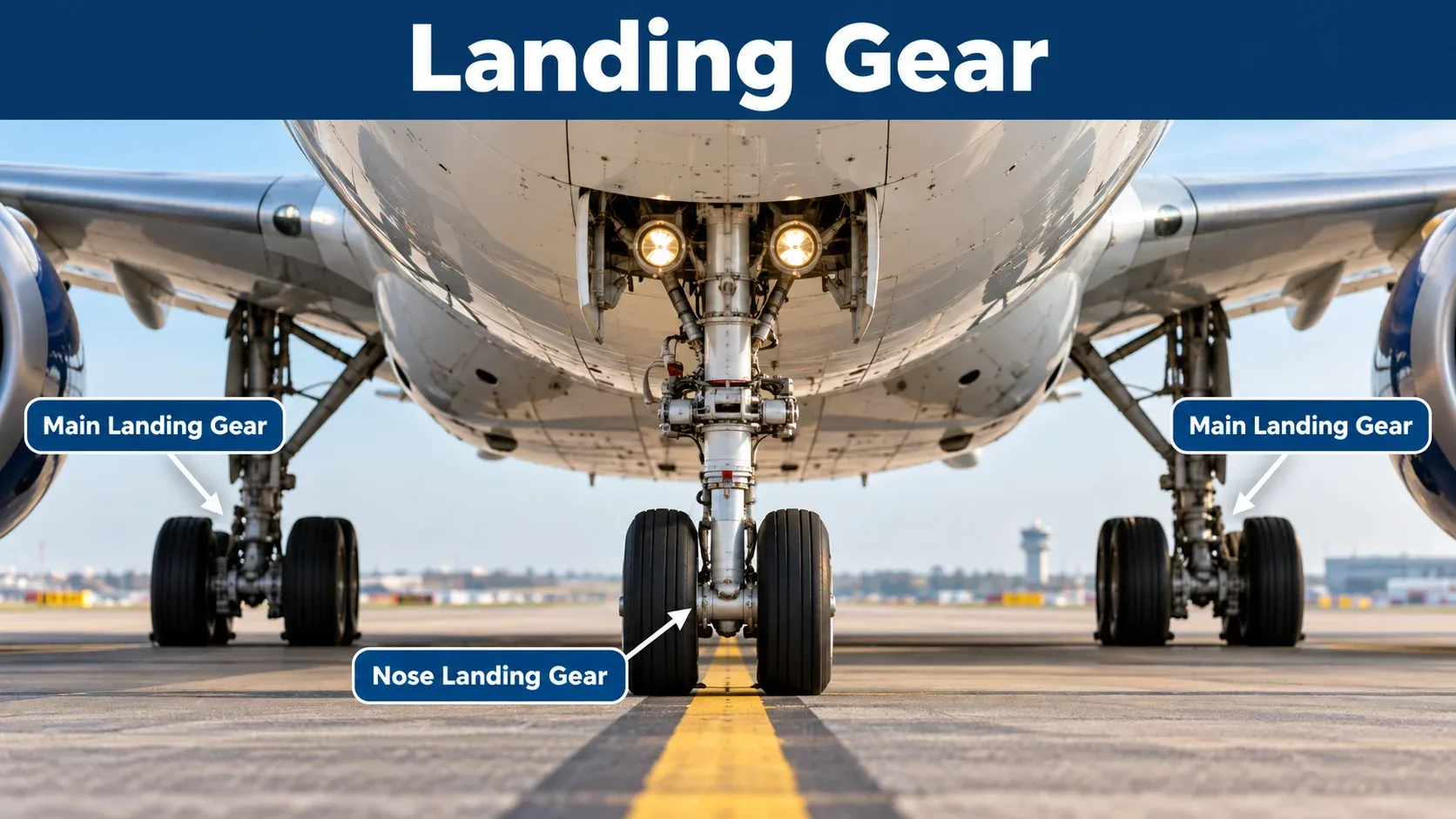
Landing gear supports the aircraft while it is parked, taxiing, taking off, or landing.
Understanding Roll, Pitch, and Yaw
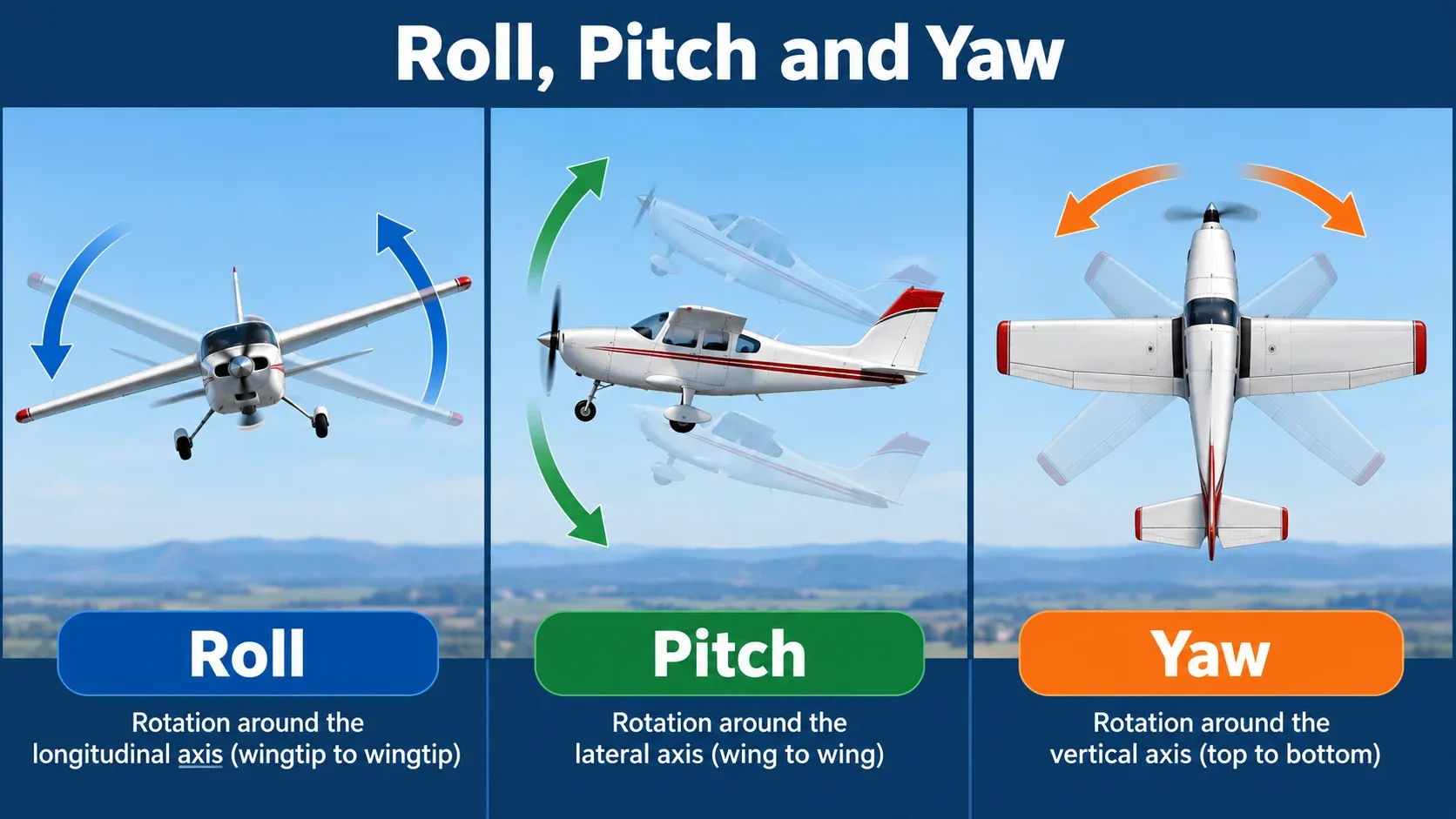
7. Ailerons: Controlling Roll
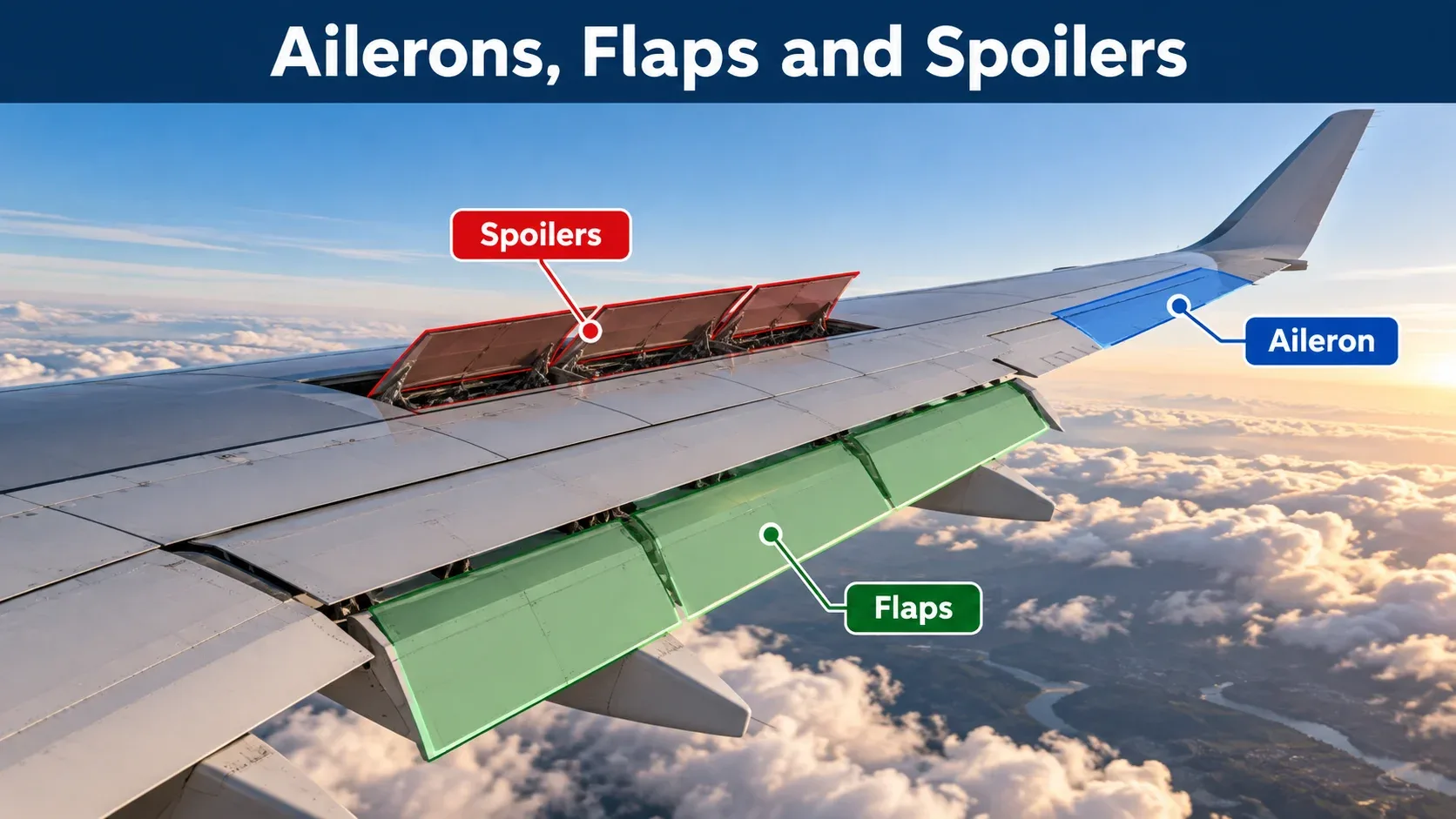
Ailerons are movable surfaces usually located near the outer trailing edges of the wings. They primarily control roll.
8. Elevator: Controlling Pitch
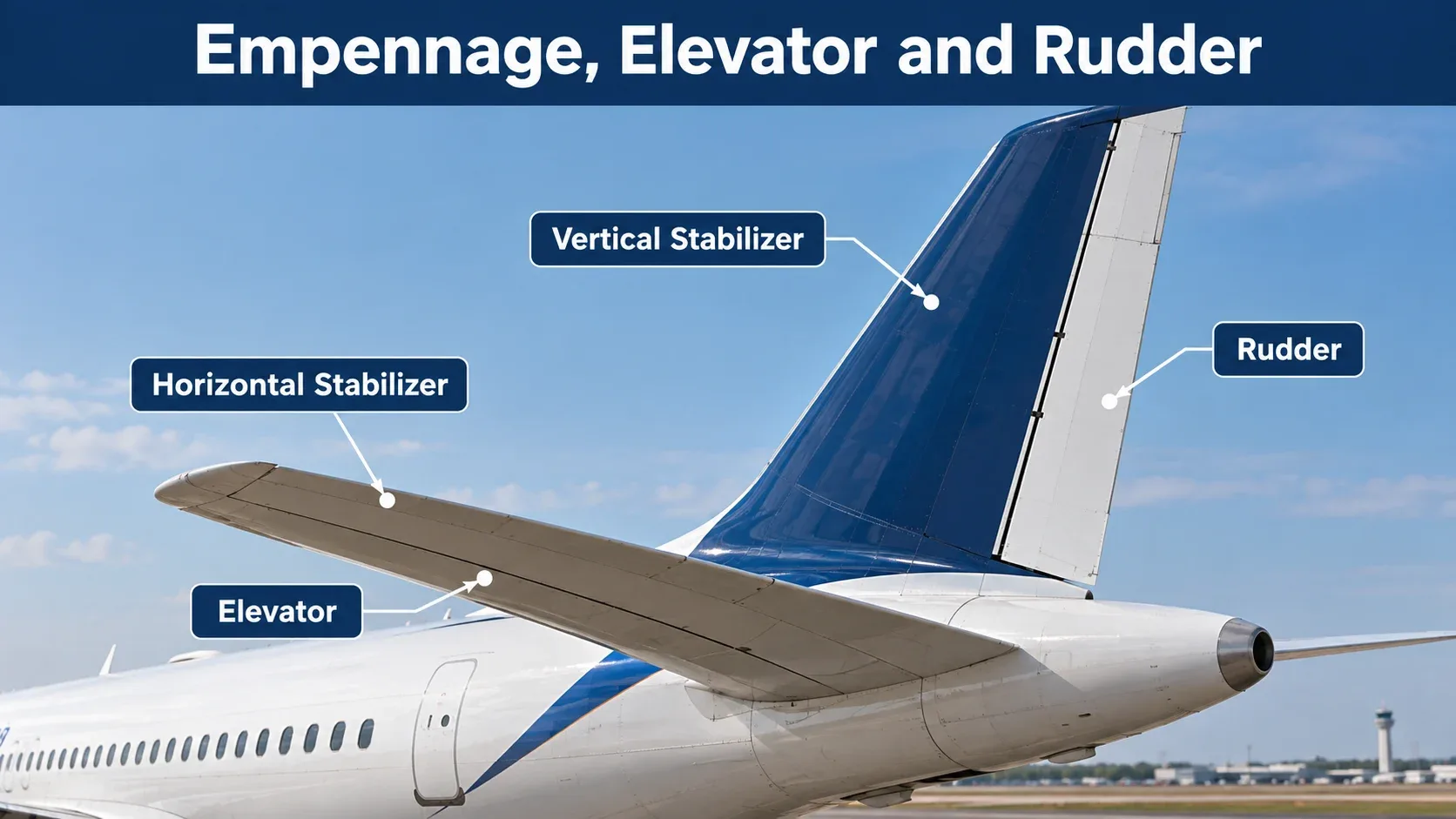
The elevator is a movable flight-control surface typically located on the horizontal tail. It primarily controls pitch.
9. Rudder: Controlling Yaw
The rudder is a movable control surface attached to the vertical stabilizer at the rear of the airplane. It primarily controls yaw.
10. Flaps: Increasing Lift and Drag
Flaps are movable surfaces commonly located along the inner trailing edge of the wings. Extending the flaps changes the aerodynamic characteristics of the wing and generally increases both lift and drag.
11. Spoilers: Reducing Lift and Increasing Drag
Spoilers are movable panels found on the upper surface of the wings on many airplanes. When raised, they disrupt airflow over part of the wing.
12. Empennage: The Tail Assembly
The technical term for the airplane’s tail assembly is the empennage. It commonly includes the vertical stabilizer, rudder, horizontal stabilizer, and elevator.
13. Vertical Stabilizer
The vertical stabilizer is the upright fixed tail surface at the rear of many airplanes. Its primary role is to help provide directional stability.
14. Horizontal Stabilizer
The horizontal stabilizer is the horizontal tail surface that helps provide longitudinal stability.
15. Nose and Radome
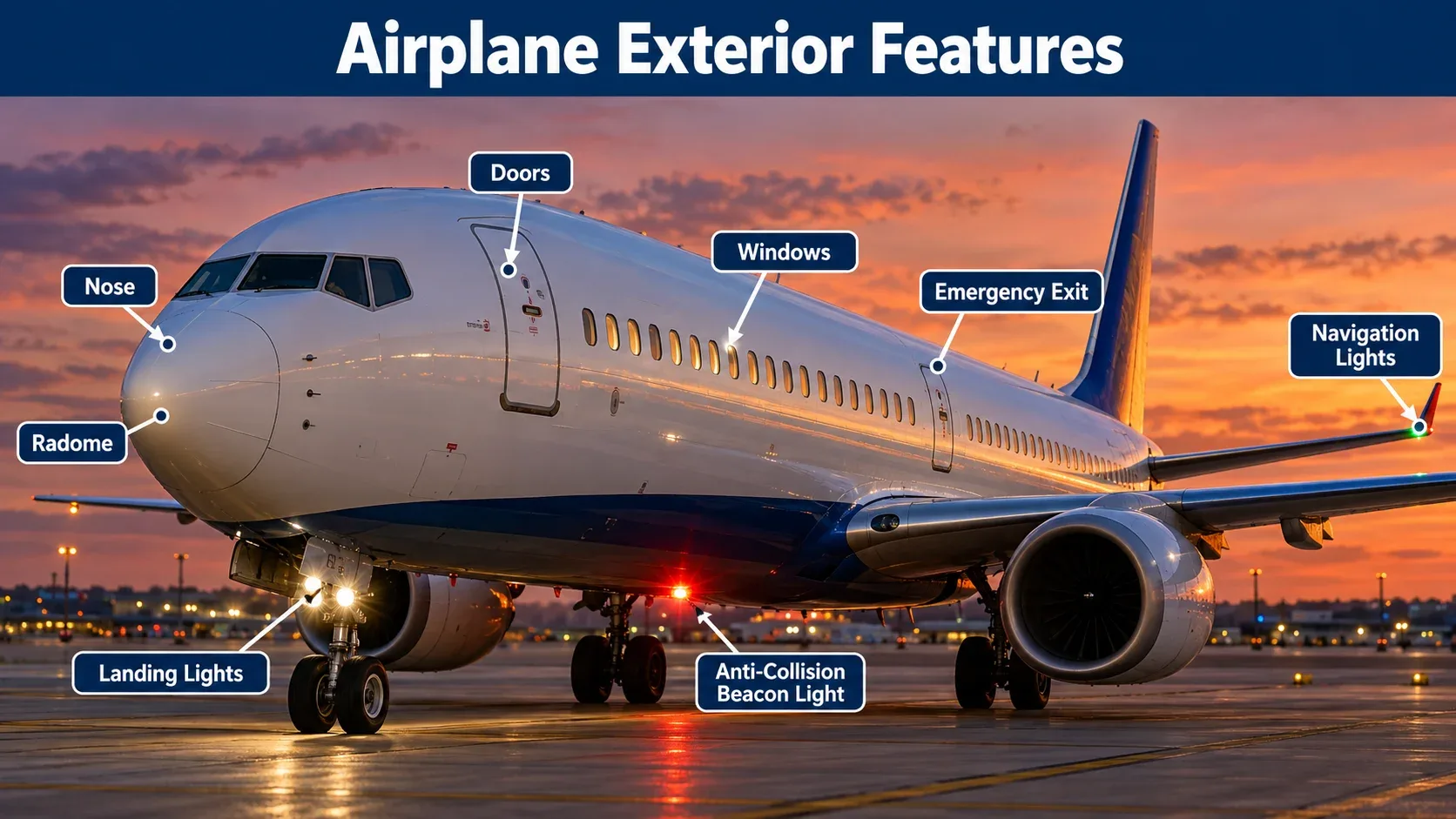
The nose is the front section of the aircraft. On many modern airplanes, part of the nose is covered by a radome, which may protect weather radar or other electronic equipment.
16. Airplane Doors, Windows, and Emergency Exits
Different aircraft have different door and window layouts depending on their purpose and size.
17. Aircraft Exterior Lights
Airplanes use several external lights to improve visibility and support safe operations, including navigation lights, anti-collision lights, landing lights, and taxi lights.
How the Main Parts of an Airplane Work Together
- The engine or propulsion system produces thrust.
- Thrust moves the airplane forward through the air.
- Airflow around the wings helps generate lift.
- Ailerons allow the pilot to control roll.
- The elevator controls pitch.
- The rudder controls yaw.
- The tail surfaces help provide stability.
- Flaps and spoilers modify aerodynamic performance when needed.
- Landing gear supports the airplane during ground operations.
Frequently Asked Questions About Parts of an Airplane
What are the five main parts of an airplane?
A simplified list usually includes the fuselage, wings, propulsion system, landing gear, and tail assembly.
What is the main body of an airplane called?
The main body of an airplane is called the fuselage.
Which part of an airplane produces lift?
The wings are the primary lift-producing surfaces on a conventional airplane.
What is the tail of an airplane called?
The complete tail assembly is commonly called the empennage.
Final Summary
Learning the parts of an airplane becomes much easier when the aircraft is divided into its major structural components, propulsion system, landing gear, tail assembly, and flight-control surfaces.
Ailerons = Roll
Elevator = Pitch
Rudder = Yaw