A resonator delete is an exhaust modification where the factory resonator is removed and replaced with a straight section of exhaust pipe. Drivers usually choose it to make the exhaust sound louder or more aggressive without installing a complete aftermarket exhaust system.
However, removing the resonator can also change exhaust tone, increase rasp, or introduce cabin drone. The exact result depends on the engine, muffler, pipe diameter, catalytic converters, and overall exhaust design.
Quick Answer
A resonator delete usually makes the exhaust louder and more noticeable. It normally does not create a meaningful horsepower increase, but it can increase cabin drone or rasp depending on the vehicle.
Resonator Delete at a Glance
| Factor | Typical Result |
|---|---|
| Sound | Louder and more aggressive |
| Tone | Can become deeper, sharper, or raspier |
| Horsepower | Usually little or no noticeable gain |
| Drone | Possible at cruising RPM |
| Fuel economy | Usually unchanged |
| Reversible | Usually yes |
What Does an Exhaust Resonator Do?
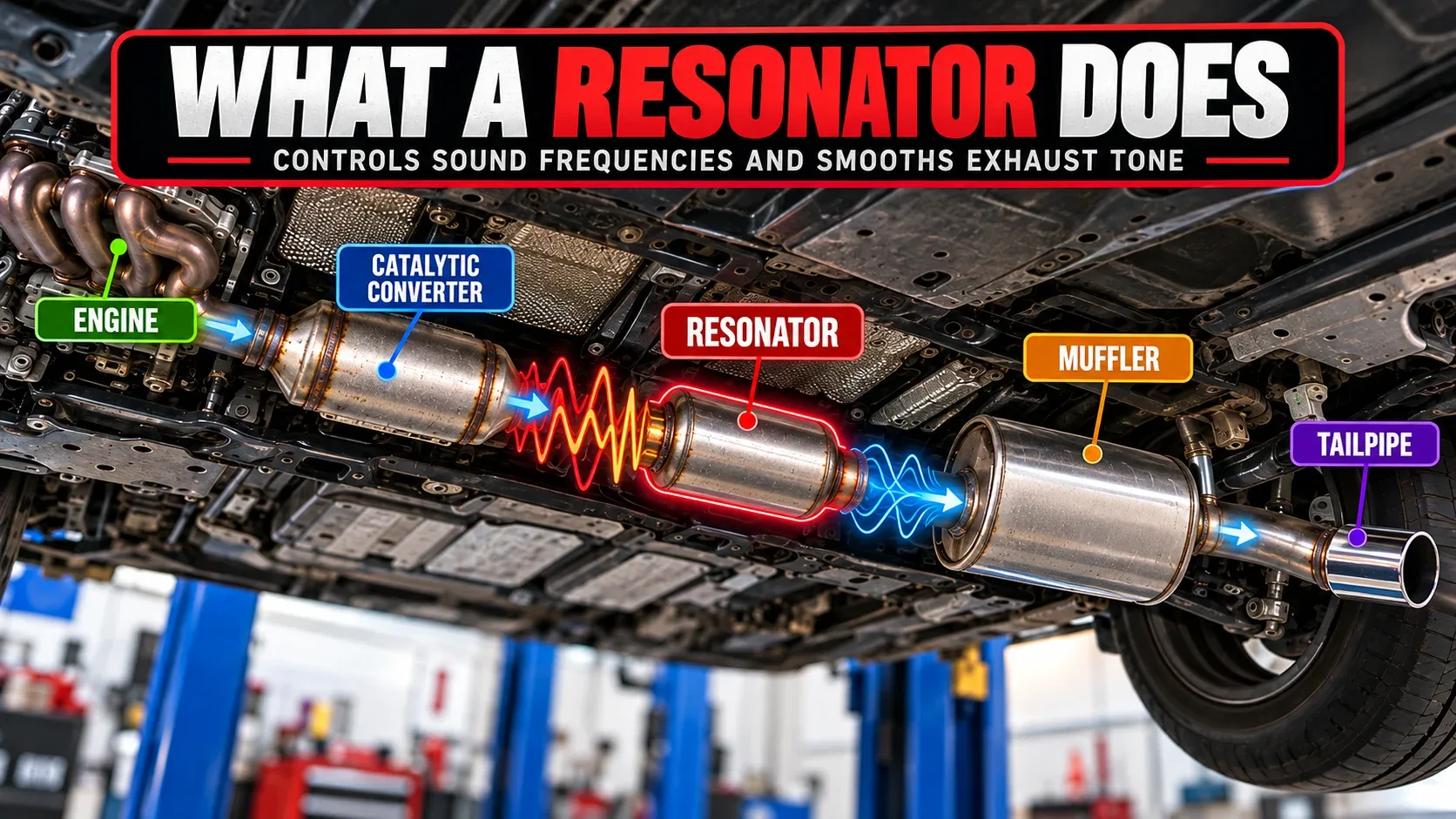
An exhaust resonator is designed mainly to control specific sound frequencies produced by the engine and exhaust system. Rather than simply reducing overall volume, it helps shape the exhaust tone and reduce unwanted frequencies.
Manufacturers use resonators to reduce harsh sounds, rasp, and certain types of low-frequency cabin drone.
A resonator is not the same as a catalytic converter. The catalytic converter controls emissions, while the resonator primarily controls sound.
What Is a Resonator Delete?
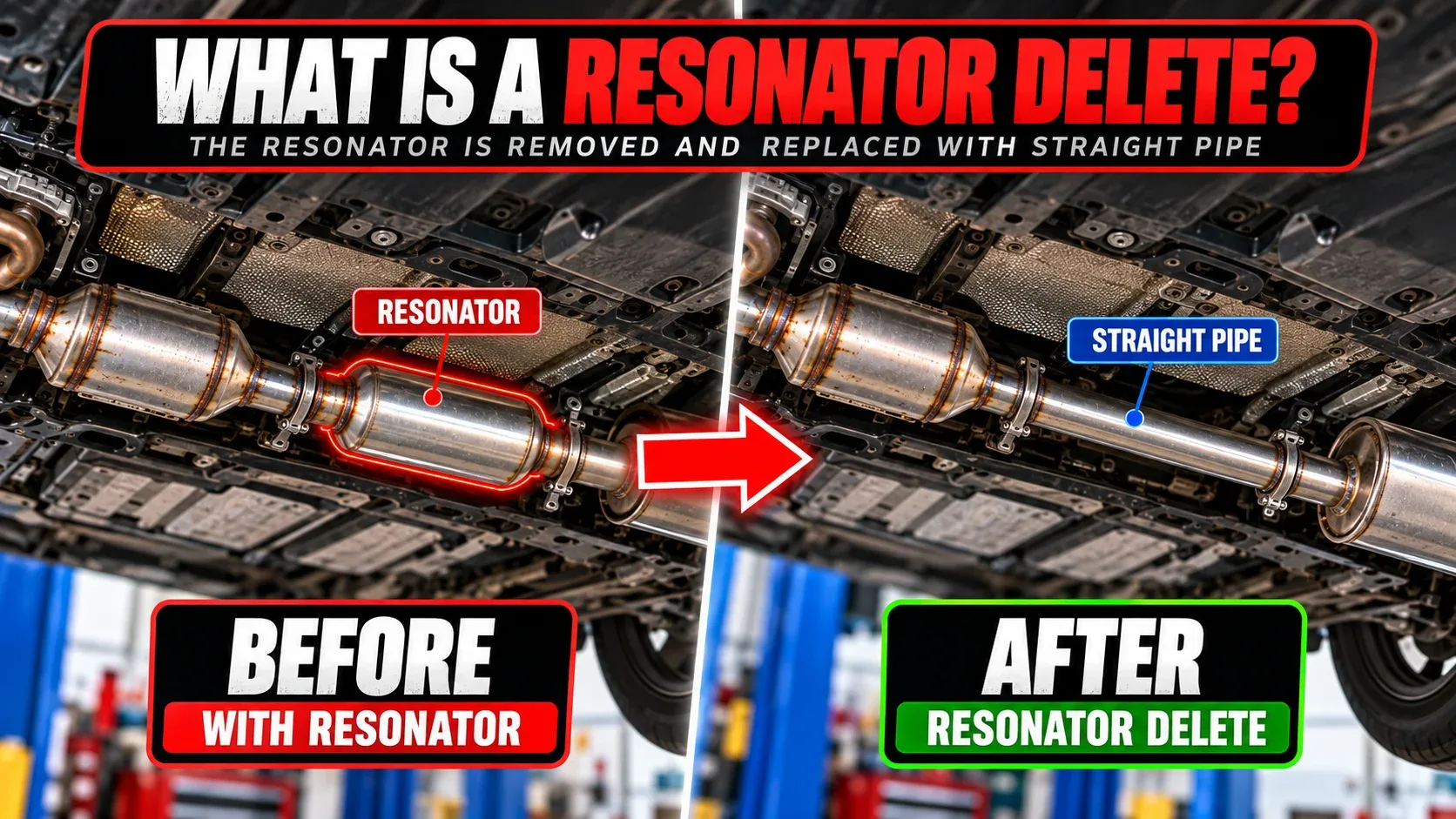
A resonator delete means removing the factory resonator and replacing the empty section with matching exhaust tubing.
In a typical installation, an exhaust shop cuts the resonator from the exhaust system, fits a straight section of pipe, and welds or clamps it into place.
How Does a Resonator Delete Change the Sound?

At Idle
The exhaust may sound slightly deeper or more pronounced, although some vehicles remain close to stock at idle.
During a Cold Start
Cold starts may become noticeably louder because engine speed is higher while the exhaust system warms up.
Under Acceleration
This is usually where the biggest sound difference is heard. The vehicle may sound more aggressive as engine load and exhaust flow increase.
At Highway Speeds
Certain vehicles may develop a steady booming sound inside the cabin at particular engine speeds. This is known as exhaust drone.
Pros of a Resonator Delete
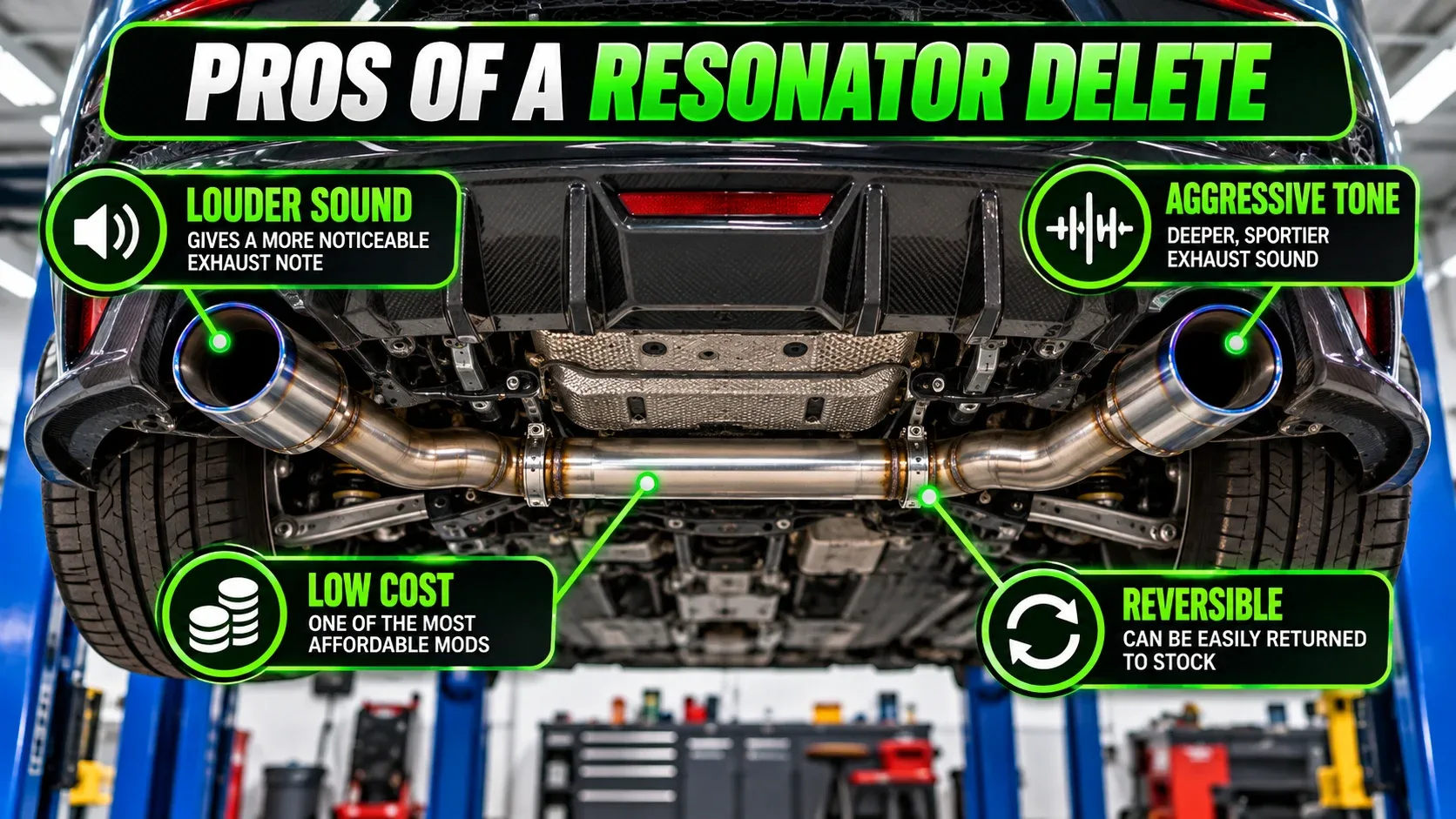
- More exhaust sound: The exhaust usually becomes more noticeable.
- More aggressive tone: The car may sound sportier under acceleration.
- Lower cost: It is usually cheaper than a complete cat-back exhaust.
- Reversible: The original resonator can often be reinstalled.
- Simple modification: Installation usually requires limited fabrication.
Cons of Removing the Resonator

- Cabin drone: Low-frequency booming may become noticeable at cruising RPM.
- Rasp: Some engines may sound sharper or more metallic.
- More exterior noise: The vehicle may become louder than expected.
- No guaranteed horsepower gain: It should mainly be considered a sound modification.
- Resale concerns: Some buyers prefer a stock exhaust system.
Does a Resonator Delete Add Horsepower?
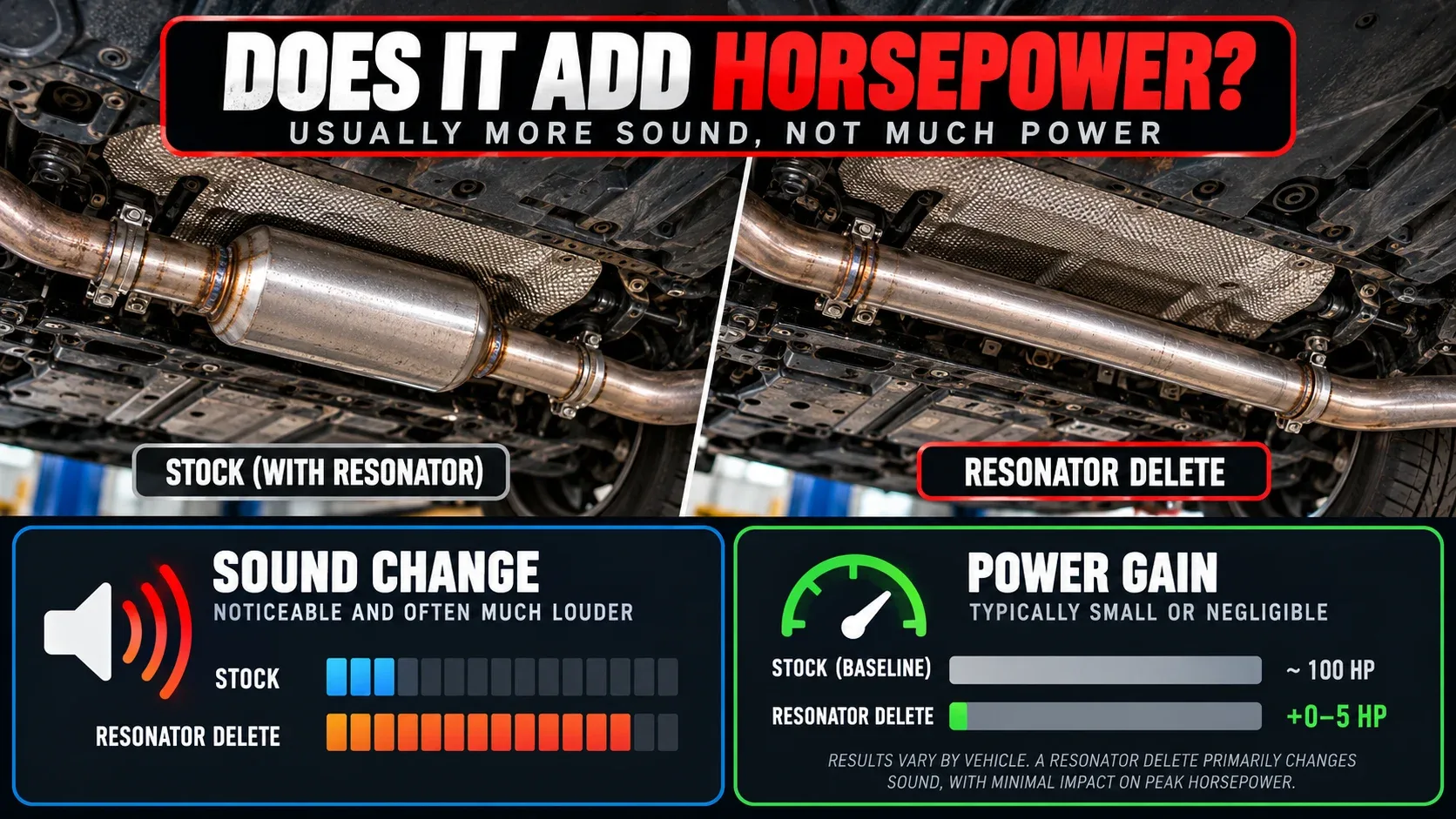
On most stock street vehicles, removing the resonator alone does not create a meaningful horsepower increase. Factory resonators are generally designed to control sound without creating a major exhaust restriction.
The car may feel more exciting because the exhaust is louder, but increased sound should not be confused with measured engine performance.
Does Removing the Resonator Affect Gas Mileage?
A properly performed resonator delete usually has little direct effect on fuel economy.
Fuel consumption may change indirectly if the louder exhaust encourages more aggressive acceleration.
Will a Resonator Delete Cause a Check Engine Light?
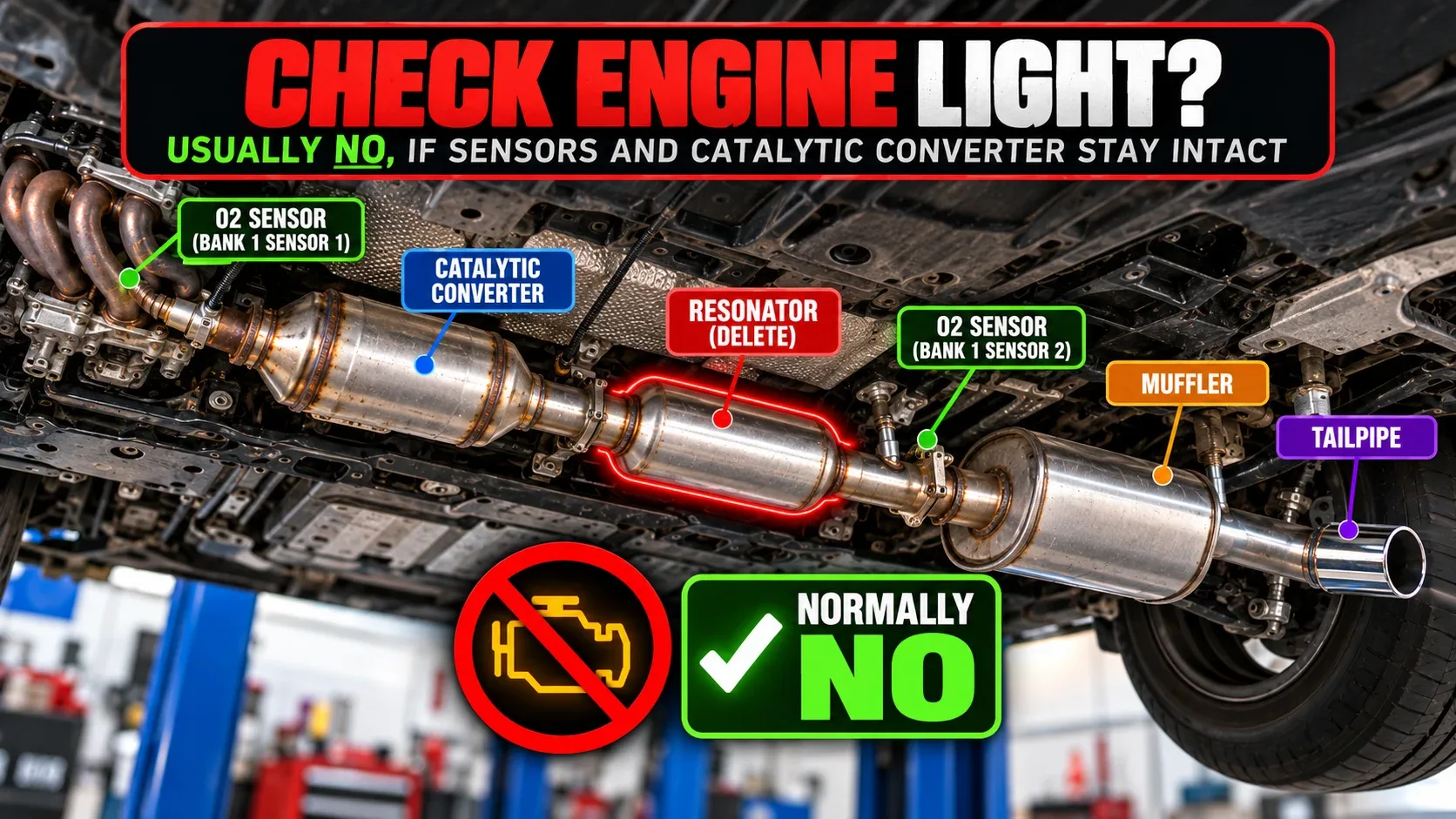
Removing only the resonator normally should not cause a check-engine light when the catalytic converter, oxygen sensors, and other emissions-related components remain intact.
A warning light may appear if an oxygen sensor is damaged, an exhaust leak develops, or other monitored components are disturbed during the modification.
Can a Resonator Delete Damage Your Engine?
A correctly performed resonator delete on a conventional exhaust system generally should not damage the engine by itself.
Problems are more likely to come from poor workmanship, such as:
- Exhaust leaks
- Damaged sensors
- Incorrect pipe sizing
- Poor-quality welds
- Pipes contacting the vehicle body or suspension
Does a Resonator Delete Affect Emissions?
A resonator does not normally perform the emissions-cleaning function of a catalytic converter. Removing only the resonator therefore does not automatically mean emissions equipment has been removed.
However, local inspection requirements may still regulate exhaust modifications.
Is a Resonator Delete Legal?
The legality of a resonator delete depends on local vehicle-noise laws and inspection rules.
Even if the catalytic converter remains installed, the resulting exhaust sound may exceed local noise limits. Check the current rules where the vehicle is registered before modifying the exhaust.
How Much Does a Resonator Delete Cost?

A basic resonator delete is usually one of the less expensive exhaust modifications. For many vehicles, a shop may charge approximately $50 to $300, depending on the vehicle, labor rates, pipe material, and fabrication requirements.
| Cost Factor | Effect on Price |
|---|---|
| Labor | Depends on local shop rates. |
| Replacement pipe | Material and diameter affect cost. |
| Dual exhaust | Can require more fabrication. |
| Rust or damage | May require additional exhaust repair. |
Actual prices vary by vehicle and location, so ask a local exhaust shop for a vehicle-specific quote.
Resonator Delete vs. Muffler Delete
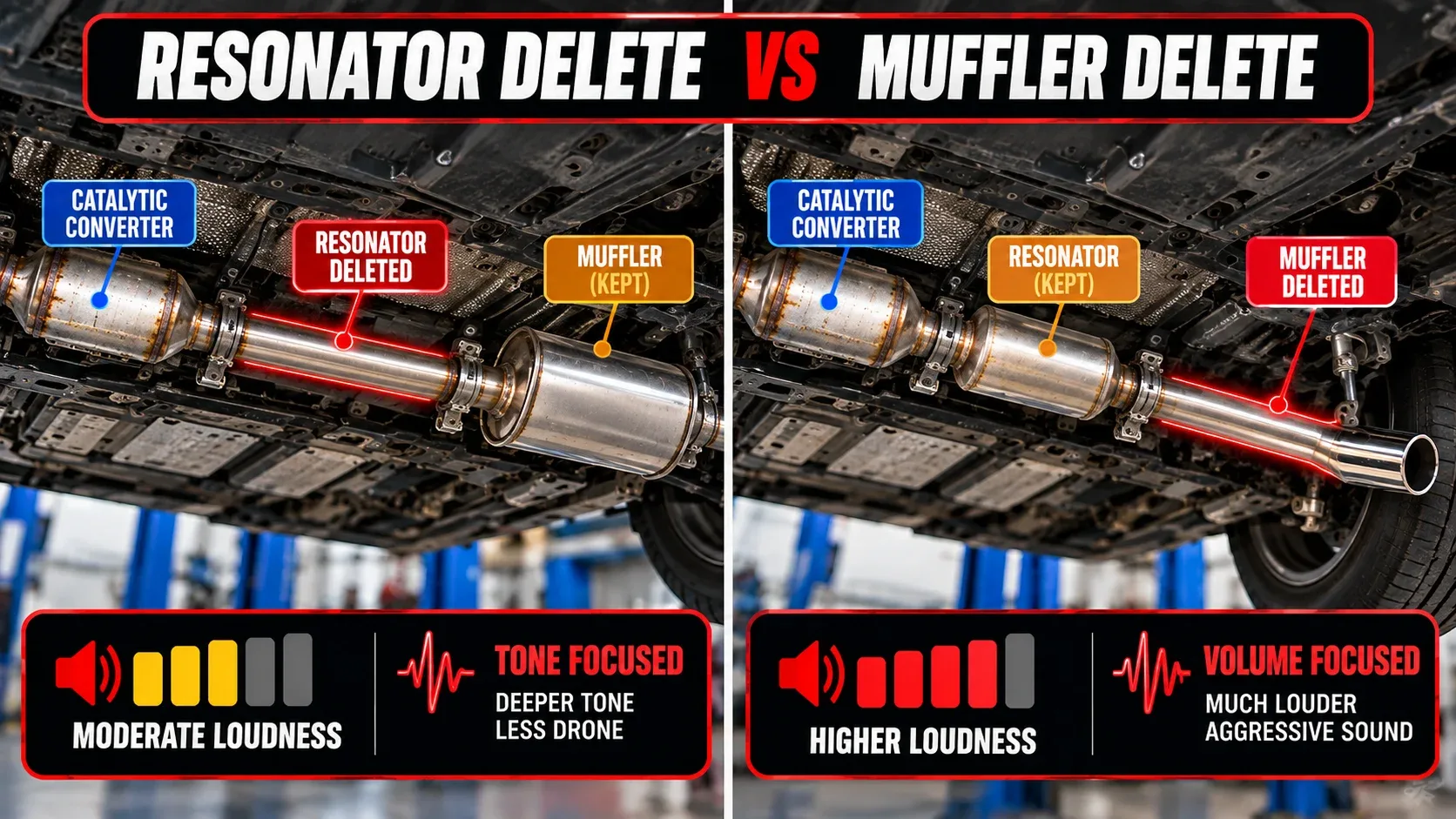
| Feature | Resonator Delete | Muffler Delete |
|---|---|---|
| Main effect | Changes frequencies and tone | Removes major sound reduction |
| Loudness | Usually mild to moderate increase | Usually greater increase |
| Drone risk | Possible | Can be significant |
Is a Resonator Delete Good for a Daily Driver?

A resonator delete can work well on a daily-driven vehicle if the resulting exhaust remains comfortable at highway speeds.
The main concern is drone. If you regularly spend long periods cruising on the highway, research your exact engine and exhaust setup before removing the factory resonator.
It May Make Sense If:
- You want more exhaust sound.
- You want an affordable modification.
- You are keeping the factory muffler.
- You can tolerate some additional cabin noise.
Keep the Resonator If:
- You want a quiet cabin.
- You drive long highway distances.
- Your vehicle is already loud.
- You expect a significant horsepower increase.
Can You Reverse a Resonator Delete?
In most cases, yes. The original resonator can often be welded or clamped back into place later.
Ask the shop to return your factory resonator after removal. Keeping it makes restoring the original exhaust much easier.
Before Removing Your Resonator, Check These 7 Things
- Listen to the same engine and vehicle configuration.
- Check local exhaust-noise laws.
- Confirm how many resonators your vehicle has.
- Check whether your exhaust has active valves.
- Research reports of highway drone.
- Use correctly sized replacement tubing.
- Keep the factory resonator.
Resonator Delete FAQs
Does a resonator delete make a car louder?
Usually, yes. The exhaust commonly becomes more noticeable, especially during acceleration.
Does removing a resonator increase horsepower?
Usually not by a meaningful amount on a stock street vehicle.
Does a resonator delete cause drone?
It can. Certain exhaust systems may develop a low-frequency booming sound at steady cruising RPM.
Can a resonator delete cause a check engine light?
Normally not when only the resonator is removed and the catalytic converter and oxygen sensors remain intact.
Can a resonator delete be reversed?
Yes. The original resonator can usually be reinstalled or replaced with another resonator.
Is a Resonator Delete Worth It?
A resonator delete can be an affordable way to make the exhaust sound louder and more aggressive without replacing the complete exhaust system.
However, removing the resonator can also introduce rasp or highway drone, and it normally provides little meaningful horsepower gain by itself.
Before making the modification, research your exact vehicle and engine combination, check local exhaust rules, and use a reputable exhaust shop.
Bottom Line
A resonator delete should primarily be viewed as a sound modification rather than a performance modification. It can make a car more exciting to hear, but the possibility of rasp, cabin drone, and local noise restrictions should be considered before removing the factory resonator.