
Whether your tread is worn, a tire is damaged, or you’re simply unsure when it’s time — this technician-reviewed guide covers when to replace the tires, how many you actually need, costs, and how to replace a tire safely at the roadside.
Your tires are the only part of your vehicle that touches the road. When it’s time to replace the tires, making the right decision protects your family, your wallet, and your vehicle’s performance.
This guide answers the most common questions drivers ask before purchasing new tires: How do I know my tires are worn out? Should I replace one, two, or all four? How much does it cost? Can I do it myself? We’ll walk you through every step so you can make a confident, informed decision.
Important: “Replacing tires” (buying and installing new ones because yours are worn or damaged) and “changing a flat tire” (swapping to a spare at the roadside) are two different tasks. This article covers both — with clearly labeled sections — so you get exactly the information you need.
Replacing Worn Tires vs. Changing a Flat Tire
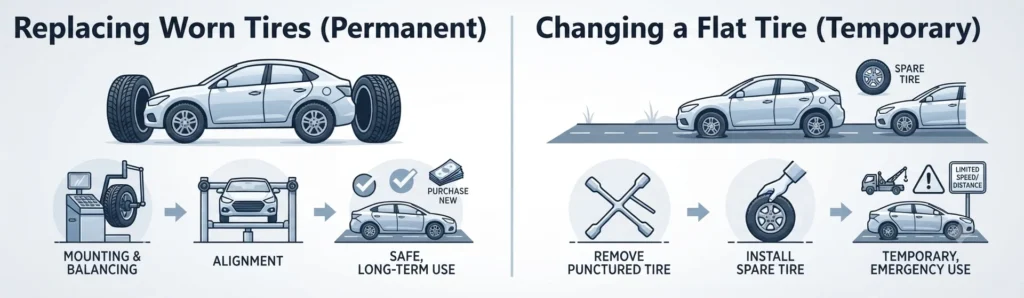
Replacing Worn Tires (Permanent)
This means purchasing brand-new tires because your current ones are worn, aged, or damaged beyond safe use. It requires professional mounting, balancing, and alignment. This is the primary focus of this article.
Changing a Flat Tire (Temporary)
This means removing a punctured or blown tire at the roadside and installing your vehicle’s spare. It’s an emergency procedure — the spare is not a permanent replacement. We cover the step-by-step process in the DIY section below.
6 Warning Signs You Need to Replace the Tires
If you notice any of these signs, have your tires inspected by a qualified technician. Driving on compromised tires significantly increases your risk of a blowout or loss of control.
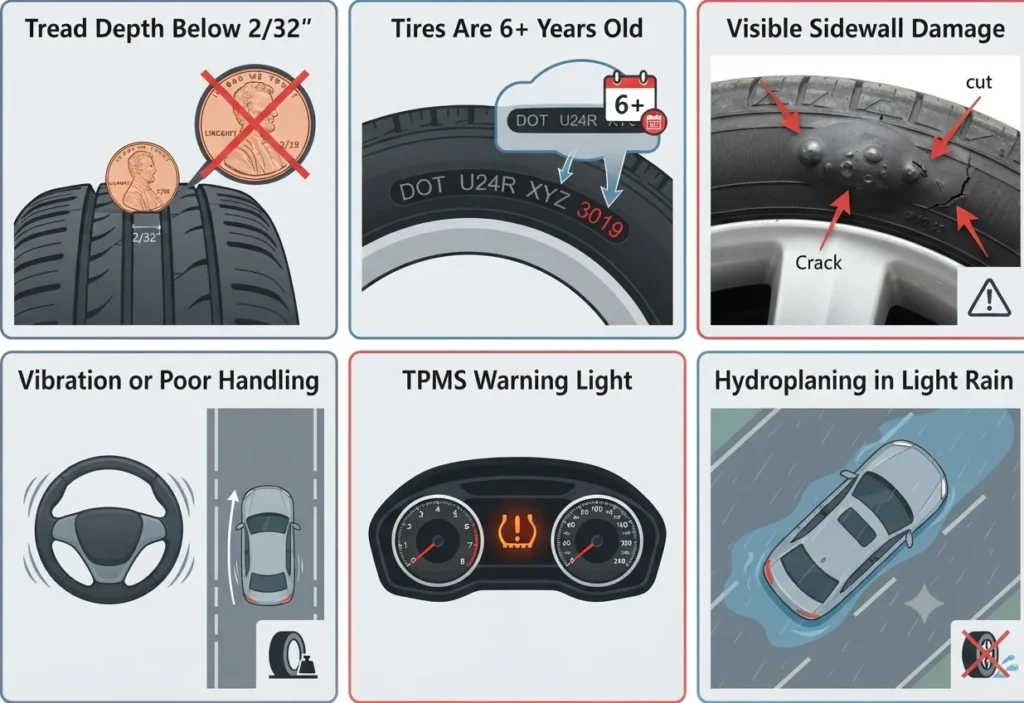
Tread Depth Below 2/32″
The legal minimum in the U.S. is 2/32 of an inch. Use the penny test: insert a penny head-first into the groove. If you can see all of Lincoln’s head, your tread is too shallow and you need to replace the tires immediately.
Tires Are 6+ Years Old
Rubber degrades over time regardless of mileage. Most manufacturers recommend replacing tires after 6 years — and never driving on tires older than 10 years. Check the DOT date code on the sidewall (last four digits = week and year of manufacture).
Visible Sidewall Damage
Bulges, bubbles, cracks, or cuts on the sidewall indicate internal structural damage. A sidewall bulge means the tire can blow out without warning. Never repair sidewall damage — replace the tire.
Vibration or Poor Handling
Persistent vibration through the steering wheel or vehicle pulling to one side may indicate uneven tread wear, internal belt separation, or tire imbalance. Have a technician inspect all four tires.
TPMS Warning Light
If your Tire Pressure Monitoring System light illuminates frequently — and the tires won’t hold pressure after inflation — you may have a slow puncture or valve stem failure. Persistent pressure loss often means it’s time to replace the tires.
Hydroplaning in Light Rain
If your vehicle slides or feels unresponsive on wet roads at moderate speeds, your tread can no longer channel water effectively. This is a serious safety hazard and a clear signal to replace the tires.
Understanding Tire Tread Depth
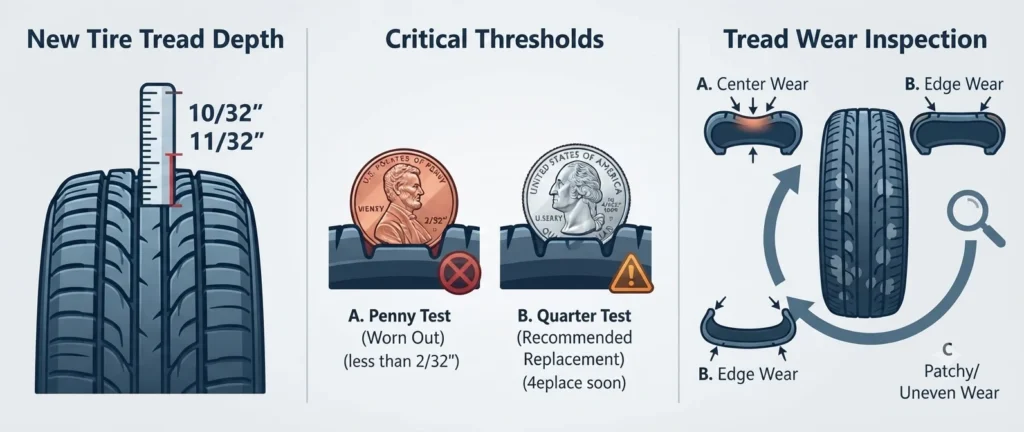
New tires typically have 10/32″ to 11/32″ of tread depth. The NHTSA considers tires worn out at 2/32″. However, most safety experts recommend replacing tires at 4/32″ — especially if you drive in rain or snow — because stopping distances increase dramatically below this threshold.
The Penny Test: Insert a U.S. penny into the tread groove with Lincoln’s head facing down. If the top of his head is visible, you have less than 2/32″ remaining and must replace the tires. For the quarter test (4/32″ threshold), use a quarter — if you can see the top of Washington’s head, plan for replacement soon.
Check tread depth in multiple spots across the tire width and at different points around the circumference. Uneven wear patterns can indicate alignment, inflation, or suspension problems that should be addressed before installing new tires.
Should You Replace 1, 2, or All 4 Tires?
The number of tires you need to replace depends on your vehicle type, drivetrain, and the condition of your remaining tires. Here’s the general guidance:
Replacing 1 Tire
Acceptable only if the other three tires have substantial tread remaining (within 2/32″ of the new tire) and the vehicle is front-wheel or rear-wheel drive. The new tire should match the brand, model, and size. Place the new tire on the rear axle for safety.
Replacing 2 Tires
The most common scenario. Install the two new tires on the rear axle regardless of whether you have FWD or RWD — this prevents dangerous oversteer in wet conditions. Match the tire size and speed rating to the remaining pair.
Replacing All 4 Tires
Required for AWD and 4WD vehicles (mismatched tread can damage the drivetrain). Also recommended when existing tires are near end-of-life or when you want to switch tire types (e.g., all-season to winter).
⚠️ AWD & 4WD owners: Most manufacturers require all four tires to be replaced simultaneously with matching tread depths (within 2/32″ difference). Mismatched circumferences can cause premature wear on differentials and transfer cases — a repair that costs far more than four new tires. Always check your owner’s manual.
How to Replace a Tire: Roadside Flat Change (Step by Step)
If you have a flat and need to install your spare, follow these steps. Remember: a temporary spare (donut) is rated for 50 miles at 50 mph maximum. Get to a tire shop as soon as possible.
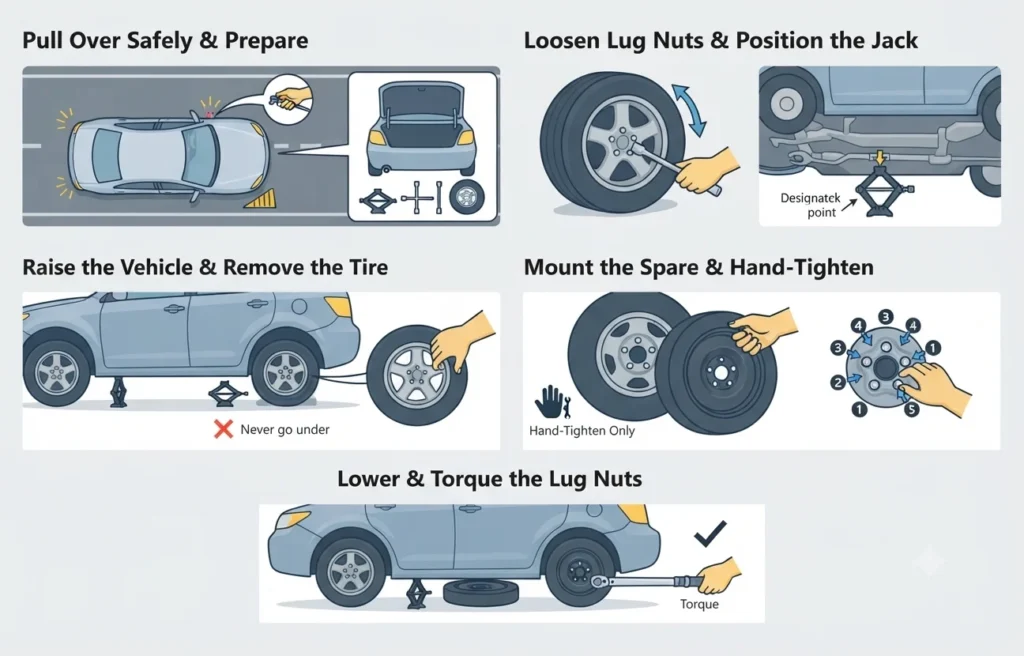
Pull Over Safely & Prepare
Move to a flat, stable surface away from traffic. Turn on hazard lights, apply the parking brake, and place wheel wedges behind the tires. Retrieve the jack, lug wrench, and spare from the trunk.
Loosen Lug Nuts & Position the Jack
While the tire is still on the ground, loosen each lug nut by turning counterclockwise (about ½ turn). Then position the jack under the vehicle frame at the designated jack point — check your owner’s manual for the exact location.
Raise the Vehicle & Remove the Tire
Raise the jack until the flat tire is about 6 inches off the ground. Fully remove the lug nuts, then pull the tire straight toward you. Never go under the vehicle while it’s supported only by a jack.
Mount the Spare & Hand-Tighten
Lift the spare onto the lug bolts, push gently until the bolts show through. Hand-tighten the lug nuts in a star pattern to ensure even seating. Do not fully torque them yet.
Lower & Torque the Lug Nuts
Lower the vehicle until the tire touches the ground but doesn’t bear full weight. Tighten lug nuts fully in a star pattern. Lower completely, remove the jack, and check tire pressure. Drive to a tire shop to replace the tires with a permanent set.
Tire Replacement Cost Estimates (2026)
| Service | Estimated Cost (USD) |
|---|---|
| Economy Tires (per tire) | $60 – $120 |
| Mid-Range Tires (per tire) | $120 – $200 |
| Premium Tires (per tire) | $200 – $400+ |
| Mounting & Balancing (per tire) | $15 – $45 |
| Wheel Alignment | $75 – $150 |
Not Sure If Your Tires Need Replacing?
Have the tread depth, tire condition, and vehicle requirements checked by a qualified tire technician before making a purchase. A professional inspection takes minutes, costs little or nothing at most tire shops, and gives you peace of mind that you’re only spending money when safety requires it.
Frequently Asked Questions About Tire Replacement
How often should I replace the tires on my car?
Most tires last 40,000–70,000 miles depending on the brand, driving style, and road conditions. Regardless of mileage, replace tires after 6 years and never drive on tires older than 10 years. Check tread depth every 5,000 miles or at each oil change.
Can I replace just one tire?
On 2WD vehicles, yes — but only if the remaining tires have similar tread depth (within 2/32″). The new tire should be the same size, speed rating, and load index. For AWD/4WD vehicles, most manufacturers require all four tires be replaced together.
Do new tires go on the front or rear?
New tires should always be installed on the rear axle, regardless of your drivetrain. This provides better stability and reduces the risk of oversteer (fishtailing) on wet roads. This recommendation comes from the Tire Industry Association and major tire manufacturers.
How long does it take to replace tires at a shop?
Replacing all four tires typically takes 45 minutes to 1 hour, including mounting, balancing, and a courtesy inspection. Add another 30–45 minutes if you need a wheel alignment. Wait times may vary depending on the shop’s schedule.
Can I replace a tire myself at home?
You can change a flat tire (swap to a spare), but actually mounting a new tire onto a rim requires a tire mounting machine and balancer — specialized equipment found only in tire shops. DIY flat tire changes are covered in the step-by-step section above.
What does tire replacement include at a shop?
Professional installation typically includes: removing old tires, mounting new tires on rims, wheel balancing, new valve stems, setting correct tire pressure, and a visual inspection. Some shops include a free alignment check or road-force balancing at higher price tiers.
Is it safe to drive on a spare tire for a long time?
No. Temporary spares (donuts) are rated for a maximum of 50 miles at 50 mph. Full-size spares can be driven longer but are not balanced or aligned for permanent use. Replace the tires with a proper set as soon as possible after using any spare.
How do I know what size tires my car needs?
Check the placard on the driver’s door jamb — it lists the original tire size, load index, and recommended pressure. You can also find this information in your owner’s manual or on the sidewall of your current tires (e.g., P225/65R17 102H). Always match these specifications when you replace the tires.