
A Range Rover engine rebuild is not a routine garage job. Modern Range Rover powertrains combine complex lubrication systems, turbocharging, emissions hardware, timing systems and vehicle electronics. When internal damage is serious, choosing a Range Rover engine rebuild specialist in UK can be the difference between a durable repair and repeating the same failure months later.
The right specialist should be able to identify the engine by code, explain why it failed, measure the internal components, machine what can be saved, replace what cannot, rebuild to the correct specification and then prove the result with diagnostic and mechanical testing. A workshop that jumps directly to “you need another engine” without diagnosing the failure deserves extra scrutiny.
| Fast answer For Range Rover owners, the strongest workshop choice is usually one that works on JLR engines every day, can show experience with your exact engine code, provides a written rebuild specification and warranty, and carries out pre- and post-rebuild diagnostics. Jaguar & Land Rover Engine Specialists in Ilford publishes this JLR-only approach and covers Range Rover Sport, Evoque, Velar and Vogue engine families. |
What does a Range Rover engine rebuild involve?
A proper rebuild begins with diagnosis, not parts ordering. The specialist needs to understand whether the original fault was caused by lubrication loss, overheating, timing failure, bearing wear, piston-ring damage, coolant contamination, turbo failure or another issue. Rebuilding the core without addressing the original cause can damage the fresh engine.
1. Initial diagnostic scan and fault-history review using JLR-capable equipment.
2. Compression, oil-pressure or other mechanical checks where the engine can still be tested.
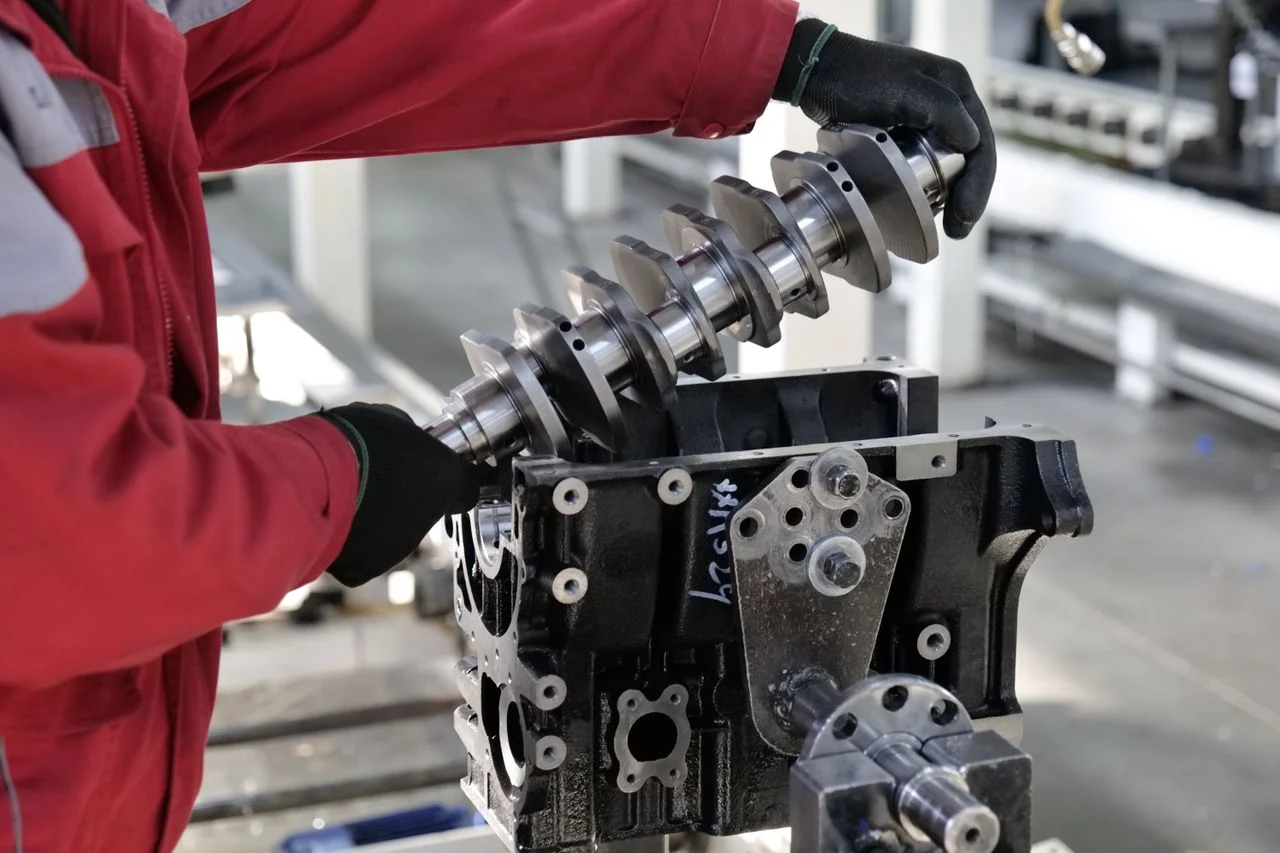
3. Engine removal and complete strip-down to the block, crankshaft, cylinder head, pistons and connecting rods.
4. Cleaning of the block, head and oil galleries so contamination and hidden damage can be inspected.
5. Measurement of crankshaft journals, cylinder bores, deck surfaces and other critical tolerances.
6. Machining or replacement of damaged components, including crankshaft work, honing, resurfacing or additional machine work where required.
7. Replacement of bearings, rings, gaskets, seals, timing components and other items specified for the engine family.
8. Reassembly to the correct torque and timing specification.
9. Pre-installation or post-installation compression and oil-pressure testing.
10. Final JLR diagnostic scan, road test and checks for leaks, pressure, temperatures and stored fault codes.
Why Range Rover engine-code expertise matters
A badge such as “Range Rover Sport 3.0 diesel” is not precise enough for major engine work. Different model years can use different engine codes, turbo layouts, emissions systems, sensors and ECU calibrations. The specialist should confirm the code from the registration or VIN before pricing an exchange engine or ordering internal parts.
| Range Rover family | Example engine codes / types | Typical specialist focus |
|---|---|---|
| Evoque | 204DTA, 204DTD, 204PT, 224DT | Ingenium timing system, lubrication, piston-ring and oil-pressure diagnosis |
| Sport | 276DT, 306DT, 30DDTX, V8 variants | TDV6/SDV6 crankshaft and bearing wear, timing, turbo and cooling checks |
| Velar | 204DTA, 204DTD, 306DT, 306PS | Ingenium and 3.0 engine diagnosis, timing, lubrication and cooling-related work |
| Vogue / L322 / L405 | 306DT, 448DT, 508PN, 508PS and related codes | TDV6/TDV8/V8 rebuilds, crankshaft, oil-pump, head and timing work |
Common signs that a Range Rover engine may need rebuilding
- Deep knocking or rumbling that rises with engine speed, which can indicate crankshaft or bearing damage.
- Persistent low-oil-pressure warnings or oil-pressure fault codes after the oil level and sensor have been checked.
- High oil consumption combined with blue smoke, poor compression or crankcase pressure.
- White exhaust smoke with coolant loss, especially after an overheating event.
- Serious timing-chain noise, loss of timing correlation or internal contact after timing-system failure.
- Metal contamination in the oil or filter.
- Low compression across one or more cylinders after leakage and valvetrain causes have been ruled out.
- Engine seizure or major internal damage after oil starvation, overheating or coolant contamination.
Not every one of these symptoms means a full rebuild is necessary. Turbocharger failure, EGR faults, injector problems, sensors, cooling-system leaks and ancillary issues can imitate major engine trouble. A specialist should separate those faults before recommending a rebuild.
Range Rover repair vs rebuild vs reconditioned replacement engine
| Route | When it makes sense | Advantages | Watch-outs |
|---|---|---|---|
| Targeted repair | Damage is isolated to a repairable component and the rest of the engine tests well | Lower cost and less downtime | Must confirm no wider internal wear exists |
| Rebuild your original engine | Block and major castings are viable but internal wear is extensive | Known engine identity; rebuild can be tailored to actual damage | Machining and parts availability can extend turnaround |
| Reconditioned exchange engine | Original engine is uneconomic to save or faster turnaround is needed | Potentially faster; prepared unit can be installed while original becomes a core | Need clear documentation of what “reconditioned” included |
| Used engine | Vehicle value or budget makes a full rebuild difficult | Lowest upfront cost in many cases | Unknown internal wear and service history |
What a Range Rover engine rebuild specialist should be able to prove
Marketing phrases such as “factory standard” or “fully reconditioned” are only useful when the workshop can explain the process. Before booking, ask for evidence in five areas.
- Engine-code experience: the workshop should recognise the code and its common failure pattern without guessing from the model name alone.
- Diagnostic capability: JLR-specific SDD or Pathfinder-level diagnostics are valuable because generic OBD-II tools do not provide the same model-specific coverage.
- Machining and measurement: ask which tolerances are checked and whether crankshaft, block and cylinder-head work is done in-house or by a named machine shop.
- Parts specification: ask which internal parts are OEM, genuine, or quality-matched and whether the timing system is included.
- Testing and warranty: request the final testing process and the exact written warranty before work begins.
Why choose a JLR-only workshop?
A general engine builder can be technically excellent, but there is value in a workshop that sees the same JLR engine families repeatedly. Jaguar & Land Rover Engine Specialists states that its Ilford workshop works exclusively on Jaguar, Land Rover and Range Rover engines and has more than 20 years of JLR engine experience.
The workshop publishes coverage of TDV6, SDV6, TDV8, Ingenium and V8 engines, along with engine-code matching, SDD/Pathfinder diagnostics, documented strip-down and testing, and written warranty terms. For Range Rover owners, that specialist repetition is particularly useful when the root cause is a known platform-specific issue rather than generic age-related wear.
See the full Range Rover engine rebuild service for model and engine-code coverage. If you drive a Sport, the Range Rover Sport engine page also explains supply-and-fit options.
How much does a Range Rover engine rebuild cost in the UK?
There is no honest fixed price that applies to every Range Rover engine. The final cost depends on the engine code, the amount of crankshaft or block damage, cylinder-head condition, machining, turbo and injector condition, timing components, ancillary parts and whether the quote includes removal and refitting.
Jaguar & Land Rover Engine Specialists publishes a broad £3,000 to £6,500 range for TDV6 rebuild work depending on the damage and parts required. Treat that as a guide rather than a universal price. A 2.0 Ingenium rebuild, a 3.0 TDV6/SDV6 rebuild and a V8 rebuild can have very different parts and machining requirements.
| Get a written quote after diagnosis A useful quotation should state the engine code, scope of strip-down, included parts, machining work, fluids, filters, fitting, VAT, warranty and any items that remain provisional until the engine is opened. This is more valuable than a low headline “from” price. |
How long does a Range Rover engine rebuild take?
Turnaround varies with workshop capacity, engine damage and parts availability. A rebuild that needs crankshaft machining, cylinder-head work or a replacement block will take longer than a prepared exchange-engine installation. Ask the workshop to separate the estimated workshop time from delays caused by machining or parts sourcing.
The fastest option is not automatically the best. A workshop promising an unrealistically short turnaround may be using a prepared exchange unit, outsourcing the build or carrying out a more limited repair. None of those is automatically wrong, but the route should be explained clearly.
What should the warranty cover?
A warranty is useful only when you understand the conditions. Jaguar & Land Rover Engine Specialists advertises a written 12-month warranty on qualifying rebuilds and repairs, including core components such as the timing chain, crankshaft bearings and cylinder-head gasket as a minimum. Other UK specialists publish six- or twelve-month cover depending on the engine and service route.
- Parts and labour: confirm whether both are covered when the same workshop supplies and fits the engine.
- Mileage limit: some warranties are time-limited and mileage-limited.
- Servicing obligations: a bedding-in oil change or specific oil grade may be mandatory.
- Return-to-base conditions: understand who pays recovery if a warranty issue occurs.
- Ancillaries: turbochargers, injectors, DPFs, EGR systems and cooling components may have separate terms.
- Transferability: relevant if you sell the vehicle during the warranty period.
Questions to ask a Range Rover engine rebuild specialist
1. Will you confirm my exact engine code from the registration or VIN?
2. Do you diagnose the root cause before removing the engine?
3. Do you rebuild my original engine or fit an exchange unit?
4. Which parts are replaced as standard?
5. Who performs the crankshaft and cylinder-head machining?
6. Is the timing system included in the rebuild?
7. How do you test oil pressure and compression after assembly?
8. Will you scan the vehicle with JLR-specific diagnostics after installation?
9. What warranty do I receive in writing?
10. Is the quote fixed, and which items can change after strip-down?
11. Do you provide vehicle collection or nationwide engine delivery?
12. What running-in and first-service procedure must I follow?
FAQs: Range Rover Engine Rebuild Specialist in UK
Can a seized Range Rover engine be rebuilt?
Sometimes. A seized engine must be stripped before the workshop can determine whether the block, crankshaft and cylinder heads are economically recoverable. Severe block damage can make a reconditioned replacement unit more sensible.
Is a rebuilt Range Rover engine as good as a replacement engine?
A correctly rebuilt original engine can be an excellent solution because the internal condition is measured and the rebuild is tailored to the actual damage. A quality exchange reconditioned engine can also work well when it has a documented build process and warranty.
Do I need a specialist for a 2.0 Ingenium engine?
Specialist experience is strongly advisable because timing, oil-pressure and lubrication issues need to be diagnosed together. Replacing a failed part without correcting the underlying cause can lead to repeat damage.
What information should I send for a quote?
Registration, VIN if available, model, year, mileage, engine symptoms, warning messages, service history and any diagnostic codes. Photos or a previous garage report can also help.
Do Range Rover engine rebuild specialists cover the whole UK?
Many do. Jaguar & Land Rover Engine Specialists advertises UK-wide engine supply and delivery, while its workshop is in Ilford, East London. Other specialists also offer vehicle collection or pallet delivery.
Should I replace the turbo at the same time?
Not automatically. The turbo should be inspected, and the oil feed/return system checked. If the original engine failed because of oil starvation or debris, the turbo and lubrication circuit deserve particular attention before the rebuilt engine is started.
Final takeaway
Choosing a Range Rover engine rebuild specialist in UK should be a technical decision, not simply a price comparison. The workshop should know your engine code, diagnose the original failure, document the rebuild, use appropriate components, test the result and give you written warranty terms. That combination is what protects the investment in a vehicle that is often worth far more than the failed engine.
For a JLR-specific assessment and written quote, visit the Range Rover engine rebuild specialists page or contact the Ilford workshop through jaguarlandroverengines.co.uk.