
Learning the parts of a boat makes boating terminology much easier to understand. Whether you are buying your first boat, taking a boating course, renting a vessel, or simply trying to understand terms such as bow, stern, port, starboard, hull, and transom, this guide explains the main boat parts in simple language.
Although boats vary greatly in size and design, many basic terms are used across recreational powerboats, fishing boats, pontoons, sailboats, and other vessels. Some components, however, are specific to certain types of boats, so this guide points out those differences where they matter.
Parts of a Boat Diagram: Quick Reference
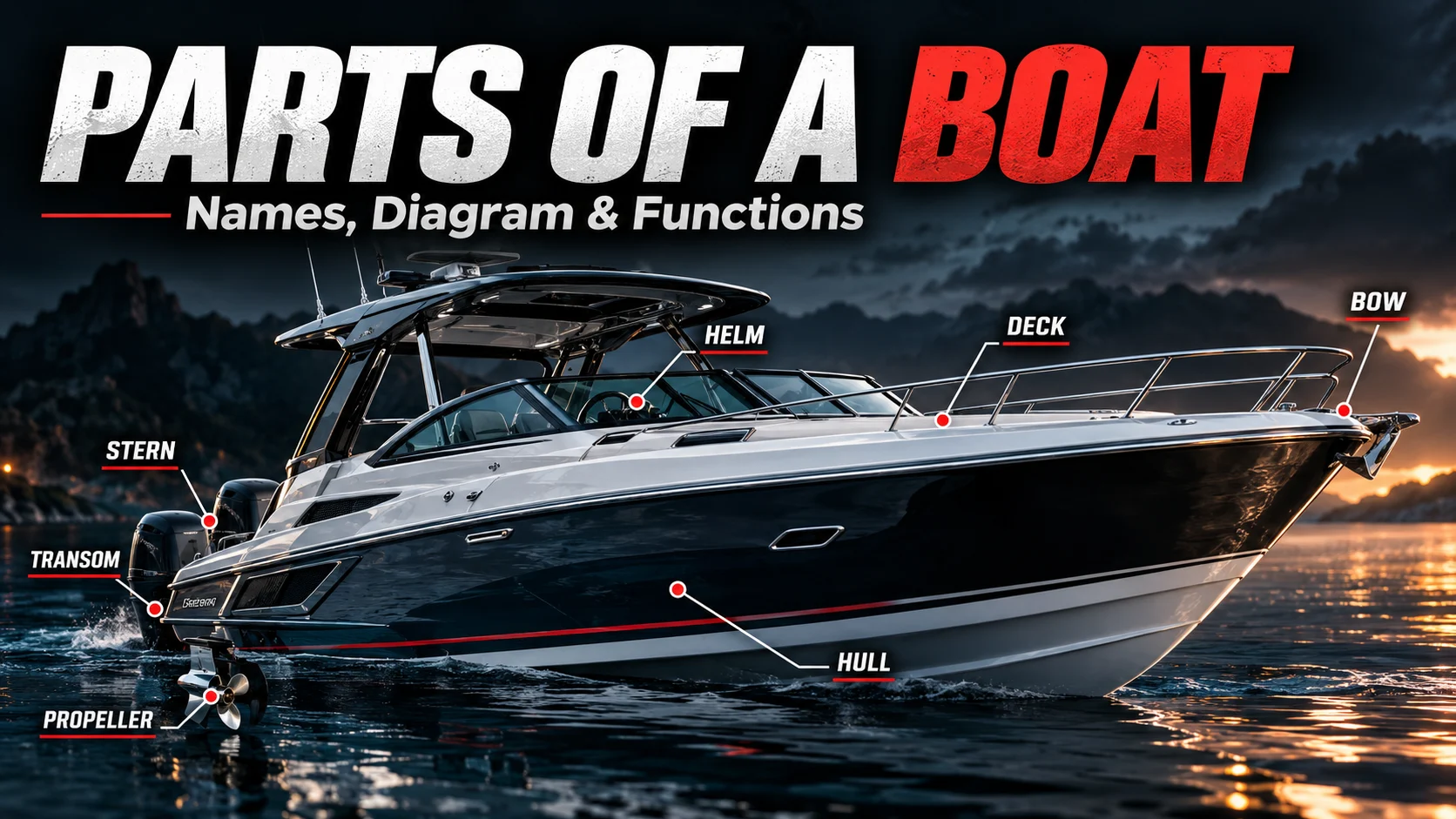
A labeled diagram is one of the easiest ways to learn boat anatomy. The illustration below shows the major exterior and operating components of a typical recreational powerboat.
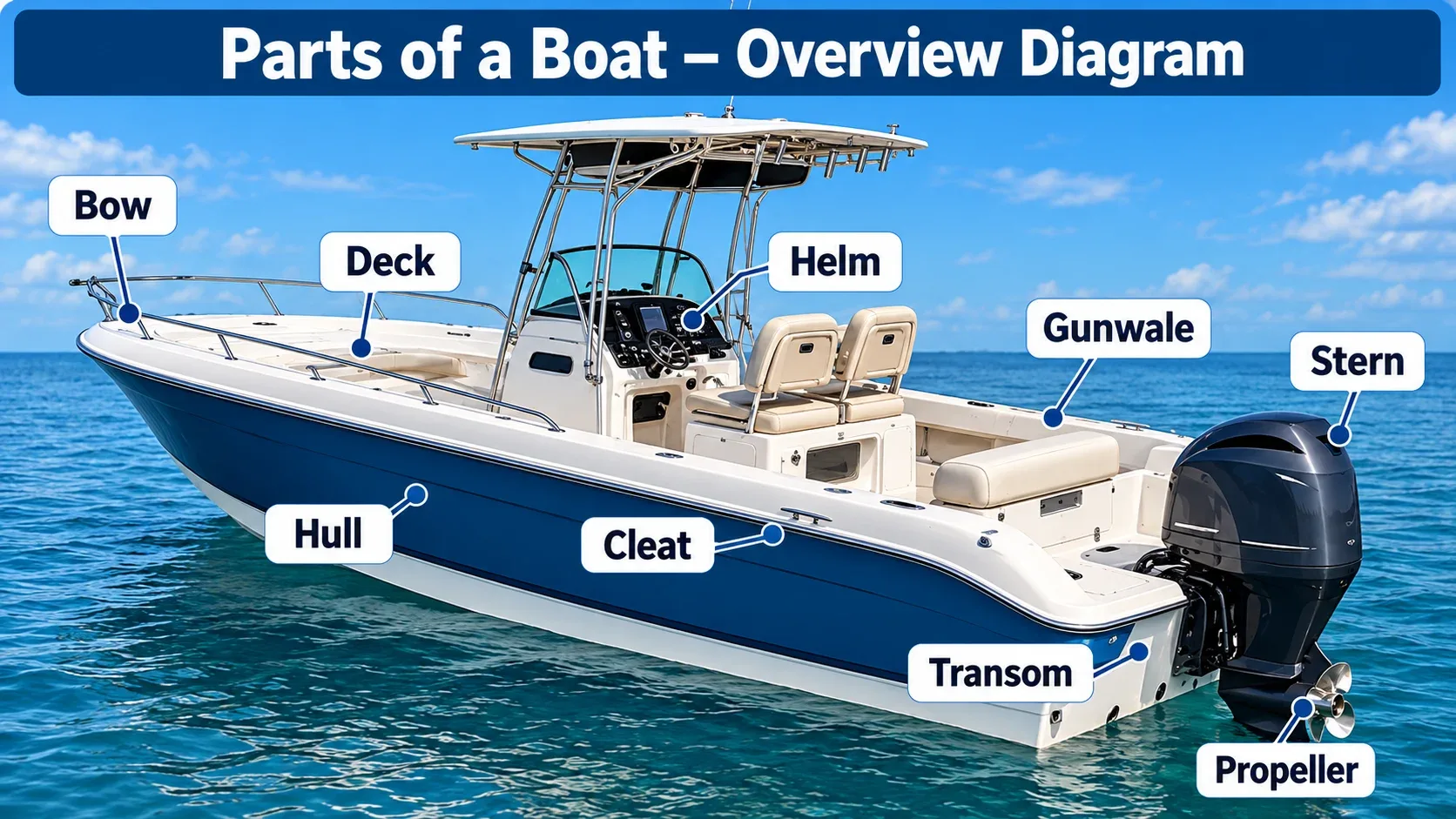
| Boat Part | Location | Main Function |
|---|---|---|
| Bow | Front | The forward section of the boat. |
| Stern | Rear | The back section of the boat. |
| Port | Left side | The boat’s left side when facing the bow. |
| Starboard | Right side | The boat’s right side when facing the bow. |
| Hull | Main body | Provides the boat’s primary structure and buoyant form. |
| Deck | Upper surface | Provides walking, seating, and working areas. |
| Transom | Rear of hull | Forms part of the stern structure and often supports an outboard motor. |
| Helm | Operating area | Contains steering and control equipment. |
| Cleat | Deck or gunwale area | Provides an attachment point for dock lines and other ropes. |
Basic Boat Terms: Bow, Stern, Port and Starboard
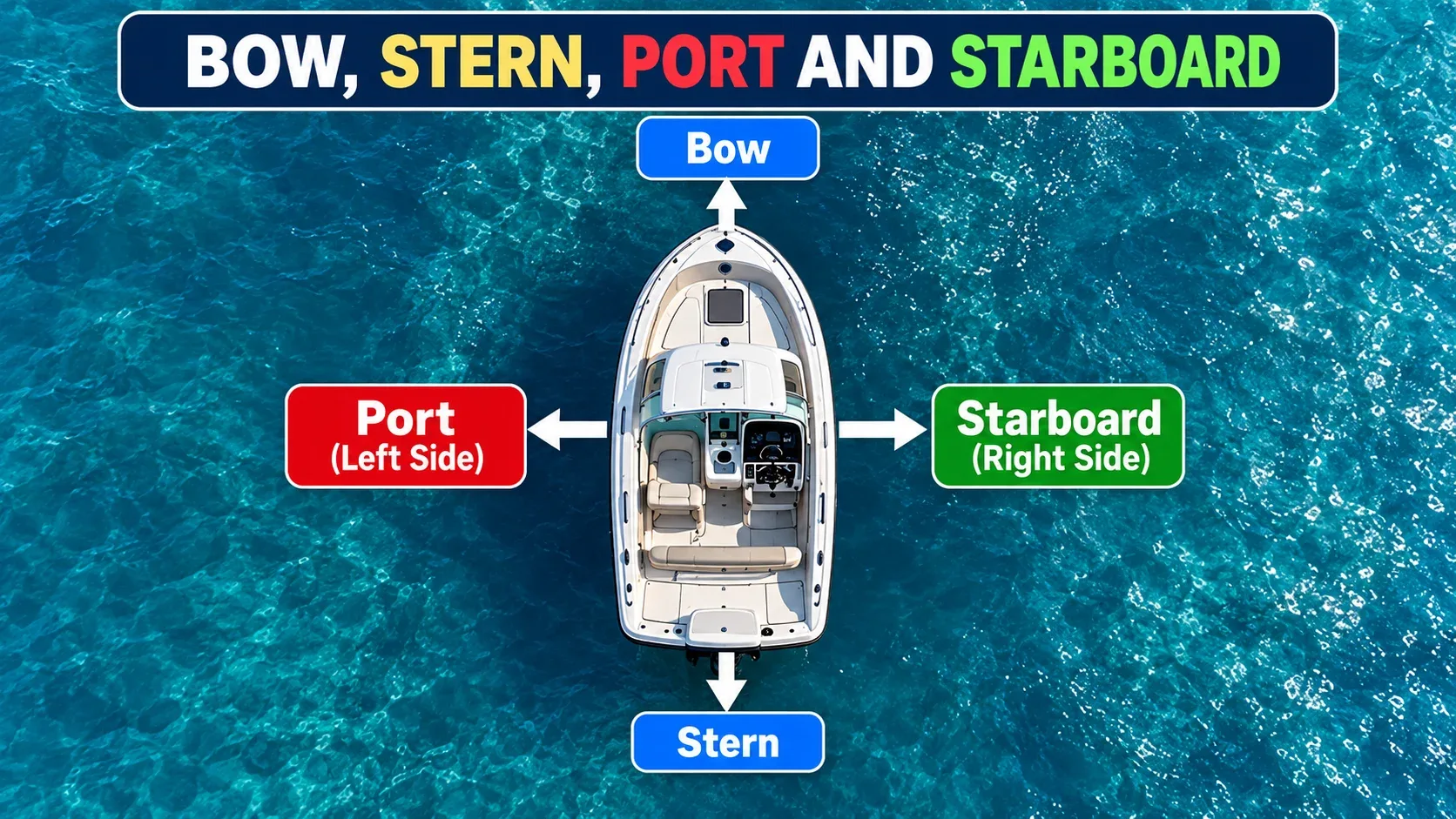
Four of the first boating terms a beginner should learn are bow, stern, port, and starboard. Unlike ordinary left and right directions, port and starboard always refer to the same sides of the vessel.
Bow
The bow is the front of the boat. It is the forward-most section when the vessel is moving normally through the water.
Stern
The stern is the rear or back of the boat. Many recreational boats have engines, swim platforms, boarding ladders, or storage areas toward the stern.
Port
Port is the boat’s left side when you are facing forward toward the bow.
Starboard
Starboard is the boat’s right side when facing toward the bow.
Main Structural Parts of a Boat
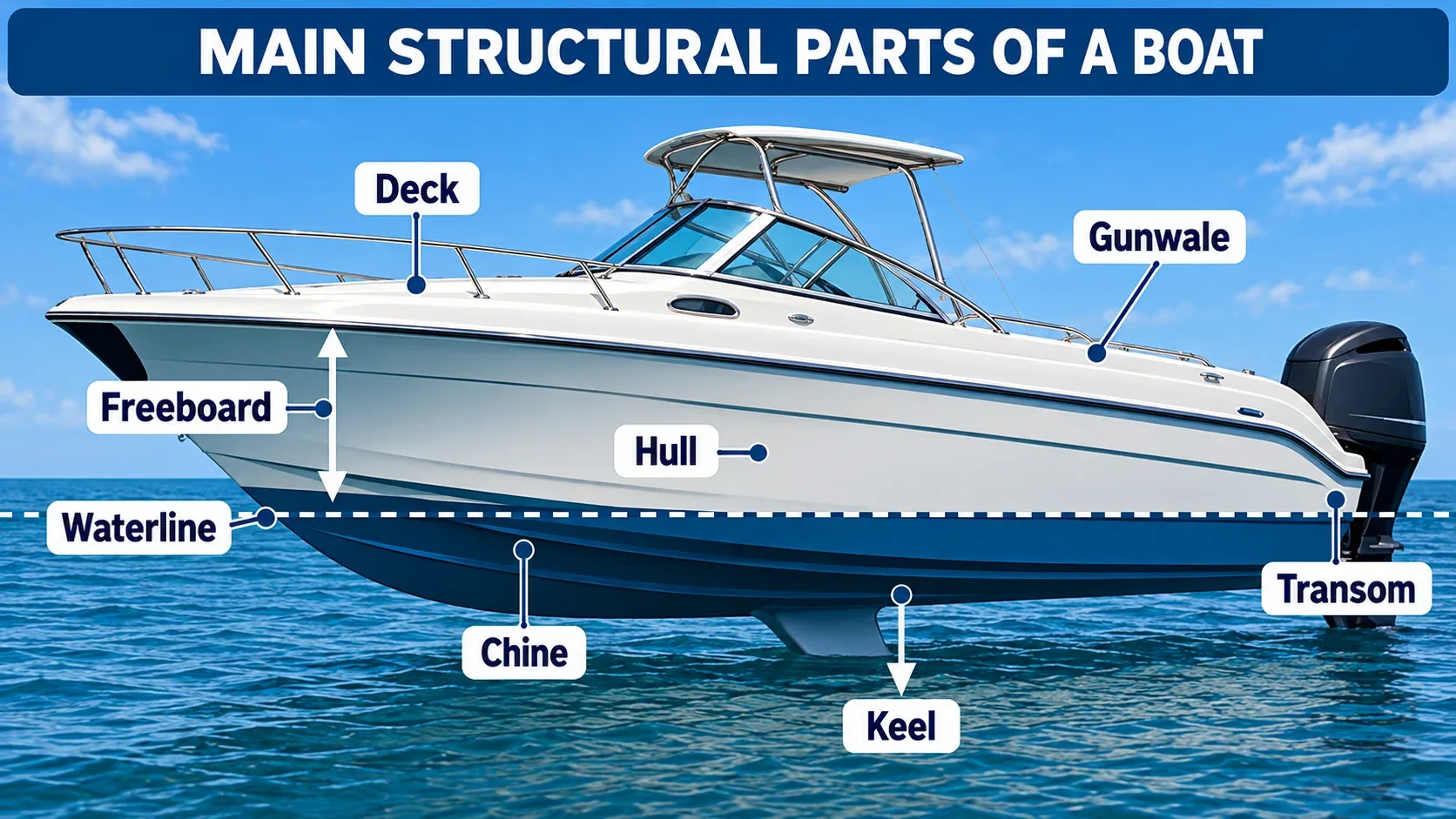
The structural parts form the main body of the vessel. Their exact shapes and designs vary depending on whether a boat is designed for fishing, cruising, watersports, sailing, or another activity.
Hull
The hull is the main body of a boat. It supports the vessel and creates the shape that moves through or rests on the water.
Deck
The deck is the upper surface of the boat and may be used for walking, seating, fishing, working, or accessing storage.
Gunwale
The gunwale, commonly pronounced “gunnel,” is the upper edge of the side of the boat.
Transom
The transom is a structural section at the rear of many boats. Outboard motors are commonly mounted to it or to connected hardware.
Keel
The keel generally runs along the bottom centerline of a boat. Its design and function vary according to vessel type.
Parts Around the Boat Hull
Freeboard
Freeboard refers to the vertical distance between the waterline and the upper edge of the boat’s side.
Waterline
The waterline is the level where the surface of the water meets the hull.
Chine
The chine is the area where the bottom of a hull transitions into its side.
Beam
A boat’s beam is its width at the widest point.
Common Interior Areas of a Boat
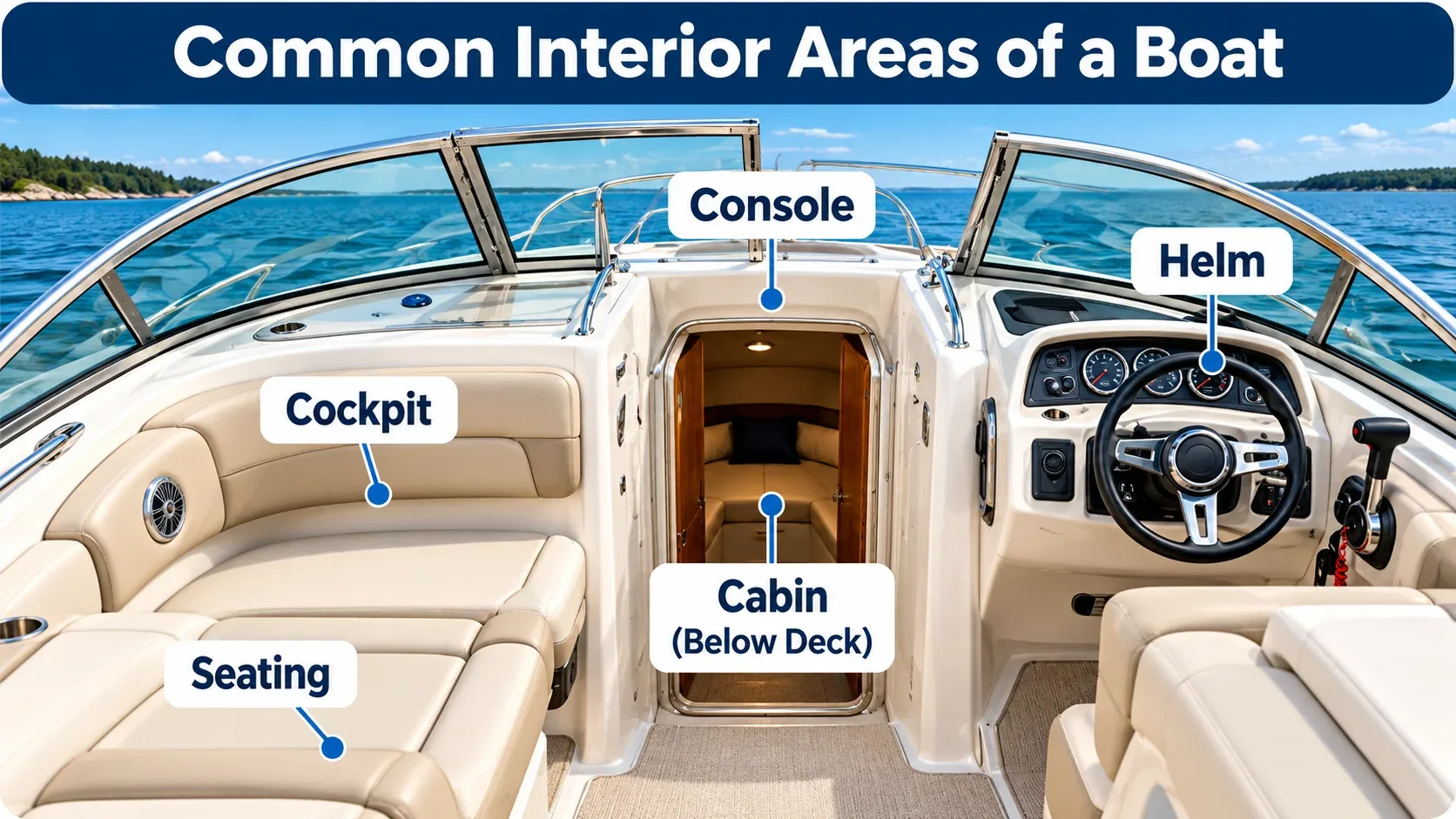
Many boats have named interior areas used by passengers, crew, and the operator.
Cockpit
The cockpit is generally an open area where passengers or crew sit, stand, fish, or move around.
Helm
The helm is the boat’s operating position and normally contains the steering and engine controls.
Cabin
A cabin is an enclosed interior space that may include seating, sleeping space, storage, or other accommodations.
Console
The console houses controls, gauges, electronics, and other operating equipment.
Berth
A berth is a sleeping space aboard a vessel.
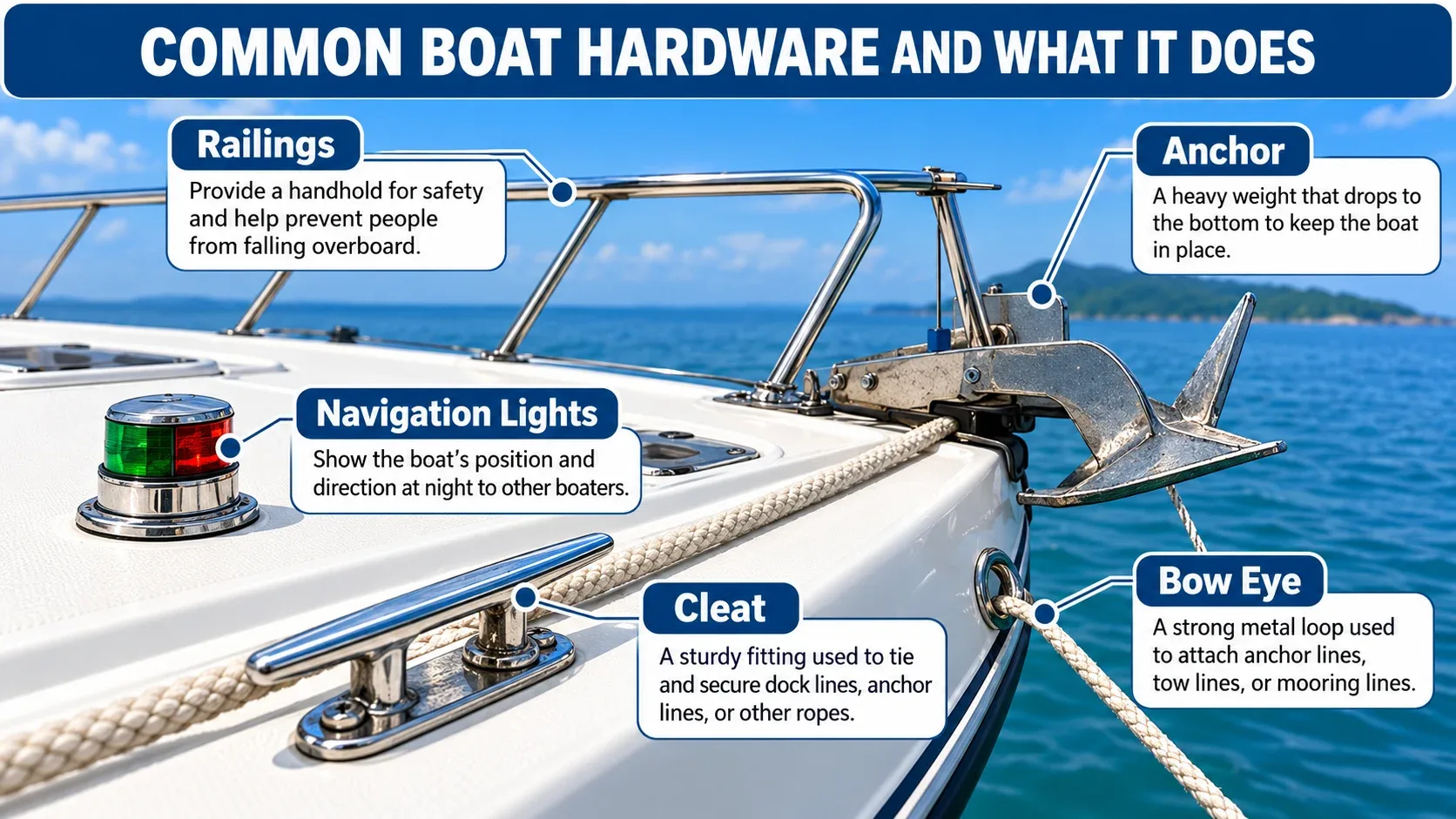
Common Boat Hardware and What It Does
Cleats
Cleats are strong fittings used as attachment points for dock lines and other ropes.
Railings
Railings provide handholds and may help create a physical barrier around parts of the deck.
Anchor
An anchor is used to help hold a vessel in position by engaging the bottom.
Bow Eye
A bow eye is a strong fitting near the bow of many trailerable boats.
Navigation Lights
Navigation lights help other boaters identify a vessel’s presence and orientation in darkness or reduced visibility.
Parts of a Boat Below the Waterline
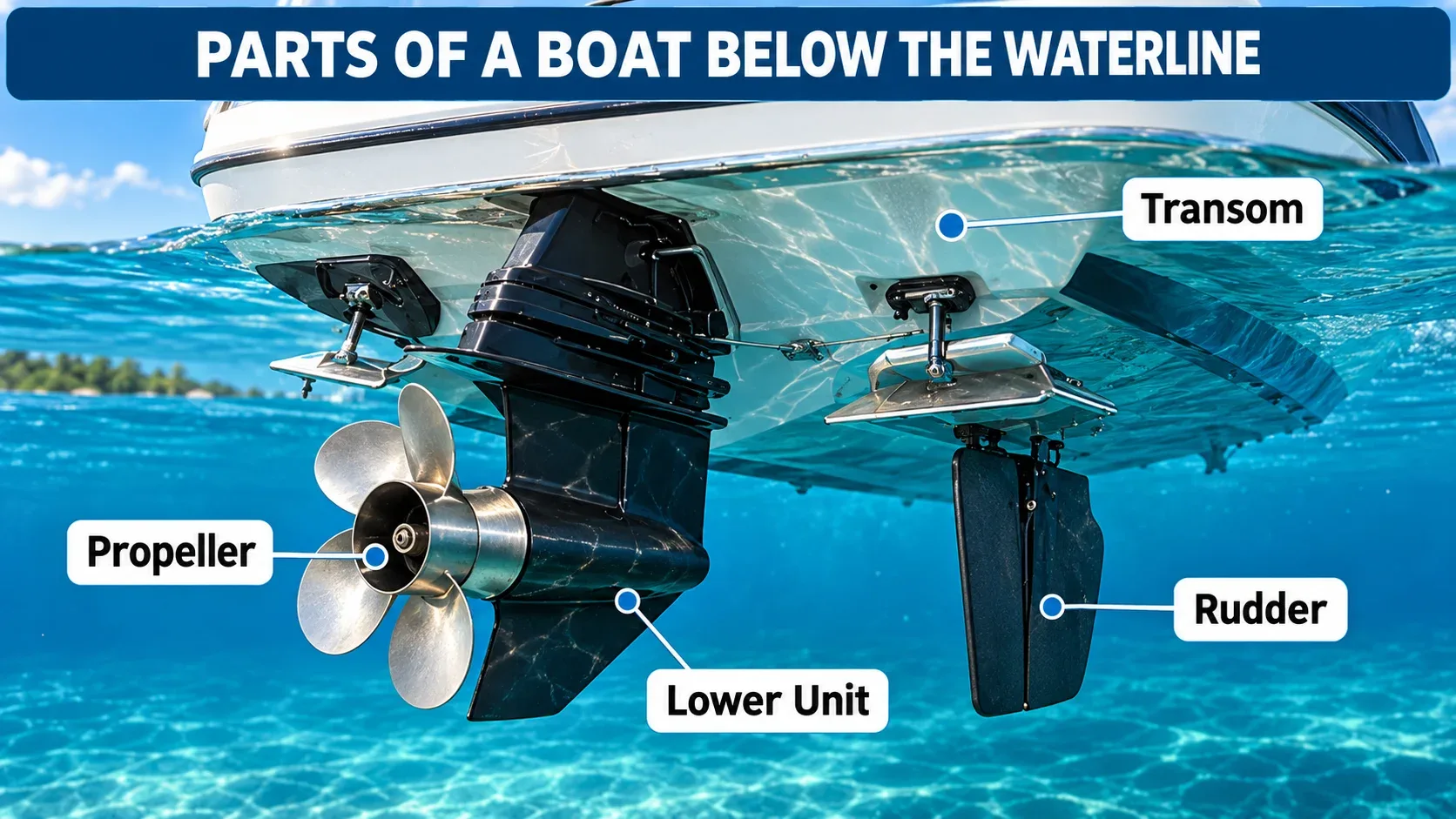
Several important boat components operate partly or completely below the waterline. The exact arrangement depends on the propulsion and steering system.
Propeller
A propeller converts rotational power from an engine into thrust that moves the boat.
Rudder
A rudder is a steering surface found on many sailboats and some inboard-powered vessels.
Lower Unit
On an outboard or related drive system, the lower unit extends below the water and contains key propulsion components.
Sterndrive
A sterndrive combines an engine mounted inside the boat with an external drive unit.
Trim Tabs
Trim tabs are adjustable surfaces installed on some powerboats to influence running attitude.
Boat Engine and Propulsion Components
Recreational boats use several propulsion arrangements, including outboard, inboard, and sterndrive systems.
Outboard Motor
An outboard motor is a self-contained propulsion unit typically mounted at the transom.
Inboard Engine
An inboard engine is installed inside the hull.
Sterndrive System
A sterndrive uses an engine inside the hull connected to an external drive unit.
Throttle and Shift Controls
The throttle and shift controls allow the operator to control engine power and select forward, neutral, or reverse where applicable.
Parts Found on Sailboats
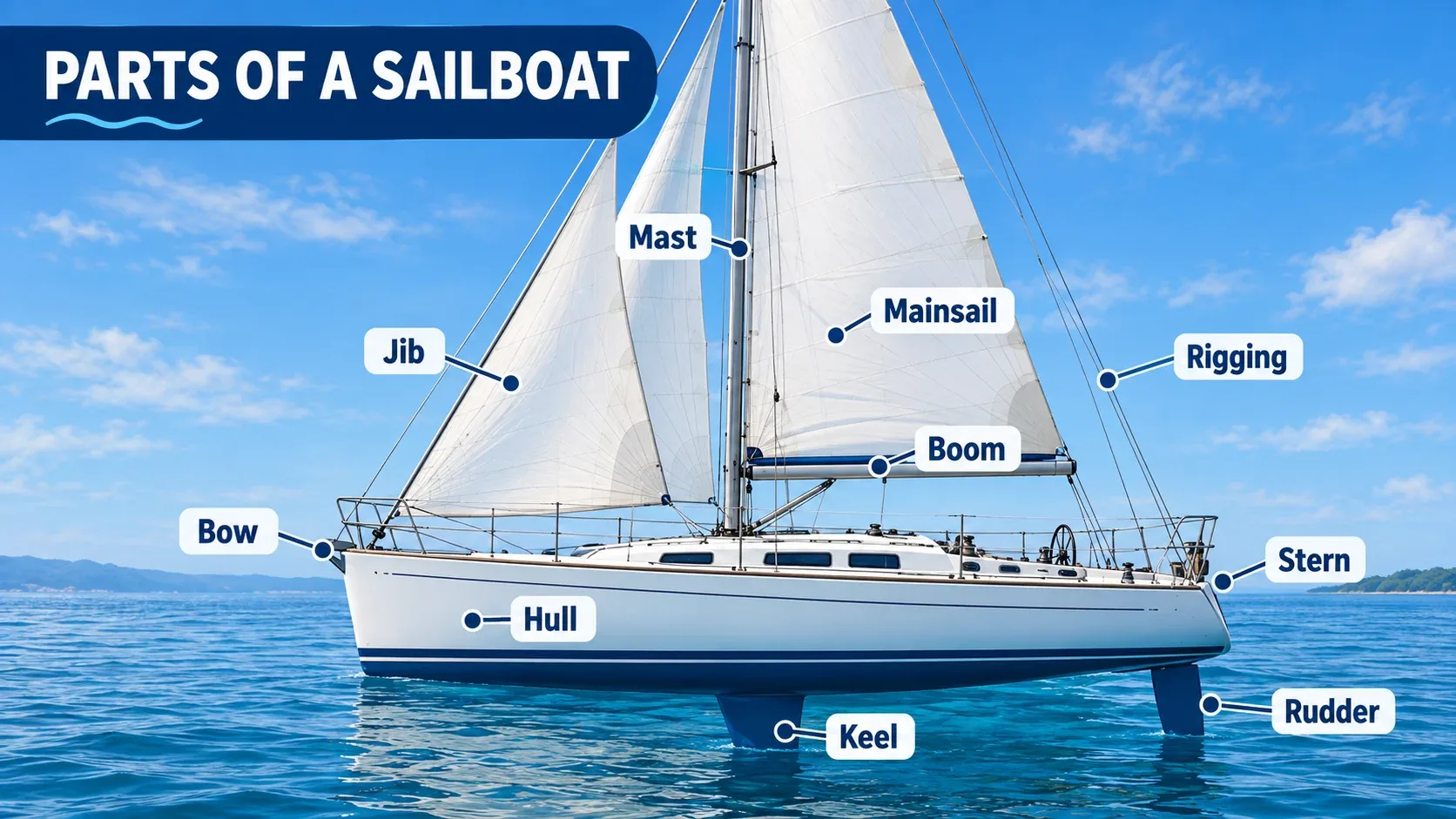
Sailboats share basic terms such as bow, stern, hull, and deck with powerboats, but they also have equipment specifically related to sailing.
Mast
The mast is the main vertical spar supporting the sails and rigging.
Boom
The boom is a horizontal spar extending from the mast.
Mainsail
The mainsail is a primary sail normally positioned behind the mast.
Jib
A jib is a forward sail positioned ahead of the mast on many sailboats.
Rigging
Rigging includes the lines, cables, fittings, and related components used to support spars and control sails.
Sailboat Keel or Centerboard
Many sailboats use a keel, centerboard, or similar underwater surface to resist sideways movement.
Tiller
A tiller is a lever used to steer some boats by controlling the rudder.
Boat Parts That Are Easy to Confuse
Stern vs. Transom
Hull vs. Deck
Helm vs. Cockpit
Port vs. Left
Port always describes the vessel’s left side when facing toward the bow.
Gunwale vs. Railing
The gunwale is the upper edge of the hull side, while a railing is a separate structure installed above or near it.
Boat Parts Names and Functions at a Glance
| Part | Location | Function |
|---|---|---|
| Bow | Front | Forward end of the vessel. |
| Stern | Rear | Rear end of the vessel. |
| Port | Left | Boat’s left side when facing forward. |
| Starboard | Right | Boat’s right side when facing forward. |
| Hull | Main body | Forms the primary structure and buoyant shape. |
| Deck | Upper surface | Provides walking and working areas. |
| Gunwale | Upper side edge | Forms the upper edge of the hull side. |
| Transom | Rear structure | Forms part of the stern and may support an outboard motor. |
| Keel | Bottom centerline | May help with tracking, structure, or stability. |
| Helm | Operator position | Contains steering and operating controls. |
| Cockpit | Open interior area | Provides space for passengers and crew. |
| Cleat | Deck/gunwale | Provides an attachment point for lines. |
| Propeller | Below water | Produces thrust to move the vessel. |
| Rudder | Below water | Provides steering on applicable boats. |
| Anchor | Usually stored near bow | Helps hold the vessel in position. |
Do All Boats Have the Same Parts?
No. While basic directional terms such as bow, stern, port, and starboard apply broadly, physical components vary according to boat design and intended use.
- Fishing boats: may have casting decks, livewells, rod holders, and trolling motors.
- Pontoon boats: use buoyant pontoons or tubes beneath the deck.
- Center-console boats: use a centrally positioned operating console.
- Bowriders: include passenger seating in the bow area.
- Cabin cruisers: may have cabins, berths, and galleys.
- Sailboats: may have masts, booms, sails, rigging, keels, and rudders.
Boat Parts Beginners Should Know Before Going on the Water
- Bow: front of the boat.
- Stern: rear of the boat.
- Port: left side when facing forward.
- Starboard: right side when facing forward.
- Helm: operating position.
- Cleats: attachment points for dock lines.
- Navigation lights: indicate vessel presence and orientation.
- Anchor: helps hold the vessel in position.
- Bilge: low interior area where water may collect.
- Boarding ladder: helps passengers enter from the water.
Frequently Asked Questions About Parts of a Boat
What are the main parts of a boat?
Common boat parts include the bow, stern, port, starboard, hull, deck, gunwale, transom, keel, helm, cockpit, cleats, engine, and propeller.
What is the front of a boat called?
The front of a boat is called the bow.
What is the back of a boat called?
The back of a boat is called the stern.
What are the left and right sides of a boat called?
When facing the bow, the left side is port and the right side is starboard.
What is the bottom of a boat called?
The main structure forming the bottom and sides is the hull.
What is the steering area of a boat called?
The steering and operating position is called the helm.
What is the edge of a boat called?
The upper edge of the side of a boat is commonly called the gunwale.
What part of a boat holds the engine?
It depends on the propulsion system. Outboard motors are generally mounted at the transom, while inboard engines are installed inside the hull.
Do all boats have a keel?
No. Keel design varies significantly between different boat types.
What is the difference between the bow and stern?
The bow is the front of the boat, while the stern is the rear.
Understanding the Parts of a Boat
Learning basic boat anatomy makes it easier to understand instructions, communicate with other boaters, read owner’s manuals, shop for equipment, and feel more confident around different vessels.
The most important beginner terms to remember are bow, stern, port, starboard, hull, deck, gunwale, transom, keel, cockpit, helm, cleats, and propeller.
Keep in mind that not every boat uses the same equipment. Propulsion systems, layouts, structural components, and accessories vary by vessel type and intended purpose.