Every day, we use electricity, drive vehicles, heat buildings, and buy products made from materials found in the Earth. Many of these activities depend on natural resources that cannot be replaced quickly once they are used.
These are called nonrenewable resources. They include familiar energy sources such as coal, petroleum, natural gas, and uranium, as well as mineral deposits containing metals such as copper and gold.
But what makes a resource nonrenewable? Why do we depend on these materials, and how are they different from renewable resources such as sunlight and wind? This guide explains the definition, types, examples, uses, advantages, disadvantages, and environmental effects of nonrenewable resources in simple language.
Quick Answer: What Are Nonrenewable Resources?
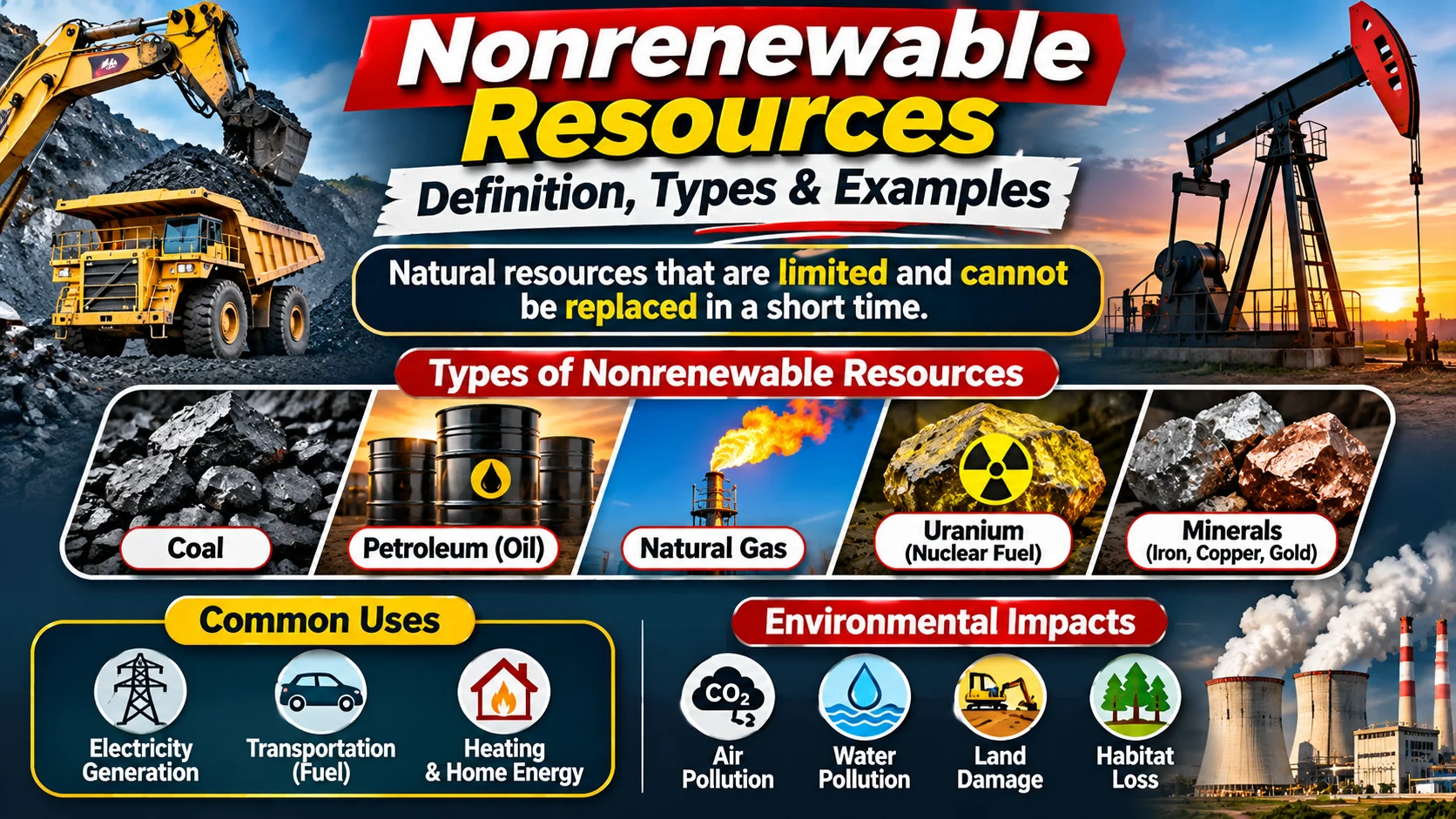
Nonrenewable resources are natural resources that exist in limited supplies or cannot be replenished within a human lifetime or a practical human timescale.
Many form through geological processes that take millions of years. Others, such as mineral deposits, are finite concentrations of materials in the Earth’s crust.
Examples: Coal, petroleum (crude oil), natural gas, uranium, and mineral deposits containing copper, gold, and iron.
Key difference: Renewable resources replenish naturally on relevant timescales, while nonrenewable resources are not replaced quickly enough to keep pace with human use.
What Are Nonrenewable Resources?
A nonrenewable resource is a natural material or energy source that cannot be replaced at the rate humans consume it. Some nonrenewable materials are created by natural processes, but those processes take so long that the materials are effectively finite for present-day societies.
For example, coal forms from ancient plant material buried and transformed over geological time. Oil and natural gas develop from ancient organic matter under suitable conditions. Humans extract and use these fuels much faster than nature can create new supplies.
Nonrenewable resources are not limited to fuels. Mineral deposits, including deposits of copper, iron, and gold, are also nonrenewable because geological processes cannot replace mined deposits on a useful human timescale.
Key Characteristics of Nonrenewable Resources
- Limited availability: Economically recoverable supplies are finite.
- Slow replacement: Natural formation can take extremely long periods.
- Extraction required: Many are mined, drilled, or otherwise recovered from the Earth.
- Important everyday uses: They provide energy and materials for homes, vehicles, infrastructure, and industries.
- Environmental effects: Extraction, processing, and use can affect ecosystems and the environment.
The most important characteristic is that human consumption can reduce available supplies faster than natural processes can restore them.
Why Are Some Natural Resources Nonrenewable?
Resources are considered nonrenewable when their natural replacement happens too slowly compared with human consumption.
Imagine using a resource that takes millions of years to form. Even if the Earth continues producing small amounts, people cannot wait millions of years for the supplies they consume today to be replaced.
Fossil fuel formation offers a useful example.
How Fossil Fuels Form
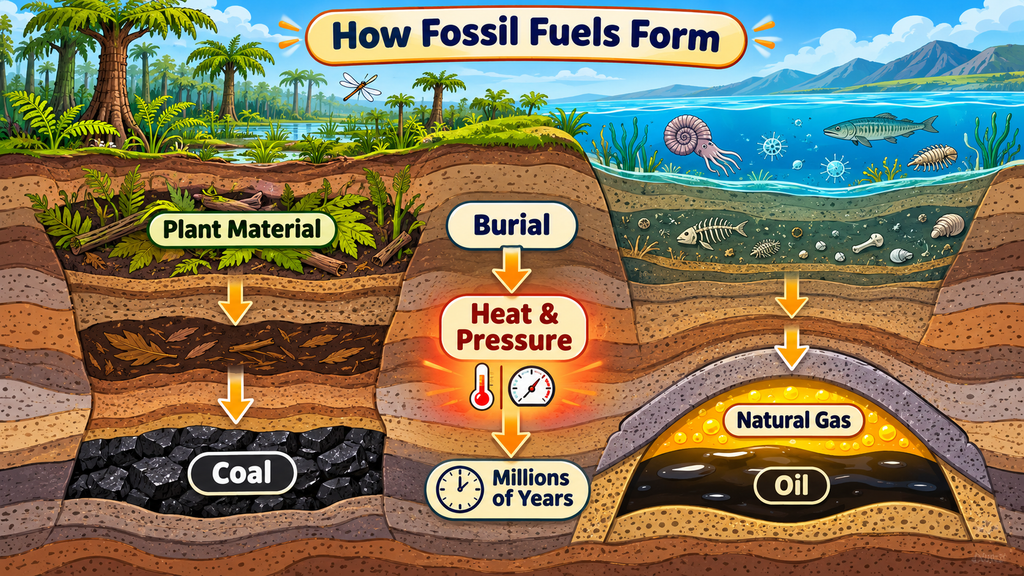
- Organic material accumulates: Ancient plants and other organisms die and become buried in suitable environments.
- Sediments cover the material: Additional layers build up over long periods.
- Heat and pressure increase: Geological conditions gradually transform the buried material.
- Fossil fuels develop: Depending on the original material and conditions, coal, petroleum, or natural gas may form.
Coal generally forms from ancient plant material, while much of the world’s petroleum and natural gas originated from microscopic organisms in ancient aquatic environments.
This is why resources such as coal and petroleum are considered nonrenewable even though the natural processes involved in their formation have not entirely stopped.
Main Types of Nonrenewable Resources
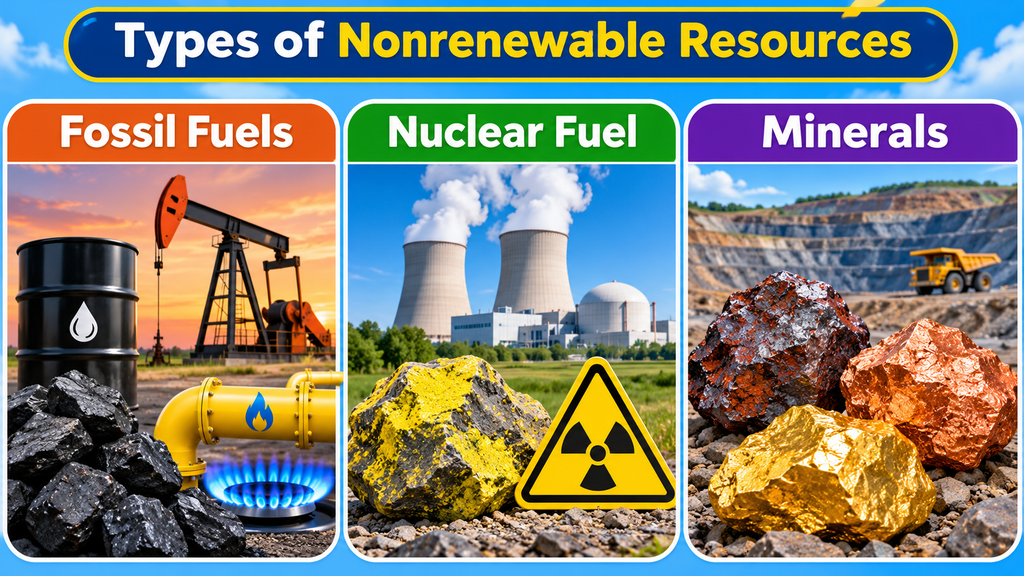
Nonrenewable resources can be divided into three useful educational categories: fossil fuels, nuclear fuel materials, and nonrenewable mineral deposits.
1. Fossil Fuels
Fossil fuels are energy resources formed from ancient organic material under suitable geological conditions. They contain chemical energy that can be released through combustion.
The three main fossil fuels are coal, petroleum, and natural gas.
2. Nuclear Fuel Materials
Uranium is a naturally occurring element used to produce fuel for many nuclear power plants. Nuclear reactors release energy through nuclear fission, rather than by burning fossil fuels.
Because economically recoverable uranium deposits are finite, conventional uranium-based nuclear energy is classified as nonrenewable.
3. Nonrenewable Mineral Deposits
Mineral deposits contain naturally occurring materials that can be extracted and processed for manufacturing and construction.
Examples include deposits of iron ore, copper, gold, and phosphate minerals. While some extracted materials can be reused or recycled, their original geological deposits cannot be quickly replaced.
Examples of Nonrenewable Resources
The following examples show how nonrenewable resources support modern life and why they are important.
1. Coal
Coal is a solid fossil fuel composed mainly of carbon along with other elements. It forms from ancient vegetation that was buried and transformed over millions of years.
Coal is used in some electricity-generating power plants and industrial processes, including steel production. Burning coal releases carbon dioxide and air pollutants, so emissions controls and energy alternatives are important environmental considerations.
2. Petroleum (Crude Oil)
Petroleum is a liquid fossil fuel found in underground geological formations. Crude oil is refined into products such as gasoline, diesel, jet fuel, and materials used in manufacturing.
Petroleum is especially important for transportation and the chemical industry. However, its extraction, processing, and combustion can create environmental impacts.
3. Natural Gas
Natural gas is a fossil fuel made primarily of methane. It is used for electricity generation, heating, cooking, and many industrial processes.
Natural gas combustion generally releases less carbon dioxide per unit of energy than coal combustion, but it still produces greenhouse gas emissions. Methane leaks during production and transportation are also important environmental concerns.
4. Uranium
Uranium is a naturally occurring radioactive element found in certain rocks and mineral deposits.
Processed uranium fuel is used in many nuclear reactors. Nuclear fission releases heat, which can be used to produce steam and generate electricity.
Unlike fossil fuel power plants, nuclear reactors do not generate electricity by burning coal, oil, or gas. However, uranium mining and radioactive waste management require careful oversight.
5. Iron Ore
Iron ore is a natural mineral resource used to produce iron and steel. Steel is widely used in buildings, bridges, vehicles, machinery, and infrastructure.
Iron and steel can be recycled, reducing the need for newly mined ore. However, iron ore deposits are still nonrenewable natural resources.
6. Copper
Copper is an important metal used in electrical wiring, plumbing, electronics, motors, and renewable energy technologies.
Because copper conducts electricity efficiently, it is valuable in modern infrastructure. Recycling helps conserve copper, but new geological copper deposits cannot be quickly created.
7. Gold
Gold is a naturally occurring metal used in jewelry, electronics, and certain specialized industrial applications. Gold can be recovered and recycled, but economically useful gold deposits are finite.
| Resource | Category | Common Uses |
|---|---|---|
| Coal | Fossil fuel | Electricity and steel production |
| Petroleum | Fossil fuel | Transportation fuels and chemicals |
| Natural gas | Fossil fuel | Heating, electricity, industry |
| Uranium | Nuclear fuel material | Nuclear electricity generation |
| Iron ore | Mineral resource | Steel and infrastructure |
| Copper | Mineral resource | Electrical wiring and electronics |
| Gold | Mineral resource | Jewelry and electronics |
Remember: Coal, oil, natural gas, and uranium are nonrenewable energy resources. Iron ore, copper, and gold are examples of nonrenewable mineral resources, not primary fuel sources.
How Do Nonrenewable Energy Sources Produce Electricity?
Nonrenewable energy resources provide much of the energy used by modern societies. Different resources generate electricity through different processes.
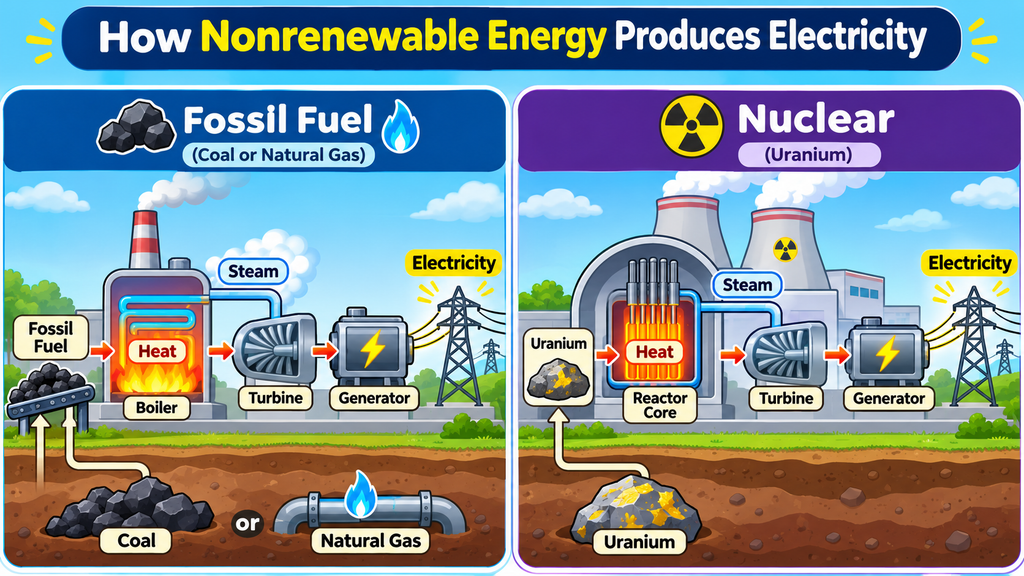
Electricity From Coal and Natural Gas
In a conventional steam-powered fossil fuel plant, burning fuel releases heat. That heat produces steam, which turns a turbine connected to an electrical generator.
Many natural gas plants work differently: hot combustion gases drive a gas turbine, and combined-cycle facilities capture additional heat to generate more electricity.
Electricity From Nuclear Energy
In a nuclear power plant, controlled nuclear fission releases heat. That heat ultimately produces steam, which drives a turbine connected to a generator.
The important distinction is the source of heat. Fossil fuel plants use combustion, while nuclear plants use energy released when atomic nuclei split.
Electricity itself is an energy carrier, not a renewable or nonrenewable natural resource. Its environmental characteristics depend largely on the sources and technologies used to produce it.
How Are Nonrenewable Resources Used in Everyday Life?
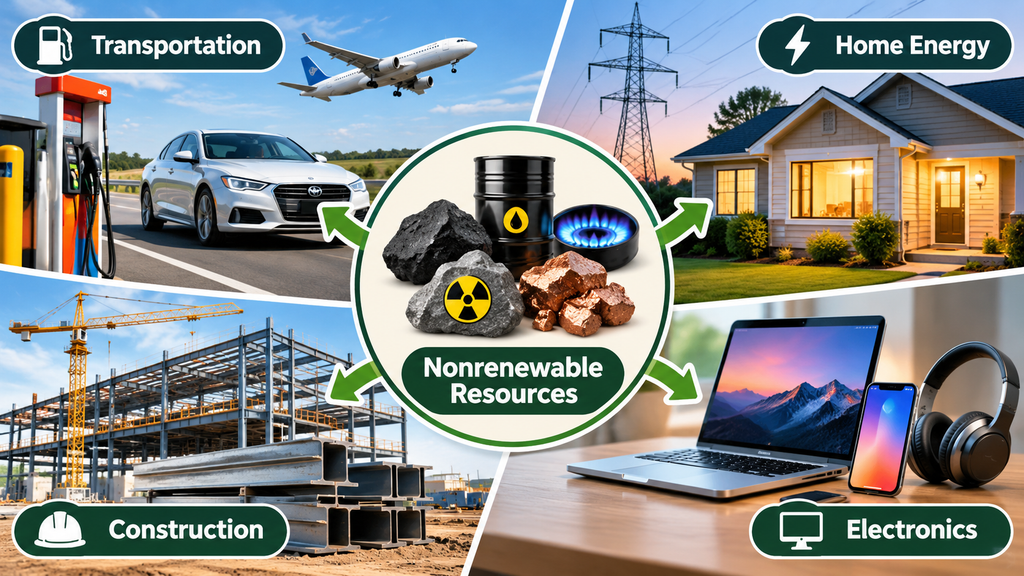
Nonrenewable resources support many activities that people depend on every day, often without noticing where the original materials came from.
Transportation
Gasoline, diesel, and jet fuel are commonly produced from petroleum.
Electricity
Coal, natural gas, and nuclear fuel help power electrical grids.
Construction
Iron ore and other minerals supply important building materials.
Electronics
Copper, gold, and other materials are used in electronic devices.
For example, a smartphone may contain copper wiring, small amounts of gold, and components manufactured using materials derived from petroleum. A vehicle may use petroleum-based fuel, steel made using iron ore, and copper in its electrical system.
Renewable vs. Nonrenewable Resources: What’s the Difference?
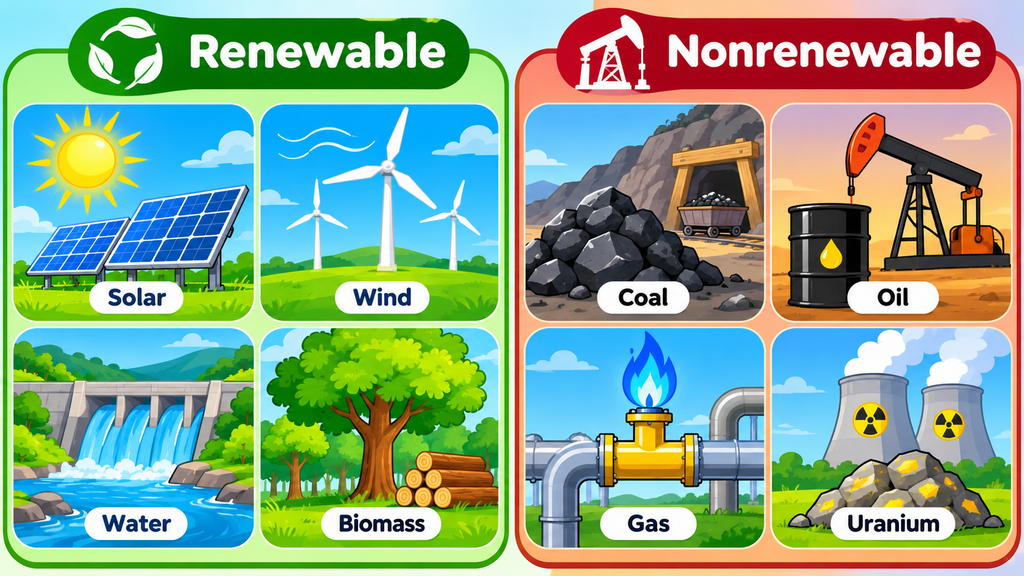
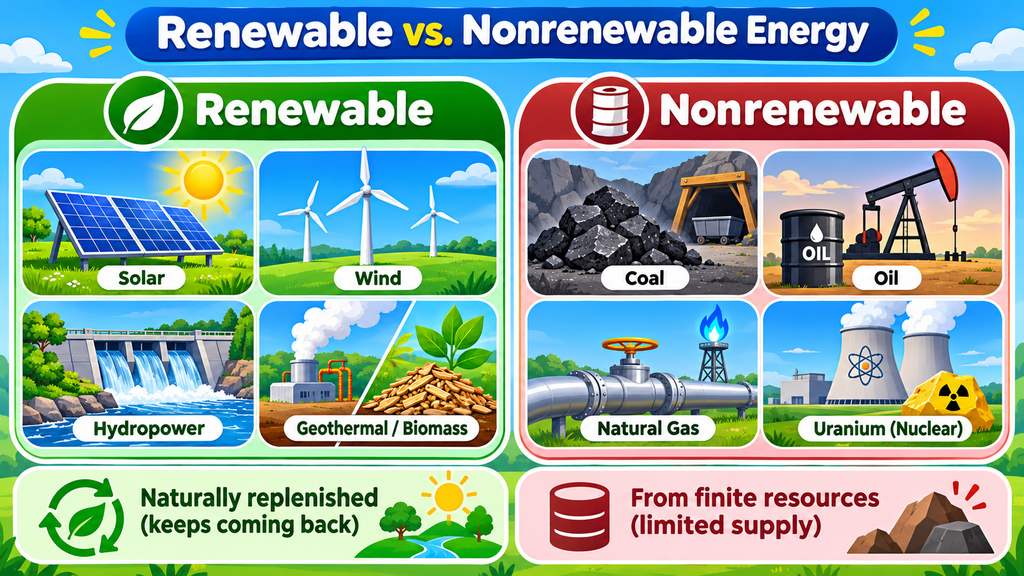
The main difference between renewable and nonrenewable resources is how quickly nature can replenish them.
Renewable resources such as sunlight and wind are continuously replenished by natural processes. Nonrenewable resources such as fossil fuels and mineral deposits cannot be replaced quickly enough to match human consumption.
| Feature | Renewable Resources | Nonrenewable Resources |
|---|---|---|
| Replenishment | Naturally replenished on relevant timescales | Not quickly replenished |
| Examples | Sunlight, wind, flowing water | Coal, oil, natural gas, uranium |
| Availability | Continually renewed, but may be variable or limited locally | Finite extractable supplies |
| Environmental effects | Often lower operational emissions, but not impact-free | Impacts vary by resource and technology |
| Long-term concern | Sustainable use and system management | Depletion, extraction and replacement |
What Are Non-Examples of Nonrenewable Resources?
If a science assignment asks for non-examples of nonrenewable resources, it is asking for resources that are renewable.
- Sunlight: A naturally replenished source of solar energy.
- Wind: Moving air that can power wind turbines.
- Flowing water: Used in hydropower systems.
- Geothermal energy: Heat from within the Earth.
- Biomass: Organic material that can be renewed if produced and managed sustainably.
An important detail is that renewable does not automatically mean unlimited or environmentally harmless. Forests, soil, and freshwater systems can experience depletion or damage when poorly managed, even though natural processes can replenish them under suitable conditions.
Advantages of Nonrenewable Energy Resources
Nonrenewable energy sources continue to play major roles in many energy systems because they offer several practical benefits.
1. Established Infrastructure
Many regions already have power plants, pipelines, refineries, and transportation systems built around fossil fuels and nuclear energy.
2. High Energy Density
Fossil fuels contain significant energy in relatively compact quantities. Nuclear fuel also has extremely high energy density, although the underlying process is different.
3. Controllable Electricity Generation
Many fossil fuel power plants can adjust their electricity output according to demand. Nuclear power plants can provide large amounts of steady electricity.
4. Wide Industrial Applications
Petroleum and natural gas are not only fuels. They are also used as feedstocks for chemical manufacturing, fertilizers, plastics, and other industrial products.
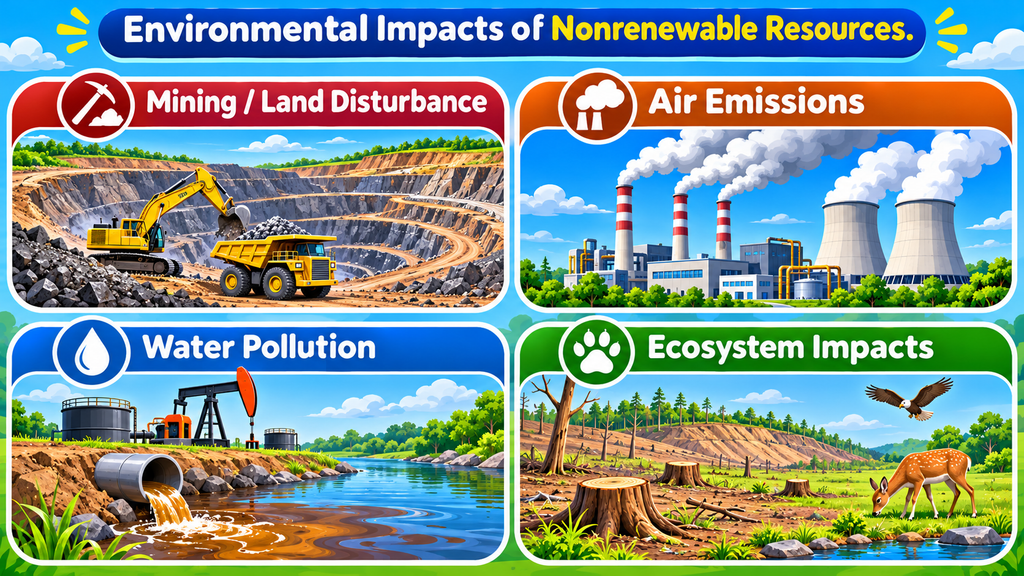
Disadvantages and Environmental Impacts of Nonrenewable Resources
Although nonrenewable resources provide important benefits, their extraction and use can create economic, environmental, and long-term supply challenges.
1. Limited Supplies
Nonrenewable deposits are finite. Continued extraction gradually reduces the amount remaining in known deposits, although exploration, technology, and economic changes can alter how much is recoverable.
2. Greenhouse Gas Emissions
Burning coal, oil, and natural gas releases carbon dioxide, an important greenhouse gas. Fossil fuel production and transportation may also release methane.
These emissions contribute to climate change. Different fuels and production technologies have different emissions profiles, so they should not all be treated as environmentally identical.
3. Air and Water Pollution
Fuel combustion can release pollutants that affect air quality. Mining, drilling, and processing can also create risks to water resources if waste and operations are not properly managed.
4. Habitat and Land Disturbance
Mining and energy development can disturb natural habitats, alter landscapes, and affect surrounding ecosystems. Responsible restoration and environmental protection practices can reduce some impacts.
5. Waste Management
Energy and mineral extraction can produce waste materials requiring careful handling. Nuclear energy produces spent nuclear fuel and other radioactive wastes that require specialized management and long-term safeguards.
What Happens When Nonrenewable Resources Run Out?
When an economically useful deposit is depleted, companies may need to locate another deposit, extract a lower-quality resource, recycle existing materials, or use alternatives.
As easily accessible supplies decline, extracting and processing remaining resources can become more difficult or expensive. However, it is not scientifically accurate to predict a single date when all oil, coal, or natural gas will disappear.
The amount considered recoverable can change with new discoveries, technology, prices, government policies, and demand.
This is one reason energy efficiency, materials recycling, resource conservation, and the development of alternative energy technologies are important.
How Can We Conserve Nonrenewable Resources?
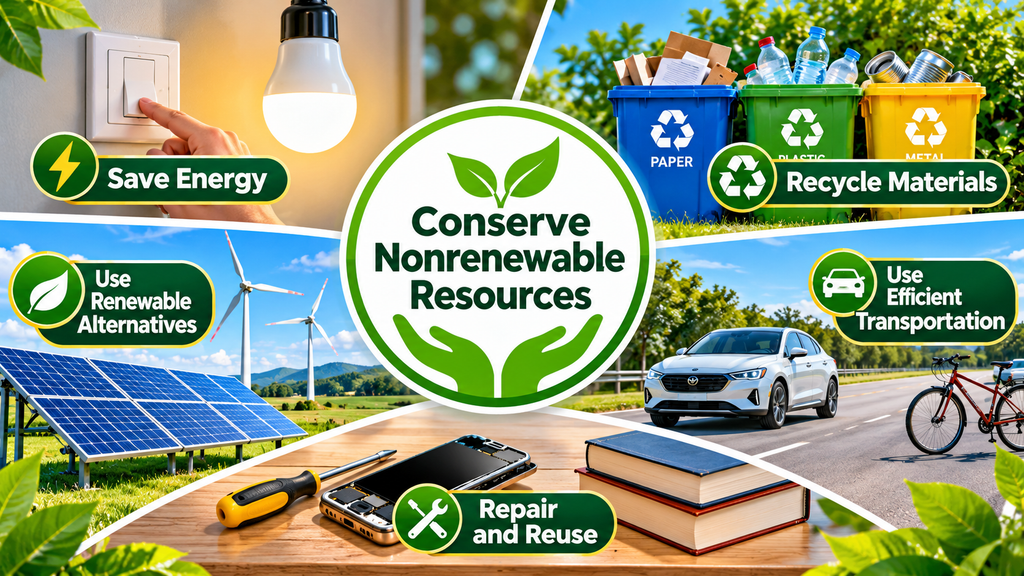
Conserving nonrenewable resources means using available supplies efficiently, reducing avoidable waste, and finding appropriate alternatives.
- Save energy: Turn off unused electrical devices and choose efficient equipment.
- Use transportation efficiently: Walk, cycle, carpool, or use public transportation where practical.
- Recycle metals: Recover materials such as aluminum, copper, iron, and steel when suitable recycling programs are available.
- Repair and reuse products: Extend the useful life of electronics, appliances, vehicles, and other goods.
- Reduce unnecessary consumption: Avoid replacing usable products without good reason.
- Support cleaner energy systems: Use suitable renewable energy and efficiency improvements where available.
Can Recycling Make a Nonrenewable Resource Renewable?
No. Recycling does not change a material’s original classification from nonrenewable to renewable.
For example, copper remains a nonrenewable mineral resource even though copper metal can be recycled repeatedly. Recycling helps conserve existing supplies and reduce the need to mine new material.
Simple Nonrenewable Resources Examples for Students
If you are completing a science assignment, use these simple examples to test your understanding.
| Resource | Renewable? | Reason |
|---|---|---|
| Coal | No | Takes millions of years to form |
| Crude oil | No | Finite fossil fuel deposits |
| Uranium | No | Finite recoverable deposits |
| Sunlight | Yes | Continuously supplied by the Sun |
| Wind | Yes | Naturally replenished by atmospheric processes |
Easy way to remember: If a resource cannot naturally replace what people use within a practical human timescale, it is generally classified as nonrenewable.
Frequently Asked Questions About Nonrenewable Resources
1. What are nonrenewable resources in simple words?
Nonrenewable resources are natural materials that cannot be replaced quickly after people use them. Examples include coal, oil, natural gas, uranium, and mineral deposits.
2. What are four examples of nonrenewable energy resources?
The four commonly taught examples are coal, petroleum, natural gas, and uranium. The first three are fossil fuels, while uranium is used to produce nuclear energy.
3. Is nuclear energy renewable or nonrenewable?
Conventional nuclear energy using mined uranium is classified as nonrenewable because uranium fuel supplies are finite. Nuclear energy is not a fossil fuel.
4. Why is coal a nonrenewable resource?
Coal is nonrenewable because it forms from ancient plant material over millions of years. People use coal much faster than natural geological processes can replace it.
5. What are non-examples of nonrenewable resources?
Non-examples include sunlight, wind, flowing water used for hydropower, and geothermal energy. These are renewable energy resources.
6. Can nonrenewable resources be recycled?
Some can. Metals such as copper, aluminum, iron, and gold can be recovered and recycled. Recycling conserves the materials but does not make their original geological deposits renewable.
7. Will nonrenewable resources eventually run out?
Individual deposits can be depleted, and accessible supplies are finite. However, exact global depletion dates are uncertain because discoveries, technology, prices, recycling, and demand can change how much is available for use.
8. What is the main difference between renewable and nonrenewable energy?
Renewable energy comes from sources naturally replenished on useful timescales, such as sunlight and wind. Nonrenewable energy relies on limited fuel resources, including fossil fuels and conventional uranium fuel.
Key Takeaways
- Nonrenewable resources cannot be replenished quickly enough to match human consumption.
- Coal, oil, natural gas, and uranium are major nonrenewable energy resources.
- Mineral deposits such as copper, iron ore, and gold are also nonrenewable.
- Solar, wind, hydropower, and geothermal energy are renewable energy examples.
- Recycling, resource efficiency, and suitable alternatives help conserve finite supplies.
Final Thoughts: Why Do Nonrenewable Resources Matter?
Nonrenewable resources play an important role in everyday life. They help supply energy for electricity, heating, and transportation, while mineral resources provide materials used in buildings, electronics, vehicles, and many other products.
However, these resources are finite on human timescales. Extracting and using them can also create environmental challenges, including greenhouse gas emissions, habitat disturbance, and waste-management concerns.
Understanding the difference between renewable and nonrenewable resources helps us make more informed decisions about energy, materials, conservation, and long-term sustainability.
The Bottom Line
Nonrenewable resources include fossil fuels, uranium, and finite mineral deposits. They are valuable because they provide energy and essential materials, but their supplies cannot be quickly replaced. Using them responsibly and reducing unnecessary waste helps protect resources for the future.