If one of your license plate screws is missing, rusted, stripped, or no longer holding the plate securely, the first question is usually simple: what license plate screw size do I need? The answer depends on the vehicle, model year, mounting bracket, and type of threaded insert used behind the plate.
Although license plates themselves follow standardized dimensions in many markets, the screws and bolts used to attach them are not always universal. Some vehicles use metric machine screws, others use SAE fasteners, and many bumper-mounted brackets use self-tapping screws or plastic retainers.
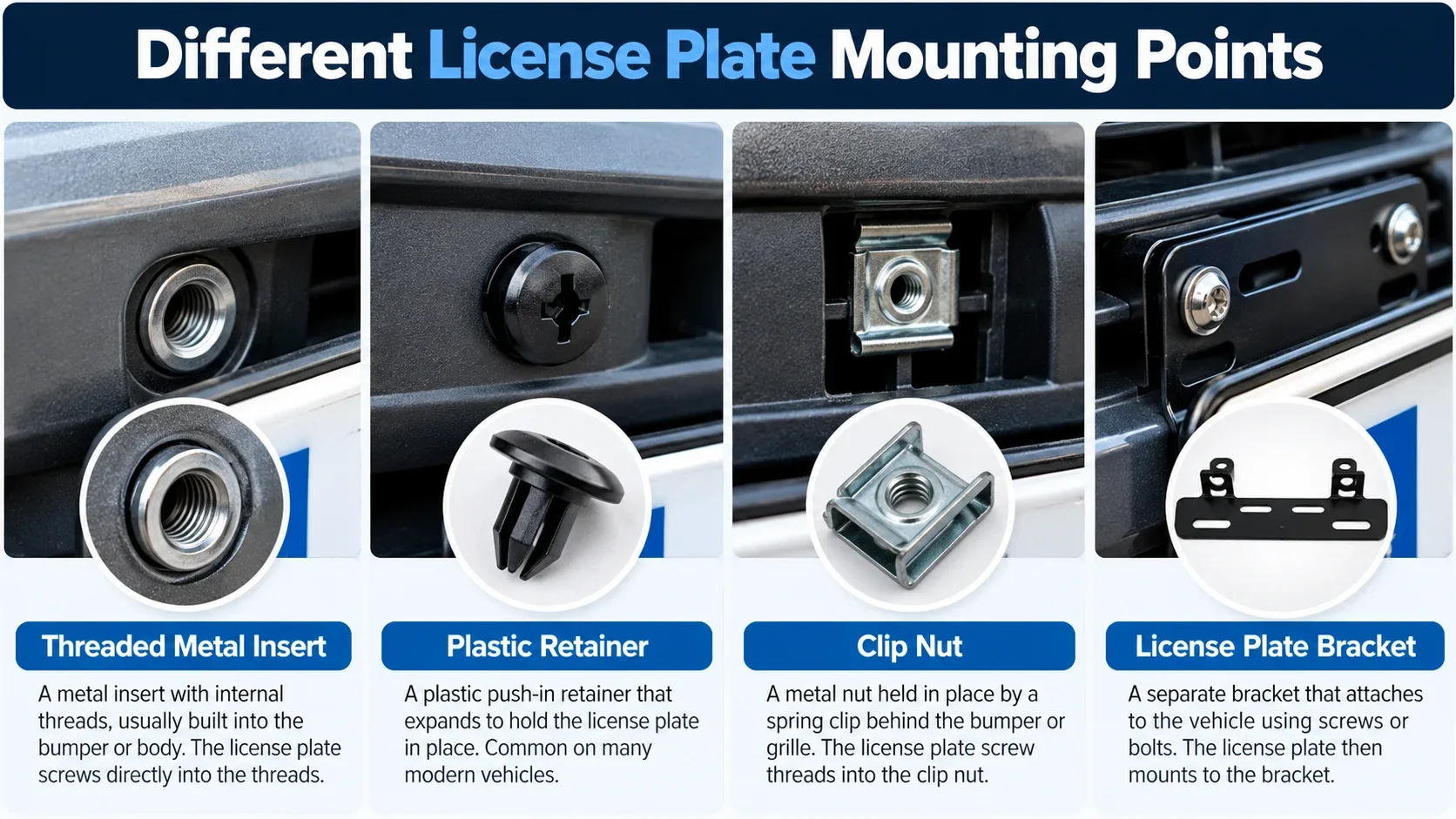
Quick Answer: What Size Are License Plate Screws?
There is no single universal license plate screw size that fits every car. Common applications may use metric hardware such as M6 × 1.0 or M5 × 0.8, SAE hardware such as 1/4"-20, or self-tapping screws used with plastic plate brackets.
The safest method is to match an original fastener, inspect the mounting point, or verify the part through an OEM parts catalog or dealership before installing a replacement.
| Fastener Type | Example Size | Typical Application | Important Note |
|---|---|---|---|
| Metric machine screw | M6 × 1.0 | Common on many modern vehicles | Length and exact fit can vary |
| Smaller metric screw | M5 × 0.8 | Some brackets and imported vehicles | Confirm thread pitch before installation |
| SAE machine screw | 1/4"-20 | Some North American applications | Do not substitute for a metric thread |
| Self-tapping screw | #12 or #14 example | Plastic retainers and bumper brackets | Diameter and length depend on the bracket |
Why License Plate Screw Sizes Are Not Universal
Drivers often find conflicting answers when searching for a car tag screw size because several different mounting systems are used across vehicles. Even two models from the same manufacturer may use different hardware.
The correct fastener can depend on:
- Vehicle manufacturer and model
- Model year
- Front or rear plate location
- Factory-installed versus dealer-installed bracket
- Threaded metal insert versus plastic retainer
- Aftermarket license plate frame or bracket
- Previous repairs or replaced mounting hardware
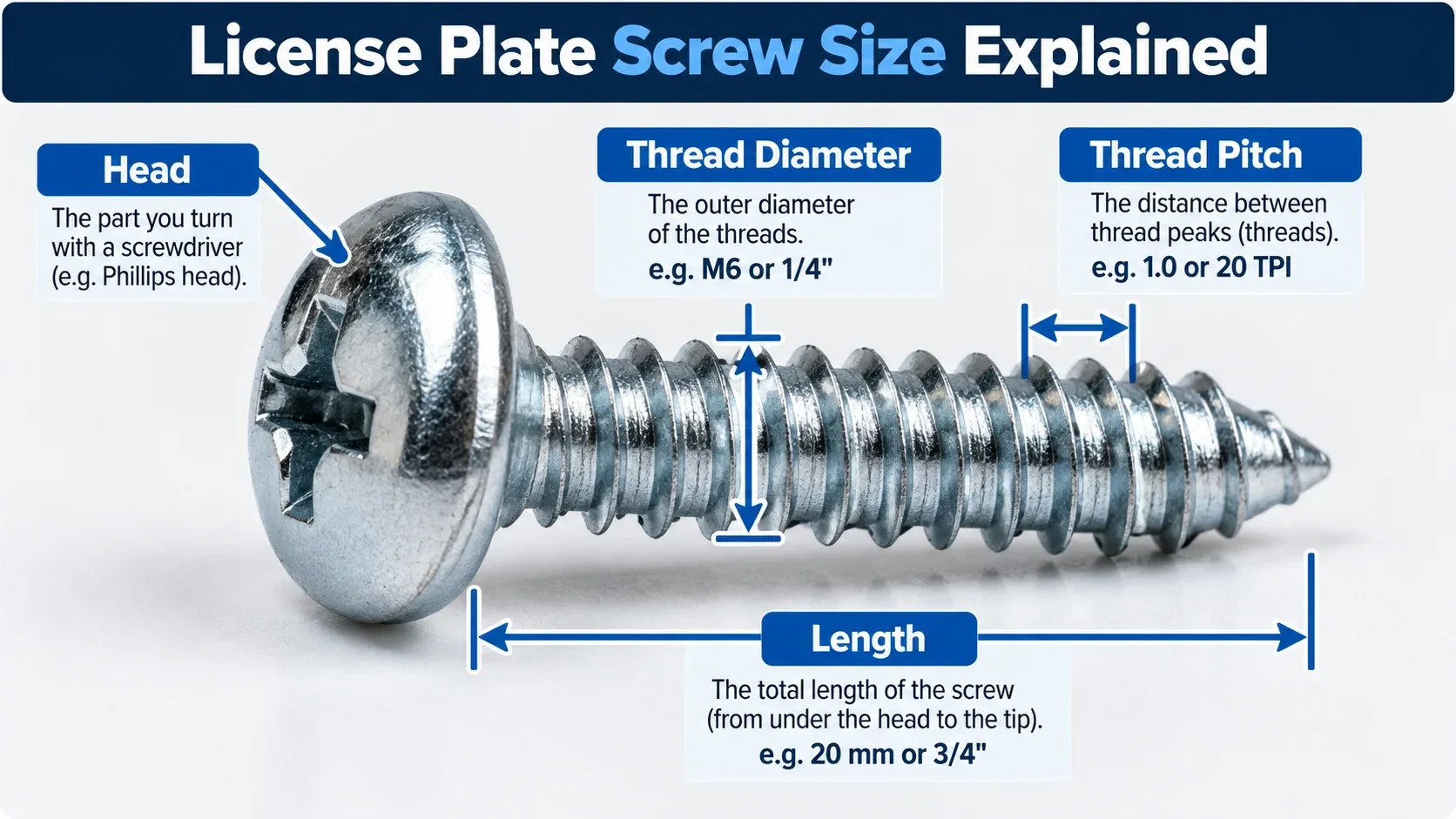
How to Read a License Plate Screw Size
Understanding the numbers on a screw specification makes it much easier to select replacement hardware. The two most common systems are metric and SAE.
Metric License Plate Screws
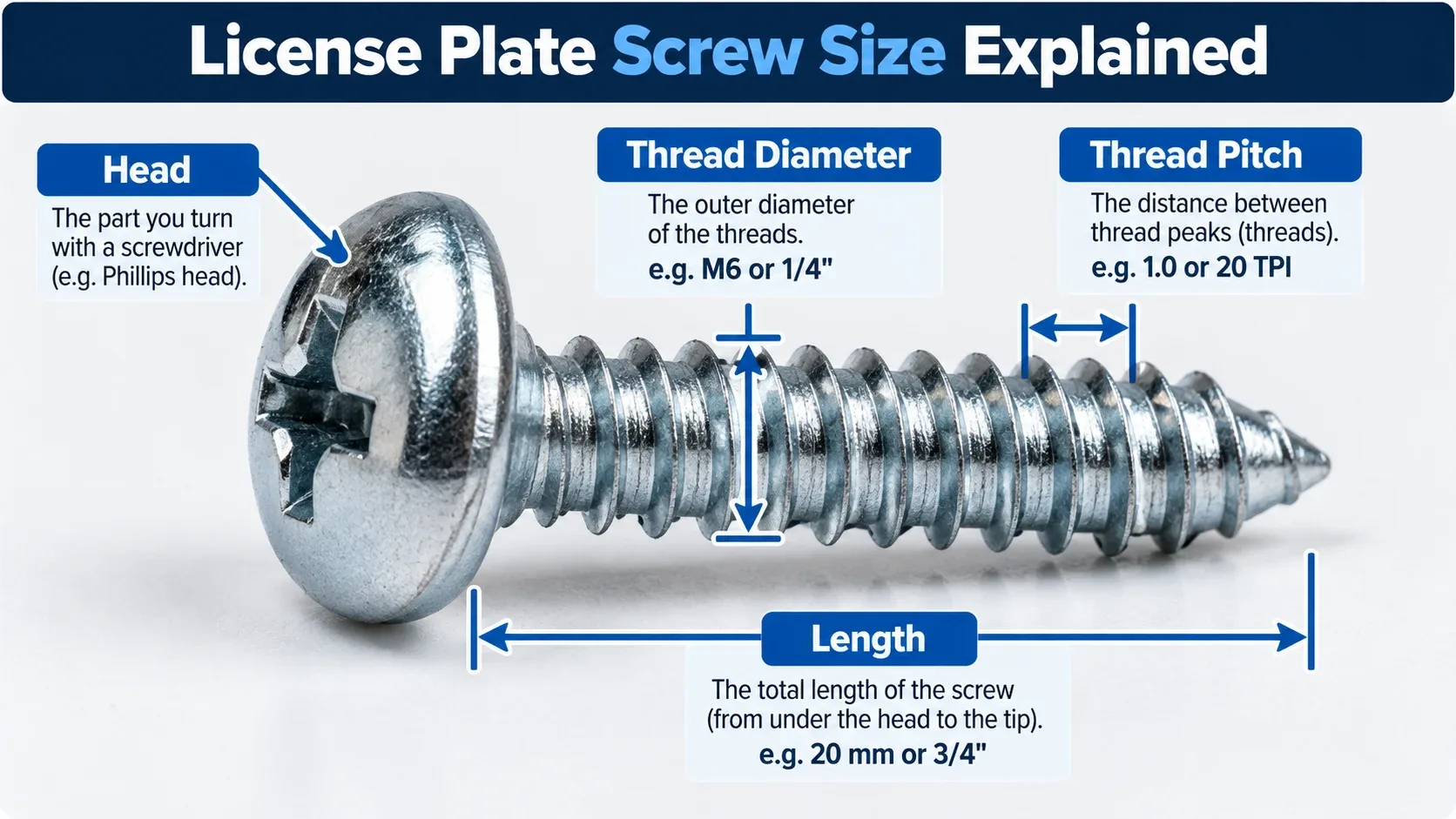
A metric specification might look like M6 × 1.0 × 20 mm.
- M6 indicates a nominal thread diameter of approximately 6 mm.
- 1.0 indicates a 1.0 mm thread pitch.
- 20 mm indicates the fastener length.
SAE License Plate Screws
An SAE specification might look like 1/4"-20 × 3/4".
- 1/4 inch is the nominal screw diameter.
- 20 means 20 threads per inch.
- 3/4 inch is the screw length.
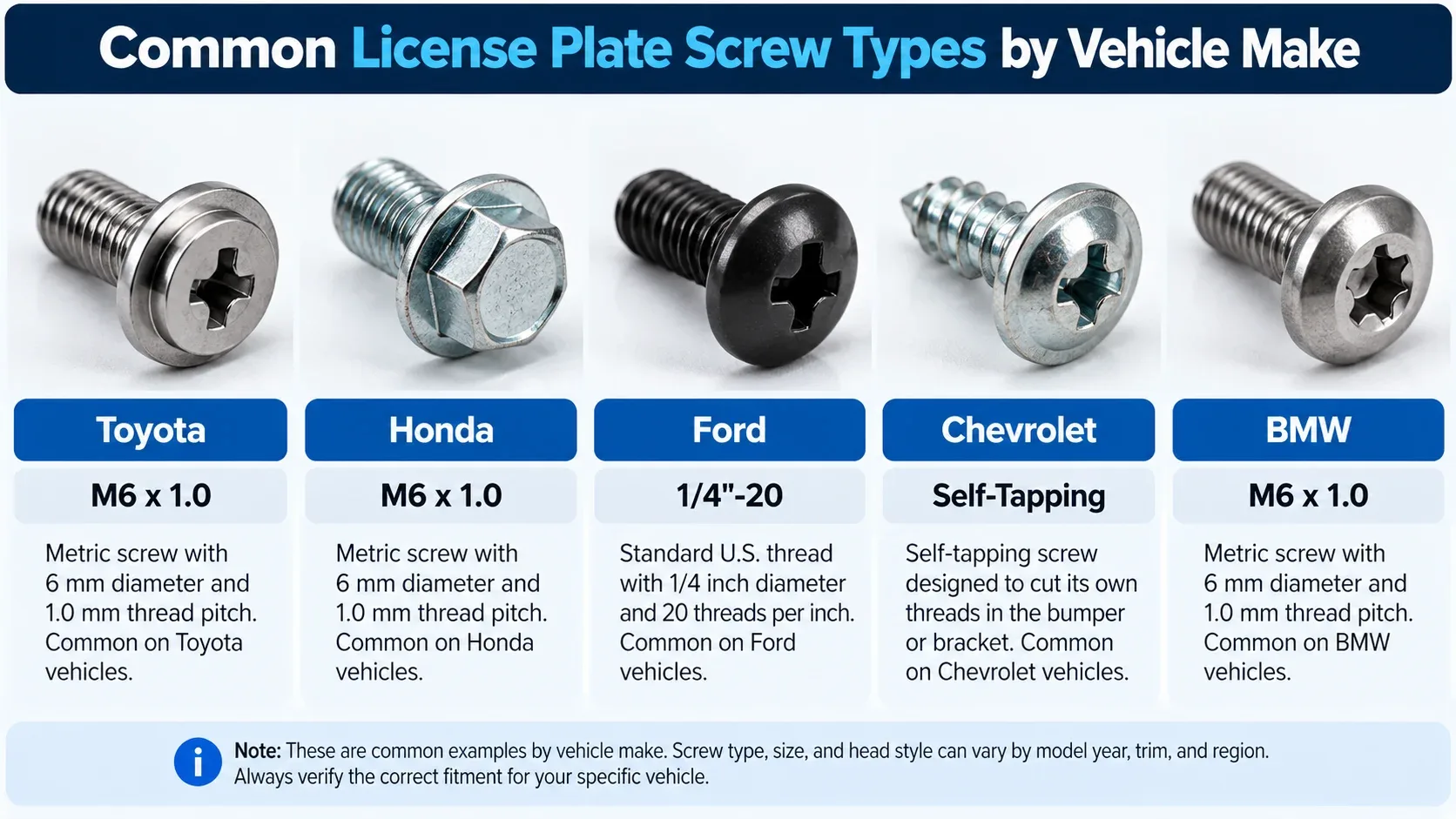
Common License Plate Screw Sizes by Vehicle Make
Vehicle owners often search by manufacturer because OEM mounting systems tend to follow certain patterns. However, the exact license plate bolt size can still change between models, generations, production years, and front or rear mounting locations.
| Vehicle Make | Common Fastener Style | General Pattern | What to Verify |
|---|---|---|---|
| Toyota | Metric machine screw | Metric hardware is common | Model, year, bracket, and length |
| Honda | Metric screw | Metric threaded inserts are common | Front and rear mounting style |
| Ford | Screw, bolt, or bracket fastener | Varies substantially by model | Inspect insert or factory bracket |
| Chevrolet | Screw or self-tapping fastener | Varies by vehicle and bracket | Mounting retainer type |
| Nissan | Metric screw | Metric hardware commonly encountered | Exact thread and length |
| Subaru | Metric fastener | Often uses metric mounting hardware | Bracket and model year |
| Hyundai / Kia | Metric screw | Metric hardware is common | Thread pitch and usable depth |
| BMW | Metric machine screw | Metric mounting hardware | OEM bracket configuration |
| Mercedes-Benz | Metric screw | Often bracket-specific | OEM mounting hardware |
| Volkswagen | Metric screw | Metric applications are common | Model-specific plate bracket |
Do Front and Rear License Plates Use the Same Screws?
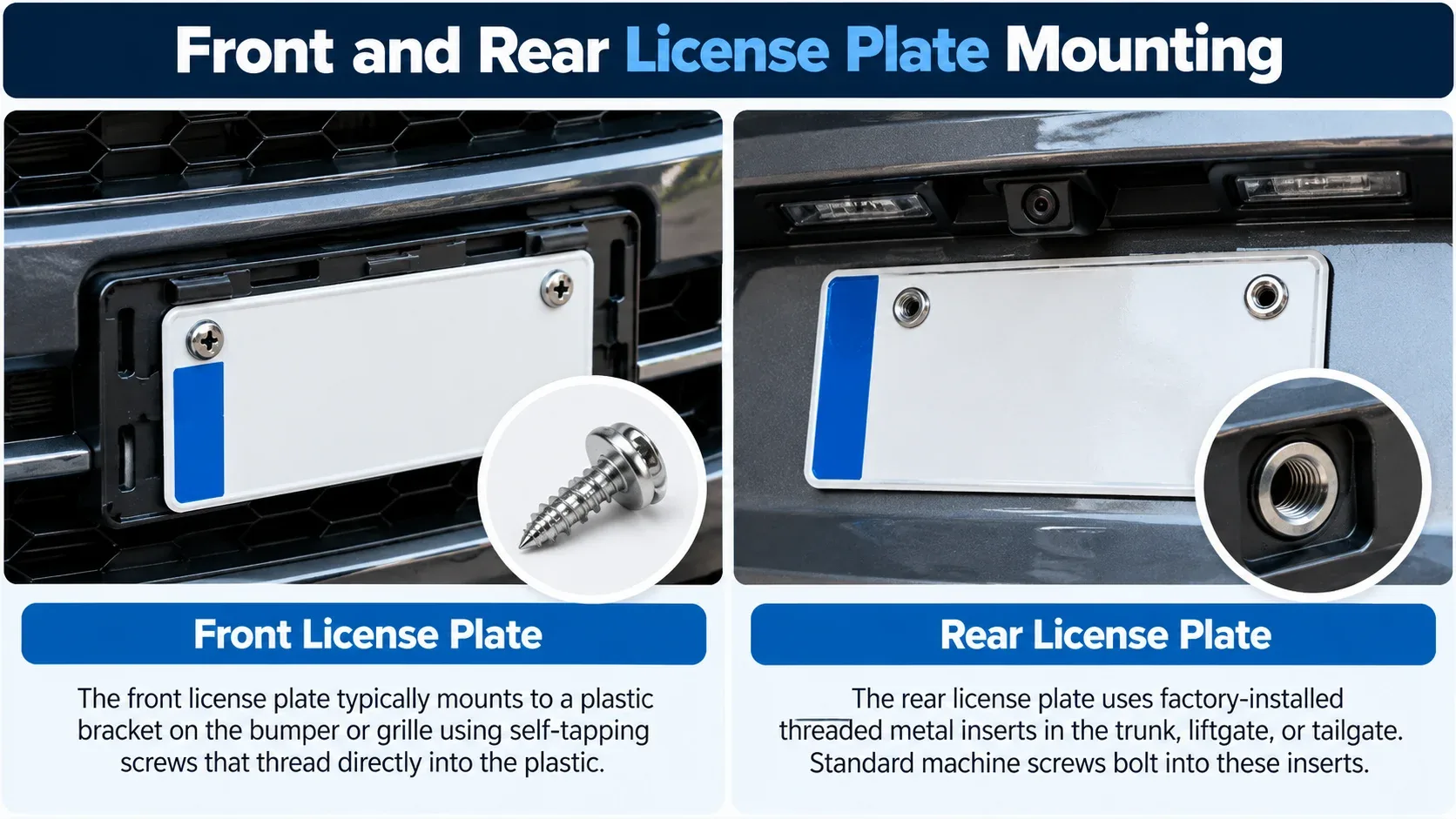
Not necessarily. Front and rear mounting systems are often different. The rear plate may attach to threaded inserts in sheet metal, a trunk lid, liftgate, or tailgate, while the front plate may be mounted to a separate plastic bracket.
A dealer may also install a front plate bracket after the vehicle leaves the factory. That bracket can use self-tapping screws even when the rear plate uses metric machine screws.
License Plate Screws vs License Plate Bolts
Drivers often use the words screw and bolt interchangeably when discussing license plate hardware. Technically, however, the mounting design may use several types of fasteners.
| Fastener | How It Works | Common Plate Application |
|---|---|---|
| Machine screw | Threads into a threaded insert or nut | Metal mounting points and OEM brackets |
| Bolt | Often works with a nut or threaded receiver | Some aftermarket and bracket applications |
| Self-tapping screw | Forms or cuts its own path into compatible material | Plastic plate brackets and retainers |
| Clip-nut fastener | Threads into a removable metal clip | Bumpers and plate brackets |
How to Measure Your Existing License Plate Screw
If at least one original screw is still present, it is usually your best reference. Remove an undamaged fastener and compare its dimensions before buying replacements.
Remove One Good Screw
Choose a fastener that is not stripped, bent, or heavily corroded.
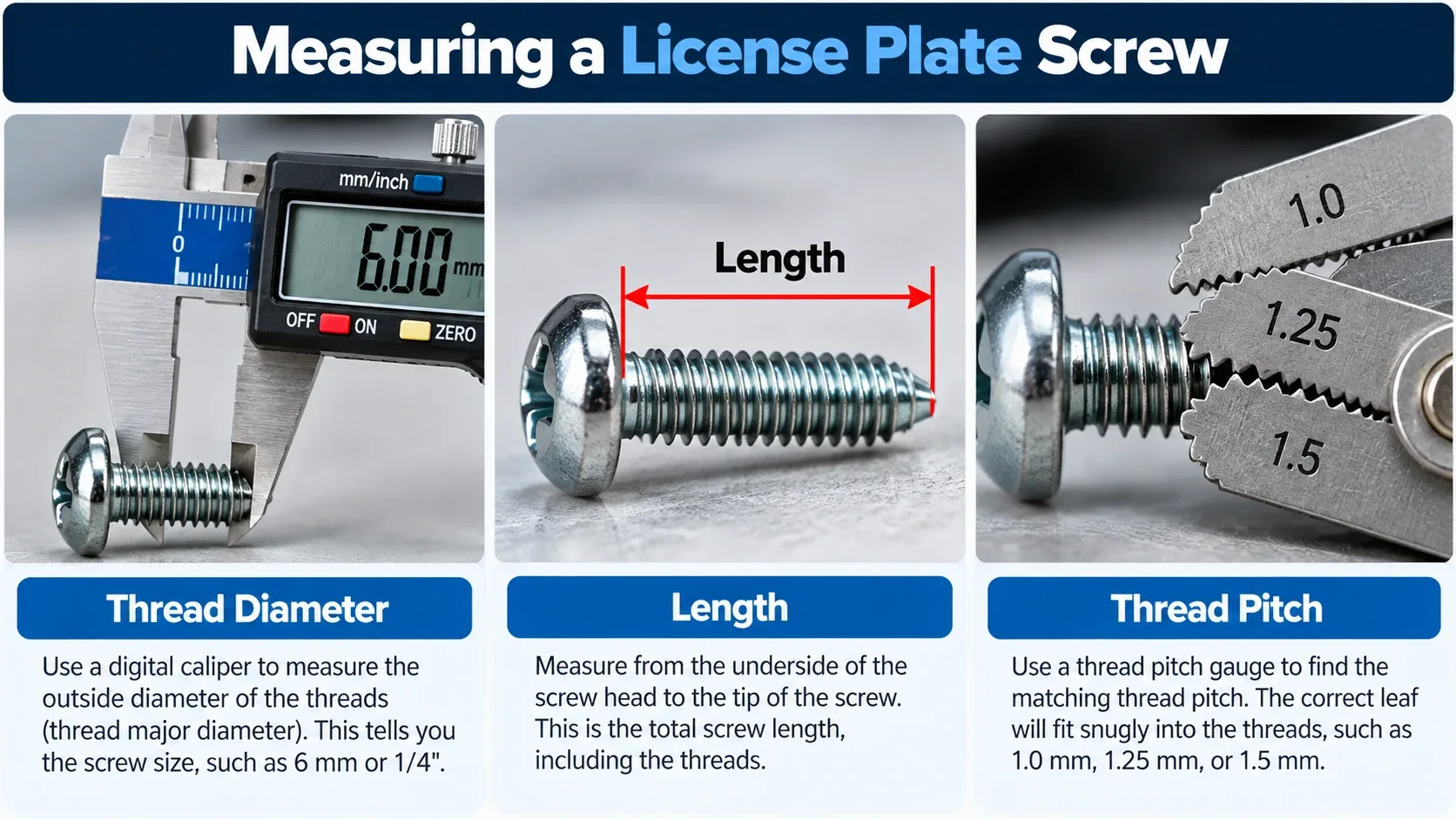
Measure the Thread Diameter
Use a caliper if available. Measure across the outside of the threads, not the screw head.
Measure the Length
Measure from the appropriate underside of the head to the tip.
Identify the Thread Pitch
Use a thread-pitch gauge or compare the screw with known metric and SAE hardware.
Match the Head Style
Phillips, slotted, hex, Torx, and security-style heads may all be used.
How to Find the License Plate Screw Size Without the Original Screw
If both original screws are missing, do not start by forcing random hardware into the mounting holes. Instead, identify the mounting system first.
- Inspect the hole. Determine whether it contains a metal threaded insert, plastic retainer, clip nut, or unthreaded bracket.
- Check vehicle documentation. Some manufacturers list plate mounting hardware or accessories.
- Search an OEM parts catalog. Vehicle-specific parts diagrams may identify the screw, retainer, or bracket.
- Ask a dealer parts department. Providing the VIN can help identify model-specific hardware.
- Use a thread gauge. This can help determine the diameter and pitch.
- Inspect the opposite mounting point. A matching fastener may still be present.
How Long Should License Plate Screws Be?
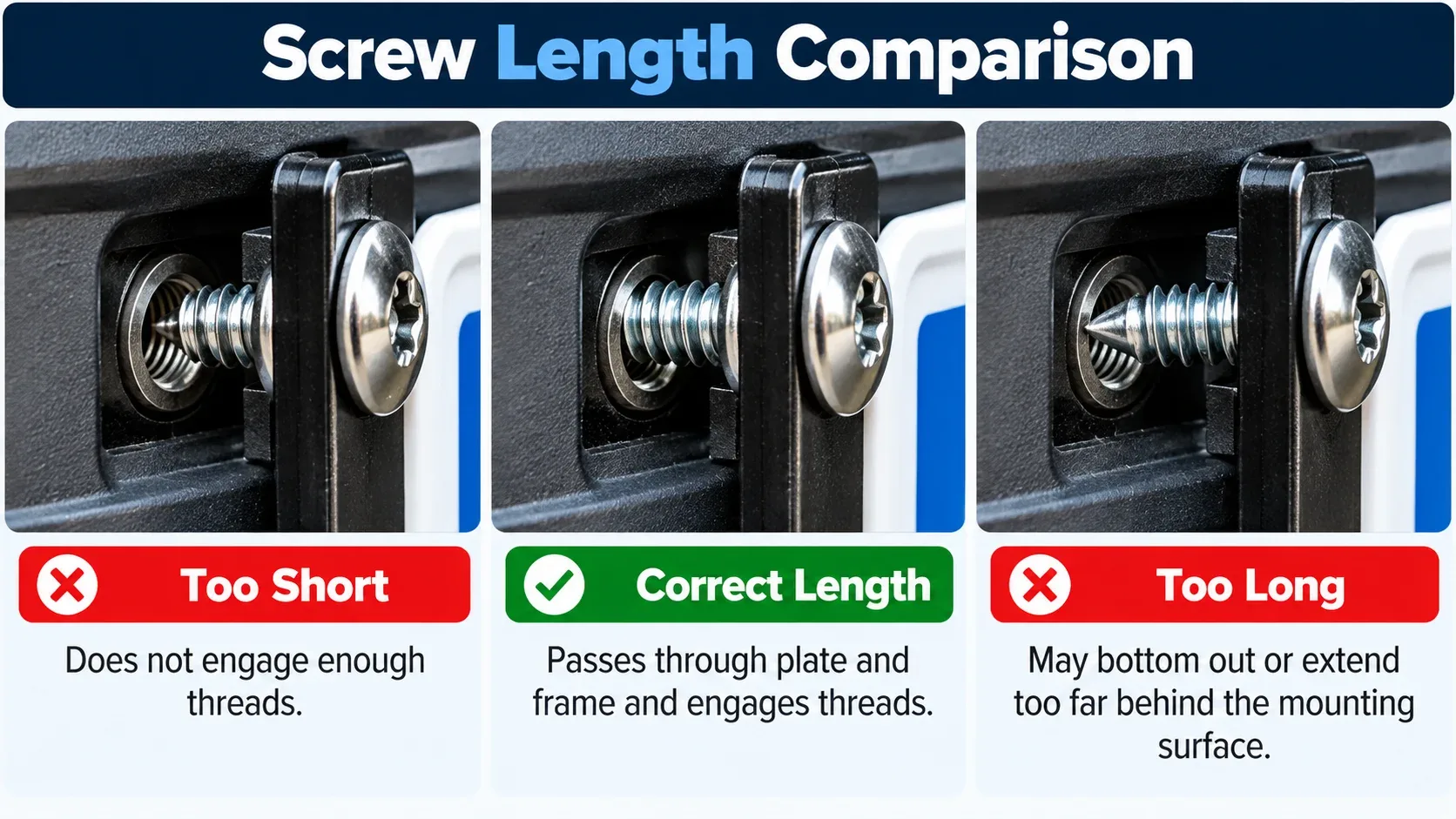
Screw length is just as important as diameter and thread pitch. A screw must be long enough to pass through the license plate, any frame or washer, and engage enough of the mounting threads to hold securely.
At the same time, an excessively long screw can bottom out before the plate is tight or extend farther behind the mounting surface than intended.
- Pass through the plate and frame easily
- Engage the mounting threads securely
- Tighten without bottoming out
- Hold the plate flat without excessive force
- Not extend unnecessarily far behind the mounting surface
Does a License Plate Frame Require Longer Screws?
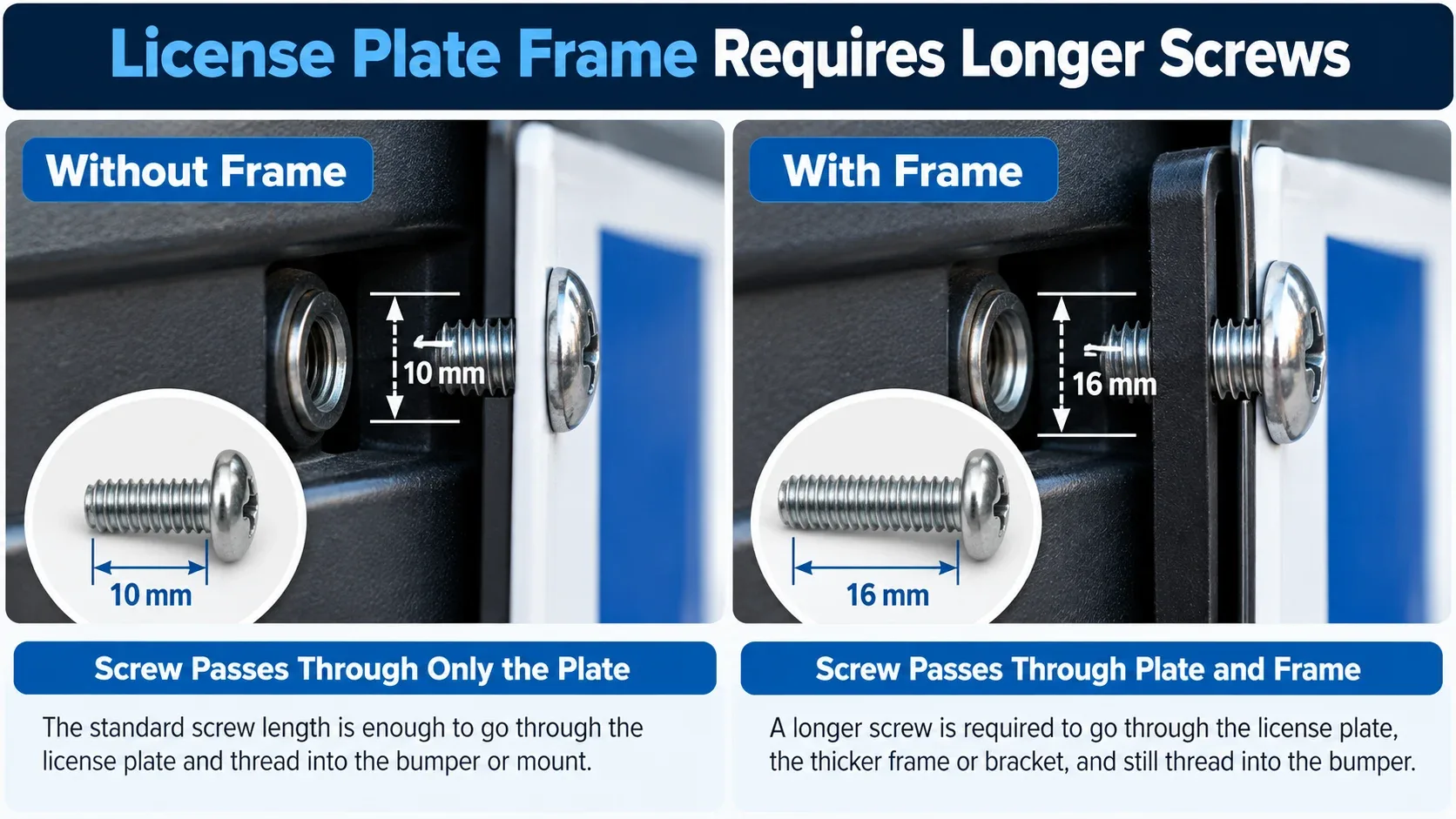
Sometimes. A decorative frame, silicone plate holder, security cover, or thick mounting bracket adds material between the screw head and the mounting point. That may require a slightly longer car tag screw size.
The replacement screw should retain the same diameter and thread pitch as the correct original fastener. Only the length should be increased when additional thickness genuinely requires it.
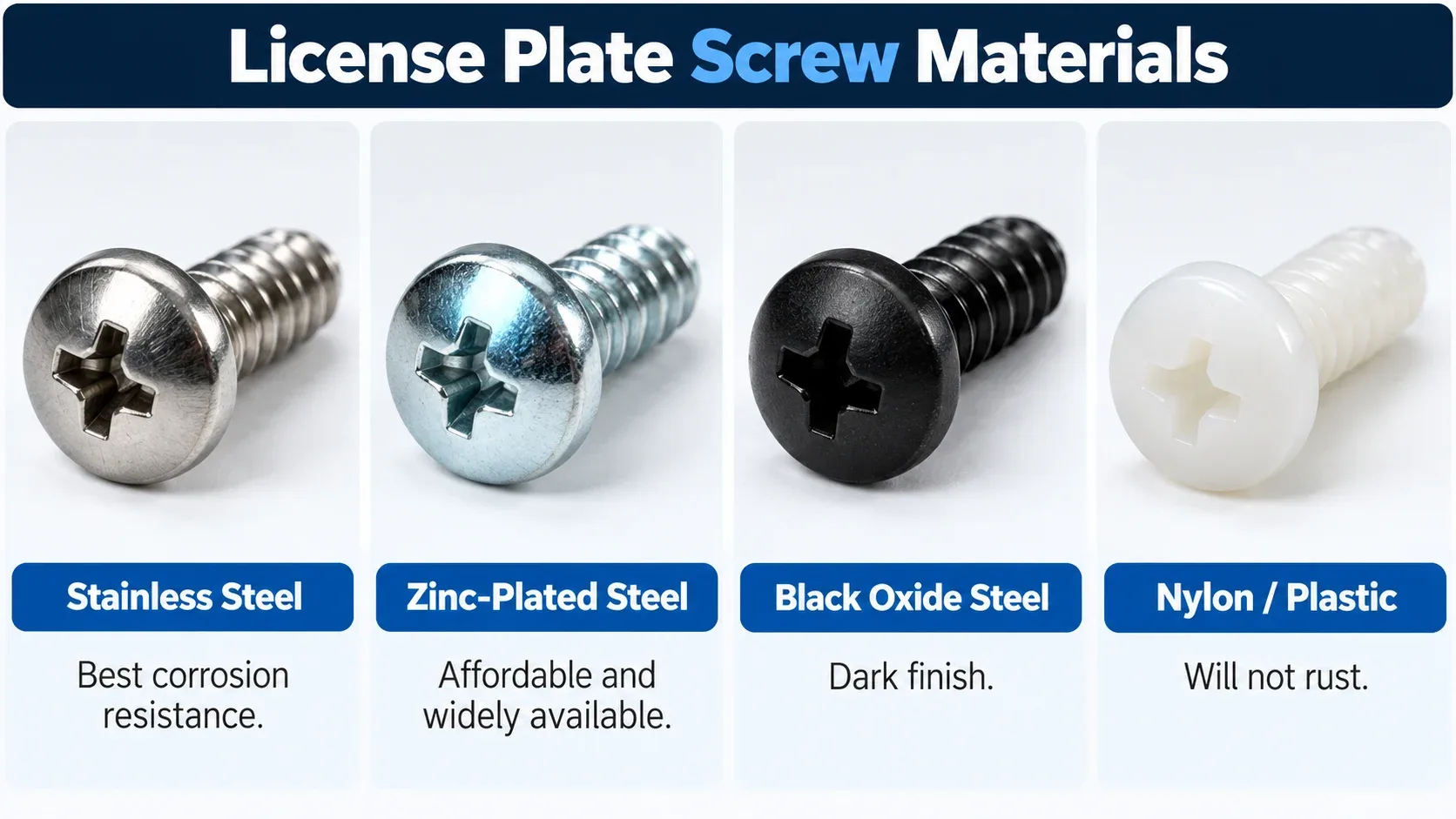
What Material Is Best for License Plate Screws?
License plate screws are exposed to rain, road salt, washing chemicals, dirt, and changing temperatures. Choosing suitable hardware can help reduce corrosion and make future removal easier.
| Material | Advantages | Possible Limitations |
|---|---|---|
| Stainless steel | Strong corrosion resistance and clean appearance | Correct thread and material compatibility still matter |
| Zinc-plated steel | Affordable and commonly available | Coating may deteriorate over time |
| Black oxide steel | Dark finish matches many plate frames | Less corrosion resistant than stainless steel |
| Nylon or plastic | Will not rust | Lower strength and not suitable for every mounting point |
How to Keep License Plate Screws From Rusting
Corrosion is especially common in wet climates or regions where road salt is used. Basic maintenance can help prevent rusted or seized license plate screws.
- Use corrosion-resistant hardware compatible with the vehicle.
- Replace heavily rusted screws.
- Clean dirt and road salt around the mounting points.
- Avoid over-tightening.
- Inspect the hardware periodically.
- Use washers where the mounting design requires them.
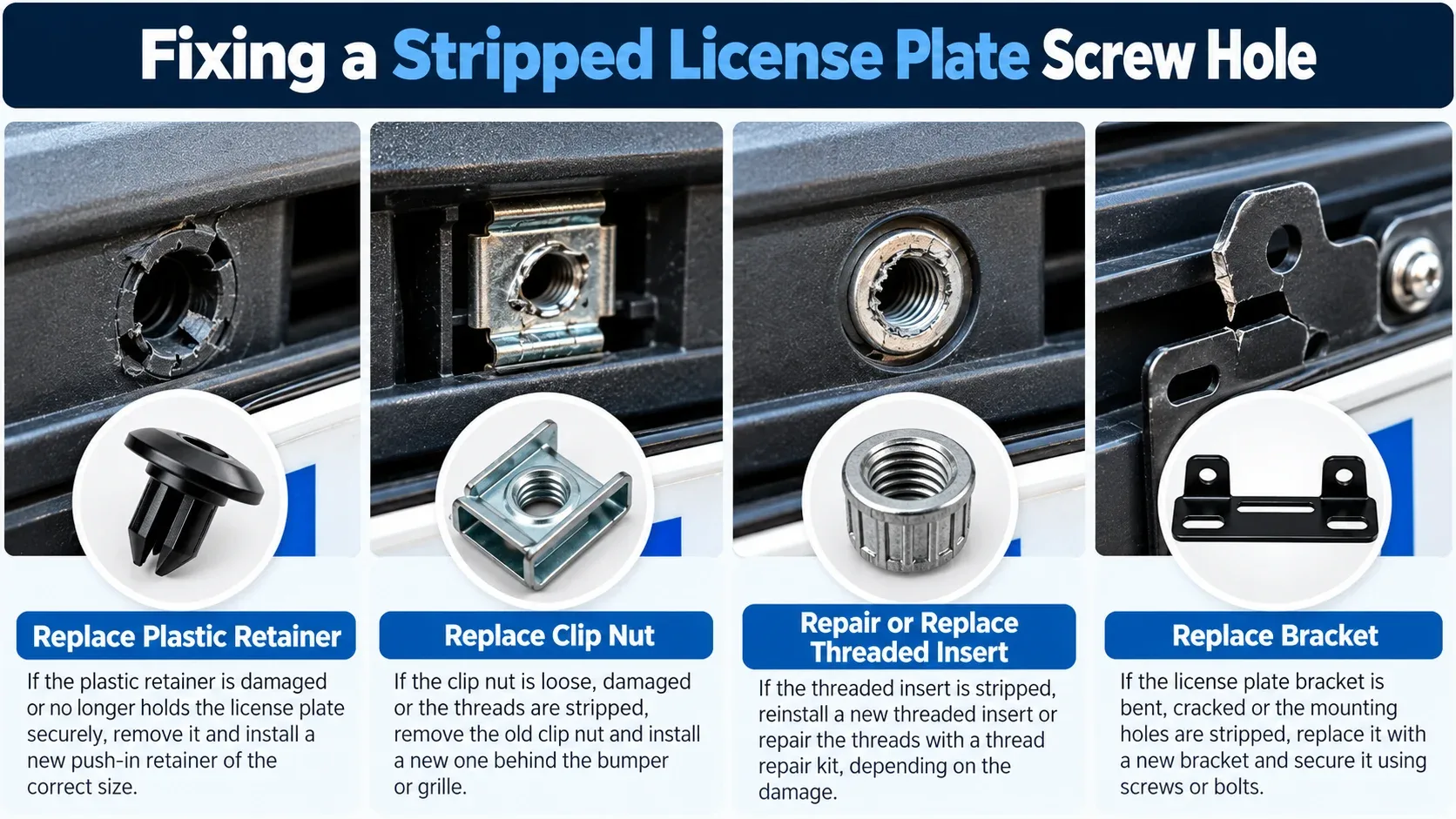
How to Fix a Stripped License Plate Screw Hole
If the screw turns but never tightens, the problem may be the plastic retainer, clip nut, threaded insert, or bracket rather than the screw itself.
- Plastic retainer: Replace the damaged retainer.
- Clip nut: Replace the worn or rusted clip.
- Threaded insert: Inspect and repair or replace the damaged insert.
- License plate bracket: Replace a cracked or stripped bracket.
- Metal threaded hole: Have damaged threads assessed before using larger hardware.
How to Install License Plate Screws Correctly
Once you have verified the correct licence plate screws size, installation is straightforward. The most important rule is to start the screws by hand.
- Clean the mounting area.
- Position the license plate over the mounting holes.
- Add the plate frame or washers if required.
- Insert the first screw and turn it gently by hand.
- Start the second screw before fully tightening either side.
- Confirm that both screws turn smoothly.
- Tighten them evenly until the plate is secure.
- Stop once the plate and frame no longer move.
Common License Plate Screw Mistakes
- Assuming every vehicle uses the same screw size
- Mixing metric and SAE threads
- Choosing a screw based only on head size
- Using an excessively long fastener
- Forcing a screw that does not start by hand
- Over-tightening plastic retainers
- Using power tools before confirming thread engagement
- Reusing badly rusted hardware
- Ignoring a damaged bracket or insert
License Plate Screw Troubleshooting
| Problem | Possible Cause | What to Check |
|---|---|---|
| Screw will not start | Wrong diameter or thread pitch | Verify metric/SAE size and inspect threads |
| Screw spins without tightening | Stripped retainer or insert | Inspect the mounting hardware behind the plate |
| Plate remains loose | Incorrect screw length or damaged bracket | Check mounting depth and bracket condition |
| Screw is difficult to remove | Rust, corrosion, or damaged threads | Inspect before applying excessive force |
| New screw stops halfway | Wrong pitch, damaged thread, or excessive length | Remove it and verify the specification |
| Fastener fits only one side | Damaged or replaced retainer | Inspect both mounting points independently |
License Plate Screw Size FAQs
Are all license plate screws the same size?
No. Screw size varies by manufacturer, model, year, bracket, and mounting design.
What is the most common license plate screw size?
M6 × 1.0 is commonly encountered on many vehicles, but it is not universal. Verify your mounting threads before purchasing replacement screws.
How do I know whether my car uses metric or SAE screws?
Measure an original screw, use a thread gauge, check OEM parts information, or ask a vehicle parts department.
What size screws fit a license plate frame?
The frame should normally use the same thread diameter and pitch as the original mounting screw, although a thicker frame may require slightly more length.
Can I use stainless steel license plate screws?
Yes, when they match the correct thread size, length, and mounting design. Stainless steel is commonly chosen for its corrosion resistance.
Can I use self-tapping screws for a license plate?
Only if the mounting system is designed for them. Never use a self-tapping screw in a threaded metal insert.
Why will my new license plate screw not go in?
The screw may have the wrong diameter, wrong pitch, excessive length, or the mounting threads may be damaged or corroded.
What should I do if the license plate screw hole is stripped?
Identify whether the damaged part is a retainer, clip nut, bracket, or threaded insert and repair or replace that component instead of forcing a larger screw.
Are front and rear license plate screws the same size?
Not always. Front and rear mounting systems can use entirely different hardware.
Can a license plate screw be too long?
Yes. An excessively long screw can bottom out or extend farther behind the mounting surface than intended.
How to Choose the Right License Plate Screw Size
The correct license plate screw size depends on both the vehicle and the mounting hardware installed behind the plate. Identify the mounting system, determine whether the thread is metric or SAE, confirm the diameter and pitch, and then choose a suitable screw length.
If an original fastener is available, use it as your reference. If it is missing, check OEM parts information, inspect the retainer or threaded insert, or have the hardware identified for your specific vehicle.
Most importantly, start the replacement screw by hand. If it does not turn smoothly within the first few threads, stop and verify the fastener before continuing.