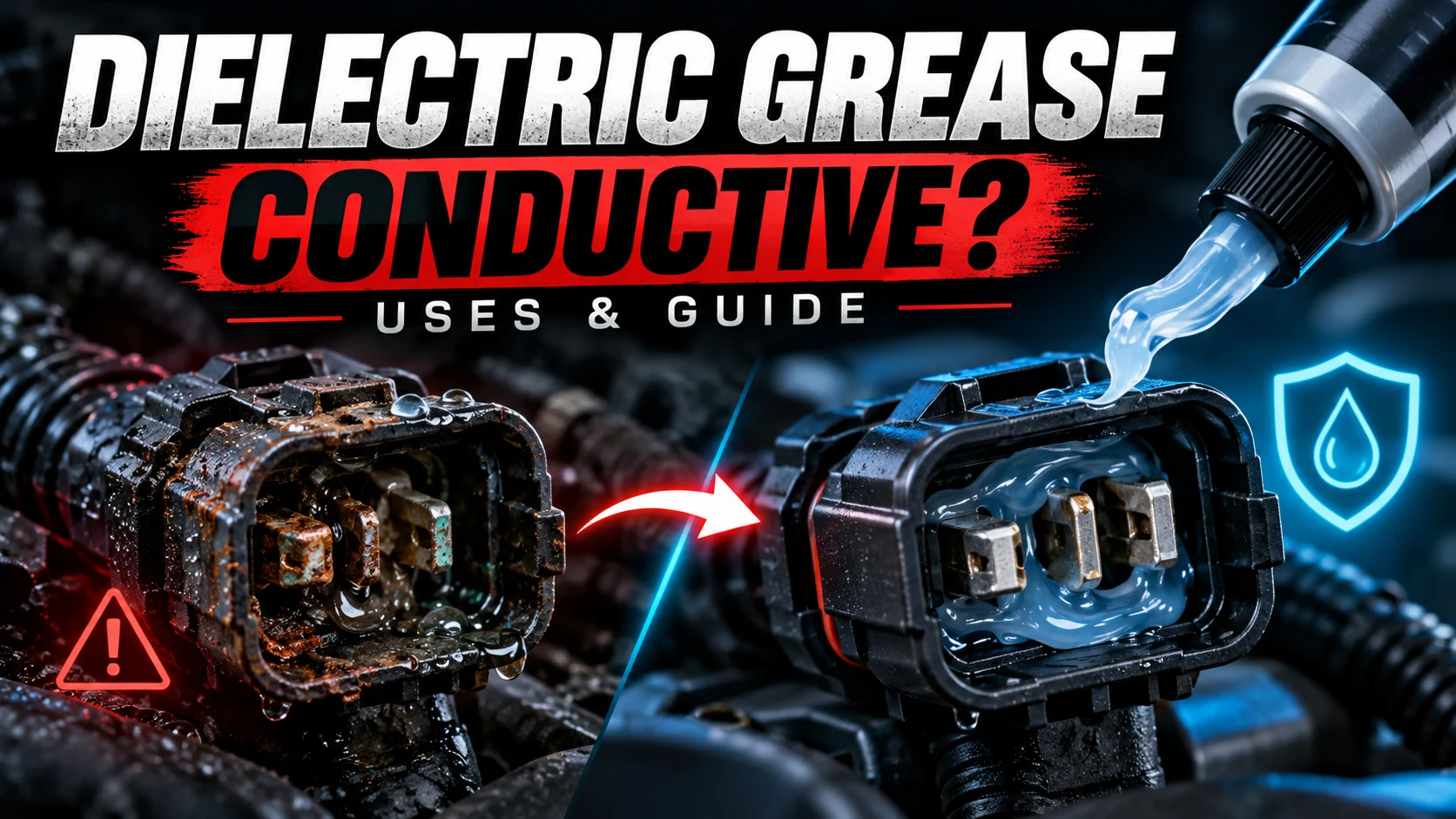

If you have ever used electrical grease on a battery terminal, spark plug boot, trailer plug, or weather-sealed connector, you may have wondered how a grease that does not conduct electricity can still be useful around electrical connections. The answer is that dielectric grease protects the connection from moisture and corrosion while the metal terminals themselves carry the electrical current.
Quick Answer: Is Dielectric Grease Conductive?
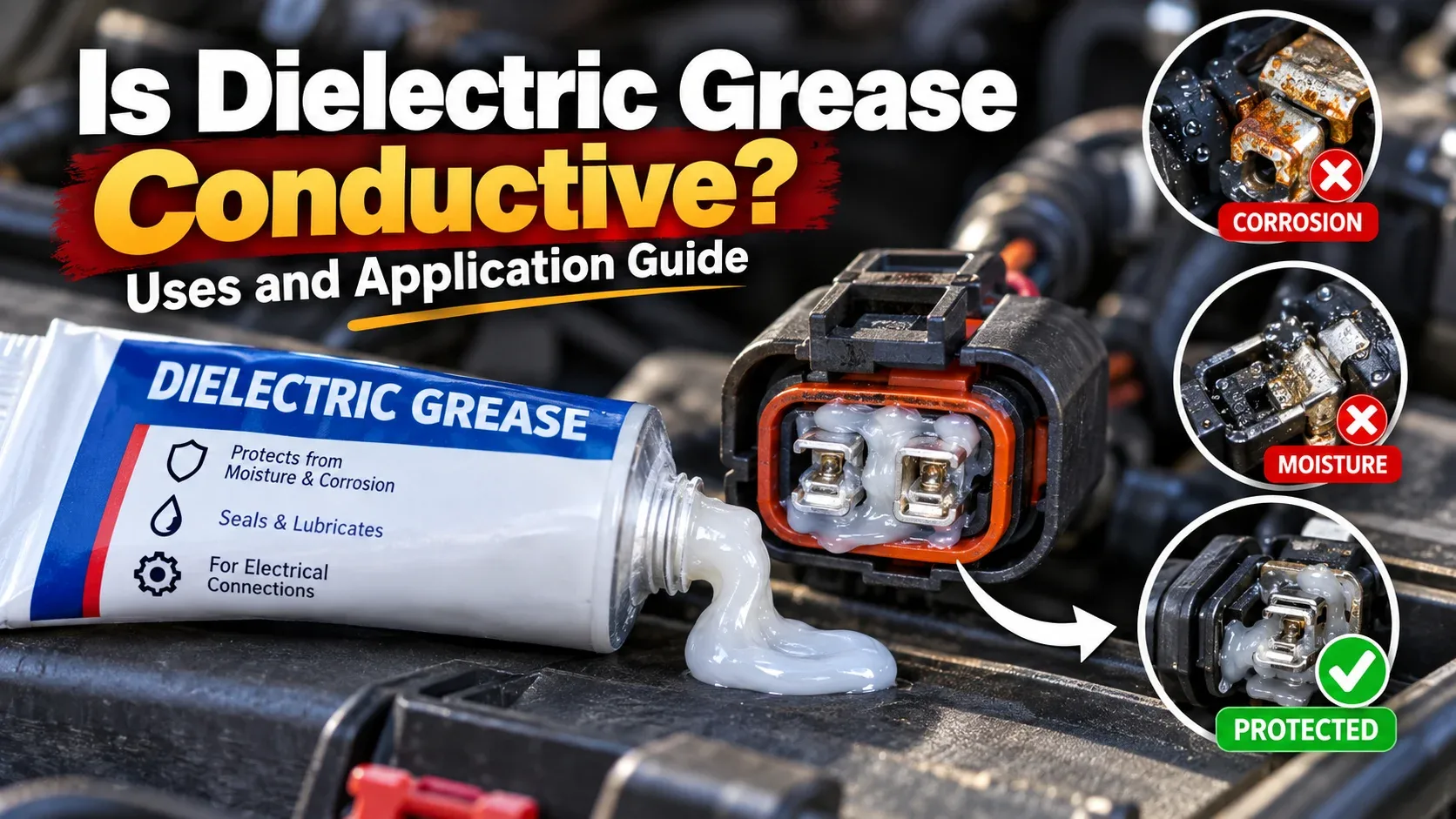
No. Dielectric grease is electrically insulating, not conductive. It is typically used to help keep out moisture, reduce corrosion, lubricate seals and rubber boots, and protect electrical connections from contamination.
The electrical current still travels through direct metal-to-metal contact between properly seated terminals. The grease should not be relied on to create or repair an electrical connection.
What Is Electrical Grease?
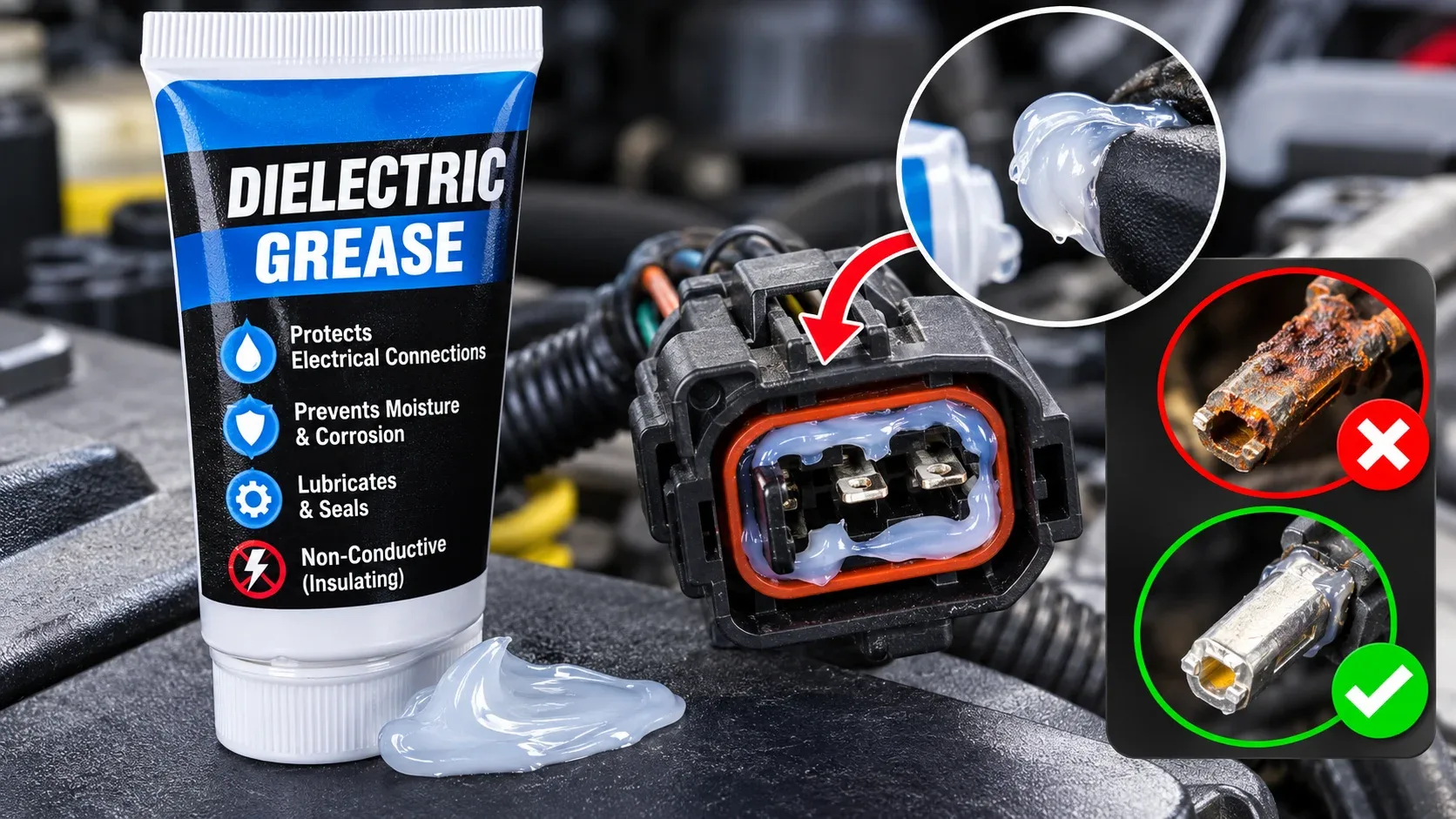
The term electrical grease can describe several different products used around electrical or electronic connections. They do not all work the same way.
Some electrical greases are designed mainly to seal out water, reduce corrosion, and lubricate connectors. Others contain conductive materials and are intended for specialized electrical applications.
“Electrical grease” is a broad category. Dielectric grease is one type of electrical grease, but conductive grease is a different product with different properties and uses.
What Is Dielectric Grease?
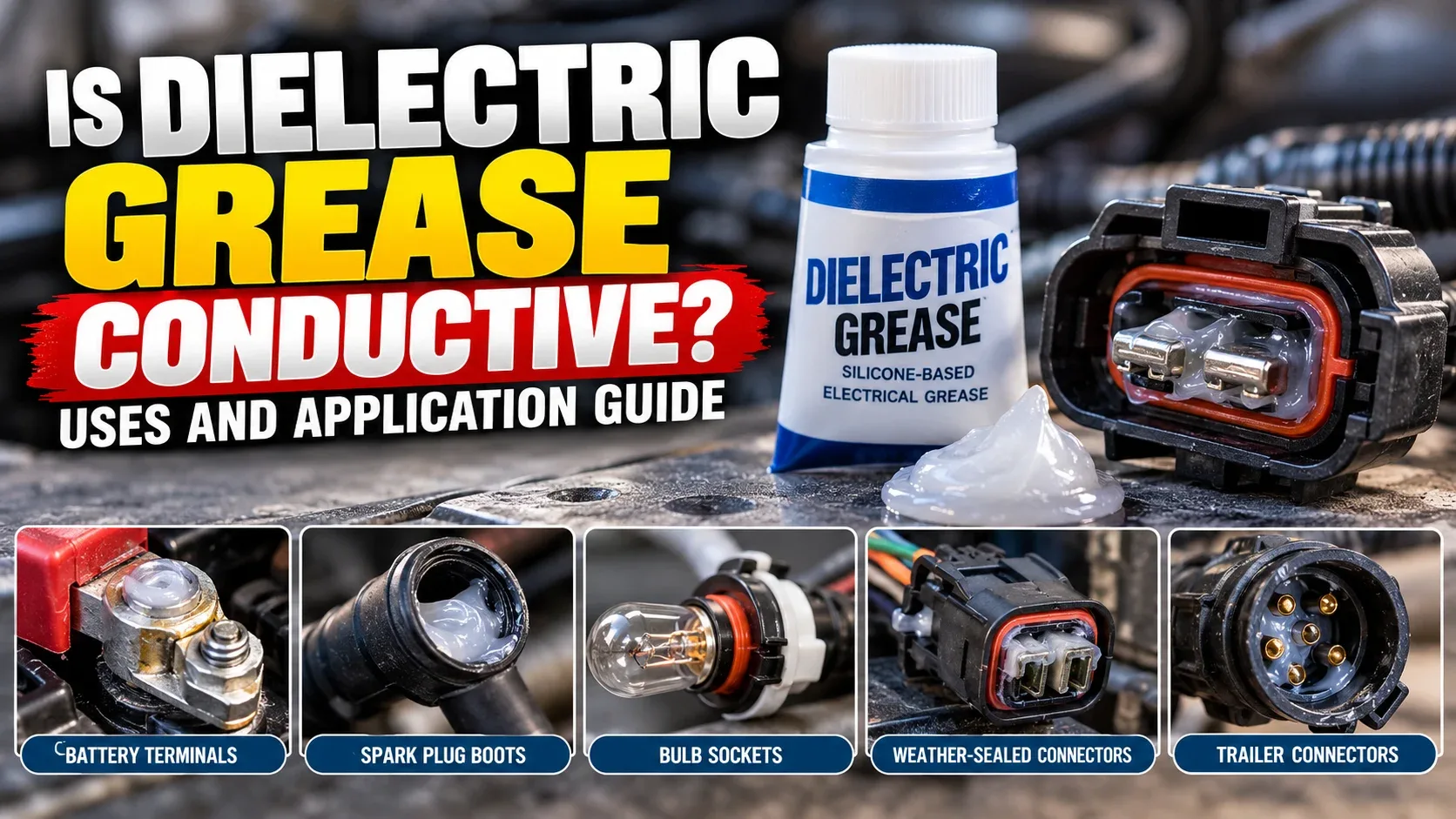
Dielectric grease is typically a silicone-based, water-resistant grease that acts as an electrical insulator. Its job is not to carry current. Instead, it helps protect electrical connections from moisture, dirt, oxidation, and corrosion.
In automotive applications, it is commonly used around connector seals, spark plug boots, battery terminals, bulb sockets, trailer connections, and other components exposed to moisture or contaminants.
How Does Dielectric Grease Work If It Doesn’t Conduct?
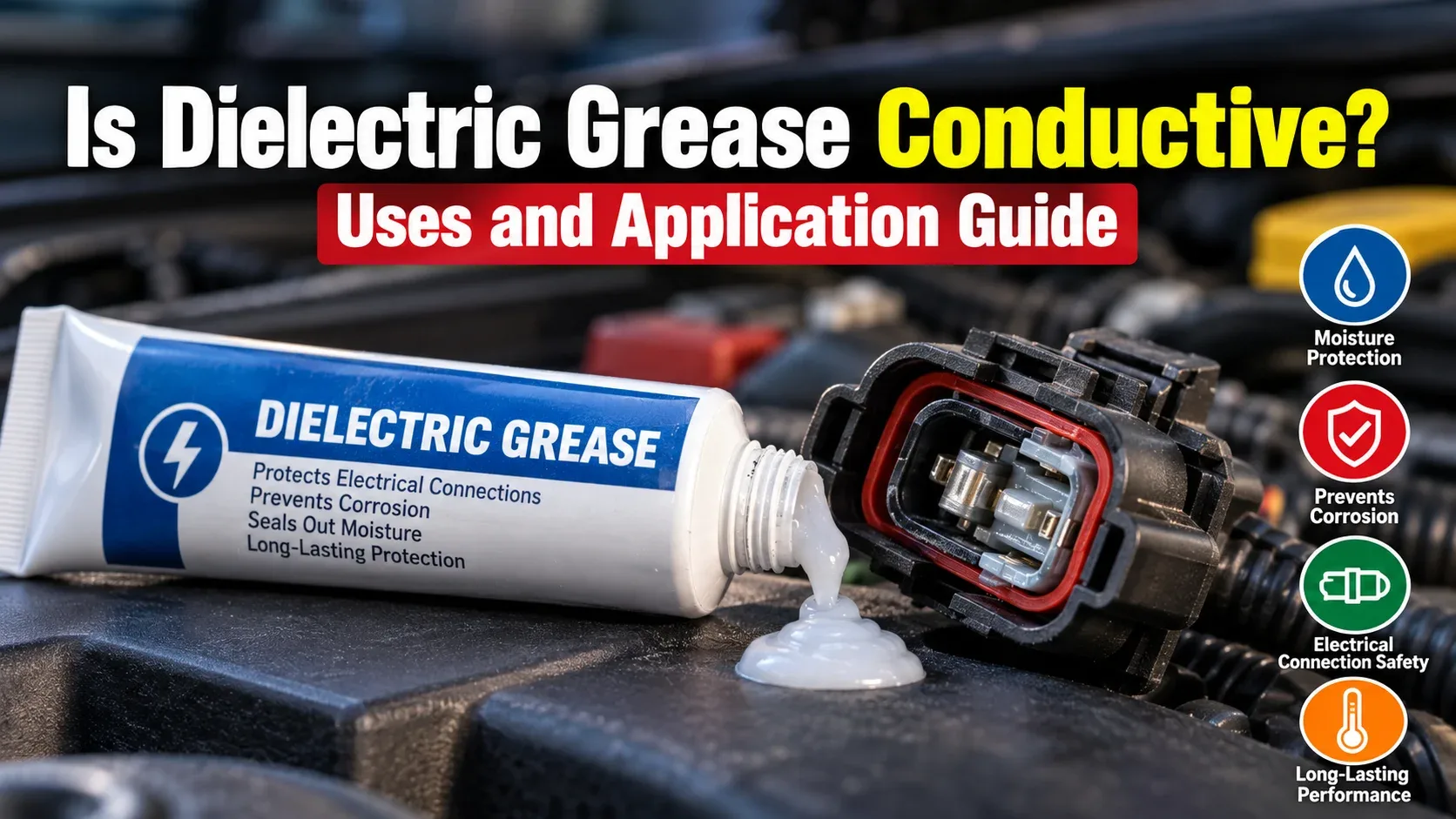
A properly designed electrical connector creates its circuit when the male and female metal terminals press firmly against each other. That physical metal-to-metal contact provides the conductive path.
Dielectric grease fills surrounding air gaps and helps block moisture and contamination. When a compatible connector is assembled correctly, terminal pressure allows the metal contact surfaces to mate as designed.
Dielectric grease protects a good electrical connection. It does not create the electrical connection itself.
Dielectric Grease vs Conductive Grease
| Feature | Dielectric Grease | Conductive Grease |
|---|---|---|
| Conducts electricity | No | Yes, depending on formulation |
| Main purpose | Moisture protection, sealing, corrosion resistance, lubrication | Maintain electrical continuity in specific applications |
| Automotive connector use | Common when recommended | Application-specific |
| Safe to substitute freely | No | No |
What Is Dielectric Grease Used For?
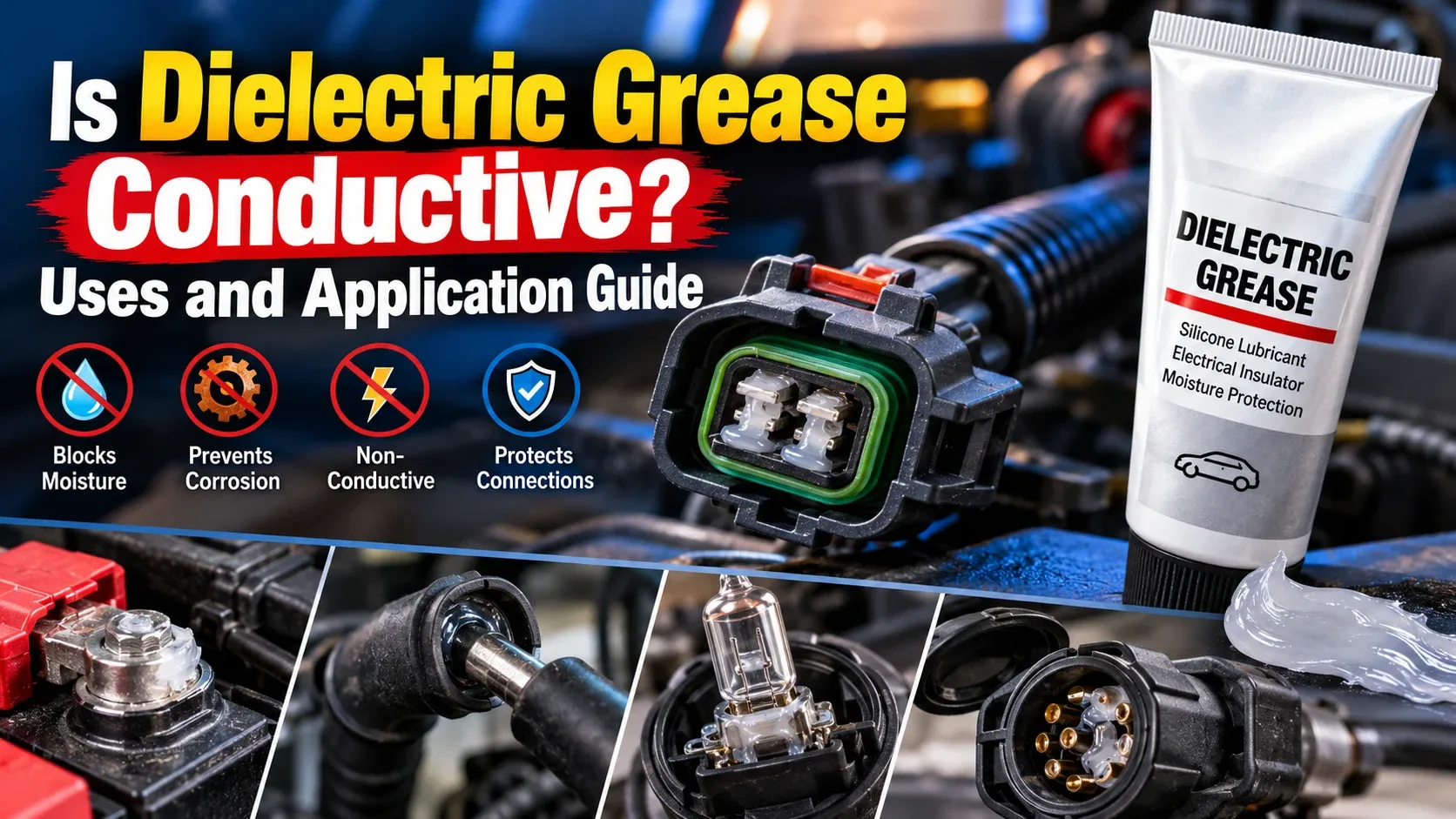
Dielectric grease is useful where moisture, dirt, road salt, or oxidation may threaten a compatible electrical connection.
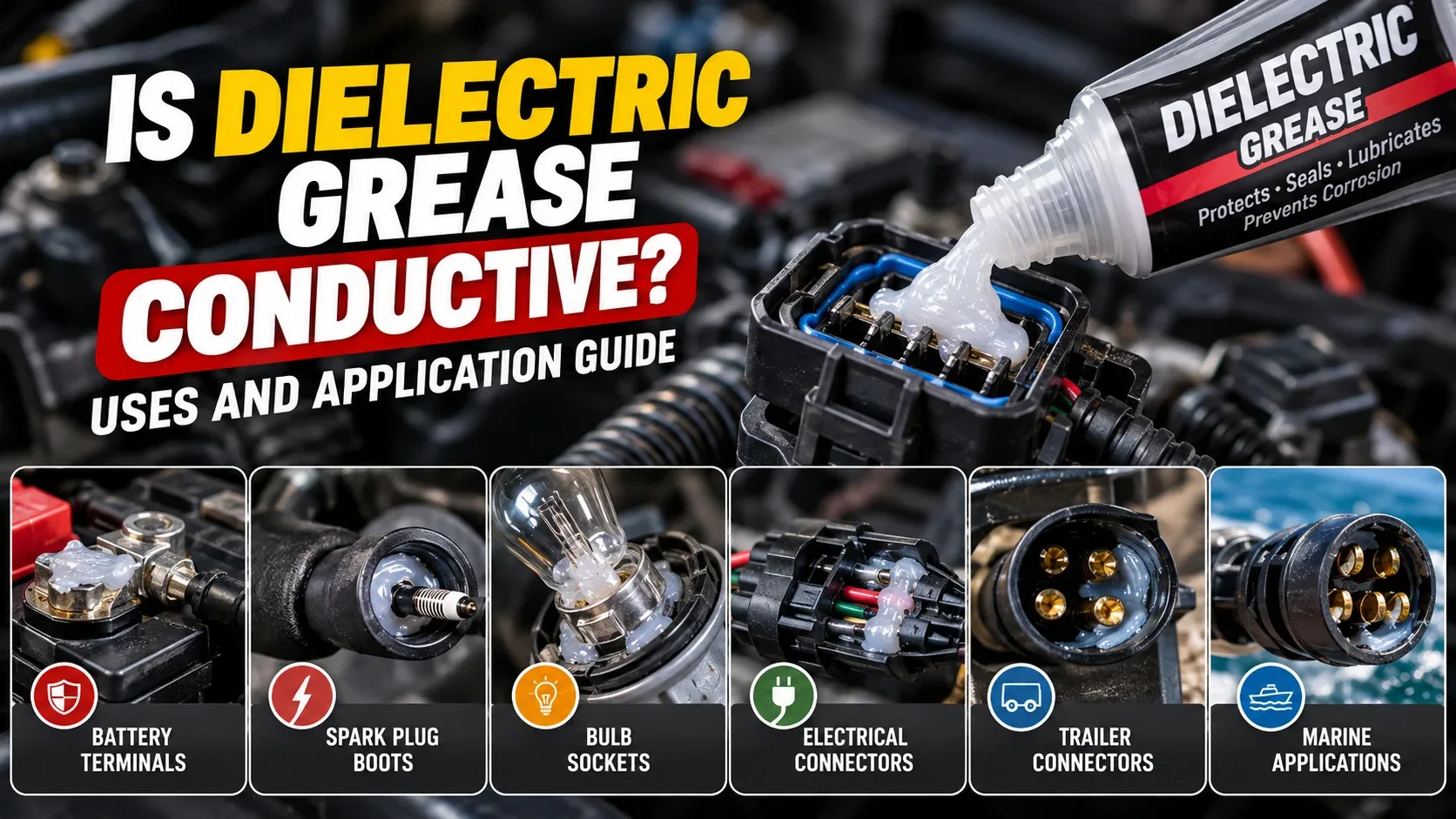
Battery Connections
Helps protect clean, secure battery terminals from moisture and corrosion.
Spark Plug Boots
Helps lubricate and seal rubber boots while reducing moisture intrusion.
Bulb Sockets
Can help reduce corrosion in compatible lighting connections.
Weather-Sealed Connectors
Helps protect compatible connectors exposed to moisture and contaminants.
Trailer Connectors
Useful where plugs are exposed to rain, road spray, mud, or salt.
Marine Connections
Can provide extra moisture protection around compatible wet-environment connections.
Can You Use Dielectric Grease on Battery Terminals?
Yes. Dielectric grease can be used as a protective barrier around automotive battery terminals, but the battery connection must first be clean and mechanically secure.
Do not cover existing corrosion or use grease to compensate for a loose terminal.
Can You Use Dielectric Grease on Spark Plug Boots?
Spark plug boots are one of the most common automotive applications for dielectric grease.
A small amount can be used around the inner sealing area of the boot when recommended. The metal ignition terminal still needs to seat firmly onto the spark plug terminal.
Can You Use Dielectric Grease on Bulb Sockets?
Dielectric grease can be useful in compatible automotive bulb sockets exposed to condensation, humidity, or road contaminants.
Burned, melted, loose, or badly corroded contacts should be repaired or replaced rather than simply covered with grease.
Using Dielectric Grease on Electrical Connectors
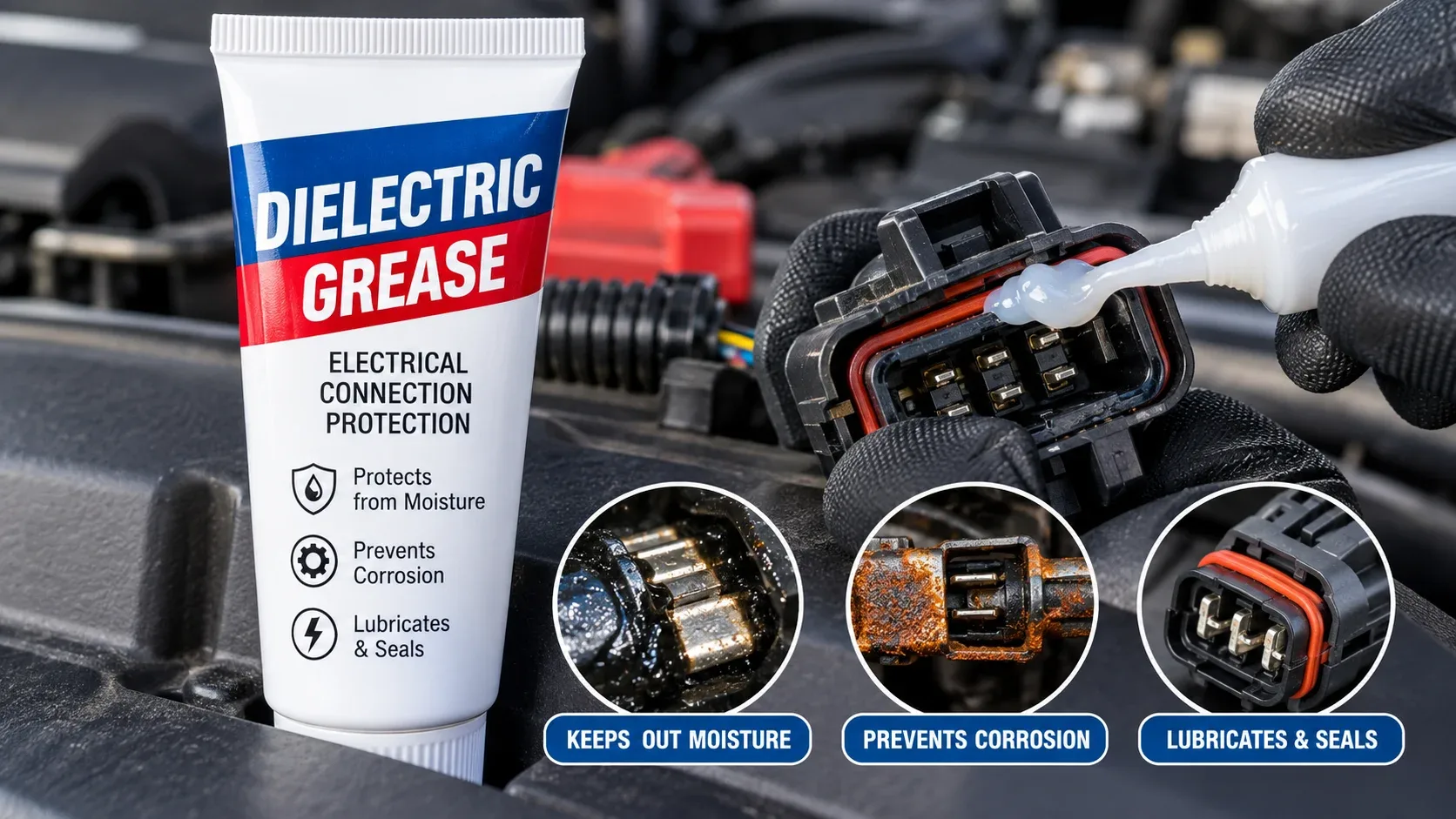
Weather-sealed connectors are common places to use dielectric grease, especially in engine bays, exterior lighting systems, and other moisture-prone areas.
Always confirm that the connector or component manufacturer permits its use.
Trailer and Marine Electrical Connections
Trailer and marine connectors frequently encounter water, salt, humidity, dirt, and mud.
Dielectric grease can help protect compatible connections from these environmental conditions.
Where Should You Not Use Dielectric Grease?
- Do not use it to compensate for loose or damaged terminals.
- Do not pack it into connectors when the manufacturer prohibits it.
- Do not use it as a replacement for cleaning corrosion.
- Do not substitute it for conductive grease where conductivity is required.
- Do not apply excessive amounts that prevent proper connector seating.
How to Apply Dielectric Grease Correctly
- Disconnect power where necessary.
Follow the correct service procedure for the circuit. - Inspect the connection.
Check for corrosion, loose terminals, damaged seals, or burned contacts. - Clean the connection.
Remove dirt and corrosion using a suitable method. - Allow it to dry.
Avoid trapping moisture or cleaning residue. - Apply a small amount.
Use only enough grease for the intended protective surface. - Reconnect fully.
Make sure the connector locks and seats properly. - Verify operation.
Confirm that the circuit works normally after reassembly.
How Much Dielectric Grease Should You Use?
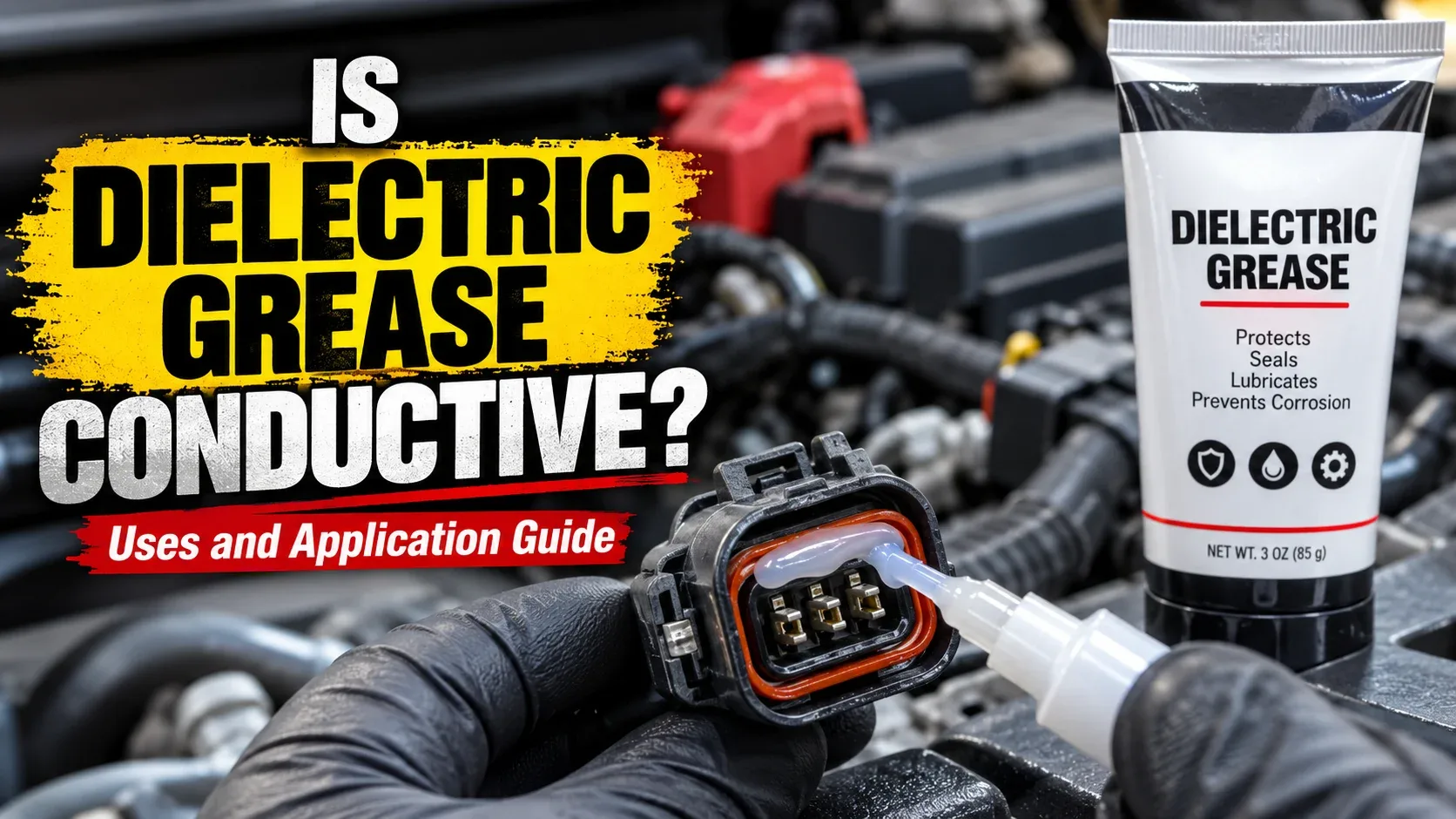
More grease does not necessarily provide better protection.
In many applications, a light or controlled coating is enough. Excessive grease may make connectors difficult to assemble and can be unnecessary.
Common Dielectric Grease Mistakes
Assuming It Conducts Electricity
The metal contacts conduct electricity, not the dielectric grease.
Using Too Much
More grease is not always better and can make assembly difficult.
Covering Corrosion
Clean or repair damaged connections before applying grease.
Using the Wrong Product
Dielectric and conductive greases are not interchangeable.
Frequently Asked Questions
Is dielectric grease conductive?
No. Dielectric grease is electrically insulating and is mainly used to help protect compatible electrical connections from moisture and corrosion.
Why use dielectric grease if it does not conduct electricity?
Because the metal terminals carry the current. The grease helps protect the surrounding connection.
Can dielectric grease stop a connection from working?
Poor application, excessive grease, damaged terminals, or incorrect connector assembly can cause problems. Proper metal contact is still essential.
Can dielectric grease be used on battery terminals?
Yes, as a protective barrier around clean and securely connected battery terminals.
Can dielectric grease be used on spark plug boots?
Yes, it is commonly used around the boot sealing area when recommended.
Is electrical grease the same as dielectric grease?
Not always. Electrical grease is a broad term. Some electrical greases are dielectric, while others are intentionally conductive.
Final Thoughts: Using Electrical Grease Correctly
The answer to “is dielectric grease conductive?” is no. Dielectric grease is electrically insulating, but that does not make it unsuitable for electrical work.
Its value comes from helping protect compatible connections against moisture, dirt, oxidation, and corrosion while properly seated metal terminals carry the electrical current.
Before applying any electrical grease, inspect and clean the connection, verify the manufacturer’s recommendations, use the correct grease type, apply only the amount needed, and make sure the terminals seat securely.