A calm, manufacturer-aware way to restore clean cutting—without guessing your file size, filing angle, or the condition of a damaged chain.
A stopped saw is the only saw you should sharpen.
Switch the saw off, remove the battery on cordless models, and disconnect the spark-plug lead where your manual recommends it. Let hot parts cool, secure the bar in a vise or stable holder, wear eye protection and cut-resistant gloves, and use a handled file. Never sharpen a running chain. Your chain and saw manuals take priority over this general guide.
Signs your chainsaw chain is dull
A sharp chain feeds itself gently and throws coarse, consistent chips in clean wood. Dullness often follows a light strike on soil, stone, wire, or embedded metal—sometimes after only one cut.
- Fine dust replaces chunky wood chips.
- You need extra downward pressure to keep cutting.
- The bar smokes or the cut becomes slow despite correct lubrication.
- The saw pulls left or right, often because cutters are uneven.
The chain parts that control a clean cut
The cutting teeth alternate left and right. Before sharpening, identify the cutter and depth gauge rather than treating the whole chain like one continuous blade.
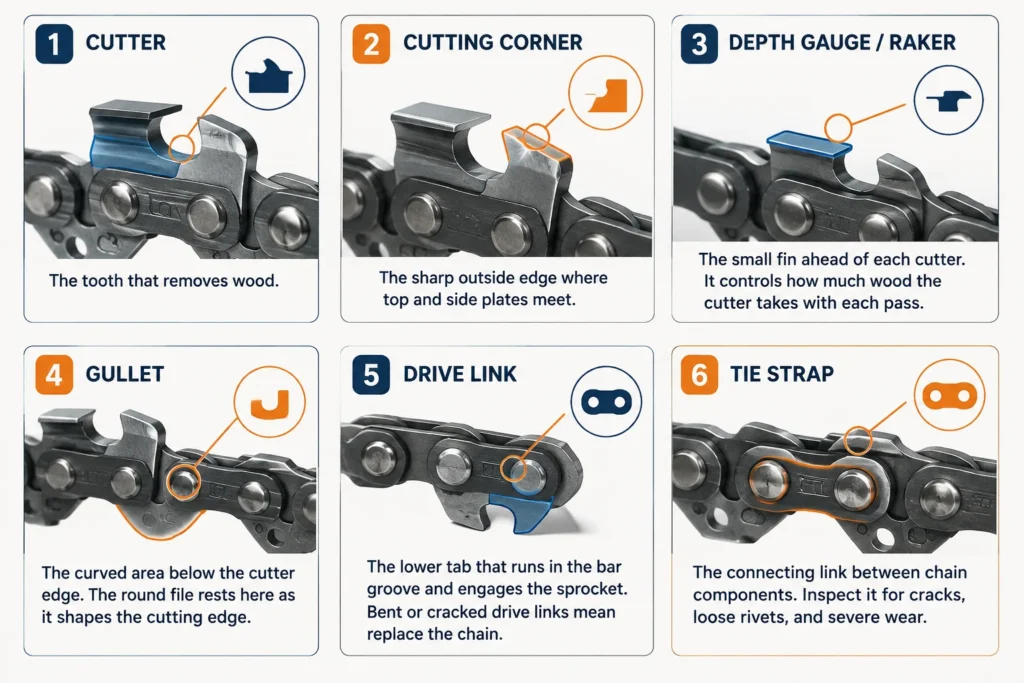
Cutter
The tooth that removes wood. It includes the top plate, side plate, and cutting corner.
Cutting corner
The sharp outside edge where top and side plates meet. It should look crisp, not rounded or blue from heat.
Depth gauge / raker
The small fin ahead of each cutter. It controls how much wood the cutter takes with each pass.
Gullet
The curved area below the cutter edge. The round file rests here as it shapes the cutting edge.
Drive link
The lower tab that runs in the bar groove and engages the sprocket. Bent or cracked drive links mean replace the chain.
Tie strap
The connecting link between chain components. Inspect it for cracks, loose rivets, and severe wear.
Choose the file size and angle from the exact chain specification
Do not choose a file from the saw bar length or engine size. Find the chain pitch, gauge, and cutter type on the chain package, bar stamp, owner manual, or manufacturer chart; these determine the required round-file diameter and filing angles.
- Manufacturer-specified round file with handle
- Filing guide matched to your chain
- Depth-gauge tool and flat file
- Vise or secure bar-holding method
- Marker pen and cleaning brush
- Eye protection and cut-resistant gloves
How to sharpen a chainsaw chain with a round file
Use smooth forward strokes and remove only enough metal to restore a clean edge. The goal is equal cutter length and consistent angles—not the maximum number of file strokes.
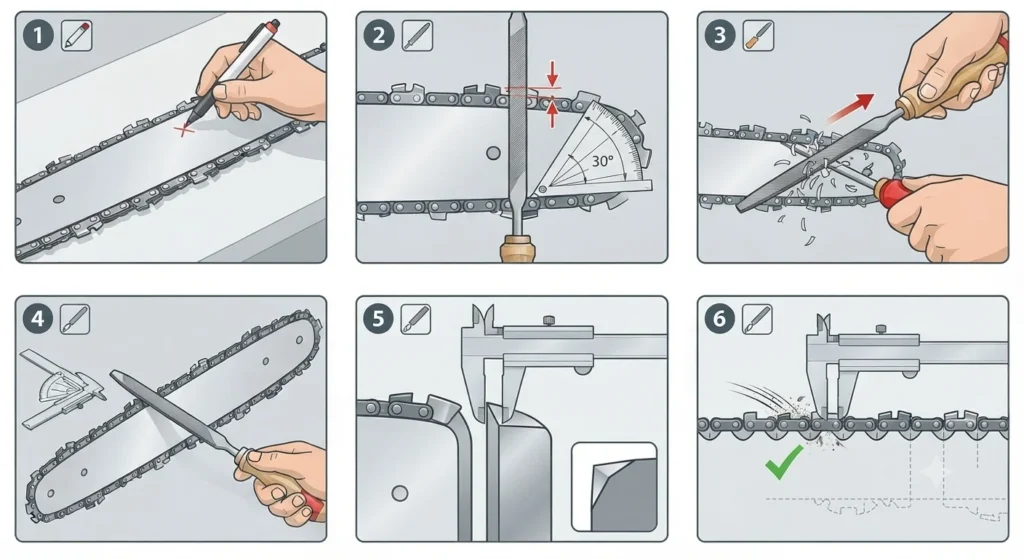
Mark the first cutter with a pen
A small marker line stops you from going around twice. Begin with the most damaged cutter on one side and work through every cutter facing that direction.
Follow the witness mark and file height
Place the correct round file in the gullet, using the guide to hold the specified angle. Typically a small portion of the file sits above the top plate; follow your guide and manufacturer instructions.
Use light, even strokes away from your body
Push the file from inside to outside, lifting it on the return. Count strokes only as a consistency check; stop when the dull, rounded edge is replaced by a bright, sharp corner.
Reposition yourself, then compare cutters
Turn the saw or move to the other side of the bar. File the opposite-facing cutters with the same method. Compare top-plate lengths visually; unequal lengths are a common cause of crooked cuts.
What a correct result looks like
Each cutter should have a clean, matching top plate and a sharp, uninterrupted cutting corner. If one cutter is chipped, blue from overheating, or much shorter than the rest, pause and consider professional service or replacement.
Clean the chain and find the shortest cutter
Brush off oil and debris. Inspect every cutter, drive link, and rivet. Use the shortest undamaged cutter as your length reference; it prevents you from filing healthy cutters too far.
Check depth gauges only with the correct tool
As cutters get shorter, depth gauges may need lowering to preserve the manufacturer-specified clearance. Place the correct depth-gauge tool over the chain. If the raker protrudes, file it carefully with a flat file, then round its leading edge as instructed. Filing rakers too low can make the chain grab, vibrate, and kick back more aggressively.
Three common sharpening mistakes
A filing guide is useful because it makes the correct position repeatable—especially when you only sharpen occasionally.
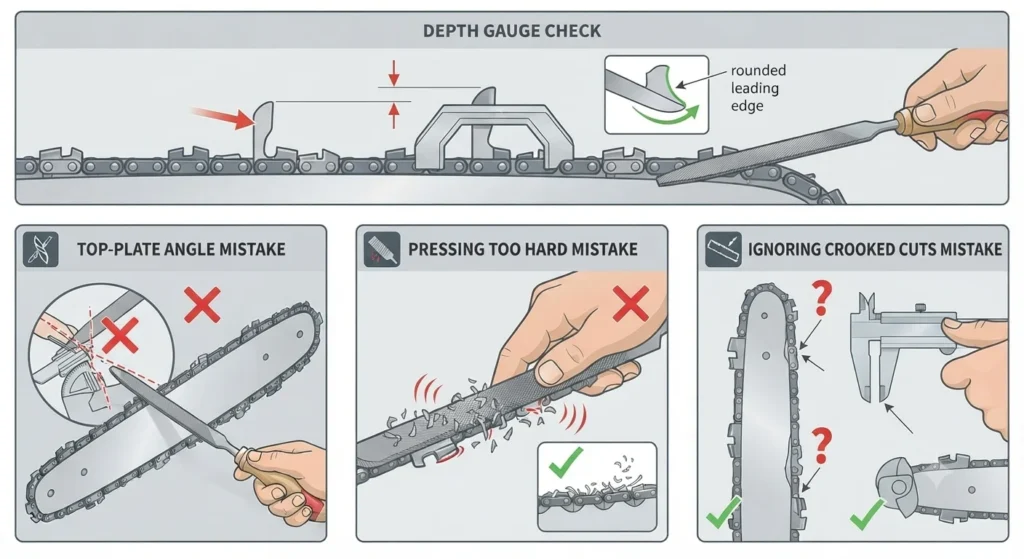
Changing the top-plate angle
Beginners often twist the file near the end of a stroke. Keep the guide aligned with the cutter’s witness mark from start to finish.
Pressing too hard
Heavy pressure makes the file chatter and removes metal unevenly. A sharp file with controlled forward strokes does the work.
Ignoring a chain that cuts crooked
First compare left and right cutter lengths, then inspect the bar rails and groove. A damaged bar can mimic a sharpening problem.
Manual file vs. electric sharpener
| Method | Best for | Watch for |
|---|---|---|
| Round file + guide | Homeowners, field touch-ups, and learning cutter geometry. | Slower process, but excellent control and low risk of heat damage. |
| Portable electric sharpener | Frequent users who need quick touch-ups away from a bench. | Use only with the right attachment and settings for the chain. |
| Bench grinder | Restoring multiple chains with repeatable set-up. | Too much pressure or heat can remove metal quickly and weaken the cutting edge. |
Sharpening restores cutters—it does not repair structural damage.
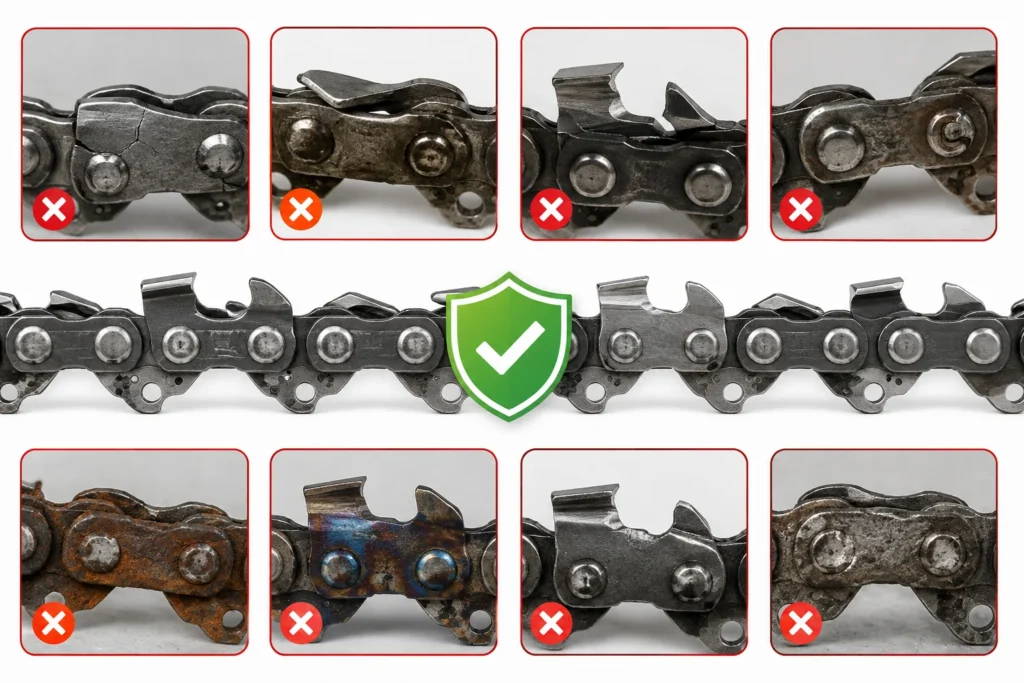
Replace the chain or have it inspected professionally if you find cracked tie straps, damaged or bent drive links, broken cutters, loose rivets, severe corrosion, blue heat damage, or cutters filed close to the manufacturer’s wear marks. If the chain repeatedly cuts crooked after careful matching, inspect the guide bar and seek qualified service.
Chainsaw chain sharpening FAQs
Can I sharpen a chainsaw chain myself?
Yes, if the chain is structurally sound and you can identify its exact specification. A round file and filing guide are a sensible starting point. If you cannot identify the chain, see damage, or feel uncertain about the setup, take it to a qualified technician.
How often should I sharpen my chainsaw chain?
Sharpen when cutting performance changes, not by a fixed calendar. Fine dust, extra cutting pressure, smoke, and directional pulling are useful signals. A brief touch-up after contact with dirt or stone can prevent more extensive filing later.
What file size should I use for my chain?
Use the file diameter listed by the chain manufacturer for that chain’s pitch and cutter design. Bar length does not reliably identify file size. Check the chain packaging, saw manual, bar stamp, or manufacturer sharpening chart.
Why does my chainsaw cut to one side after sharpening?
The usual cause is unequal cutter length or angle from one side to the other. Compare cutters using the shortest as a reference, then inspect the bar rails for uneven wear. Do not keep filing blindly if the pull continues.