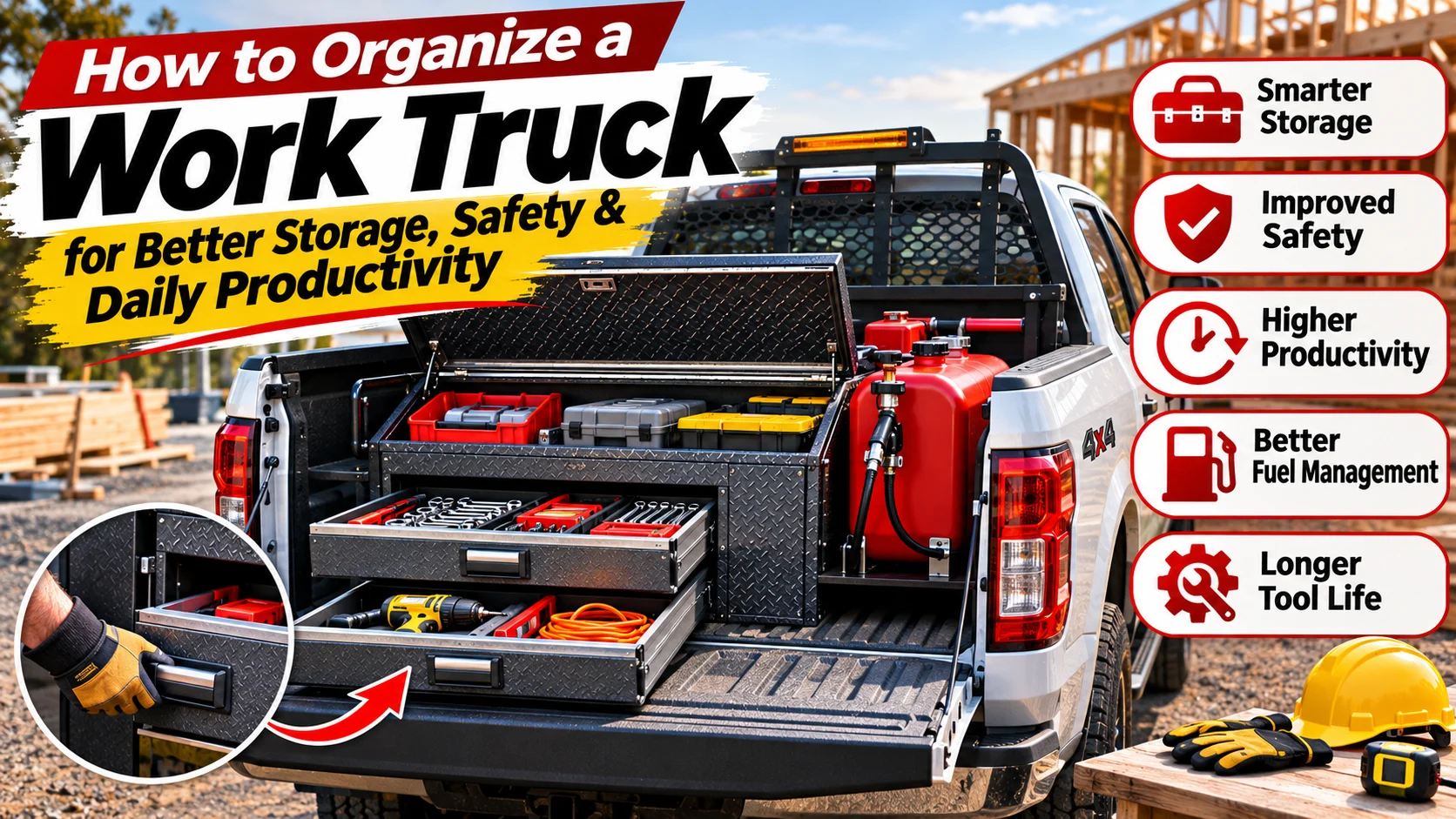

A work truck is more than a vehicle used to travel between jobs. For contractors, farmers, mechanics, and field workers, it often serves as a mobile workspace. Tools, spare parts, fuel, and equipment must be transported safely while remaining easy to access throughout the day. Without a proper storage system, workers can waste time searching for equipment, struggle with limited bed space, and face unnecessary risks from loose cargo.
Planning a practical truck setup starts with understanding the work being performed and selecting equipment that supports those daily tasks. The product range available from FRDM Fabs illustrates how different storage solutions, fuel tanks, mounting accessories, and truck equipment can serve different working requirements.
1. Identify Your Daily Equipment Requirements
Before purchasing storage accessories, make a list of the items that regularly travel in your truck. Different professions have different equipment needs, so a setup that works for a contractor may not suit a farmer or maintenance technician.
For example:
- Contractors may carry drills, saws, measuring tools, fasteners, and safety equipment.
- Farmers may transport fencing supplies, repair tools, chains, and fuel containers.
- Mechanics may need sockets, wrenches, diagnostic equipment, and replacement parts.
- Electricians may carry cables, meters, connectors, and specialized hand tools.
- Landscaping workers may need trimmers, hoses, hand tools, and maintenance supplies.
Separate frequently used equipment from items needed only occasionally. This helps determine which tools should be stored in easily accessible compartments and which can be placed in less accessible areas.
2. Choose the Right Type of Toolbox
Truck toolboxes come in several designs. Each provides different advantages depending on available space, vehicle configuration, and storage requirements.
Side-Mounted Toolboxes
Side-mounted toolboxes use space along the sides of the truck bed. They can provide convenient storage while leaving much of the central loading area available for larger materials.
They may be suitable for workers who carry both hand tools and bulky equipment.
Before choosing one, check its dimensions, opening mechanism, mounting requirements, and compatibility with your truck.
Drawer Toolboxes
Drawer systems organize tools into separate compartments. They can make it easier to locate smaller items without removing everything stored above them.
Consider the drawer depth, weight capacity, locking system, and whether removable dividers are available.
Underbody Toolboxes
Underbody boxes are commonly installed beneath suitable truck or trailer platforms. They can use space that would otherwise remain unused.
However, clearance, mounting strength, exposure to road debris, and weather protection should be checked before installation.
Combination Storage Systems
Some setups combine storage compartments with fuel tanks or other accessories. These systems can save space, but buyers should verify that each component meets its intended purpose and applicable safety requirements.
3. Measure Available Space Before Buying
One common mistake is selecting storage equipment based on appearance without measuring the available space.
Start by recording the truck bed’s length, width, and usable height. Also identify any existing equipment that may affect installation.
Measure around:
- Wheel wells.
- Bed rails.
- Tailgate openings.
- Existing mounting points.
- Hitch equipment.
- Other installed accessories.
Remember that a toolbox must not prevent the tailgate from closing or interfere with cargo loading.
Check the manufacturer’s dimensions carefully. Allow enough room to open doors and drawers fully, even when other equipment is installed nearby.
4. Organize Tools According to Frequency of Use
Good organization reduces unnecessary movement during busy workdays.
Place frequently used tools in accessible compartments. Equipment required less often can be stored farther away or in deeper sections.
A simple organization method involves three groups:
Daily-use tools: Items needed for most jobs, such as measuring tapes, screwdrivers, and commonly used wrenches.
Specialized equipment: Tools required for particular projects or occasional repairs.
Emergency supplies: First-aid materials, warning equipment, spare lights, and other items needed when unexpected situations occur.
Use removable dividers, labeled compartments, and tool holders where practical.
Avoid placing heavy objects in locations where they can fall when a drawer opens or a vehicle moves.
5. Consider Fuel Storage and Management
Some work trucks need to transport fuel for machinery, generators, or equipment operating away from regular fuel stations.
A dedicated transfer tank may provide a more organized solution than carrying multiple loose containers. Some systems combine a toolbox and fuel tank to use available truck bed space more efficiently.
However, fuel storage requires careful planning.
Before selecting a tank, consider:
- The type of fuel being transported.
- Tank capacity and intended application.
- Compatibility with the vehicle and equipment.
- Mounting requirements.
- Fuel transfer equipment.
- Applicable transportation and safety regulations.
Only use tanks approved for the intended fuel and application. Secure them properly and follow the manufacturer’s instructions for filling, ventilation, grounding where applicable, and transfer.
Never assume that an ordinary storage tank is suitable for transporting fuel.
6. Protect Equipment From Weather and Damage
Tools left exposed to rain, dust, sunlight, and road debris can deteriorate over time. Moisture may cause rust, while repeated movement can damage sensitive equipment.
A suitable toolbox should provide appropriate protection for the working environment.
Look for features such as:
- Weather-resistant seals.
- Secure locking mechanisms.
- Durable hinges.
- Corrosion-resistant finishes.
- Strong mounting hardware.
- Proper drainage where required.
Even weather-resistant storage requires maintenance. Check seals periodically and remove dirt that may prevent doors from closing properly.
For electrical equipment, use suitable protective cases rather than assuming a metal toolbox alone provides adequate protection.
7. Use Mounting Accessories Correctly
Mounting brackets and hardware help secure storage systems and accessories to the vehicle.
The correct hardware depends on the accessory, truck design, and expected loads.
Before installation, verify:
- The mounting surface is suitable.
- The bracket matches the equipment.
- Fasteners have the correct size and rating.
- Installation follows manufacturer instructions.
- The accessory does not obstruct vehicle components.
Do not drill into structural areas or modify important vehicle components without confirming that the work is safe and appropriate.
A poorly secured toolbox can move during sudden braking or rough driving, creating a serious hazard.
8. Think About Weight Distribution and Payload
Every accessory adds weight to the truck. Toolboxes, fuel tanks, racks, equipment, passengers, and cargo all contribute to the total load.
Check the vehicle’s gross vehicle weight rating, axle weight ratings, tire load limits, and payload capacity.
Heavy equipment should be secured and distributed according to the vehicle manufacturer’s recommendations.
Avoid concentrating too much weight in one area. Incorrect loading can affect steering, braking, suspension performance, and overall vehicle stability.
If the truck carries heavy equipment regularly, professional weighing can help determine how its actual load is distributed.
9. Keep Safety Equipment Accessible
A well-organized truck should also support safe working practices.
Keep important emergency equipment in a known and accessible location. Depending on the job, this may include:
- First-aid supplies.
- High-visibility clothing.
- Warning triangles.
- Flashlights.
- Fire extinguishers suitable for the hazards present.
- Protective gloves and eyewear.
Check expiration dates and replace damaged supplies.
Secure all equipment so that it cannot become a projectile during sudden stops. Heavy objects should never be left loose in the passenger compartment.
10. Create a Regular Inspection Routine
Storage systems need periodic attention, especially when trucks operate in demanding environments.
A weekly inspection can help identify problems early.
Check:
- Toolbox locks and hinges.
- Mounting bolts and brackets.
- Fuel tank connections.
- Signs of rust or coating damage.
- Loose tools and equipment.
- Damaged seals.
- Rack and accessory attachments.
Clean compartments regularly and remove unnecessary items. A lighter, organized truck is generally easier to manage than one filled with unused equipment.
Conclusion
An organized work truck can make daily tasks easier, improve equipment accessibility, and support safer transportation. The best setup depends on the tools being carried, available space, fuel requirements, vehicle capacity, and working environment.
By measuring carefully, selecting suitable storage systems, securing equipment correctly, and maintaining accessories regularly, workers can build a practical mobile workspace that supports their everyday responsibilities.