

A practical guide to choosing and using the right file tool for shaping, smoothing, deburring, and material removal in your workshop.
A file tool is one of the most versatile hand tools in any metalworker’s or woodworker’s toolkit — yet many beginners struggle to choose between a round file and a rasp file.
This guide explains what each file type does, when to use it, and how to get the best results. Whether you need to enlarge a drilled hole, smooth a rough metal edge, or shape a wooden curve, you will find the right answer here.
What Is a File Tool?
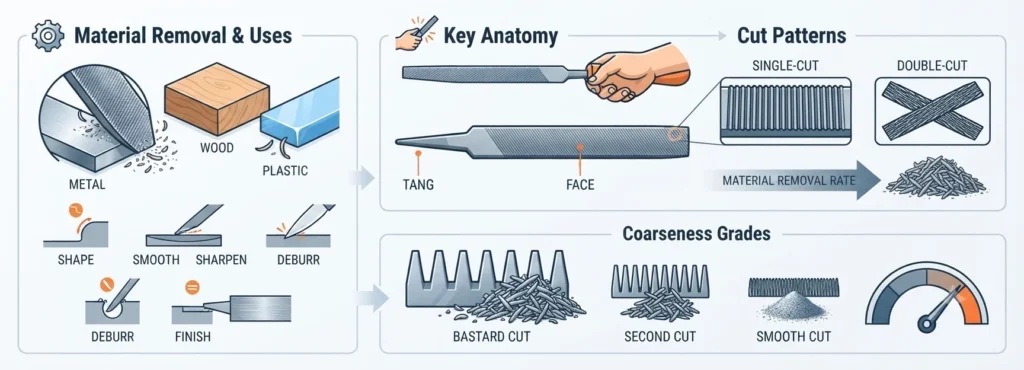
A file tool is a hardened steel hand tool with rows of cutting teeth on its surface. When you push the file across a workpiece, the teeth shave away small amounts of material. Files are used to shape, smooth, sharpen, deburr, and finish metal, wood, plastic, and other materials.
Key terms: The tang is the pointed end that fits into a handle. The face is the broad cutting surface. Cut refers to the tooth pattern — single-cut files have parallel rows of teeth, while double-cut files have two sets of rows crossing each other for faster material removal.
Coarseness grades include bastard cut (coarse, fast removal), second cut (medium, general shaping), and smooth cut (fine, finishing work). Choosing the correct coarseness prevents damage to your workpiece and saves time.
What Is a Round File?
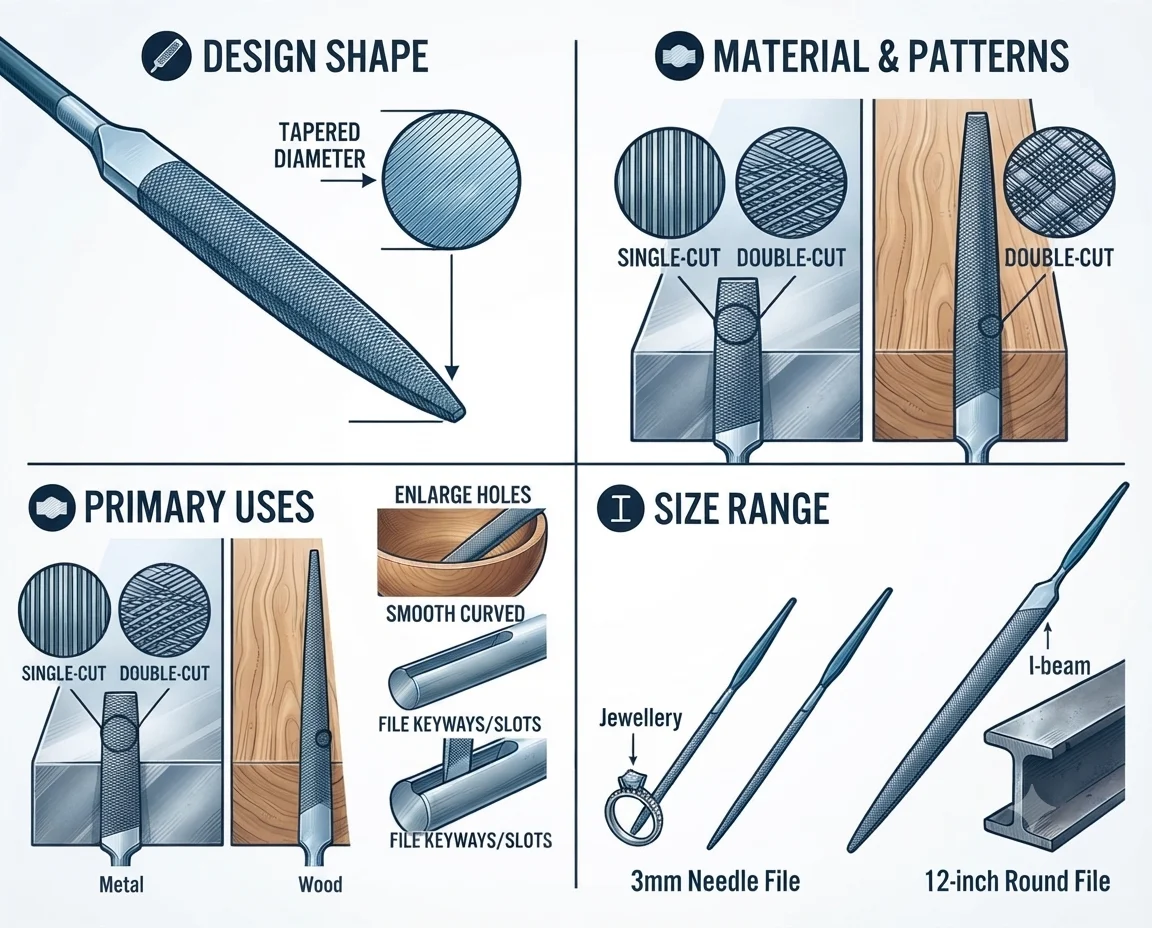
A round file has a circular cross-section that tapers toward the tip. It is designed for enlarging round holes, smoothing curved inner surfaces, and filing slots or keyways. Round files are available in single-cut and double-cut patterns for both metal and wood.
Sizes range from small needle files (3 mm diameter) used in jewellery work to large 12-inch round files for heavy metalworking. The tapered shape lets you start in a small opening and progressively widen it by using different sections of the file.
Common Uses of a Round File
Enlarging drilled holes to an exact size. Smoothing the inside of pipes and tubes. Filing chainsaw teeth (a specific round file diameter matches each chain pitch). Deburring round cutouts in sheet metal. Shaping concave curves in woodworking projects.
What Is a Rasp File?
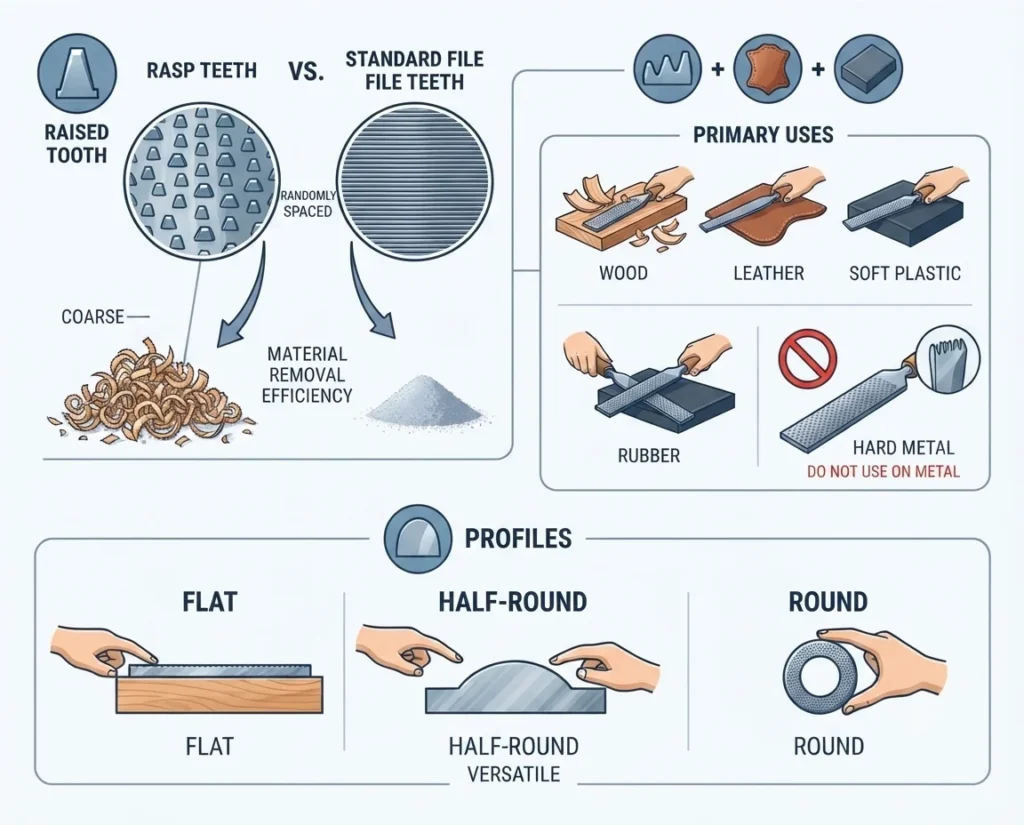
A rasp file has individually raised teeth (called rasp teeth) that are punched into the steel surface one at a time. Unlike standard files with machined rows, rasp teeth are coarser, randomly spaced, and designed for aggressive material removal on soft materials — primarily wood, leather, rubber, and soft plastics.
Rasps come in flat, half-round, and round profiles. A half-round rasp is the most versatile because the flat side works on straight surfaces while the curved side shapes concave areas. Rasp files should not be used on metal — the soft teeth will dull quickly and the finish will be poor.
Common Uses of a Rasp File
Shaping wooden furniture legs and curves. Removing large amounts of wood quickly before finishing with sandpaper. Trimming wooden joints for a snug fit. Sculpting and carving projects. Shaping leather soles in shoemaking. Trimming soft plastics and foam.
Round File vs Rasp File — Key Differences
Use this comparison table to quickly identify which file tool suits your task. The main difference is material compatibility: round files work on metal and wood, while rasp files are designed only for wood and soft materials.
| Feature | Round File | Rasp File |
|---|---|---|
| Cross-section | Circular, tapered | Flat, half-round, or round |
| Tooth pattern | Single-cut or double-cut rows | Individually punched rasp teeth |
| Best for | Metal, hard plastics, wood | Wood, leather, soft materials |
| Material removal | Moderate, controlled | Aggressive, fast |
| Finish quality | Smooth to very smooth | Rough (requires sanding after) |
| Typical task | Enlarging holes, deburring edges | Shaping curves, sculpting wood |
Proper Filing Technique & Safety
Secure Your Workpiece
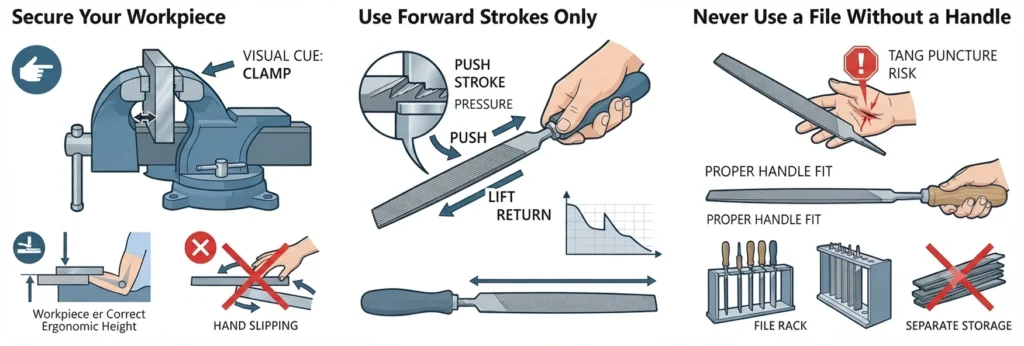
Always clamp the material in a bench vise before filing. A loose workpiece can shift, causing injury or an uneven cut. Position the work at elbow height for maximum control.
Use Forward Strokes Only
File teeth cut on the push stroke. Apply steady pressure forward, then lift slightly on the return. Dragging the file backwards dulls the teeth prematurely. Use the full length of the file for even wear.
Never Use a File Without a Handle
The bare tang can puncture your palm if the file catches. Always fit a proper handle. Keep files stored separately — stacking them dulls the teeth as they rub against each other.
File Tool Maintenance & Storage
Clean clogged teeth with a file card (wire brush) after each use. Store files in a rack or individual sleeves — never pile them in a drawer. Keep files dry to prevent rust. A well-maintained file tool lasts years; a neglected one becomes useless in weeks. Replace any file with visibly worn or chipped teeth.
Frequently Asked Questions About File Tools
Can I use a rasp file on metal?
No. Rasp teeth are designed for soft materials like wood and leather. Using a rasp on metal will dull the teeth quickly and produce a poor finish. Use a single-cut or double-cut metal file instead.
What size round file do I need for a chainsaw?
The correct diameter depends on your chain pitch. Common sizes are 4.0 mm (5/32″) for 3/8″ low-profile chain, 4.8 mm (3/16″) for .325″ chain, and 5.5 mm (7/32″) for full 3/8″ chain. Check your chain manufacturer’s guide.
What is the difference between bastard cut and smooth cut?
Bastard cut is the coarsest grade — it removes material quickly but leaves a rough surface. Second cut is a medium grade for general shaping. Smooth cut is the finest, used for finishing and precision work where surface quality matters.
How do I clean a clogged file?
Use a file card (a flat brush with short wire bristles) and brush along the teeth grooves — not across them. For stubborn pinnings (metal chips stuck in teeth), use a scriber or pointed brass rod to pick them out individually.
Can a round file be used on wood?
Yes. A round file works on wood, especially for enlarging holes or smoothing curved internal edges. However, for aggressive wood shaping and fast material removal, a rasp file is more efficient because its teeth are designed to clear wood fibres without clogging.
How long does a file tool last?
With proper care — cleaning after use, storing separately, and avoiding use on materials harder than the file — a quality file tool can last several years of regular workshop use. Files cannot be resharpened; once teeth are worn, the file must be replaced.