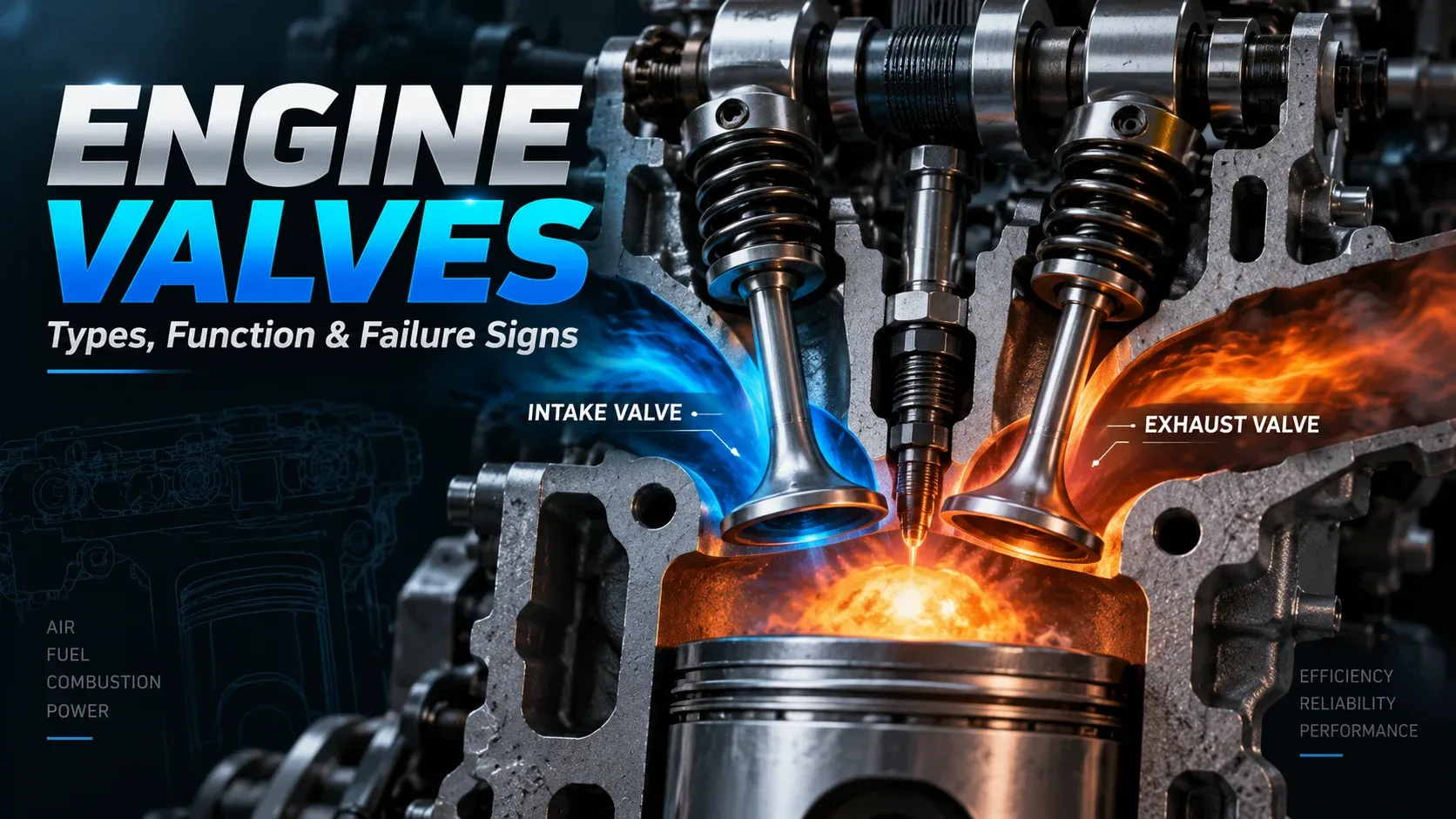

Engine valves control the air entering your cylinders and the exhaust leaving them. Learn how intake and exhaust valves work, what supports them, and why symptoms such as misfires or smoke need testing before a repair decision.
What are engine valves?
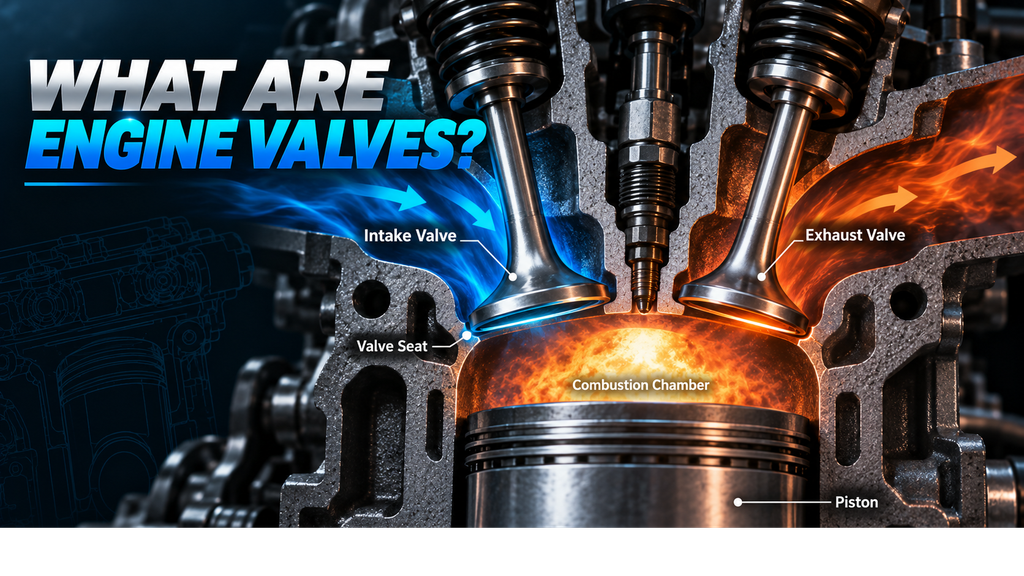
Engine valves are precision metal components in the cylinder head. They open and close passages between the combustion chamber and the engine’s intake and exhaust ports. During normal operation, intake valves admit fresh air—or an air-fuel mixture—while exhaust valves release burned gases. When closed, each valve must seal tightly against its valve seat so the cylinder can build compression.
Why it matters
A valve that opens at the wrong time, does not open far enough, or cannot seal can affect compression, combustion, fuel economy, power, and emissions. One symptom alone does not identify the failed part.
Intake valve vs. exhaust valve: the key difference
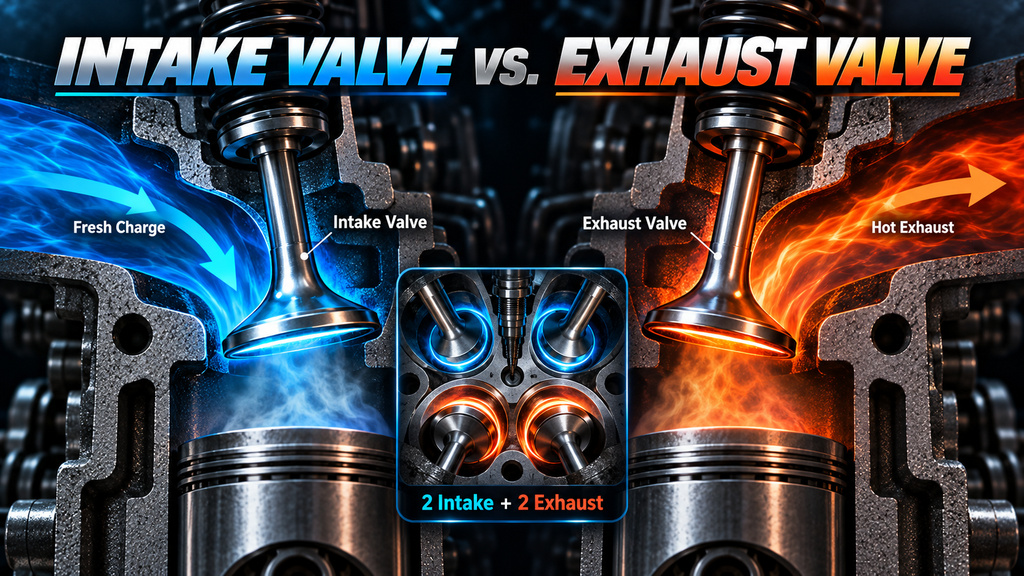
Most four-stroke engines use both intake and exhaust valves in every cylinder. A 16-valve four-cylinder engine commonly has four valves per cylinder: two intake and two exhaust. A 24-valve V6 often has four valves per cylinder as well. The number describes the total valve count, not the number of cylinders.
Fresh charge
Intake valve
Opens during the intake stroke to draw air into the cylinder. In port-injected gasoline engines, fuel is commonly added upstream of this valve; direct-injection engines add fuel inside the cylinder.
Spent gases
Exhaust valve
Opens later in the cycle so combustion gases can leave the cylinder. Exhaust valves operate in far hotter conditions, which is one reason overheating, a lean mixture, or poor sealing can contribute to a burnt valve.
How engine valves open, close, and stay in time
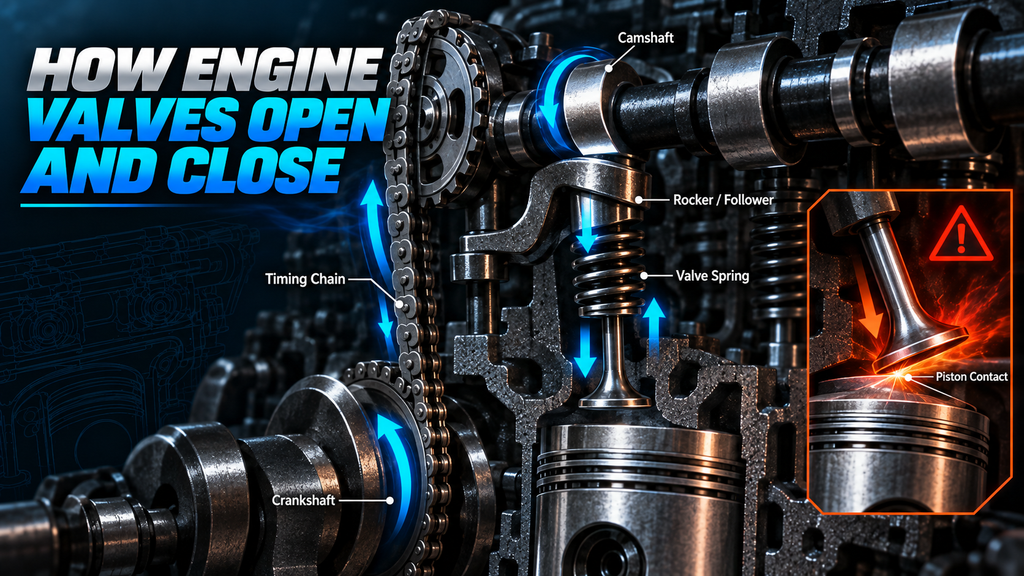
A camshaft controls engine valve timing. Its shaped lobes push on lifters, rocker arms, or followers to open each valve. Once the cam lobe rotates away, a valve spring closes the valve and holds it against the seat. The crankshaft and camshaft are synchronized by a timing belt, timing chain, or gear set so piston and valve movement remain coordinated.
Incorrect engine valve timing can cause rough running or no-start conditions. On interference engines, a broken timing belt or severe timing error can allow the piston to contact an open valve and bend it.
Valve engine parts: what supports each valve?
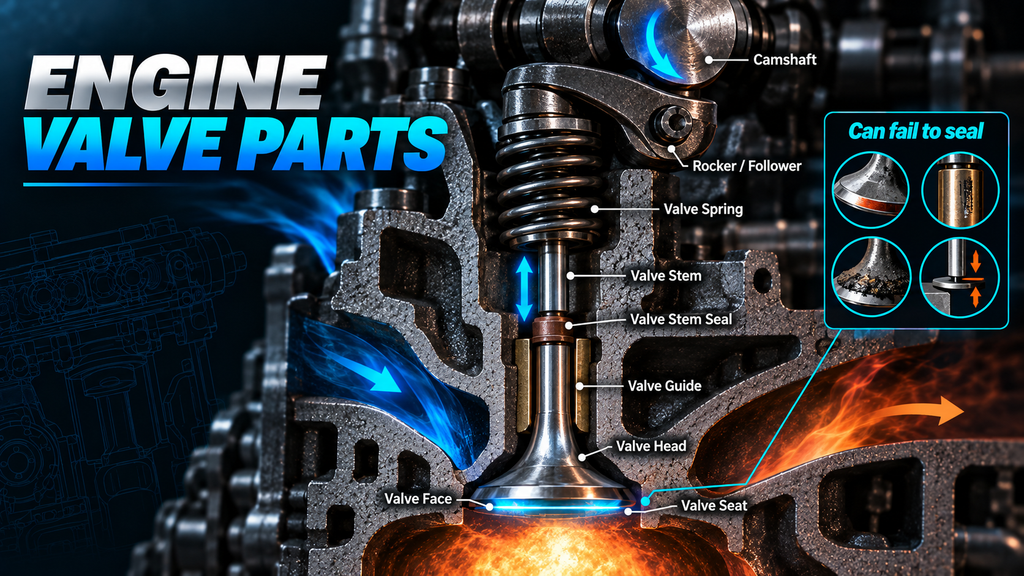
The valve itself is only one part of a system. Knowing the supporting valve engine parts helps prevent confusion: the camshaft provides movement, the spring returns the valve closed, the guide keeps the stem aligned, the seat provides the sealing surface, and the seal helps control oil around the moving valve stem.
Camshaft, lifter, follower or rocker arm
These valve-train parts transmit cam-lobe movement to open the valve. Layout varies between pushrod, single-overhead-cam, and dual-overhead-cam engines.
Valve spring
Returns the valve to its seat and keeps the valve train controlled at speed. A weak or damaged spring can contribute to valve float or misfire under load.
Valve head, face and stem
The valve head closes the port; the angled valve face meets the seat; the stem travels up and down through the guide.
Valve seat, guide and seal
The valve seat is the machined sealing ring in the head. The valve guide centers the stem. The valve-stem seal limits oil entering the intake or exhaust port area.
A valve can be intact yet fail to seal because of a damaged seat, worn guide, incorrect clearance, carbon buildup, or a timing-related problem.
Bad engine valve symptoms and common failures
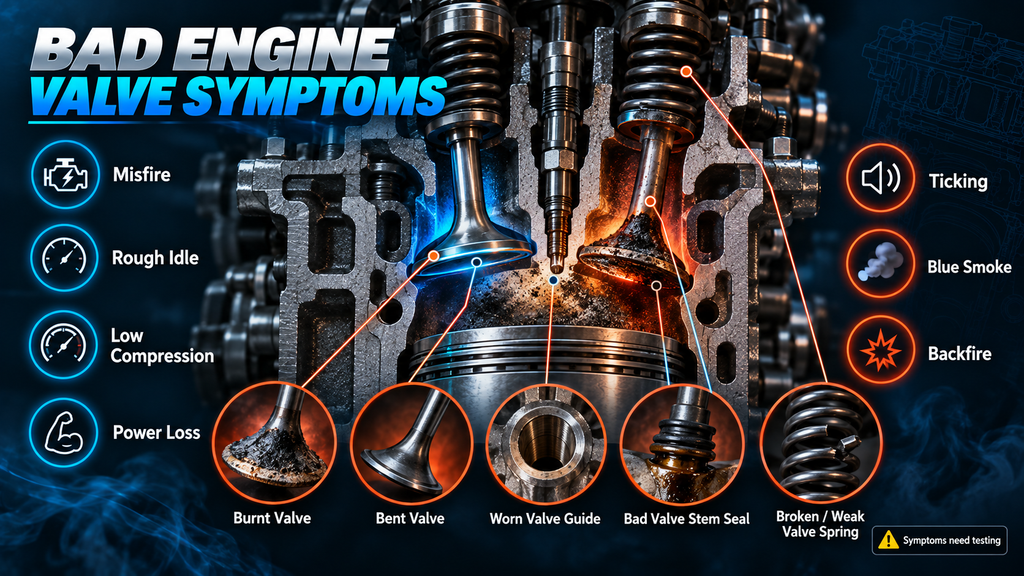
A burnt valve has heat damage around its face or edge and may no longer seal. A bent valve is commonly linked to piston contact after a timing failure. Other faults include worn valve guides, hardened valve seals, broken springs, recessed seats, and incorrect valve clearance. These faults can overlap in symptoms, so diagnosis should look for evidence rather than guess from noise or smoke alone.
Signs worth investigating
A persistent misfire, rough idle, low compression in one cylinder, power loss, ticking from the valve cover area, poor fuel economy, backfiring, blue smoke after idling, or smoke on start-up may justify further testing.
A symptom is not a verdict
Low compression can result from valve leakage, piston or ring wear, head-gasket failure, cylinder damage, or incorrect timing. Ticking can also come from lifters, injectors, exhaust leaks, or normal operation on some engines.
How suspected valve problems are diagnosed
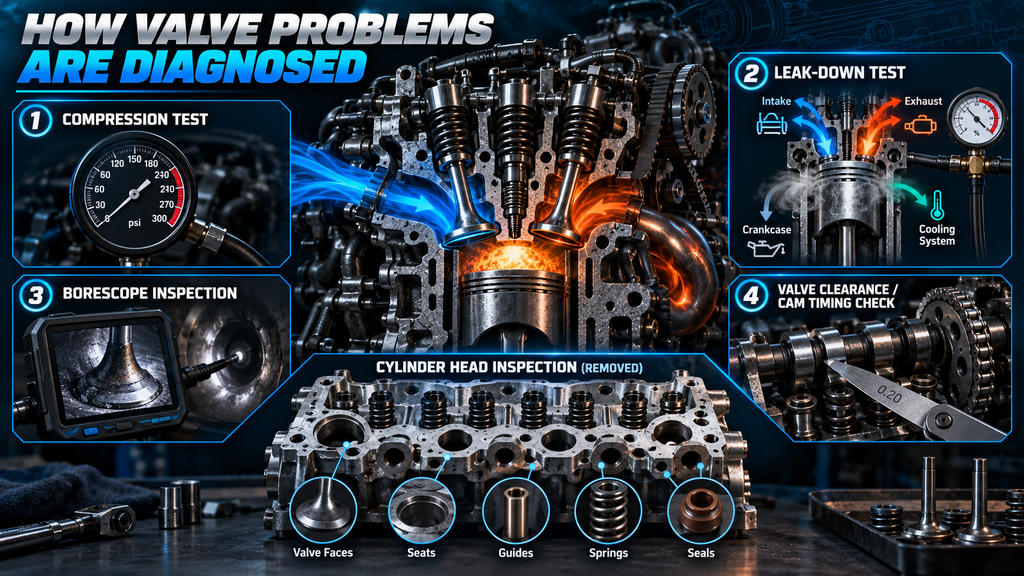
Reliable diagnosis combines the vehicle’s history, symptoms, fault codes, and targeted testing. A technician may compare cylinders, inspect timing data, and decide whether cylinder-head removal is justified. Visual guessing from an exhaust plume or an engine noise can lead to unnecessary repairs.
- A compression test can identify a weak cylinder, while a leak-down test can help show whether air is escaping through the intake, exhaust, crankcase, or cooling system.
- A borescope may reveal piston damage, valve contact marks, or abnormal deposits. Valve-clearance measurement is also important on engines with adjustable clearances.
- If the cylinder head is removed, valve seats, guides, springs, seals, and valve faces can be inspected and measured against manufacturer specifications.
Can engine valves be repaired or replaced?
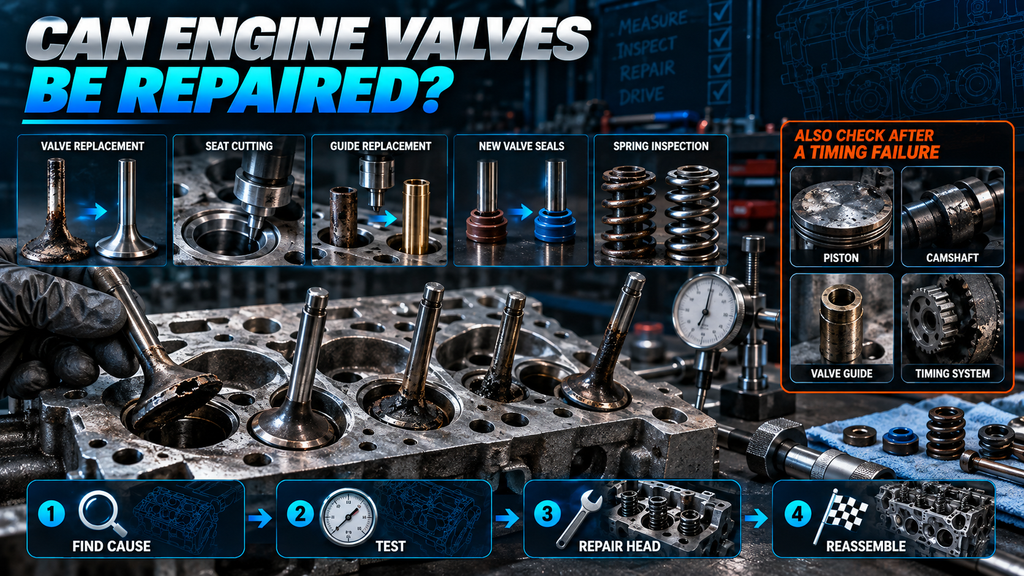
Often, yes—but the repair depends on the cause and the cylinder head’s condition. A machine shop may replace damaged valves, cut or replace valve seats, renew guides or seals, and verify spring condition. A bent valve after timing failure may also require inspection for piston, guide, camshaft, and timing-system damage.
- Confirm the root cause, such as overheating, incorrect timing, a lean condition, or lubrication problems.
- Ask whether compression, leak-down, valve clearance, and cam timing were checked before major disassembly.
- If the head comes off, use new gaskets, follow torque procedures, and match parts to the exact engine specification.
- For a used-car purchase, unexplained misfires, smoke, or timing noise are reasons to request a pre-purchase inspection.
Engine valve questions, answered
What happens when an engine valve does not seal properly?
Compression can leak past the valve and reduce the cylinder’s ability to produce power. Depending on the severity, the engine may misfire, idle roughly, lose power, or trigger a check-engine light. Testing is needed to establish whether the leak is actually at a valve.
Can bad valve seals cause blue smoke?
They can. Worn valve-stem seals may allow oil to enter the port area, sometimes producing blue smoke after idling or during start-up. However, blue smoke can also be related to rings, a turbocharger, PCV faults, or other sources of oil consumption.
What is the difference between a burnt valve and a bent valve?
A burnt valve is heat-damaged and commonly leaks at the sealing surface. A bent valve is physically distorted, often after piston-to-valve contact caused by a timing failure. Both can cause low compression, but their causes and repair checks differ.