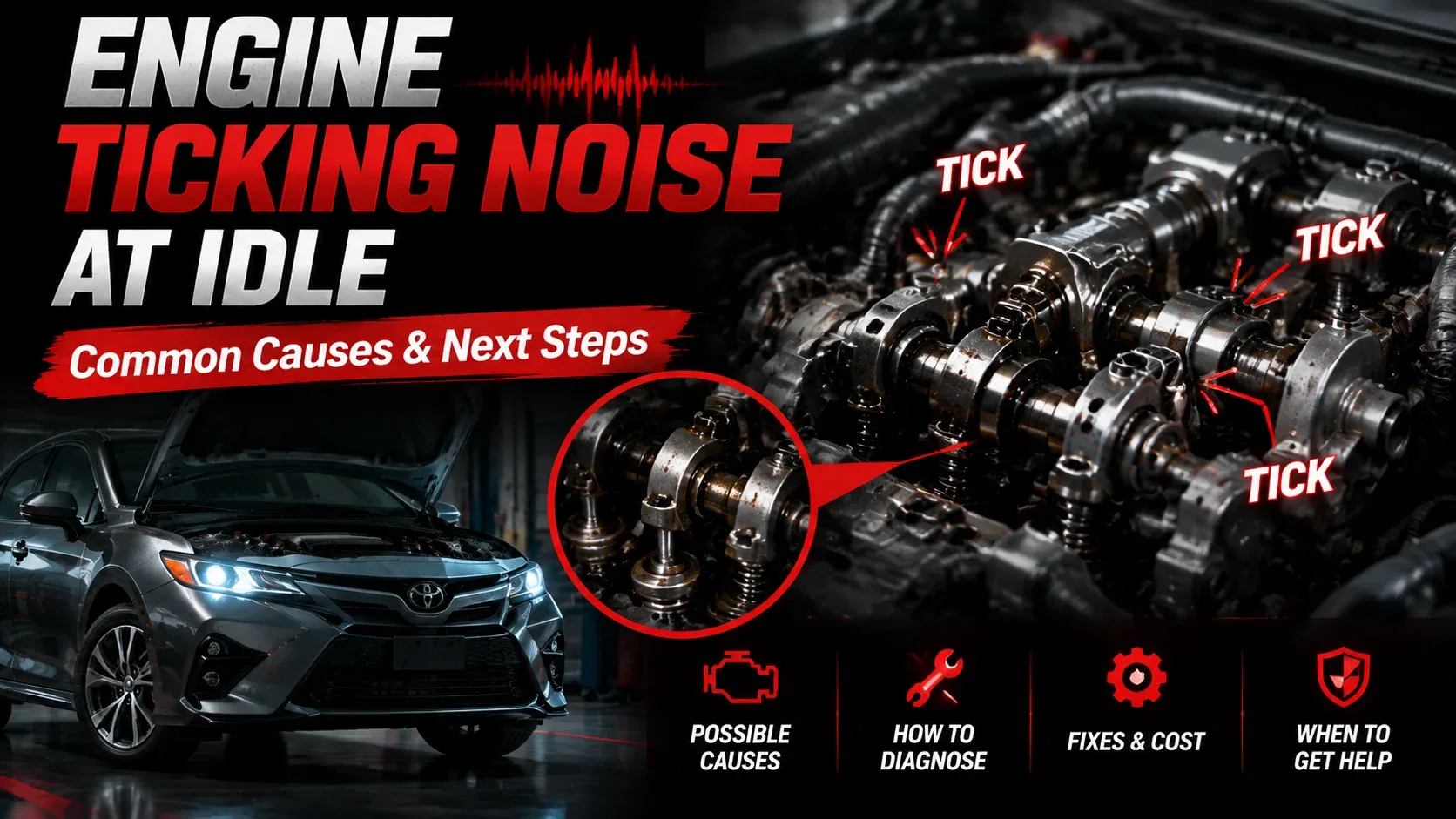

An engine ticking noise can be harmless injector operation, a basic oil issue, or a clue that needs prompt inspection. Learn what the sound pattern can tell you before replacing parts.
Why is my engine making a ticking noise at idle?
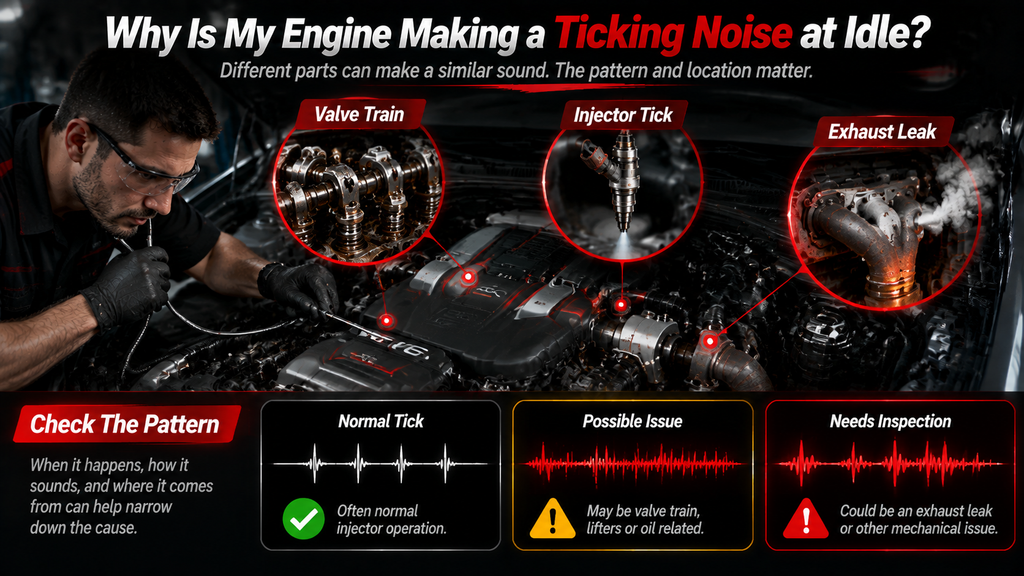
At idle, the engine is turning slowly enough that small mechanical sounds can be easier to hear. A light, even tick near the top of the engine may simply be fuel injectors opening and closing. Other noises can come from the valve train, an exhaust leak, or parts that are not receiving the lubrication they need.
The useful clues are timing and location. Note whether the engine ticking noise is loudest when cold, fades after warm-up, speeds up with RPM, or appears with warning lights, misfires, oil pressure concerns, or loss of power. Those supporting symptoms matter more than the word “tick” alone.
Common causes of engine ticking noise
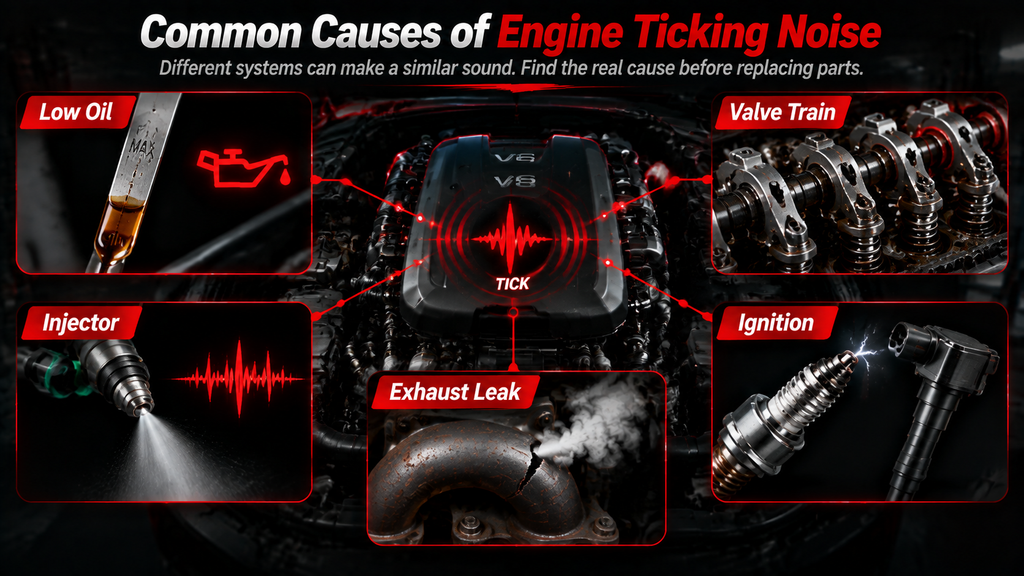
Several different systems can create a similar sound. Use these causes as a checklist, not a parts-shopping list: the right repair follows a confirmed source.
Low oil level or incorrect oil
Oil cushions and lubricates moving engine parts. A low level, overdue oil change, wrong viscosity, or oil-pressure problem can make valve-train parts noisier, especially just after starting. Check the dipstick on level ground before assuming a mechanical failure.
Small exhaust manifold leak
A cracked manifold, loose fastener, or failed gasket can produce a tick or puffing sound that is often louder when the engine is cold. It may soften as metal expands with heat. Look for soot marks or exhaust smell, but avoid touching hot components.
Normal fuel-injector clicking
Many modern injectors make a consistent, fast clicking sound by design. It is often even across the engine, most noticeable with the hood open, and not paired with rough running, warning lights, or power loss. In that pattern, the sound is usually normal operation.
Valve train or lifter noise
Lifters, rockers, camshaft components, and valve clearances work at the top of the engine. Wear, a sticking hydraulic lifter, or an incorrect clearance can create a sharper rhythmic tick that follows engine speed. Diagnosis may require service information and professional inspection.
Spark plug or ignition-related issue
A loose spark plug can allow combustion pressure to escape and may sound like a tick near the cylinder head. Misfires, a check-engine light, rough idle, or a noticeable exhaust smell make this more concerning. Do not overtighten plugs without the correct specification and torque procedure
How to diagnose an engine ticking sound
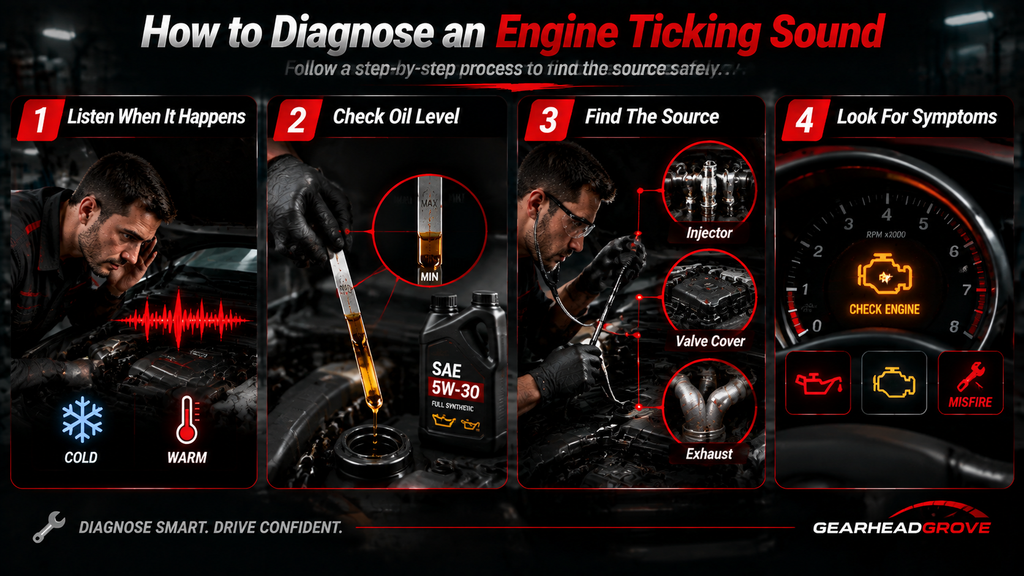
A careful observation process can help you give a shop better information and prevent unnecessary replacements. Keep hands, hair, clothing, and tools away from belts, fans, and hot exhaust parts while the engine is running.
- Listen for when the noise happensMake a simple note: cold only, warm only, every idle, or only after a drive. Then listen from a safe distance as RPM changes slightly. A noise that speeds up directly with RPM is often tied to engine rotation, while a sound that fades warm may point toward oil flow or an exhaust leak.
- Check the oil level and maintenance historyWith the engine off and after the recommended settling time, inspect the dipstick on level ground. Confirm the oil is within the marked range and that the last service used the manufacturer-specified grade. If the oil-pressure warning light is on, stop driving and investigate promptly.
- Identify the general area of the soundA mechanic’s stethoscope is the safest listening tool for experienced DIY work. A long screwdriver can transmit sound too, but it must be used cautiously and never near moving components. Injector clicks tend to be even and localized around each injector; exhaust leaks are often heard around the manifold area.
- Check for warning signs before driving fartherScan for warning lights and pay attention to rough idle, misfires, smoke, oil leaks, loss of power, or a sudden change in sound. A shop can combine sound location, scan data, oil-pressure testing, and service information to isolate the cause without guessing.
Is an engine ticking noise serious?
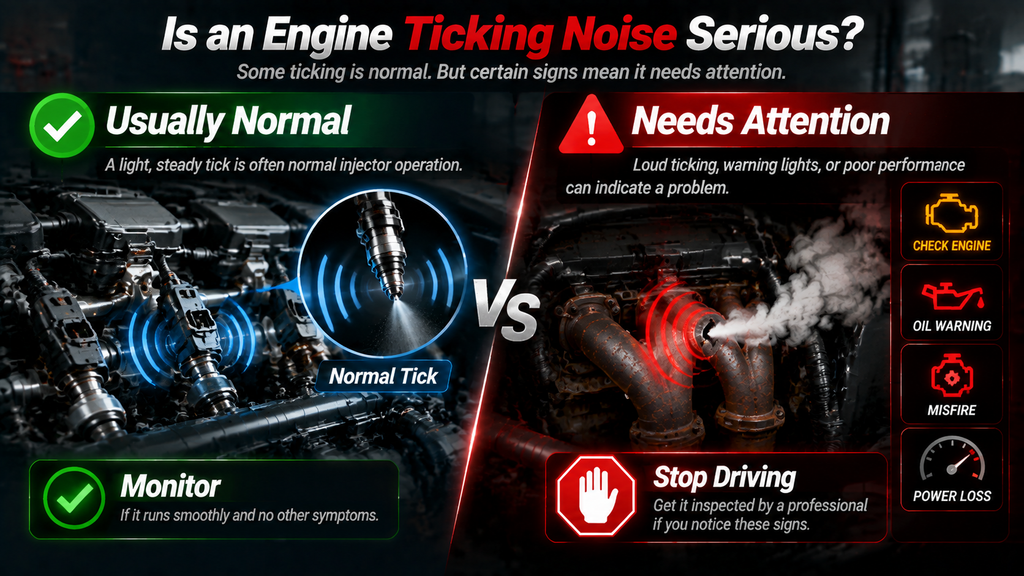
Some ticking is normal, but the sound deserves faster attention when it is new, loud, worsening, or accompanied by other symptoms. Use this general guide while following the owner’s manual for your specific vehicle.
| Noise pattern | What it may suggest | Best next step |
|---|---|---|
| Light, steady click with normal running | Often normal injector operation, particularly when the noise is even across the engine. | Monitor it; compare with your vehicle’s normal sound and service schedule. |
| Tick after start-up or with low oil | Lubrication may be delayed or insufficient; valve-train components can become noisier. | Check oil level, correct oil specification, leaks, and any oil-pressure warning. |
| Puffing tick that is louder cold | May indicate a manifold, gasket, or connection leak that changes as parts heat up. | Schedule an exhaust inspection; avoid contact with hot engine components. |
| Loud tick with misfire, warning light, or power loss | Could involve ignition, a loose spark plug, lubrication, or mechanical wear. | Limit driving and arrange prompt professional diagnosis. |
How to fix engine ticking noise
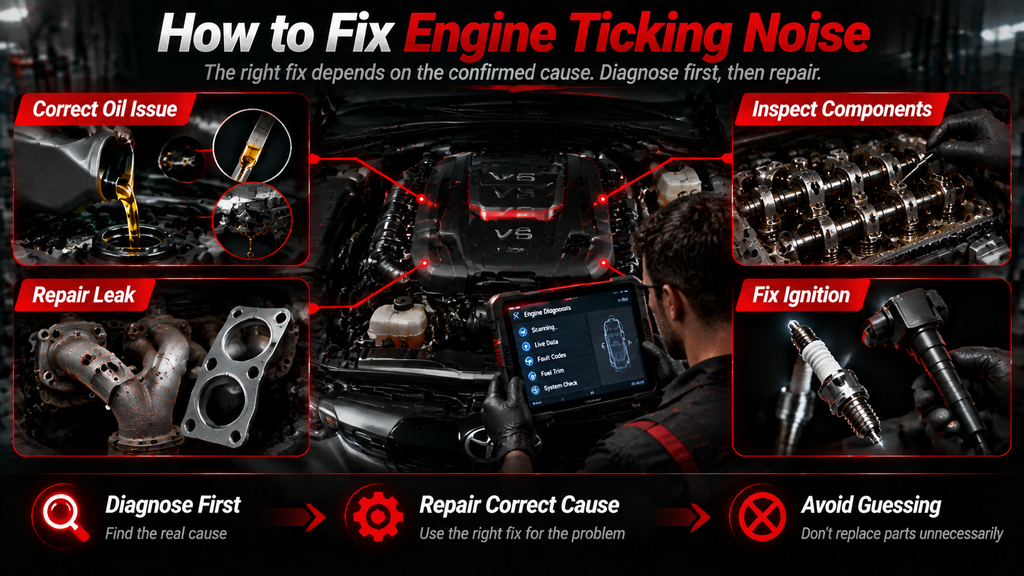
The correct fix depends on the confirmed cause. An oil-level issue may be addressed by correcting the level, repairing a leak, and using the correct oil at the next service. A normal injector tick generally needs no repair. Exhaust leaks, loose plugs, and valve-train concerns require vehicle-specific inspection rather than a universal additive or replacement part.
Avoid using thicker oil, additives, or parts replacements simply to hide a new noise. Those choices can delay diagnosis and may not match the manufacturer’s requirements. If the tick is sudden, loud, or paired with an oil warning, misfire, or reduced power, the safer choice is to stop and seek qualified help.
What to tell a diagnostic shop
Describe when the ticking occurs, whether it changes cold versus warm, if it rises with RPM, the oil level and recent service history, and any dashboard warnings. This evidence helps a technician prioritize the right tests before recommending valve-train, exhaust, ignition, or oil-system repairs.
Engine ticking noise FAQs
Is ticking noise normal at idle?
It can be. A light, consistent injector click is normal on many engines. Ticking is less likely to be normal when it suddenly appears, gets louder, changes significantly with temperature, or occurs with a warning light, misfire, or loss of power.
Can low oil cause engine ticking?
Yes. Low oil can reduce lubrication to components such as hydraulic lifters and other valve-train parts, making noises more noticeable. Check the level correctly and investigate why it is low. Never ignore an oil-pressure warning light.
Can an oil change fix ticking?
An oil service using the correct grade can help if the sound is related to old, low, or unsuitable oil. It will not repair worn mechanical parts, an exhaust leak, a loose spark plug, or a failing component. Treat improvement as a clue, not proof of the cause.
Why does ticking get louder when the engine is warm?
Warm oil is thinner than cold oil, and metal components expand as temperature rises. Either change can alter how a noise is heard. A tick that becomes louder warm should be evaluated alongside oil condition, location, RPM response, and engine performance symptoms.
Can I drive with a ticking engine?
A quiet, familiar injector tick with no other symptoms is usually less urgent. Avoid continued driving and seek prompt help if the noise is loud or sudden, the oil-pressure light appears, the engine misfires, power drops, smoke appears, or you smell exhaust or raw fuel.