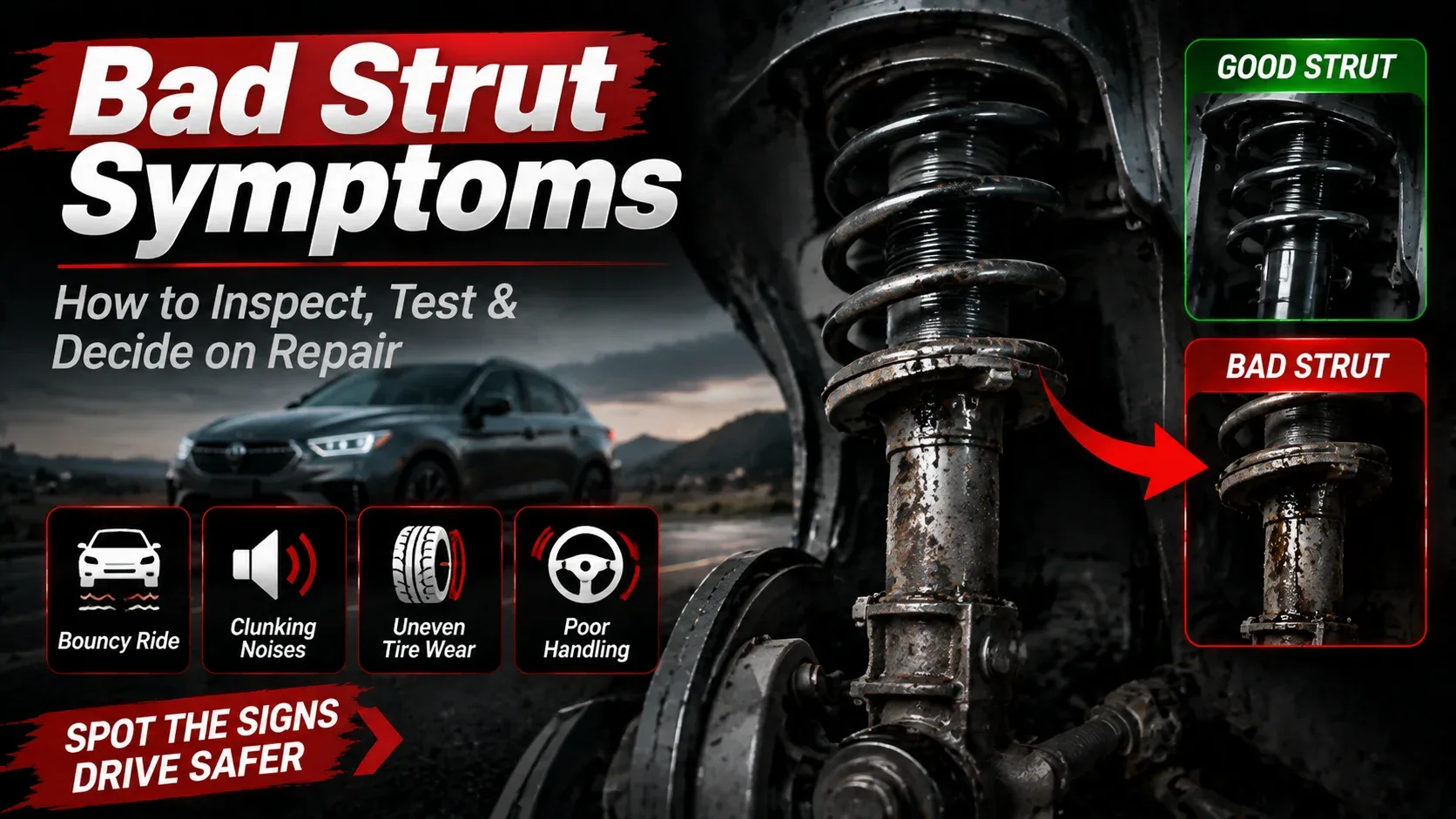
How can you tell if a strut is bad? Learn the signs of bad struts, what a safe DIY check can reveal, and when a professional inspection makes more sense than replacing parts on a guess.
What do struts do?
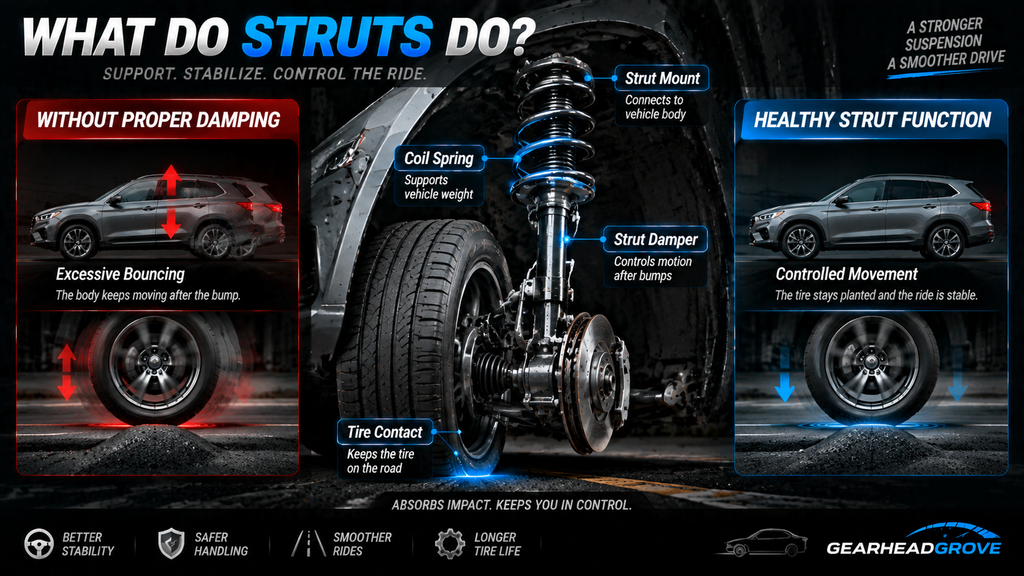
A strut is a structural suspension assembly that helps support the vehicle and controls how quickly the spring moves after a bump. On many front-wheel-drive cars and crossovers, it also contributes to steering and wheel alignment geometry. A shock absorber mainly controls motion; a strut does that job while also serving as part of the suspension structure.
A healthy strut does not make the road disappear. It helps the tire settle back onto the pavement quickly and predictably. As the internal damper wears, the spring can keep moving longer than it should. That may show up as extra bouncing, reduced composure in turns, or less confidence during braking.
Signs of bad struts
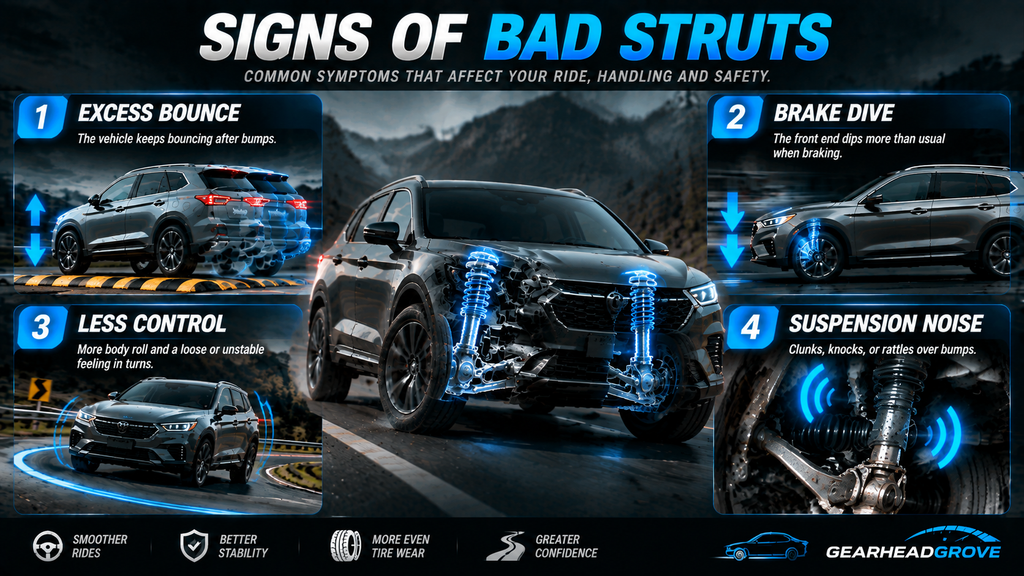
The most useful pattern is a change in ride control combined with a visible clue or repeatable noise. These signs are worth checking, but none should be treated as a guaranteed diagnosis by itself.
Excessive bouncing after bumps
One controlled rebound can be normal. If the body continues to bob after a speed bump or dip, especially compared with the other end of the vehicle, the dampers deserve inspection.
Noticeable nose dive under braking
Worn front struts can allow more forward weight transfer when braking. Brake condition, tire grip, load, and vehicle design also matter, so judge this as one clue in a larger picture.
Less stable handling
More body roll, extra movement after lane changes, or a floaty feeling on rough roads can indicate reduced damping. Incorrect tire pressure or worn steering components can feel similar.
Clunks, knocks, or rattles
A sound over bumps may come from a strut mount, loose hardware, sway-bar link, control-arm bushing, or ball joint. Noise is a reason to inspect—not proof that the strut cartridge has failed.
How can you tell if a strut is bad?
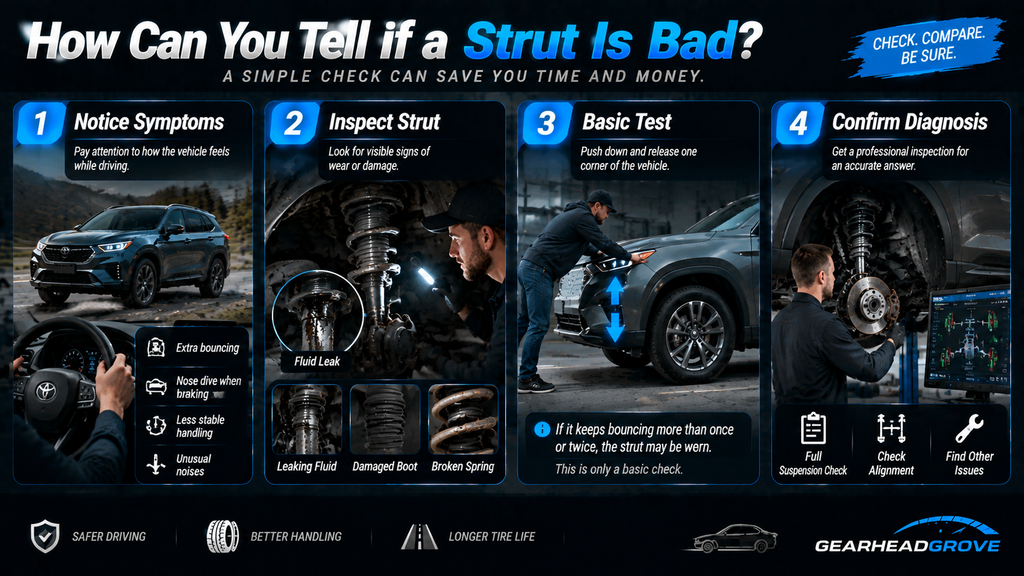
Start with observations you can repeat safely. Avoid working beneath a vehicle supported only by a jack, and do not loosen suspension hardware unless you have the correct procedure, tools, and support equipment.
Compare the driving symptoms
On a familiar route, note whether the vehicle keeps moving after a bump, pulls or wanders, dives sharply under normal braking, or feels unsettled through gentle turns. Compare left and right behavior where possible.
Look for obvious external clues
With the vehicle parked on level ground, look through the wheel area for a wet, oily strut body, a broken coil spring, damaged dust boot, or uneven ride height. A light film of dirt is not the same as an active fluid leak.
Use the bounce test carefully
Push down firmly on one corner of a parked vehicle and release. Repeated oscillation can support a worn-damper suspicion, but modern springs, body stiffness, and vehicle weight make this only a rough screening test—not a final verdict.
Check tires and ask for a full inspection
Look for cupping or irregular patches in the tread and verify tire pressure first. A workshop can road-test the vehicle, inspect mounts and joints under load, check for leakage, and measure alignment before recommending parts.
Bad struts vs. other suspension problems
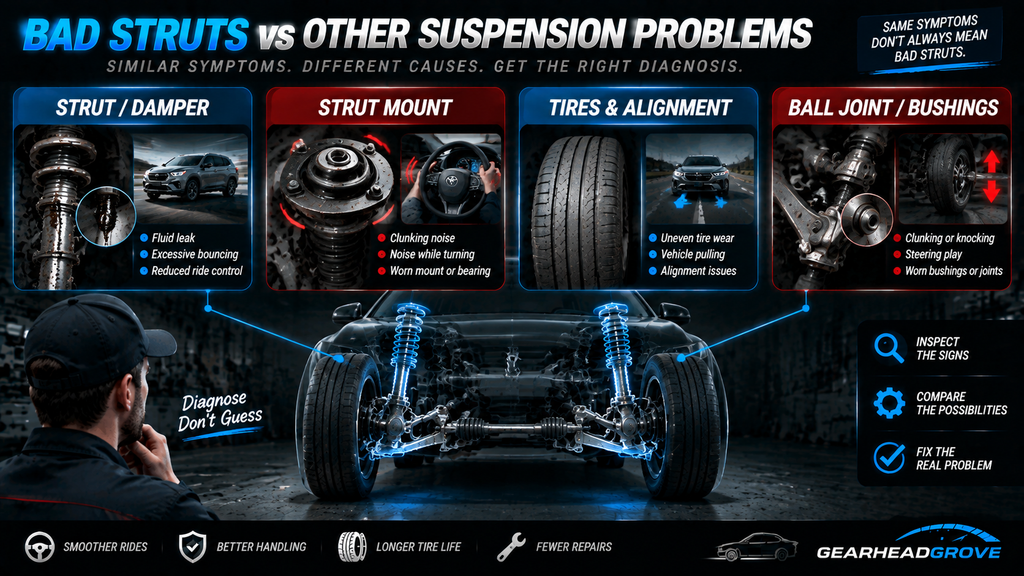
Suspension symptoms overlap because several parts control the same wheel area. For example, a strut may control spring motion while a mount isolates noise and a ball joint allows steering movement. Replacing only the most visible part can leave the original problem behind.
A useful repair estimate should explain what was observed, which tests supported the recommendation, and whether related wear items need attention now or simply monitoring.
| Possible source | A common clue | What helps confirm it |
|---|---|---|
| Strut or damper | Repeated bouncing, visible fluid leak, reduced ride control. | Road test, leak inspection, and comparison of damping behavior. |
| Strut mount or bearing | Knock over bumps or noise while turning the steering wheel. | Inspect mount condition and listen while steering or moving the suspension. |
| Tires or alignment | Pulling, vibration, feathered or uneven tread wear. | Check pressure, tread pattern, wheel balance, and alignment readings. |
| Ball joint, tie rod, or bushing | Clunking, steering play, wandering, or uneven tire wear. | Hands-on play check with the wheel safely unloaded by a qualified technician. |
Can you drive with bad struts?
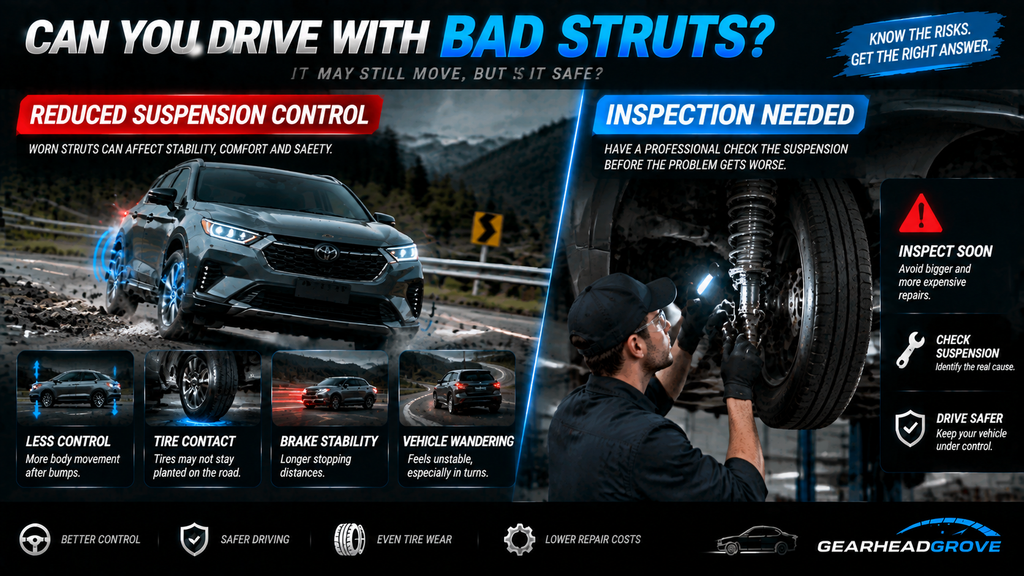
Mild wear does not always mean a vehicle is immediately unsafe to move, but it can reduce braking stability, tire contact, and control on uneven roads. The right decision depends on how severe the symptoms are, road conditions, load, tire condition, and the rest of the suspension.
If diagnosis supports replacement, struts are commonly replaced in left-and-right pairs on the same axle so damping remains balanced. Use your owner’s manual and the repair professional’s inspection findings to decide whether mounts, springs, boots, or alignment service should be included.
How much does strut replacement cost?
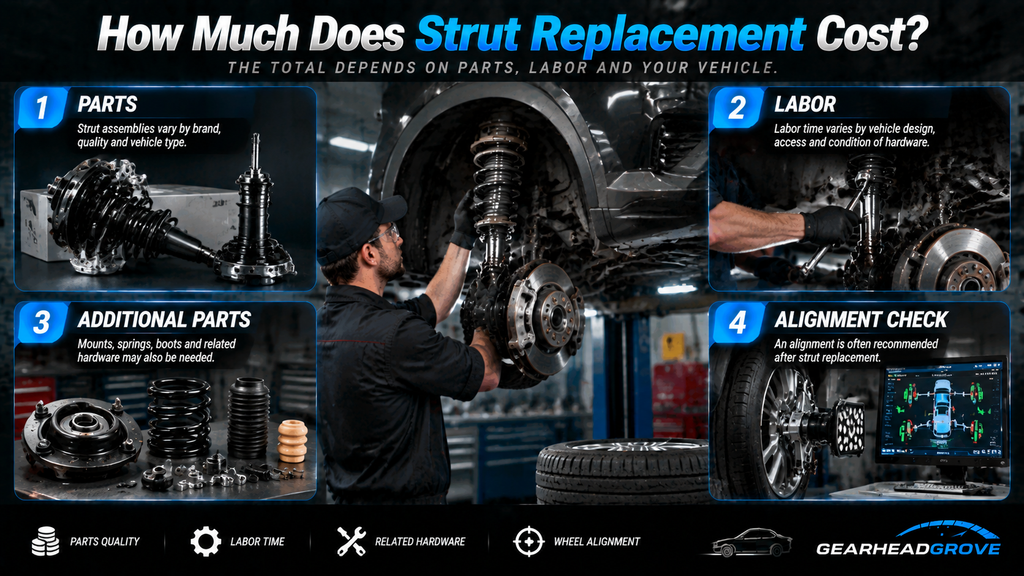
The total varies widely by vehicle, part quality, local labor rate, corrosion, and whether the shop installs a complete loaded strut assembly or transfers existing springs and mounts. Luxury vehicles, adaptive suspension, and heavily rusted hardware can increase the cost substantially.
Ask for an itemized estimate that separates parts, labor, mounts or related hardware, and alignment. That makes it easier to compare options and understand whether the recommendation addresses a confirmed fault or a preventive replacement.
Why pairs are usually recommended
Replacing both struts on the same axle helps preserve even damping and predictable handling. Replacing one may be appropriate in limited cases, but mismatched wear can be noticeable.
Plan for an alignment check
Because strut position can affect alignment angles, many vehicles should have alignment checked after front strut work. This helps protect tire life and confirms the vehicle tracks correctly.
Bad strut FAQs
How long do struts last?
There is no universal replacement mileage. Road quality, vehicle weight, driving habits, climate, and part design all affect service life. Replace struts based on inspection findings and symptoms rather than mileage alone, while following any manufacturer maintenance guidance.
Can bad struts damage tires?
Worn struts can allow extra wheel movement that contributes to irregular tire wear, including cupping. However, poor alignment, incorrect pressure, worn steering parts, and missed tire rotations are also common causes, so inspect the full tire and suspension system.
Do bad struts make noise?
They can, but a clunk or knock often comes from a worn strut mount, sway-bar link, bushing, ball joint, or loose hardware rather than the internal strut damper. A technician should identify the exact source before parts are ordered.
Should I replace all four struts at once?
Not necessarily. The normal recommendation is to replace both units on the same axle. Whether all four are due depends on their condition, vehicle mileage, handling concerns, budget, and what the inspection finds at each corner.
Can I replace only one strut?
A single-strut replacement is possible, but it can leave unequal damping side to side when the opposite unit is worn. Replacing as an axle pair is generally the more balanced repair. Ask for the condition of the matching strut before deciding.