Beyond the headlines — what actually happened, what went wrong mechanically, and how these crashes changed road safety forever.
Car accidents involving celebrities are often reduced to tabloid soundbites, but the real stories are far more instructive. Behind each crash lies a specific set of mechanical forces, vehicle engineering decisions, and — in many cases — regulatory changes that now protect millions of drivers. This article breaks down four famous incidents with the technical depth they deserve.
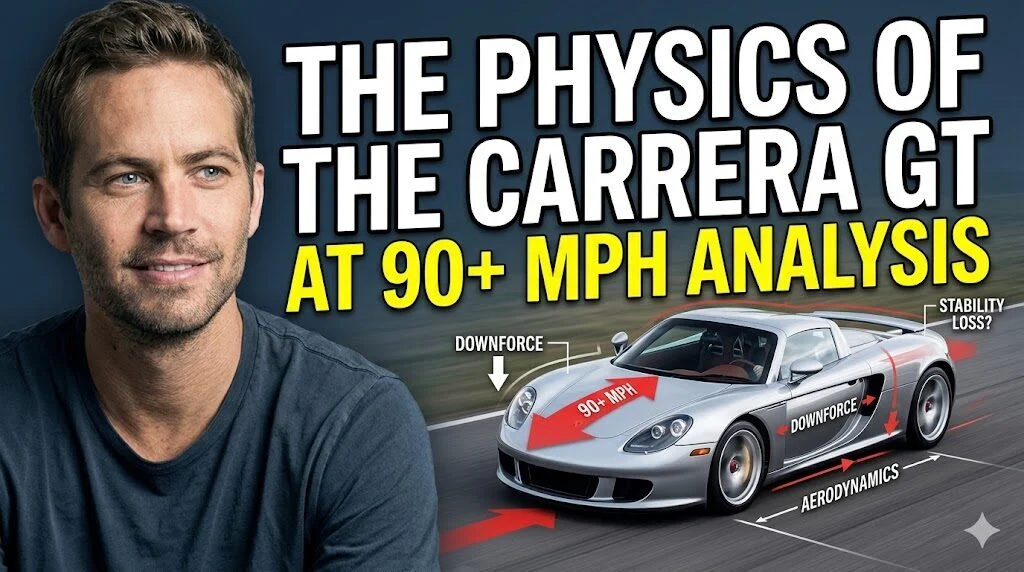
Paul Walker: The Physics of a Porsche Carrera GT at 90+ MPH
📅 Date: November 30, 2013 | Location: Valencia, Santa Clarita, CA
🚗 Vehicle: 2005 Porsche Carrera GT (V10, 605 hp, 0–60 in 3.5s)
⚡ Estimated speed: 80–93 mph in a 45 mph zone
🔧 Key factor: No electronic stability control (ESC) — by design
On November 30, 2013, actor Paul Walker was a passenger in a 2005 Porsche Carrera GT driven by Roger Rodas. The car — one of only 1,270 ever produced — was designed as a raw, analog supercar. Porsche deliberately omitted electronic stability control to preserve driver engagement, making it one of the most challenging road-legal cars to handle at speed.
The LA County Sheriff’s investigation concluded the car was traveling between 80 and 93 mph when Rodas lost control on a gentle curve. The Carrera GT’s mid-engine layout, combined with worn rear tires (9.5 years old with uneven wear), caused catastrophic oversteer. The vehicle struck a concrete lamp post and two trees before igniting. Both occupants died from a combination of traumatic injuries and thermal injuries. The post-crash fire was intensified by the car’s magnesium-alloy subframe, which burns at extreme temperatures once ignited.
A subsequent wrongful-death lawsuit by Walker’s daughter alleged that Porsche’s lack of ESC and an inadequate fuel-line design contributed to the deaths. While the case settled out of court, the engineering community widely discussed whether the Carrera GT’s “purity” philosophy represented an acceptable trade-off between driving feel and occupant safety. Today, ESC is mandatory on all new vehicles sold in the US (FMVSS 126, phased in 2008–2012).
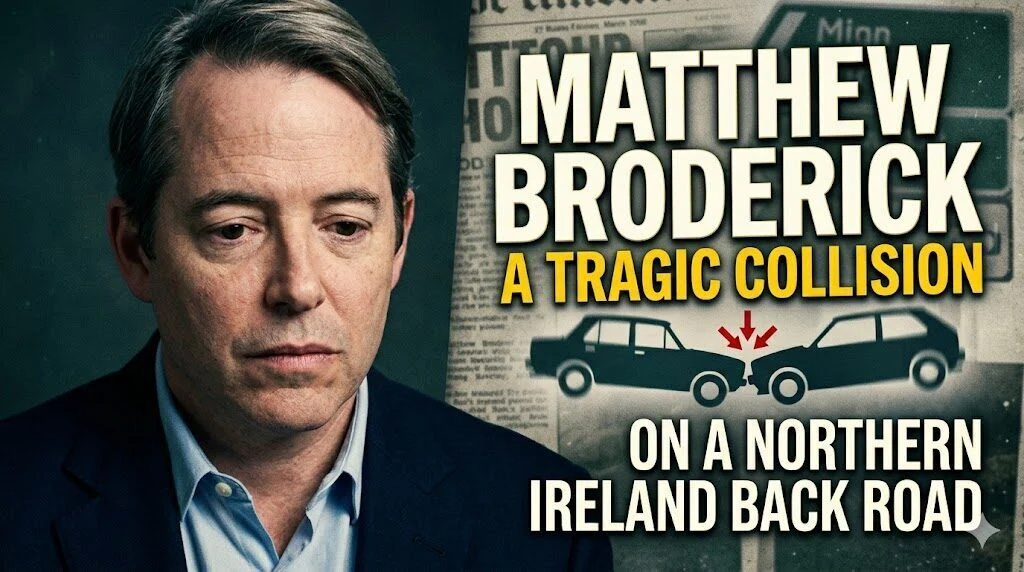
Matthew Broderick: A Head-On Collision on a Northern Ireland Back Road
📅 Date: August 5, 1987 | Location: Enniskillen, County Fermanagh, N. Ireland
🚗 Vehicles: Rented 1987 BMW 316 vs. Volvo driven by Margaret Doherty
⚖️ Outcome: Broderick charged with dangerous driving causing death — convicted of lesser careless driving charge (£100 fine)
In August 1987, Matthew Broderick — then 25 and fresh off the success of Ferris Bueller’s Day Off — was vacationing in Northern Ireland with actress Jennifer Grey. Driving a rented BMW 316 on the A46 road near Enniskillen, Broderick crossed into the oncoming lane and collided head-on with a Volvo carrying mother and daughter Anna Margaret and Margaret Doherty. Both women were killed instantly.
Broderick later stated he had no memory of the crash. Investigators could not determine why he crossed the center line — theories ranged from momentary confusion about which side of the road to drive on (left in the UK/NI) to a brief lapse of attention on the narrow, winding road. Toxicology cleared him of alcohol or drugs. He was initially charged with dangerous driving causing death, which carried up to five years in prison.
In February 1988, the charge was reduced to careless driving. Broderick was fined £100 (approximately $175 at the time). The Doherty family publicly expressed devastation at the outcome. The case remains one of the most frequently cited examples in discussions about celebrity justice disparities, and it continues to surface in online forums decades later — particularly after any new Broderick interview or project.
Jayne Mansfield: The Crash That Created a Federal Safety Standard
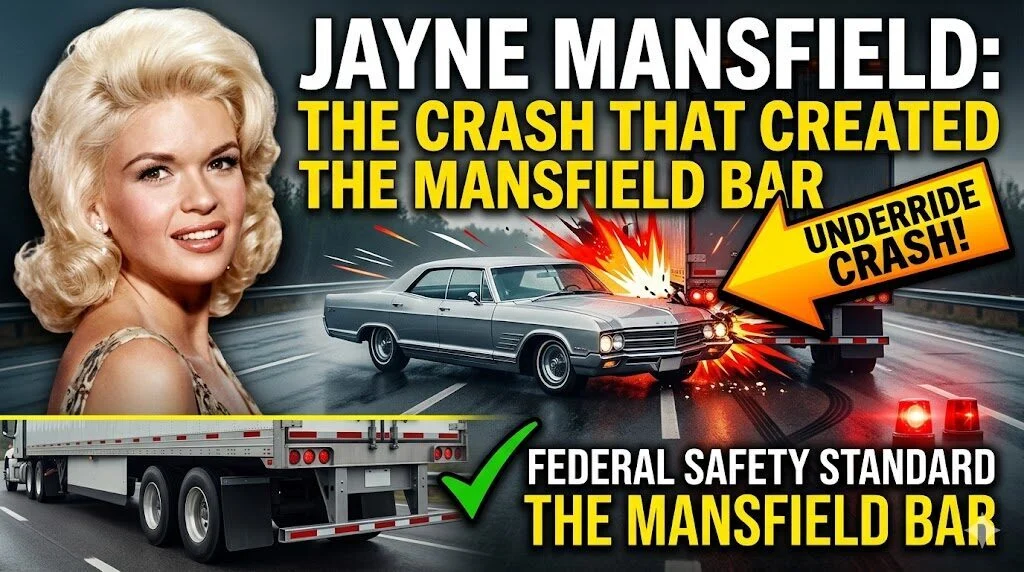
📅 Date: June 29, 1967 | Location: US Highway 90, Slidell, Louisiana
🚗 Vehicles: 1966 Buick Electra 225 rear-ended a tractor-trailer at ~55 mph
⚖️ Regulatory outcome: NHTSA mandated rear underride guards (DOT bumpers / “Mansfield Bars”) — 49 CFR 571.223
On the night of June 29, 1967, actress Jayne Mansfield was a passenger in a 1966 Buick Electra 225 traveling from Biloxi, Mississippi to New Orleans. The car — driven by Ronnie Harrison with Mansfield’s attorney Sam Brody in the front seat — came upon a truck-mounted insecticide fogger that had slowed behind a tractor-trailer. Visibility was near zero due to the fog spray.
The Buick struck the rear of the tractor-trailer at approximately 55 mph. Because the trailer’s deck sat significantly higher than the car’s hood line, the Buick slid underneath the trailer — shearing off the entire top of the passenger compartment. All three adults in the front seat were killed. Three children sleeping in the rear survived with minor injuries, protected by the lower rear deck geometry.
The crash directly catalyzed NHTSA’s adoption of 49 CFR 571.223 — the federal standard requiring rear underride guards (colloquially called “Mansfield Bars” or “DOT bumpers”) on all trailers over 10,000 lbs. These steel bars hang below the trailer’s rear edge to prevent passenger vehicles from submarining underneath. While modern crash-test standards have revealed that many current guards still fail at highway speeds, the Mansfield crash remains the origin point of ongoing legislative efforts — including the bipartisan STOP Underrides Act reintroduced multiple times in Congress.
Trey Gowdy: Separating Internet Rumor from the Public Record

Former U.S. Representative Trey Gowdy (R-SC) has been the subject of recurring online claims about involvement in a car accident. However, a thorough review of court records, news archives, and official statements yields no verified reporting of a serious car accident involving Gowdy. The claims appear to stem from social media posts that conflate Gowdy with other political figures or fabricate incidents entirely.
This is a textbook example of why E-E-A-T (Experience, Expertise, Authoritativeness, Trustworthiness) matters in research. When no credible primary source — no police report, no court filing, no contemporaneous news coverage — corroborates a claim, the responsible conclusion is that the claim is unverified. If you’ve encountered this rumor and landed on this article looking for facts: as of this writing, no documented accident exists in the public record.
The Safety Legacy: How Celebrity Crashes Changed Engineering & Law
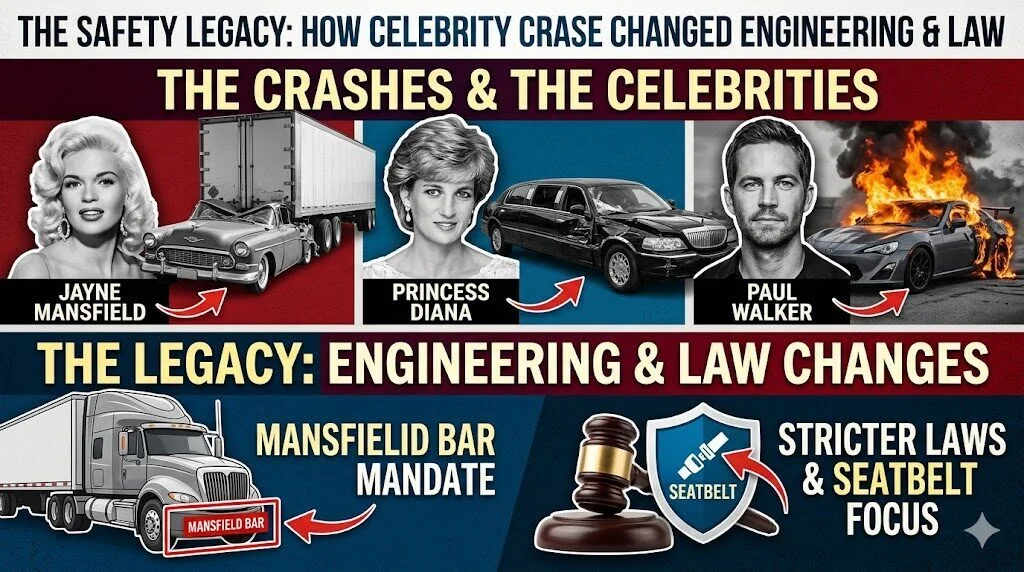
Each of these incidents — whether they resulted in new regulation or not — highlights a specific failure mode in vehicle design or road infrastructure. The Mansfield crash gave us underride guards. The Walker crash reignited debate about stability control in exotic cars. The Broderick case exposed how narrow foreign roads, unfamiliar driving conventions, and momentary inattention can prove fatal.
For the trivia buff or history enthusiast: the next time someone brings up one of these incidents at a dinner table or in a comment thread, you now have the mechanical specifics, the legal outcomes, and the engineering legacy. That’s the “aha” moment — these aren’t just celebrity gossip stories. They’re case studies in automotive safety engineering.