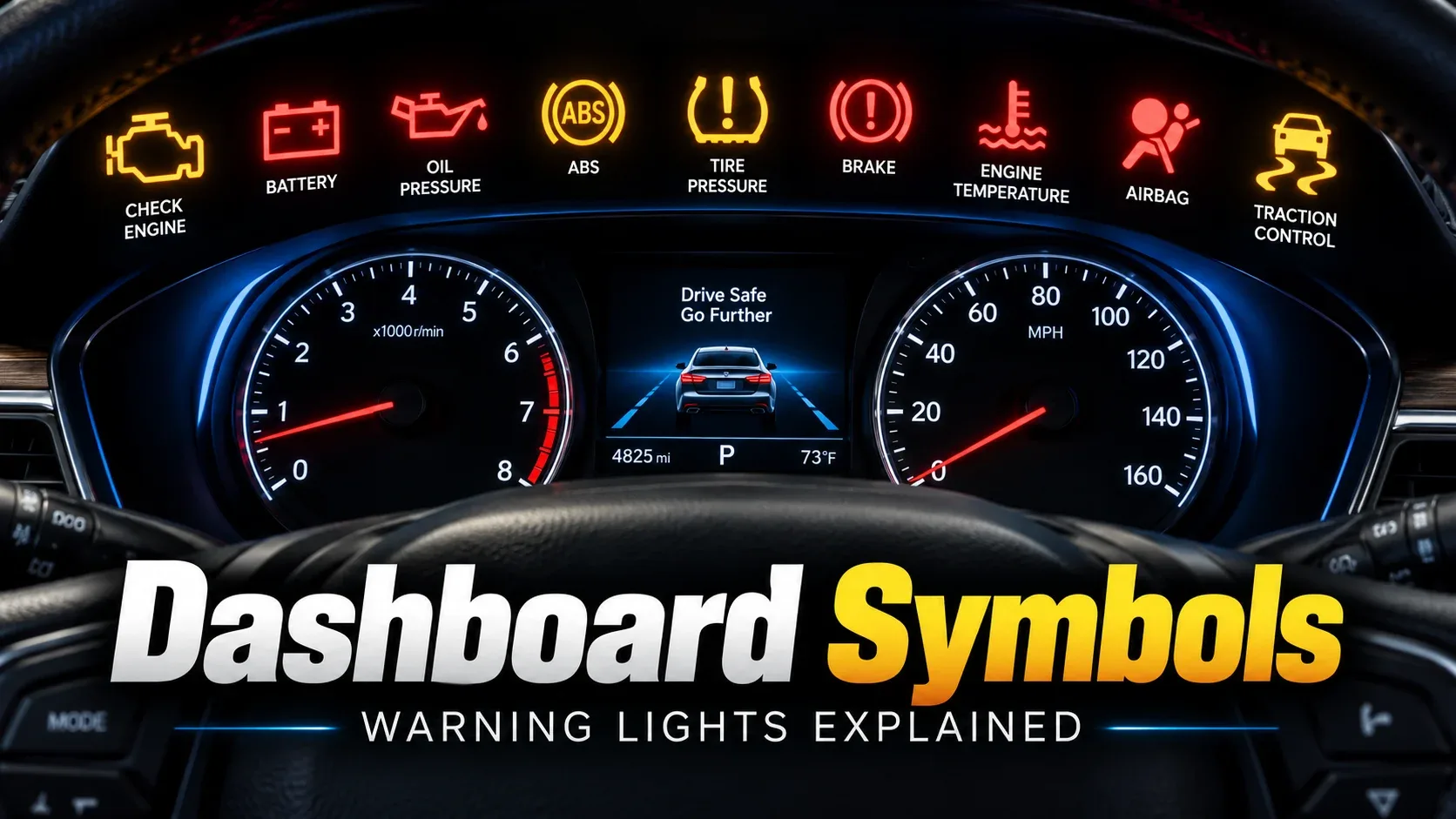

A clear guide to common car dashboard symbols, warning lights, what they usually mean, and when it is safest to stop, drive cautiously, or arrange an inspection.
Dashboard warning light colors are a starting point—not a diagnosis
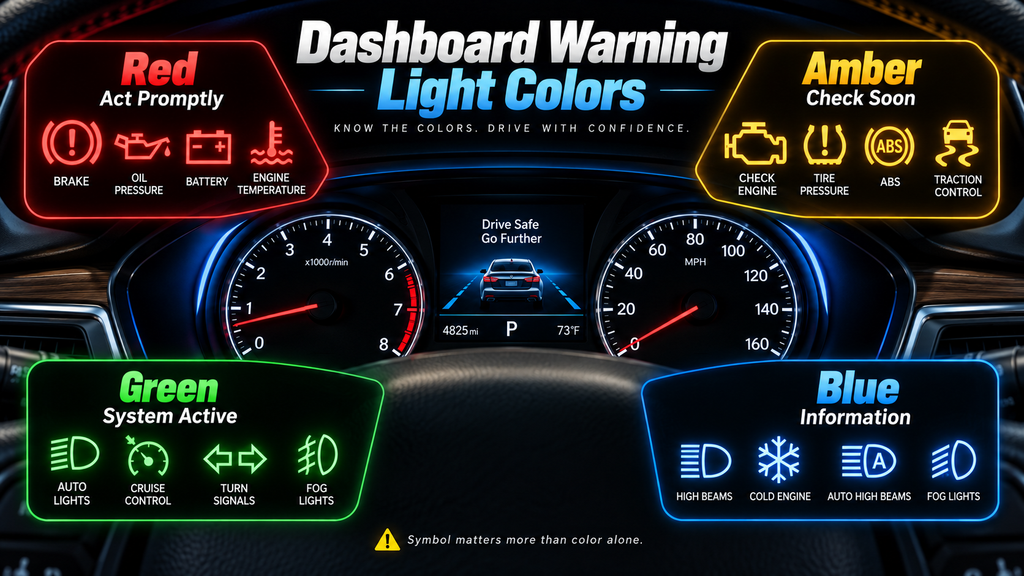
Color helps you judge urgency quickly. But the symbol, any change in how the vehicle drives, and the manufacturer’s instructions matter more than color alone.
Red: act promptly
A red dashboard light can indicate a serious safety or mechanical issue. Stop safely when appropriate and follow the owner’s manual.
Green: system status
Green lights usually show that a system is switched on or operating, such as lights, cruise control, or an assistance feature.
Amber/yellow: caution
A yellow dashboard light commonly means a system needs attention or service soon. Do not assume it is safe to ignore.
Blue: information
Blue is often used for high beams or a cold-engine coolant indicator. Check your manual if the symbol is unfamiliar.

Four dashboard warning lights that should never be treated as routine
These car warning lights often relate to lubrication, temperature, braking, or charging. The exact dash light meaning differs between vehicles, but continuing to drive without checking can increase risk or damage.
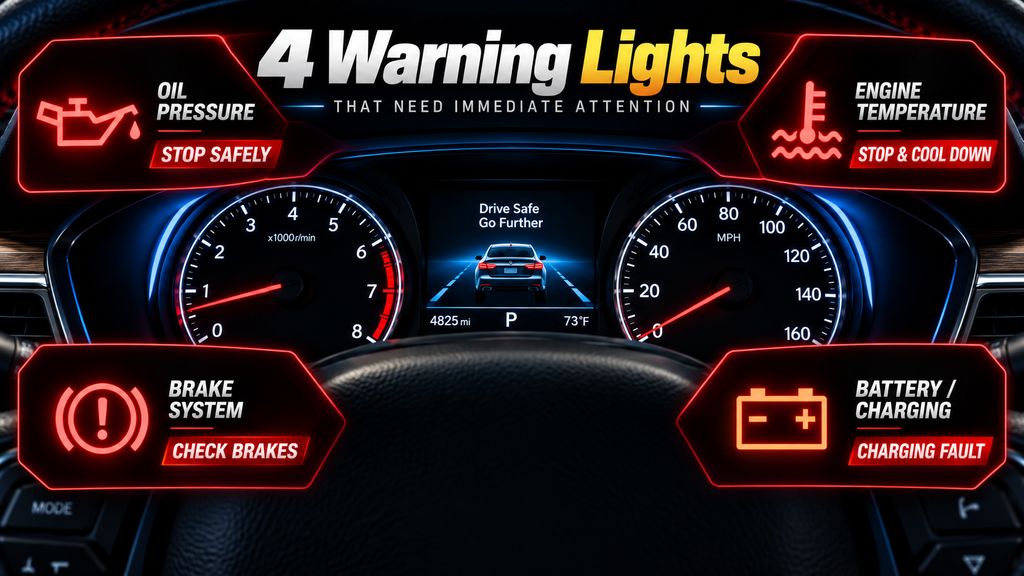
Oil pressure warning
Usually red · stop safely
This usually means the engine may not have enough oil pressure. It is different from a routine oil-change reminder.
Stop the engine as soon as it is safe. Check the manual and avoid restarting until the cause has been assessed.
Engine temperature warning
Usually red · stop safely
The engine may be overheating because of low coolant, a cooling-system fault, a fan issue, or another problem.
Pull over safely and let the engine cool. Never open a hot cooling-system cap. Seek help if the warning remains.
Brake system warning
Often red · urgent check
It may indicate the parking brake is on, low brake fluid, or a fault in the braking system.
Confirm the parking brake is fully released. If it is, or braking feels unusual, stop driving and arrange inspection.
Battery / charging warning
Usually red · limit driving
The battery may not be charging while the engine runs. The cause can involve the alternator, belt, wiring, or battery.
Reduce electrical loads and head to a safe place for testing. The engine may stop once stored battery power is depleted.
Common car light symbols for engine, safety, tires, steering, and diesel systems
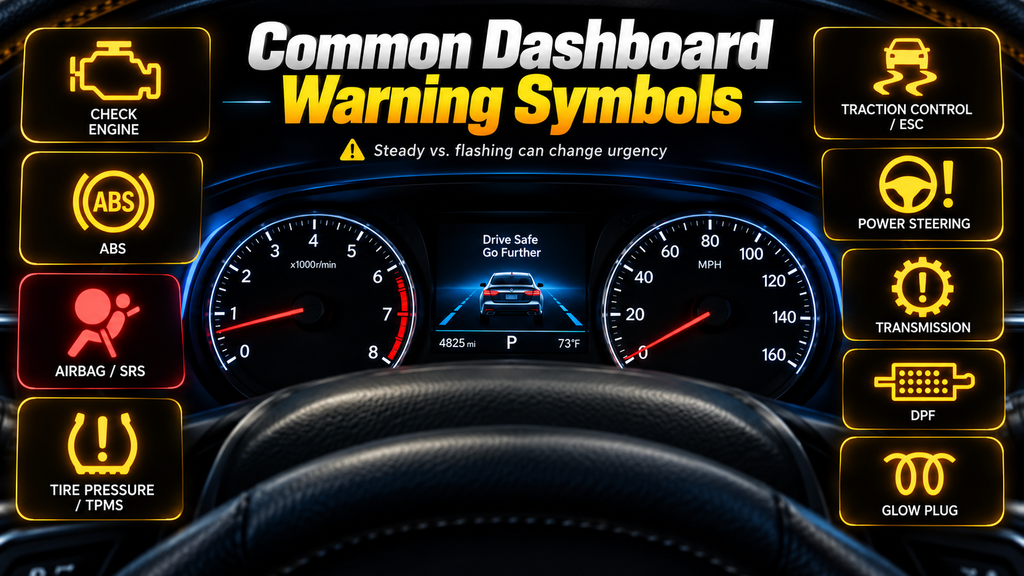
Most amber dashboard warning indicators need a scan, an inspection, or both. A vehicle can still feel normal while a safety system is limited, so treat these warning lights on the dashboard seriously.
Check engine symbol
Usually amber. It can cover many engine or emissions faults. A flashing check-engine light can indicate a more urgent misfire on many cars; reduce load and seek prompt advice.
ABS warning light
Usually amber. Normal braking may remain, but anti-lock braking may be unavailable. Brake carefully and arrange an inspection.
Airbag / SRS warning
Usually amber. It can mean an airbag or seat-belt pretensioner system fault. Crash protection may be reduced, so book a professional check.
Tire-pressure / TPMS warning
Usually amber. One or more tires may be under-inflated, or the system may have a fault. Check pressures when tires are cold and inspect for damage.
Traction control / ESC
A flashing symbol often means the system is actively helping with wheel slip. A steady light can mean it is switched off or there is a fault.
Power steering warning
Usually amber or red depending on the car. Steering assistance may be reduced, making the wheel harder to turn—especially at low speed.
Transmission warning
The icon and wording vary widely. It may relate to gearbox temperature, fluid, shifting, or an electronic control fault. Avoid heavy driving and check the manual.
Diesel particulate filter (DPF)
Diesel vehicles may show this when the filter needs regeneration or is becoming restricted. Follow the manual’s driving instructions or arrange service.
Glow plug indicator
On diesel vehicles, it may illuminate briefly before starting. If it stays on or flashes after the engine starts, have the diesel system checked.
Not every dashboard light means a fault
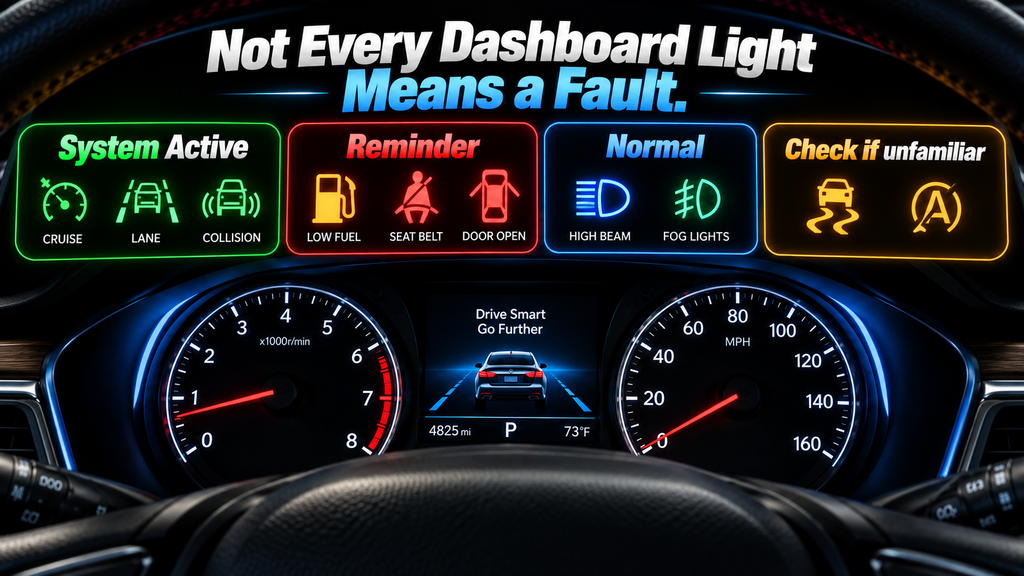
Some dashboard indicator lights are reminders or normal system-status messages. Even so, check an unfamiliar symbol before assuming it is harmless.
Low fuel
A reminder to refuel soon. Driving repeatedly on very low fuel can draw sediment into the fuel system on some vehicles.
Seat belt / door open
A red reminder may mean a seat belt is unfastened or a door, hood, or trunk is not fully closed.
High beam / fog lights
Blue commonly means high beams are on; green commonly indicates front or rear fog lights are active.
Cruise, lane, and collision alerts
These symbols show a driver-assistance system is active, unavailable, or requesting attention. They do not replace attentive driving.
Use the light as a clue, then confirm the actual fault
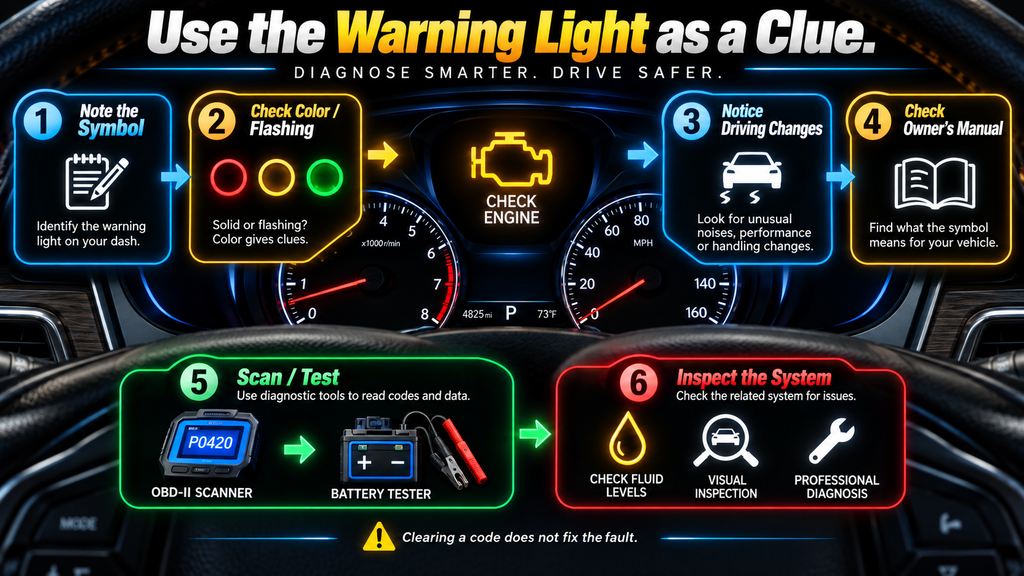
Resetting dashboard warning lights or clearing a fault code does not prove the repair is complete. The cause may return immediately or later, and some faults need vehicle-specific diagnostic equipment.
- Note the symbol color, whether it is steady or flashing, and any changes in engine sound, braking, steering, temperature, or power.
- Check the owner’s manual before topping up fluids or continuing to drive; symbols and instructions differ between makes and models.
- Arrange an OBD scan, battery and charging test, fluid check, or professional inspection when the warning points to a system fault.
Car dashboard symbols: common questions
Can multiple dashboard warning lights come on at once?
Yes. A low battery voltage, charging fault, wiring issue, or a fault affecting shared systems can trigger several dashboard warning indicators together. Multiple lights do not automatically mean multiple failed parts, but they do deserve proper diagnosis.
Is a flashing check engine light more serious than a steady one?
On many vehicles, a flashing check engine symbol can indicate an active misfire that may damage the catalytic converter. Reduce load, avoid hard acceleration, and seek prompt manufacturer-specific advice.
Can I just reset a dashboard warning light?
A reset can turn a light off temporarily, but it does not repair the underlying fault. If the problem remains, the dashboard light may return and the vehicle may still have a safety, emissions, charging, or mechanical issue.