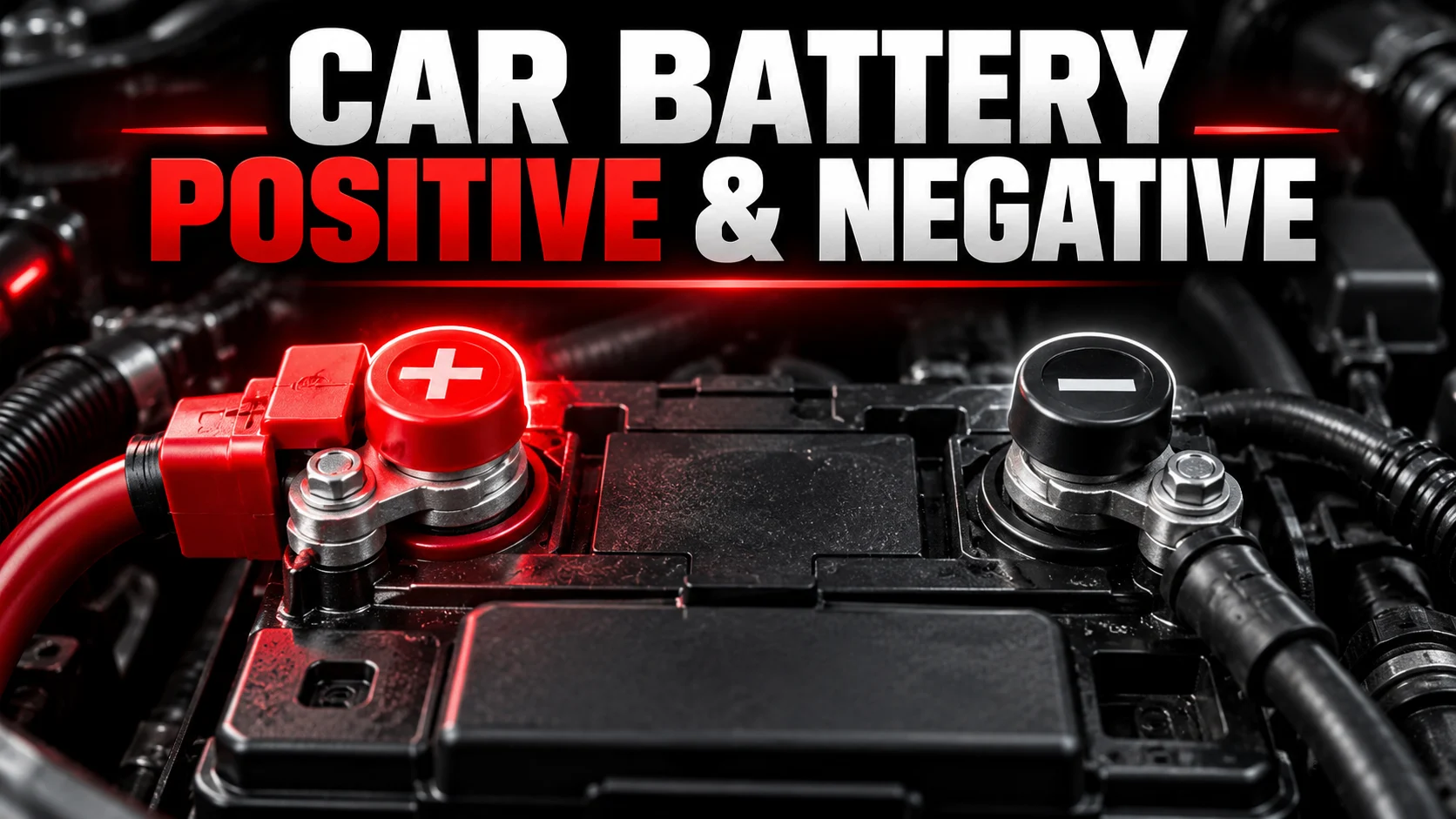
Understanding car battery positive and negative terminals is essential before disconnecting a battery, replacing it, charging it, or jump-starting a vehicle. The two terminals perform different roles, and identifying them correctly helps prevent electrical mistakes.
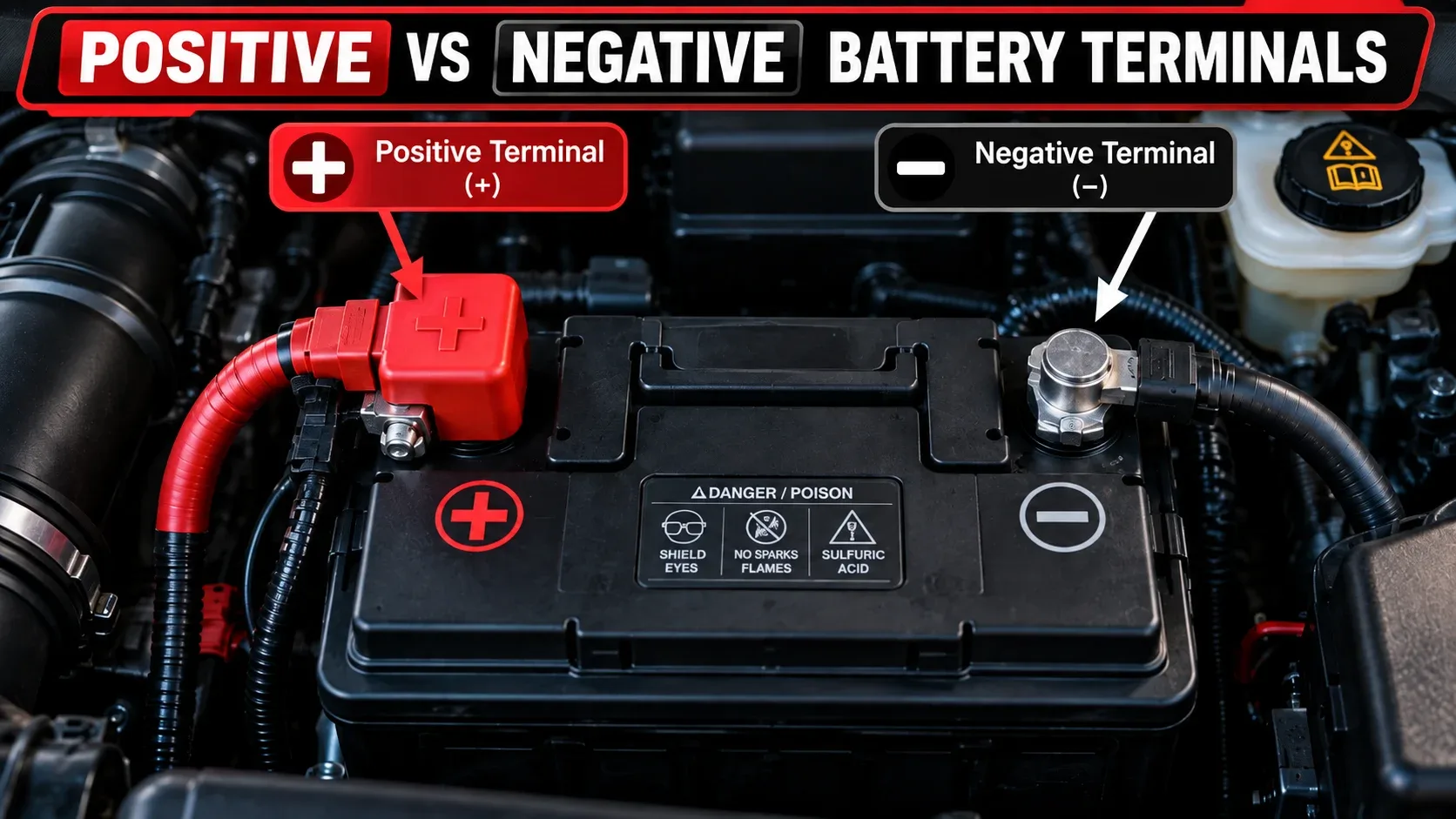
Car Battery Positive and Negative: Quick Answer
On a typical car battery, the positive terminal is marked with a plus sign (+) and is usually connected to a red cable. The negative terminal is marked with a minus sign (−) and usually connects to a black cable leading to the vehicle’s ground.
Positive Terminal
- Marked with a + symbol
- Often marked POS
- Usually has a red cable or cover
- Feeds power into the vehicle electrical system
Negative Terminal
- Marked with a − symbol
- May be marked NEG
- Usually has a black cable
- Normally connects to chassis or engine ground
What Do Positive and Negative Battery Terminals Do?
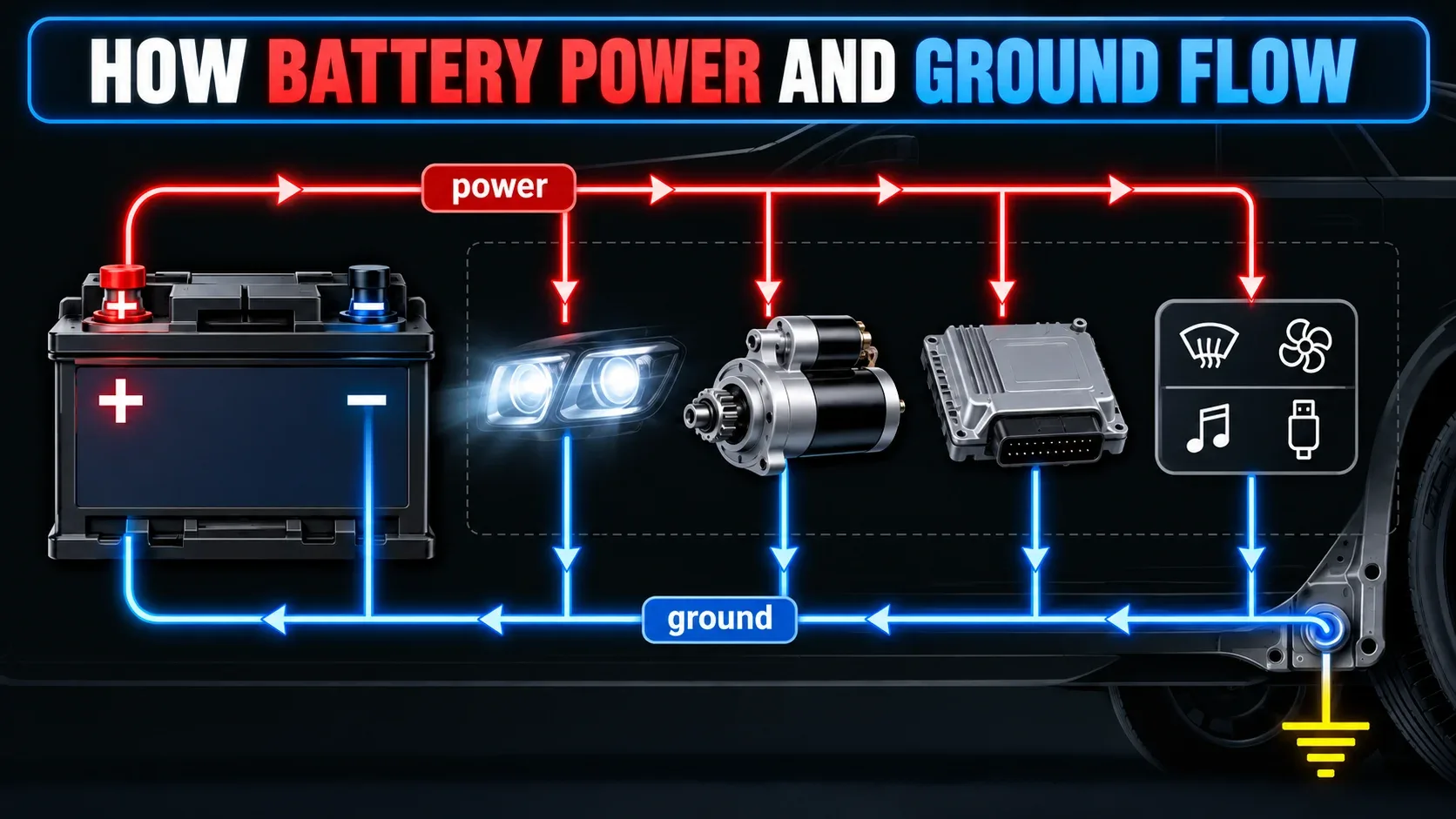
A car battery has two terminals because the vehicle’s electrical system requires a complete electrical path. The positive and negative sides work together to deliver electrical energy to vehicle systems.
The positive terminal provides battery voltage to components such as the starter motor, lights, fuse box, control modules, and accessories. The negative terminal normally connects to the engine or vehicle chassis, creating the ground return path.
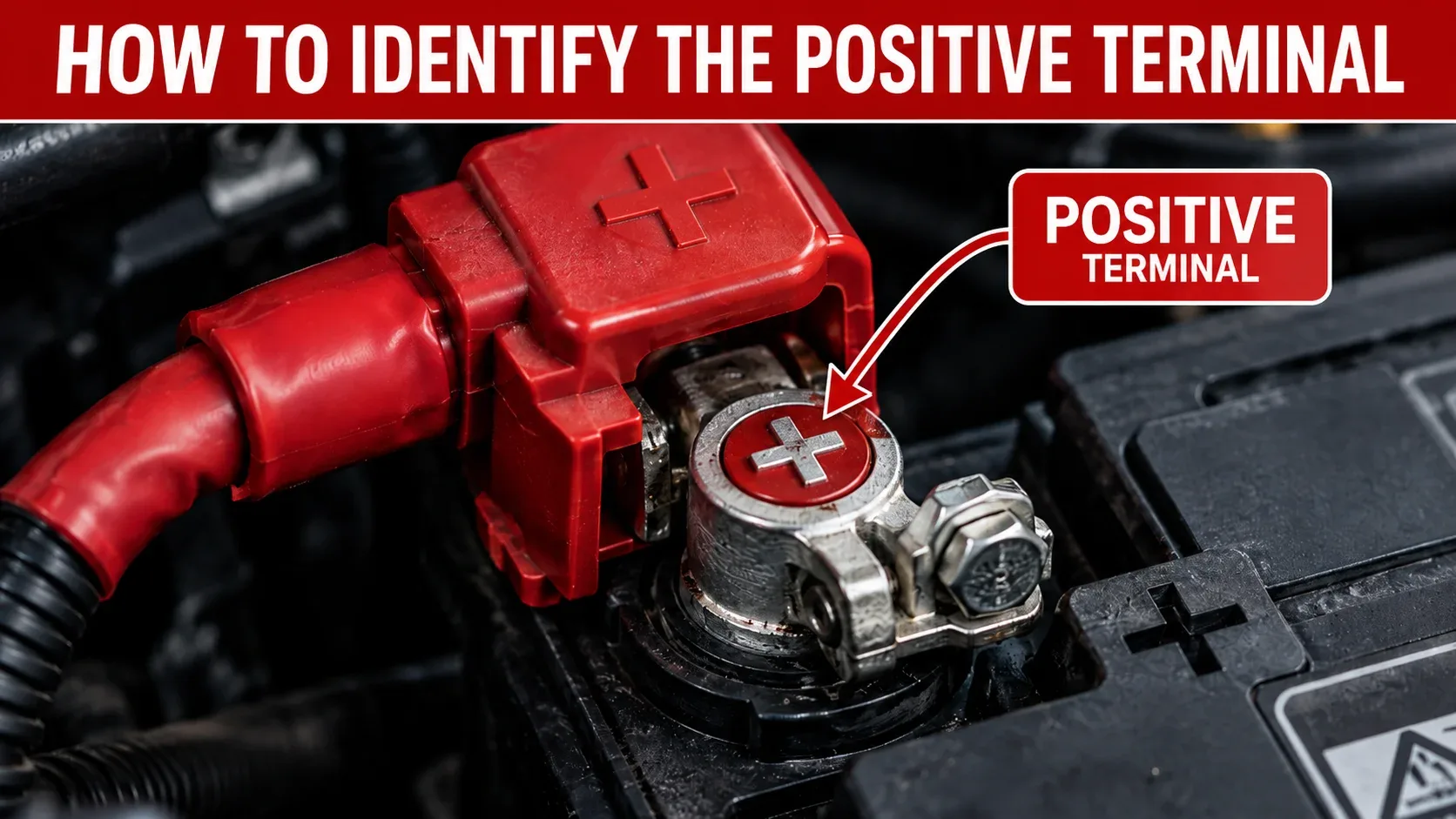
How to Identify the Positive Battery Terminal
When identifying car battery positive and negative terminals, look directly at the battery case around each terminal.
The positive terminal typically has:
- A + symbol
- The letters POS
- A red protective cover
- A red battery cable
- On some top-post batteries, a slightly larger terminal post
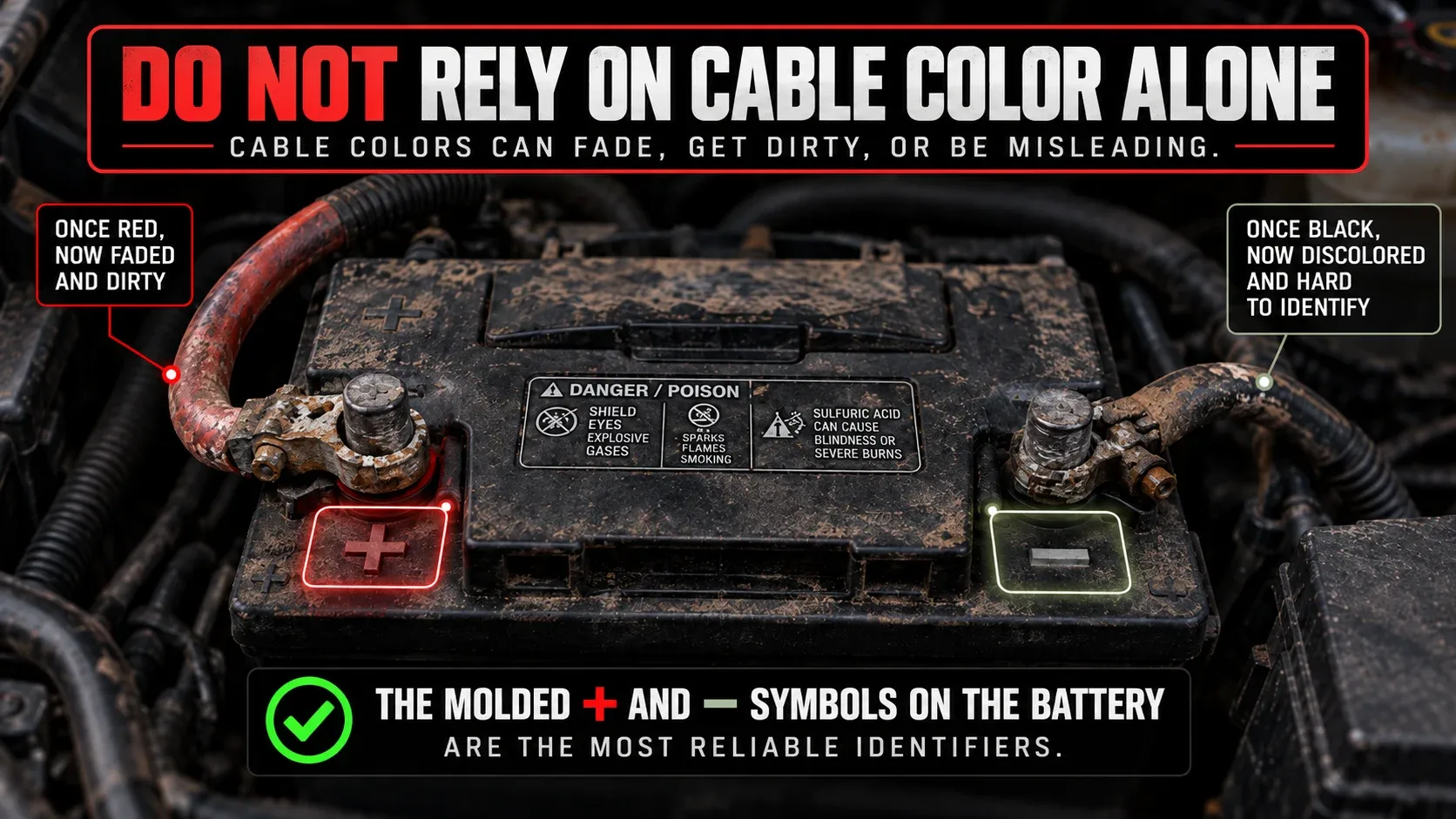
The battery’s + symbol is more reliable than cable color, especially if wiring has previously been replaced or modified.
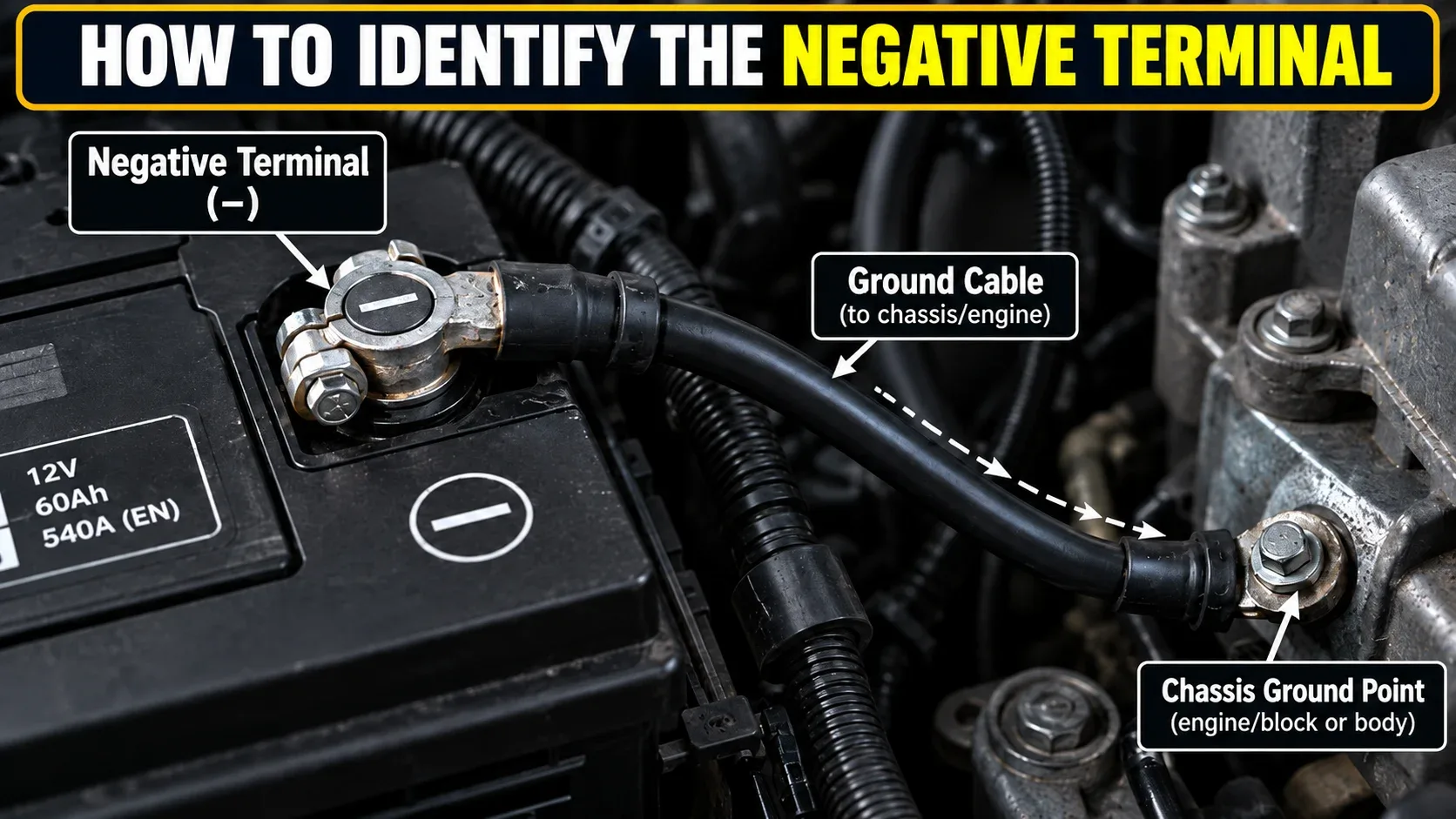
How to Identify the Negative Battery Terminal
The negative terminal is normally identified by a minus sign (−). It commonly uses a black cable that connects to the vehicle’s chassis or engine.
- A − symbol beside the terminal
- The letters NEG
- A black battery cable
- A cable leading to chassis or engine ground
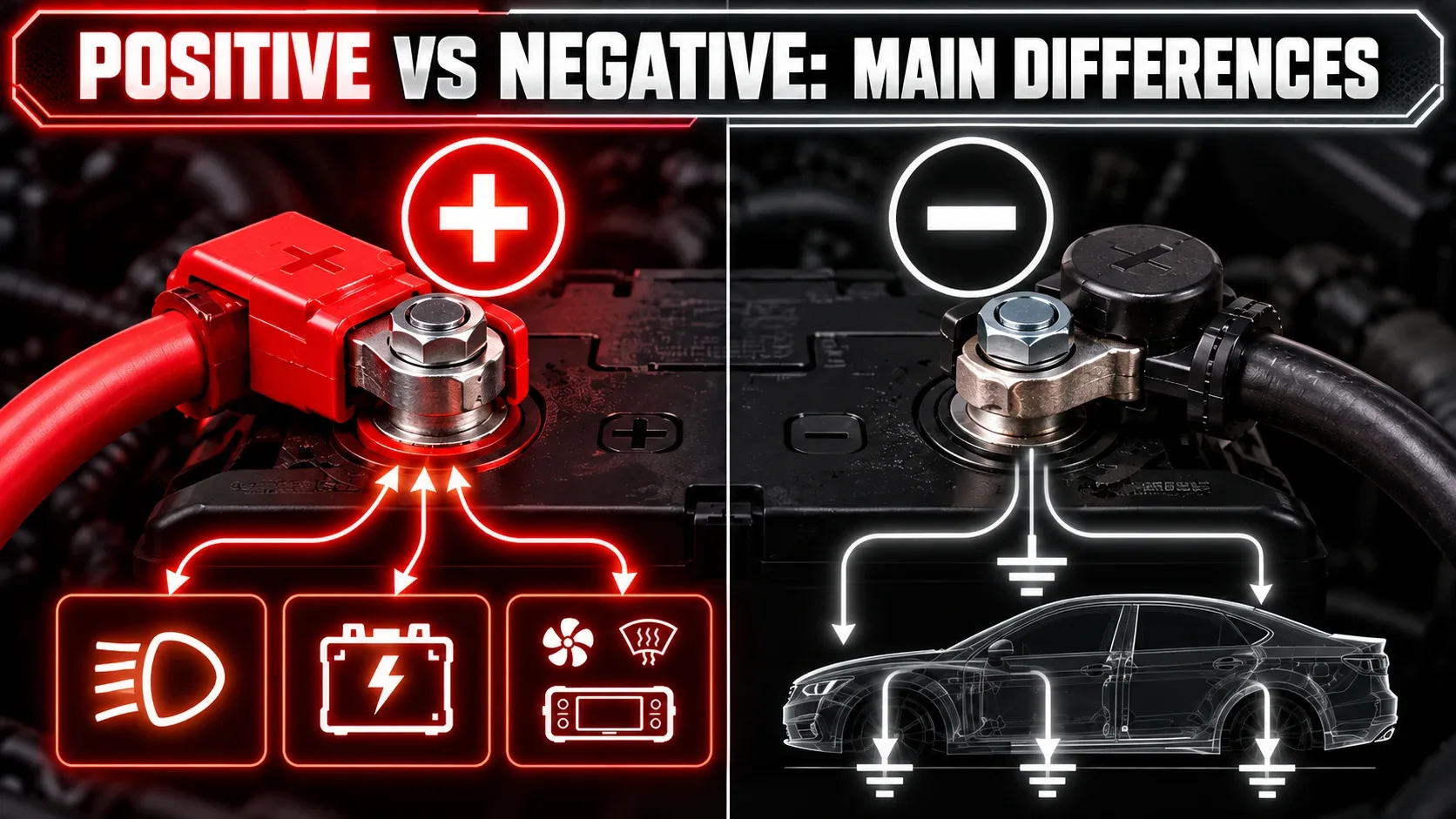
Car Battery Positive vs Negative: Main Differences
| Feature | Positive | Negative |
|---|---|---|
| Symbol | + | − |
| Common marking | POS | NEG |
| Typical color | Red | Black |
| Main connection | Electrical system | Chassis / ground |
| Disconnect order | Second | First |
| Reconnect order | First | Last |
Is Red Always Positive and Black Always Negative?
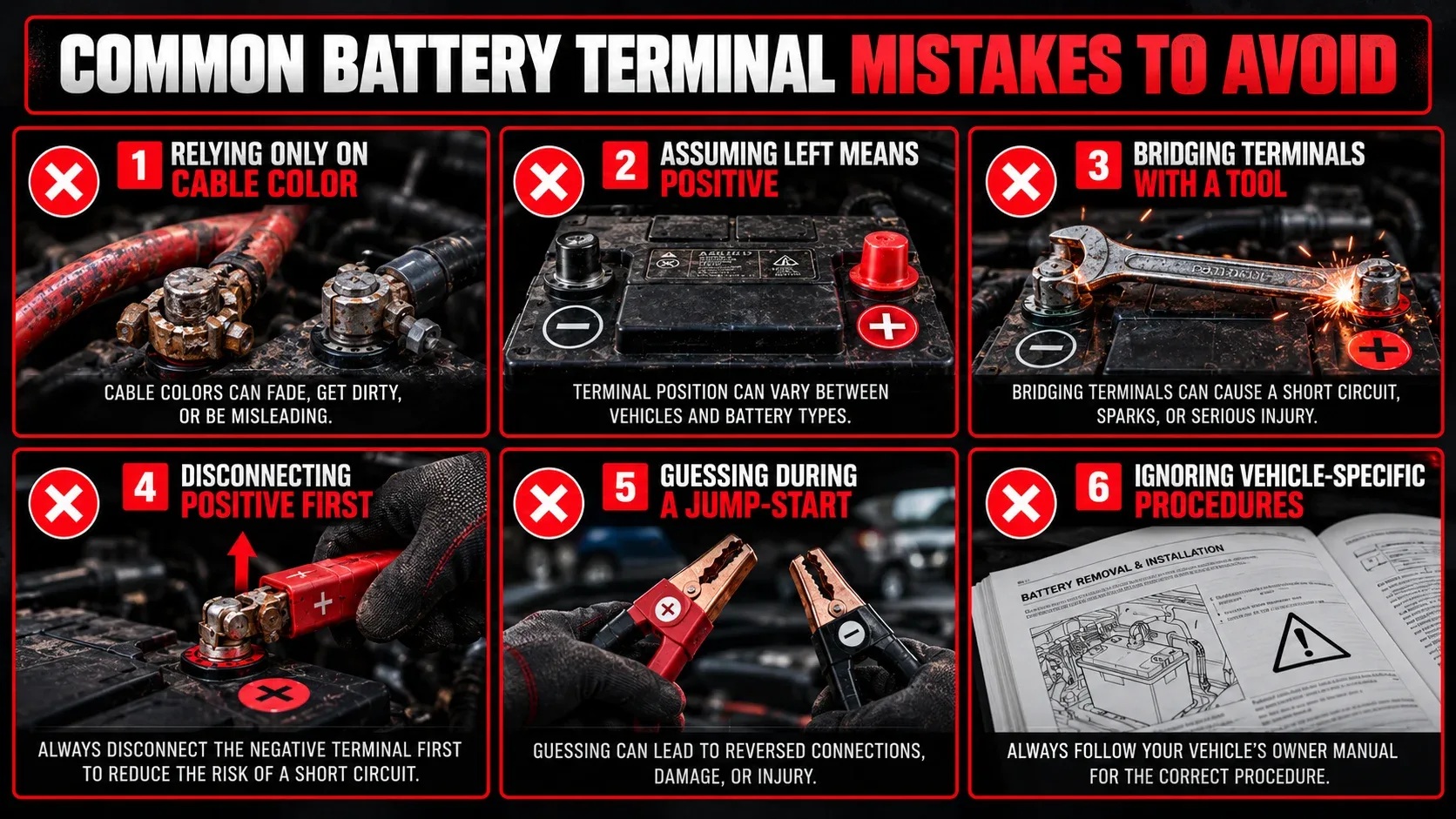
Red normally indicates positive and black normally indicates negative, but cable color should not be your only method for identifying polarity.
Older vehicles, previous repairs, replacement cables, dirt, fading, or electrical modifications can make cable colors misleading.
Can the Positive Terminal Be on Either Side of a Battery?
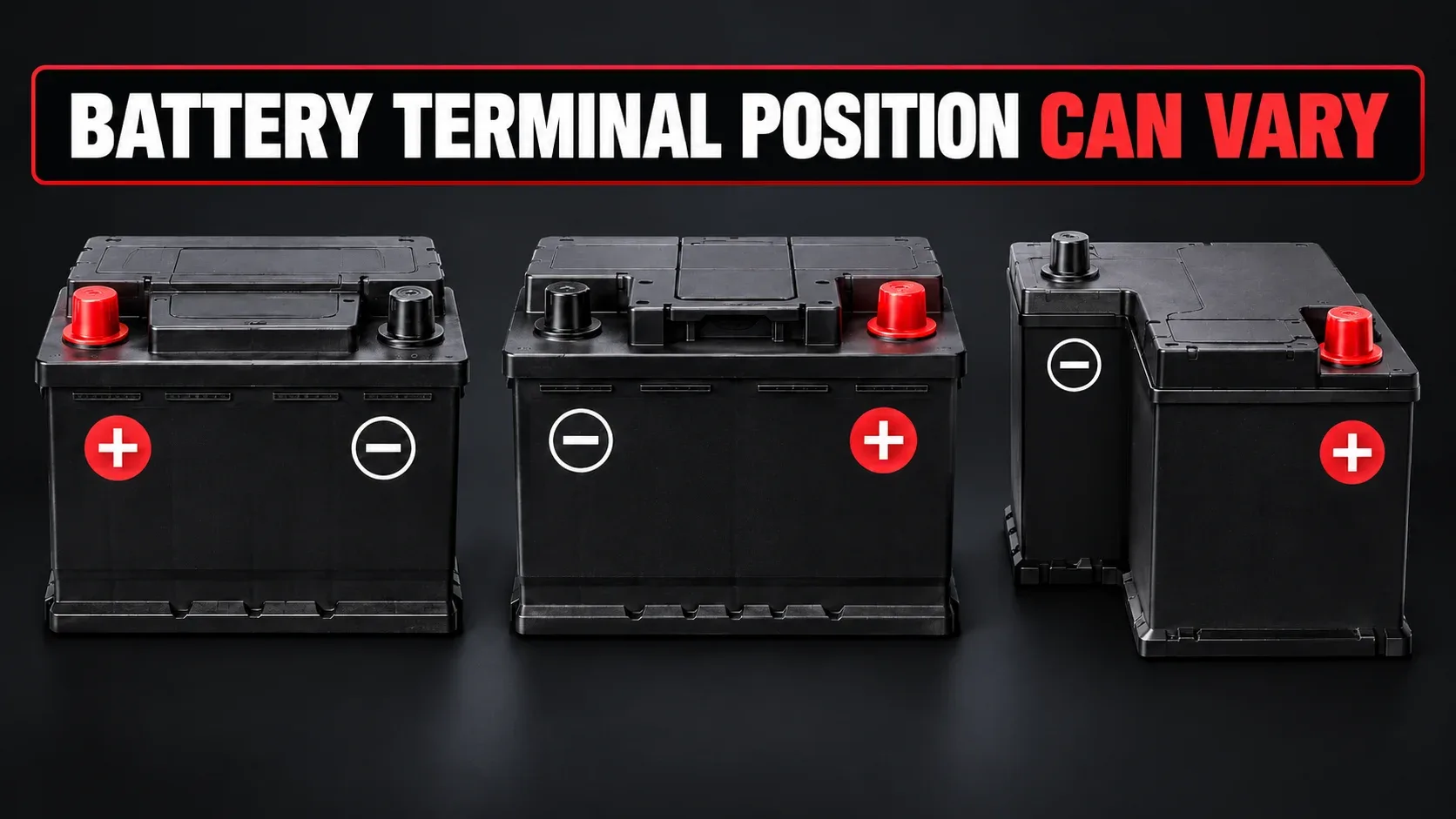
Yes. A battery’s positive terminal may be located on either the left or right side, depending on battery design, group size, orientation, and vehicle application.
This is why terminal position alone should never be used to determine car battery positive and negative polarity.
Which Battery Terminal Should You Disconnect First?
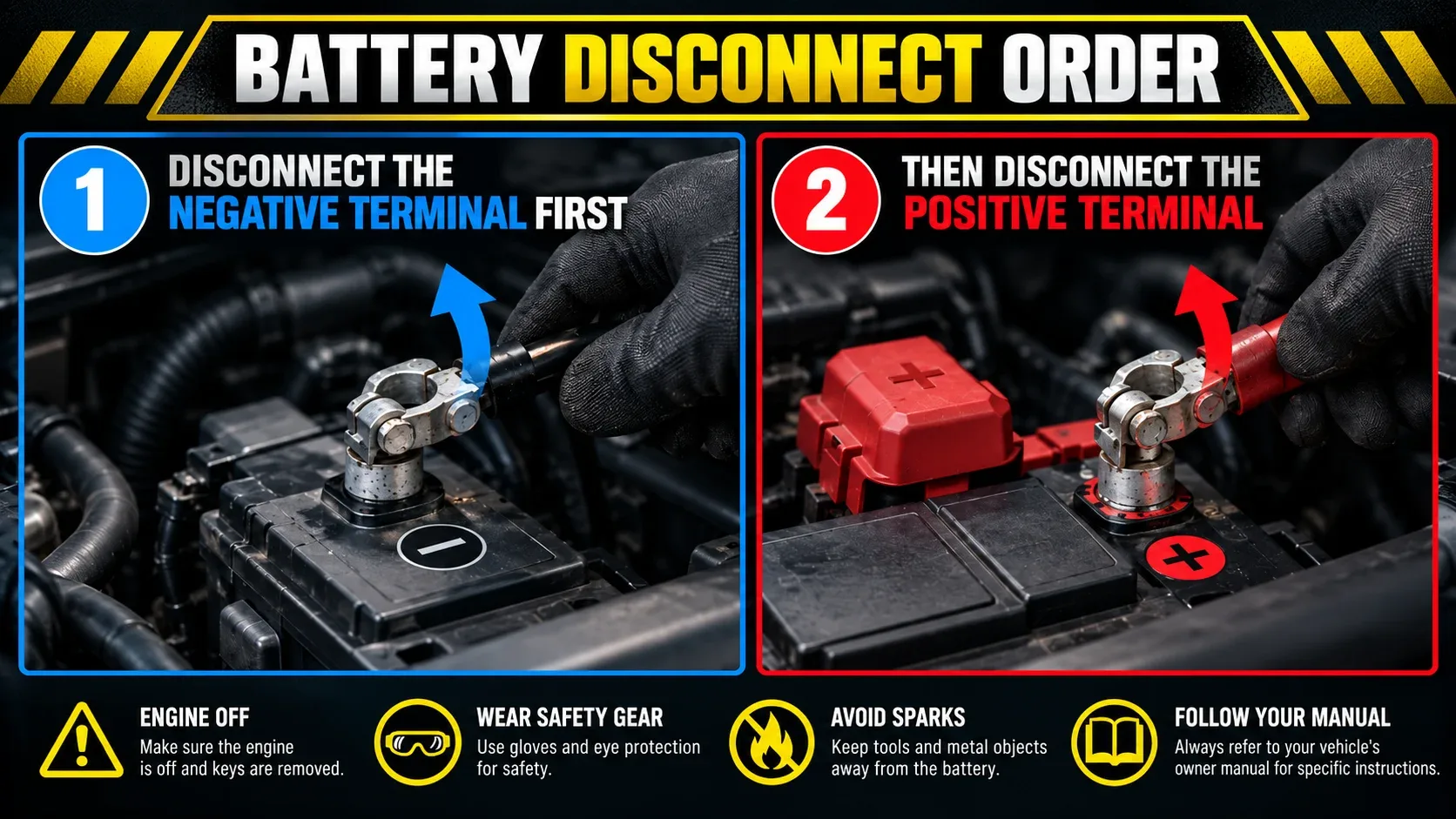
On a conventional negative-ground vehicle, disconnect the negative battery terminal first.
While the negative cable remains connected, the vehicle body and chassis are tied to battery ground. If a wrench touches the positive terminal and grounded metal at the same time, a short circuit may occur.
Disconnecting negative first breaks that ground connection before you work on the positive terminal.
Battery Removal
Battery Installation
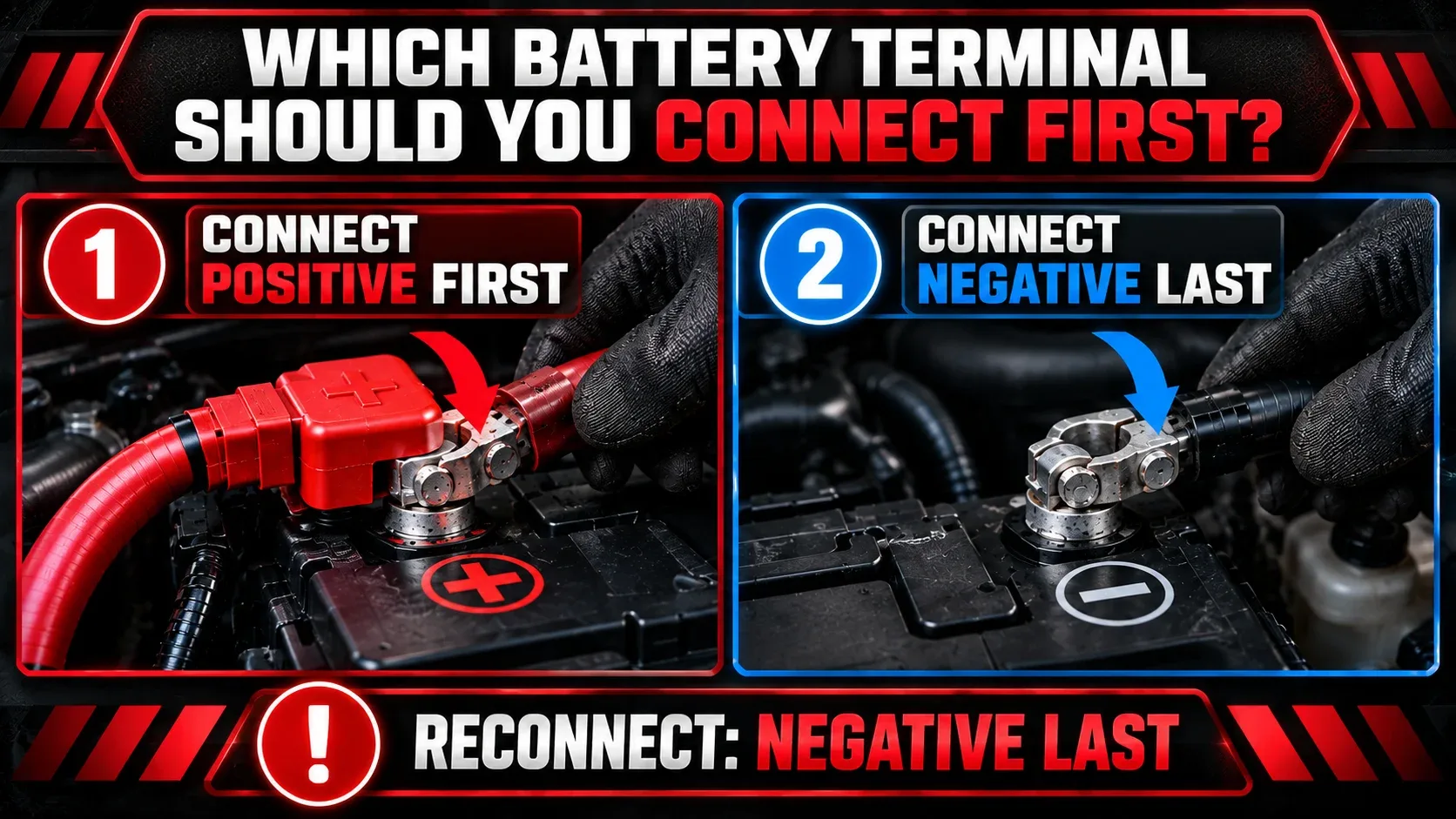
Which Battery Terminal Should You Connect First?
When reconnecting a typical negative-ground car battery, connect the positive terminal first and connect the negative terminal last.
Reconnect: Negative Last
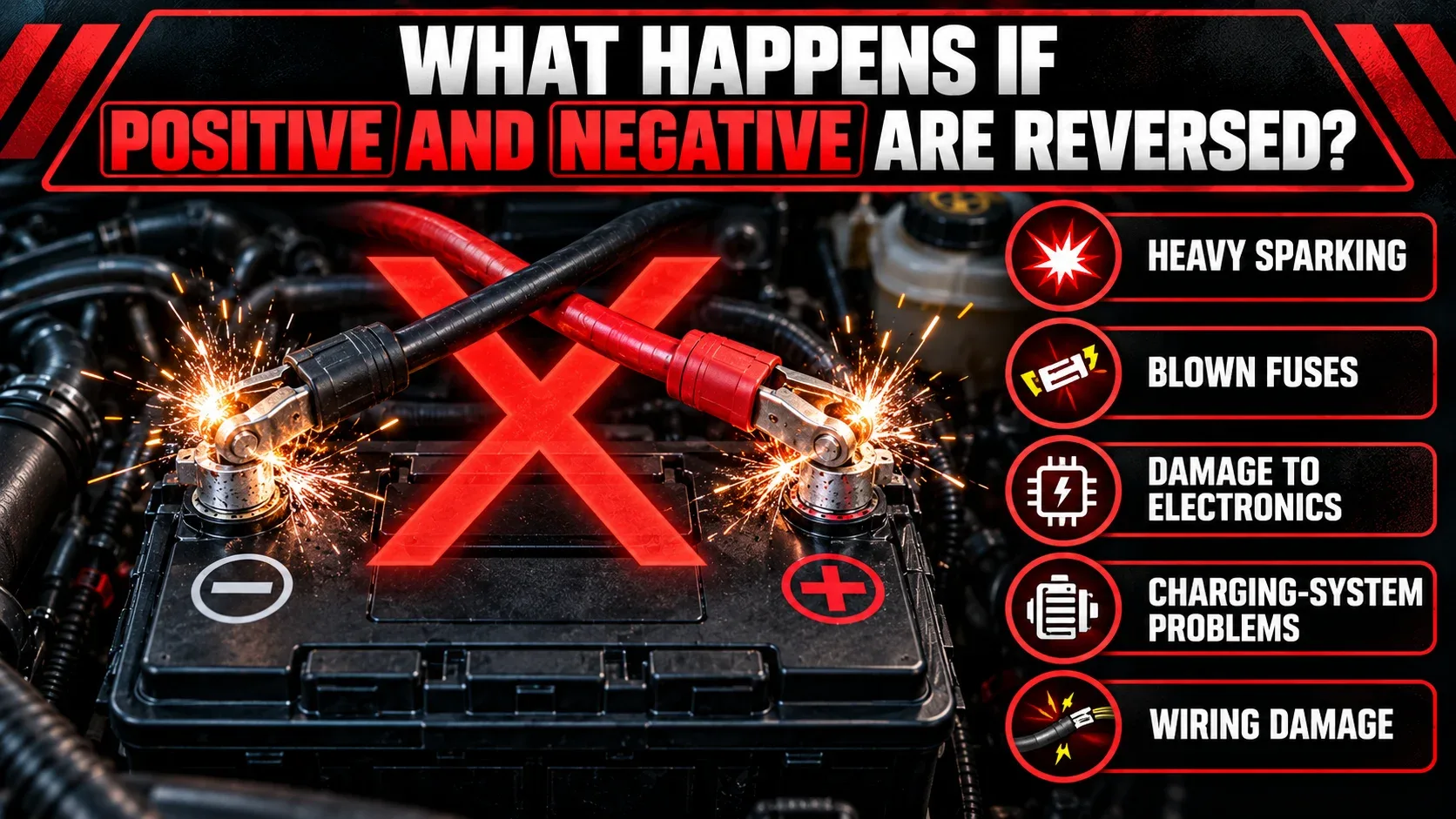
What Happens If Positive and Negative Are Reversed?
Reverse polarity occurs when positive and negative connections are accidentally swapped.
Possible consequences include:
- Heavy sparking
- Blown fuses or fusible links
- Damage to electronic modules
- Charging-system problems
- Damage to wiring
- Damage to jump-start or charging equipment
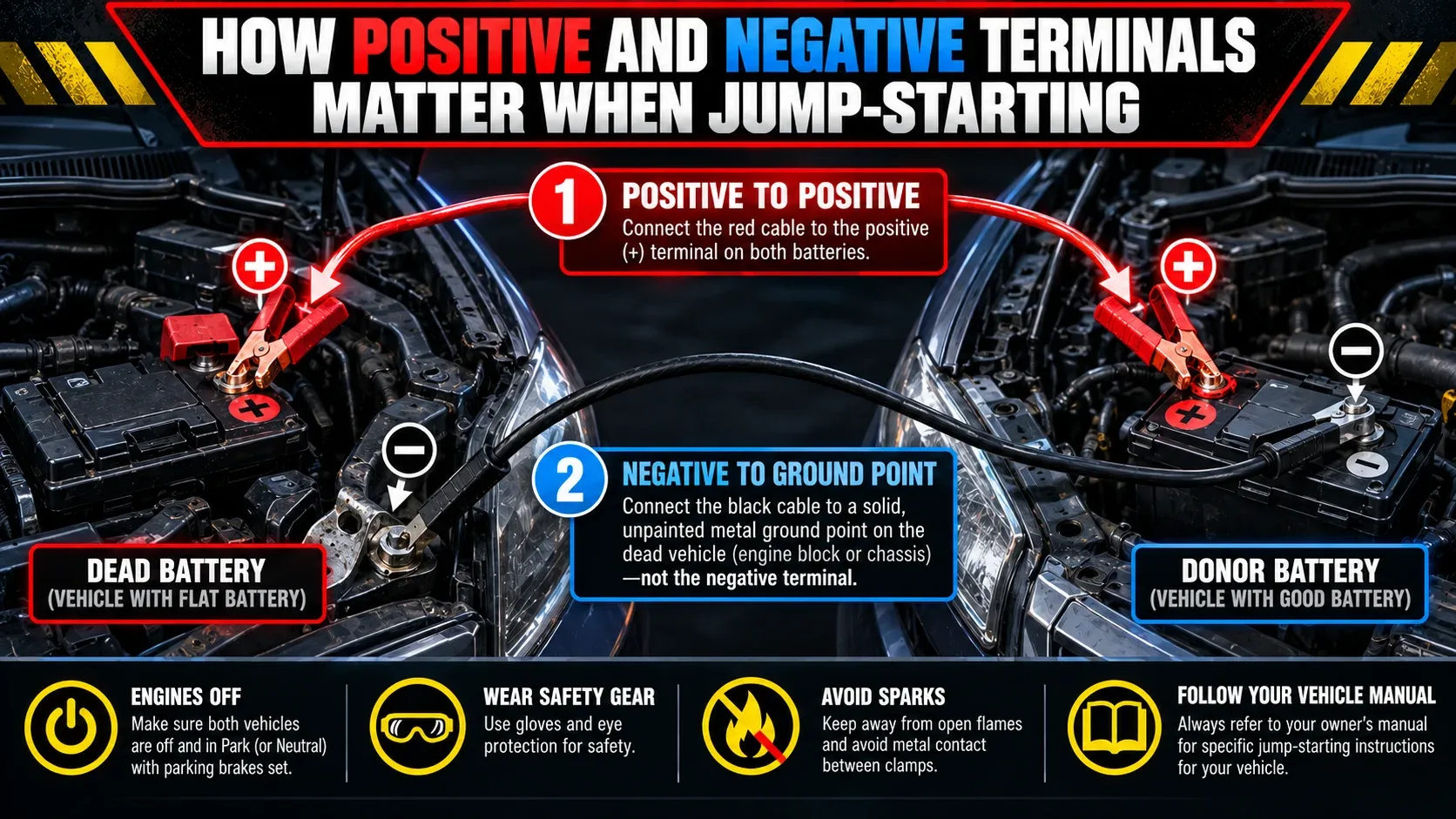
How Positive and Negative Terminals Matter When Jump-Starting
Correct polarity is especially important during a jump-start. Connecting jumper cables incorrectly may create sparks or electrical damage.
In a typical procedure, the positive side is connected to positive, while the manufacturer’s specified ground point may be used for the final negative connection.
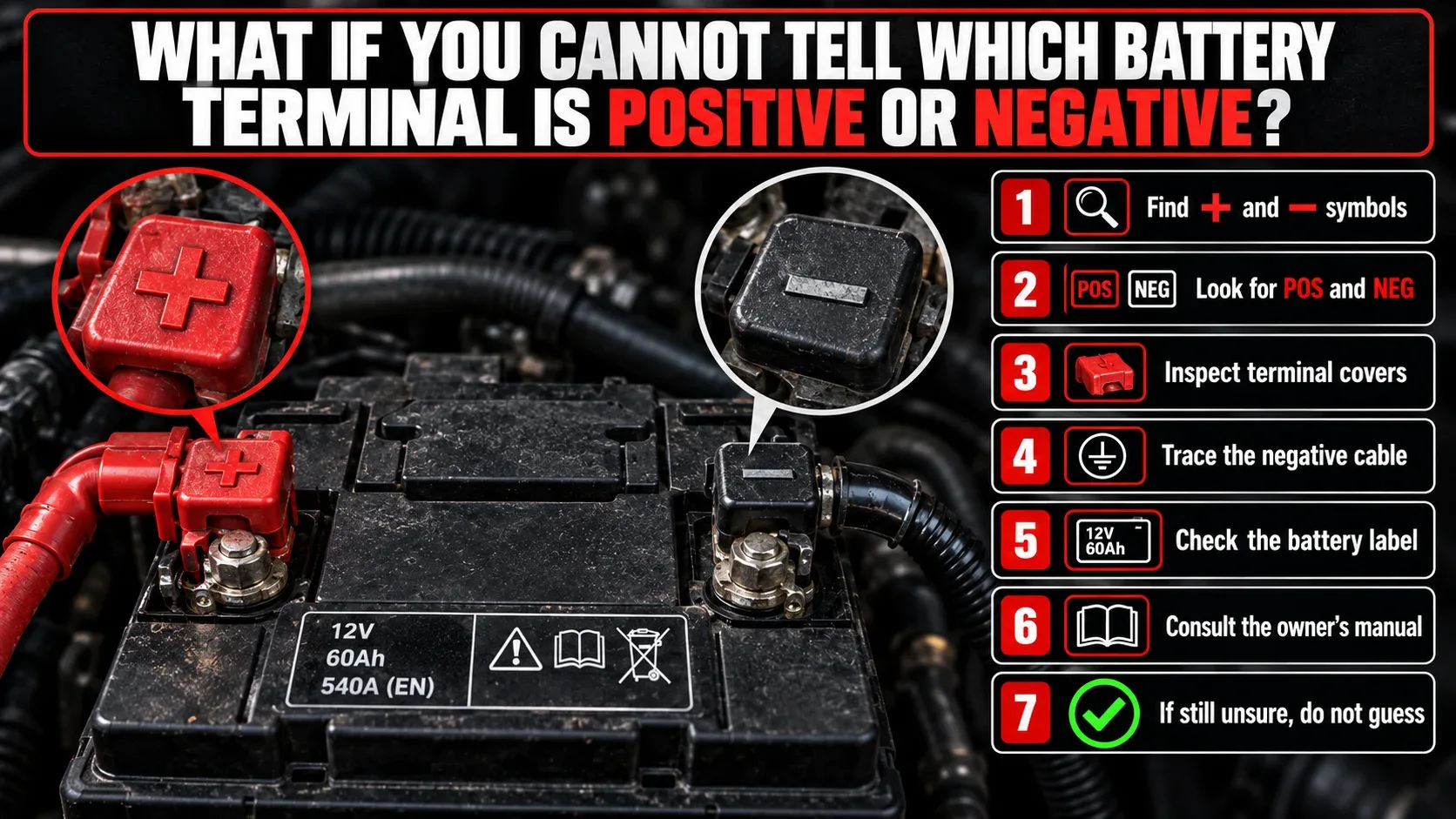
What If You Cannot Tell Which Battery Terminal Is Positive or Negative?
Dirt, corrosion, faded labels, and replacement wiring can sometimes make battery polarity harder to identify.
- Find the + and − symbols.
- Look for POS and NEG labels.
- Inspect protective terminal covers.
- Trace the negative cable toward chassis or engine ground.
- Check the battery label.
- Consult the vehicle owner’s manual.
- If still uncertain, do not guess.
Common Battery Terminal Mistakes to Avoid
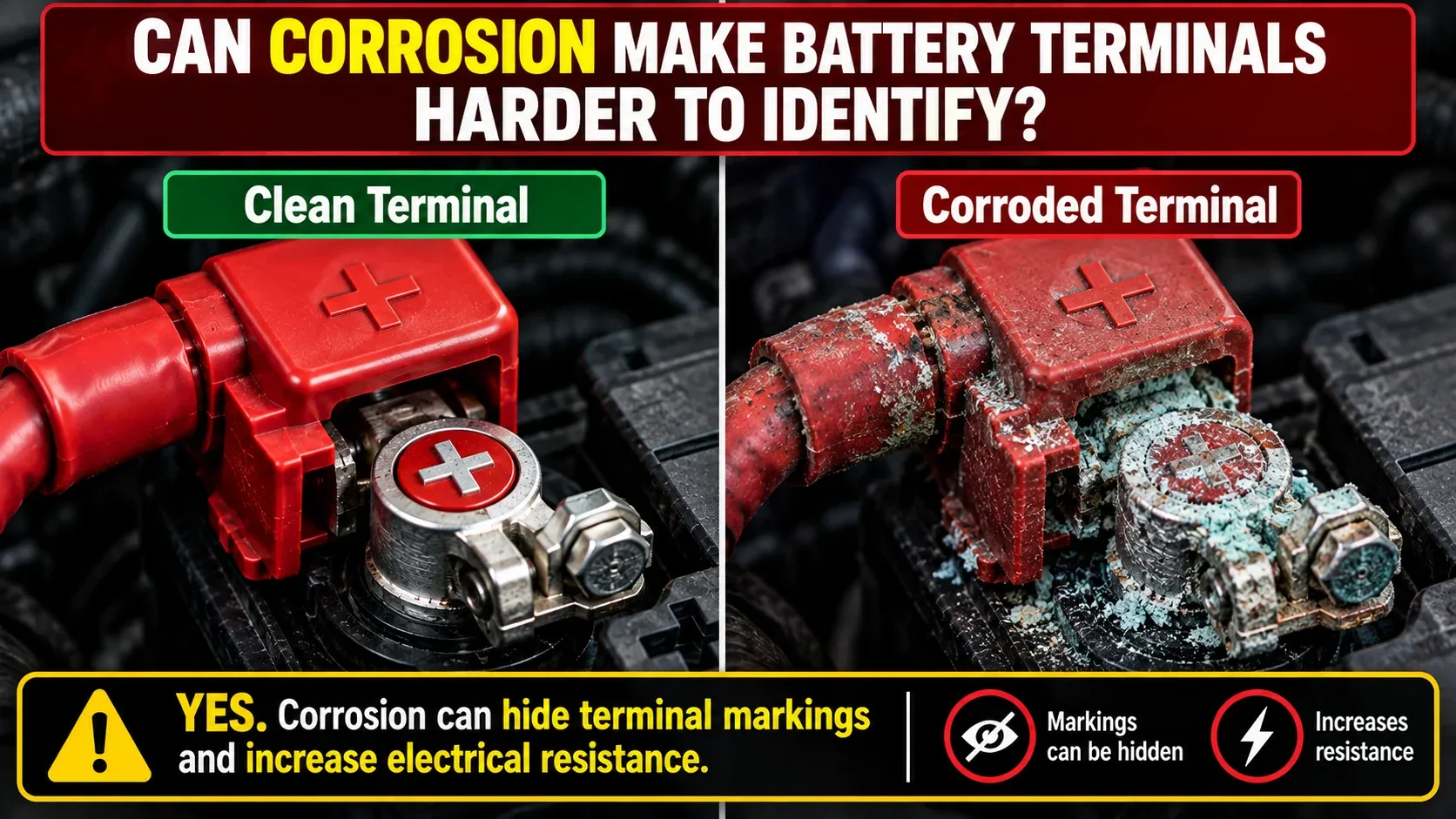
Can Corrosion Make Battery Terminals Harder to Identify?
Yes. Corrosion can cover battery markings, clamps, and cable connections. It may appear white, blue, or green around the battery terminal.
Corrosion can also increase resistance and contribute to starting or charging problems. Do not use corrosion color to identify terminal polarity.
Battery Safety Checklist Before You Touch the Terminals
- Switch the engine off.
- Remove the key or keep ignition fully off.
- Identify positive and negative before using tools.
- Remove metal jewelry.
- Wear appropriate eye protection.
- Keep tools from bridging both battery terminals.
- Follow the manufacturer’s procedure.
- Do not work on a leaking, swollen, damaged, or frozen battery.

Frequently Asked Questions
Which terminal is positive on a car battery?
The positive terminal is marked with a plus sign (+) and is typically connected to a red cable.
Which terminal is negative on a car battery?
The negative terminal is marked with a minus sign (−) and usually connects to a black ground cable.
Is red positive or negative on a car battery?
Red normally indicates positive, but always verify the battery’s + symbol.
Is black positive or negative?
Black normally indicates negative, but confirm the − marking before making a connection.
Which battery terminal should be disconnected first?
On a typical negative-ground vehicle, disconnect the negative terminal first.
Which terminal should be connected first?
When reconnecting, connect the positive terminal first and negative terminal last.
Can the positive battery terminal be on either side?
Yes. Battery terminal layout varies, so positive can appear on either side.
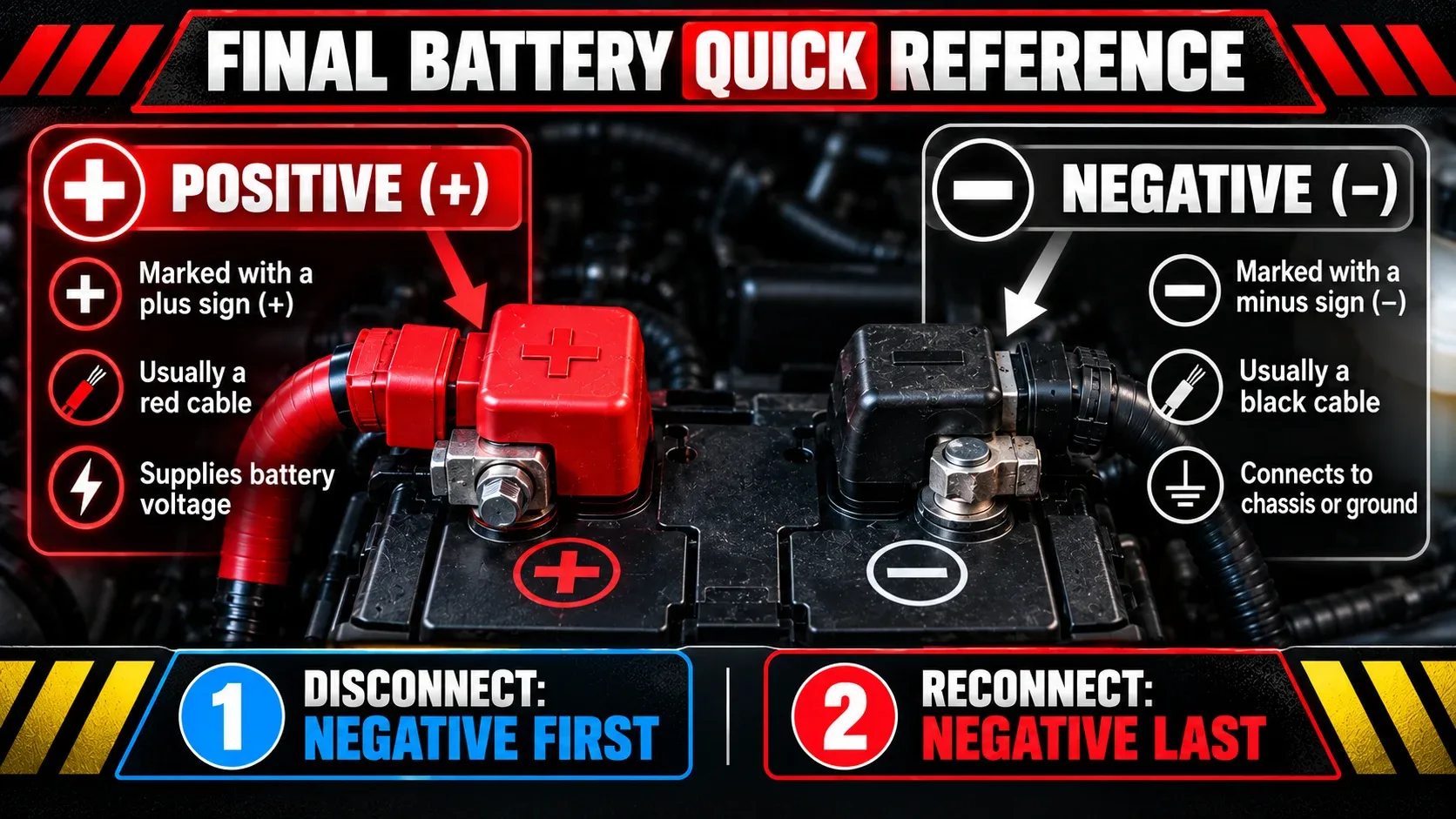
Final Takeaway
Understanding car battery positive and negative terminals becomes straightforward when you know which markings to trust.
- Positive: marked + and usually red.
- Negative: marked − and usually black.
- Do not identify polarity only by terminal position.
- Disconnect negative first on typical negative-ground vehicles.
- Reconnect positive first and negative last.
- Always follow vehicle-specific battery procedures.