CAR BATTERY & ELECTRICAL SYSTEM
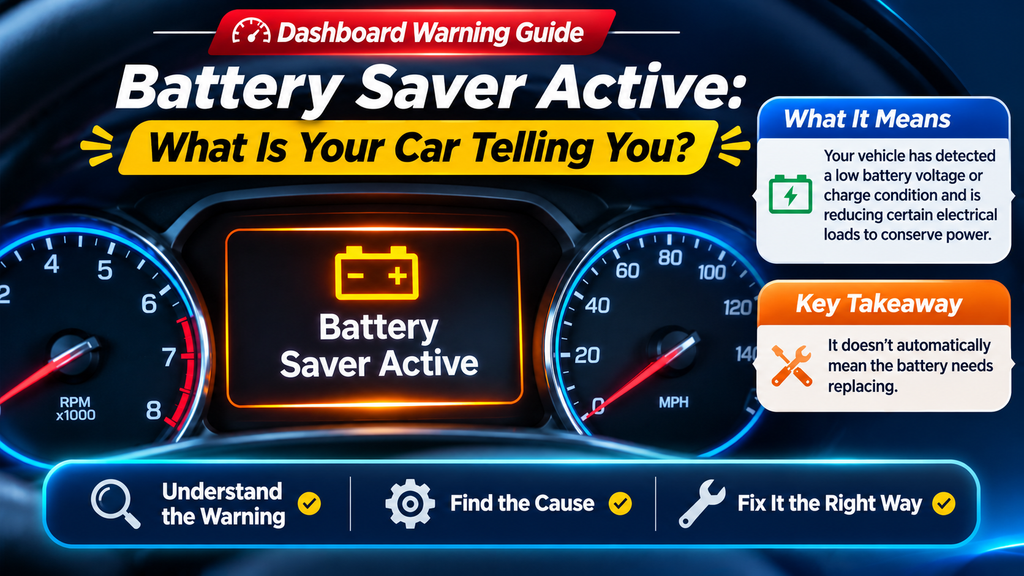
Dashboard Warning Guide
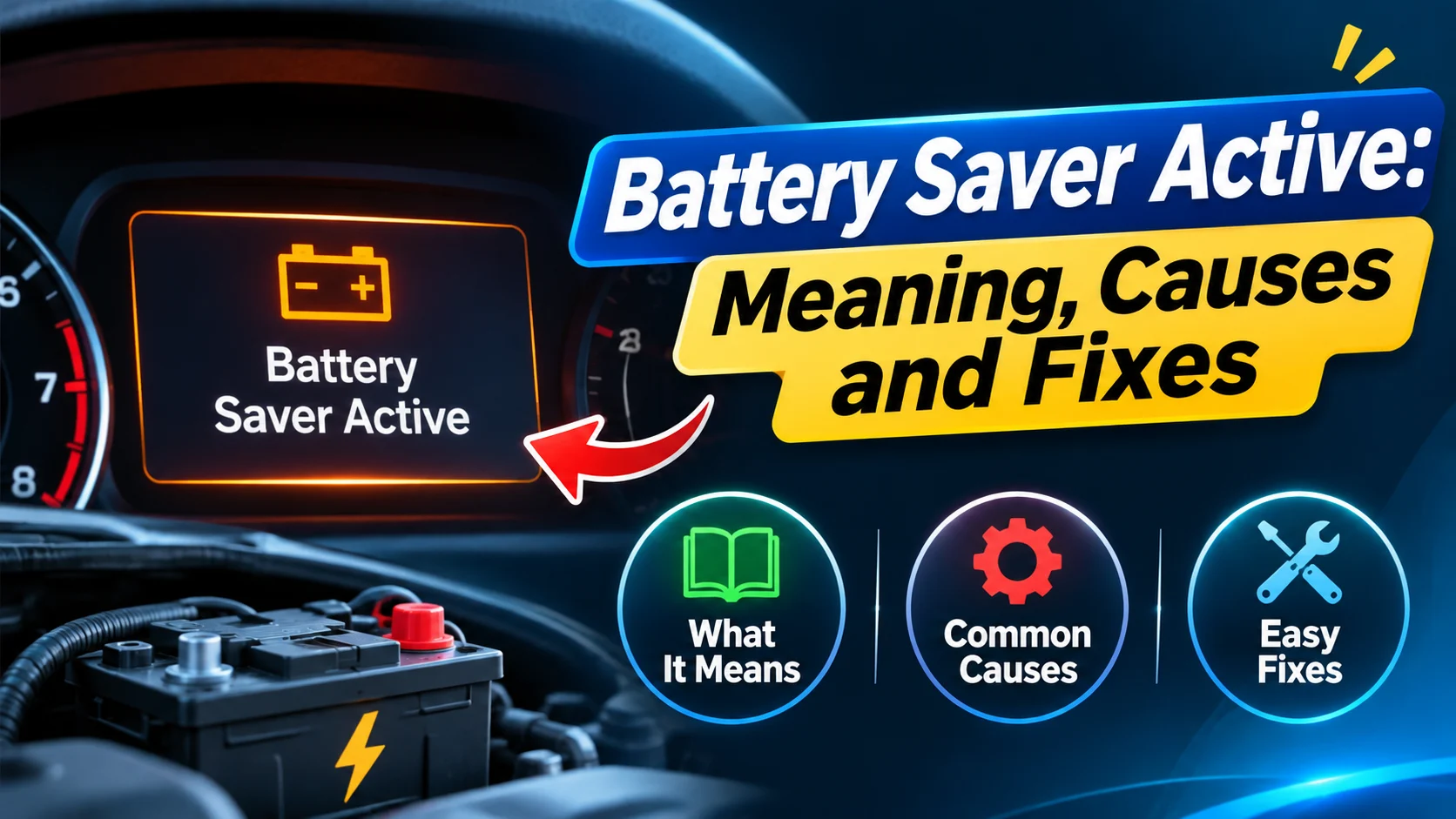
Battery Saver Active: What Is Your Car Telling You?
Your car is trying to protect its electrical power. Here’s how to understand the warning, find the cause, and decide what to do next.
Seeing Battery Saver Active on your dashboard can be concerning, especially when your car seems to run normally. The message is common on certain Chevrolet, GMC, Buick, and Cadillac vehicles.
What does Battery Saver Active mean?
It means your vehicle has detected a low battery voltage or charge condition and is reducing certain electrical loads to conserve power. It does not automatically mean the battery needs replacing.
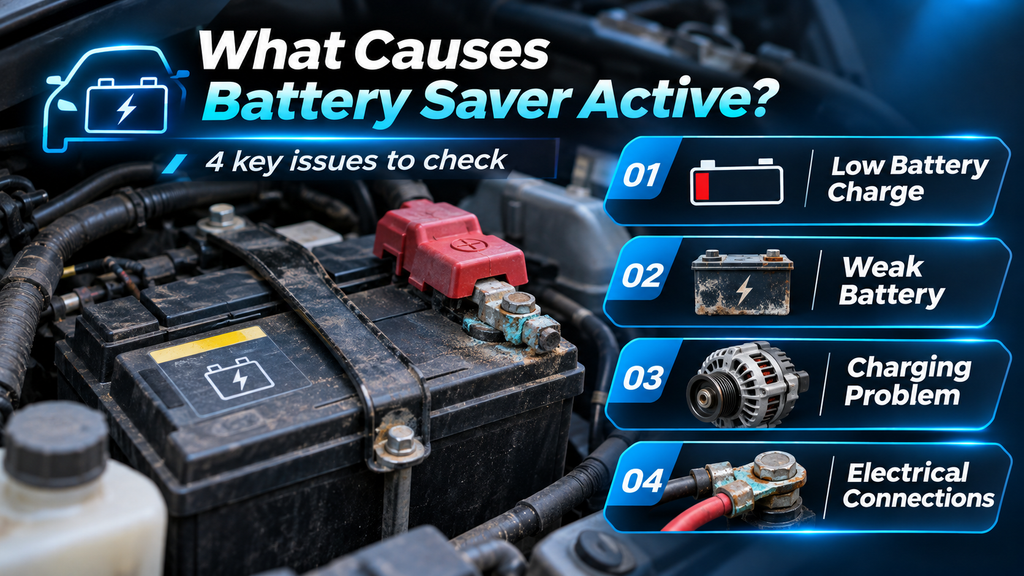
What Causes Battery Saver Active?
Several electrical problems can trigger the message. These are the most important possibilities to check.
01
Low Battery Charge
Short trips, extended parking, or accessory use can leave the battery undercharged.
02
Weak Battery
An aging battery may struggle to store enough energy, especially in extreme temperatures.
03
Charging Problem
A faulty alternator or related charging component may fail to replenish the battery.
04
Electrical Connections
Corroded terminals, damaged cables, or loose connections can affect power delivery.
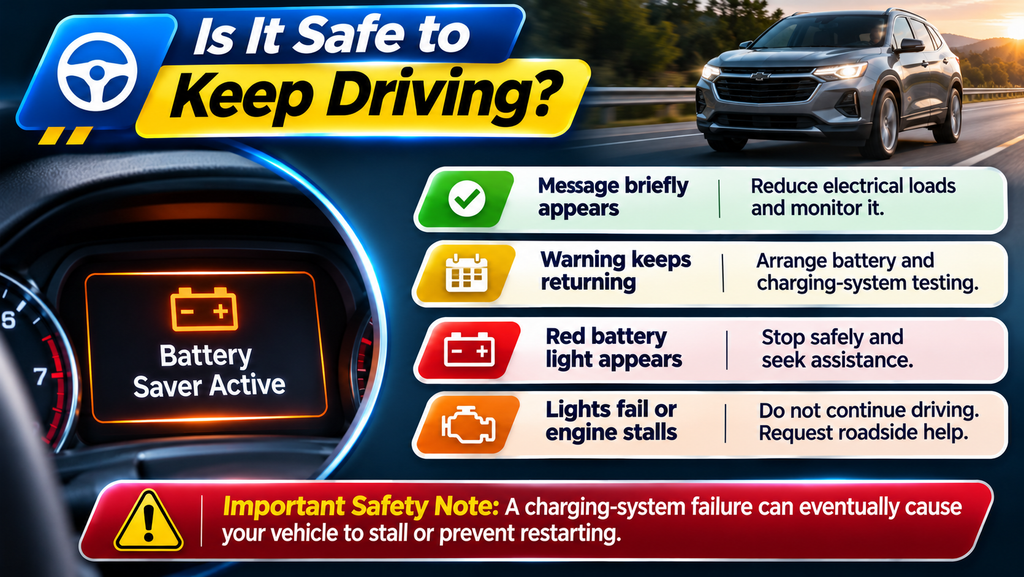
Is It Safe to Keep Driving?
A brief message without other symptoms may not indicate an immediate breakdown. However, a warning that stays on or repeatedly returns needs attention.
| Situation | What to Do |
|---|---|
| Message briefly appears | Reduce unnecessary electrical loads and monitor it. |
| Warning keeps returning | Arrange battery and charging-system testing. |
| Red battery light appears | Stop safely and seek assistance. |
| Lights fail or engine stalls | Do not continue driving. Request roadside help. |
Important Safety Note
A charging-system failure can eventually cause a vehicle to stall or prevent restarting. Never assume that battery saver mode guarantees continued operation.
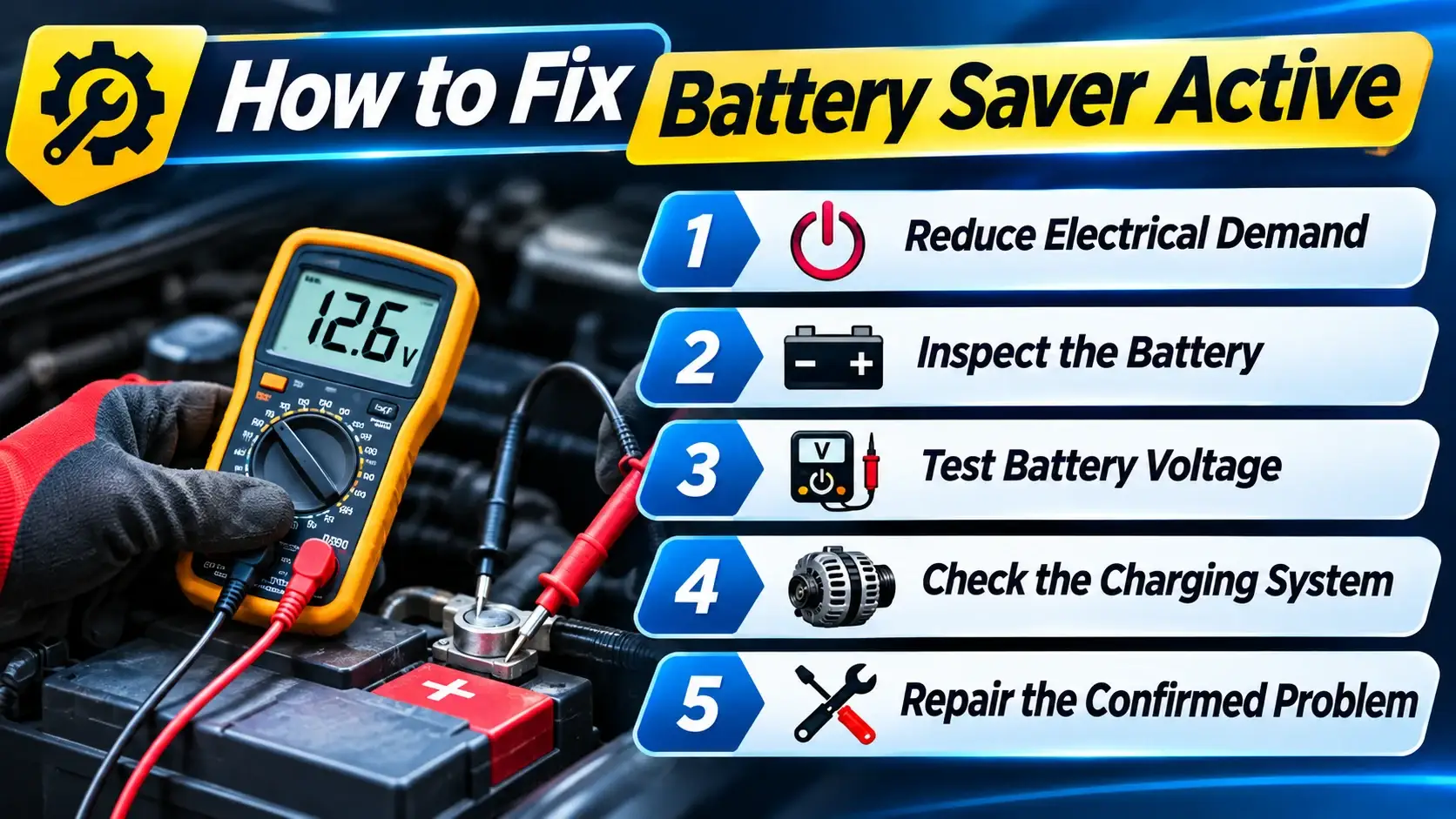
How to Fix Battery Saver Active
Follow this simple troubleshooting sequence before replacing expensive components.
Reduce Electrical Demand
Switch off nonessential accessories such as heated seats or extra audio equipment. Keep safety-related lights and defogging equipment in use.
Inspect the Battery
With the engine off, check for visible corrosion, loose connections, or battery damage. Do not handle a leaking or damaged battery.
Test Battery Voltage
A rested, fully charged conventional 12V lead-acid battery commonly measures around 12.6V. Low voltage indicates further charging and testing are needed.
Check the Charging System
Have the alternator and charging system tested if the battery continues losing charge or the warning appears while driving.
Repair the Confirmed Problem
Recharge or replace the battery only when testing supports it. Repair faulty cables, charging components, or electrical drains as necessary.
Battery Voltage: Quick Reference
| Resting Voltage | General Condition |
|---|---|
| 12.6–12.8V | Usually near fully charged |
| About 12.4V | Partially discharged |
| About 12.2V | Significantly discharged |
| 12.0V or lower | Deeply discharged |
These are approximate readings for a rested conventional lead-acid battery. AGM batteries, temperature, and measurement conditions can change the interpretation. Voltage alone cannot determine battery health.
What If the Warning Keeps Coming Back?
A recurring message may indicate that the battery is not holding charge, the alternator is not charging correctly, or an electrical component is draining power while the vehicle is parked.
If the warning remains after charging or replacing the battery, a technician should inspect the charging circuit, battery monitoring system, and possible electrical drains. Avoid clearing the warning without identifying its cause.
Frequently Asked Questions
Does Battery Saver Active mean my battery is bad?
Not necessarily. The battery could be discharged, or the charging system may have a problem. A battery health test can help identify the cause.
Can a bad alternator cause this warning?
Yes. Insufficient charging can lower battery voltage and trigger the electrical power management system.
Can I drive with Battery Saver Active on?
It depends on the symptoms. A persistent warning should be checked promptly. If a charging-system warning appears or electrical functions deteriorate, stop safely.
Will replacing the battery fix Battery Saver Active?
Only if the battery is responsible. A new battery will not fix a defective alternator, excessive electrical drain, or damaged wiring.
How do I reset Battery Saver Active?
There is no universal reset procedure. The message may clear when normal electrical conditions return. Follow your vehicle-specific owner’s manual.
Why does my Chevy show Battery Saver Active?
On supported Chevrolet models, the electrical management system may reduce accessory loads when battery voltage is below expected levels. Battery and charging-system testing helps determine why.
Final Verdict
Battery Saver Active is a warning to check your vehicle’s electrical health—not an automatic instruction to replace the battery. Start with basic inspections, confirm battery condition, and test the charging system if the message persists. Address serious electrical symptoms immediately.