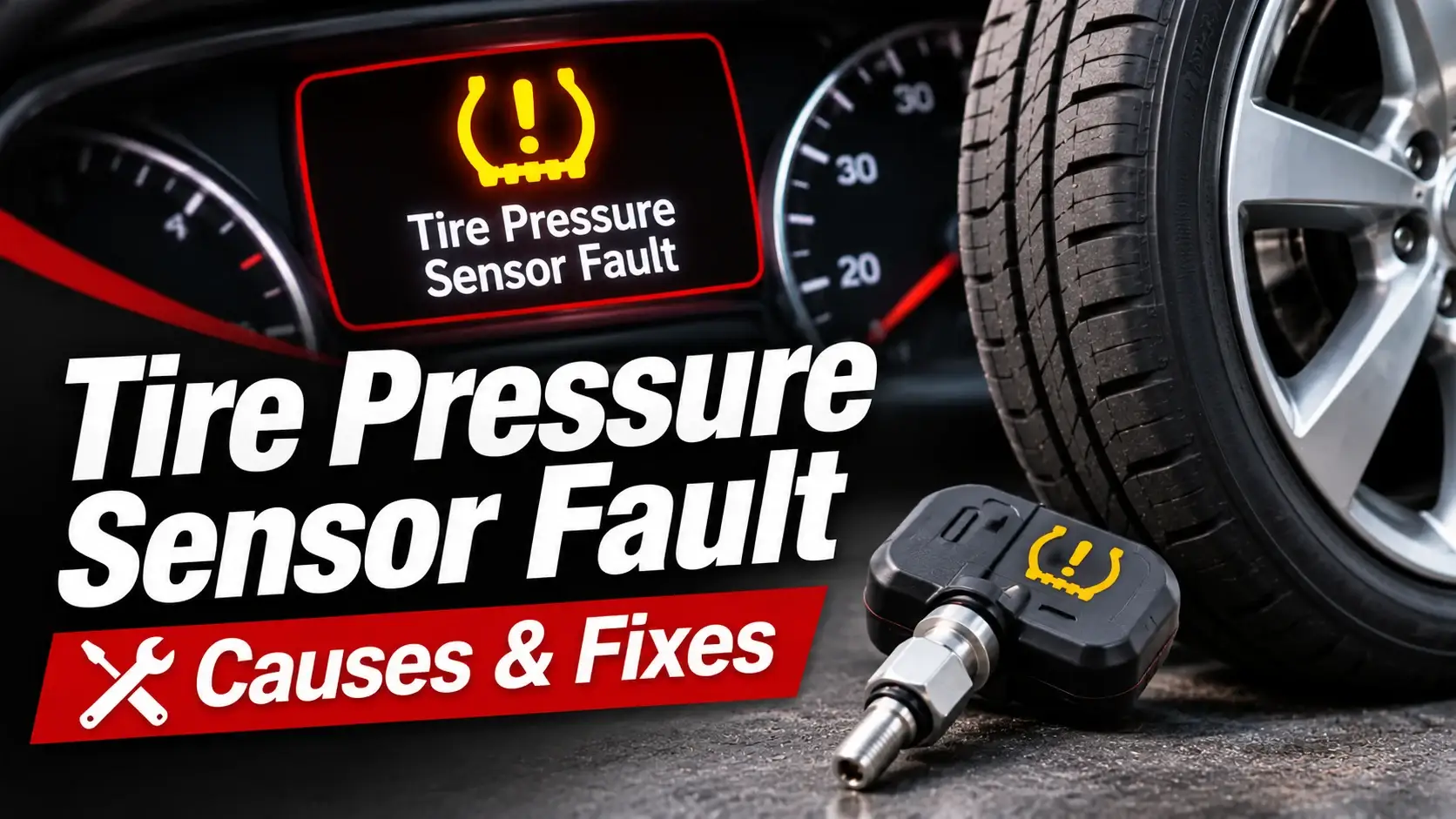
Automotive Troubleshooting Guide
Vehicle Warning Lights, Suspension Faults, Hybrid Problems & Practical Repair Solutions
A warning light suddenly appears on your dashboard. Your suspension starts sagging overnight. Your BMW loses power during acceleration, or your Volkswagen key fob stops unlocking the doors. What should you check first?
Modern vehicles rely on advanced electronics, sensors, and computerized control systems. While these technologies improve safety and driving comfort, they can make diagnosing problems more challenging.
This guide explores common vehicle-specific problems and fixes for Mercedes-Benz, BMW, Lexus, Chevrolet, and Volkswagen vehicles. You’ll discover possible causes, warning signs, diagnostic steps, and when it’s safer to visit a qualified mechanic.
Quick Takeaway
Diagnose the problem before replacing parts.
A drivetrain warning doesn’t automatically mean a transmission has failed. A sagging Mercedes suspension doesn’t necessarily need calibration. And a Lexus airbag warning should never be ignored. Understanding the affected system helps you make safer, more informed repair decisions.
Which Vehicle Problem Are You Experiencing?
Start with the symptom that best matches your vehicle.
Mercedes W221 AIRMATIC
Uneven ride height, sinking suspension, or suspension warnings.
Mercedes Hybrid
Hybrid-system warnings, charging problems, or reduced performance.
BMW Drivetrain
Drivetrain malfunction, hesitation, or reduced engine power.
Lexus LX Airbag
SRS warning lights or suspension problems described as airbag faults.
2013 Chevrolet
Engine, electrical, starting, or transmission-related concerns.
VW Key Fob
Weak remote range, unresponsive buttons, or battery warnings.
Safety Before Troubleshooting
If your vehicle overheats, loses substantial power, develops serious braking problems, or displays an instruction to stop driving, pull over safely and follow the manufacturer’s directions. Airbag circuits, high-voltage hybrid systems, and unsupported air suspensions should never be handled without proper training and equipment.
Problem 01 | Mercedes-Benz S-Class
Mercedes W221 AIRMATIC Calibration: Why Your Suspension Sags
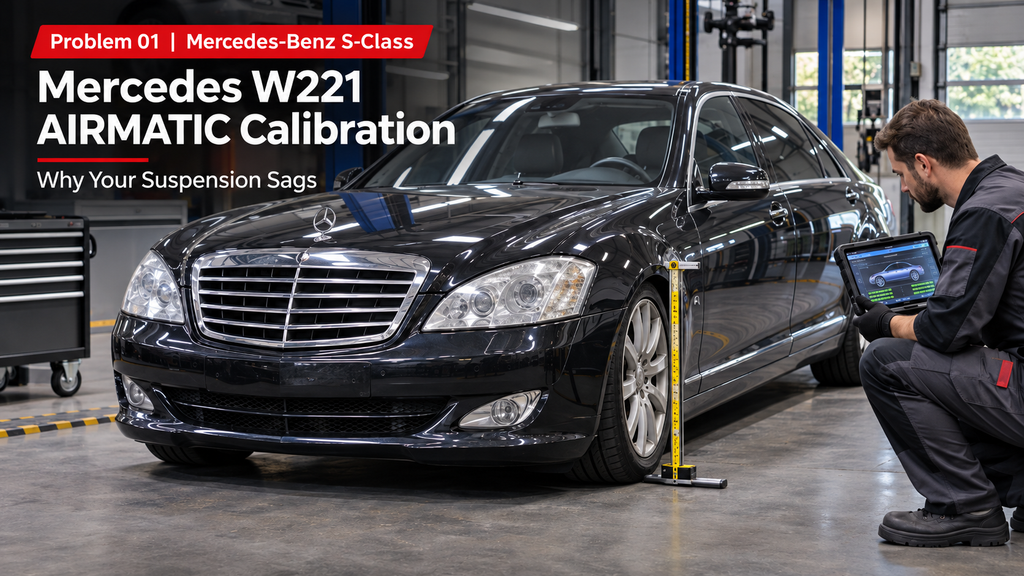
The Mercedes-Benz W221 S-Class offers electronically controlled AIRMATIC suspension on equipped models. It uses air springs, sensors, a compressor, and electronic controls to manage ride height and driving comfort.
When something goes wrong, the vehicle may lean to one side, settle while parked, or display a suspension warning. However, not every AIRMATIC problem is caused by incorrect calibration.
Symptoms You Shouldn’t Ignore
- One corner of the vehicle sits lower than the others.
- The suspension sinks after several hours of parking.
- The dashboard displays a suspension-related warning.
- The compressor runs unusually frequently.
- The vehicle no longer raises or lowers normally.
- Ride quality becomes noticeably harsh or uneven.
Possible Causes and What to Check
| Possible Cause | Typical Clue | Next Step |
|---|---|---|
| Leaking air spring | Vehicle sinks while parked | Professional leak inspection |
| Faulty height sensor | Incorrect height readings | Check sensor data and linkage |
| Compressor problem | Slow or failed height adjustment | Test compressor and system pressure |
| Calibration issue | Incorrect measured ride height | Verify and calibrate per factory procedure |
How W221 AIRMATIC Calibration Is Performed
- Inspect the suspension: Check for leaks, damaged components, and sensor problems before calibration.
- Retrieve fault codes: A technician uses Mercedes XENTRY or suitable professional diagnostic equipment.
- Prepare the vehicle: Follow manufacturer instructions regarding surface, loading, and operating conditions.
- Measure ride height: Use the specified reference points and equipment.
- Perform guided calibration: Enter and validate measurements using the approved procedure.
- Confirm results: Verify suspension height and correct operation.
Mechanic’s Diagnostic Tip: If the vehicle sinks while parked, check for air loss before assuming recalibration is the answer. Calibration cannot seal a leaking air spring or repair a defective compressor.
Repair difficulty: Professional diagnosis recommended. Never work beneath an air-suspended vehicle that is not mechanically supported.
Problem 02 | Electrified Mercedes
Mercedes Hybrid Problems: What the Warning Signs Mean
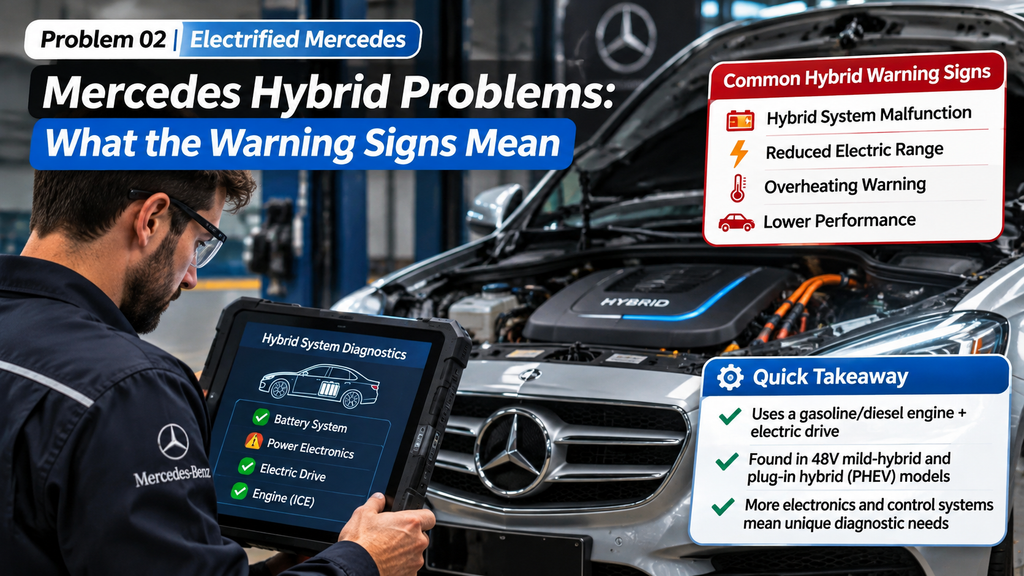
A Mercedes hybrid combines a gasoline or diesel engine with electric-drive technology. The exact arrangement depends on the vehicle: some use 48-volt mild-hybrid systems, while others have higher-voltage plug-in hybrid components.
These vehicles have additional electronics, energy storage, and control systems that can create unique diagnostic challenges.
Common Warning Signs
- Hybrid-system warning messages.
- Reduced acceleration or propulsion performance.
- Start-stop features becoming unavailable.
- Charging difficulty on plug-in hybrid vehicles.
- Battery-related warnings.
- Unexpected changes in fuel consumption.
What Could Be Causing the Problem?
Battery & Power Supply
Low-voltage power problems or faults in hybrid battery management.
Cooling System
Cooling-related faults affecting power electronics or battery operation.
Electronic Controls
Control-module communication, power electronics, or software faults.
Safe Troubleshooting Steps
- Record the exact dashboard warning.
- Identify the model, year, and hybrid system.
- Follow the warning instructions in the owner’s manual.
- For plug-in models, visually check external charging equipment for obvious damage without touching electrical contacts.
- Arrange a hybrid-capable diagnostic scan.
- Repair confirmed faults using qualified personnel.
High-Voltage Warning
Never open a hybrid battery enclosure, probe high-voltage components, or disconnect orange high-voltage cables without the required training and safety equipment. High-voltage electrical faults can cause serious injury or death.
Important: A hybrid malfunction does not automatically mean that the main battery needs replacing. A qualified diagnosis may reveal a different electrical, cooling, or control-system fault.
Problem 03 | BMW Powertrain
BMW Drivetrain Malfunction: Causes, Symptoms, and Solutions
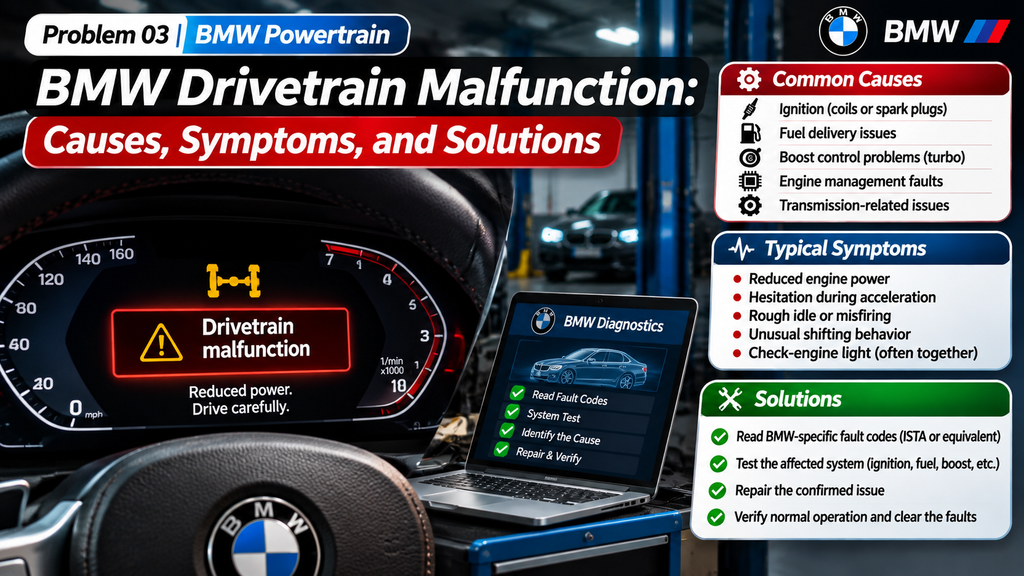
The BMW drivetrain malfunction message indicates that the vehicle has detected a problem affecting powertrain operation. Depending on the underlying fault, the engine may reduce power, respond poorly to acceleration, or run roughly.
Although the warning can seem serious, it does not by itself prove that the transmission or engine needs replacement.
Signs of a Drivetrain Problem
- Reduced engine power or acceleration.
- Hesitation when pressing the accelerator.
- Rough idle, vibration, or engine misfires.
- Unusual shifting or drivability.
- Check-engine light accompanying the warning.
- Warning messages that appear intermittently.
Possible Faults and Diagnostic Clues
| Possible Cause | Potential Symptoms | What to Inspect |
|---|---|---|
| Ignition coils or spark plugs | Rough idle, misfire | Ignition faults and components |
| Fuel delivery | Hesitation, power loss | Fuel-pressure data and codes |
| Boost control | Reduced acceleration | Boost data and charge-air system |
| Engine management | Intermittent reduced power | DME fault records |
| Transmission-related fault | Unusual shifting | Transmission module diagnosis |
What to Do Immediately
- Assess severity: Look for overheating, significant power loss, shaking, or additional warnings.
- Pull over safely: If the car is running badly or issues a stop-driving instruction, stop driving and arrange assistance.
- Document symptoms: Record the warning and the conditions when it appeared.
- Read BMW-specific codes: Use appropriate diagnostic equipment such as ISTA or a suitable professional scanner.
- Confirm the fault: Test the relevant system before replacing components.
- Verify the repair: Check that normal operation returns and the fault is resolved.
Important Diagnostic Insight: Restarting a BMW may temporarily make the drivetrain warning disappear, but that does not establish that the cause has been corrected. Stored fault data can help identify intermittent problems.
Can You Keep Driving?
It depends on the exact warning and how the vehicle behaves. Severe shaking, overheating, significant power loss, or critical warnings require stopping when safe and seeking professional assistance. Follow the instructions for your specific BMW rather than assuming every drivetrain warning permits continued driving.
Problem 04 | Lexus LX Safety Systems
Lexus LX Airbag Problem: What Owners Should Know
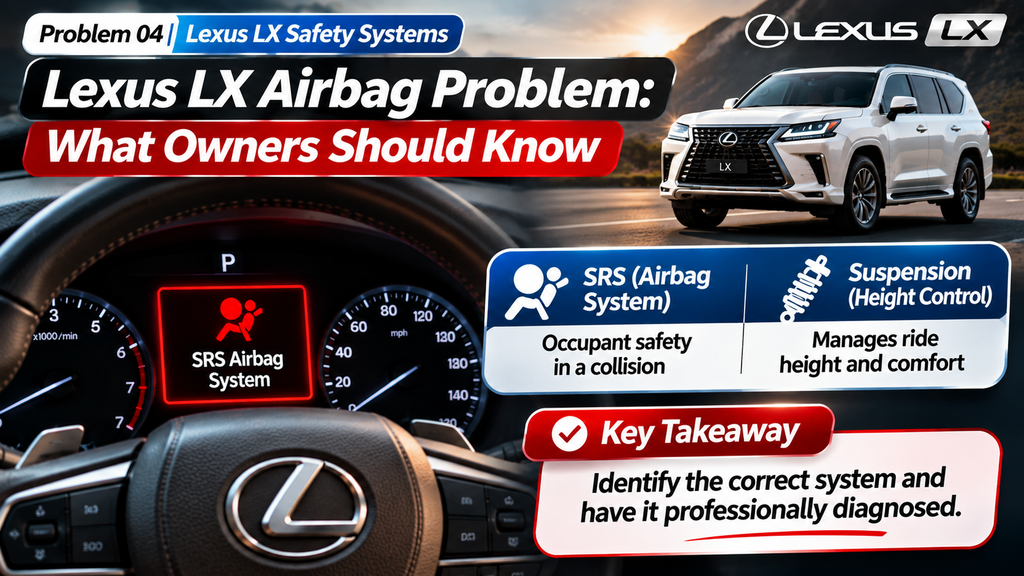
A Lexus LX airbag problem can refer to either the supplemental restraint system (SRS) or a suspension component that an owner describes as an airbag. These are very different concerns.
The SRS includes safety equipment intended to protect occupants during a collision. Suspension height-control systems manage vehicle ride height and comfort. Accurate system identification is the first step.
Possible Causes of an SRS Warning
- Airbag-related electrical circuit faults.
- Seat belt pretensioner problems.
- Occupant classification faults on applicable models.
- Steering-wheel clock spring defects.
- Damaged connectors or wiring.
- Problems resulting from previous collision repairs.
What Should You Do?
- Check the Lexus owner’s manual for the expected warning-light operation.
- Record the exact model year and warning behavior.
- Check outstanding recalls using the vehicle VIN.
- Have the SRS module checked by a qualified technician.
- Repair the confirmed fault according to manufacturer procedures.
- Verify correct system operation.
Never Bypass an Airbag Warning
Do not install resistors to hide SRS faults, probe airbag circuits, disconnect restraint components, or suppress warning lights. An incorrectly repaired restraint system may not protect occupants in a crash.
What if the Lexus LX Is Sagging?
If the vehicle sits too low, rides unevenly, or displays a suspension warning, inspect the actual height-control system fitted to that model. Some Lexus LX generations use hydraulic height-control suspension rather than conventional air springs.
Height sensors, hydraulic components, or related controls may need diagnosis. Avoid ordering an air spring unless your exact vehicle configuration uses one.
Problem 05 | Chevrolet Model Year 2013
2013 Chevy Problems: Model-Specific Troubleshooting
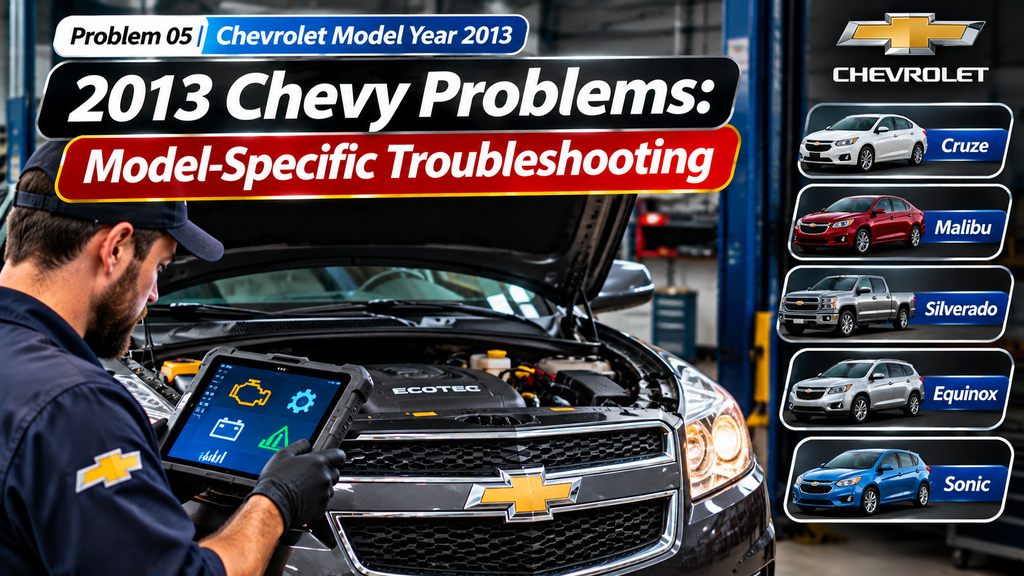
Chevrolet produced several distinct vehicles during the 2013 model year, including the Cruze, Malibu, Silverado, Equinox, and Sonic. These models have different engines, transmissions, and electrical systems.
As a result, searching for 2013 Chevy problems is not enough to identify the correct repair. You need to know which model and engine you own.
Where to Start by Chevrolet Model
| 2013 Model | Useful Diagnostic Checks |
|---|---|
| Cruze | Cooling symptoms, leaks, engine codes, maintenance history |
| Malibu | Battery, starting system, electrical complaints, powertrain codes |
| Silverado 1500 | Engine operation, oil condition, transmission behavior |
| Equinox | Oil level, consumption history, engine noises, warning codes |
| Sonic | Cooling condition, engine performance, electrical faults |
These checks are diagnostic starting points, not confirmed failures shared by every vehicle.
Buying a Used 2013 Chevrolet?
Review the service records, inspect the vehicle for fluid leaks, evaluate engine and transmission operation, and have the car independently inspected. A used vehicle’s maintenance history and current condition matter more than assumptions based solely on its model year.
Problem 06 | Volkswagen Remote Key
VW Fob Battery Replacement: A Simple DIY Guide
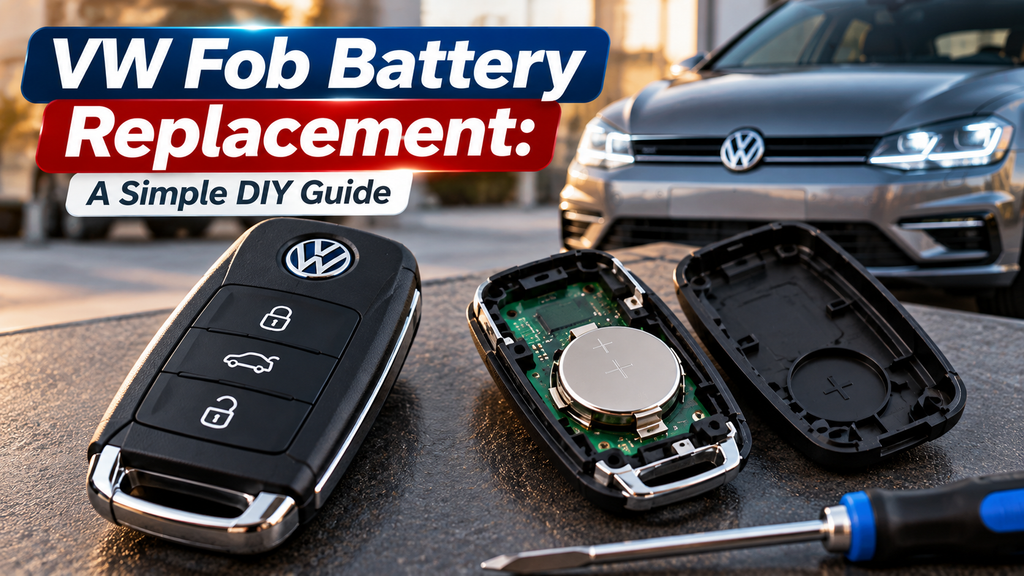
If your Volkswagen remote is becoming unreliable, the key fob battery may be running low. Fortunately, this is one of the simpler maintenance issues discussed in this guide.
A typical VW fob battery replacement can be completed with the correct coin-cell battery and the instructions for your exact remote design.
Signs Your Battery May Need Replacing
- The remote works only near the vehicle.
- Lock and unlock buttons respond inconsistently.
- A key battery warning appears on equipped models.
- Keyless entry becomes unreliable.
- The remote indicator does not behave normally.
Which Battery Should You Buy?
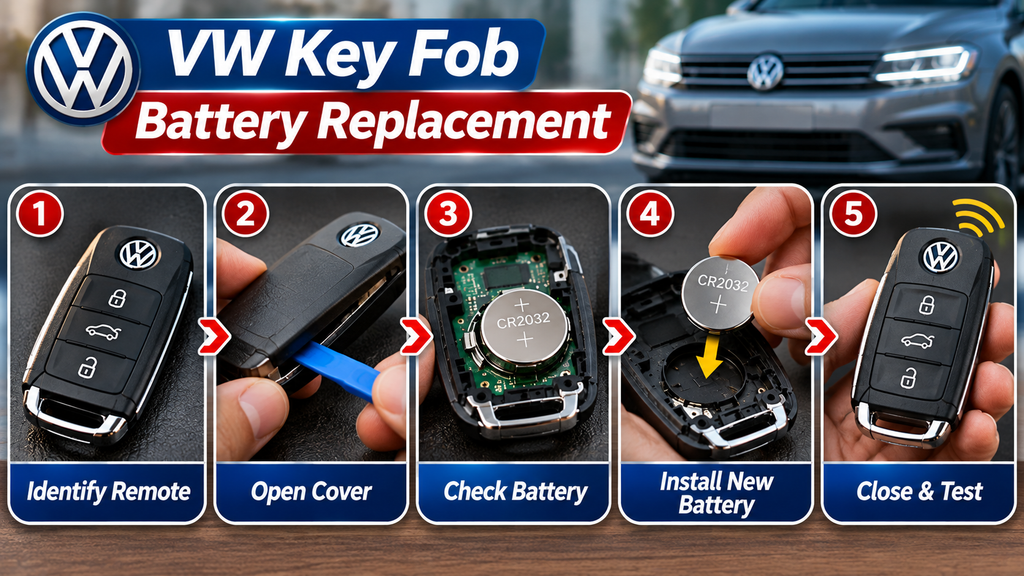
Many Volkswagen remotes use a 3-volt coin-cell battery. Depending on the design, the required battery may be a CR2032, CR2025, or another specified type. Check the old battery and your owner’s manual before purchasing a replacement.
How to Change the Battery
1. Identify the remote type
Determine whether it has a folding mechanical key or proximity-key housing.
2. Open the battery cover
Follow the manufacturer instructions. Avoid damaging the housing or contacts.
3. Check the old battery
Confirm its model number and the positive and negative orientation.
4. Install the replacement
Use the correct coin-cell battery and insert it in the proper orientation.
5. Close and test the fob
Reassemble the remote and check its supported functions.
What if the Key Still Doesn’t Work?
Check whether the replacement battery is correct, charged, and properly installed. If the remote remains unresponsive, the problem may involve battery contacts, remote electronics, synchronization, or the vehicle’s receiver.
Coin Battery Safety: Keep new and used coin-cell batteries away from children and pets. Swallowing a coin battery is a medical emergency.
DIY Repair or Professional Mechanic?
The right repair approach depends on the system involved, the required diagnostic tools, and your experience.
| Repair Task | Difficulty | Recommendation |
|---|---|---|
| VW key fob battery | Easy | Usually suitable for DIY |
| Basic code reading | Beginner to intermediate | Useful preliminary check |
| BMW drivetrain diagnosis | Intermediate to advanced | Professional help often beneficial |
| W221 AIRMATIC calibration | Advanced | Professional recommended |
| Mercedes high-voltage repair | Specialist | Qualified high-voltage technician only |
| Lexus SRS airbag repair | Safety-critical | Qualified professional only |
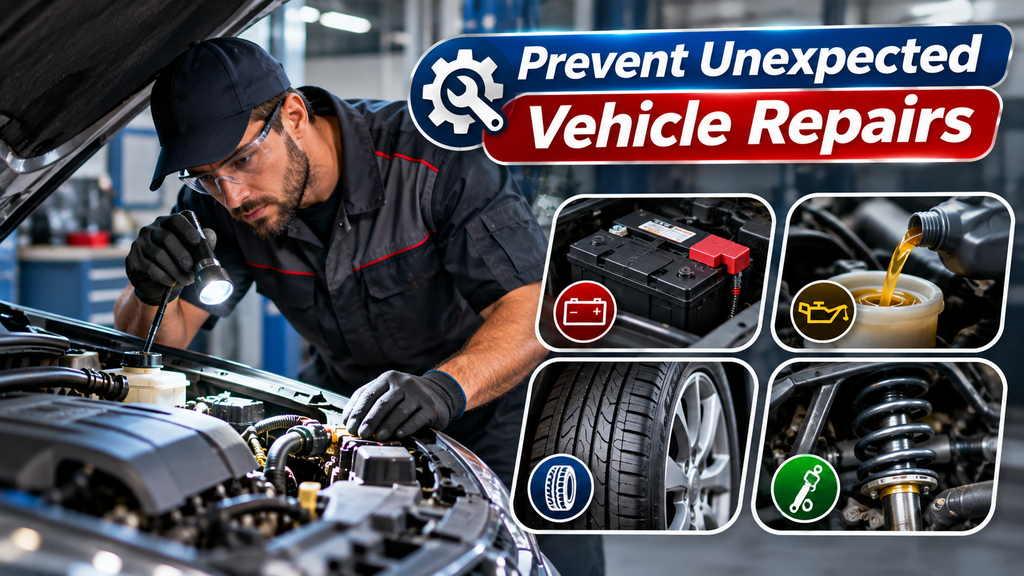
How to Prevent Unexpected Vehicle Repairs
Not every mechanical failure is preventable, but proper maintenance and early diagnosis can reduce avoidable repair expenses and help maintain vehicle reliability.
Follow Service Intervals
Use the maintenance schedule for your exact vehicle and engine.
Investigate Warning Lights
Diagnose recurring warnings rather than simply clearing codes.
Maintain Electrical Health
Check battery condition and charging-system performance.
Keep Repair Records
Document maintenance, previous faults, and completed repairs.
Frequently Asked Questions
Does Mercedes W221 AIRMATIC need calibration after every repair?
No. The requirement depends on the repair performed and the manufacturer’s procedures. A height sensor or related control-system repair may require calibration, while other repairs may not.
Are Mercedes hybrid repairs always expensive?
No. Repair complexity varies considerably. Some faults concern low-voltage power supplies or controls, while others involve more specialized electrified components. A proper diagnosis is needed before estimating repair costs.
Does BMW drivetrain malfunction mean the transmission is failing?
Not necessarily. The warning may be related to engine ignition, fuel delivery, boost control, electronic management, or transmission operation. Fault-code diagnosis is necessary to identify the actual issue.
Can I drive my Lexus LX with an airbag warning?
An active SRS warning may indicate compromised occupant protection. Follow your owner’s manual and arrange prompt professional inspection rather than assuming the airbags will function correctly.
What should I check before buying a 2013 Chevy?
Check the exact model, engine, maintenance history, warning lights, visible leaks, transmission behavior, and outstanding recalls. An independent pre-purchase inspection is recommended.
Can I replace a Volkswagen key fob battery myself?
Yes. Most VW key fob batteries are designed for straightforward replacement. Use the exact battery specified for your remote and follow the correct opening procedure.
What battery does a VW remote use?
The battery type depends on the key design. Common examples include CR2032 and CR2025 coin cells. Always check your existing battery and owner’s manual.
Can an OBD-II scanner identify every vehicle problem?
No. Basic scanners can retrieve certain powertrain codes, but advanced suspension, airbag, hybrid, and manufacturer-specific modules may require specialized diagnostic equipment. A fault code is also not always proof that a particular component needs replacement.
Final Thoughts: Fix the Cause, Not Just the Symptom
Vehicle-specific troubleshooting starts with accurate information. A Mercedes W221 suspension issue, Mercedes hybrid warning, BMW drivetrain malfunction, Lexus LX airbag concern, Chevrolet problem, and Volkswagen remote failure all require different diagnostic approaches.
Identify the exact model and symptoms, follow manufacturer service information, and confirm the fault before paying for replacement components.
A reliable repair is supported by proper diagnosis, safe procedures, and verification that the original problem has been resolved.