QUICK ANSWER
What does ECO mean in a car?
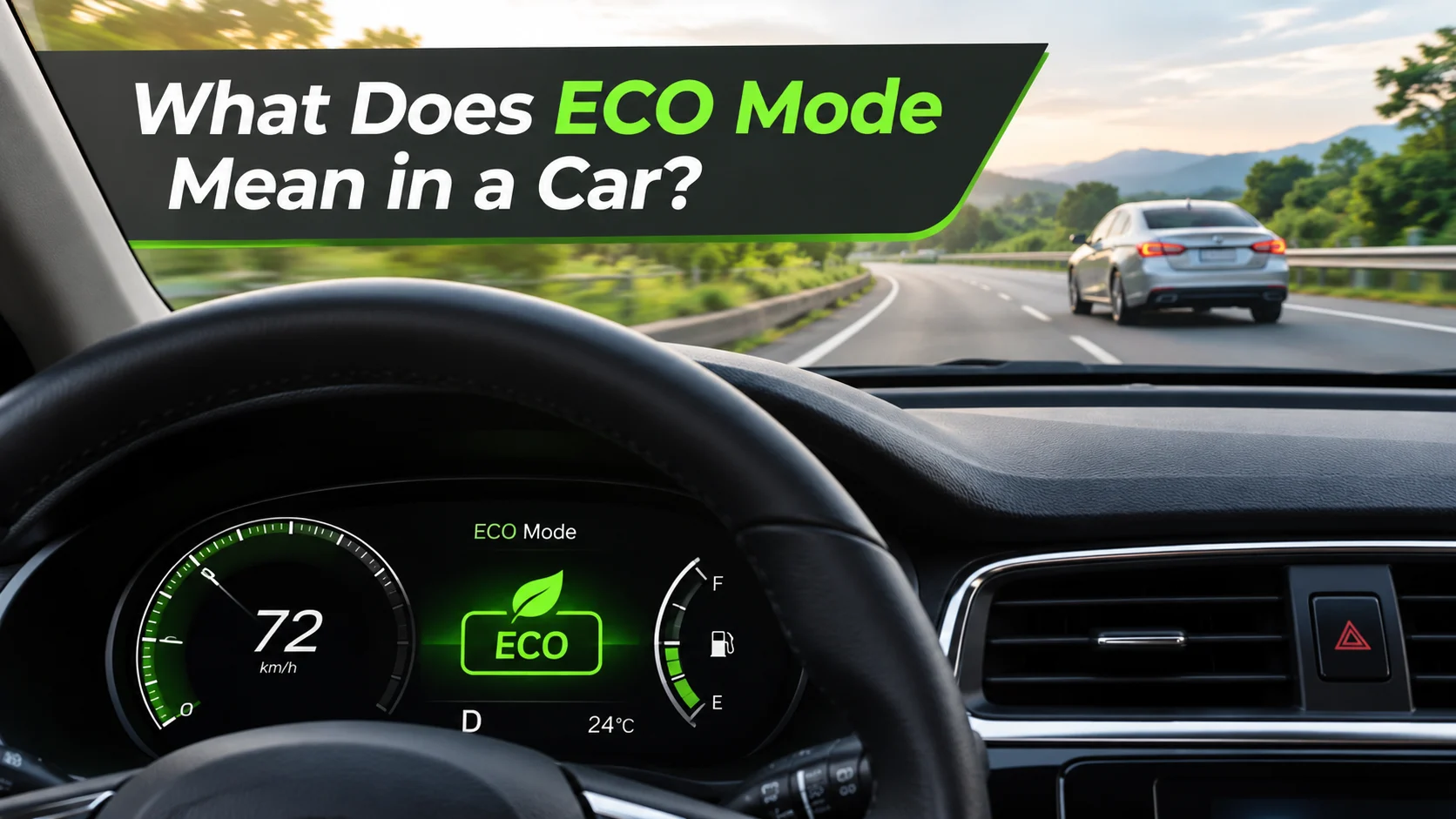
ECO refers to economy or efficiency. In many vehicles, ECO mode adjusts accelerator response, transmission behavior, or climate control to encourage lower fuel or energy consumption. An ECO dashboard light can also indicate efficient driving rather than a selected driving mode. Check your owner’s manual to tell which one your car has.
Noticed an ECO symbol on your dashboard or pressed an ECO button by accident? You may be wondering if the light signals a problem, whether it saves gas, or whether you should turn it off. The good news: ECO is usually an informational efficiency feature, not a mechanical fault warning on its own.
Here is what ECO mode actually does, when it helps, and how to use it safely.
What Does ECO Mean in a Car?
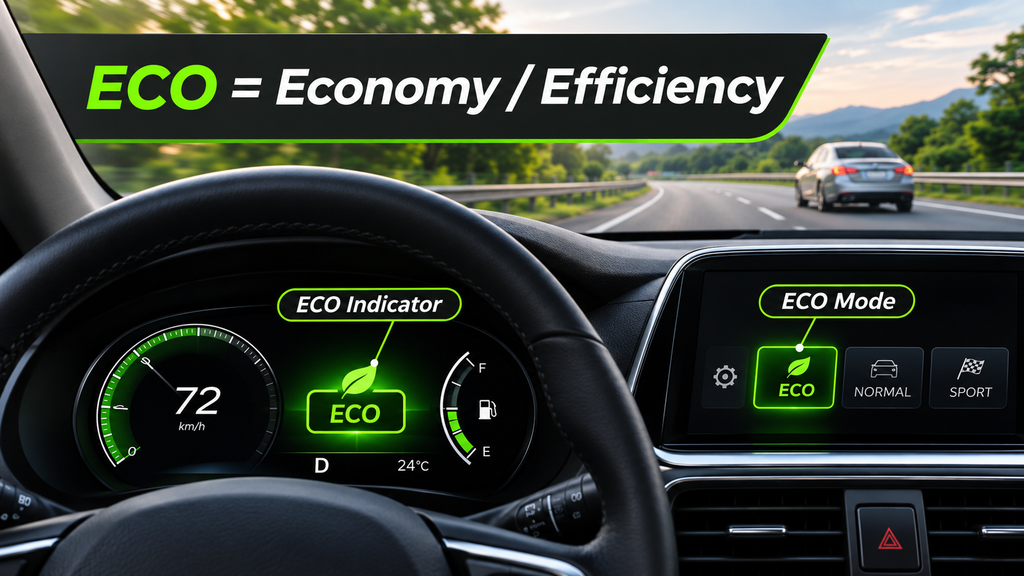
In automotive terms, ECO generally means economy or efficiency. Depending on the car, it can describe two different features:
ECO driving mode
A selectable setting that modifies vehicle responses to prioritize efficient driving. It may be activated by a button or drive-mode menu.
ECO driving indicator
A light or display that may illuminate when the vehicle detects economical driving. It does not necessarily mean that a drive mode is selected.
This distinction matters. For example, some Toyota vehicles offer an Eco Driving Indicator as well as a separate selectable Eco drive mode. The meaning of the symbol depends on the make, model, and year.
What Is ECO Mode in a Car?
ECO mode is a manufacturer-designed setting intended to make efficient driving easier. It may reduce how quickly the car reacts to small accelerator movements, influence automatic transmission shifts, or reduce energy demand from the cabin climate system. Not every ECO mode makes every one of these changes.
Simple example: When pulling away from a traffic light, an ECO setting may make the car feel less eager to accelerate with the same pedal movement. You can still accelerate as required; the system mainly changes the response or efficiency strategy within its designed operating limits.
How Does ECO Mode Work?
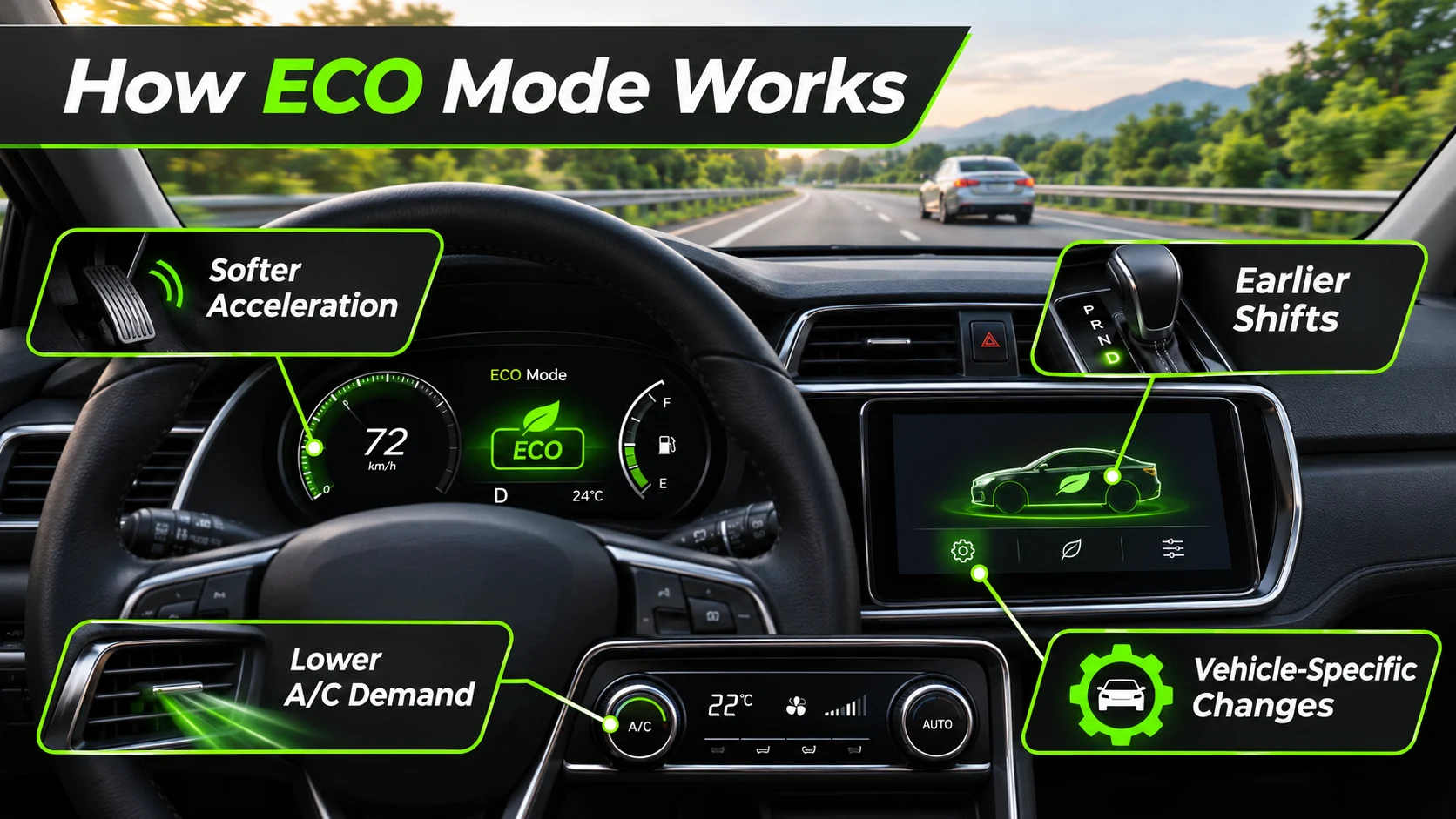
1. Softer accelerator response
Some systems remap the accelerator so a small pedal movement produces gentler acceleration. That may help drivers avoid unnecessary bursts of fuel use.
2. Different transmission behavior
Some automatic vehicles shift earlier or avoid certain downshifts to keep engine speed lower when practical. The exact shift strategy depends on the drivetrain.
3. Reduced climate-control demand
Some manufacturers limit air-conditioning or heating output in efficiency mode. This may save energy but can make cooling or heating feel less strong.
4. Other vehicle-specific changes
Hybrid power delivery, cruise-control response, or electric-vehicle energy management may also change on certain models. Your owner’s manual is the definitive source for your vehicle.
What Does the ECO Light Mean on Your Dashboard?
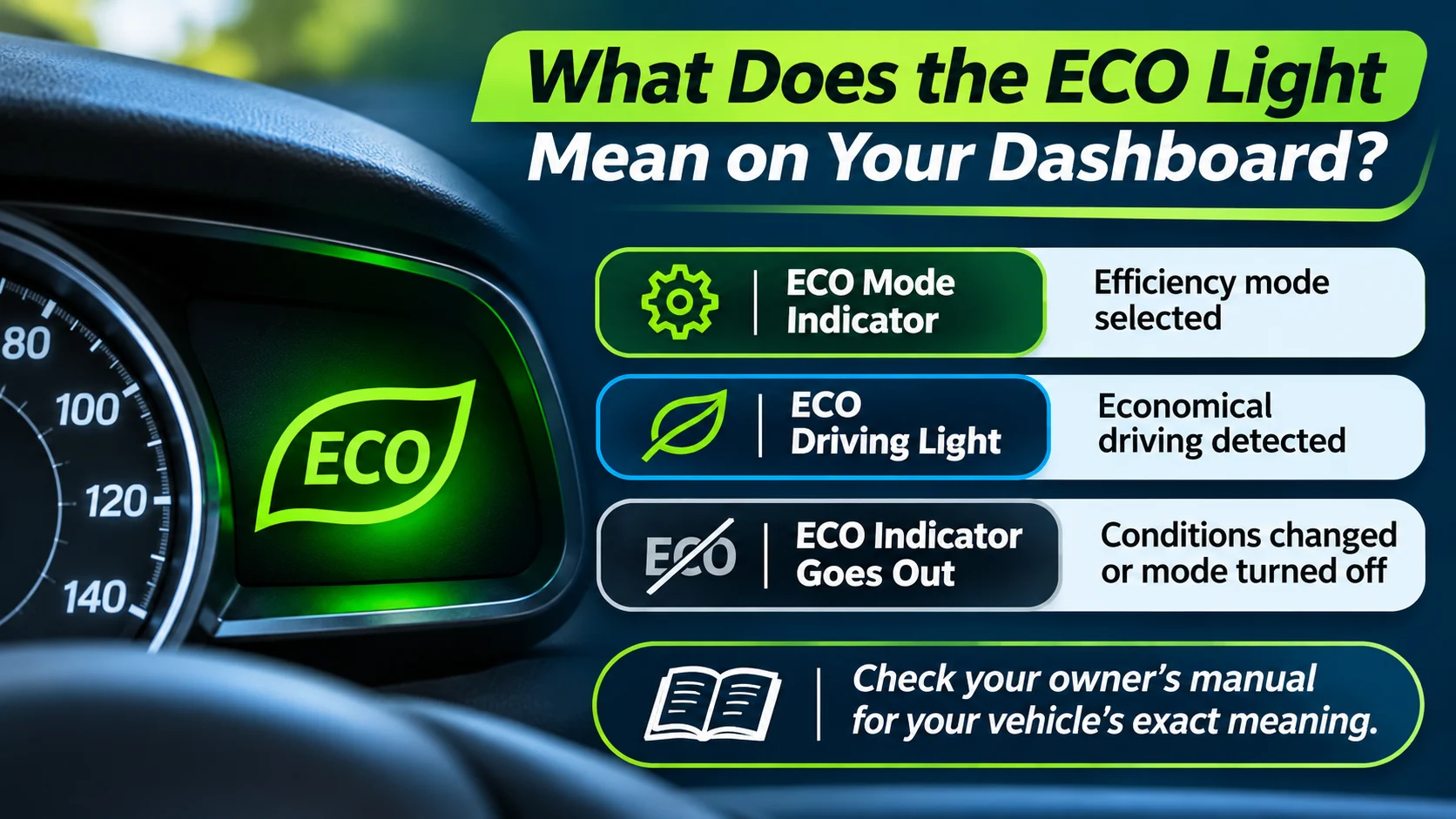
An ECO symbol is usually an informational feature, not an engine-fault warning by itself. Interpret it according to your vehicle’s manual rather than relying on its color or appearance alone.
| Display | Typical meaning | What to do |
|---|---|---|
| ECO mode indicator | Efficiency mode selected | No action needed in normal operation |
| ECO driving light | Economical driving detected | Continue driving safely |
| ECO indicator goes out | Conditions changed or mode turned off | Consult the manual if unexpected |
If a check-engine light, unusual power loss, or another warning accompanies the ECO symbol, investigate that separate warning promptly.
Does ECO Mode Really Save Gas?
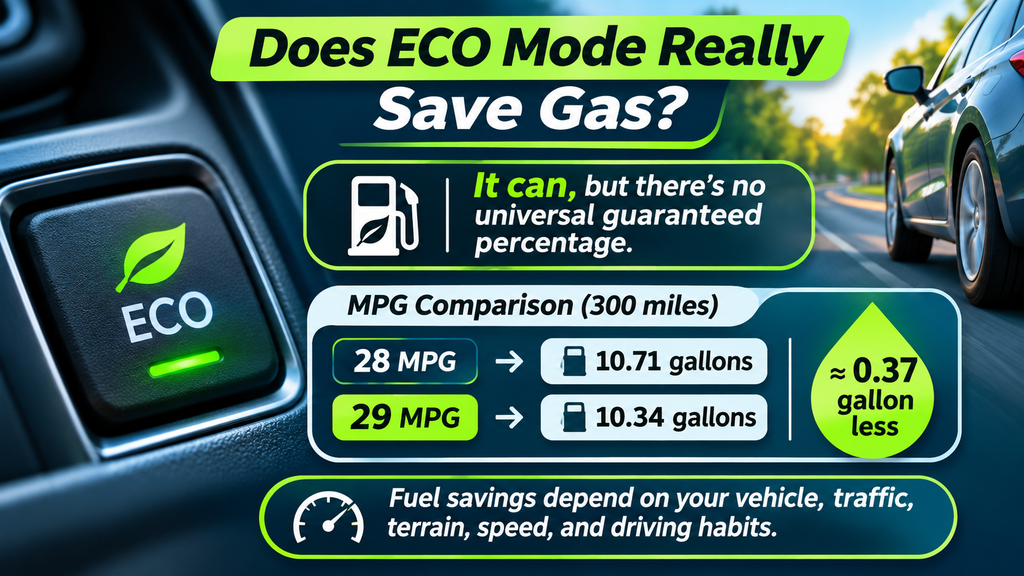
It can, but there is no universal guaranteed percentage. Benefits depend on the vehicle, traffic, hills, speed, climate use, and your existing driving habits. Drivers who often accelerate aggressively may find the gentler response especially helpful; consistently smooth drivers may notice less of a difference.
Fuel economy context: The U.S. Department of Energy reports that aggressive driving can substantially reduce MPG. That finding describes driving behavior, not a measured or guaranteed saving from selecting ECO mode.
Simple MPG comparison
If a car averaged 28 MPG on one 300-mile trip, it would use about 10.71 gallons. If an otherwise comparable trip averaged 29 MPG, it would use about 10.34 gallons—a hypothetical 0.37-gallon difference. This is an arithmetic illustration, not an ECO mode test result.
For a more useful comparison, track several tanks of fuel on similar routes in similar conditions, without making unsafe changes to how you drive.
When Should You Use ECO Mode?
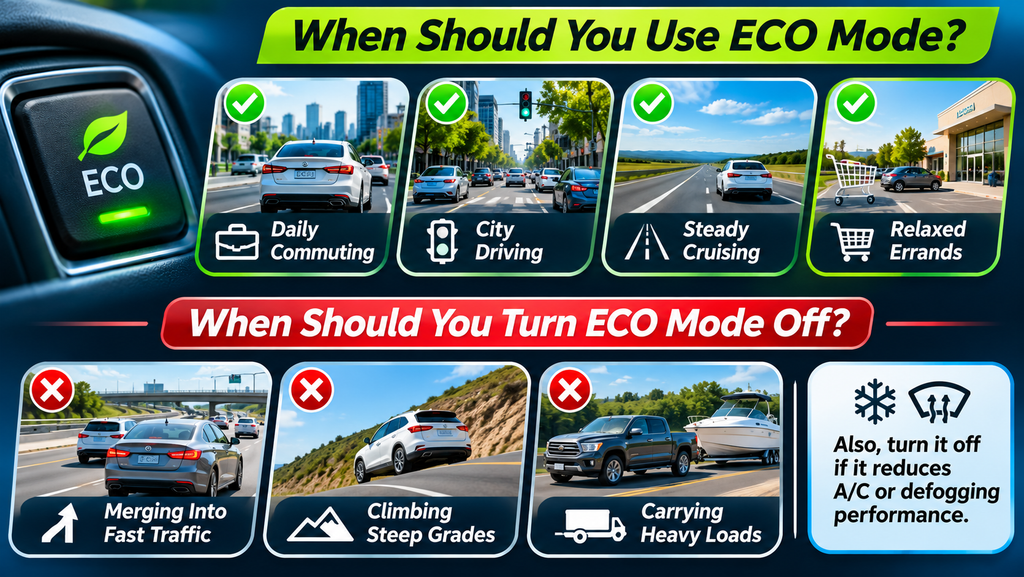
Daily commuting
Useful for routine trips with predictable acceleration.
City driving
May encourage gentler starts between traffic lights.
Steady cruising
Can be comfortable on open roads, though gains may be modest.
Relaxed errands
Suitable when smooth efficiency matters more than quick response.
When Should You Turn ECO Mode Off?
You don’t always need to turn ECO mode off, but Normal mode may feel preferable when joining fast traffic, climbing steep grades, or carrying heavy loads. Use the manufacturer’s Tow/Haul setting where applicable, and always allow enough room to merge safely.
If ECO mode reduces air-conditioning or defogging performance, prioritize visibility and passenger comfort. ECO mode does not replace traction control or a dedicated slippery-road mode.
ECO Mode vs. Normal Mode vs. Sport Mode
| Feature | ECO | Normal | Sport |
|---|---|---|---|
| Main focus | Efficiency | Balance | Response |
| Accelerator | Often gentler | Balanced | Often sharper |
| Transmission | May shift for economy | Default program | May hold gears longer |
| Typical use | Commuting | Everyday driving | Responsive driving |
These are common patterns, not universal specifications. Manufacturers configure their drive modes differently.
Is ECO Mode Bad for Your Engine?
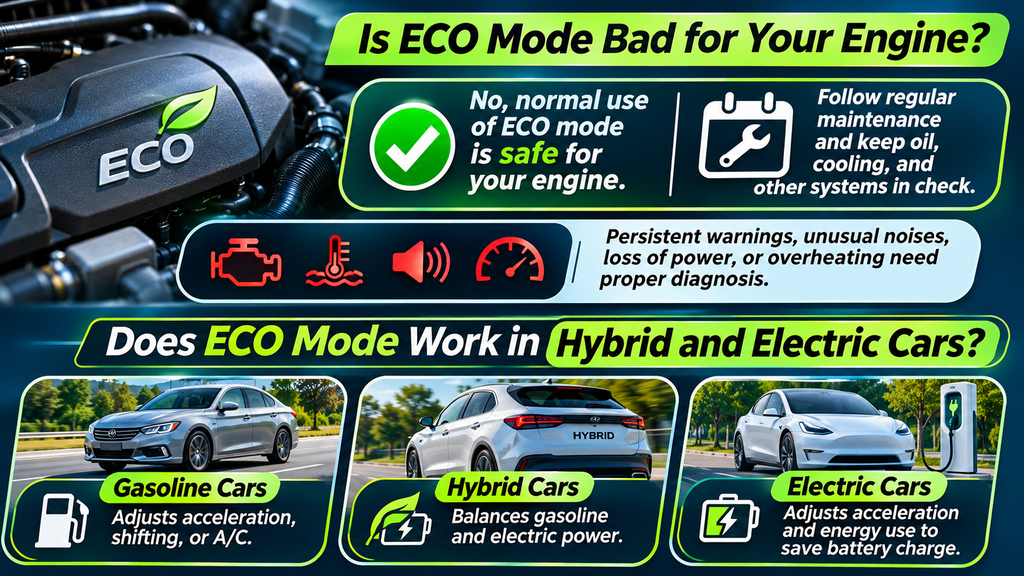
Normal use of the manufacturer-provided ECO mode generally does not harm a healthy engine. It is part of the car’s intended operation. It also cannot prevent damage caused by low oil, overheating, neglect, or an existing mechanical fault.
Persistent warning lights, unusual noises, severe loss of power, or overheating deserve proper diagnosis rather than being blamed on ECO mode.
Does ECO Mode Work in Hybrid and Electric Cars?
In gasoline cars, ECO mode may influence accelerator mapping, shifting, or climate control. Hybrid models may also modify how the gasoline engine and electric motor deliver power. In electric cars, efficiency settings may adjust acceleration response and energy use to help conserve battery charge. The details vary considerably.
Why Is ECO Mode Not Working?
If the button does nothing or the light will not appear, first check whether your vehicle has a selectable ECO mode or only an efficiency indicator. The mode may be unavailable in certain operating conditions, another mode may be active, or an unrelated system warning may be present.
Quick checklist
- Park safely and identify the ECO button or indicator.
- Consult the relevant section in the owner’s manual.
- Check any active dashboard warnings.
- Follow the manufacturer’s mode-selection instructions.
- If a fault or unusual driving problem remains, seek qualified diagnosis.
How to Improve Fuel Economy With or Without ECO Mode
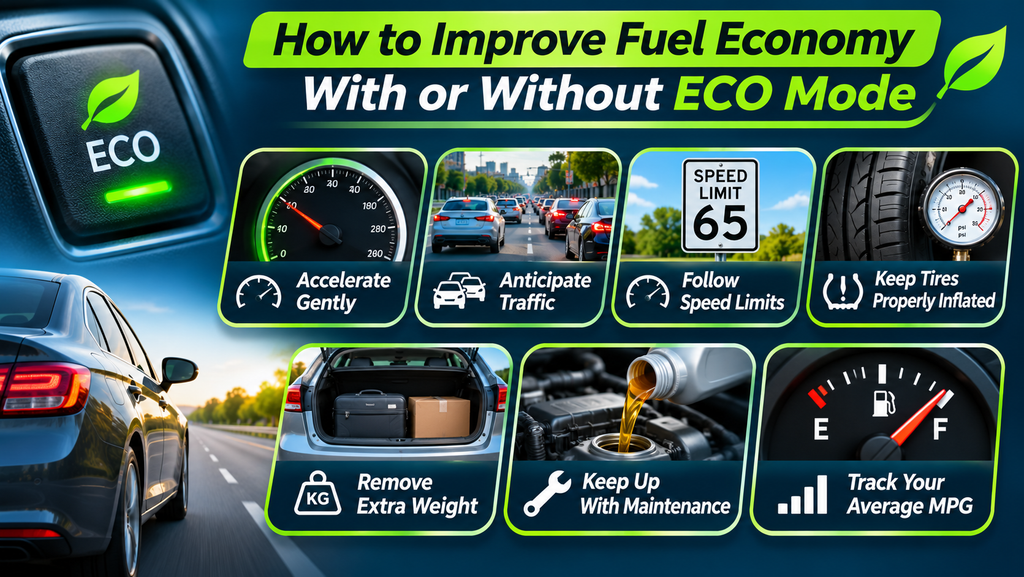
- Accelerate gently when safe and practical.
- Anticipate traffic and avoid unnecessary hard braking.
- Follow posted speed limits and drive at appropriate speeds.
- Keep tires inflated to the vehicle’s recommended cold pressure.
- Remove unnecessary heavy cargo.
- Follow scheduled maintenance and address warning lights.
- Measure average MPG over comparable routes and several fill-ups.
Frequently Asked Questions
What does ECO mean on a car dashboard?
Usually economy or efficiency. It may indicate an activated efficiency mode or economical driving behavior, depending on your car.
Should I leave ECO mode on?
You generally can for routine driving if the manufacturer permits it. Switch modes when another setting better suits the situation.
Does ECO mode make the car slower?
It may make initial acceleration feel softer. It does not necessarily mean maximum available power is permanently reduced.
Can you use ECO mode on the highway?
Many vehicles allow it during highway driving. Any fuel savings depend on the route, speed, and vehicle.
Is ECO mode bad for the engine?
Normal use of a manufacturer-provided ECO mode is not generally harmful to a healthy engine.
Does ECO mode turn off automatically?
Some cars revert to Normal after a restart. Efficiency indicators may also switch off when driving conditions change.
Is ECO mode the same as cruise control?
No. ECO mode changes efficiency-related responses. Cruise control manages vehicle speed or following distance according to its own system.
Final Verdict: Is ECO Mode Worth Using?
ECO mode is worth trying if you want smoother acceleration and a chance to improve fuel efficiency. It is generally a normal efficiency feature, not a warning sign. The most important first step is identifying whether the ECO symbol in your car indicates a selected mode or simply efficient driving.
Use the mode where it suits the driving conditions and follow your owner’s manual. Smart driving habits, regular maintenance, and safe decisions still matter more than any dashboard button.