

Arental car can make a trip feel straightforward until the booking confirmation introduces a second itinerary: collection times, driver conditions, kilometre limits and return procedures. These details are easy to skim while planning flights and accommodation.
Yet the car hire terms and conditions that matter most are often connected to ordinary changes of plan: a delayed flight, an additional driver, an unexpected detour or an extra day on the road.
You do not need to memorise every clause in a rental agreement. A more useful approach is to read the conditions against your actual trip, identify anything that could change the cost, and clarify your responsibilities before paying.
Car Hire Agreement: What to Check First
Before confirming your reservation, focus on these six essentials:
- Total rental price and additional charges
- Collection and return times
- Driver eligibility and additional-driver rules
- Kilometre allowances and permitted driving areas
- Damage excess, deposits and cover exclusions
- Cancellation, late-return and vehicle inspection procedures

Start with the Trip, Not the Advertised Daily Rate
A low daily rental price can be attractive, but it does not necessarily tell you how much the journey will cost. Before comparing offers, write down the practical details of your trip.
Consider who will drive, where and when the vehicle will be collected and returned, how many kilometres you expect to travel, and whether your route includes remote areas or unsealed roads.
Also check whether the quoted vehicle is a specific model or a vehicle category. A booking for a particular category may not guarantee the exact make and model shown in the advertisement.
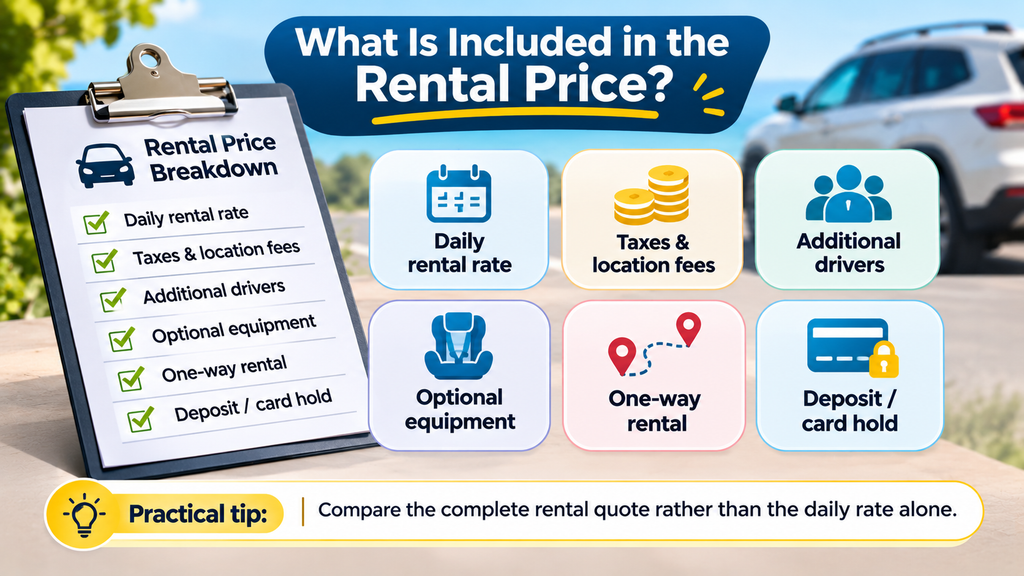
What Is Included in the Rental Price?
The advertised rate and the final payable amount may differ. Review the price breakdown before checkout, particularly when comparing two rental companies.
| Cost or condition | What to check |
|---|---|
| Daily rental rate | Total rental period and what the base rate includes |
| Taxes and location fees | Whether these are included in the displayed total |
| Additional drivers | Driver eligibility and any extra daily charges |
| Optional equipment | Child restraints, GPS units and other requested extras |
| One-way rental | Charges for returning the car to another location |
| Deposit or card hold | Required payment method and temporary authorisation amount |
Practical tip: Compare the complete rental quote rather than the daily rate alone. A more expensive-looking offer may include features that would cost extra with another provider.
If you need a child restraint, an additional driver or a different return location, confirm availability and pricing while you can still adjust the booking.
Read the Clock and the Map Together
Rental periods do not always match the way travellers think about calendar days. A vehicle booked for collection at 10 am and return at 10 am may be priced differently if the actual return is several hours later. The outcome depends on the rental agreement.
Compare your booked collection and return times with your flight schedule, allowing time for baggage collection, transport to the rental counter and possible delays.
What Happens If Your Flight Is Delayed?
Check the company’s late-arrival and no-show policy. Some providers may have procedures for delayed flights, but these should not be assumed to apply automatically.
Supplying a flight number does not necessarily change your rental conditions. Confirm whether the vehicle will be held, how to contact the rental desk, and what happens if you arrive outside opening hours.
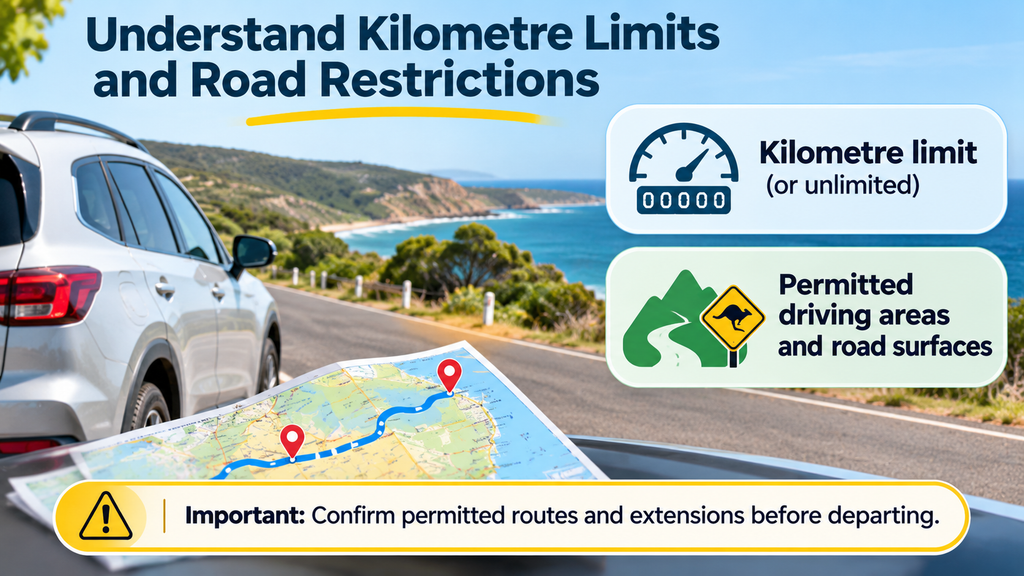
Understand Kilometre Limits and Road Restrictions
Distance conditions are equally important, particularly for travellers planning long Australian road trips.
A traveller researching Perth car hire might be planning city errands, a coastal drive or a much longer route. Each journey makes different rental conditions relevant.
Check whether your booking includes unlimited kilometres or a specified allowance. If a limit applies, understand how additional kilometres are calculated and charged.
Also confirm which areas and road surfaces are permitted. Some agreements restrict driving on unsealed roads, beaches or particular remote routes. A vehicle’s physical capability does not mean every route is permitted under its rental agreement.
Important: If your itinerary may change, ask the rental provider about permitted routes and extensions before departing. Do not rely on general assumptions about where a rental vehicle can be driven.
Know What You Could Owe After an Incident
Damage terminology is one of the most confusing parts of a car rental agreement. A daily rental charge, a security deposit, a damage excess and an optional excess-reduction product are not interchangeable.
Understanding the difference helps you estimate your potential financial responsibility before you collect the vehicle.
Common Car Hire Terms Explained
| Rental term | What it generally means |
|---|---|
| Security deposit | An amount collected or temporarily authorised, subject to the rental conditions |
| Damage excess | An amount the renter may be responsible for under specified damage or loss conditions |
| Excess reduction | An optional product that may reduce certain financial liabilities, subject to exclusions |
| Damage exclusions | Events, vehicle parts or circumstances that may have separate or additional liability rules |
| Breakdown assistance | A service arrangement with conditions that may differ for mechanical faults and driver-related incidents |
For example, an agreement may include standard damage liability while offering an additional product to reduce certain amounts payable after an incident. However, that reduction may not apply to every type of damage or every circumstance.
Read the conditions for tyres, windscreens, underbody damage, lost keys, prohibited road use and other listed exclusions. Ask for written clarification where the wording is unclear.
What About Credit Card Rental Car Cover?
Some credit cards provide rental vehicle insurance benefits, but eligibility, exclusions, claim procedures and payment arrangements vary. Read the card provider’s policy separately.
Do not assume that a familiar insurance product name guarantees every driver, vehicle or incident is covered.
What Should You Do After an Accident or Breakdown?
Your agreement should explain the reporting procedure for accidents, theft, damage and mechanical problems.
Identify the correct contact number, any reporting deadlines, and the information the rental company requires. Follow local emergency procedures when necessary, and do not continue driving an unsafe vehicle.
Practical tip: Save the rental company’s assistance number and agreement reference on your phone before starting your journey.

A Short Check Before You Confirm
Once you understand the main car rental agreement terms, turn them into a few questions specific to your booking.
You do not need to analyse every clause like a lawyer. The aim is to identify conditions that could affect your planned trip or create unexpected obligations.
Pre-Booking Car Hire Checklist
- Driver eligibility: Are all intended drivers eligible under the licence and age requirements?
- Payment: What will you pay upfront, and is a deposit or card authorisation required?
- Cancellation: What happens if you cancel, fail to collect the car or return it early?
- Travel route: Does the agreement allow your planned distance and driving locations?
- Damage responsibility: What excess or other charges could apply after an incident?
- Late return: What should you do if the car cannot be returned at the agreed time?
- Fuel or charging: What condition must the fuel tank or battery be in when the vehicle is returned?
Keep a copy of the booking confirmation and the conditions that apply to your particular rate. If a booking agent clarifies something by email, save that response as well.
If the agreement presented at the rental counter differs from what you expected, ask about the difference before signing.
Give the Handover and Return Their Own Time
Careful planning should not stop once the booking is confirmed. Collection and return procedures are important parts of a successful rental.
Before Driving Away
Compare the vehicle and final agreement with your booking. Inspect the exterior and interior, including visible scratches, dents and other existing damage.
Follow the company’s procedure for recording anything missing from the condition report. Take clear photographs for your own records where appropriate.
Confirm the fuel or charging policy, emergency assistance details, return location and any special return instructions.
When Returning the Rental Car
Allow time to refuel or charge if required, remove your belongings and follow the agreed return procedure.
Keep any fuel receipts, return confirmations and vehicle condition records.
After-hours key drops can be convenient, but their conditions may differ from staffed returns. Confirm when the rental is considered complete and how the vehicle’s condition will be assessed.
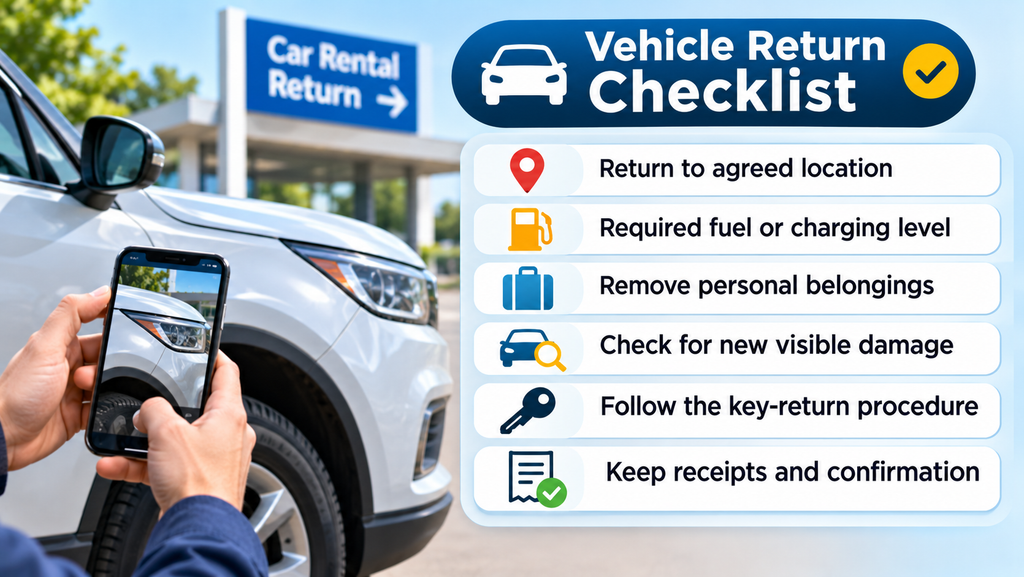
Vehicle Return Checklist
- Return the vehicle to the agreed location
- Meet the required fuel or charging level
- Remove personal belongings
- Check the vehicle for new visible damage
- Follow the key-return procedure
- Keep receipts and return confirmation
Frequently Asked Questions About Car Hire
Understanding car hire terms and conditions before booking can help you avoid unexpected charges and make informed decisions. Here are answers to common questions about rental agreements.
What should I check before renting a car?
Check the total rental price, driver requirements, deposit, damage excess, kilometre allowance, fuel policy and return conditions. Also review cancellation fees and any restrictions on where you can drive.
What are the common hidden fees in car hire?
Additional charges may include extra-driver fees, young-driver surcharges, one-way rental fees, optional equipment, excess kilometres, late returns and fuel service charges. Check the full price breakdown before confirming your booking.
What does excess mean in a car rental agreement?
Car rental excess is an amount you may be responsible for paying if the rental vehicle is damaged or stolen, subject to the agreement. Some rental companies offer optional products that reduce certain liabilities, but exclusions may still apply.
Do car rental companies require a deposit?
Many rental providers require a security deposit or temporary payment card authorisation at collection. The amount, accepted payment methods and release conditions depend on the rental company and booking.
What happens if I return a rental car late?
Returning a vehicle late may result in additional hourly charges, another rental day or other fees, depending on the company’s policy. Contact the rental provider as early as possible if you need to extend your booking.
Can I drive a rental car on unsealed roads in Australia?
It depends on the rental agreement. Some providers restrict unsealed roads, beaches and remote routes. Always confirm permitted driving areas before travelling, especially when planning a long road trip.
Final Thoughts: Read the Terms Before You Drive
The fine print of car hire is most useful when it helps you make a decision before an unexpected cost becomes a dispute.
Read the agreement with your actual drivers, route, budget and schedule in mind. Ask about unclear conditions, confirm important answers in writing and save the version you agreed to.
This preparation cannot prevent every travel surprise, but it can make the responsibilities attached to your rental vehicle much easier to understand.