Mechanical Engineering & Tools / Drivetrain Guide
A low rumble under your pickup, a vibration that increases with road speed, or a clunk when shifting into gear can make any drive unsettling. One possible culprit is the carrier bearing—but several other drivetrain faults can produce similar symptoms. This guide explains the part, how it works, how a technician checks it, and what to consider before repair.
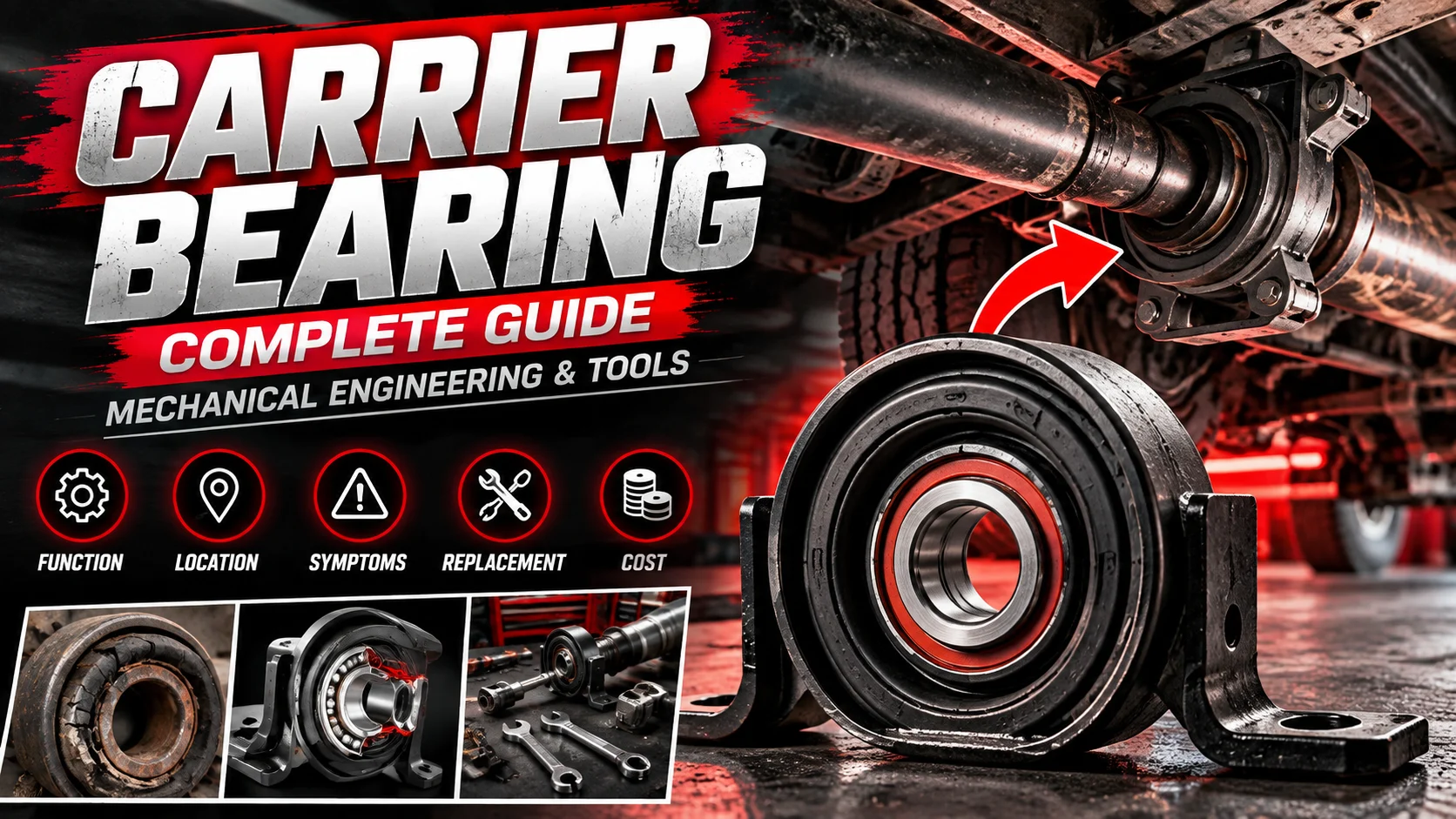
A driveshaft carrier bearing, also called a center support bearing, supports an intermediate section of a multi-piece driveshaft while allowing the shaft to rotate. It is commonly housed in a rubber isolator and mounting bracket beneath certain trucks, SUVs and other rear-wheel-drive or four-wheel-drive vehicles. A worn bearing or damaged support can contribute to noise, vibration and driveline movement.
Driveshaft supportVibration diagnosisRepair guidanceWhat Is a Carrier Bearing?
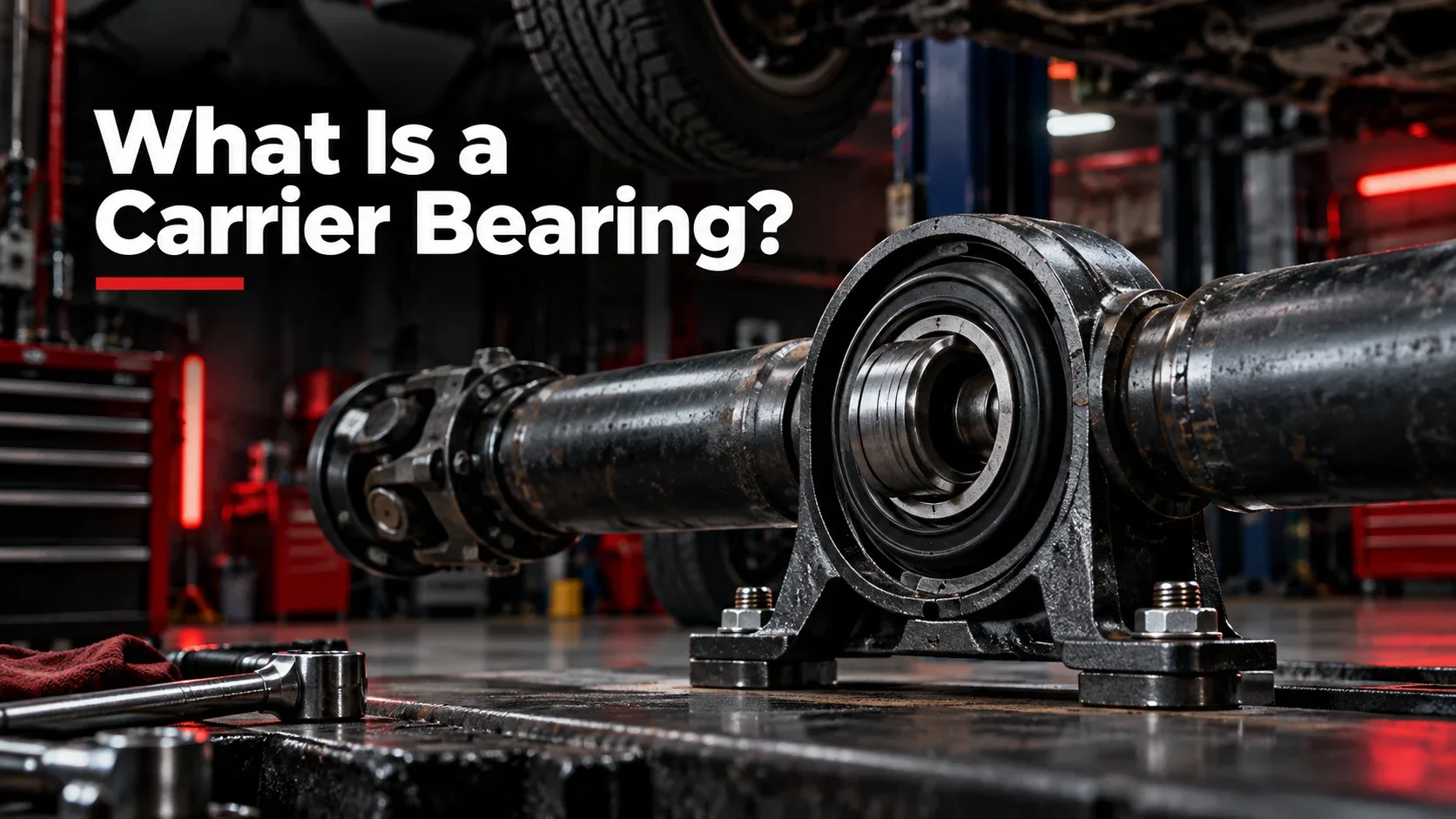
In many vehicles with a two-piece or multi-piece propeller shaft, a driveshaft carrier bearing supports the rotating shaft between the transmission or transfer case and the rear differential. Without that intermediate support, a long driveshaft could be more difficult to package and control during operation.
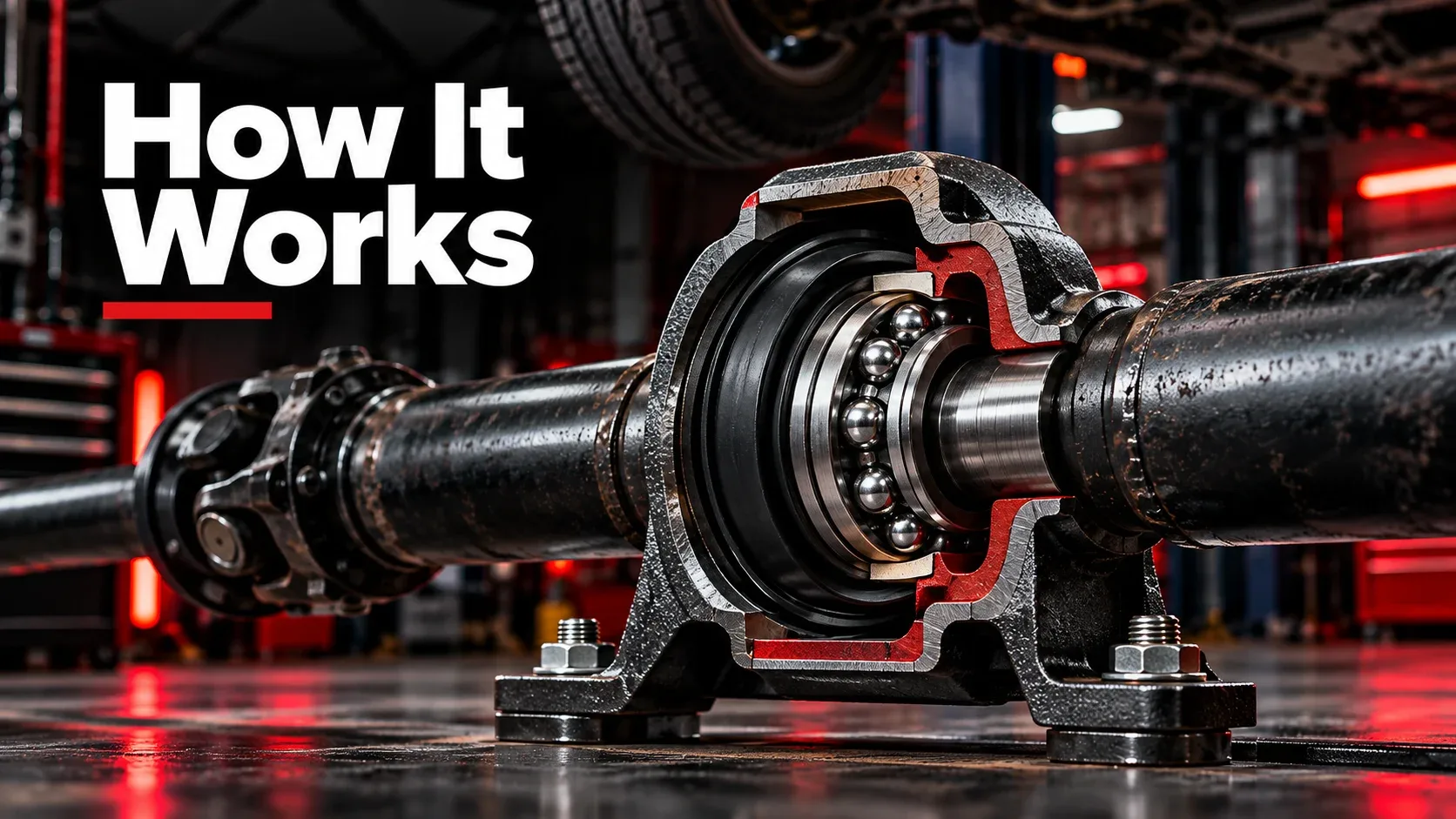
A typical center support assembly includes a rolling-element bearing, a rubber cushion or isolator, and a bracket attached to the vehicle. The bearing supports shaft rotation; the surrounding mounting structure locates the assembly and helps limit the transfer of vibration to the body.
Where Is the Carrier Bearing Located?
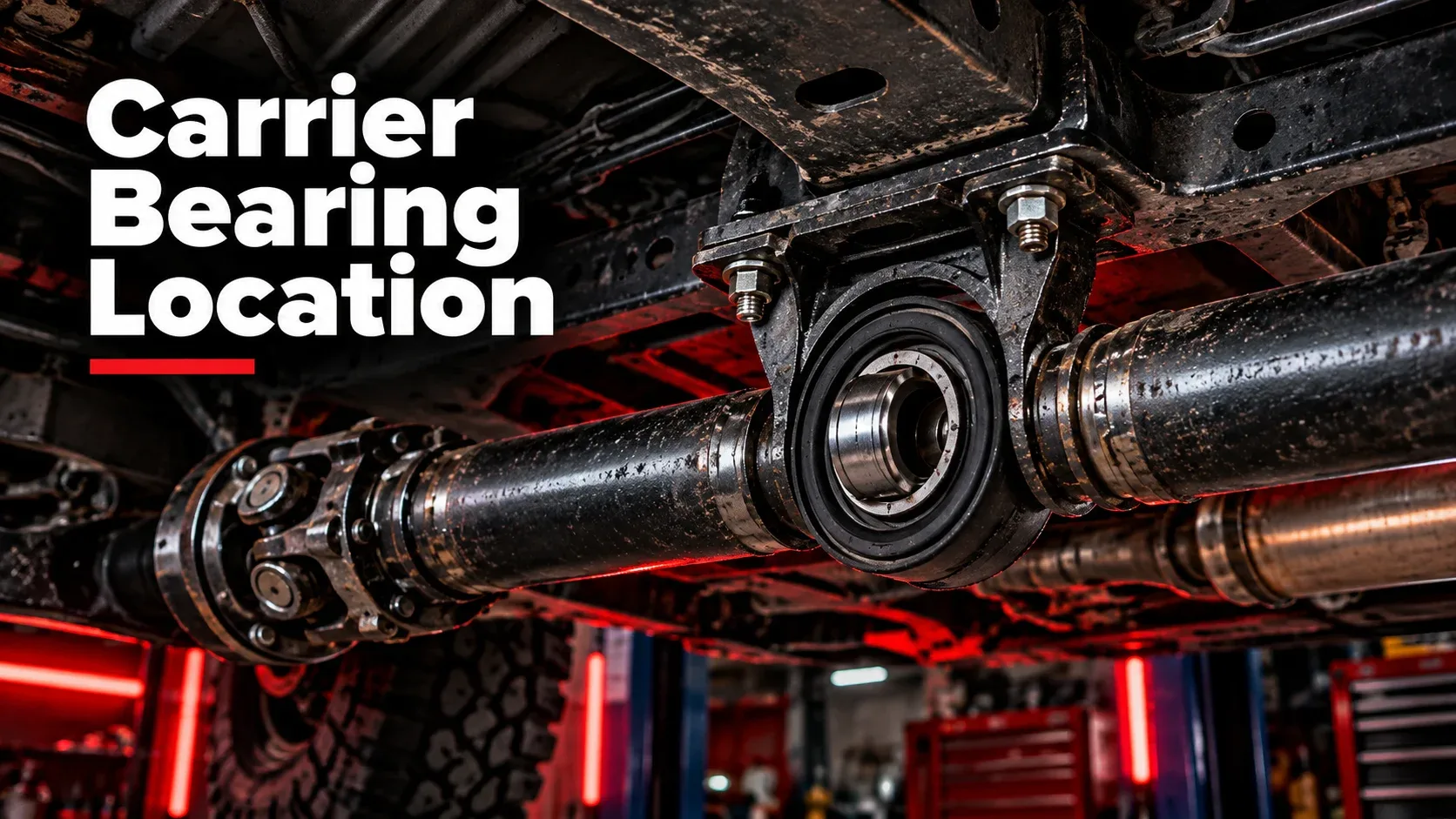
On vehicles equipped with a multi-piece driveshaft, the center support bearing is generally positioned under the vehicle where two driveshaft sections meet. Its bracket commonly fastens to a structural crossmember or other designated mounting point.
Look along the driveline running toward the rear differential, not inside the differential itself. The precise location varies by wheelbase, chassis design, and drivetrain layout. A vehicle with a single-piece driveshaft may not have a center support bearing at all.
How Does a Carrier Bearing Work?
Engine torque travels through the transmission and driveline toward the drive axle. As the driveshaft spins, the carrier bearing supports a section of that shaft, helping maintain its intended position and manage its radial loading. The shaft rotates through the bearing while the mounting bracket remains fixed to the vehicle.
1. Shaft rotates
The shaft turns as torque passes through the driveline.
2. Bearing supports
Rolling elements allow rotation while carrying specified loads.
3. Cushion isolates
A rubber support helps manage movement and transmitted vibration.
Proper shaft alignment, mount condition and component phasing matter. A support bearing cannot compensate for a bent driveshaft, a defective U-joint, or a badly misaligned driveline.
Types of Carrier Bearings
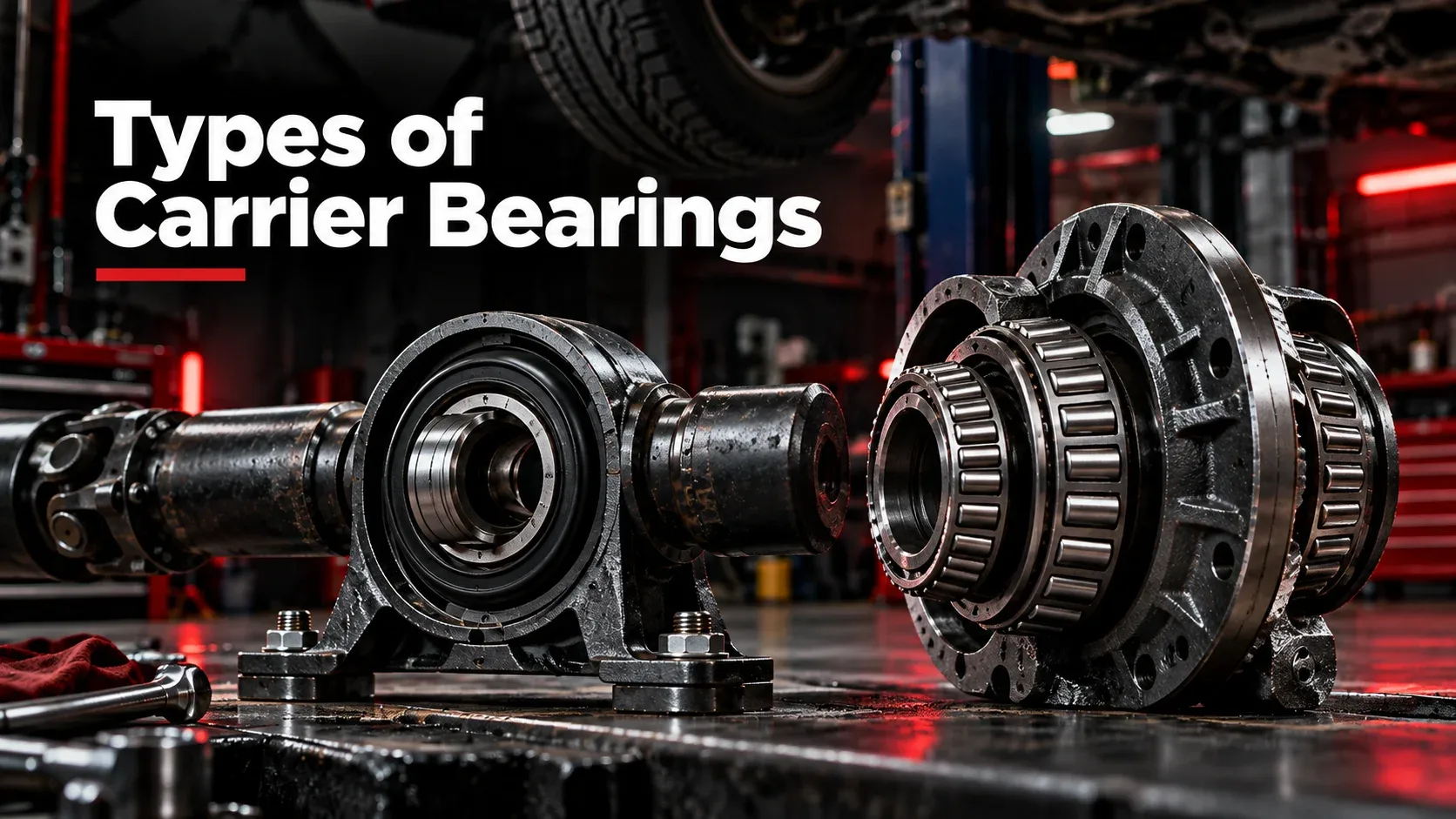
The term “carrier bearing” is used for more than one automotive component. Identifying the system is essential before ordering parts or following a repair procedure.
| Type | Where it is used | Main purpose | Repair consideration |
|---|---|---|---|
| Driveshaft center support bearing | Along certain multi-piece driveshafts | Supports an intermediate rotating shaft section | May require driveshaft removal, phasing marks and a press/puller |
| Differential carrier bearing | Inside the axle/differential assembly | Supports the rotating differential case | Requires careful differential setup and measurement |
Although they can both be described as carrier bearings, these parts are not interchangeable. Differential bearing work can involve bearing preload, backlash and gear-contact inspection; it should not be approached as a basic center support replacement.
Symptoms of a Bad Carrier Bearing
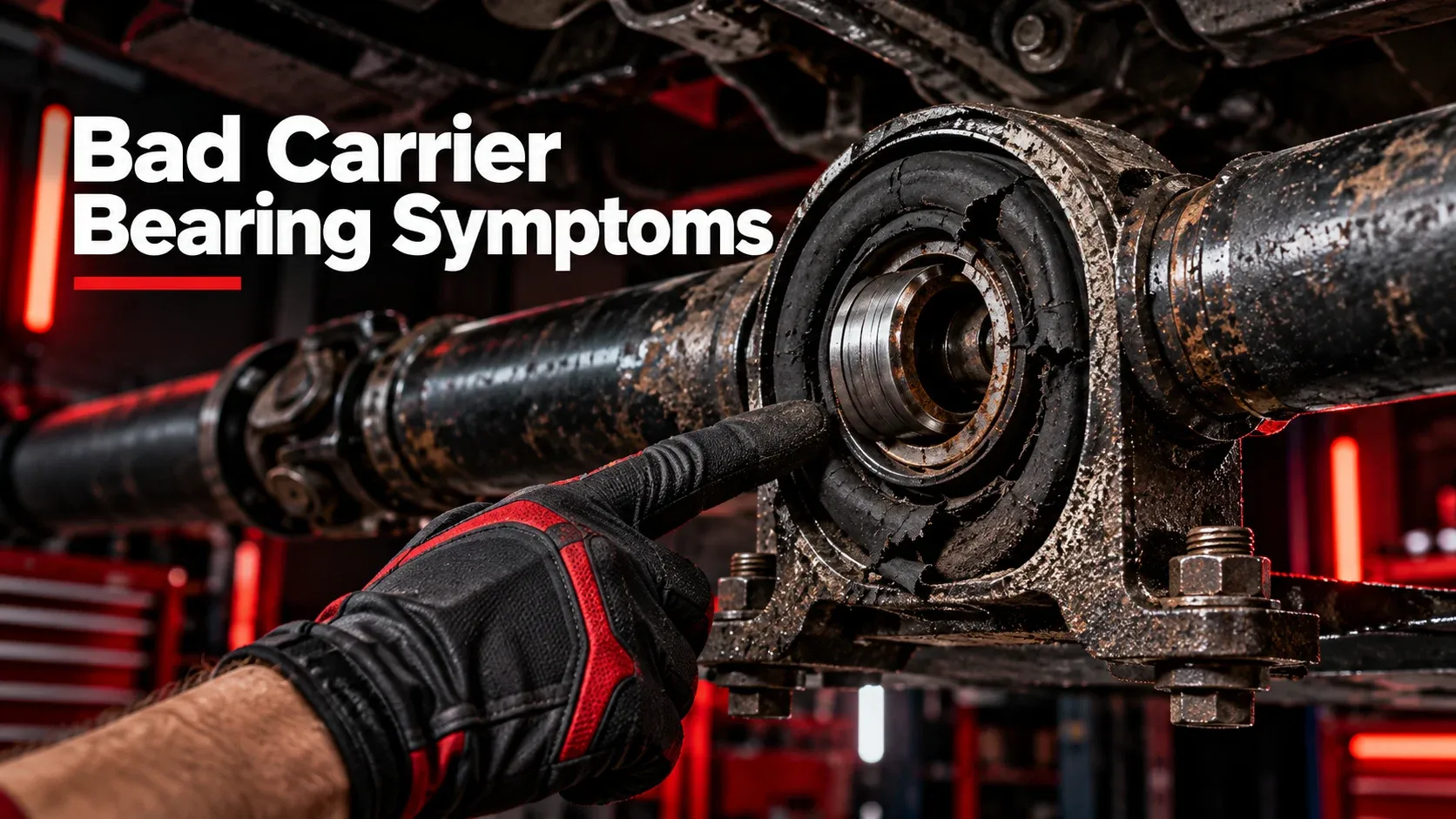
A failing carrier bearing may produce a rumble, whirring sound, clunk, or vibration, especially as shaft speed and load change. The surrounding rubber support can also tear or deteriorate. None of these signs confirms a bad carrier bearing by itself.
| What you notice | Possible explanation | What to do |
|---|---|---|
| Rumbling or growling beneath vehicle | Worn center bearing or other rotating component | Have the driveline inspected for the actual noise source |
| Vibration under acceleration | Support movement, U-joint wear, shaft imbalance or other faults | Record when it occurs and request drivetrain diagnosis |
| Clunk when selecting drive/reverse | Excess driveline play or worn mounts/joints | Inspect bearing support and related connections |
| Torn or sagging support rubber | Damaged carrier bearing cushion | Check fitment and replace affected assembly as specified |
| Visible shaft displacement | Potential mount or drivetrain fault | Do not drive until professionally assessed if movement is severe |
What Causes Carrier Bearing Failure?
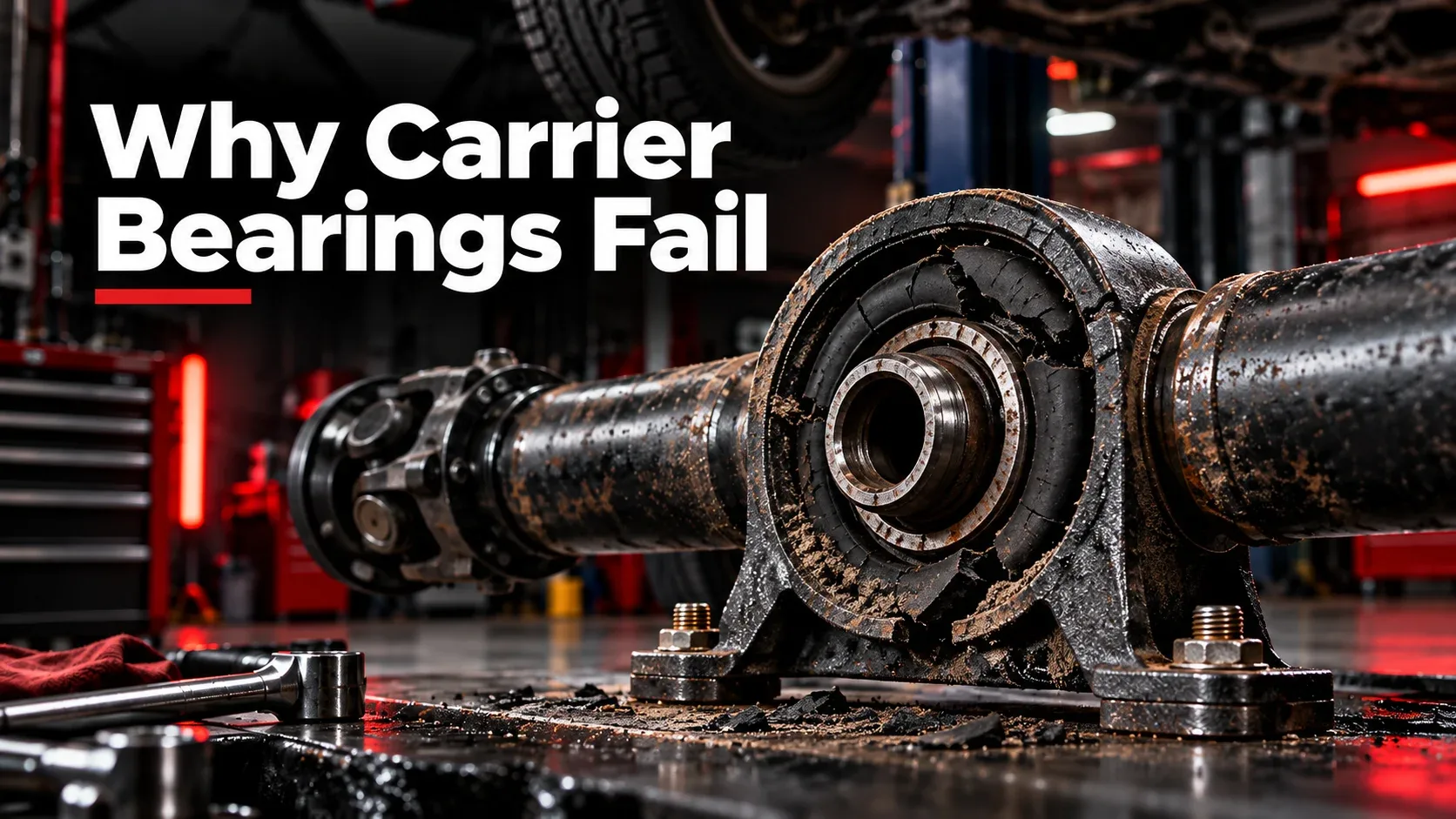
Like other rotating support components, a center support bearing is exposed to repeated loading and environmental conditions. Failure may be linked to one or several factors:
- Ordinary wear: Bearing surfaces and seals can deteriorate with use and age.
- Rubber aging: A cracked or separated isolator can allow excessive shaft movement.
- Contamination: Water, dirt or corrosion can damage vulnerable parts.
- Installation errors: Incorrect fitment, alignment or torque can create new problems.
- Other driveline damage: Defective U-joints, shaft imbalance or abnormal geometry may add vibration and stress.
How to Diagnose a Bad Carrier Bearing
Start by documenting the problem. Is the vibration tied to speed, engine load or gear selection? Does it happen on smooth roads, during acceleration, or when coasting? This information helps a technician narrow down the cause.
Practical inspection checklist
- Note the symptoms. Record conditions, sounds and whether the issue is getting worse.
- Check service history. Look for recent driveline removal, collision damage, suspension modification or prior repairs.
- Perform a safe visual inspection. With the vehicle secured and the driveline stationary, a qualified person checks the bracket, rubber cushion and surrounding components.
- Look for related issues. Inspect U-joints, mounting hardware, shafts and nearby components using vehicle-specific procedures.
- Confirm before replacing. Use the manufacturer’s diagnostic criteria and examine the entire assembly before purchasing parts.
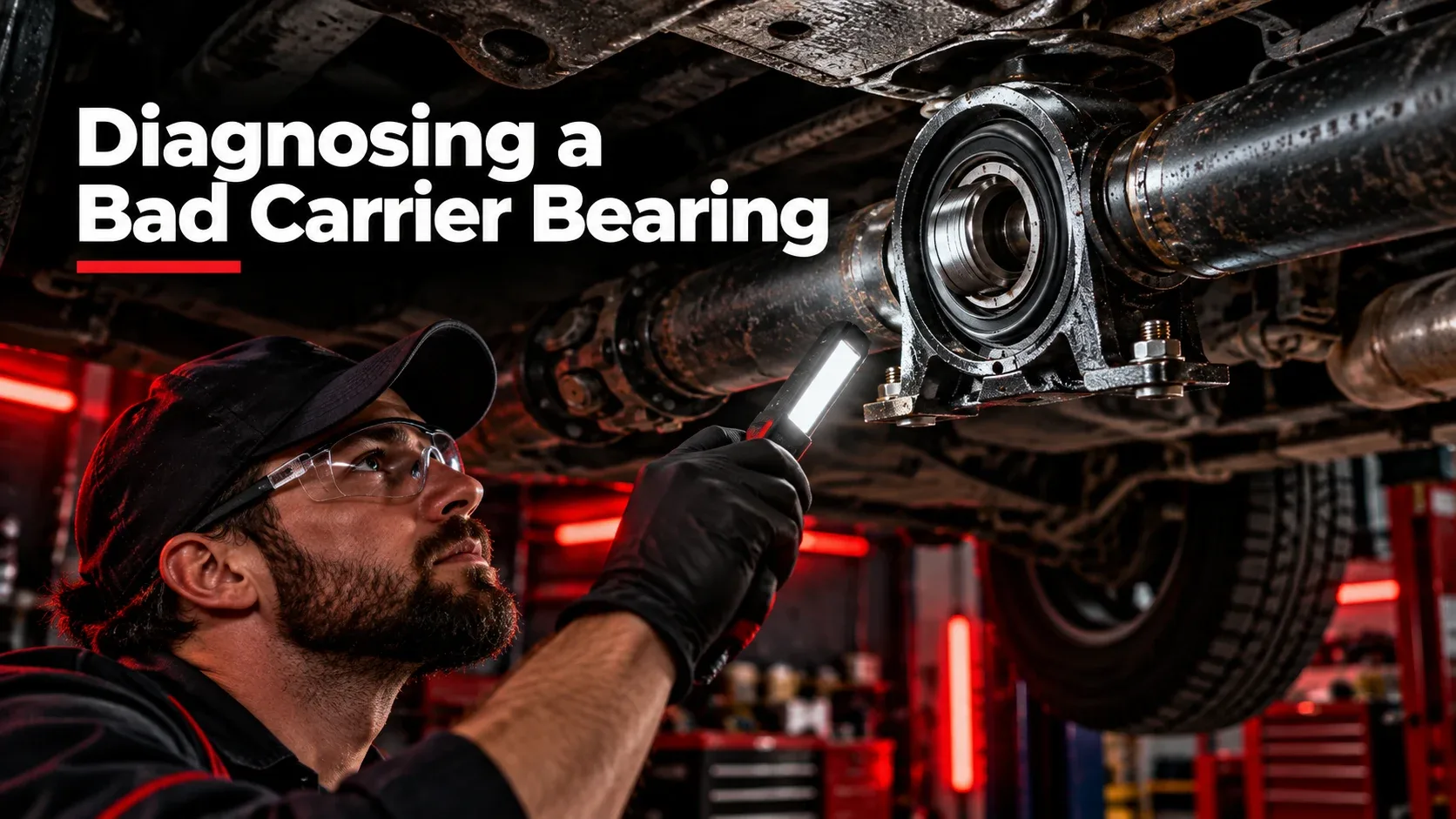
Spicer’s driveshaft service material describes checking center-bearing bracket looseness, rubber cushion damage and support condition. Always use the relevant manufacturer procedure for the vehicle and driveline fitted.
Carrier Bearing vs. U-Joint: What’s the Difference?
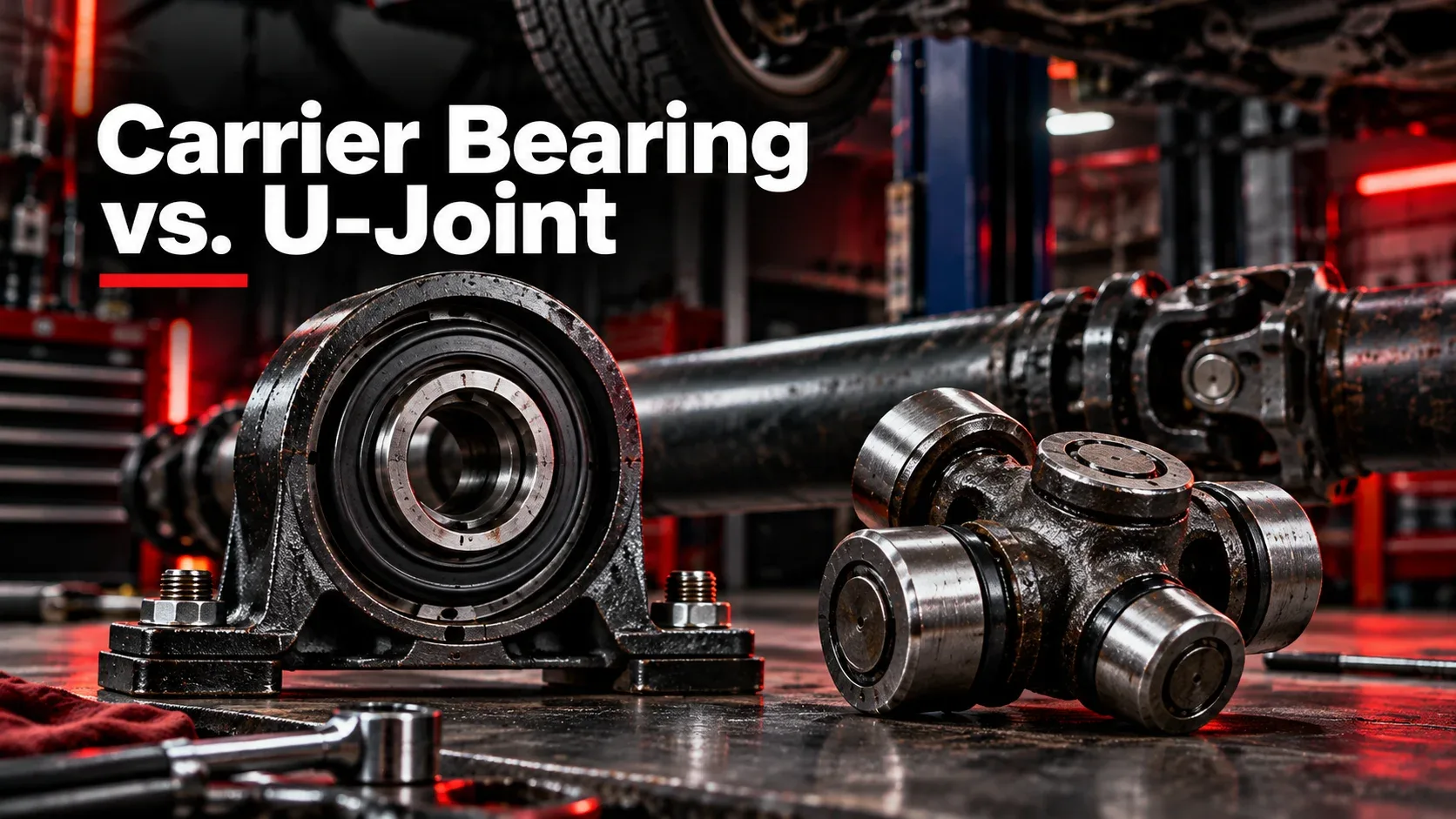
A U-joint allows an angled torque-transmitting connection between driveline parts. A carrier bearing supports a shaft section at an intermediate point. Either component, or both, may develop faults that cause noises and vibration.
| Feature | Carrier bearing | Universal joint (U-joint) |
|---|---|---|
| Main role | Supports a driveshaft section | Transmits rotation across an angular joint |
| Typical location | Center support of multi-piece shaft | At one or more shaft/yoke connections |
| Possible symptoms | Rumble, vibration, damaged isolator | Clunk, squeak, binding or vibration |
| Diagnostic clue | Inspect cushion, mounting and bearing condition | Inspect joint play, binding and lubrication condition as applicable |
How to Replace a Carrier Bearing: Repair Overview
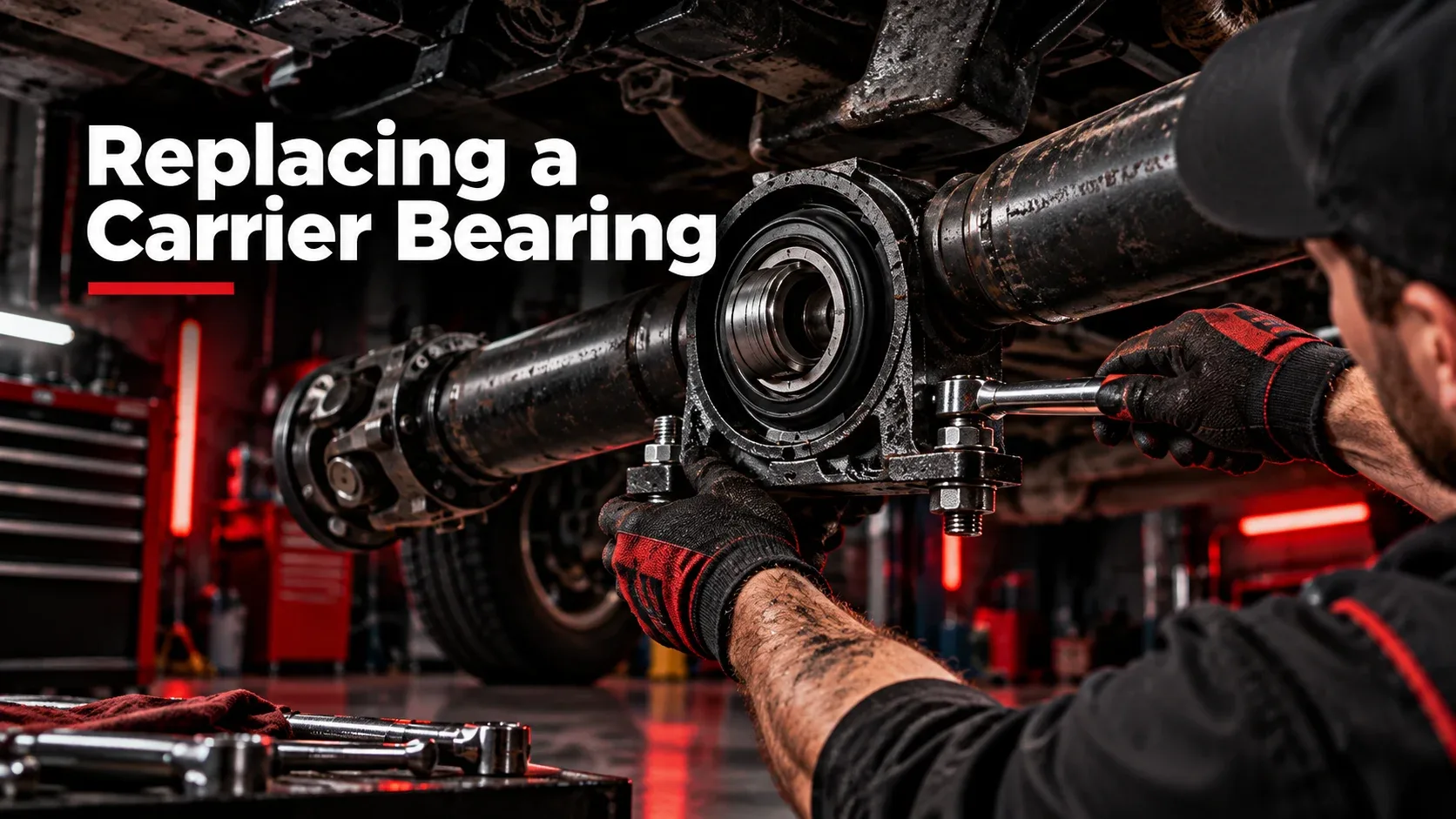
Replacement complexity varies greatly by vehicle and driveshaft design. Some assemblies use a pressed-on bearing and separate support bracket; others are serviced differently. The steps below explain the workflow, not a universal service procedure.
- Identify the correct assembly. Verify the vehicle, driveline, part number and approved replacement procedure.
- Secure the vehicle and shaft. Use approved supports and driveshaft support straps; never rely on a jack alone.
- Document orientation. Mark shaft, yoke and slip components as directed so original phasing can be preserved.
- Remove designated components. Follow the vehicle-specific shaft removal and bracket fastener sequence.
- Service the bearing. Use the specified puller, press or replacement method without damaging shaft surfaces, seals or yokes.
- Inspect related parts. Check U-joints, splines, mounts and retainers; replace one-time-use fasteners when specified.
- Reassemble to specifications. Restore phasing and alignment, use required fastener torque and confirm clearances.
- Verify repair. Have the complete driveline inspected and tested according to the manufacturer’s service guidance.
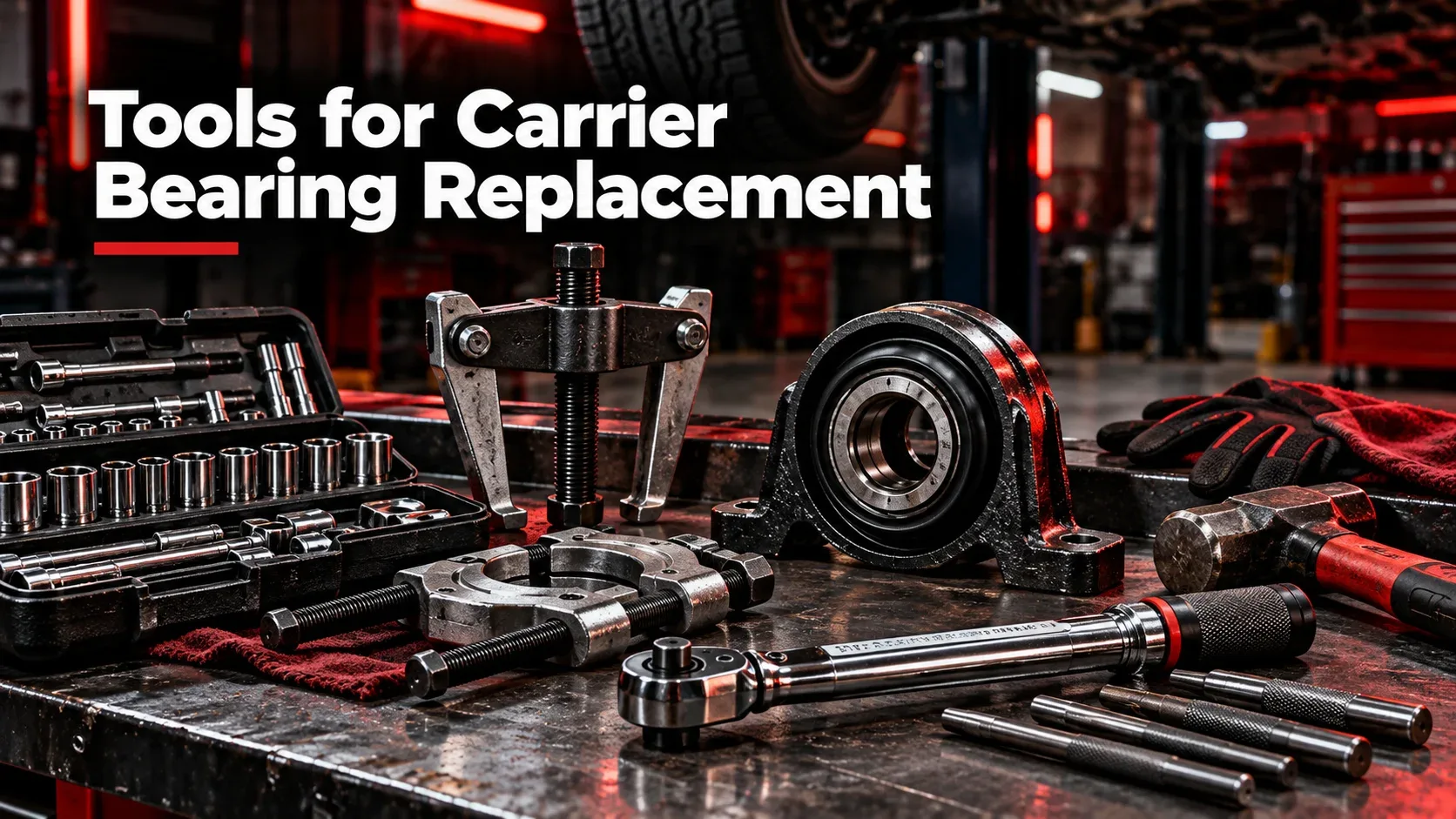
Tools Needed for Carrier Bearing Replacement
Exact tooling depends on the vehicle and bearing design. Before attempting a repair, consult the factory service information.
| Tool or equipment | Purpose | Consideration |
|---|---|---|
| Vehicle lift or approved stands | Safe access and support | Correct lifting points and load ratings essential |
| Driveshaft support straps | Control shaft during removal | Specified by certain driveshaft service manuals |
| Socket and wrench set | Remove designated mounting hardware | Sizes vary by vehicle |
| Torque wrench | Apply specified fastener torque | Use actual service specifications |
| Paint marker | Preserve shaft orientation and phasing | Mark before disassembly as required |
| Suitable bearing puller/press | Remove/install press-fit components | Use model-specific adapters and methods |
| Eye protection and gloves | Personal protection | Not a substitute for safe procedures |
How Much Does Carrier Bearing Replacement Cost?
The cost of a carrier bearing replacement depends on the vehicle, whether only the bearing or a complete support assembly is supplied, local labor rates, rust, access, and other defective driveline components.
| Cost component | What affects it | Question to ask |
|---|---|---|
| Replacement part | OEM vs aftermarket; bearing-only vs assembly | Is this the exact part for my driveshaft? |
| Labor | Removal complexity, press work and access | How many labor hours are estimated? |
| Additional repairs | Worn U-joints, hardware, shaft damage | Which additional faults were confirmed? |
| Testing | Inspection, alignment or driveline verification | Is post-repair verification included? |
A fixed nationwide dollar amount could be misleading without a vehicle model and current local estimates. Compare itemized quotes from qualified shops and ask what diagnosis supports the recommended replacement.
Can You Drive With a Bad Carrier Bearing?
Continuing to drive with a suspected damaged center support bearing may worsen wear and, in serious cases, contribute to loss of driveline support or related component damage. The risk depends on the actual defect and the vehicle’s design; it cannot be safely determined from a noise description alone.
For milder or intermittent symptoms, arrange prompt diagnosis and avoid assuming the problem is harmless. The vehicle’s service guidance and a physical inspection determine the appropriate next step.
How to Help Extend Carrier Bearing Life
No maintenance routine eliminates normal wear, but good driveline care can help identify issues early.
- Address new vibrations or unusual underbody noises promptly.
- Inspect the center bearing rubber cushion and bracket at recommended service intervals.
- Repair damaged mounts, joints and related components before problems escalate.
- Use manufacturer-specified replacement parts and alignment procedures.
- Follow the lubrication instructions for the exact driveline components; many bearings are sealed and are not designed for routine grease injection.
- Have driveline geometry reviewed after relevant suspension or drivetrain modifications.
Frequently Asked Questions About Carrier Bearings
What happens when a carrier bearing goes bad?
A worn driveshaft support bearing or damaged isolator may cause rumbling, vibration, clunks or excess shaft movement. Similar symptoms can have other causes, so diagnosis is essential.
Can a bad carrier bearing cause vibration while accelerating?
Yes. A damaged center support can contribute to driveline vibration that changes under load, but U-joints, tires and other rotating components must also be checked.
Is a carrier bearing the same as a center support bearing?
In the context of a multi-piece driveshaft, the names are often used interchangeably. A differential carrier bearing, however, is a separate part inside the differential.
Can a failing carrier bearing damage a driveshaft?
It can contribute to abnormal shaft movement or stress. Severe support or driveline failure can have serious consequences, making prompt inspection important.
How long does a carrier bearing last?
There is no universal lifespan. Service life depends on vehicle design, loads, road conditions, component quality and maintenance history. Replace based on verified condition and manufacturer guidance, not an arbitrary mileage number.
Can I replace a carrier bearing myself?
Experienced DIY mechanics with correct lifting equipment, driveline support, service instructions and specialized tools may be able to service some designs. Press-fit bearings, shaft phasing and critical fasteners make many replacements better suited to professional shops.
How do I know which carrier bearing to buy?
Use your VIN, exact vehicle configuration, driveshaft information and confirmed part number. Determine whether the repair calls for a bearing only, support assembly or additional hardware.
Is the carrier bearing part of the differential?
The term can refer to differential carrier bearings inside the differential case assembly, but a driveshaft center support bearing is mounted along the driveshaft outside the differential. Always identify the application.
Final Thoughts
A carrier bearing is a relatively small component with an important job in certain multi-piece driveline systems. Rumble, vibration or a worn rubber support may raise suspicion, but symptoms alone cannot establish the cause. Identify the specific bearing, inspect related driveline parts, and use the correct service documentation before replacing anything. When vibration is severe or components seem loose, prioritize safe recovery and professional diagnosis.
Technical Reference and Editorial Notes
Technical service considerations were cross-checked against Dana Spicer Driveshafts Service Manual and Spicer 10-Series Driveshaft Service Manual. Manufacturer instructions take priority over this general educational article. This article is not a substitute for a model-specific diagnosis or repair manual.