Choosing engine oil should be simple, but the shelves at an auto parts store can make it confusing. You’ll see 5W-30, 5W-20, 0W-20, conventional, synthetic blend, and full synthetic motor oils, often with similar-looking labels. So how do you know which one actually belongs in your engine?
5W30 full synthetic oil is a multigrade engine lubricant designed to provide cold-start flow and maintain a specified viscosity range at normal engine operating temperatures. It is available for many gasoline engines, but that doesn’t mean every vehicle should use it.
This guide explains what 5W-30 means, how full synthetic motor oil works, its benefits and limitations, how it compares with other viscosity grades, and when to change it. Most importantly, you’ll learn how to check whether a particular 5W-30 oil meets your vehicle’s requirements.
5W-30 full synthetic oil combines a 5W cold-temperature viscosity classification with an SAE 30 operating-temperature viscosity grade. Its synthetic formulation can offer strong resistance to oxidation, useful cold-start characteristics, and dependable lubrication when correctly matched to an engine. Always verify the recommended viscosity, required performance standard, and manufacturer approvals in your owner’s manual.
What Is 5W30 Full Synthetic Oil?
5W-30 full synthetic oil is an engine lubricant manufactured using synthetic base oils combined with additives that help control wear, deposits, oxidation, corrosion, and other operating challenges.
The 5W-30 designation describes the oil’s SAE viscosity grade, while full synthetic describes its formulation. These are separate characteristics, and understanding both is important when choosing motor oil.
Inside a running engine, oil circulates through narrow passages, lubricates moving surfaces, helps carry heat away from certain components, suspends contaminants, and contributes to engine cleanliness.
Full synthetic oils are formulated to maintain useful performance across a range of operating conditions. Their exact capabilities depend on the base oils, additives, performance standards, and manufacturer’s intended application.
- Viscosity: SAE 5W-30 multigrade engine oil.
- Formulation: Synthetic base oils with a formulated additive package.
- Purpose: Lubrication, wear protection, cleanliness, and temperature-related performance.
- Applications: Engines specifically approved for a compatible 5W-30 formulation.
- Important: Two 5W-30 oils can carry different manufacturer approvals and performance specifications.
For example, a modern gasoline engine may require an API/ILSAC-certified 5W-30 oil, while another engine may specify a particular European manufacturer approval. Both bottles might say 5W-30, yet only one could meet the requirements for a given vehicle.
What Does 5W30 Mean in Engine Oil?
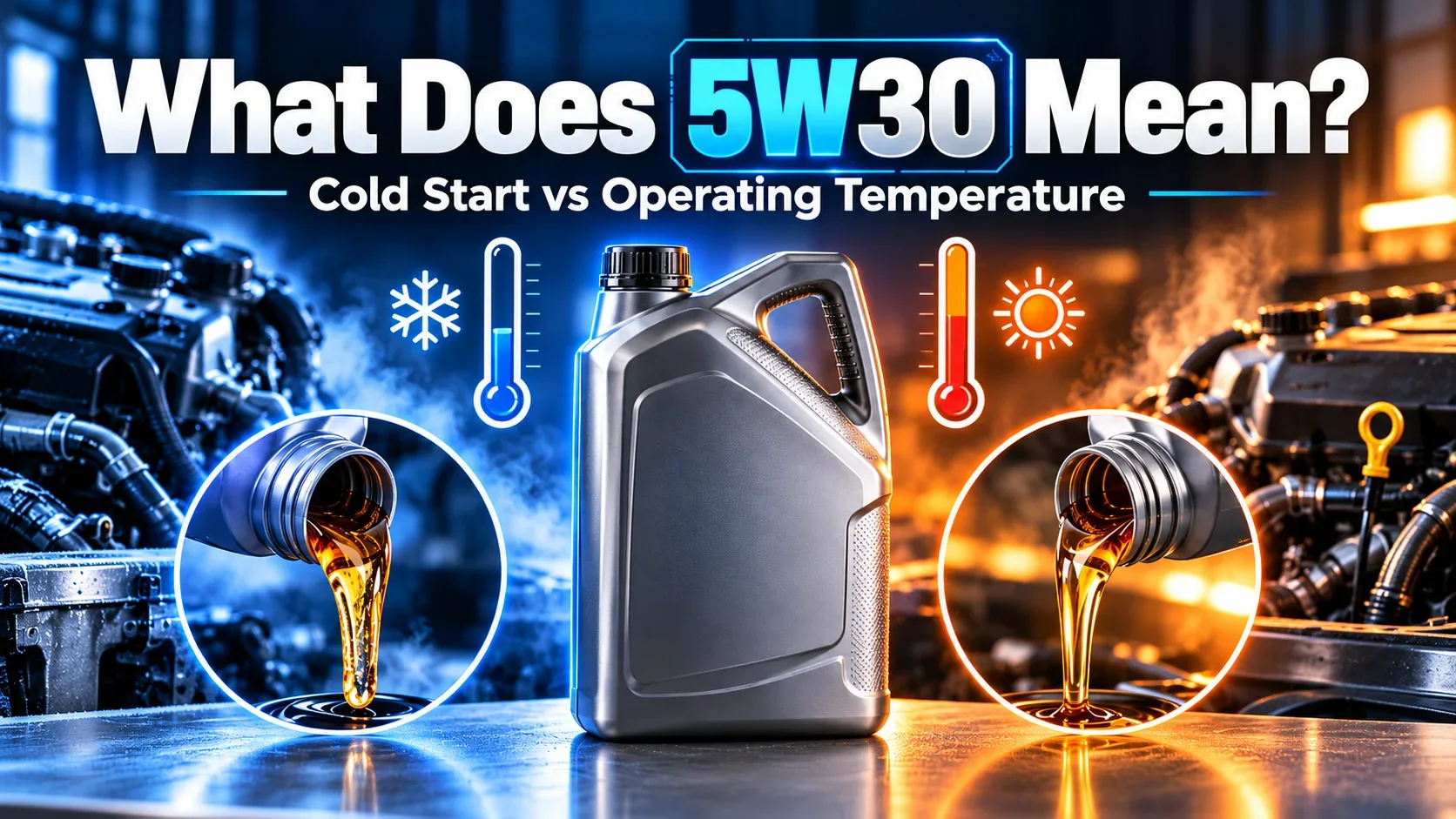
The numbers and letter in 5W-30 describe how an oil fits into the SAE J300 engine oil viscosity classification system. Viscosity refers to a fluid’s resistance to flow, but the complete engine oil grading system involves several standardized tests.
Understanding the SAE 5W-30 engine oil label
What Does the 5W Represent?
The 5W designation describes how the oil performs under standardized low-temperature cranking and pumping tests. It helps identify whether the oil can meet certain cold-weather flow requirements.
A 0W-rated oil must satisfy more demanding low-temperature test conditions than a 5W-rated oil. However, this does not automatically make 0W oil the correct choice for every engine.
What Does the Number 30 Represent?
The number 30 identifies the oil’s SAE high-temperature viscosity grade. For an SAE 30 grade, the standard specifies a kinematic viscosity range at 100°C along with relevant high-temperature, high-shear requirements.
This matters because an operating engine requires an appropriately specified lubricant film between moving components.
Does 5W30 Become Thicker When the Engine Gets Hot?
No. Like most liquids, motor oil generally becomes less viscous as temperature rises.
A multigrade oil is designed to satisfy both a specified winter grade and a specified high-temperature grade. The two numbers describe different test conditions, not a change from one fixed thickness to another.
5W-30 does not mean the oil is suitable for every climate or that it will work in every engine. The manufacturer’s approved viscosity range and oil specification remain the deciding factors.
Benefits of 5W30 Full Synthetic Motor Oil
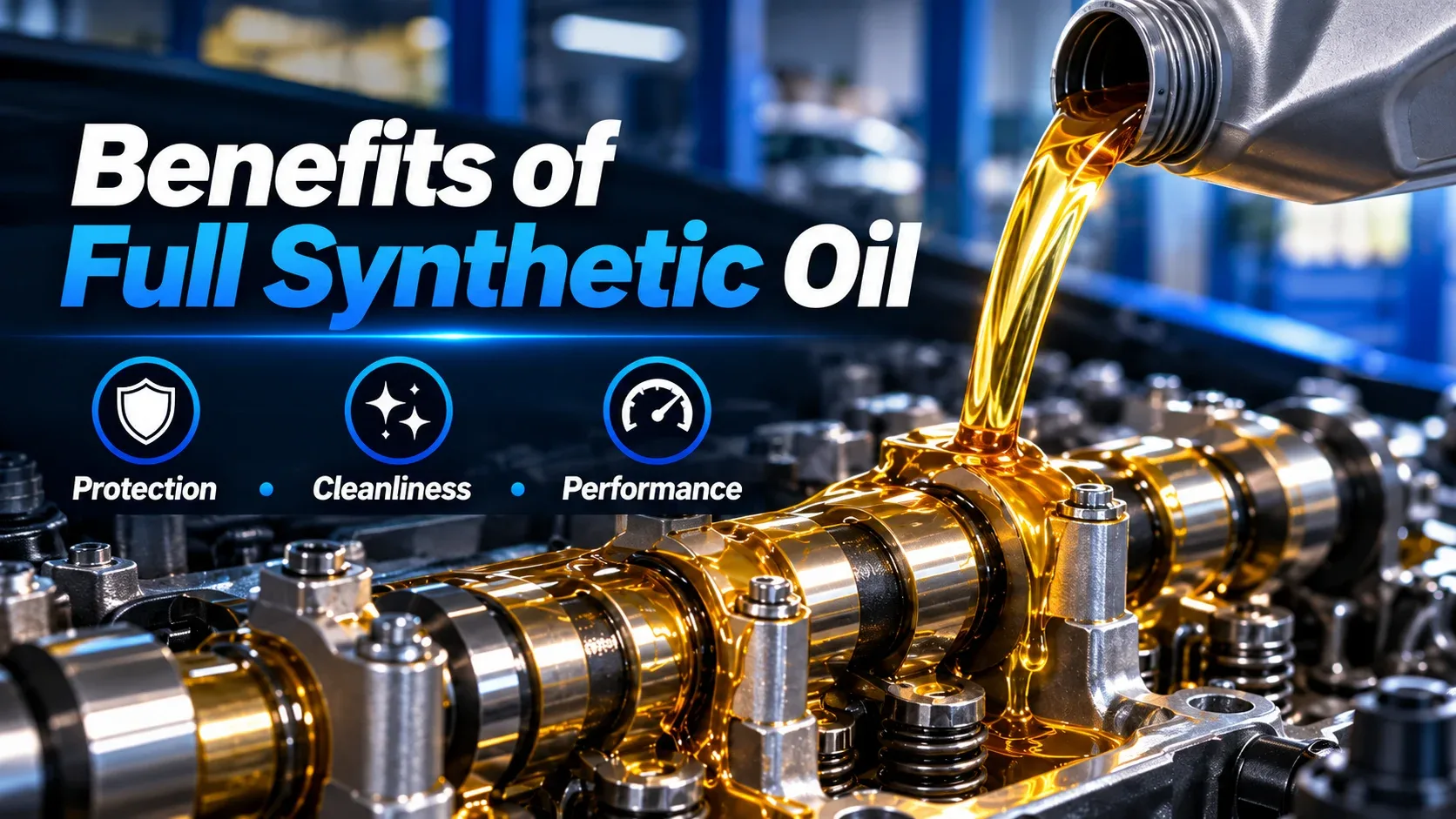
Quality full synthetic motor oils can offer practical advantages, particularly in demanding operating conditions. However, the actual benefit depends on the particular formulation and whether it meets the engine’s requirements.
Cold-Start Performance
Properly formulated synthetic oil can offer favorable low-temperature flow characteristics. This helps the lubrication system circulate oil during cold starts, when engine components need protection as they begin moving.
Resistance to Oxidation
Synthetic formulations can provide good oxidation stability. This helps limit oil degradation caused by prolonged exposure to heat and oxygen under suitable operating conditions.
Engine Cleanliness
Detergent and dispersant additives help control sludge, varnish, and deposits. A well-formulated synthetic lubricant can help keep internal engine components cleaner over recommended service intervals.
Wear Protection
Appropriate viscosity and antiwear additives work together to protect surfaces such as bearings, camshafts, and other moving components. Protection depends on the complete oil formulation.
Can Full Synthetic Oil Improve Fuel Economy?
Some modern synthetic motor oils are engineered to reduce friction and meet fuel-economy performance requirements. However, changing to 5W-30 from a lighter viscosity grade does not guarantee improved fuel economy.
Use the manufacturer’s approved viscosity instead of choosing an oil solely for advertised efficiency gains.
Does Synthetic Oil Mean Fewer Oil Changes?
Not automatically. Certain synthetic oils are designed and tested for extended-drain applications, but the vehicle’s maintenance schedule, oil-life system, operating conditions, and oil specification determine an appropriate interval.
Full synthetic oil is not a substitute for proper maintenance.
5W30 Full Synthetic vs. Conventional vs. Synthetic Blend Oil
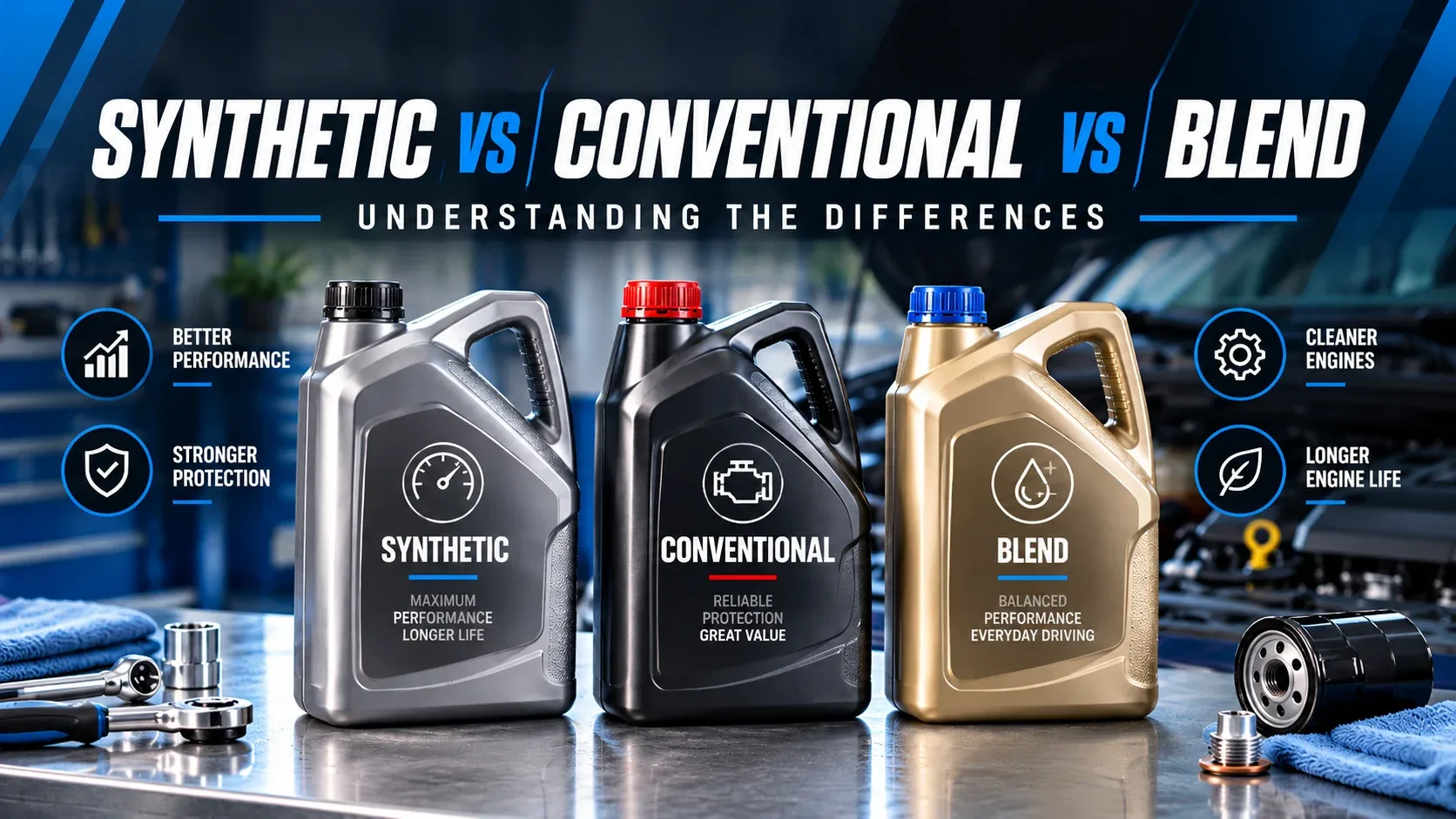
Motor oil formulation is different from viscosity. You may encounter conventional 5W-30, synthetic blend 5W-30, and full synthetic 5W-30 products, depending on the market and product availability.
Although their viscosity grades can match, their base oil formulations and performance characteristics may differ.
| Feature | Full Synthetic | Synthetic Blend | Conventional |
|---|---|---|---|
| Base oil formulation | Synthetic base oils | Blend of conventional and synthetic base oils | Primarily conventionally refined base oils |
| Oxidation stability | Often excellent | Varies by formulation | Varies by formulation |
| Cold-temperature performance | Can be particularly good | Depends on formulation | Depends on grade and formulation |
| Price | Typically higher | Usually midrange | Often lower |
| Oil-change interval | Follow vehicle requirements | Follow vehicle requirements | Follow vehicle requirements |
| Best choice | The oil that meets your vehicle’s viscosity, performance, and approval requirements | ||
Is Full Synthetic Always Better?
Full synthetic motor oil can provide valuable performance benefits, but it is not universally suitable for every vehicle.
An oil meeting the exact manufacturer specification is preferable to a more expensive synthetic product that lacks the required approval.
Remember: Never choose engine oil solely because its container says premium, advanced, maximum protection, or full synthetic. These marketing descriptions cannot replace the correct technical specifications.
Is 5W30 Full Synthetic Oil Right for Your Car?
For most readers, this is the most important question. The answer depends on your vehicle’s make, model, model year, engine, manufacturer requirements, and sometimes its operating conditions.
Do not assume that every sedan, SUV, truck, turbocharged engine, or older vehicle can safely use the same 5W-30 oil.
Step 1: Check the Owner’s Manual
Find the engine oil or lubrication section of your owner’s manual. Look for the recommended SAE viscosity grade and any permitted alternatives.
The manual may recommend a single viscosity or present an approved selection based on particular conditions.
Step 2: Identify the Required Oil Standard
Many modern gasoline engines require an API or ILSAC performance category. Some vehicles also require proprietary manufacturer approvals.
As of 2026, API SQ and ILSAC GF-7 are current gasoline engine oil standards introduced in March 2025. API SQ is the newer API category, while GF-7A covers applicable gasoline-engine viscosity grades such as 5W-30. The distinct GF-7B standard applies to SAE 0W-16 oils.
Some vehicles, especially European models, require additional specifications such as a particular BMW, Mercedes-Benz, Volkswagen, or other manufacturer approval. These are not interchangeable simply because two oils share the same viscosity grade.
Step 3: Check the Container Label
Review the oil bottle’s certification markings, service category, and listed manufacturer approvals.
Where a specific automaker approval is required, confirm that the product has the correct approval rather than relying on general phrases such as “suitable for many engines.”
Step 4: Consider Your Driving Conditions
Frequent short trips, extended idling, towing, dusty roads, extreme temperatures, and repeated stop-and-go driving may affect maintenance needs.
Some vehicles have separate normal-service and severe-service maintenance schedules. Use the one that matches your driving pattern.
5W30 Compatibility Checklist
- My owner’s manual lists SAE 5W-30 as an approved viscosity grade.
- The oil meets the specified API, ILSAC, ACEA, or other required performance standard.
- Any mandatory manufacturer-specific approval is present.
- I have checked the maintenance schedule for my driving conditions.
- I know the correct oil capacity and replacement filter requirements.
If any essential requirement is uncertain, verify it before adding oil.
5W30 vs. Other Engine Oil Grades: What’s the Difference?
Drivers commonly compare 5W-30 with 5W-20, 0W-20, and 10W-30. These grades have different SAE viscosity characteristics, but the best choice is not necessarily the thickest or thinnest option.
| Oil Grade | Winter Rating | Hot Viscosity Grade | Main Difference |
|---|---|---|---|
| 0W-20 | 0W | 20 | Meets colder winter-grade testing and has an SAE 20 operating-temperature grade |
| 5W-20 | 5W | 20 | Shares the 5W winter grade but has a lower hot viscosity grade than 5W-30 |
| 5W-30 | 5W | 30 | Combines 5W cold-temperature performance with an SAE 30 high-temperature grade |
| 10W-30 | 10W | 30 | Shares the SAE 30 hot grade but has a different winter classification |
5W30 vs. 5W20
Both oils share the 5W winter classification, but 5W-30 belongs to a higher hot viscosity grade than 5W-20.
A vehicle designed specifically for 5W-20 should not automatically be switched to 5W-30. Changing viscosity can affect fuel economy, oil flow characteristics, and systems designed around specific lubrication requirements.
Follow the manufacturer’s permitted grades rather than relying on assumptions about higher viscosity being better for protection.
5W30 vs. 0W20
0W-20 has a lower winter classification and a lower hot viscosity grade than 5W-30.
These are meaningful differences. A modern engine designed around 0W-20 may not be approved for 5W-30, even though both oils may be full synthetic.
Conversely, an engine specified for 5W-30 should not automatically be filled with 0W-20 because of its cold-temperature rating or potential fuel-economy advantages.
5W30 vs. 10W30
5W-30 and 10W-30 share the same high-temperature SAE 30 classification but differ in their winter grades.
The 5W rating meets lower-temperature testing conditions than the 10W rating. This can matter during cold starts, particularly where temperatures fall significantly.
At operating temperature, two oils with the same SAE 30 grade can still have different actual viscosity values within the allowed range, depending on their formulations.
Use the viscosity and performance specification approved for your vehicle. Neither a higher viscosity number nor a premium synthetic label automatically indicates better engine protection.
How Often Should You Change 5W30 Full Synthetic Oil?

One of the biggest misconceptions about synthetic engine oil is that every vehicle can follow the same mileage-based change interval.
In reality, the correct interval depends on the engine design, manufacturer recommendations, oil formulation, driving conditions, and sometimes an electronic oil-life monitoring system.
How Many Miles Does 5W30 Full Synthetic Oil Last?
Some vehicles using approved synthetic oil have maintenance intervals in the general range of 5,000 to 10,000 miles, while others specify shorter or longer intervals. These figures are examples, not a universal recommendation.
Likewise, an oil company may advertise extended protection for a specific product, but that claim does not automatically override your vehicle’s maintenance requirements or warranty conditions.
| Driving Situation | What to Consider | Recommended Approach |
|---|---|---|
| Normal daily driving | Vehicle maintenance schedule | Use the manufacturer’s normal-service interval |
| Frequent short trips | Engine may not consistently reach full operating temperature | Check whether severe-service maintenance applies |
| Heavy towing or loads | Additional engine and oil stress | Follow towing and severe-duty guidance |
| Extreme heat or cold | Temperature-related operating challenges | Check the recommended viscosity and service interval |
| Low annual mileage | Time-based replacement can still be required | Follow the stated time limit even if mileage is low |
Can You Trust the Oil-Life Monitor?
Many newer vehicles calculate oil-change reminders using operating conditions, mileage, and other parameters.
Follow the system according to the manufacturer’s instructions, provided the correct oil has been used and the system has been properly maintained and reset.
Does Dark Engine Oil Mean It Needs Changing?
Not necessarily. Detergent and dispersant additives help suspend contaminants, which can darken motor oil during normal operation.
Color alone cannot accurately measure whether the oil still meets its performance requirements. Use the maintenance schedule and investigate unusual contamination, fuel odor, coolant mixing, or other symptoms separately.
Maintenance reminder: Check your engine oil level regularly, even between scheduled oil changes. Some engines consume oil, and running low can cause damage regardless of how recently the oil was replaced.
Can You Use 5W30 Full Synthetic Oil in Older or High-Mileage Cars?

Yes, many older and high-mileage engines can use full synthetic oil, provided the selected product meets their requirements and is appropriate for their condition.
Switching to synthetic oil does not automatically cause a healthy engine to leak, and an engine does not need to remain on conventional oil simply because it has used that type for years.
What Makes High-Mileage Oil Different?
High-mileage motor oils may contain additive packages designed for the needs of older engines. Depending on the formulation, these can include seal-conditioning ingredients, detergents, dispersants, and other performance additives.
However, a high-mileage label does not mean the product can repair worn piston rings, damaged gaskets, or serious mechanical problems.
Should You Use Thicker Oil in an Older Engine?
Do not increase viscosity solely because a vehicle has accumulated more miles. Some manufacturers allow alternative grades under specified conditions, but unauthorized changes can create new problems.
If your engine is burning oil, losing oil pressure, or leaking, diagnose the underlying cause before experimenting with viscosity.
High-Mileage Engine Checklist
- Confirm the originally recommended viscosity and permitted alternatives.
- Check for existing leaks and abnormal oil consumption.
- Review the oil’s current performance specifications.
- Monitor the oil level after changing formulations.
- Investigate persistent smoke, unusual noises, or low oil pressure.
How to Choose the Right 5W30 Full Synthetic Oil

The best 5W30 full synthetic oil for your vehicle is the product that satisfies the engine manufacturer’s requirements and fits your maintenance schedule.
Price and brand reputation may help you choose between otherwise suitable products, but they should not be the first compatibility checks.
1. Confirm the SAE Grade
Make sure 5W-30 is listed as an acceptable viscosity for your exact engine.
2. Look for the Correct Performance Category
Check the API, ILSAC, or other required standards. For gasoline engines, API SQ and ILSAC GF-7A are current standards, but the appropriate category still depends on the manufacturer’s requirements.
3. Check Manufacturer-Specific Approvals
Some vehicles require a particular automaker approval in addition to the SAE grade. A product that meets one approval may not meet another.
4. Read the Product Data Sheet
The manufacturer’s technical documentation provides more detailed information about specifications, performance claims, and intended applications.
5. Buy From a Reliable Source
Use reputable retailers and inspect containers for damaged seals, inconsistent labels, or other signs of tampering. Avoid questionable products whose specifications cannot be verified.
Priority order: Manufacturer-recommended viscosity → Required oil specifications → Verified approvals → Appropriate formulation → Price and brand preference.
Common Mistakes When Using 5W30 Synthetic Oil

Even high-quality motor oil cannot compensate for an incorrect application or poor maintenance practices. The following mistakes can increase the risk of engine problems and avoidable repair costs.
| Common Mistake | Why It Matters | What to Do Instead |
|---|---|---|
| Choosing by 5W-30 viscosity alone | The oil may lack a required performance specification | Check both viscosity and approvals |
| Assuming synthetic oil lasts indefinitely | Oil still degrades and accumulates contaminants | Follow the manufacturer’s service interval |
| Overfilling the engine | Excess oil can cause foaming or other lubrication problems | Use the correct capacity and verify the level |
| Using the wrong oil filter | Filter specifications may affect oil system operation | Install a filter approved for the engine |
| Ignoring oil consumption | Low oil level can cause serious damage | Check the dipstick or electronic level system regularly |
| Changing viscosity to fix a mechanical problem | May hide symptoms without addressing the fault | Diagnose leaks, wear, or oil-pressure issues |
| Ignoring severe-service conditions | The normal maintenance interval may not apply | Review the appropriate maintenance schedule |
Practical Oil-Change Tips
- Park on a safe, level surface and follow the manufacturer’s procedure for checking or changing oil.
- Use the specified oil grade and required certification.
- Replace the oil filter according to the maintenance instructions.
- Use the specified amount of oil, then verify the level using the recommended checking procedure.
- Check for leaks after service and properly reset the maintenance reminder if required.
- Recycle used motor oil and the used filter through an approved collection facility.
Safety warning: Never work beneath a vehicle supported only by a hydraulic jack. Use the correct lifting points and properly rated support equipment. Engine components and used oil may also be hot enough to cause burns.
Frequently Asked Questions About 5W30 Full Synthetic Oil
These answers address common questions drivers ask when choosing synthetic motor oil or preparing for an oil change.
Is 5W30 full synthetic oil better than conventional oil?
Full synthetic oil can offer advantages in oxidation stability, cold-temperature behavior, and demanding operating conditions. However, the best product is the one that meets your engine’s required viscosity and performance specifications. Synthetic oil is not automatically suitable for every vehicle.
How many miles does 5W30 full synthetic oil last?
There is no universal mileage limit. Some vehicles have maintenance intervals around 5,000 to 10,000 miles, while others differ. Always follow the vehicle manufacturer’s interval or properly functioning oil-life monitor, including any severe-service requirements. Extended-drain product claims should not override your vehicle’s maintenance instructions.
Can I use 5W30 instead of 5W20?
Only if the vehicle manufacturer permits the substitution for your engine and conditions. Although both have a 5W winter grade, 5W-30 has a higher SAE operating-temperature viscosity grade. Do not substitute one solely because it appears to offer thicker protection.
Is 5W30 full synthetic good for high-mileage engines?
It can be suitable when the engine requires or permits 5W-30 and the product meets the necessary standards. High-mileage formulations may include additives intended for older engines, but they cannot repair significant mechanical wear or eliminate the need to investigate leaks.
Can I mix synthetic and conventional engine oil?
Many compatible passenger-vehicle motor oils can be mixed for a necessary top-up, but mixing can change the properties of the original formulation. Use the correct viscosity and required specifications, and do not assume a mixture retains every approval or extended-drain claim. Follow manufacturer instructions where applicable.
Is 5W30 suitable for hot and cold weather?
5W-30 is a multigrade oil with defined winter and high-temperature viscosity classifications. It can be suitable across varied climates when approved for the engine. The actual climate suitability depends on manufacturer guidance rather than the viscosity label alone.
What happens if I use the wrong engine oil viscosity?
The consequences depend on the engine, the viscosity difference, the operating conditions, and how long the incorrect oil is used. Possible effects include altered oil pressure, fuel efficiency, and lubrication performance. If you have used an unapproved oil, check the manufacturer’s guidance or consult a qualified technician.
Can I switch from conventional oil to full synthetic oil?
In many engines, switching is possible without a special flushing procedure, provided the new oil meets the required viscosity and specifications. Inspect older engines for existing leaks or consumption issues, follow the normal maintenance schedule, and avoid unnecessary chemical flushing unless the manufacturer recommends it.
Final Thoughts: Is 5W30 Full Synthetic Oil Worth Using?
5W30 full synthetic oil can be an excellent option for engines designed to use it. A properly selected formulation can deliver dependable lubrication, useful cold-temperature performance, resistance to degradation, and protection against deposits and wear.
But the phrase “full synthetic” is not enough to determine whether a product is right for your car. The most important details are the SAE viscosity, the required performance standard, and any manufacturer-specific approvals.
Before your next oil change, check your owner’s manual, verify the exact oil specifications, and follow the appropriate maintenance interval. Choosing the correct lubricant and maintaining the proper oil level are more valuable than simply buying the most expensive bottle.