
Car Cleaning & Detailing • DIY Guide
From coffee stains on cloth seats to dusty leather and sticky cup holders, here’s a practical way to refresh your car’s interior without damaging its surfaces.
Cleaning methods depend on upholstery material, product instructions, and your vehicle’s owner manual.
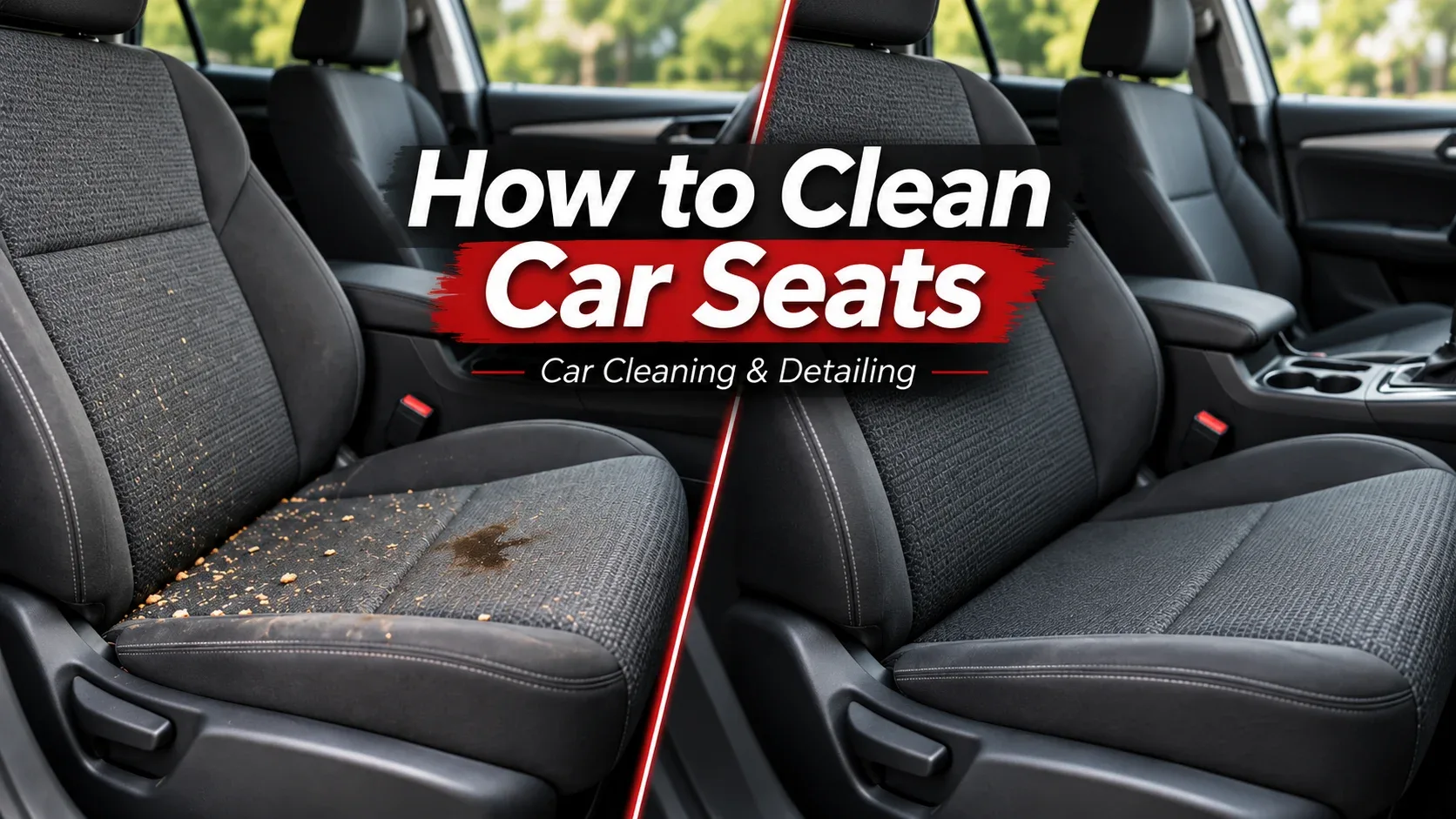
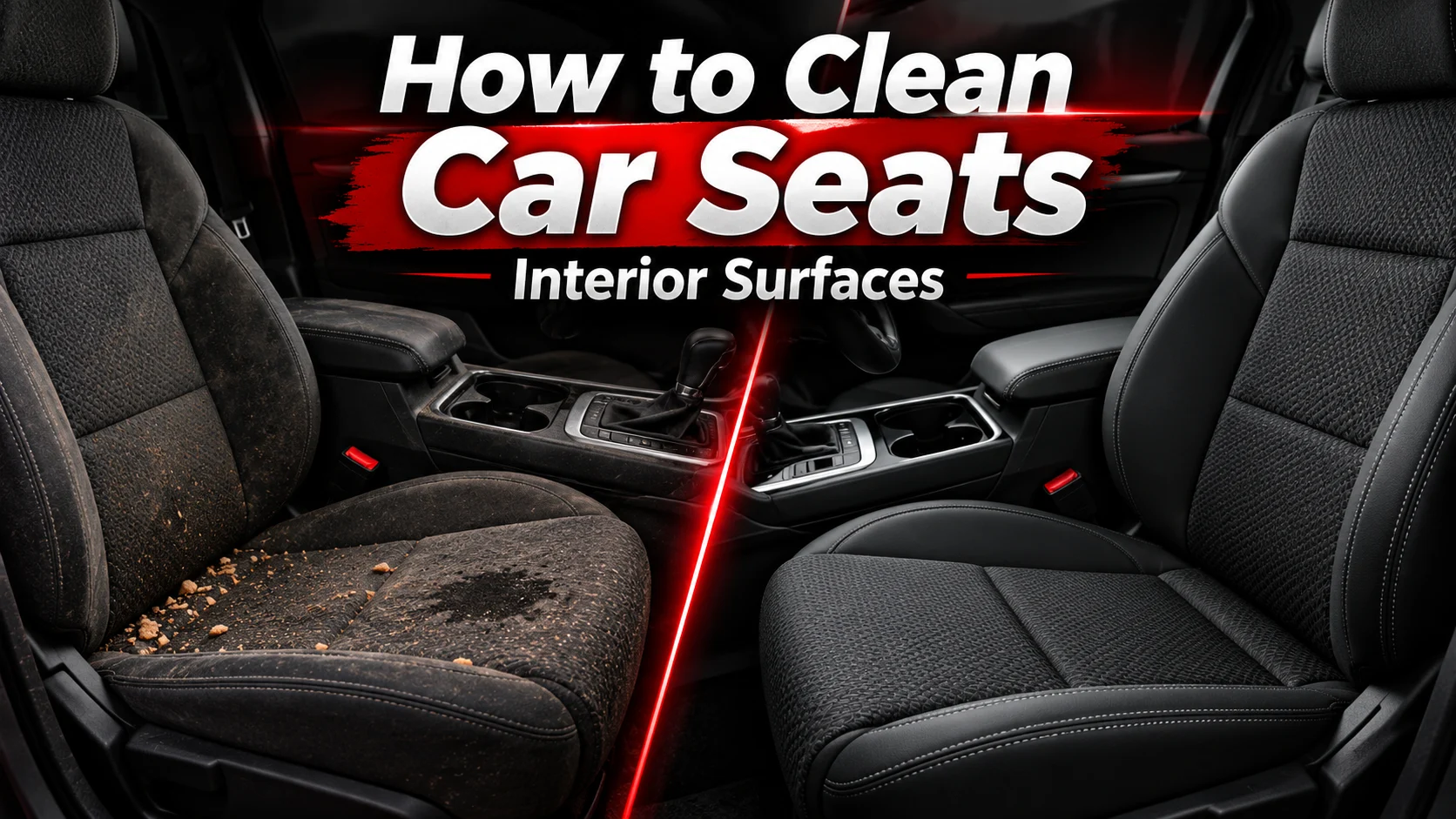
You open the car door on Monday morning and spot yesterday’s coffee mark on the passenger seat. Crumbs have settled into the seams, and the dashboard has a fine layer of dust. Should you grab dish soap and a wet sponge? Not so fast.
The safest way to clean car seats starts with identifying what they’re made of. Cloth usually needs careful moisture control, while leather and synthetic upholstery often need different products. Below, we’ll tackle the stain, the seats, and the rest of the cabin—one manageable step at a time.
How to Clean Car Seats at Home: The Quick Answer
For most car seats, follow this simple sequence—then adjust the cleaner and technique for your particular material:
- Identify the upholstery. Check the owner’s manual or seat care label before choosing products.
- Vacuum first. Remove grit, crumbs, and dust from cushions, seams, and crevices.
- Test a compatible cleaner. Try it on a small hidden area and follow the label.
- Work gently in sections. Use a microfiber towel or a suitable soft brush; avoid saturation.
- Remove cleaner residue. Wipe, blot, or extract only as the product and material instructions allow.
- Let everything dry. Keep the cabin ventilated and avoid using damp seats.
First, Know What Your Car Seats Are Made Of
Two seats can look similar yet need different care. “Leather-look” upholstery may be synthetic; genuine leather may have a protective coating. Use your vehicle documentation, not appearance alone, to identify it.
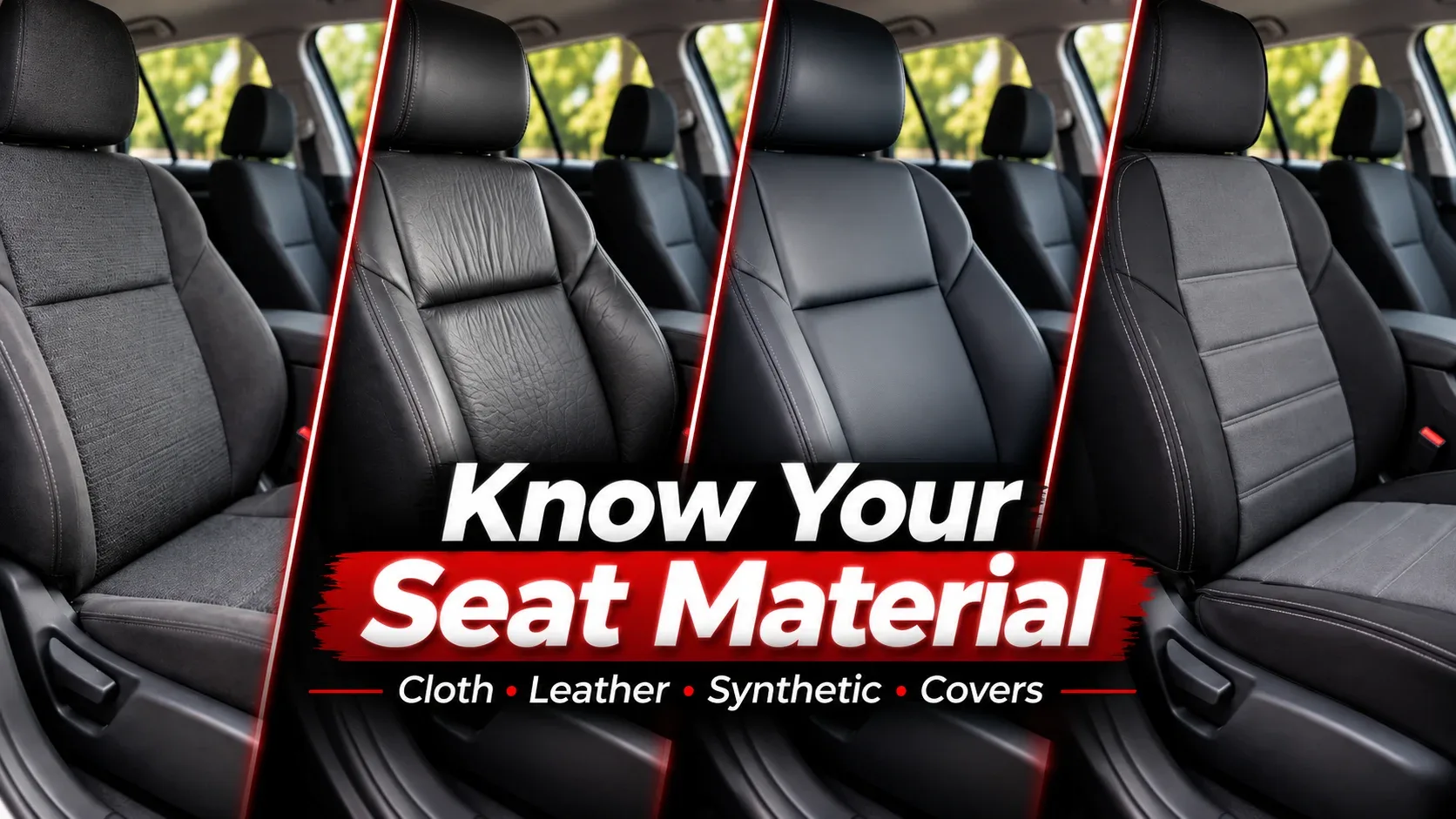
| Material | Good starting approach | Avoid |
|---|---|---|
| Cloth / fabric | Vacuum; spot-test fabric upholstery cleaner; use minimal moisture. | Soaking foam or aggressive scrubbing. |
| Genuine / coated leather | Use a manufacturer-compatible leather cleaner and soft microfiber towel. | Harsh degreasers, abrasive tools, excess water. |
| Synthetic leather / vinyl | Use the vehicle maker’s recommended cleaner for the specific surface. | Assuming genuine-leather conditioner is needed. |
| Removable seat covers | Follow the cover’s sewn-in care and fitment instructions. | Machine washing unless the label permits it. |
Choose Your Seat Material
Gather Your Car Seat Cleaning Supplies
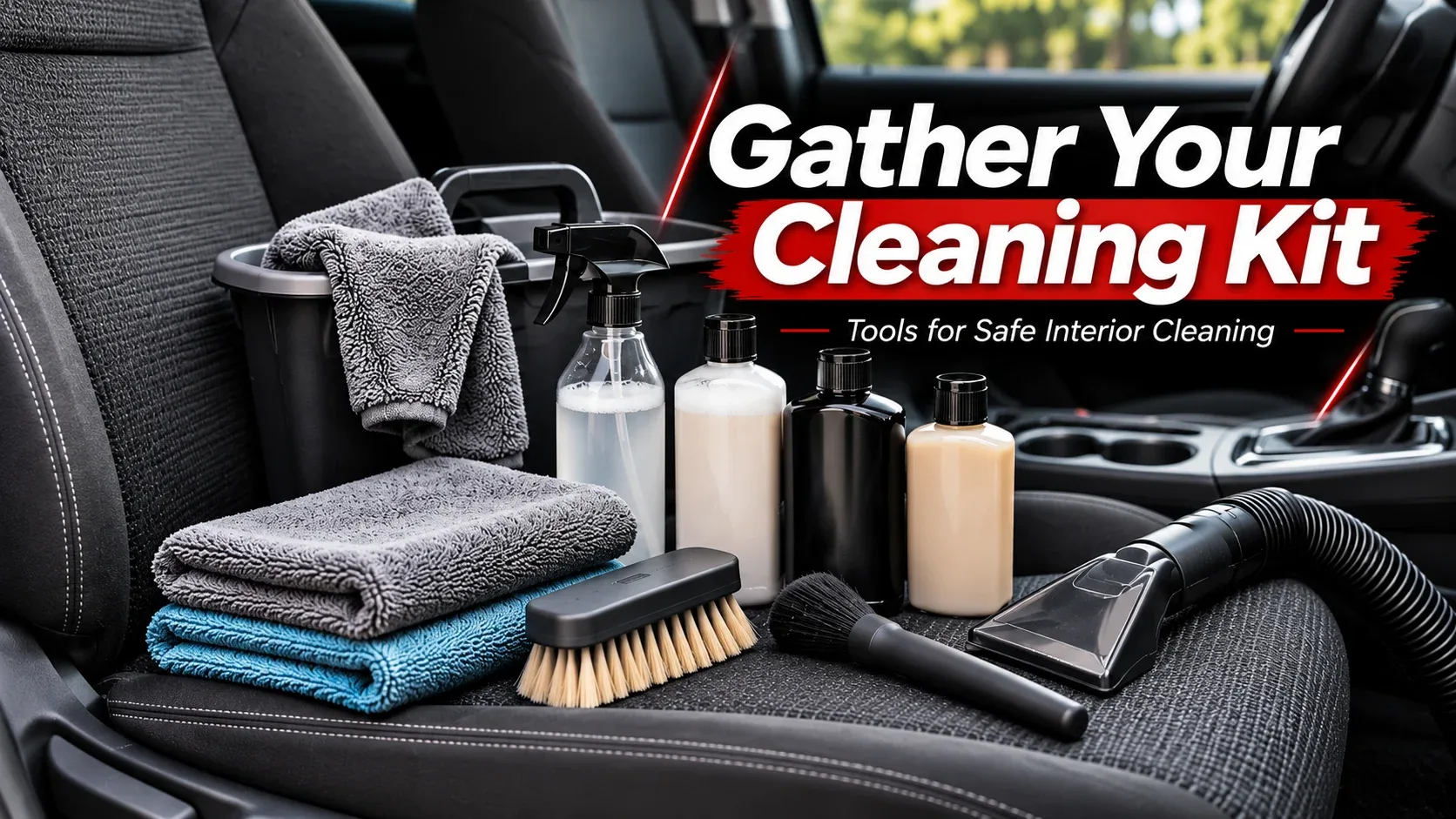
You don’t need a shelf full of detailing products. Start with basic tools that suit the surface.
Essentials
- Vacuum with a soft upholstery or crevice attachment
- Clean microfiber towels
- Material-compatible upholstery cleaner
- Soft detailing brush, if approved for the surface
- Good ventilation and drying time
Optional extras
- Fabric upholstery extractor (if the seat maker permits wet extraction)
- Soft interior detailing brush
- Leather conditioner for compatible leather finishes
- Removable seat cover approved for your vehicle
Before You Start: 5-Point Checklist
Tick each item as you prepare your car.
How to Clean Cloth Car Seats Step by Step
Back to the coffee stain on Michael’s passenger seat. Cloth upholstery can trap dirt in its weave, so cleaning involves removing loose debris first and keeping the underlying cushion as dry as possible.
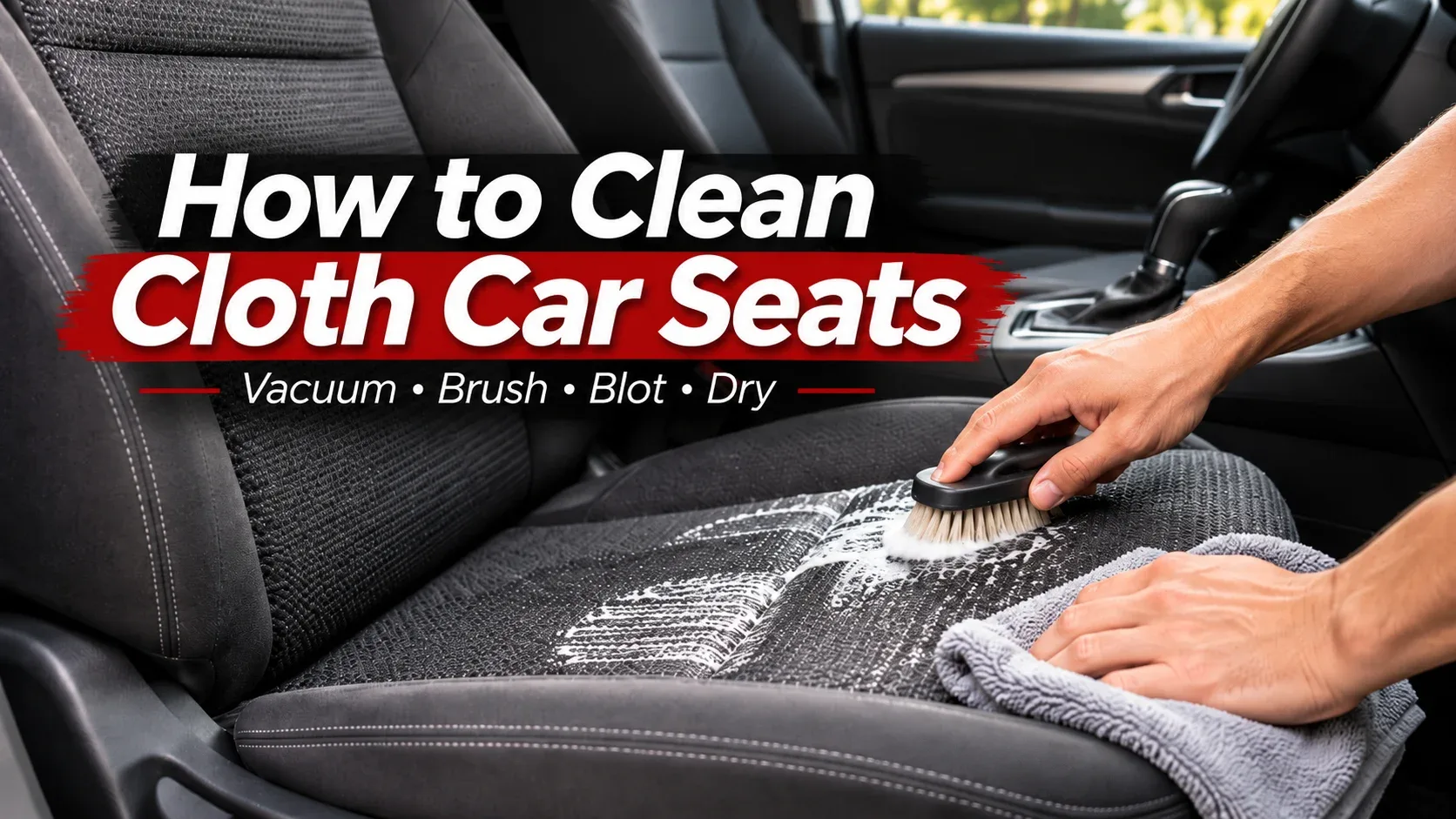
- Vacuum the entire seat. Clean the seat base, backrest, edges, and stitching. Loose grit can become abrasive when rubbed.
- Check the care instructions and patch-test. Apply your fabric-safe cleaner to an out-of-sight area exactly as the label directs. Check for discoloration or texture changes after it dries.
- Pre-treat the stain. Blot spills gently. For older stains, use the appropriate cleaner and allow only the recommended dwell time.
- Clean small sections. Apply a controlled amount of cleaner. Work gently with a suitable cloth or soft brush—don’t drench the seat.
- Lift dirt and residue. Blot with a clean towel, or extract according to equipment and upholstery instructions. Avoid repeated saturation.
- Dry fully before use. Ventilate the cabin and confirm the seat and padding are no longer damp.
How to Clean Leather Car Seats Without Damage
If you’re wondering, “How can I clean leather car seats?” the first rule is to be gentle. Many modern leather seats have a protective finish, so more aggressive washing is rarely the right approach.
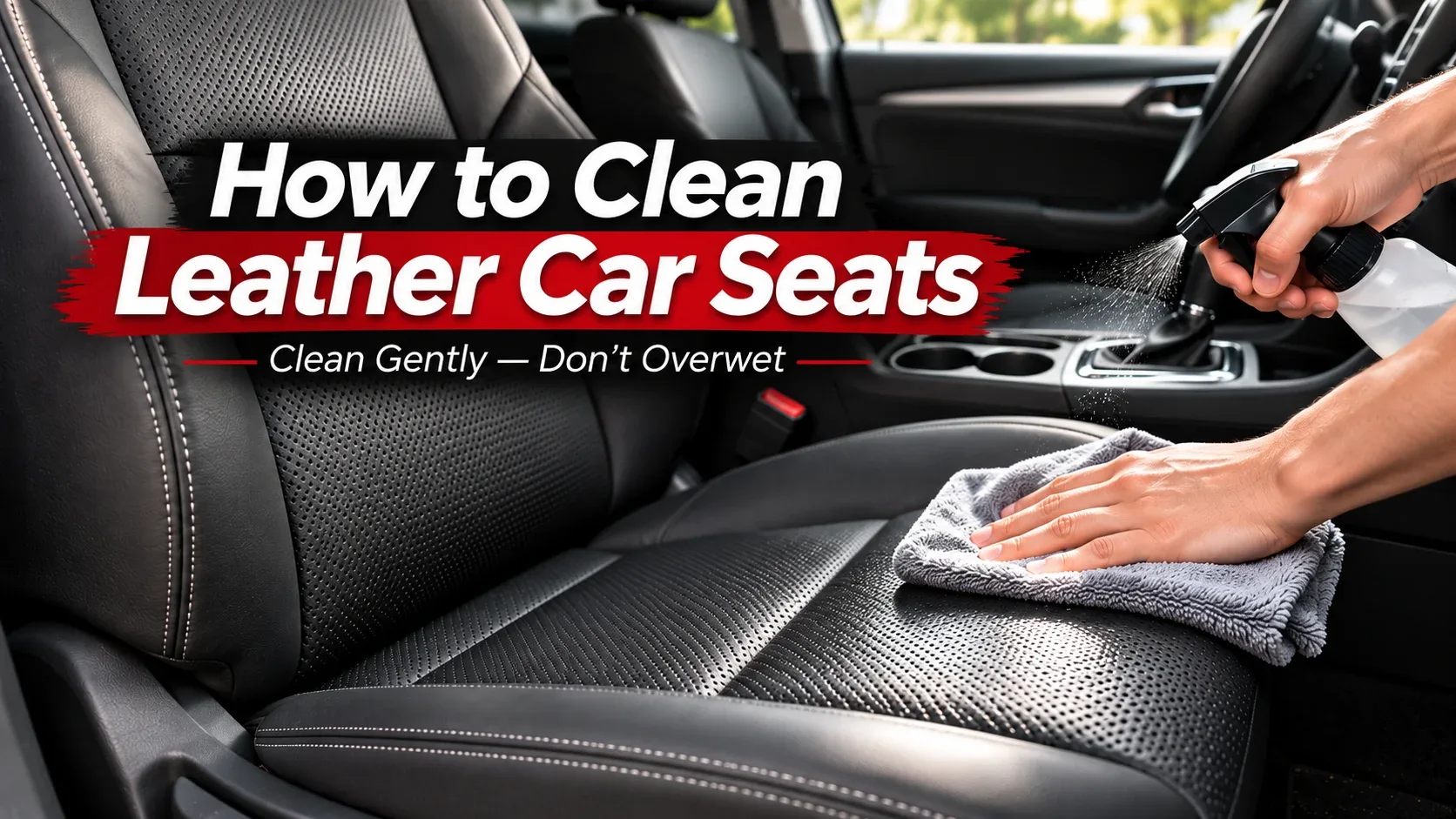
- Remove debris. Carefully vacuum folds and seams using a soft attachment.
- Confirm product compatibility. Read your owner’s manual and choose a cleaner approved for your leather’s finish; patch-test first.
- Apply gently. Use a clean microfiber applicator or towel as directed by the product. Avoid soaking the surface or spraying electrical controls.
- Wipe without heavy scrubbing. Lift dirt with light, controlled passes. Pay special attention to high-contact areas.
- Remove residue and dry. Follow the product directions, leaving the seat clean and not slippery.
Can You Wash Leather Car Seats with Water?
A slightly damp microfiber cloth may be allowed for some finishes, but don’t hose down, soak, or aggressively wash leather seats. Vehicle-specific guidance takes priority, and some materials require specially formulated cleaners.
Removing Coffee, Grease, Mud, and Food Stains
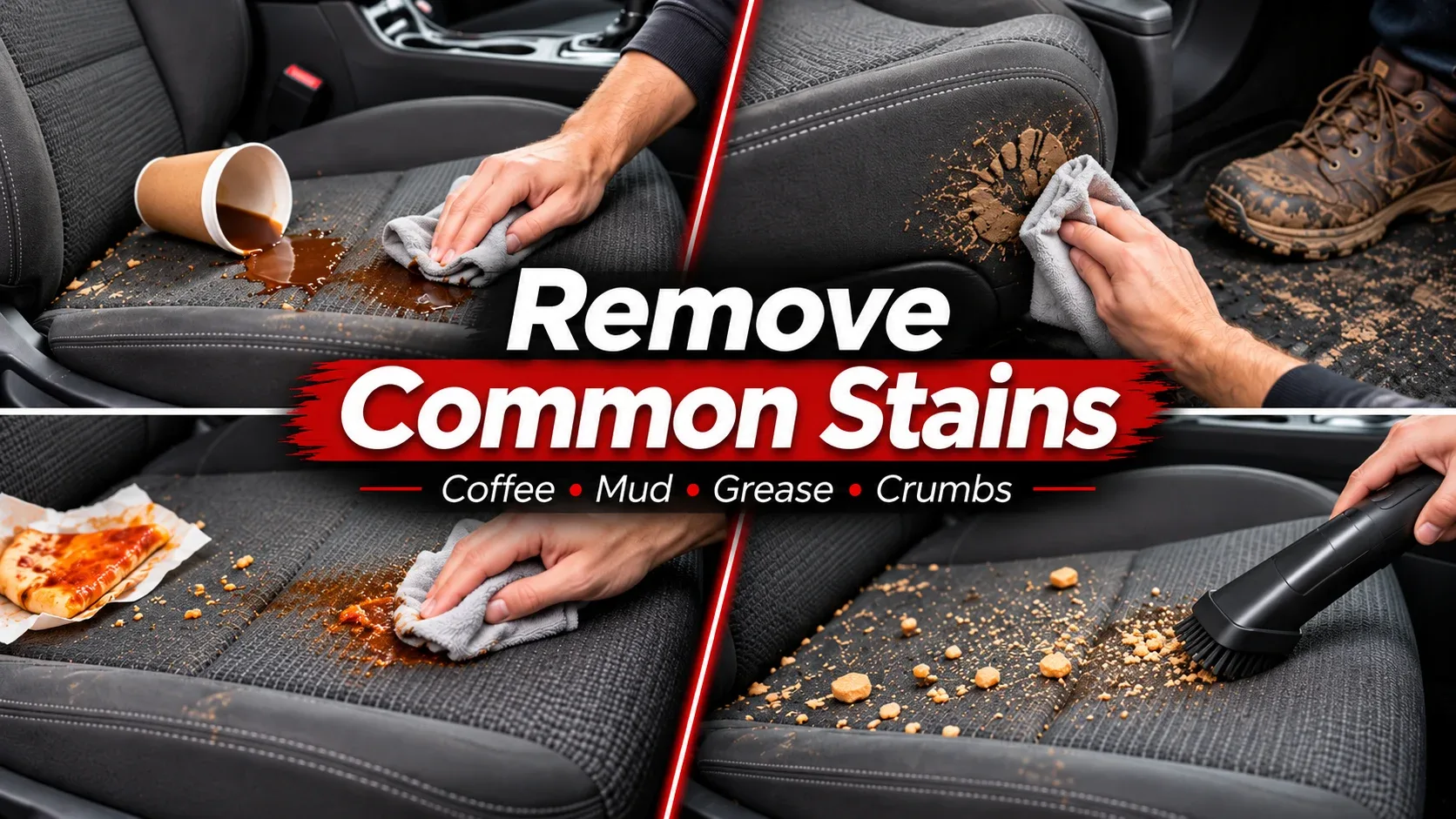
Not every stain should be attacked in the same way. Before you scrub, identify both the stain and the upholstery material. Prompt attention helps, but old stains may not come out completely.
| Stain | First step | What to avoid |
|---|---|---|
| Fresh coffee / tea | Blot promptly with a clean absorbent towel; use upholstery-compatible cleaner if needed. | Rubbing outward and spreading the spill. |
| Wet mud | Let it dry, then vacuum loose dirt before spot-cleaning. | Smearing wet grit across fabric. |
| Grease / oil | Lift excess carefully and use a cleaner approved for that surface and stain type. | Using strong household solvents without approval. |
| Food residue | Remove solids gently, then spot-clean according to material instructions. | Grinding crumbs into seams or fabric. |
If a spill has soaked deeply into the foam, if stains keep returning, or if odor persists despite thorough drying, consult a reputable upholstery detailer.
How to Clean Dashboard, Door Panels, and Interior Surfaces
Clean seats are only part of a fresh cabin. The next stop is where fingerprints and dust collect: the dashboard, center console, door panels, and cup holders.
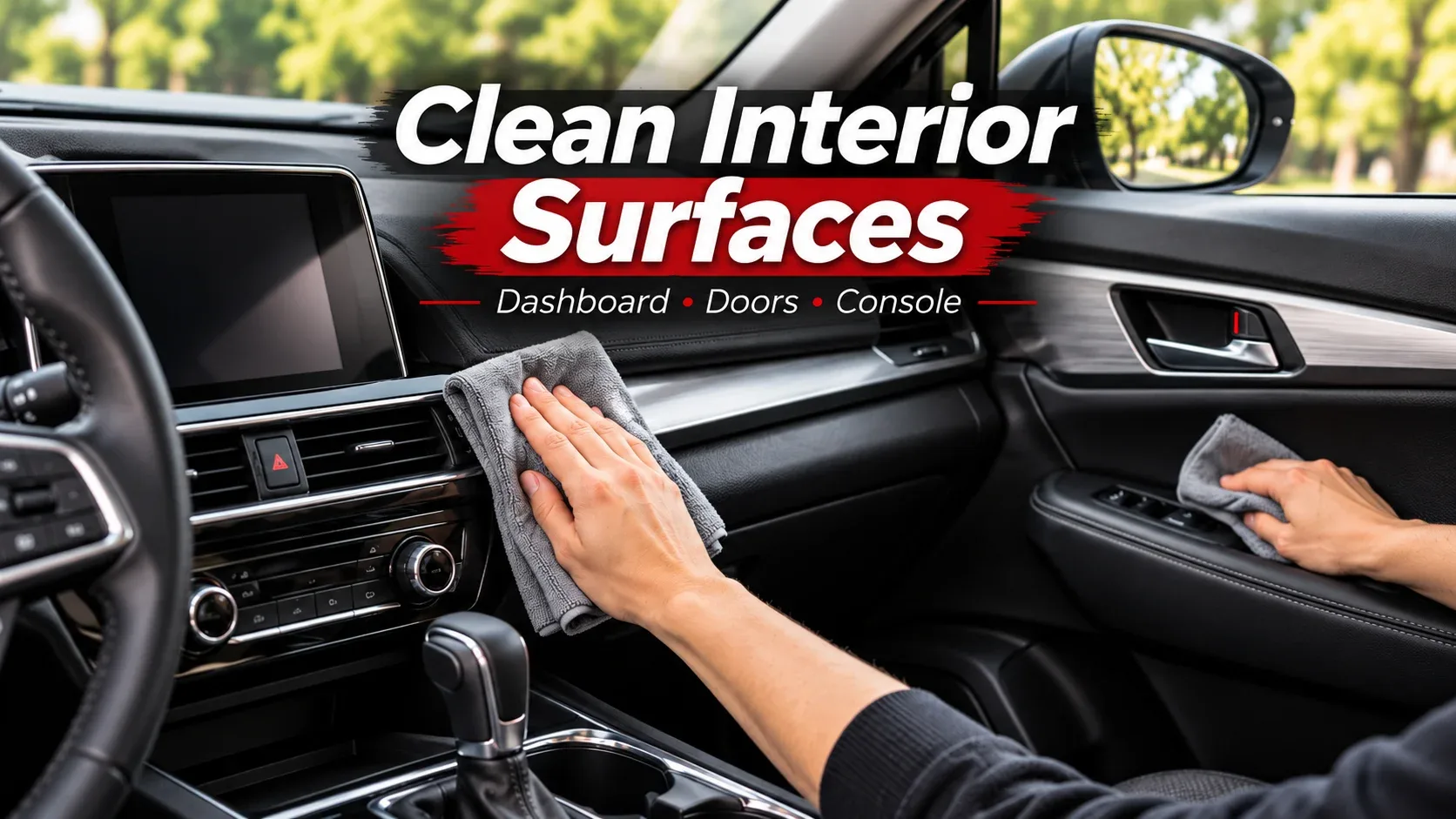
- Remove loose dust with a soft microfiber towel or gentle vacuum attachment.
- Use a surface-approved product on a cloth, following the instructions for plastic, vinyl, trim, and touch surfaces.
- Clean cup holders and accessible seams with a soft brush or cloth without forcing liquid into openings.
- Treat screens separately according to the display manufacturer’s instructions.
- Leave controls and contact surfaces residue-free. Avoid glossy or slippery dressings on the steering wheel, pedals, and other driving controls.
Should You Use Leather Conditioner for Car Seats?
A leather conditioner for car seats is not automatically necessary every time you clean. Whether it’s suitable depends on the leather type, finish, seat-maker recommendations, and product formulation.
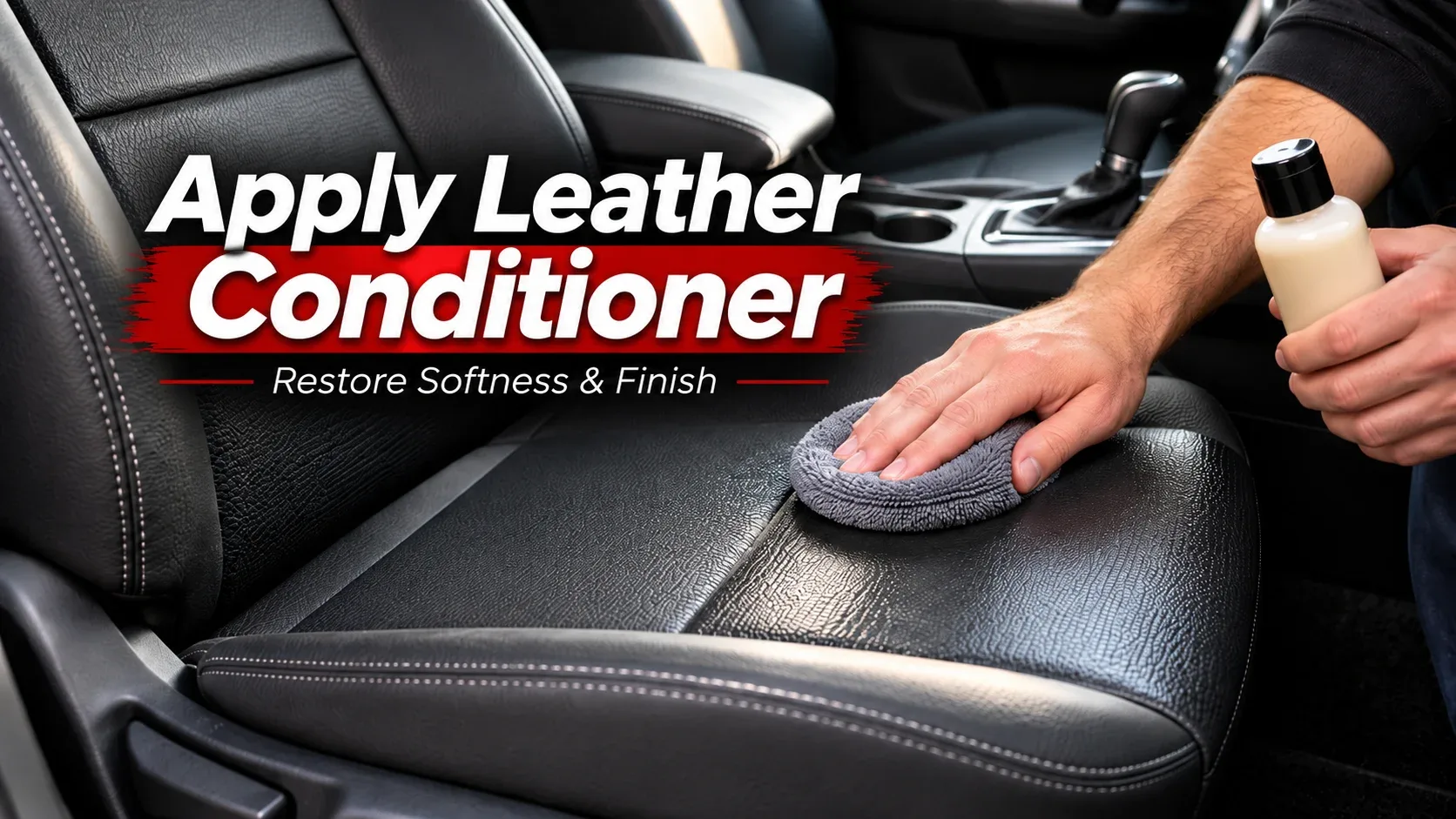
Before conditioning
- Check whether your seat material is genuine leather, coated leather, or synthetic.
- Confirm the manufacturer allows the conditioner and test in a hidden area.
- Clean the surface first and apply sparingly as the product directs.
- Remove excess; the finished seat should not feel greasy or slippery.
If the car maker recommends cleaning only, follow that direction. Conditioner cannot repair cracked or torn upholstery.
How to Clean Seat Covers and Protect Car Seats
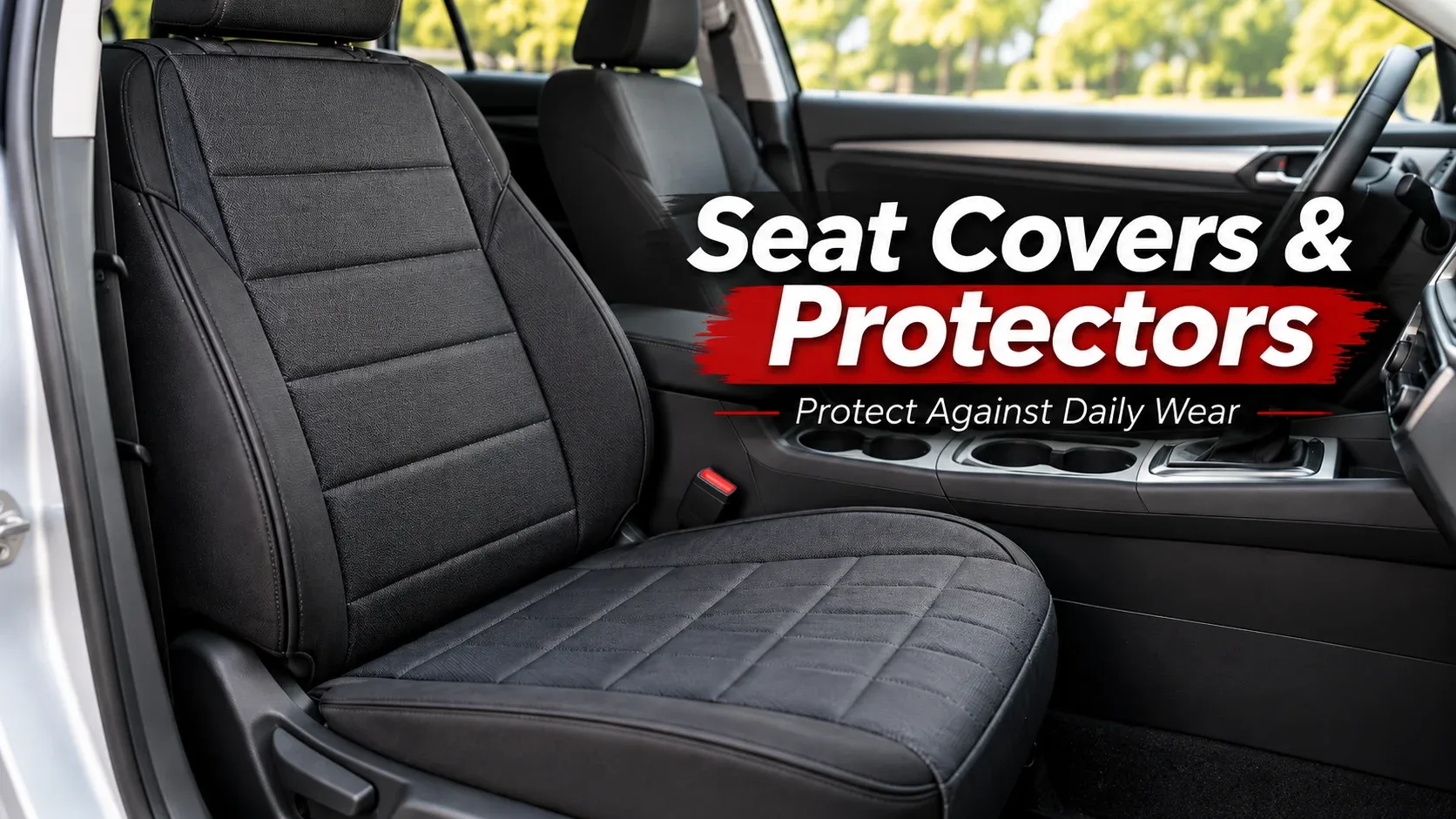
For parents, pet owners, and commuters, washable seat covers can help manage daily messes. But the terms seat covers for car seats and auto seat protectors describe products with different uses and fitment requirements.
Washing Removable Covers
Remove the cover only as its manufacturer permits. Check for machine-wash, hand-wash, and drying symbols; do not assume every cover is washable. Refit the cover only when dry and secured as directed.
Everyday Prevention
Keep an absorbent towel or cloth available for spills, vacuum regularly, and clean marks early. A cover may help in some situations, but it is not a substitute for safe, proper seat maintenance.
Common Car Seat Cleaning Mistakes to Avoid
Too much water
Moisture can remain trapped in padding and encourage odors. Use controlled amounts and allow proper drying.
Harsh chemicals
Bleach, strong degreasers, or unsuitable solvents may affect color or finish. Only use approved products.
Hard scrubbing
Stiff brushes and heavy pressure can roughen fabric or harm leather finishes. Work gently.
Skipping the patch test
A cleaner may behave differently on dyed or coated upholstery. Check a hidden area first.
How Often Should You Clean Car Seats?
There’s no single deep-cleaning timetable for every driver. Use the seat condition, manufacturer guidance, and your daily routine to decide what needs attention.
| When | Helpful action |
|---|---|
| Right after a spill | Blot or remove debris promptly using the appropriate method. |
| Weekly, or as needed | Vacuum crumbs, dirt, and high-use areas. |
| Monthly | Inspect seams and spot-clean new marks where necessary. |
| Occasionally | Deep-clean only when the material needs it and manufacturer instructions permit. |
Think of maintenance like brushing your teeth: small, regular habits help reduce the need for more intensive cleaning later.
Frequently Asked Questions About Cleaning Car Seats
Can I clean car seats with dish soap?
Don’t assume dish soap is compatible with your upholstery. It can leave residue or affect certain finishes. Use a product recommended for your specific seat material and follow its instructions.
How do I clean cloth car seats without a machine?
Vacuum, spot-test a suitable fabric cleaner, work gently in small sections, blot or wipe residue as instructed, and allow the seat to dry fully. Avoid soaking the foam.
How can I clean leather car seats safely?
Remove loose grit, use a leather-compatible cleaner approved for the finish, gently wipe with microfiber, and remove residue. Consult the vehicle manual for any special restrictions.
Can I wash leather car seats with water?
Some leather finishes permit a lightly damp microfiber towel, but soaking or rinsing the seat is not recommended. Follow your vehicle manufacturer’s guidance.
How long do car seats take to dry?
It varies with the material, amount of moisture, ventilation, humidity, and temperature. Don’t rely on a fixed number of hours; wait until the seat and padding are fully dry before normal use.
Can I machine wash removable car seat covers?
Only if the cover care label specifically allows machine washing. Follow the required temperature, cycle, detergent, and drying method.
Do I need leather conditioner for car seats?
Not always. Some leather finishes need different care, and synthetic leather may not benefit from conventional leather conditioner. Check your vehicle and product instructions first.
Are auto seat protectors safe for every vehicle?
No. Compatibility matters, especially around seat-mounted airbags, sensors, seat belts, and child restraints. Verify approval and fitting instructions before using any protector.
Final Thoughts: Clean Seats, More Comfortable Drives
Remember the coffee stain that started this story? A cleaner car begins with a careful plan, not stronger chemicals. Identify your upholstery, vacuum first, use a compatible cleaner gently, and allow everything to dry. A little regular attention can keep your cabin welcoming between deeper cleanings.
Save the checklist above for your next car-cleaning day—and always make your owner’s manual the final word on what belongs on your seats.
Editorial note: This guide provides general vehicle-care information and does not claim that individual methods were personally tested. Confirm material-specific care and accessory compatibility with the relevant manufacturers.