Buying a used car can be a smart way to save money, but only when you know what you are getting. A vehicle may look spotless, drive smoothly during a short test drive, and still have problems hidden beneath the surface. Previous accident damage, questionable mileage, poor maintenance, or incomplete paperwork can turn an attractive deal into an expensive mistake.
The good news is that many warning signs can be identified before money changes hands. You do not need to be a professional mechanic to investigate a used vehicle properly. A careful inspection, the right questions, and a little research can tell you a great deal about the car.
Here are the most important red flags to watch for when shopping for your next used vehicle.
1. The Price Looks Too Good to Be True
Everyone wants a bargain, but an unusually cheap vehicle deserves extra attention.
Start by comparing the asking price with similar cars of the same make, model, year, mileage, and specification. A small difference is normal, especially when a seller wants a quick sale. A dramatically lower price may indicate an issue the seller expects the buyer to discover later.
Ask why the vehicle is priced below comparable examples. There may be a perfectly reasonable explanation, but you should verify it rather than accepting it immediately. Avoid allowing a low price to rush your decision. Saving money at purchase means little if major repairs are required shortly afterward.
2. The Vehicle History Raises Questions
What you see during an inspection only tells you about the vehicle today. It does not necessarily tell you what happened several years ago. Before committing to a purchase, consider running a Car History Check and comparing the available records with the seller’s description and vehicle documents.
Depending on the vehicle and available data, historical records can help reveal information relating to mileage, registration, previous damage, ownership, theft, finance, or other important events. Do not treat a history report as a replacement for inspecting the car. Instead, use it as another source of evidence. The vehicle’s recorded history, documentation, physical condition, and seller’s story should make sense when considered together.
If they do not, investigate further before paying.
3. The VIN Does Not Match
The Vehicle Identification Number is one of the most important things to verify when examining a used car.
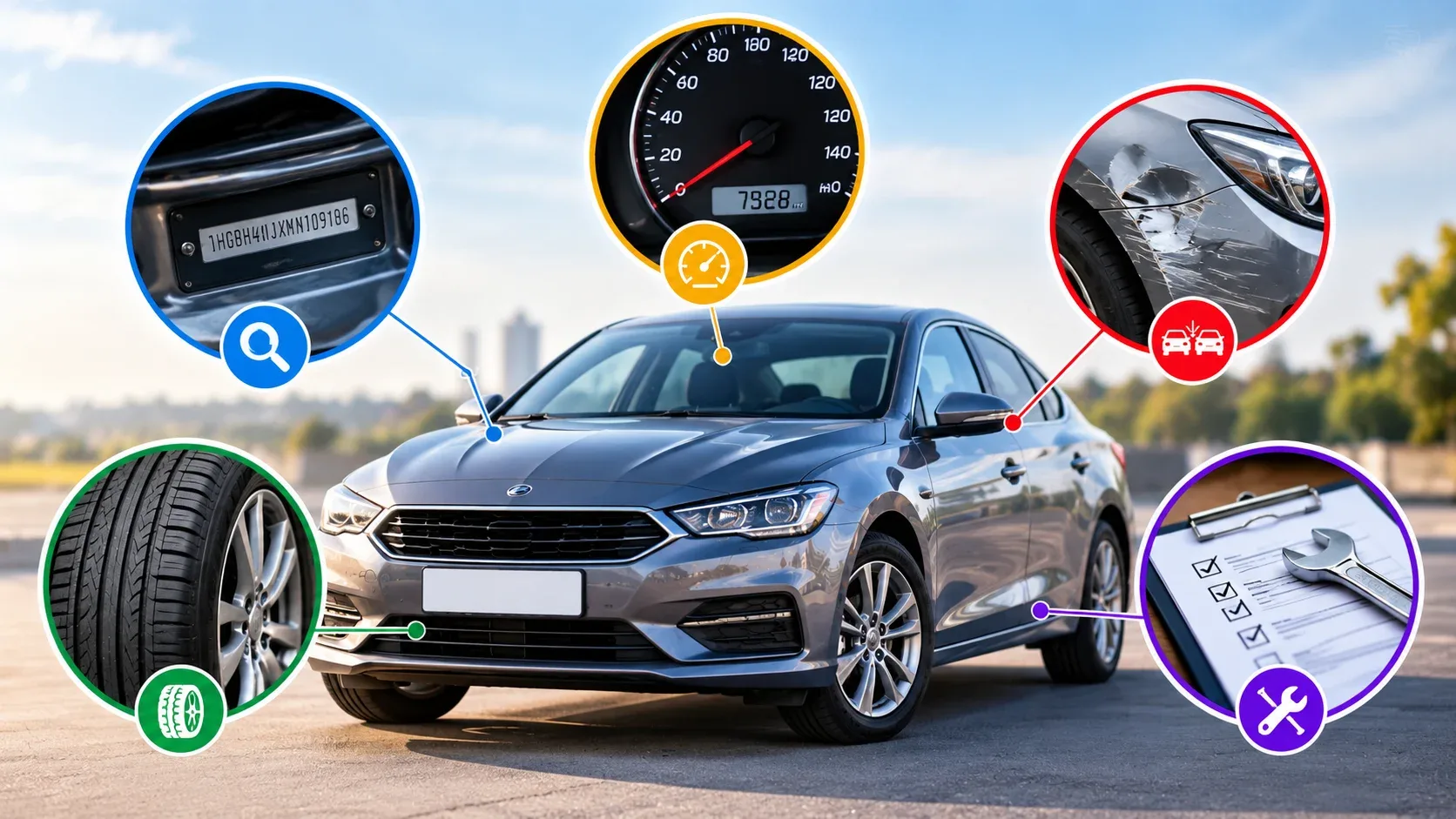
For vehicles using the standardized VIN format, it is generally a unique 17-character identifier. Depending on the manufacturer, you may find it at locations such as the lower windshield area, driver’s door frame, or another designated point on the vehicle. Compare the VIN displayed on the car with the registration and ownership documents.
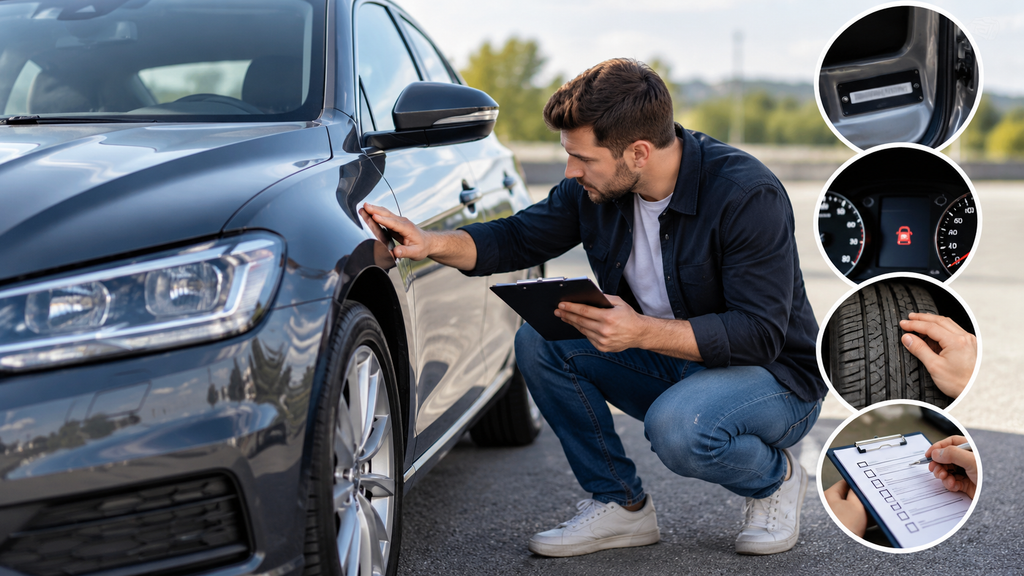
Look closely at the VIN plate or surrounding area as well. Scratches, unusual fasteners, damaged labels, inconsistent fonts, or evidence that a plate has been disturbed deserve further investigation. If the VIN on the vehicle does not match the paperwork, do not proceed until you understand exactly why.
4. Mileage Does Not Make Sense
Low mileage can increase a used car’s appeal, but the dashboard reading should never be your only evidence.
Look at the mileage in context.
Service invoices, inspection records, maintenance documentation, and other dated records can help establish how the mileage developed over time. Ideally, the figures should show a logical progression. For example, if an older record shows 90,000 miles but the dashboard currently displays 65,000, there is an obvious discrepancy that needs explaining.
Physical wear can provide additional clues. A vehicle advertised with very low mileage but showing significant wear on the steering wheel, pedals, driver’s seat, and frequently used controls deserves closer attention. Mileage alone does not determine condition, but inconsistencies should never be ignored.
5. Signs of Previous Accident Repairs
A repaired vehicle is not automatically a bad purchase. The important questions are how serious the damage was and whether the repairs were completed properly.
Inspect the bodywork in good daylight.
Look for differences in paint shade between neighboring panels, unusual gaps around doors or the hood, overspray on trim, uneven panel alignment, or paint texture that changes from one area to another. Check underneath the car where possible and inspect areas around the engine bay and trunk for unusual welding, bending, or repair marks.
Ask the seller directly whether the car has previously been involved in an accident. If repairs have been performed, request supporting invoices or documentation. A professional inspection becomes particularly valuable when you suspect significant structural repairs.
6. Missing or Incomplete Service Records
Maintenance history provides useful clues about how a vehicle has been treated.
A missing service book does not automatically mean the car has been neglected. Modern vehicles may have digital service histories, while independent garages may provide invoices instead of traditional stamps.
However, a seller should ideally be able to provide some evidence of regular maintenance.
Check for oil changes, scheduled servicing, brake work, timing belt or chain-related maintenance where applicable, and other major repairs. Pay particular attention to expensive maintenance items that should have been completed at a specific age or mileage.
If there is no documentation at all, factor that uncertainty into both your buying decision and the price you are prepared to pay.
7. Warning Lights Stay On
When you start the car, several dashboard warning lights normally illuminate briefly and then disappear.
Pay attention to what happens next.
Engine, ABS, airbag, transmission, battery, or other warning lights that remain illuminated may indicate a fault requiring diagnosis. Also be cautious if expected warning lights do not illuminate at startup at all. You want to know that the dashboard warning system is functioning normally.
Do not accept a vague explanation such as “it’s only a sensor” without evidence. Even if the problem is minor, obtaining a diagnostic scan before purchase can provide useful information.
8. The Seller Avoids Basic Questions
How the seller behaves can be almost as revealing as the car itself.
Ask straightforward questions:
Why are you selling the vehicle? How long have you owned it? Has it been involved in an accident? What maintenance has recently been completed? Are there any known mechanical problems?
A genuine seller may not know every detail, especially if they have owned the vehicle for only a short period. However, repeatedly avoiding reasonable questions or providing contradictory answers should make you more cautious.
Be particularly careful if the seller pressures you to pay a deposit immediately because another buyer is supposedly waiting. A legitimate opportunity should survive enough time for basic due diligence.
9. UK Vehicle Records Do Not Match the Story
UK vehicles have several records that can be particularly useful when evaluating a used car.
If you are considering a vehicle originating from the UK, a UK car history check can help you review available information such as MOT and mileage history, while more detailed checks may include records relating to write-offs, outstanding finance, theft, ownership, and other risk indicators.
Compare those records with the current odometer, paperwork, condition of the vehicle, and seller’s explanation.
Previous MOT advisories are also worth reviewing. One advisory does not necessarily make a car a poor purchase, but repeated issues may show how maintenance has been handled over time. Any significant contradiction between recorded information and what you have been told should be resolved before you buy.
10. The Test Drive Reveals Problems
Never underestimate the value of a proper test drive.
Whenever possible, start the vehicle from cold. Some mechanical problems are easier to detect before the engine reaches operating temperature. Listen for unusual rattles, knocks, squeaks, or grinding noises. Check that the engine accelerates smoothly and the transmission operates correctly.
Pay attention to steering and braking. The vehicle should not pull noticeably to one side under normal conditions. Excessive vibration through the steering wheel can also indicate issues that require investigation.
Test the air conditioning, windows, lights, infotainment system, parking sensors, cameras, and other equipment. A ten-minute drive can reveal problems that are impossible to identify from photographs.
11. Tyres Show Uneven Wear
Tyres can tell you more than simply whether a replacement set is due.
Inspect all four tyres rather than checking only the easiest one to see.
Uneven wear across a tyre may point toward alignment, suspension, or other mechanical issues. Different tyre brands or dramatically different tread depths are not automatically serious problems, but they can provide clues about how the vehicle has been maintained.
Also inspect the sidewalls for cracking, bulges, cuts, or other visible damage.
Tyres are consumable items, but replacing a complete set shortly after purchasing a car can significantly change the real cost of your “bargain.”
12. The Seller Refuses an Independent Inspection
This is one of the biggest warning signs.
For a significant used-car purchase, consider having the vehicle inspected by an independent qualified mechanic before completing the transaction.
A pre-purchase inspection can identify mechanical, electrical, suspension, braking, fluid-leak, and other problems that an average buyer may overlook.
No inspection can guarantee that a vehicle will remain problem-free, but it can reduce uncertainty.
If a seller strongly objects to a reasonable independent inspection without providing a convincing explanation, ask yourself why.
Build the Complete Picture Before Buying
The safest used-car decisions are rarely based on one piece of information. A clean history report does not guarantee perfect mechanical condition. Likewise, a car that drives beautifully today may still have historical issues worth knowing about.
Combine several sources of evidence: inspect the vehicle carefully, verify its VIN and paperwork, review available historical records, check its maintenance history, take a meaningful test drive, and consider an independent mechanical inspection.
Most importantly, do not allow excitement about a particular vehicle to override obvious warning signs. Taking an extra hour to investigate a used car before buying it can potentially save you from months of repairs, unexpected expenses, and regret later.