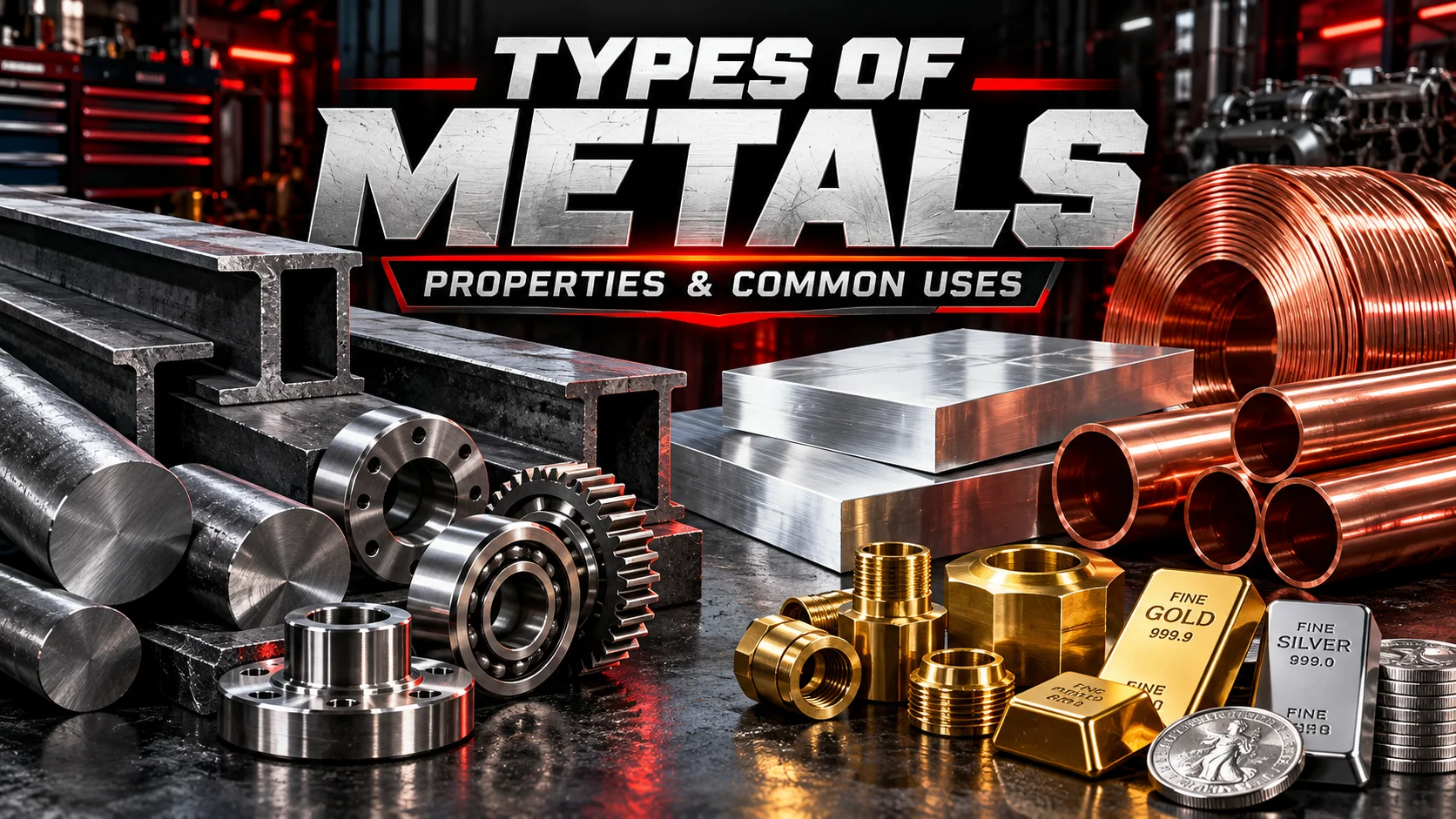

Metals are used in vehicles, buildings, tools, electronics, aircraft, machinery, medical equipment, and thousands of everyday products. This guide explains the major types of metal, how they differ, their key properties, and where each metal is commonly used.
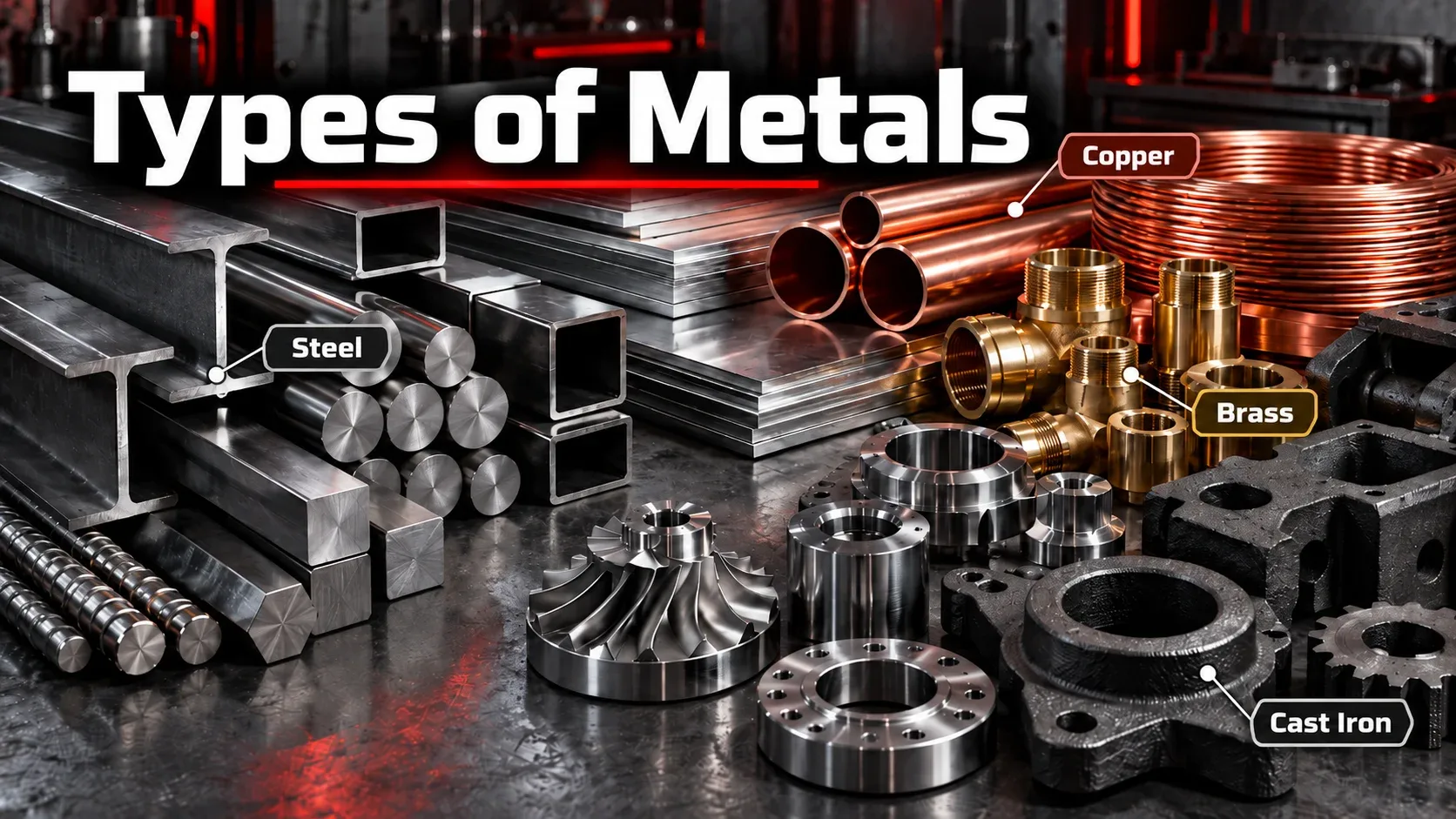
What Are the Main Types of Metals?
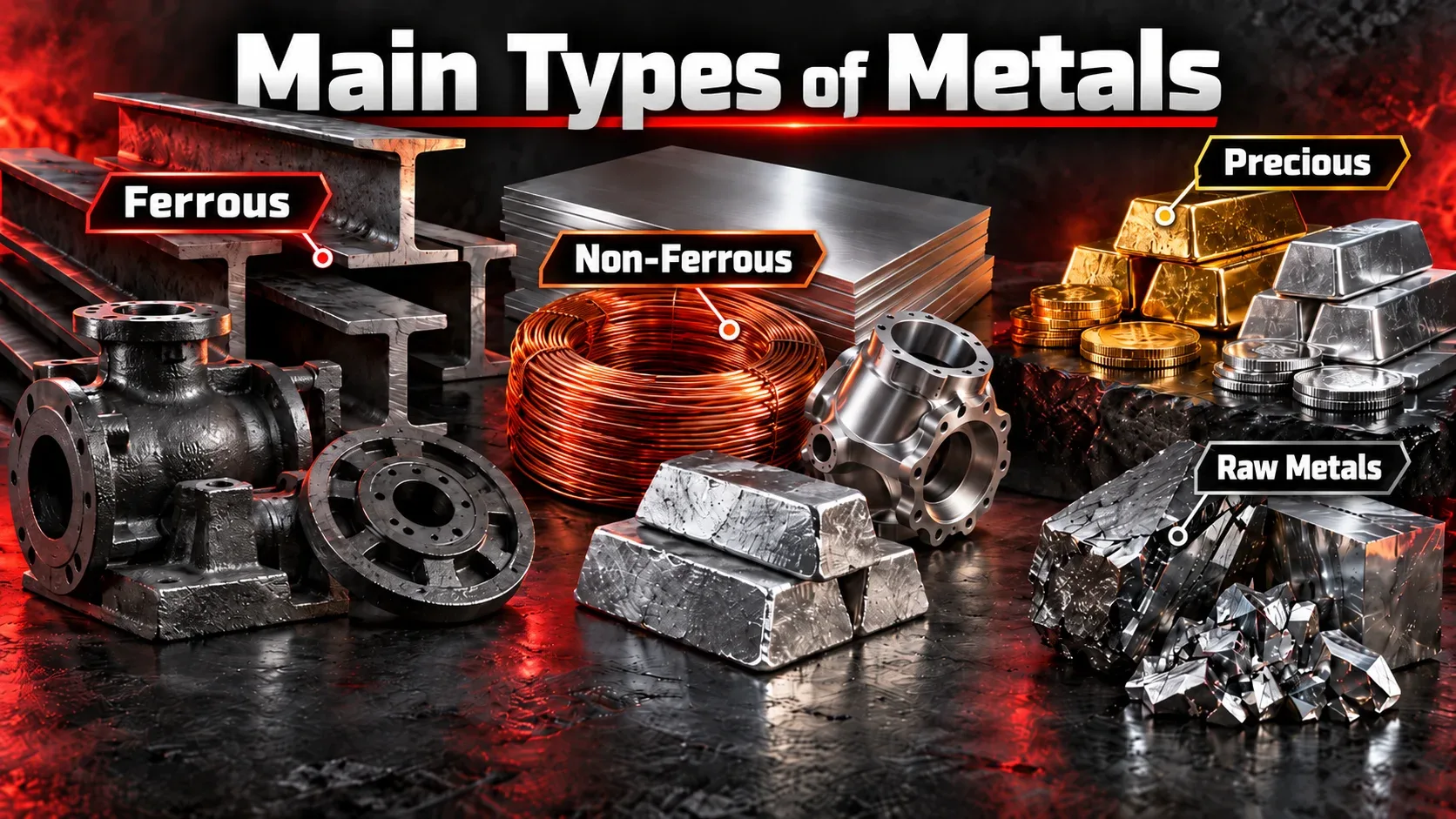
Metals can be classified in several ways, but most engineering and industrial materials fall into a few major groups. These metal types differ in weight, strength, corrosion resistance, conductivity, temperature resistance, and cost.
Ferrous Metals
Iron-based materials such as carbon steel, stainless steel, cast iron, alloy steel, and tool steel.
Non-Ferrous Metals
Metals including aluminum, copper, titanium, zinc, magnesium, nickel, tin, and lead.
Pure Metals
Materials consisting mainly of one metallic element, such as copper, aluminum, or zinc.
Metal Alloys
Combinations of elements created to improve properties such as strength, hardness, wear resistance, or corrosion resistance.
Precious Metals
Valuable and corrosion-resistant metals such as gold, silver, platinum, and palladium.
Specialty Metals
Metals such as tungsten, cobalt, molybdenum, niobium, and tantalum used for demanding engineering applications.
What Is a Metal?
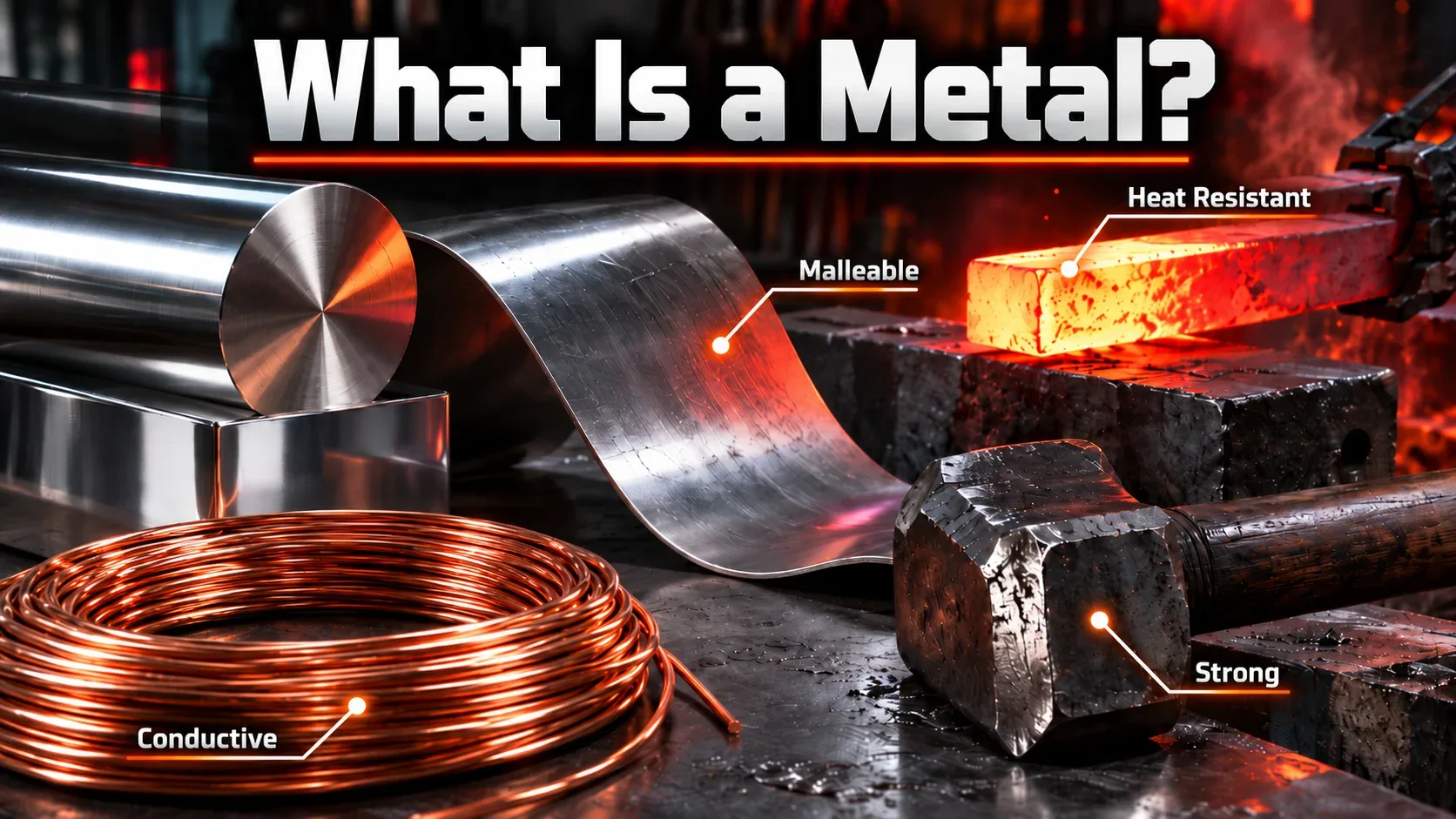
A metal is a material that generally conducts heat and electricity well and offers useful physical and mechanical properties. Many metals can be formed, machined, cast, welded, or shaped into components for industrial and everyday applications.
Metals can differ dramatically in performance. Aluminum is valued for low weight, copper for electrical conductivity, steel for strength and affordability, and titanium for its strength-to-weight ratio and corrosion resistance.
Why Metal Properties Can Vary
The exact performance of a metal depends on its composition, alloy grade, heat treatment, manufacturing process, temperature, surface condition, and working environment. Two grades of the same metal can therefore have very different characteristics.
Ferrous Metals
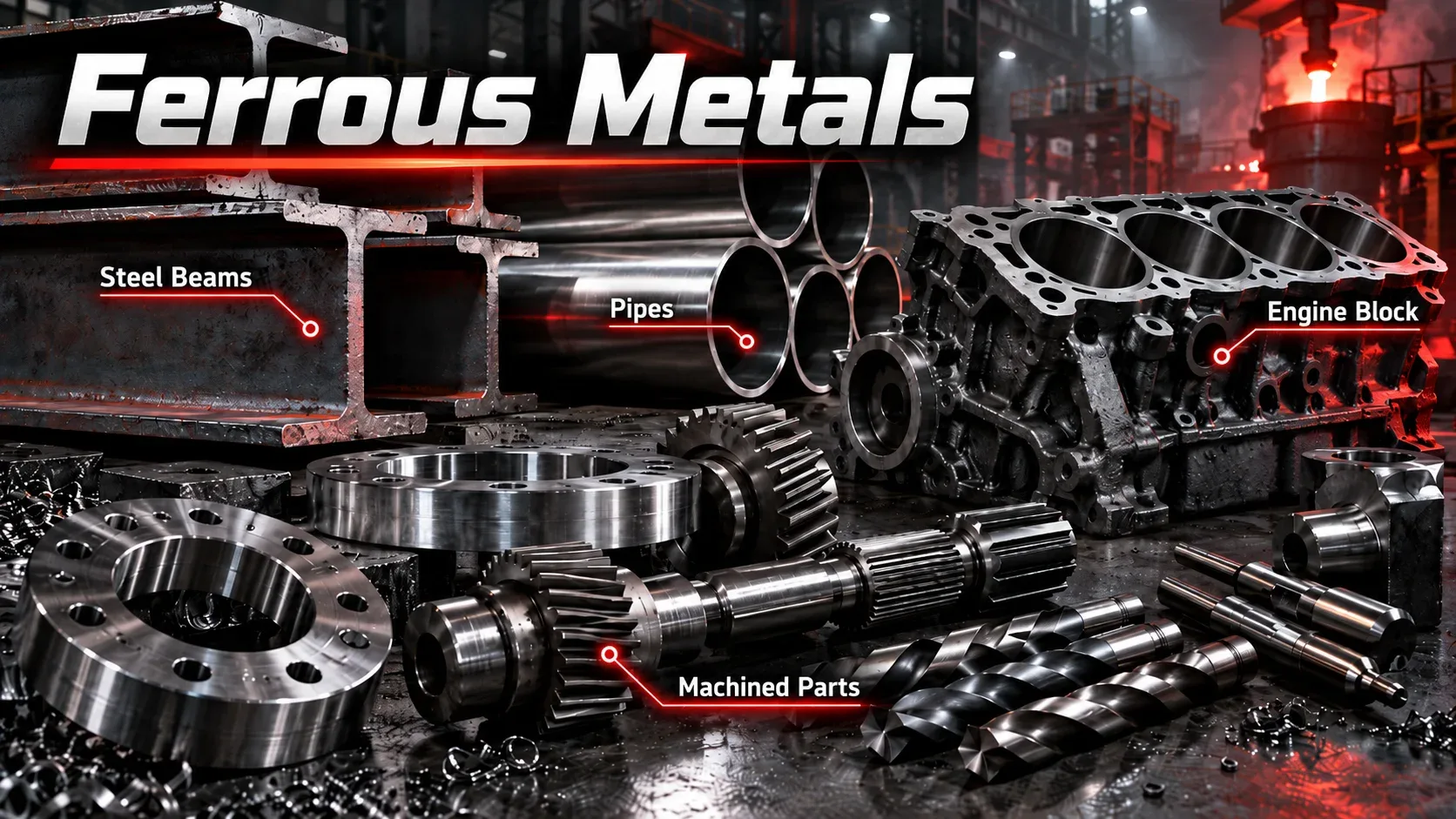
Ferrous metals are based primarily on iron. They are among the most widely used materials in construction, automotive manufacturing, machinery, infrastructure, and industrial equipment.
Iron
Iron is the primary base metal used to produce steel and cast iron. Pure iron is relatively soft, so it is usually combined with carbon and other elements.
Carbon Steel
Carbon steel contains iron and carbon. It is widely used in structures, vehicle components, shafts, machinery, tools, and fabricated products.
Stainless Steel
Stainless steel contains chromium, which helps create a protective surface layer. It is widely used where corrosion resistance and cleanliness are important.
Cast Iron
Cast iron has excellent castability and vibration-damping ability. It is commonly found in engine blocks, brake components, cookware, machine bases, and pipes.
Tool Steel
Tool steels are designed for hardness, wear resistance, and durability. They are commonly used for drills, dies, punches, molds, and cutting tools.
Alloy Steel
Alloy steel contains additional elements such as nickel, chromium, manganese, or molybdenum to improve specific properties.
Non-Ferrous Metals
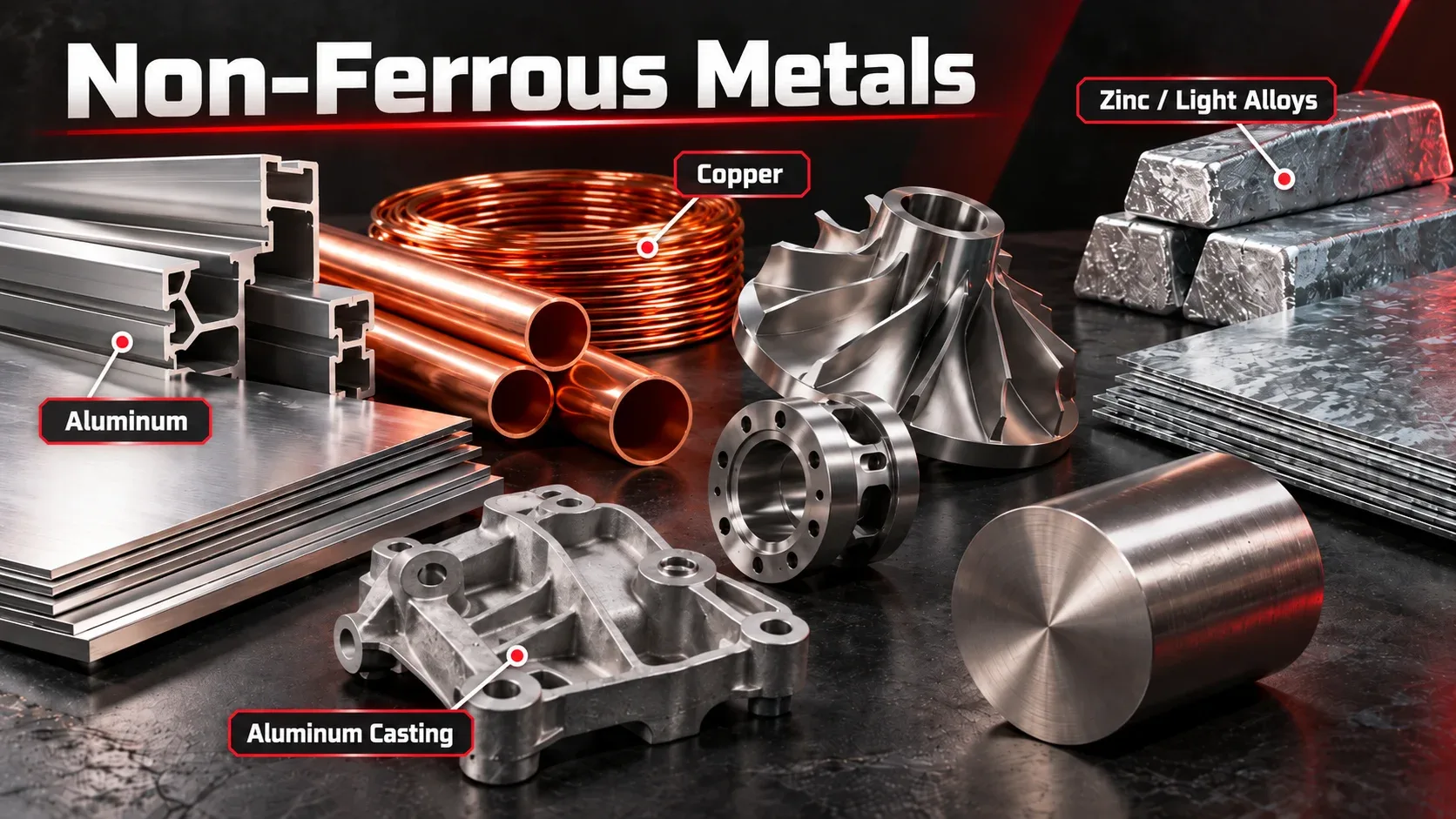
Non-ferrous metals are not primarily iron-based. Many offer advantages such as lower weight, good corrosion resistance, electrical conductivity, or non-magnetic behavior.
Aluminum
Lightweight, corrosion-resistant, and widely used in aircraft, vehicles, cans, structural frames, wheels, and machinery.
Copper
An excellent conductor of electricity and heat. Copper is commonly used in wiring, motors, electronics, heat exchangers, and plumbing.
Titanium
Strong, relatively lightweight, and highly corrosion-resistant. Titanium is used in aerospace, medical, marine, and performance engineering applications.
Zinc
Zinc is frequently used to protect steel through galvanizing and is also used in batteries, alloys, and die-cast parts.
Magnesium
Magnesium is one of the lightest metals used for structural applications and is found in vehicles, electronics, and aerospace components.
Nickel
Nickel is valued for corrosion resistance and high-temperature performance and is used in stainless steels, batteries, coatings, and superalloys.
Pure Metals vs Alloys
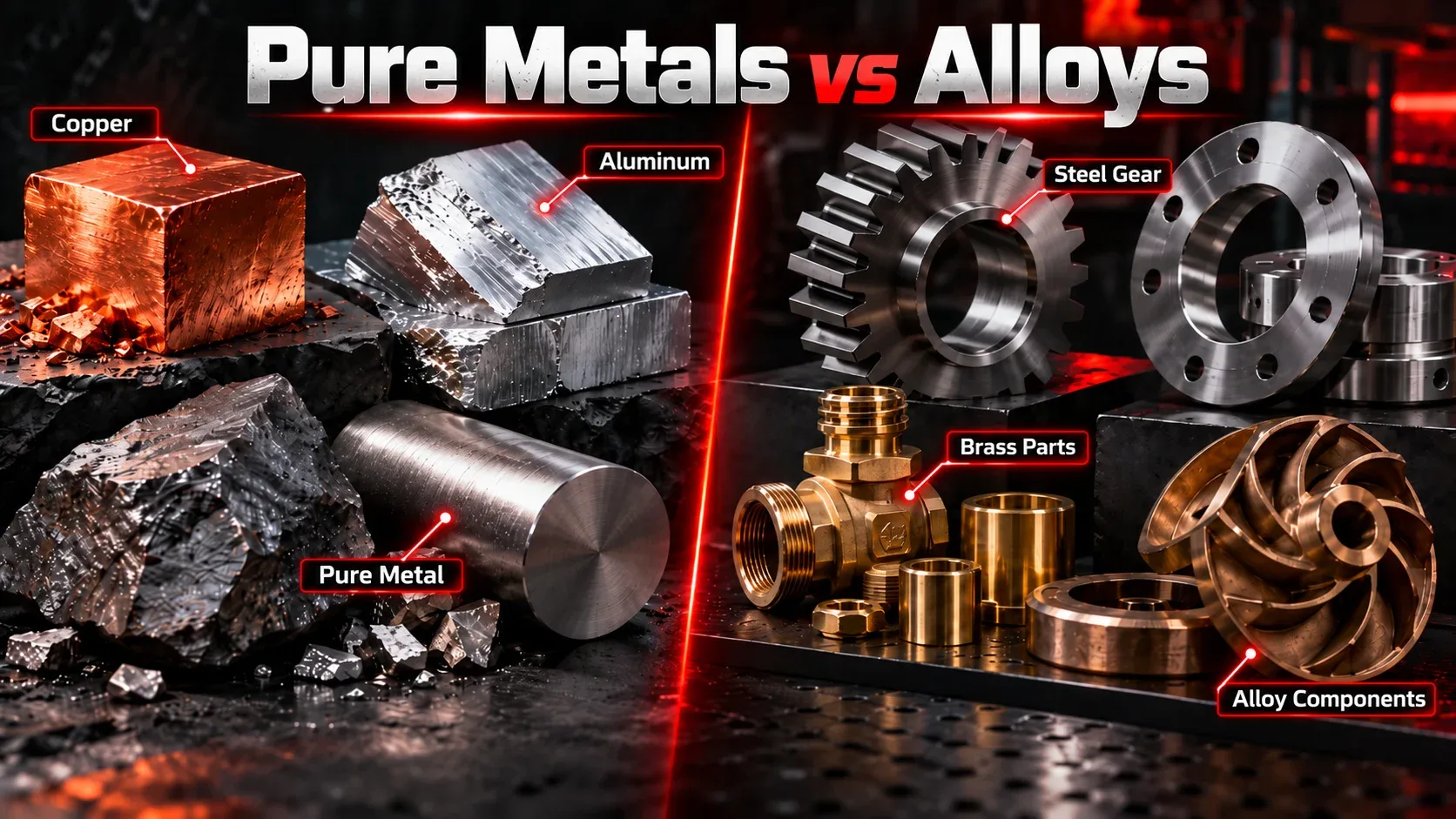
Pure metals consist mainly of one metallic element, while alloys combine a base metal with additional elements to modify its performance.
Examples of Pure Metals
- Iron
- Copper
- Aluminum
- Titanium
- Zinc
- Gold
- Silver
Examples of Alloys
- Steel — iron and carbon
- Stainless steel — iron and chromium
- Brass — copper and zinc
- Bronze — commonly copper and tin
- Aluminum alloys
- Titanium alloys
Common Metal Alloys and Their Uses
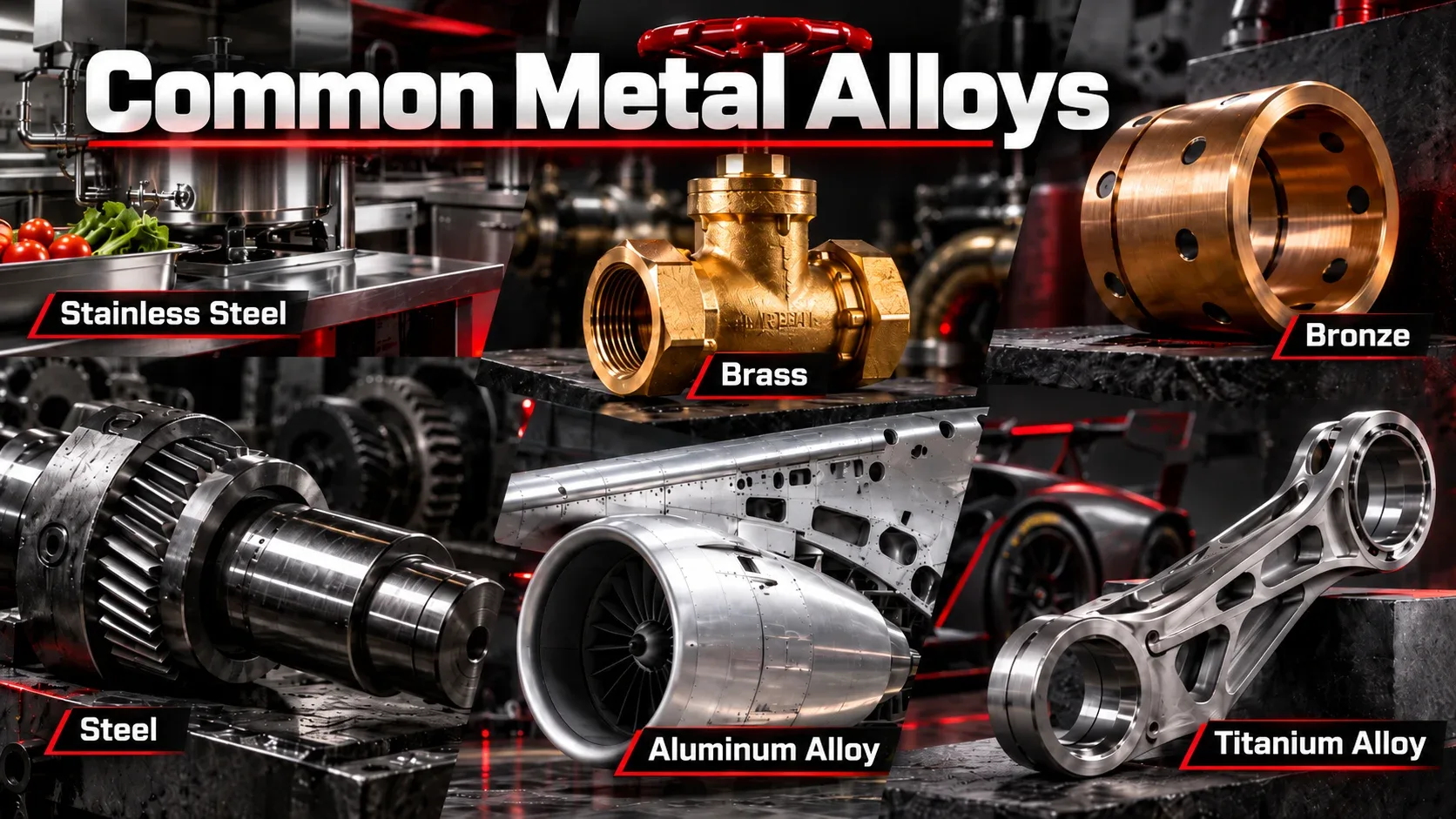
| Alloy | Main Elements | Key Properties | Common Uses |
|---|---|---|---|
| Carbon Steel | Iron + Carbon | Strong, affordable, versatile | Structures, machinery, automotive parts |
| Stainless Steel | Iron + Chromium | Corrosion-resistant, durable | Food equipment, medical tools, exhaust systems |
| Brass | Copper + Zinc | Machinable, corrosion-resistant | Valves, fittings, instruments |
| Bronze | Copper + Tin or other elements | Wear-resistant, corrosion-resistant | Bearings, bushings, marine hardware |
| Aluminum Alloy | Aluminum + Mg/Si/Cu/Zn | Lightweight, good strength | Aircraft, vehicles, frames |
| Titanium Alloy | Titanium + alloying elements | High strength-to-weight ratio | Aerospace, medical, motorsport |
List of Metals and Common Examples
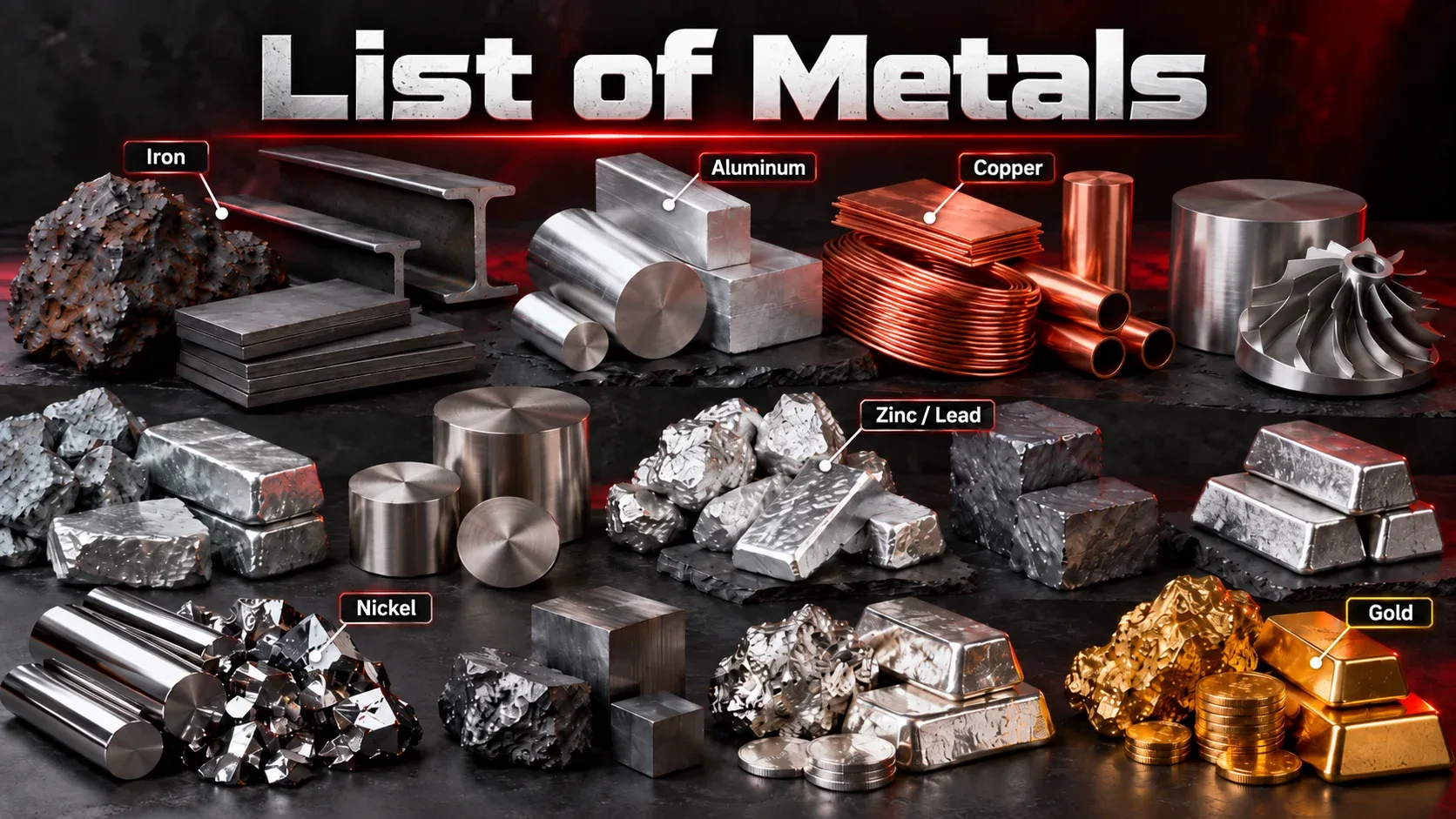
This list of metals includes many of the most important industrial, engineering, precious, and specialty metals.
| Metal | Symbol | Category | Key Property | Common Use |
|---|---|---|---|---|
| Iron | Fe | Ferrous | Strong base metal | Steel production |
| Aluminum | Al | Non-ferrous | Lightweight | Aircraft and vehicles |
| Copper | Cu | Non-ferrous | Excellent conductivity | Electrical wiring |
| Titanium | Ti | Non-ferrous | High strength-to-weight ratio | Aerospace and medical |
| Zinc | Zn | Non-ferrous | Corrosion protection | Galvanizing |
| Nickel | Ni | Non-ferrous | Heat and corrosion resistance | Superalloys and batteries |
| Magnesium | Mg | Non-ferrous | Very low density | Lightweight components |
| Tin | Sn | Non-ferrous | Corrosion resistance | Solder and coatings |
| Lead | Pb | Non-ferrous | Dense and soft | Batteries and shielding |
| Chromium | Cr | Specialty | Hard and corrosion-resistant | Alloying and plating |
| Tungsten | W | Refractory | Very high melting point | Cutting tools |
| Cobalt | Co | Specialty | High-temperature performance | Superalloys |
| Silver | Ag | Precious | Excellent conductivity | Electronics and jewelry |
| Gold | Au | Precious | Corrosion-resistant | Electronics and jewelry |
| Platinum | Pt | Precious | Chemically stable | Catalysts |
| Palladium | Pd | Precious | Catalytic performance | Catalytic converters |
| Molybdenum | Mo | Specialty | High-temperature strength | Alloy steels |
| Niobium | Nb | Specialty | Improves alloy strength | High-strength steel |
| Tantalum | Ta | Specialty | Excellent corrosion resistance | Electronics and medical uses |
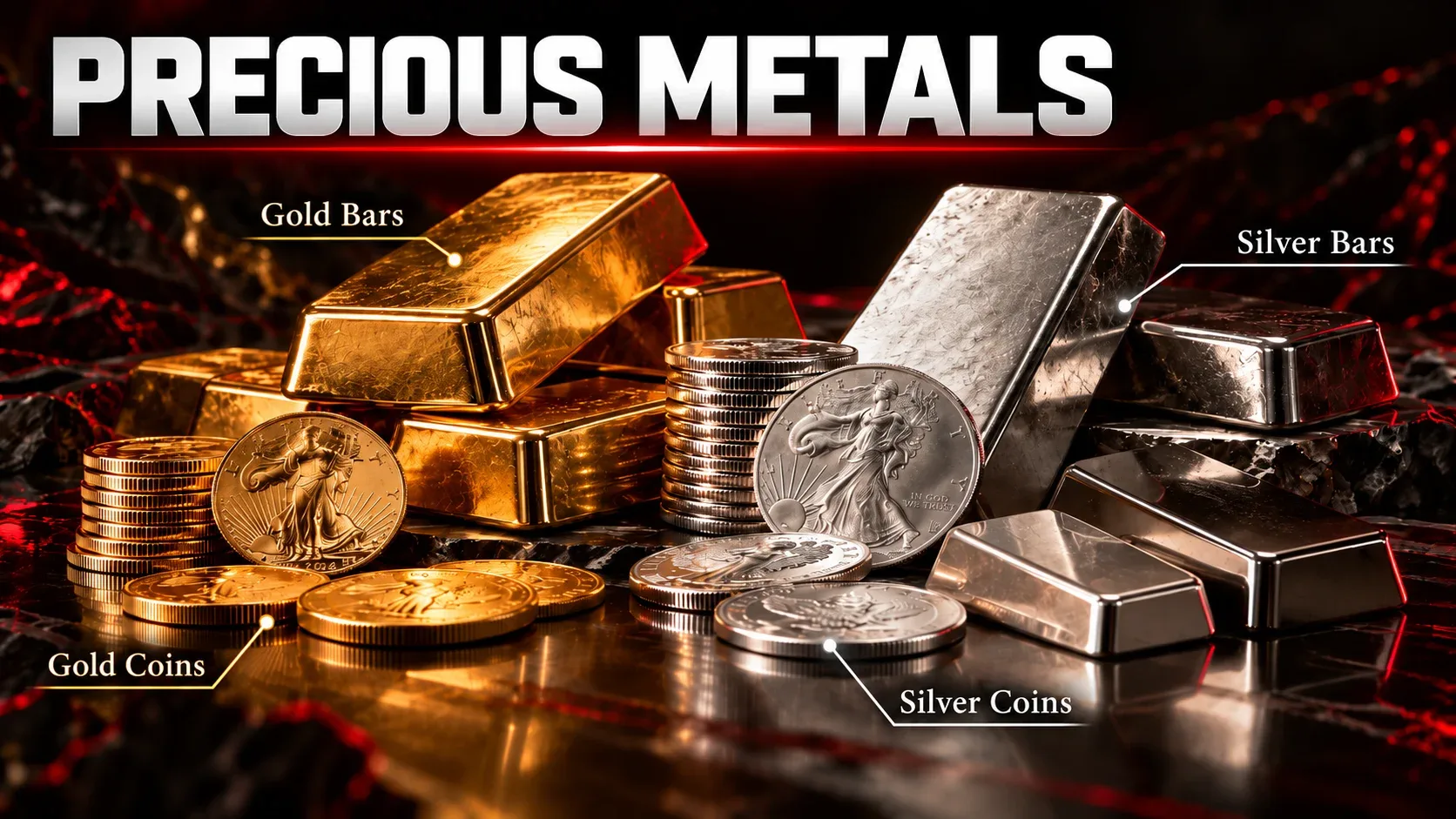
Precious Metals
Gold
Gold is highly resistant to oxidation and is used in electronics, electrical contacts, jewelry, and specialized industrial applications.
Silver
Silver offers exceptionally high electrical and thermal conductivity and is used in electronics, contacts, coatings, and jewelry.
Platinum
Platinum is chemically stable and used in catalysts, laboratories, jewelry, and industrial processes.
Palladium
Palladium is important in catalytic converters, electronics, chemical processing, and precious-metal products.
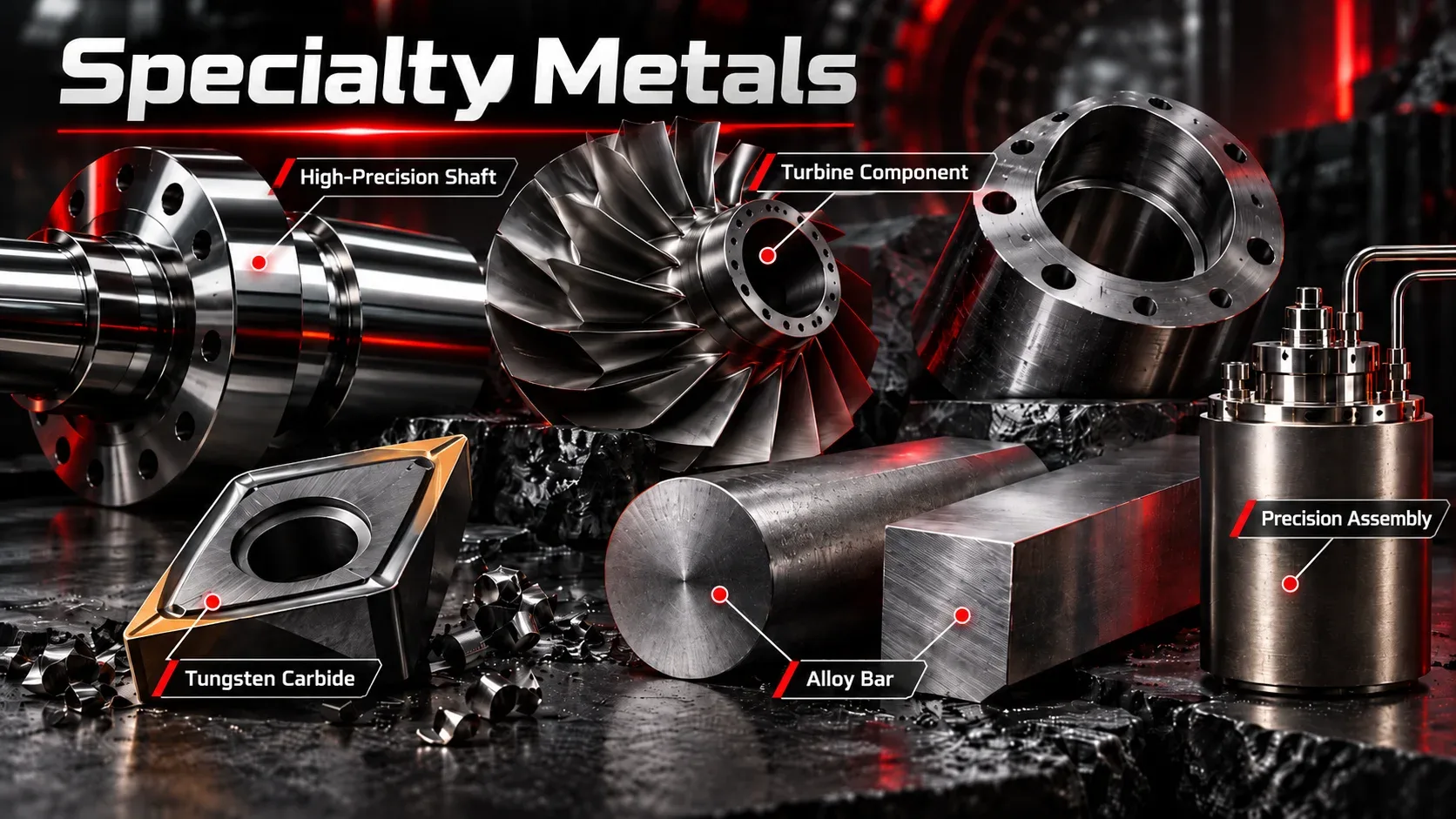
Specialty Metals Used in Engineering
Tungsten
Tungsten has an exceptionally high melting point and is widely used in high-temperature applications and hard cutting materials.
Chromium
Chromium improves hardness, corrosion resistance, and wear resistance when added to steels and other alloys.
Cobalt
Cobalt is used in batteries, cutting materials, superalloys, and demanding high-temperature applications.
Molybdenum
Molybdenum improves strength and temperature resistance in many engineering steels and high-performance alloys.
Niobium
Niobium is used in high-strength steels, aerospace materials, and specialized superconducting applications.
Tantalum
Tantalum offers excellent corrosion resistance and is used in electronics, medical equipment, and chemical-processing systems.
Important Properties of Metals
Different types of metals are selected according to the properties required by the application.
Strength
The ability of a metal to withstand applied force without failing.
Hardness
Resistance to scratching, indentation, and localized wear.
Toughness
The ability to absorb energy and resist fracture.
Ductility
The ability to deform plastically before breaking.
Malleability
The ability to be formed or compressed into different shapes.
Density
The mass of a material relative to its volume.
Electrical Conductivity
How effectively electrical current can travel through the metal.
Thermal Conductivity
The ability of a material to transfer heat.
Corrosion Resistance
The ability to resist environmental or chemical degradation.
Melting Point
The temperature at which a solid metal becomes liquid.
Common Metal Types Compared
| Metal | Weight | Strength | Corrosion Resistance | Conductivity | Common Uses |
|---|---|---|---|---|---|
| Carbon Steel | Heavy | High | Low to moderate | Low | Structures, machinery |
| Stainless Steel | Heavy | High | High | Low | Food, medical, automotive |
| Aluminum | Light | Moderate | Good | Good | Aircraft, vehicles, frames |
| Copper | Heavy | Moderate | Good | Excellent | Wiring and plumbing |
| Titanium | Medium | High | Excellent | Low | Aerospace and medical |
| Magnesium | Very light | Moderate | Varies | Moderate | Vehicles and electronics |
| Brass | Medium-heavy | Moderate | Good | Good | Valves and fittings |
| Bronze | Medium-heavy | Moderate | Good | Moderate | Bearings and marine parts |
These are general comparisons. Actual properties vary by alloy grade, heat treatment, processing method, and operating environment.
Where Different Types of Metal Are Used
Automotive
Steel, aluminum, copper, cast iron, magnesium, titanium, and zinc are widely used throughout modern vehicles.
Construction
Structural steel, stainless steel, aluminum, copper, and zinc are common in buildings and infrastructure.
Aerospace
Aluminum, titanium, nickel alloys, magnesium, and high-strength steels are used where weight and performance are critical.
Electrical Systems
Copper and aluminum are widely used in wiring, motors, power transmission, and electronic systems.
Manufacturing
Steel, cast iron, aluminum, tool steel, brass, and bronze are widely used in machines, tooling, and equipment.
Medical Equipment
Stainless steel, titanium, cobalt alloys, and specialized metals are used in medical tools, instruments, and implants.
Common Metals Used in Cars
Automotive manufacturers use multiple metal types because each material offers a different balance of strength, weight, corrosion resistance, manufacturing cost, and durability.
| Metal | Common Automotive Use | Why It Is Used |
|---|---|---|
| High-Strength Steel | Body structures and crash zones | Strength, stiffness, affordability |
| Aluminum | Body panels, wheels, engine parts | Low weight and corrosion resistance |
| Cast Iron | Engine and brake components | Wear resistance and vibration damping |
| Copper | Electrical wiring and motors | Excellent conductivity |
| Magnesium | Housings and lightweight parts | Very low density |
| Zinc | Galvanized body panels | Corrosion protection |
| Titanium | Performance exhaust and specialized parts | Strength, heat resistance, lower weight |
How to Choose the Right Type of Metal
Choosing a metal requires balancing several performance and cost factors.
- Strength: Determine the load and stress the part must withstand.
- Weight: Aluminum, magnesium, and titanium may be useful when mass matters.
- Corrosion exposure: Outdoor, marine, and chemical environments may require corrosion-resistant materials.
- Temperature: Some alloys retain strength better at high temperatures.
- Manufacturing: Consider machinability, weldability, formability, and castability.
- Conductivity: Copper and aluminum are common choices for electrical applications.
- Cost: Consider material price, machining, finishing, and long-term maintenance.
Ferrous vs Non-Ferrous Metals
| Feature | Ferrous Metals | Non-Ferrous Metals |
|---|---|---|
| Main Base | Iron-based | Not primarily iron-based |
| Typical Weight | Often heavier | Many are lighter |
| Corrosion Resistance | Varies widely | Often good |
| Magnetism | Many are magnetic | Many are non-magnetic |
| Examples | Steel, cast iron | Aluminum, copper, titanium, zinc |
Which Metals Have the Best Properties?
What Is the Strongest Metal?
There is no single strongest metal for every situation. Strength can refer to tensile strength, yield strength, hardness, fatigue resistance, or toughness.
What Is the Lightest Structural Metal?
Magnesium is among the lightest metals used for practical structural engineering applications.
Which Metal Conducts Electricity Best?
Silver has extremely high electrical conductivity, while copper is used more widely because it offers an excellent balance of performance, availability, and cost.
Which Metals Resist Corrosion Well?
Titanium, stainless steels, aluminum alloys, nickel alloys, and precious metals can offer excellent corrosion resistance, depending on the environment.
Examples of Metals in Everyday Life
Some examples of metals and metal products found in everyday life include:
Frequently Asked Questions About Types of Metals
What are the main types of metals?
The main categories include ferrous metals, non-ferrous metals, pure metals, alloys, precious metals, and specialty metals.
What are 10 examples of metals?
Iron, aluminum, copper, titanium, zinc, nickel, magnesium, tin, silver, and gold are common examples.
What is the difference between ferrous and non-ferrous metals?
Ferrous metals are mainly iron-based, while non-ferrous metals use another metal as their primary base material.
Is steel a metal or an alloy?
Steel is a metallic alloy based primarily on iron and carbon, often with other elements added to improve specific properties.
Is stainless steel a pure metal?
No. Stainless steel is an alloy containing iron, chromium, and often nickel, molybdenum, or other elements.
What are the most commonly used metals?
Steel, aluminum, copper, stainless steel, cast iron, zinc, nickel, titanium, brass, and bronze are among the most widely used engineering metals.
What metals do not rust?
Rust specifically refers to iron oxide, so aluminum, copper, zinc, titanium, and other non-iron metals do not rust in the same way as iron. They can still corrode through other processes.
Final Thoughts on the Different Types of Metals
Understanding the different types of metal makes it easier to choose suitable materials for automotive, engineering, construction, manufacturing, electrical, and everyday applications.
- Ferrous metals are commonly selected for structural strength.
- Non-ferrous metals often offer lower weight or better corrosion resistance.
- Alloys are designed to provide improved combinations of properties.
- No single metal is best for every application.
- Material selection should consider strength, weight, environment, temperature, manufacturing, and cost.
Comparing these factors together provides a more reliable way to choose the right metal than simply searching for the strongest or cheapest material.