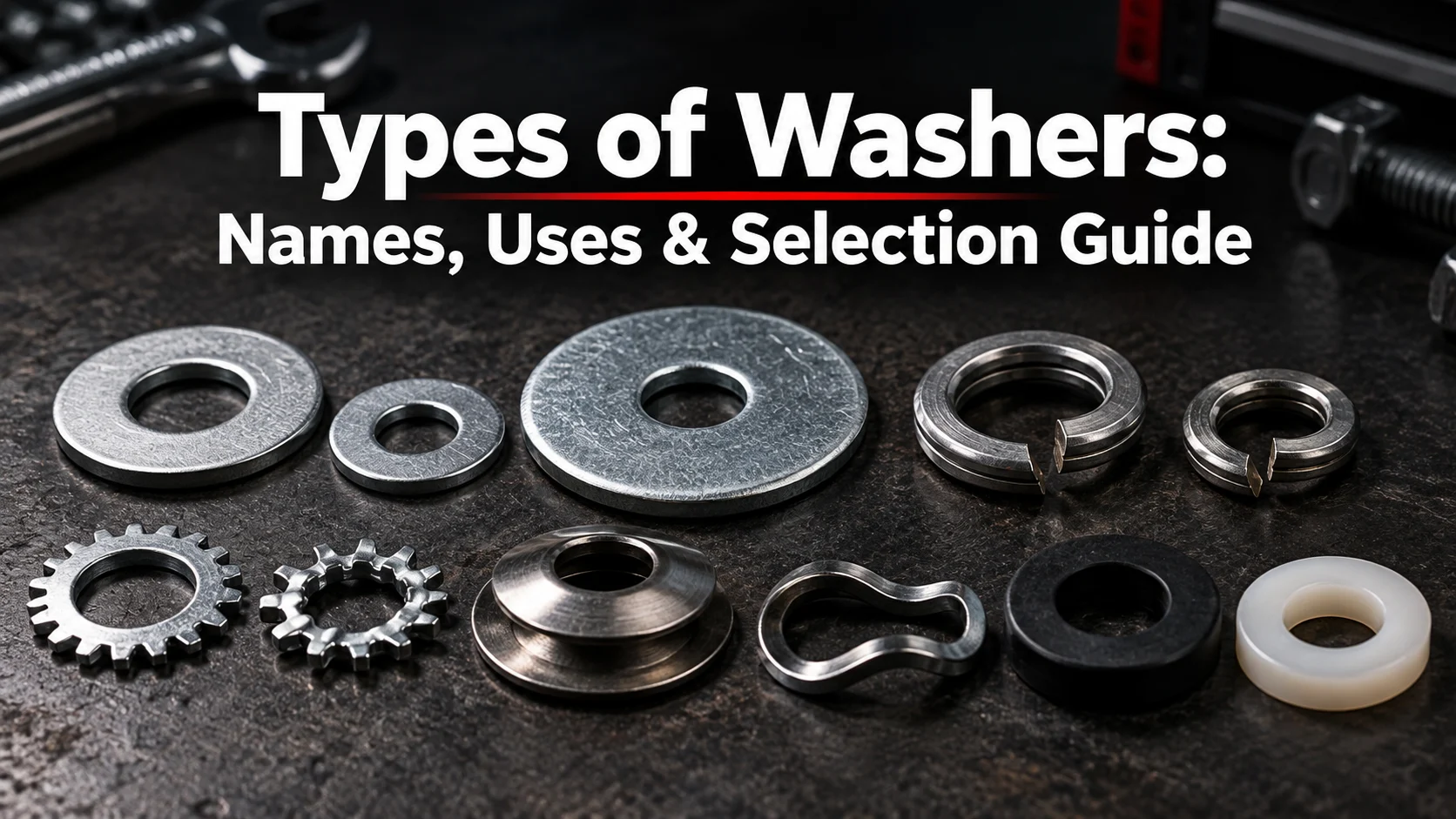
There are many types of washers, and they do more than simply sit between a bolt and a surface. Depending on the design, a washer can spread load, protect material, provide spring force, help seal a joint, reduce vibration, add spacing, or provide electrical insulation.
This guide explains the most common washer names, what each type is used for, how similar washers differ, and how to choose the right one based on bolt size, material, load, vibration, sealing needs, and operating environment.
Quick Answer
Common types of washers include flat, fender, split lock, tooth, Belleville, wave, sealing, bonded sealing, nylon, rubber, shoulder, countersunk, tab, square, finishing, and shim washers. The right type depends on whether you need load distribution, locking, sealing, insulation, spacing, or spring force.
Types of Washers at a Glance
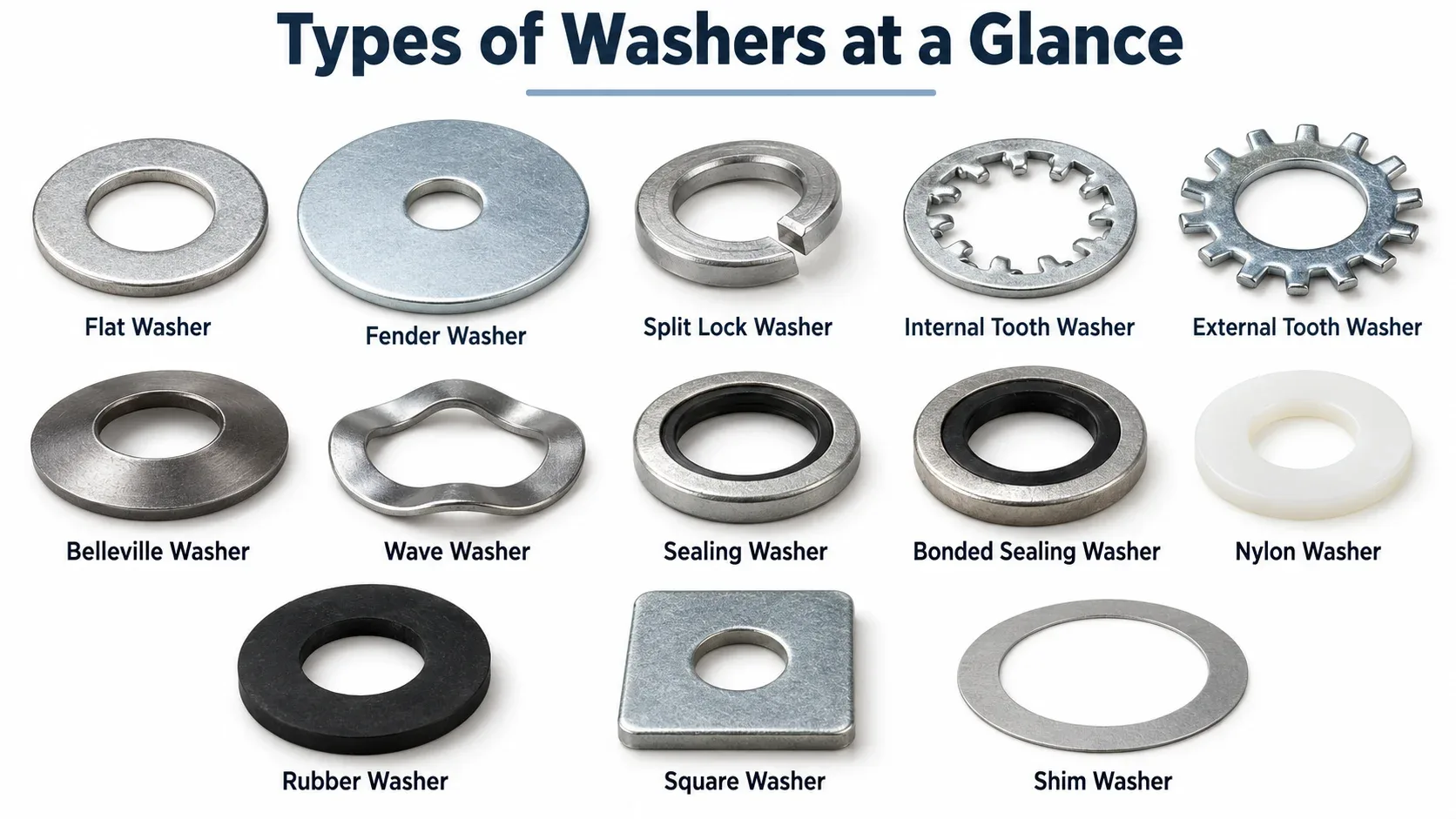
| Washer Type | Main Purpose | Common Use |
|---|---|---|
| Flat Washer | Load distribution | General fastening |
| Fender Washer | Wider load spread | Wood, plastic, sheet metal |
| Split Lock Washer | Movement resistance | Selected mechanical joints |
| Tooth Washer | Surface grip | Electrical and mechanical assemblies |
| Belleville Washer | Spring force | High-load machinery |
| Wave Washer | Light axial preload | Bearings and shafts |
| Sealing Washer | Leak reduction | Roofing and fluid systems |
| Nylon Washer | Insulation and protection | Electronics and finished surfaces |
| Rubber Washer | Sealing and cushioning | Plumbing and vibration isolation |
What Is a Washer and What Does It Do?
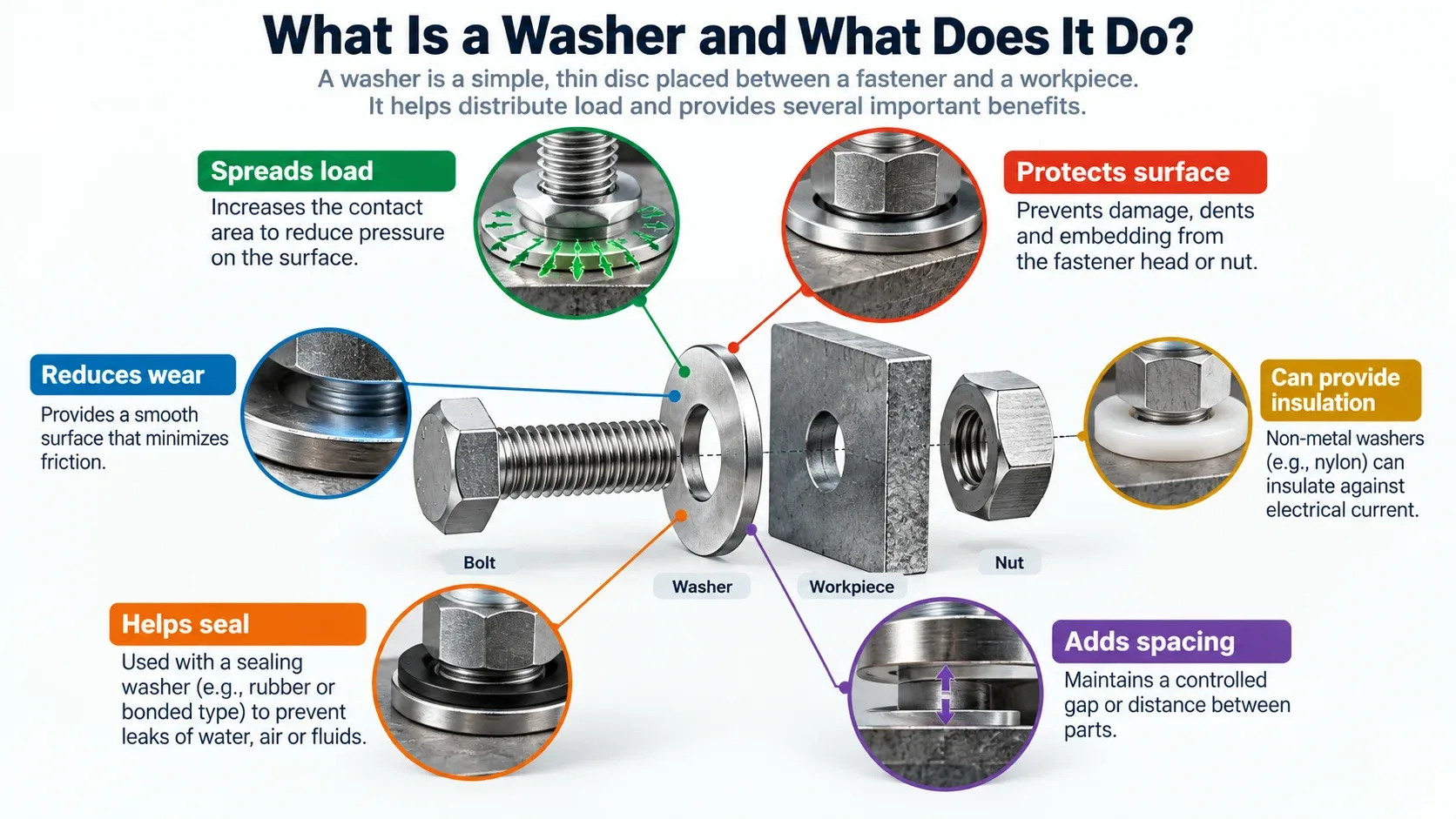
A washer is a thin component, usually placed beneath a bolt head, screw head, or nut. Its job depends on its shape and material.
- Spreading fastener load over a larger surface
- Protecting wood, paint, plastic, or thin metal
- Providing a smoother bearing surface
- Adding spring force or preload
- Helping resist movement in selected joints
- Creating a fluid or moisture seal
- Providing spacing or alignment
- Providing electrical insulation
A washer cannot compensate for an incorrectly sized fastener, damaged threads, inadequate tightening, or poor joint design.
Main Types of Washers by Function
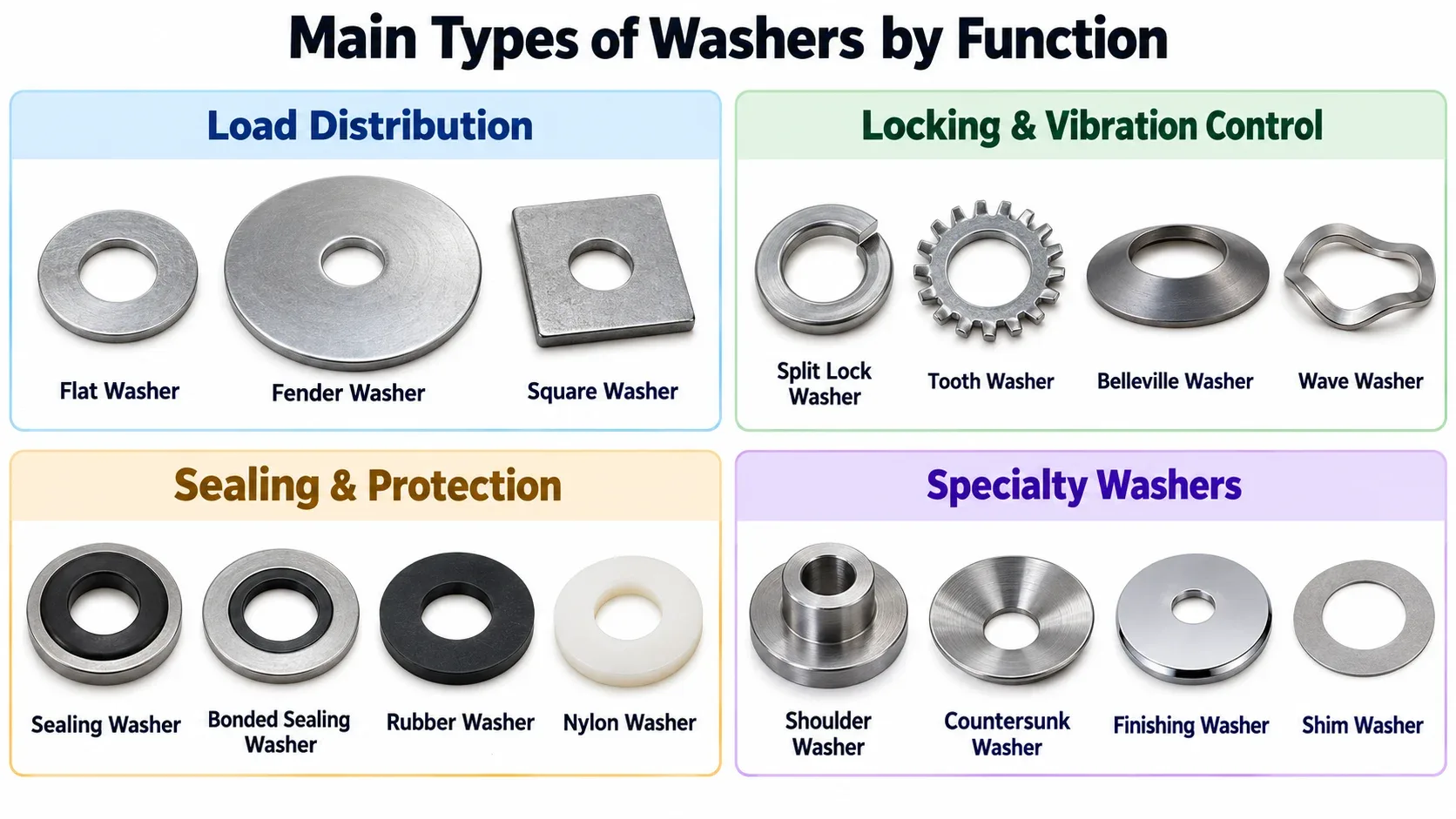
Load Distribution
Flat, fender, square, and dock washers spread clamping force across a larger area.
Locking & Vibration Control
Split, tooth, tab, Belleville, and wave washers are used where movement, preload, or vibration matters.
Sealing & Protection
Rubber, bonded sealing, sealing, and nylon washers can help seal, cushion, or protect surfaces.
Specialty Washers
Shoulder, countersunk, finishing, and shim washers handle specialized alignment, spacing, and appearance needs.
1. Flat Washer
A flat washer is the most common washer type. It has a simple flat ring shape and is generally used to spread clamping pressure beneath a bolt head or nut.
2. Fender Washer
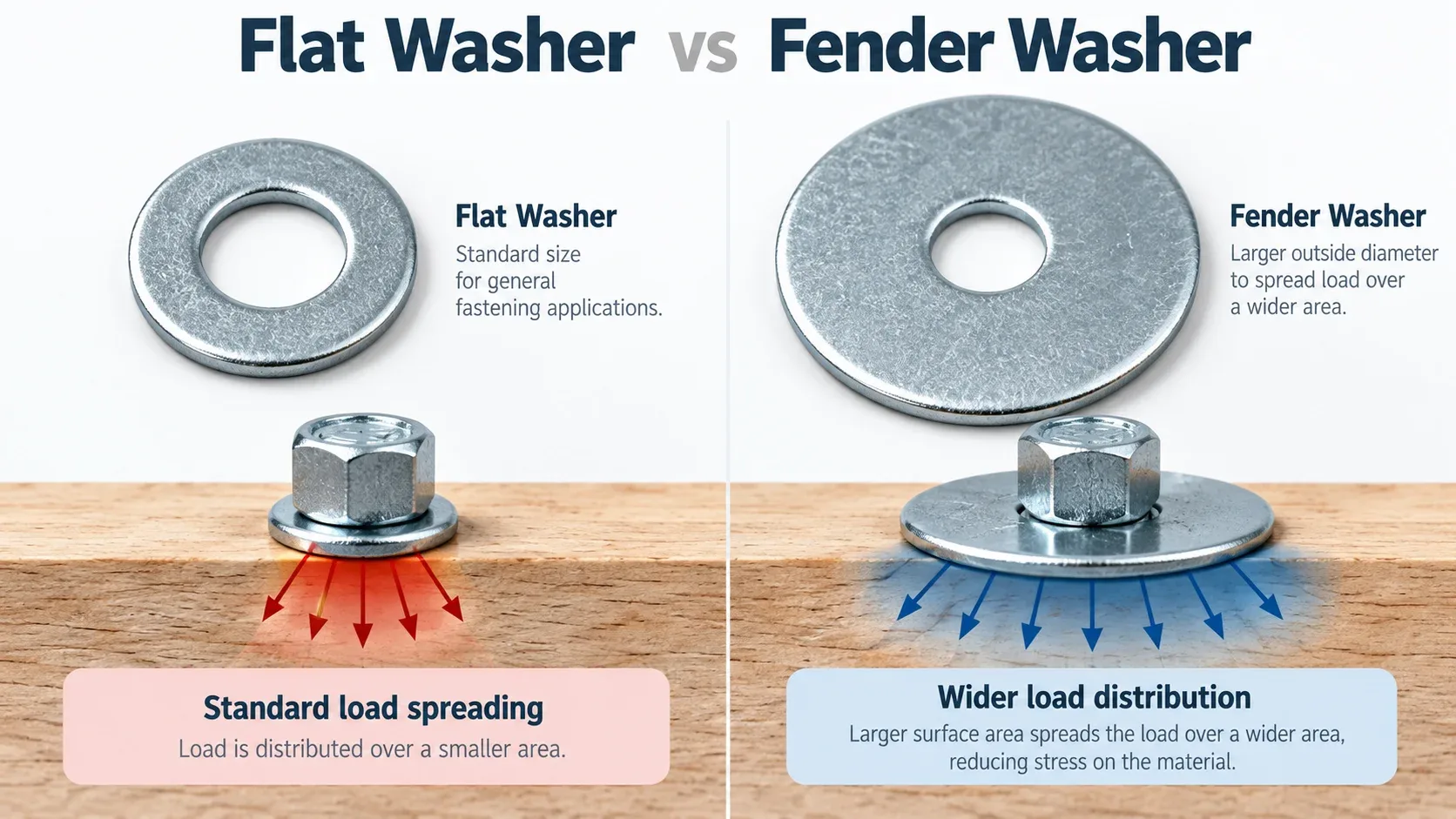
A fender washer is similar to a flat washer but has a much larger outside diameter compared with the hole size. This larger surface area helps spread load across softer or thinner materials.
3. Split Lock Washer
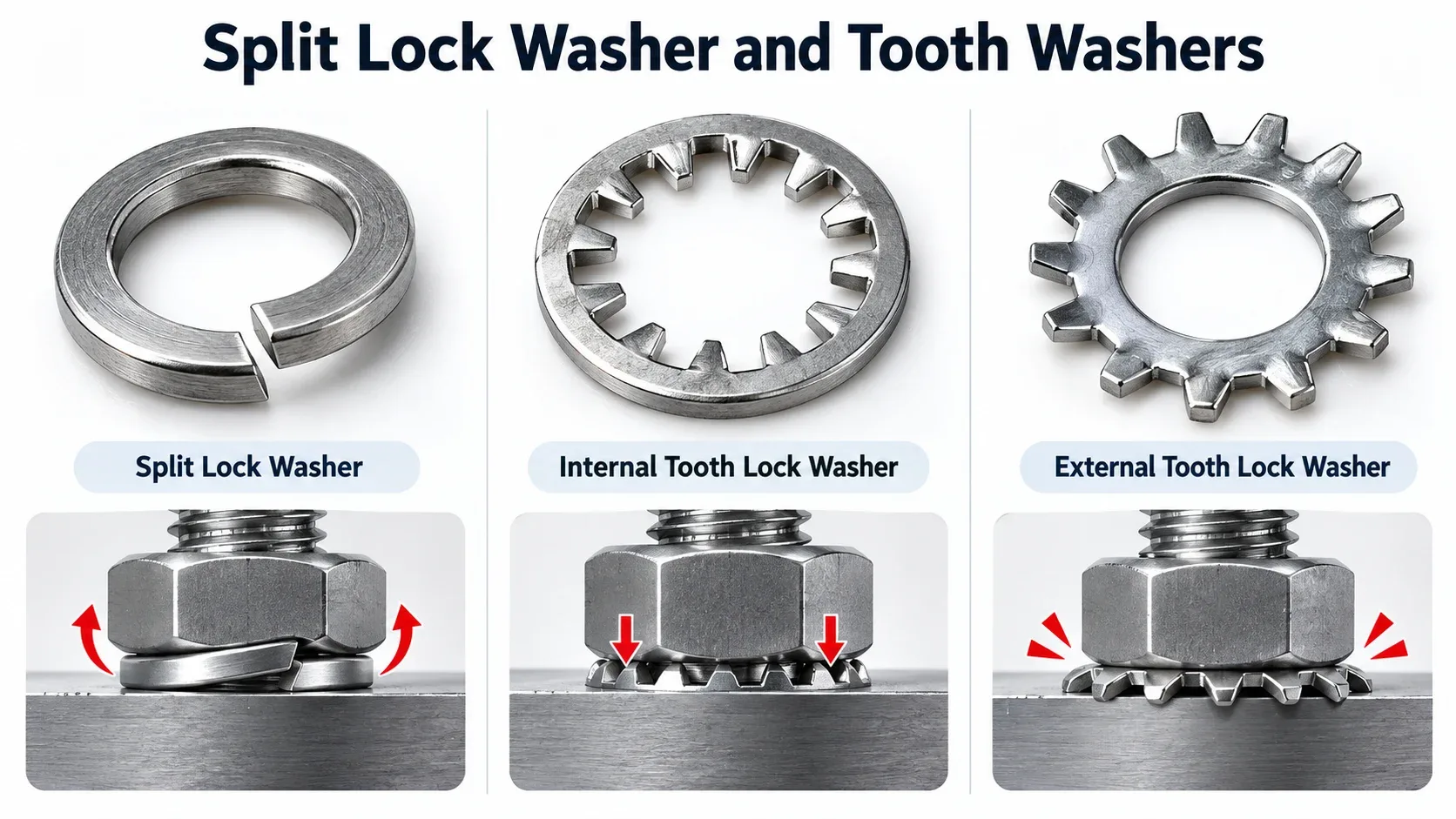
A split lock washer has a cut in the ring and a slightly helical shape. When the fastener is tightened, the washer compresses.
A split lock washer should not automatically be treated as the best solution for every vibration-prone joint. Fastener preload, joint design, locking nuts, thread-locking compounds, and manufacturer requirements may be more important.
4. Internal Tooth Lock Washer
An internal tooth washer has small teeth around its inner edge. The teeth can bite into mating surfaces when the fastener is tightened.
5. External Tooth Lock Washer
An external tooth washer has teeth around its outside edge. These washers are commonly found in selected electrical and mechanical assemblies.
6. Belleville Washer
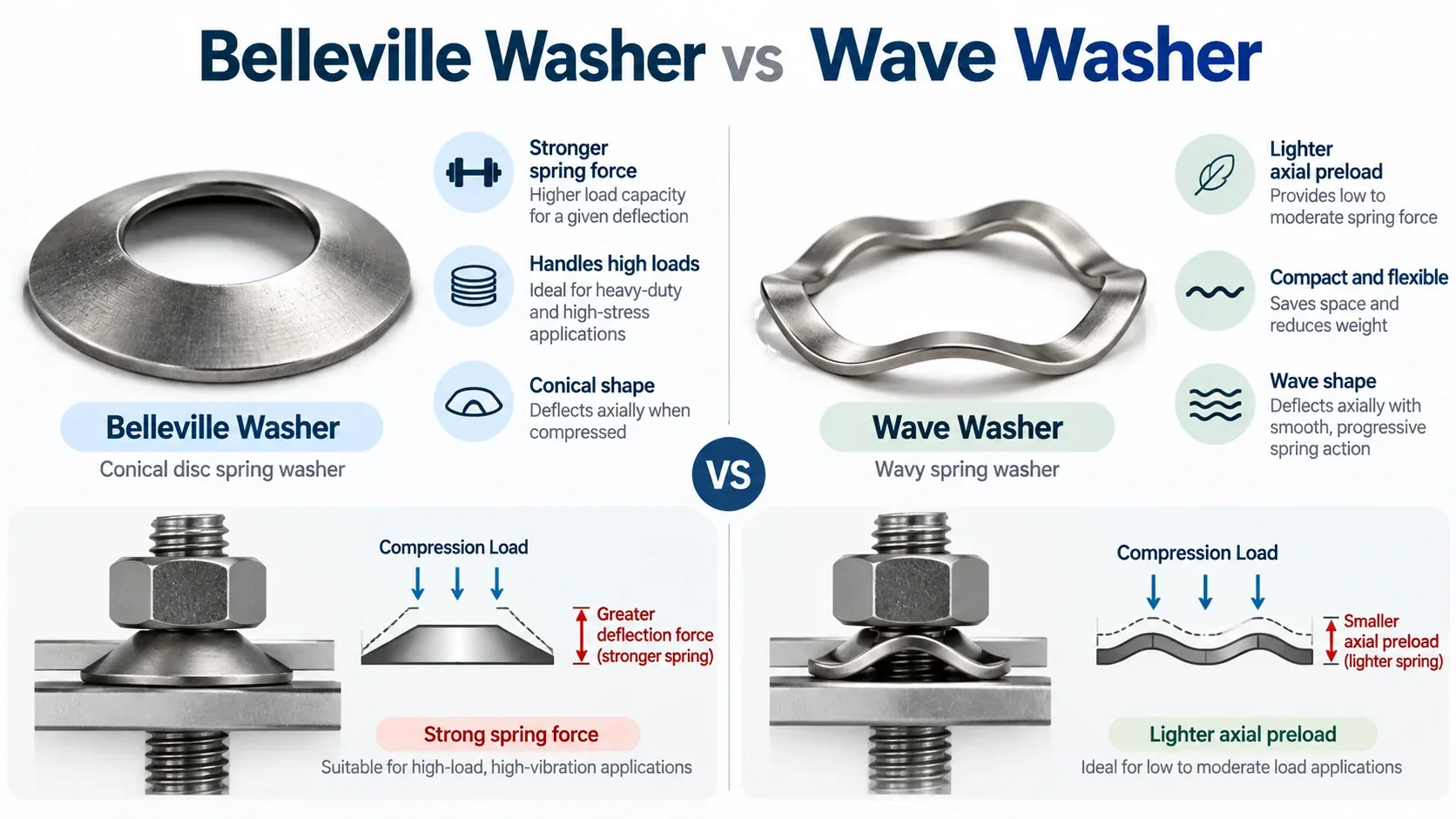
A Belleville washer, also called a conical spring washer or disc spring, has a cone-shaped profile and compresses under load to provide spring force.
7. Wave Washer
A wave washer has a wavy profile that compresses to provide light spring pressure. It is often used in bearings, shafts, and assemblies needing light axial preload.
8. Spring Washer
The term spring washer can refer to several washer designs that provide elastic force, including split, wave, and Belleville washers.
9. Sealing Washer
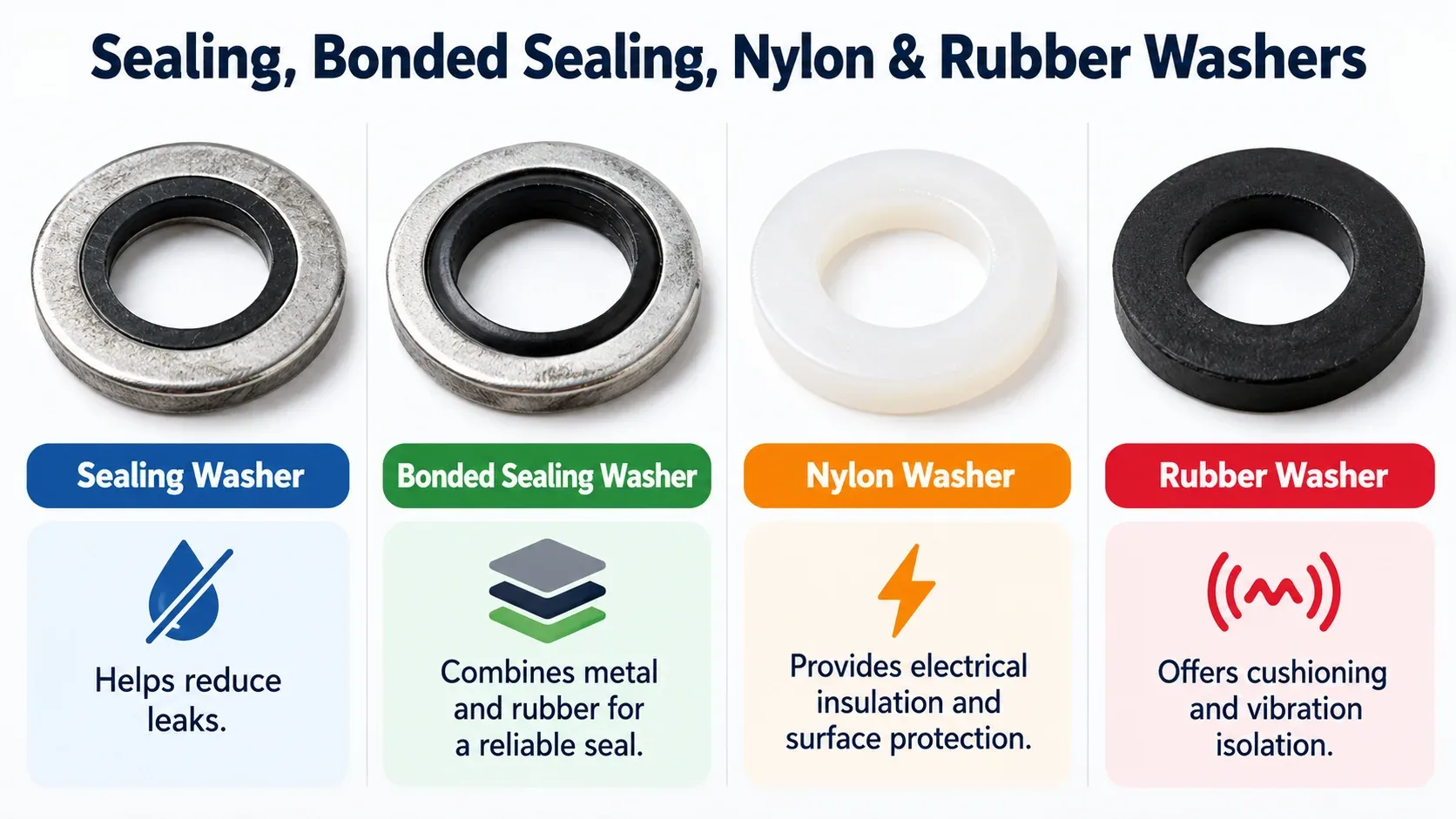
A sealing washer is designed to reduce the passage of moisture, air, oil, or another fluid around a fastener.
10. Bonded Sealing Washer
A bonded sealing washer combines a metal washer with a bonded rubber or elastomer sealing ring. The metal supports the load while the softer material forms the seal.
11. Nylon Washer
A nylon washer is lightweight, nonmetallic, and electrically insulating. It can also help protect painted, polished, or delicate surfaces.
12. Rubber Washer
A rubber washer is flexible and can be used for sealing, cushioning, noise reduction, or vibration isolation.
13. Shoulder Washer
A shoulder washer includes a sleeve-like projection that extends into a hole. This can help center, space, or electrically isolate a fastener.
14. Countersunk Washer
A countersunk washer has a recessed shape designed to support a countersunk screw head and provide a clean finished appearance.
15. Tab Washer
A tab washer includes one or more tabs that can be bent against a nut, bolt head, or fixed component to create a physical locking feature.
16. Square Washer
A square washer provides a relatively large bearing area and is often used with timber, structural bolts, and heavy-duty hardware.
17. Dock Washer
A dock washer is a large, heavy-duty washer commonly used with timber construction and large bolts.
18. Finishing Washer
A finishing washer is designed to improve appearance while supporting the screw head. It is often used with countersunk screws.
19. Shim Washer
A shim washer is a thin precision washer used to adjust spacing, alignment, or clearance in machinery and assemblies.
Flat Washer vs Lock Washer
| Feature | Flat Washer | Lock Washer |
|---|---|---|
| Main Purpose | Load distribution | Resistance to movement |
| Surface Protection | Good | Not primary purpose |
How to Choose the Right Washer Size
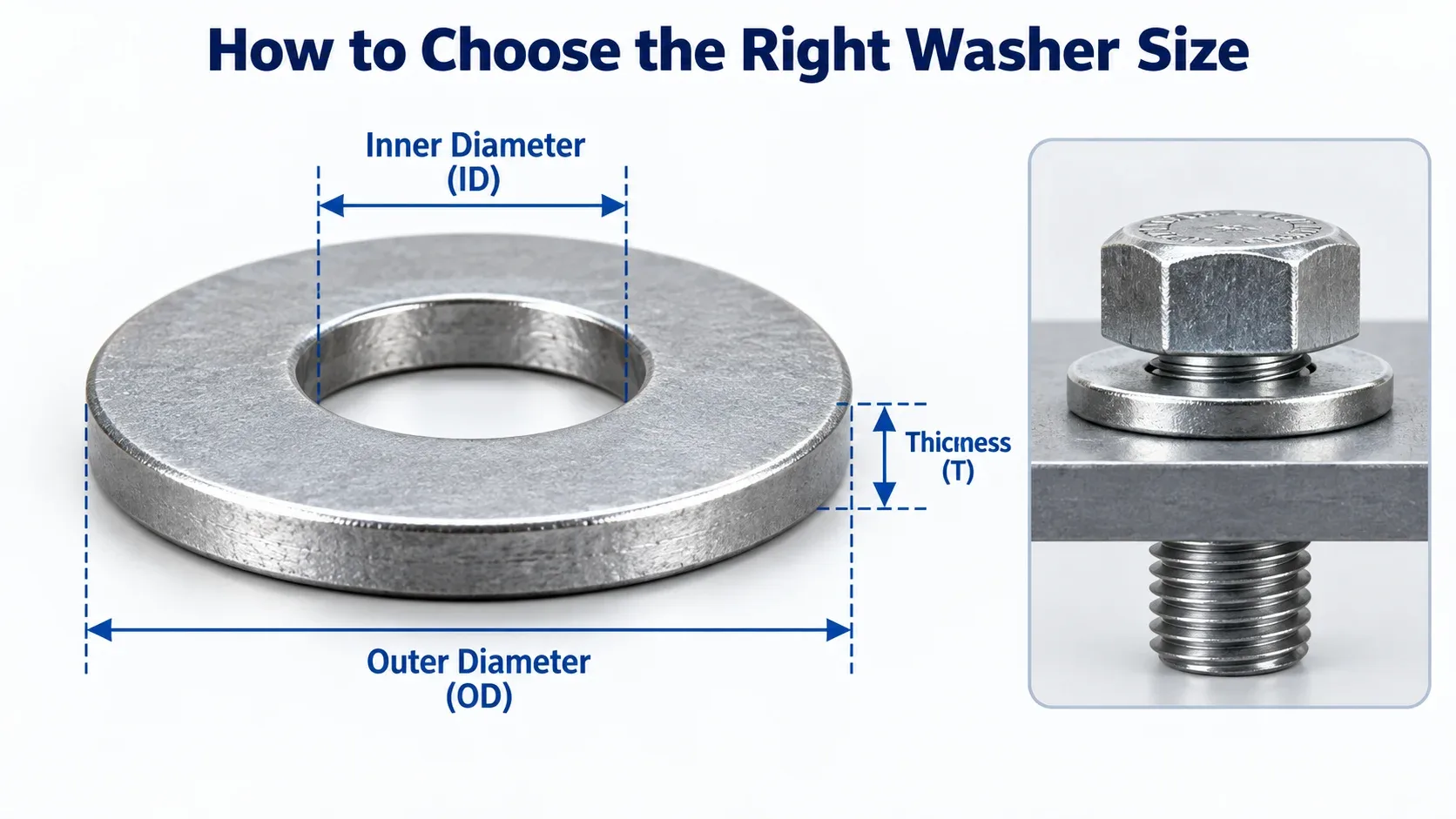
Inner Diameter
The inner diameter should provide an appropriate fit around the bolt or screw shank.
Outer Diameter
A larger outer diameter spreads clamping pressure across a wider area.
Thickness
Washer thickness influences stiffness and resistance to bending or deformation under load.
Washer Materials and Where to Use Them
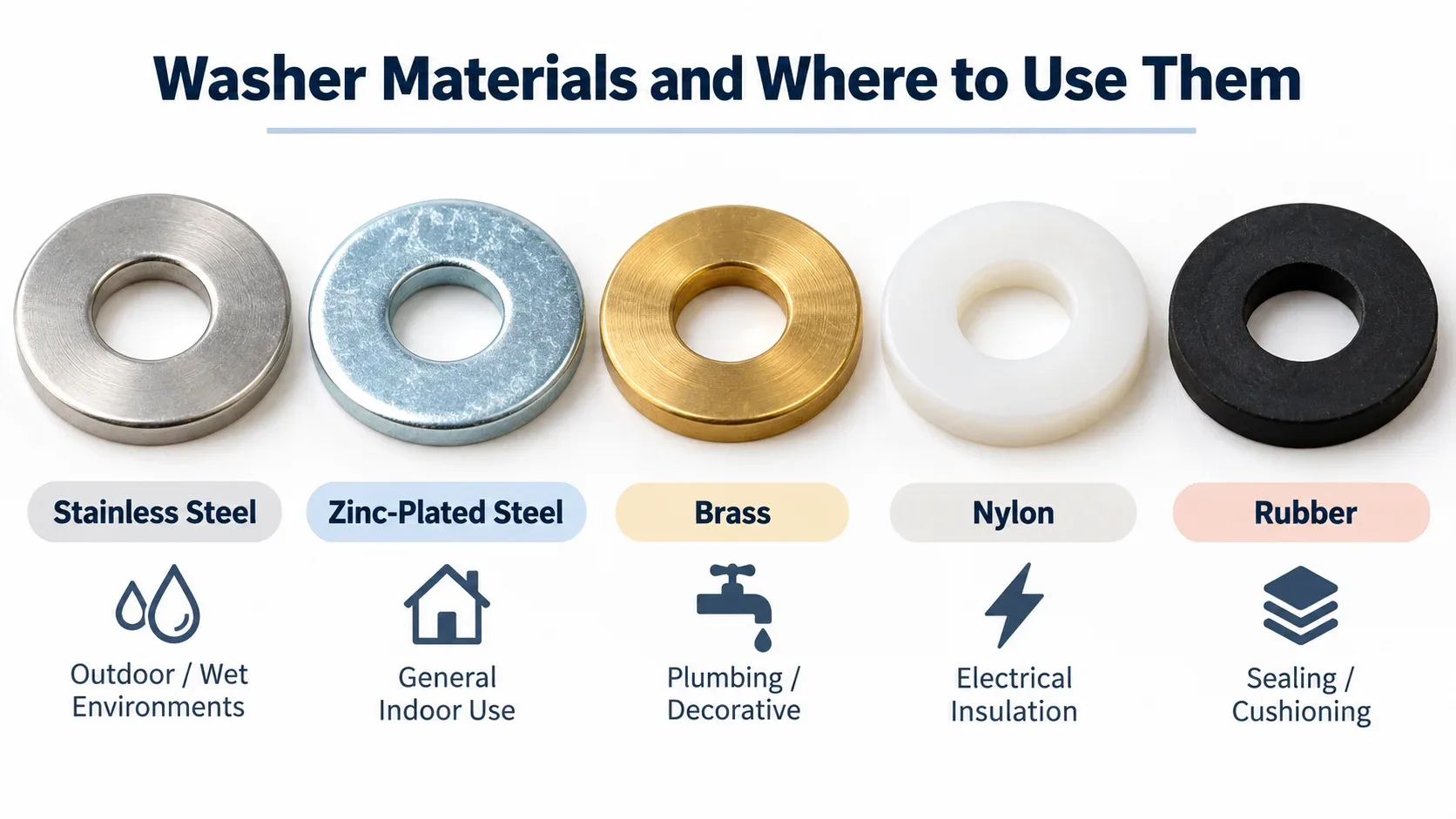
| Material | Main Advantage | Typical Use |
|---|---|---|
| Stainless Steel | Corrosion resistance | Outdoor and wet environments |
| Zinc-Plated Steel | Economical protection | General indoor use |
| Brass | Corrosion resistance and appearance | Plumbing and decorative work |
| Nylon | Electrical insulation | Electronics |
| Rubber | Sealing and cushioning | Plumbing and vibration isolation |
What Washer Should You Use for Wood?
Wood can compress beneath a small bolt head or nut. A washer with a larger outside diameter spreads the load over more wood fibers and can reduce crushing.
What Washer Is Best for Sheet Metal?
Thin sheet metal can deform when force is concentrated around a small fastener. A larger-diameter flat or fender washer can spread the load over a wider area.
Can Washers Stop Bolts From Loosening?
A standard flat washer mainly distributes load and protects the surface. Some locking washer designs can add resistance to movement, but no washer should automatically be assumed to prevent loosening in every application.
Can You Reuse Washers?
Some undamaged flat washers may be reusable in noncritical applications, but replace washers that are cracked, corroded, permanently deformed, or have damaged sealing or locking features.
How to Install a Washer Correctly
The exact arrangement depends on the joint design, equipment manufacturer, and fastener system.
Which Washer Should You Choose?
Flat washer
Fender or square washer
Rubber or bonded sealing washer
Nylon or shoulder washer
Belleville or wave washer
Tooth or tab washer where specified
FAQs About Types of Washers
What are the most common types of washers?
Common types include flat, fender, split lock, tooth, Belleville, wave, sealing, nylon, rubber, shoulder, square, and shim washers.
What is a flat washer used for?
A flat washer spreads fastener load over a larger area and can protect the surface beneath a bolt head or nut.
What is a fender washer?
A fender washer is a flat washer with a relatively large outside diameter, making it useful for spreading load over wood, plastic, or thin metal.
Can washers stop bolts from loosening?
Some washer designs can add resistance to loosening, but performance depends on the entire joint, including preload, vibration, fastener design, and manufacturer requirements.
Which Type of Washer Do You Need?
The right washer depends on the fastener size, material, load, environment, and what the joint needs the washer to do.
Bottom Line
The different types of washers are designed for different fastening problems. Choose based on load distribution, washer size, material compatibility, environment, sealing, spring force, insulation, and the requirements of the complete joint.