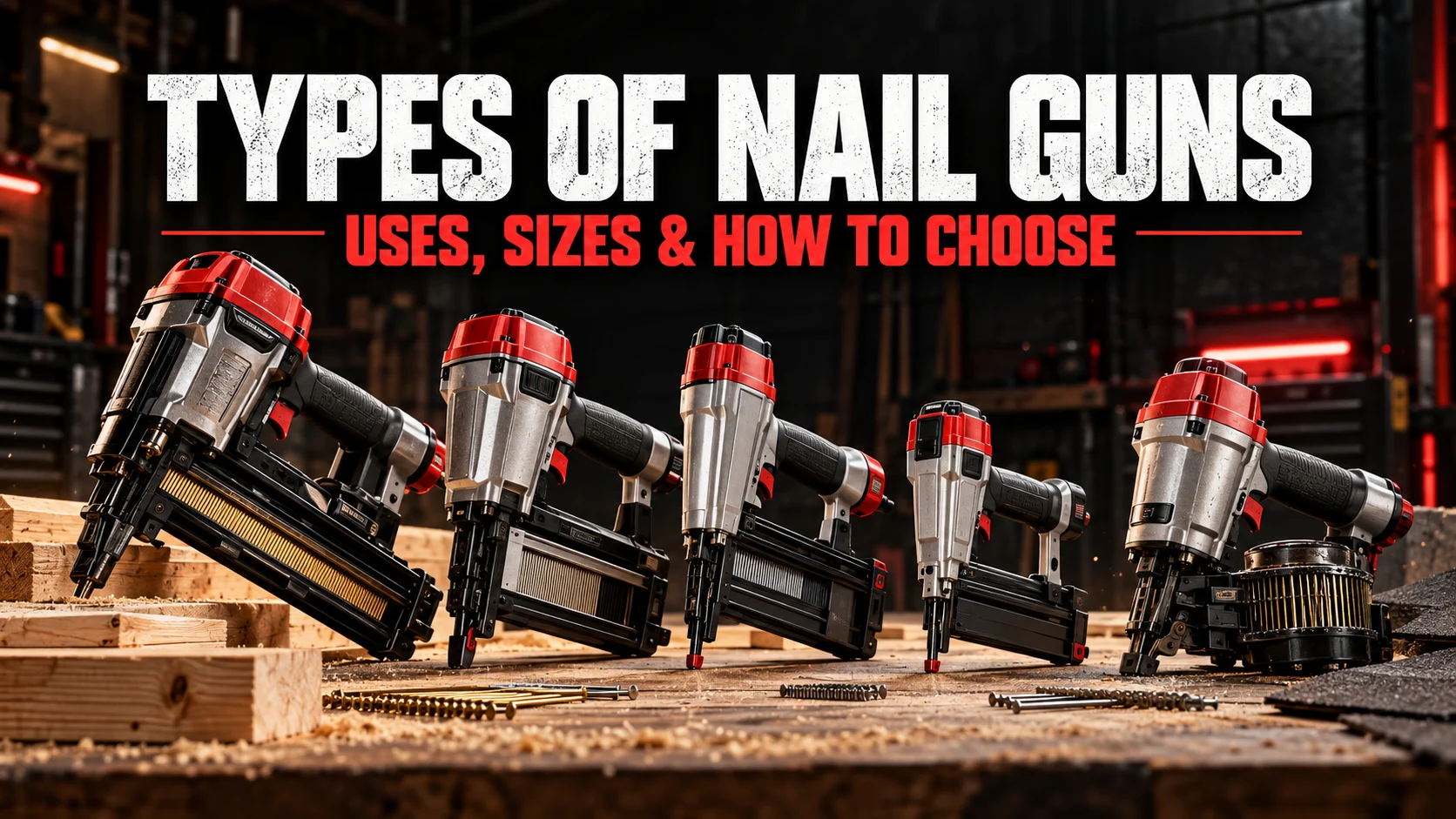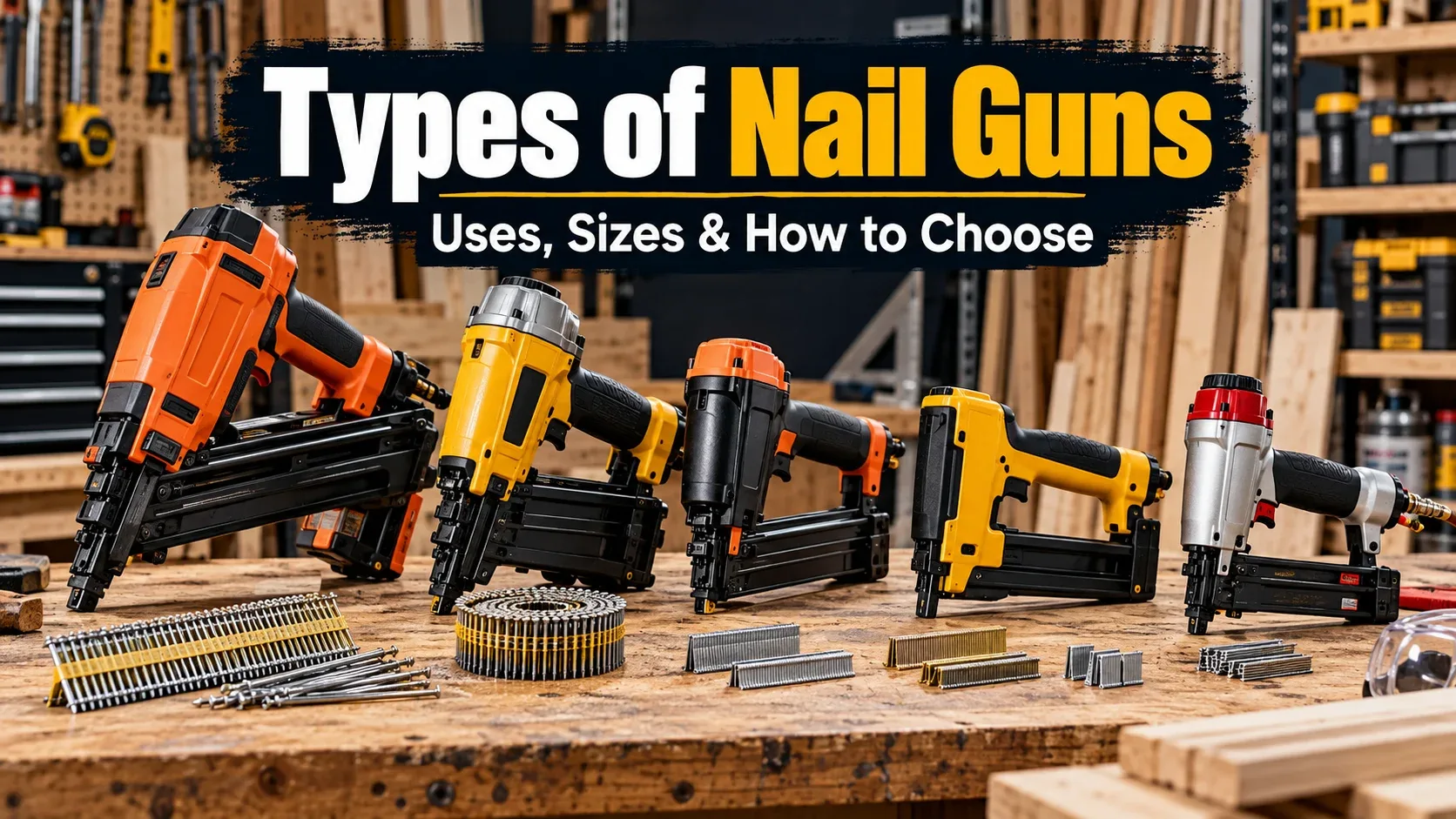
There are several types of nail guns, and each is designed for a different kind of fastening job. A framing nailer that works well for wall construction is far too aggressive for delicate trim, while a small pin nailer does not provide the holding strength needed for structural work.
This guide explains the most common nail gun types, what they are used for, the nail sizes and gauges they typically accept, and how to choose the right nailer for framing, trim, roofing, flooring, siding, woodworking, and DIY projects.
Quick Answer
The main types of nail guns include framing, finish, brad, pin, roofing, siding, flooring, palm, coil, joist-hanger, and specialty nailers. The right choice depends on the material, required holding strength, fastener size, surface finish, and whether the job is structural or decorative.
Types of Nail Guns at a Glance
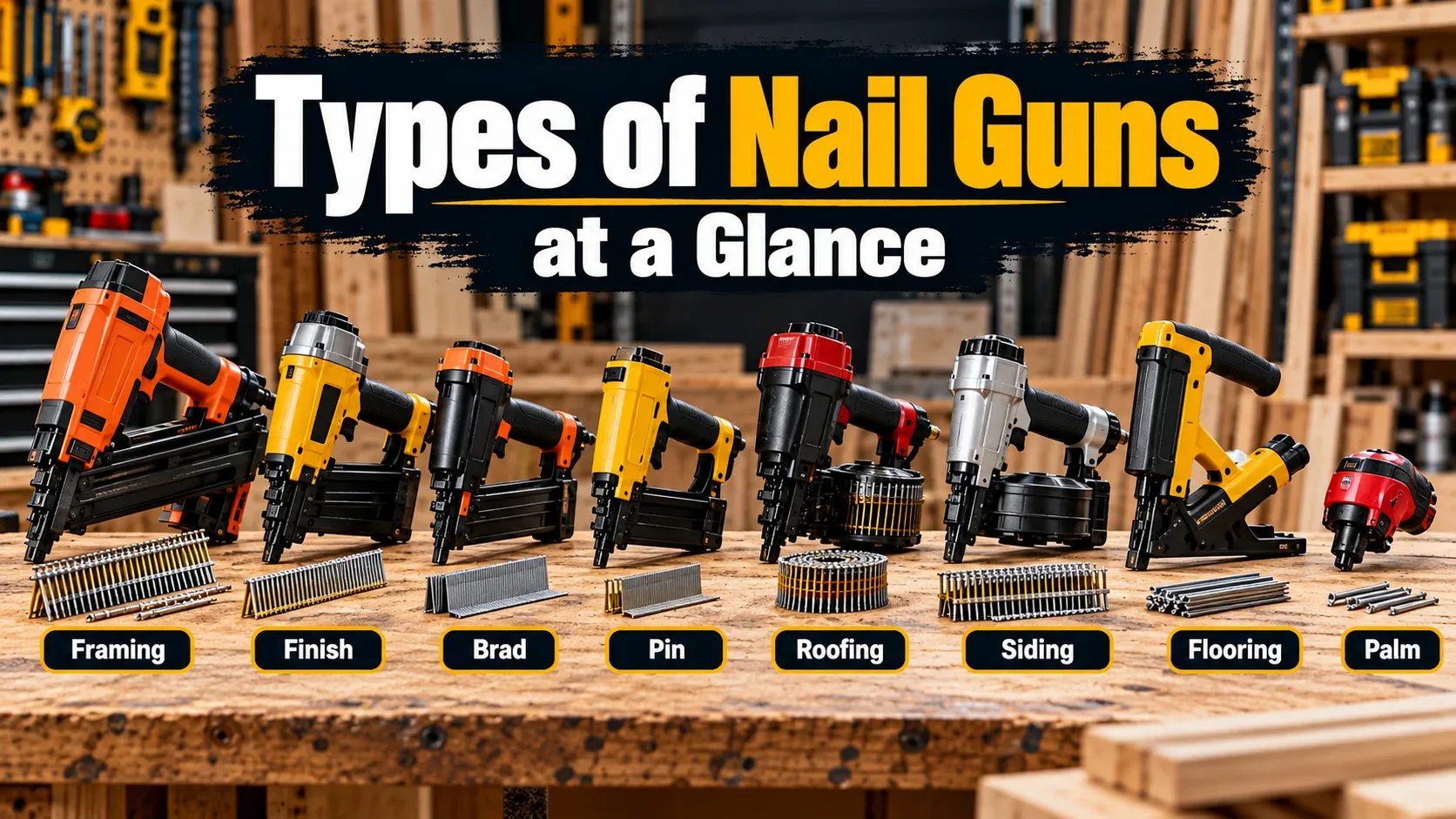
| Nail Gun Type | Best For | Typical Fastener |
|---|---|---|
| Framing Nailer | Wall framing, decking, sheathing | Large framing nails |
| Finish Nailer | Baseboards, casing, crown molding | 15- or 16-gauge finish nails |
| Brad Nailer | Light trim, cabinet work, crafts | 18-gauge brads |
| Pin Nailer | Fine molding and delicate trim | 23-gauge pins |
| Roofing Nailer | Roof shingles | Coil roofing nails |
| Siding Nailer | Exterior siding | Siding nails |
| Flooring Nailer | Hardwood flooring | Cleats or flooring staples |
| Palm Nailer | Tight spaces and individual nails | Individual compatible nails |
What Is a Nail Gun and How Does It Work?
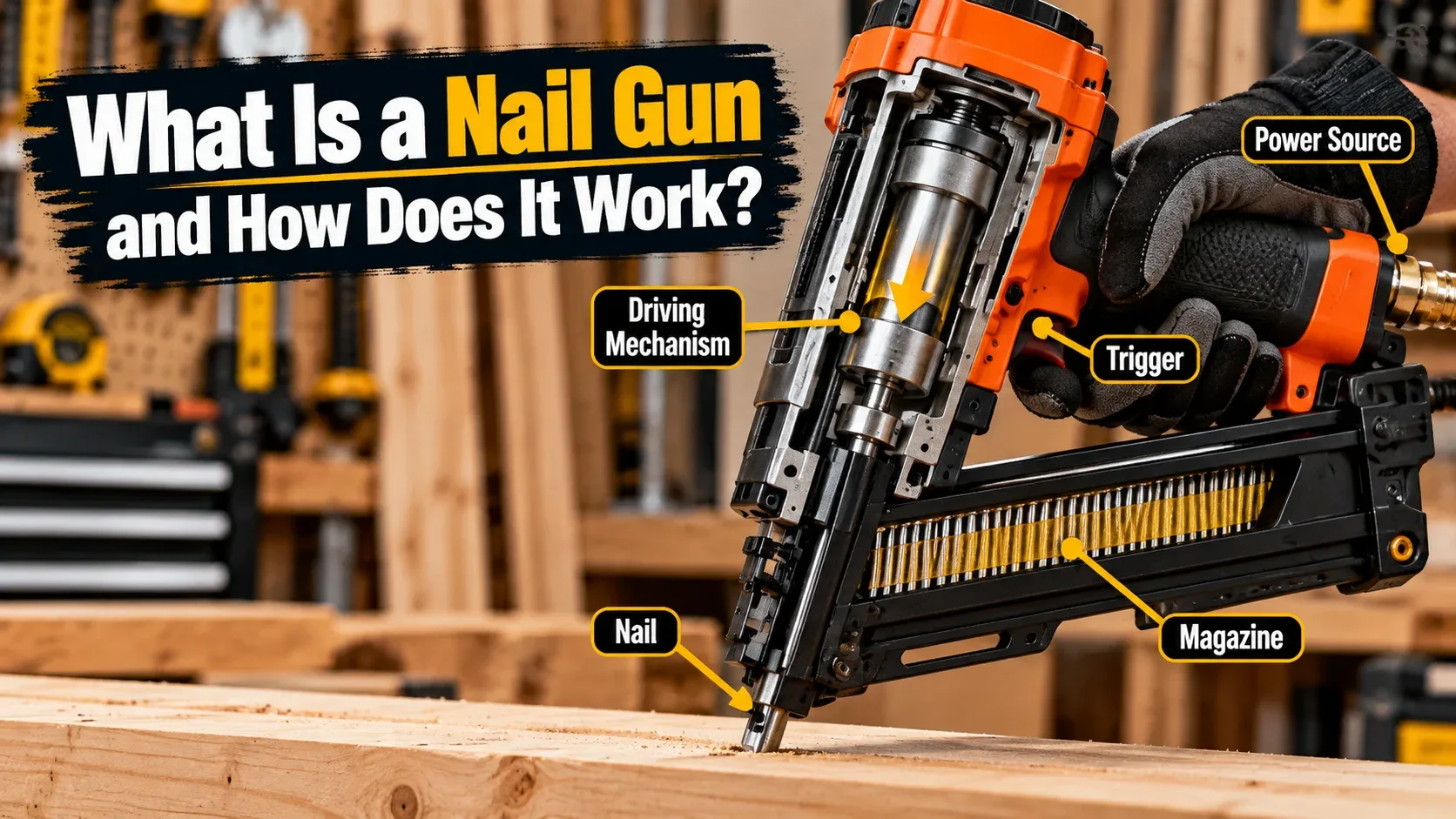
A nail gun is a power tool that drives nails or other fasteners into wood or other suitable materials much faster than a hammer. Depending on the model, the driving force may come from compressed air, a battery-powered mechanism, a gas-assisted system, or another specialized power source.
Nail guns vary in fastener size, magazine design, power source, firing mode, and intended application. A tool should always be used with compatible fasteners and according to the manufacturer’s instructions.
Nail guns can cause serious puncture injuries. Never point one at a person, keep hands clear of the fastening path, and disconnect the power source before clearing a jam or performing maintenance.
Main Types of Nail Guns by Job
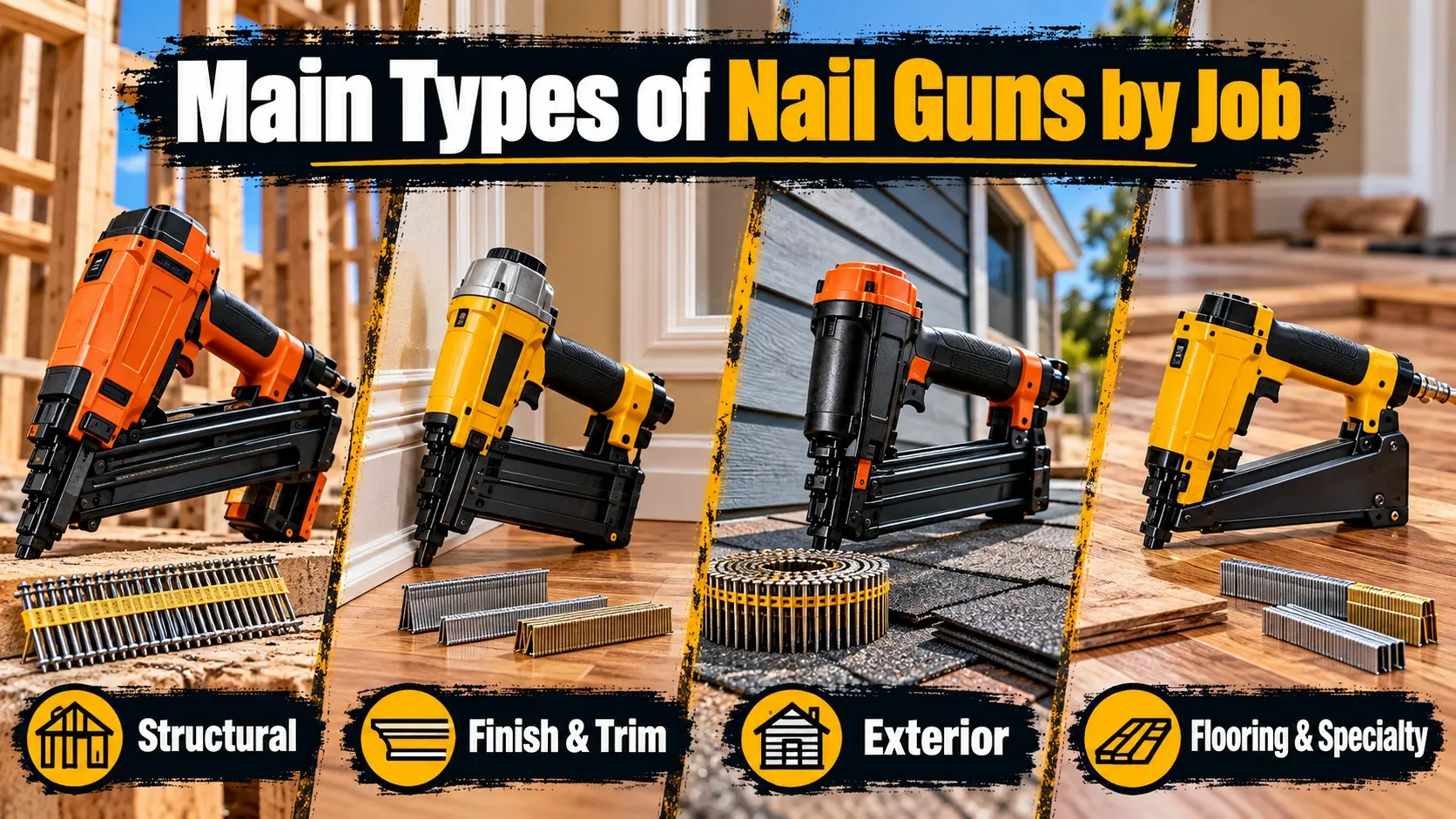
Structural Nail Guns
Framing, joist-hanger, and selected concrete fastening tools are used for heavier construction work.
Finish & Trim Nailers
Finish, brad, and pin nailers are designed for trim, molding, cabinets, and decorative work.
Exterior Nail Guns
Roofing, siding, and coil nailers are designed for high-volume exterior fastening.
Flooring & Specialty
Flooring nailers, palm nailers, crown staplers, and specialty tools handle more specific tasks.
1. Framing Nailer
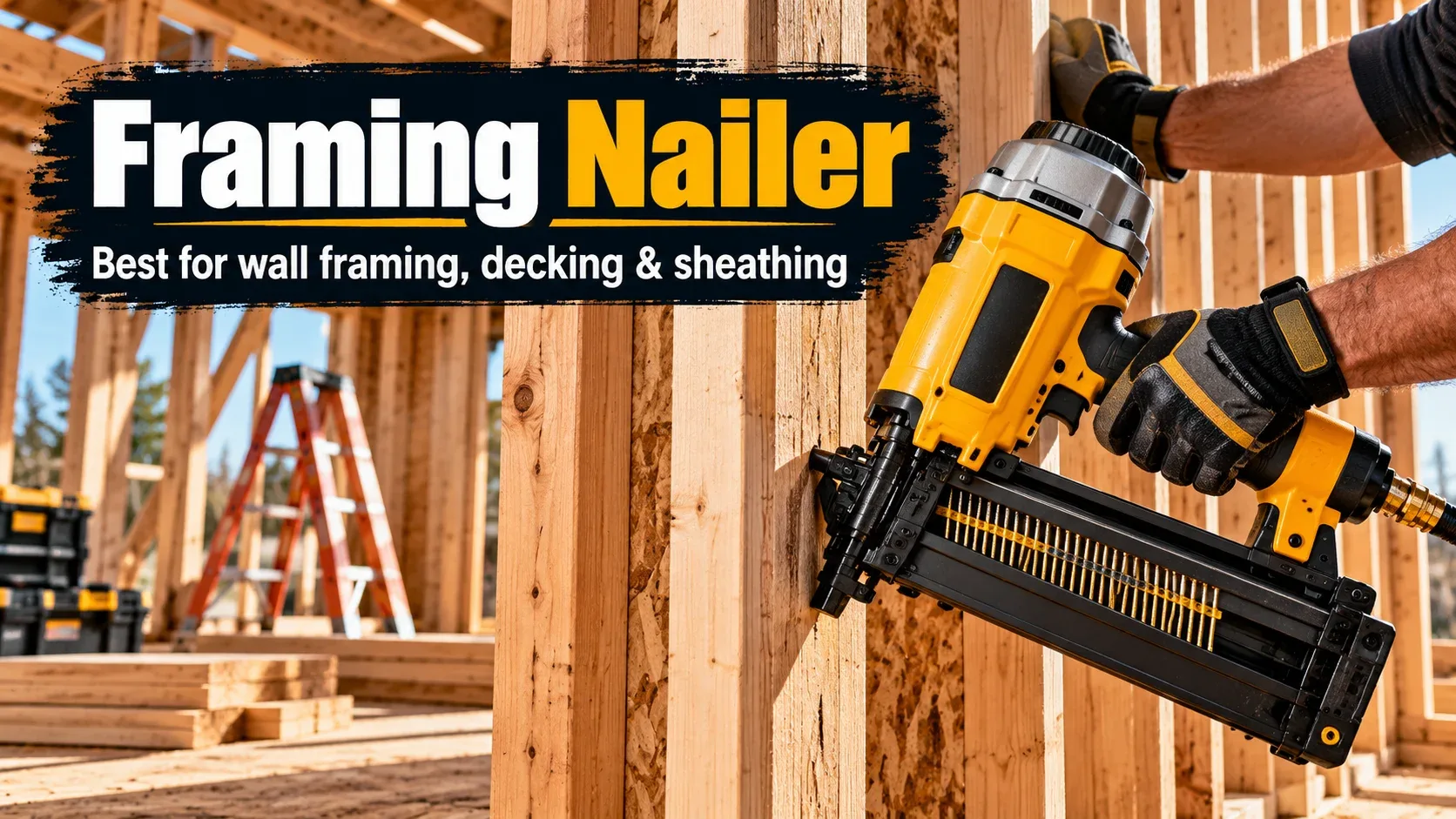
A framing nailer is designed to drive large nails into dimensional lumber quickly. It is one of the most powerful common nail guns and is primarily used for structural construction rather than finish work.
Best Uses
- Wall framing
- Deck construction
- Sheathing
- Large timber assemblies
- Fencing where compatible fasteners are specified
2. Finish Nailer
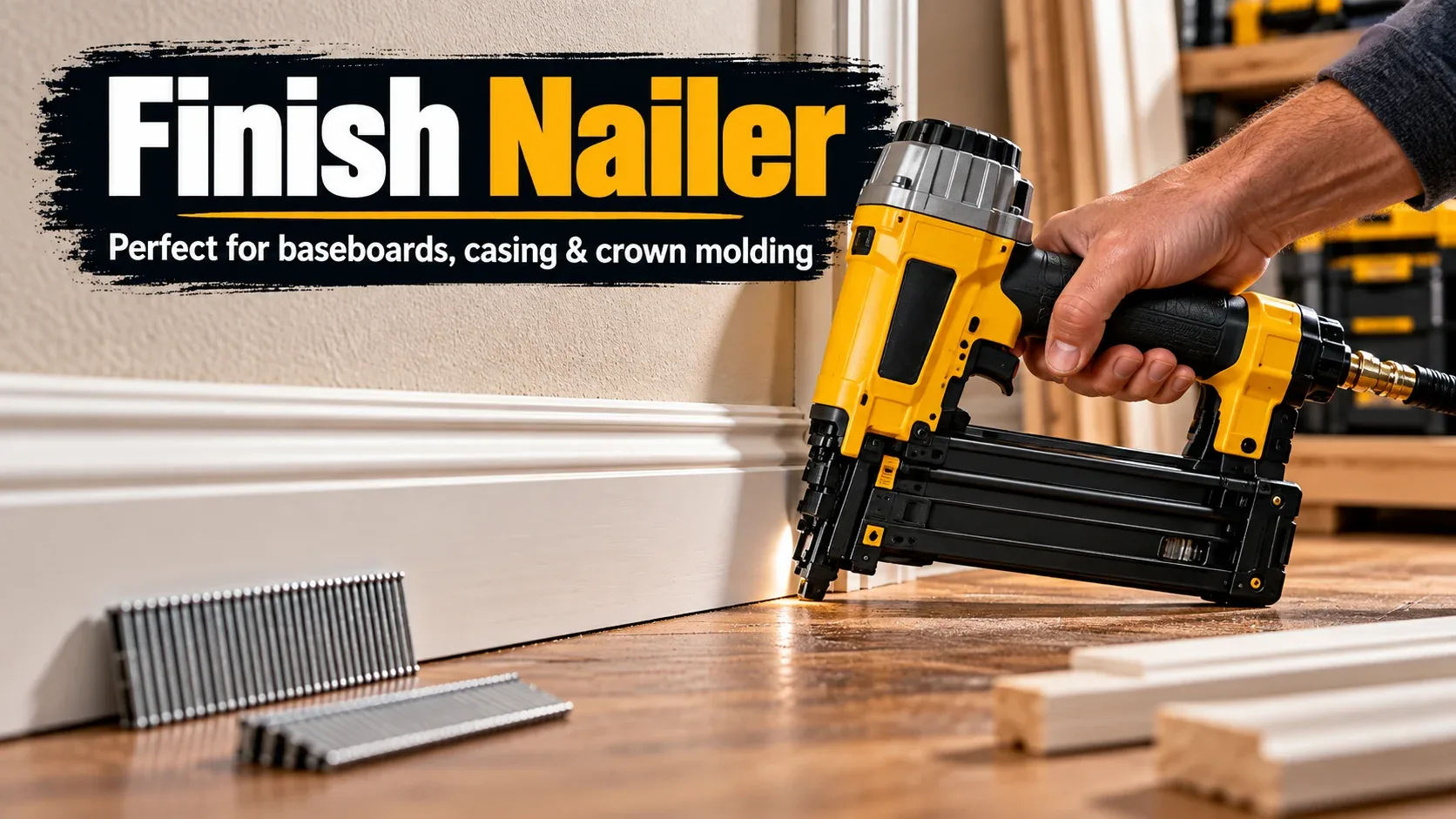
A finish nailer typically uses 15- or 16-gauge nails. These fasteners provide stronger holding power than brads while still leaving a much smaller hole than framing nails.
Best Uses
- Baseboards
- Door casing
- Window trim
- Crown molding
- Heavier decorative trim
3. Brad Nailer
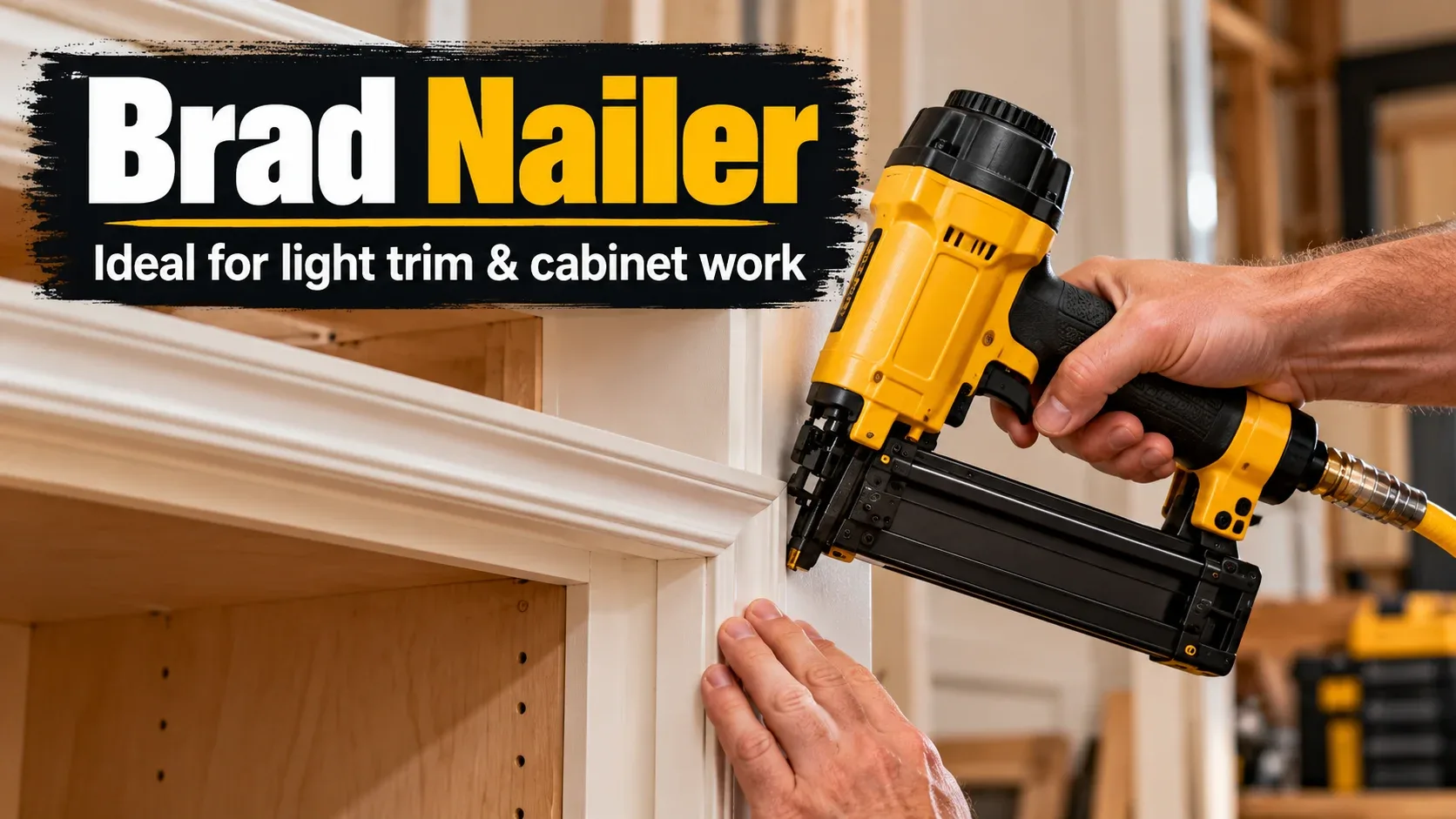
A brad nailer usually drives 18-gauge brads. These thin fasteners create small holes and are well suited to light trim and woodworking where appearance matters.
Best Uses
- Small molding
- Light trim
- Cabinet backs
- Craft projects
- Delicate woodworking
4. Pin Nailer
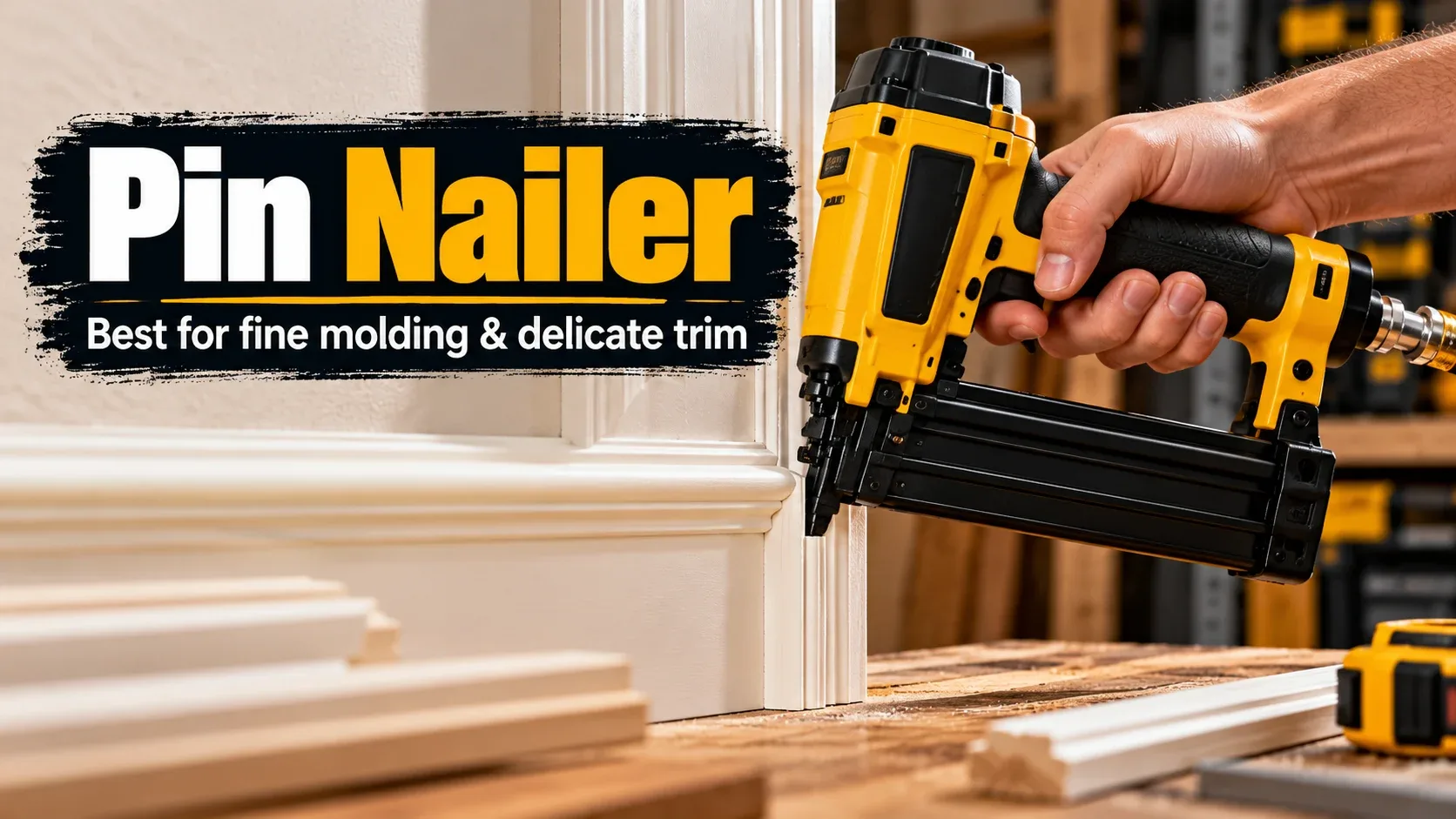
A pin nailer typically uses very thin 23-gauge pins. These fasteners have very small heads or may appear almost headless, leaving minimal visible marks.
Best Uses
- Fine molding
- Small decorative parts
- Cabinet details
- Temporary positioning while glue cures
Brad Nailer vs Finish Nailer
| Feature | Brad Nailer | Finish Nailer |
|---|---|---|
| Typical Gauge | 18-gauge | 15- or 16-gauge |
| Holding Strength | Lower | Higher |
| Hole Size | Smaller | Larger |
5. Roofing Nailer
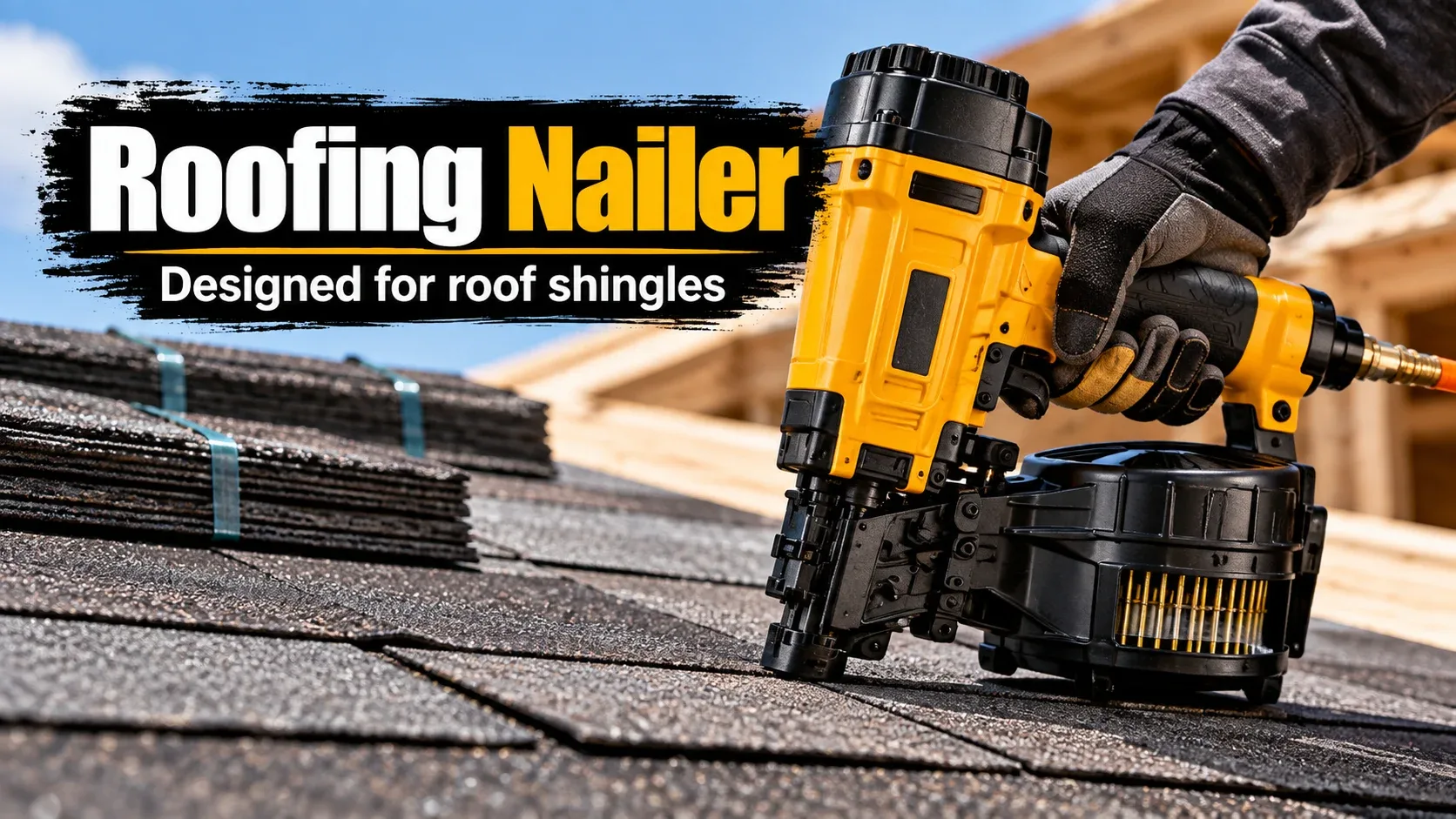
A roofing nailer is designed to drive roofing nails quickly across large roof surfaces. Many use a coil magazine that holds a large number of fasteners.
6. Siding Nailer
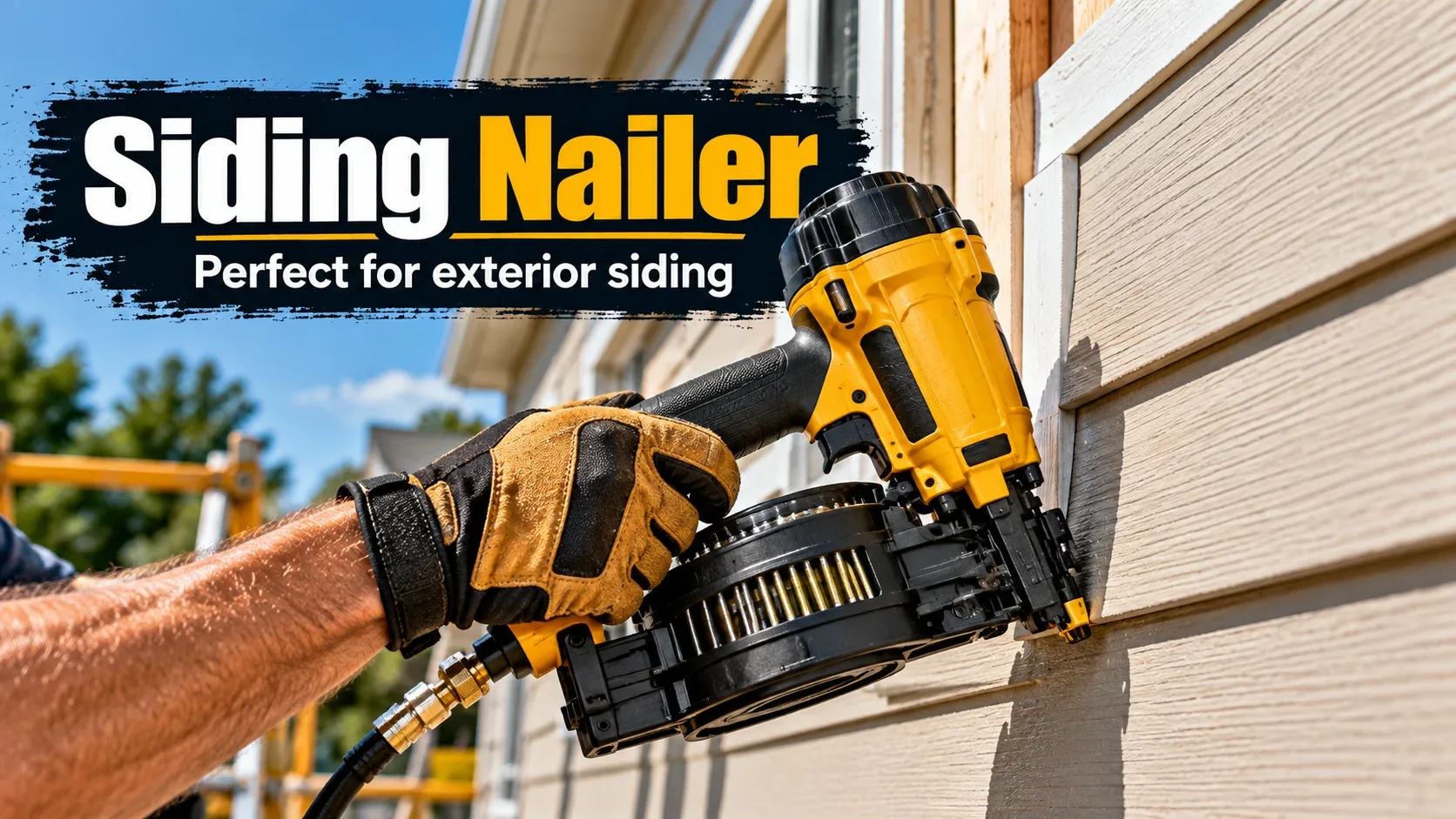
A siding nailer is designed for fastening exterior siding materials. Compatible nail type, length, corrosion resistance, and installation method depend on the siding product.
7. Flooring Nailer
A flooring nailer is designed to fasten tongue-and-groove flooring at an angle so the fastener is hidden by the next board.
8. Palm Nailer
A palm nailer is a compact tool that fits into spaces where a full-size framing nailer cannot easily reach.
9. Coil Nailer
A coil nailer uses collated nails arranged in a coil instead of a straight strip. The round magazine can hold many fasteners, reducing reloads.
10. Joist Hanger Nailer
A joist hanger nailer is designed for structural connectors such as joist hangers and metal brackets.
11. Crown Stapler
A crown stapler is technically a stapler rather than a nail gun, but it is often compared with nailers because it performs similar fastening tasks.
12. Concrete Nailer and Powder-Actuated Tools
Concrete fastening tools are designed to attach suitable materials to concrete, masonry, or steel. Some use pneumatic or gas power, while powder-actuated tools use a controlled powder charge.
Nail Gun Sizes and Gauges Explained
Nail gauge describes fastener thickness. In general, a higher gauge number indicates a thinner fastener.
| Gauge / Type | Typical Use |
|---|---|
| 23-Gauge | Fine trim and delicate molding |
| 18-Gauge | Brad work and light trim |
| 16-Gauge | Finish trim |
| 15-Gauge | Heavy finish work |
| Framing Nails | Structural construction |
Pneumatic vs Cordless Nail Guns
| Feature | Pneumatic | Cordless |
|---|---|---|
| Power Source | Air compressor | Battery |
| Mobility | Limited by hose | High |
| Tool Weight | Often lighter | Often heavier |
Sequential vs Contact Firing
Sequential Firing
Sequential operation requires the contact element and trigger to be activated in a particular order before each fastener is driven.
Contact or Bump Firing
Some nailers can fire rapidly when the trigger is held and the contact element touches the workpiece. This requires greater control and awareness.
How to Choose the Right Nail Gun
- Project type: Match the nailer to framing, trim, roofing, flooring, or another specific job.
- Fastener gauge: Choose enough holding strength without unnecessary surface damage.
- Nail length: Match material thickness and tool compatibility.
- Power source: Consider pneumatic vs cordless convenience.
- Tool weight: Important for overhead and long-duration work.
- Depth adjustment: Helps control how deeply nails are driven.
Which Nail Gun Is Best for Each Job?
| Job | Commonly Suitable Nail Gun |
|---|---|
| Wall framing | Framing nailer |
| Baseboards | Finish nailer |
| Thin trim | Brad nailer |
| Fine molding | Pin nailer |
| Roof shingles | Roofing nailer |
| Hardwood flooring | Flooring nailer |
Can One Nail Gun Handle Every Project?
Usually not. The different types of nail guns exist because framing, trim, roofing, flooring, and other jobs require very different fasteners.
Which Nail Gun Should a Beginner Buy First?
For light woodworking and trim, an 18-gauge brad nailer can be a practical starting point because it handles many small molding, cabinet, craft, and DIY jobs. If your main work is framing, heavy trim, roofing, or flooring, choose the nailer made for that task instead.
How to Use a Nail Gun Safely
- Wear appropriate eye protection.
- Keep hands away from the fastening path.
- Never point the nailer at another person.
- Keep your finger off the trigger until ready to fire.
- Disconnect power before clearing jams.
- Use only compatible fasteners.
- Never bypass safety mechanisms.
- Check for hidden wiring or plumbing before fastening.
FAQs About Types of Nail Guns
What are the main types of nail guns?
Common types include framing, finish, brad, pin, roofing, siding, flooring, palm, and coil nailers.
What nail gun should I use for framing?
A framing nailer is designed for structural lumber and large framing fasteners.
What is the difference between a brad nailer and finish nailer?
A brad nailer typically uses thinner 18-gauge fasteners, while a finish nailer usually uses thicker 15- or 16-gauge nails with greater holding strength.
Are nail guns dangerous?
They can cause serious puncture injuries if misused, so proper handling and functional safety mechanisms are essential.
Which Type of Nail Gun Do You Need?
Choose the nailer based on the project, fastener size, required holding strength, material, and surface finish. The most powerful tool is not automatically the right tool.
Bottom Line
The different types of nail guns are built for different fastening jobs. Match the nailer to the fastener, material, and project rather than trying to use one tool for every application.