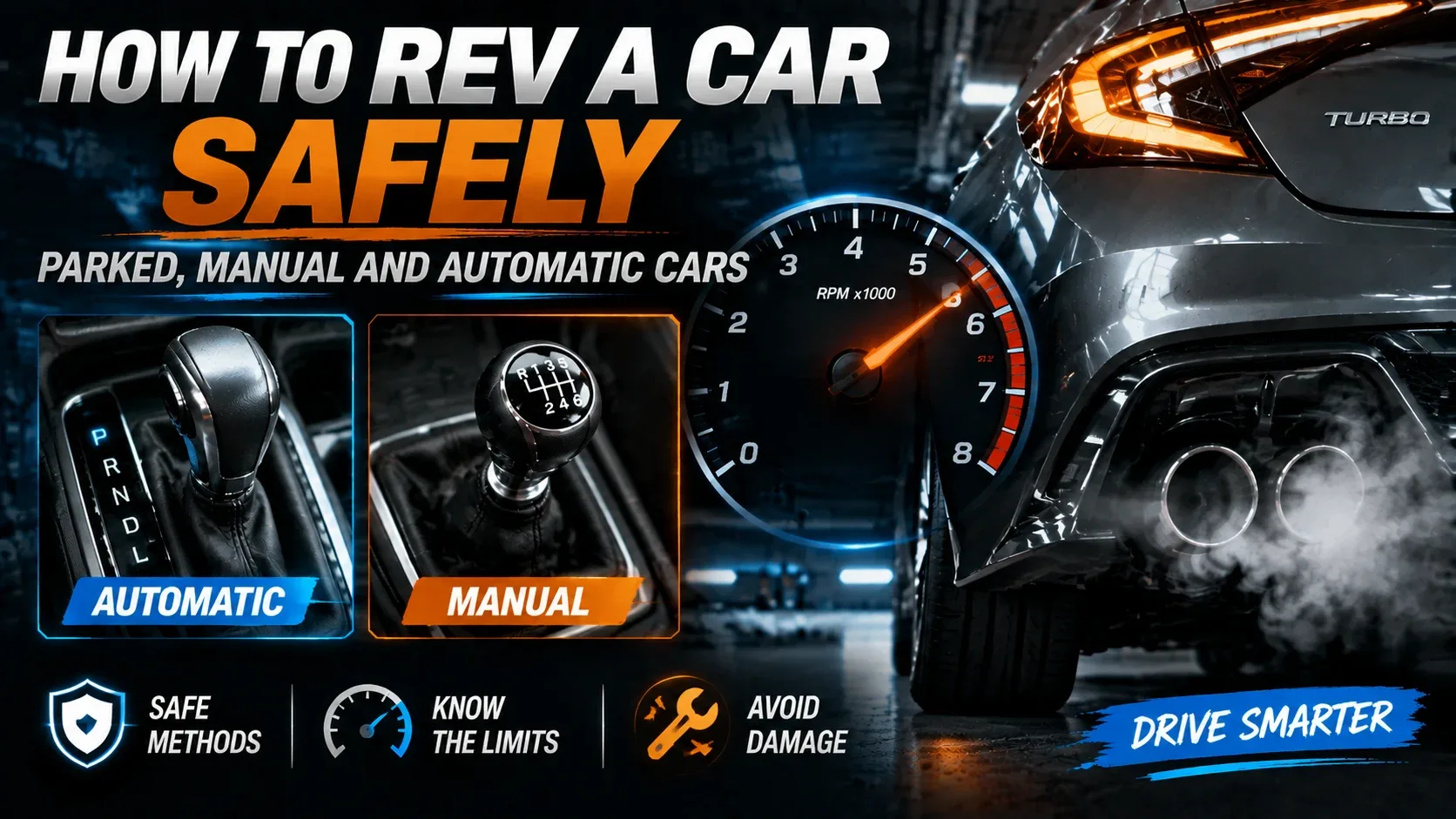

Wondering how do you rev a car without hurting it? Learn what RPM means, when to use Park or Neutral, and how to use the throttle smoothly in automatic and manual cars.
What does it mean to rev a car?
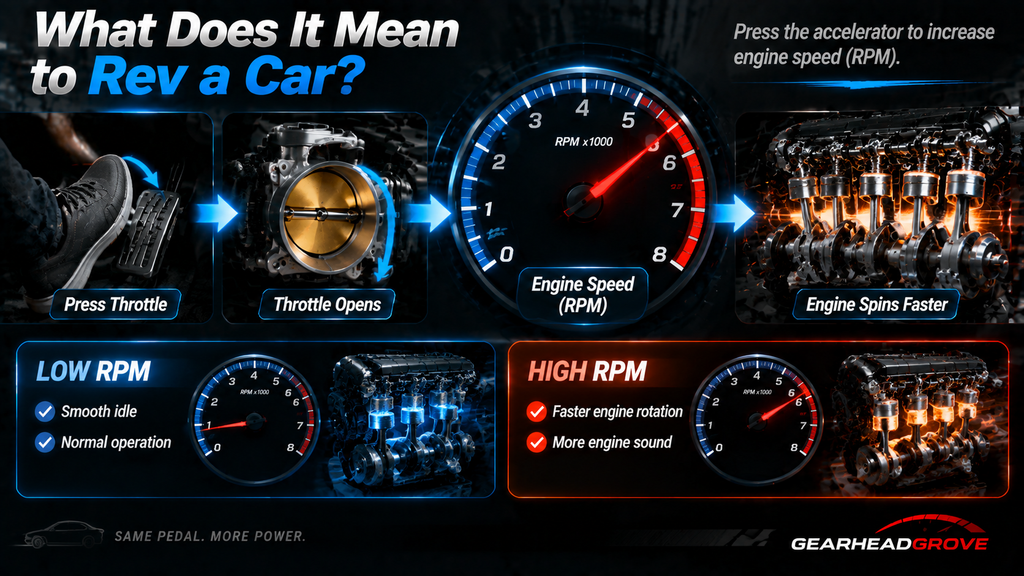
To rev a car means to increase engine speed by pressing the accelerator pedal. As the engine spins faster, the number on the tachometer rises. That number is RPM, short for revolutions per minute.
For a beginner, the important idea is simple: more pedal input creates more RPM. You do not need a hard stab at the accelerator to hear or check the engine response. A smooth press and release gives you more control, creates less unnecessary stress, and helps you learn how your vehicle responds.
How do you rev a car in Park?
If you need to check how the engine responds while parked, use a level, well-ventilated location away from people, walls, loose objects, and traffic. Never rev a car in an enclosed garage because exhaust gases can build up quickly.
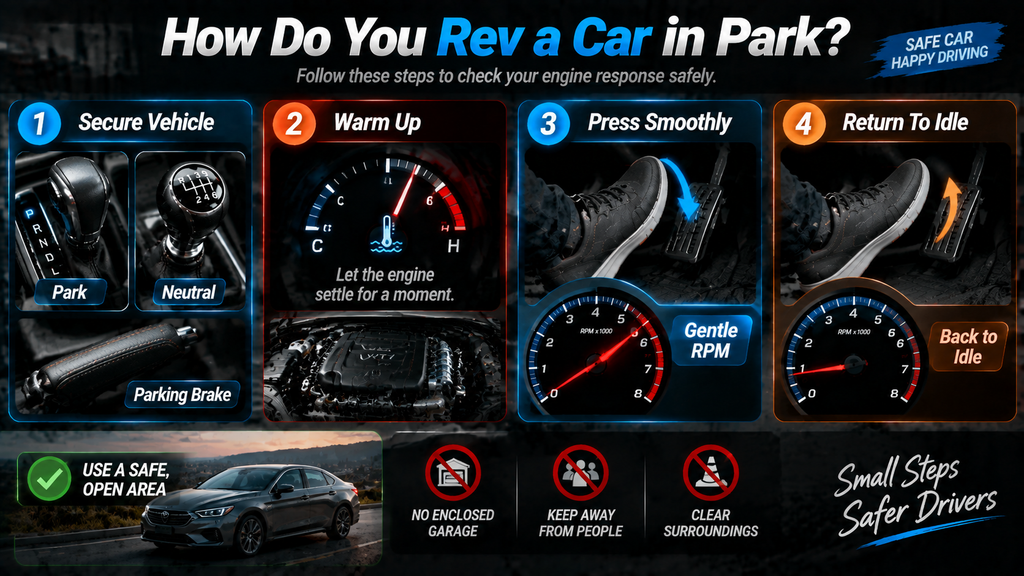
Start the car and secure it
Start the engine with the parking brake applied. Confirm the vehicle is in Park if it is automatic, or Neutral if it is manual. Keep your right foot ready for the brake and make sure the area in front of the car is clear.
Let the engine begin warming up
Give the engine a short moment to settle after starting, especially in cold weather. You do not need a long idle session, but avoid aggressive revving when oil and engine components are still cold.
Press the accelerator gently
Apply light pressure to the accelerator and watch the RPM rise. For a basic response check, a modest, brief increase is enough. Avoid flooring the pedal or holding the engine at a high RPM simply to make noise.
Release the pedal smoothly
Let the pedal return naturally and allow the RPM to settle back to idle. A quick blip of the throttle while checking engine response is different from repeatedly holding the engine near redline.
How to rev an automatic car
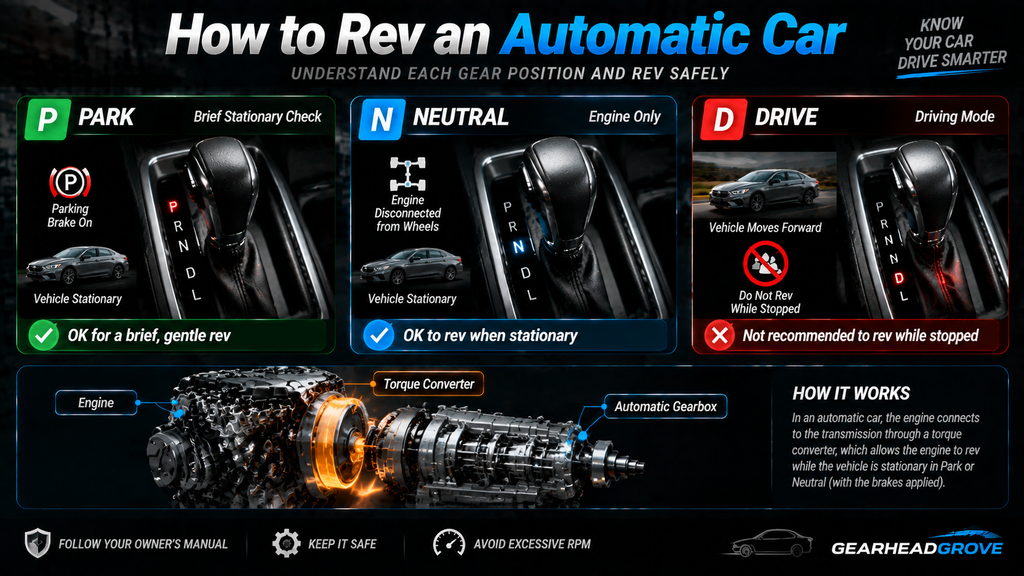
In most automatic cars, Park is the normal position for a brief stationary engine check. The parking pawl helps hold the transmission output in place, but you should still apply the parking brake and keep the rev brief and moderate.
Neutral allows the engine to rev without drive being engaged, but it does not secure the car. Do not shift to Neutral while moving just to rev the engine, and do not use aggressive throttle input in Drive while stopped. Modern automatics manage shifting for you; Sport mode changes shift behavior while driving, not the basic rules of safe throttle use.
| Selector position | What it does | Safe beginner guidance |
|---|---|---|
| Park | Locks the transmission output and is intended for parking. | Use for a brief, gentle stationary check with the parking brake applied. |
| Neutral | Disconnects engine power from the driven wheels. | Only use when safely stationary; it does not stop the vehicle from rolling. |
| Drive | Engages the transmission to move the vehicle forward. | Do not rev against the brake or use high RPM while stopped. |
How to rev a manual car
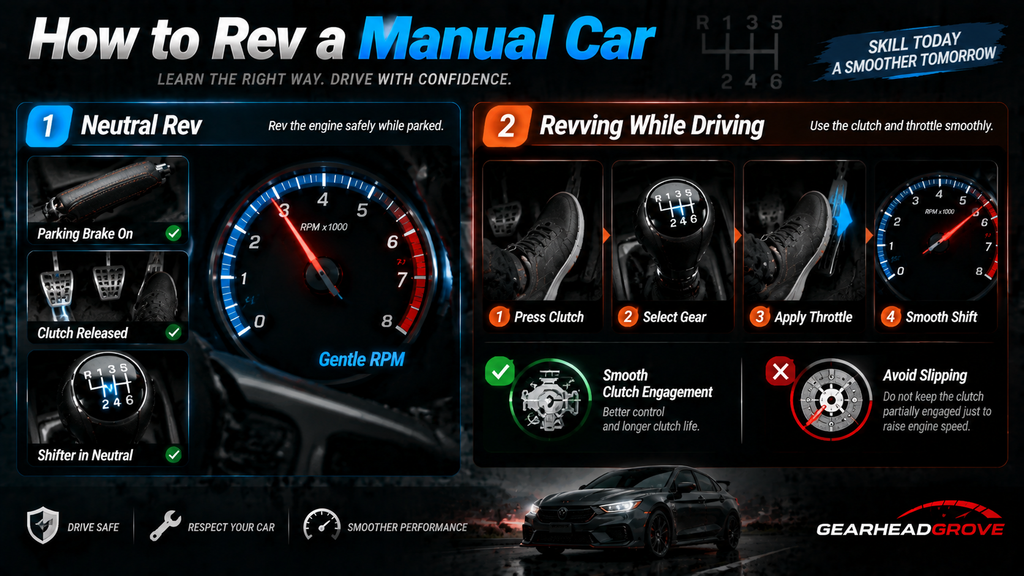
With a manual transmission, the engine and wheels are connected only when the clutch is engaged in gear. You can rev the engine while the shifter is in Neutral, or while the clutch pedal is fully pressed, but those are not the same as accelerating through a gear.
Revving in Neutral
Park on level ground, apply the parking brake, place the shifter in Neutral, and take your foot off the clutch. Then use the accelerator gently and briefly, just as you would in an automatic parked safely in Park.
Revving while driving
When accelerating, select the appropriate gear and release the clutch smoothly as you apply throttle. Do not keep the clutch partially engaged to raise engine speed; that is clutch slipping and can create unnecessary wear.
Is revving a car bad for the engine?
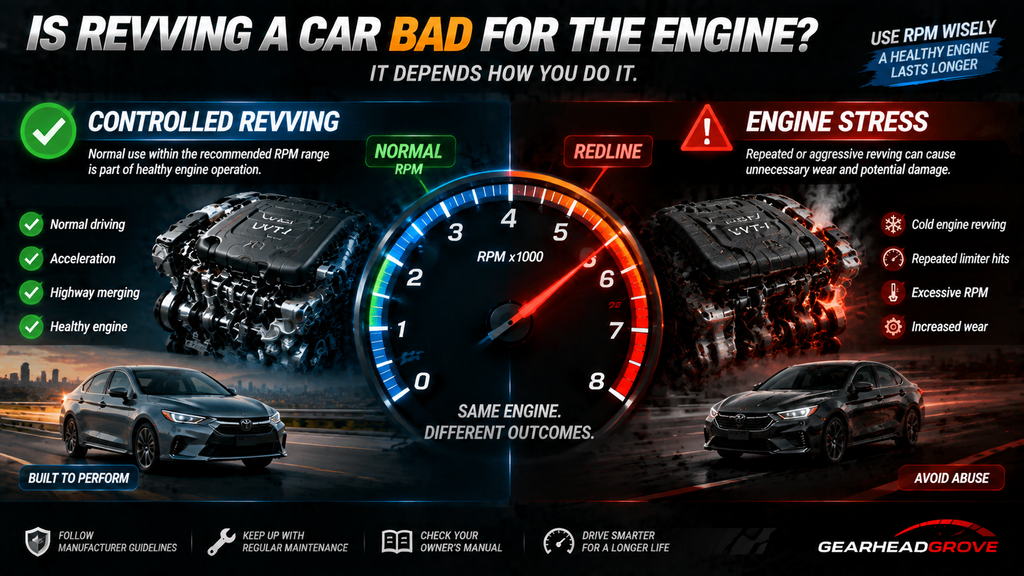
Occasional controlled revving within your vehicle’s normal operating range is not automatically harmful. Engines are designed to run across a range of RPM, and they often reach higher RPM naturally while merging, climbing hills, or accelerating.
The risk comes from repeated abuse: aggressive cold-engine revving, bouncing off the limiter, holding high RPM without need, or ignoring signs of low oil, overheating, or a mechanical problem. The safest limit is the one set by the manufacturer in your tachometer and owner’s manual.
What is redline?
Redline is the upper RPM zone marked on the tachometer, commonly in red. It is not a target for routine use. Many modern cars have a limiter designed to help prevent over-revving, but that is a safeguard, not permission to repeatedly push the engine to its limit.
When should you avoid revving your car?
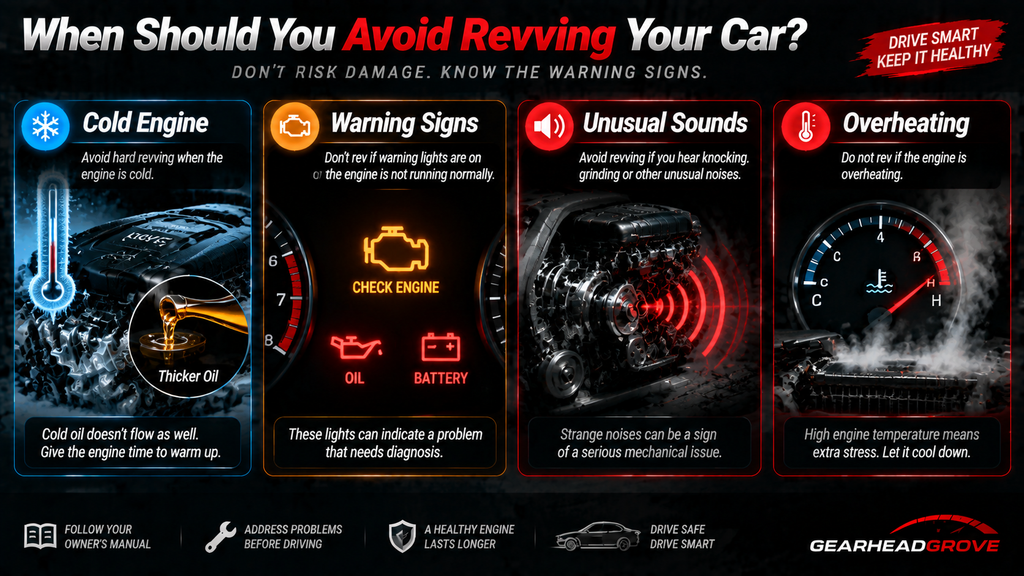
If something does not sound, smell, or feel normal, do not use revving as a way to test the problem harder. Stop and inspect the situation safely, or arrange qualified help when warning signs are present.
When the engine is cold
Cold oil does not flow the same way as oil at normal operating temperature. Start gently and drive smoothly while the car warms up instead of using hard, repeated throttle blips immediately after start-up.
With warning lights or unusual noises
Avoid revving if the oil-pressure warning appears, the check-engine light is flashing, the engine is misfiring, or you hear knocking, grinding, or a sudden loud mechanical sound. These can signal a fault that needs diagnosis.
When the engine is overheating
If the temperature gauge is high, a temperature warning is on, or you see steam, do not rev the engine. Pull over safely, switch off when appropriate for your vehicle, and allow the engine to cool before checking the owner’s manual or seeking help.
How to rev a car FAQs
Can revving damage an engine?
Normal, occasional revving within the vehicle’s operating limits is generally part of driving. Damage becomes more likely with repeated high-RPM use, revving a cold engine, over-revving a manual car in the wrong gear, or ignoring low oil and warning lights.
How high can I rev my car?
Use your tachometer and owner’s manual as the authority. For a stationary response check, there is rarely a reason to approach redline. A gentle, short rise in RPM is enough to confirm that the engine responds normally.
Is it OK to rev a car in Park?
A brief and moderate rev in Park is generally acceptable when the car is safely stationary, the parking brake is applied, and the engine has begun warming up. Avoid extended or repeated high-RPM revving, especially in an enclosed space.
Should I warm up my car before revving?
Yes. Let the engine settle after starting and use light throttle while it comes up to operating temperature. Modern vehicles generally warm up best with gentle driving rather than long idling or aggressive revving.
Does revving clean the engine?
Simply revving in Park or Neutral is not a reliable way to clean an engine or fix a performance concern. Regular maintenance, correct oil, good fuel, and diagnosis of warning lights or drivability issues are more useful than high-RPM stationary revving.