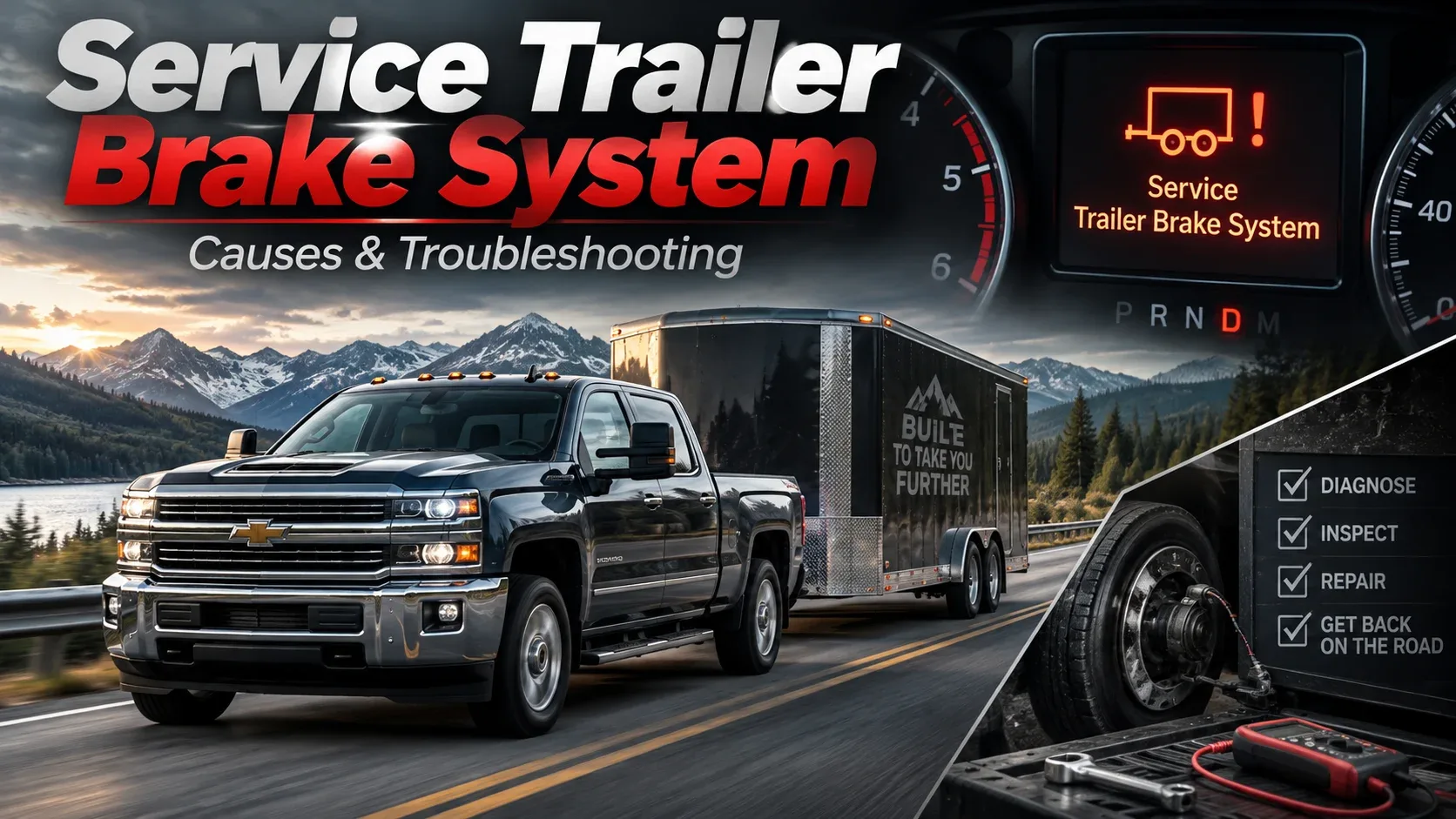

A “Service Trailer Brake System” message means the tow vehicle has detected a problem affecting trailer-brake control. Here is how to reduce risk, check the basics, and narrow the fault before replacing parts.
What does “Service Trailer Brake System” mean?
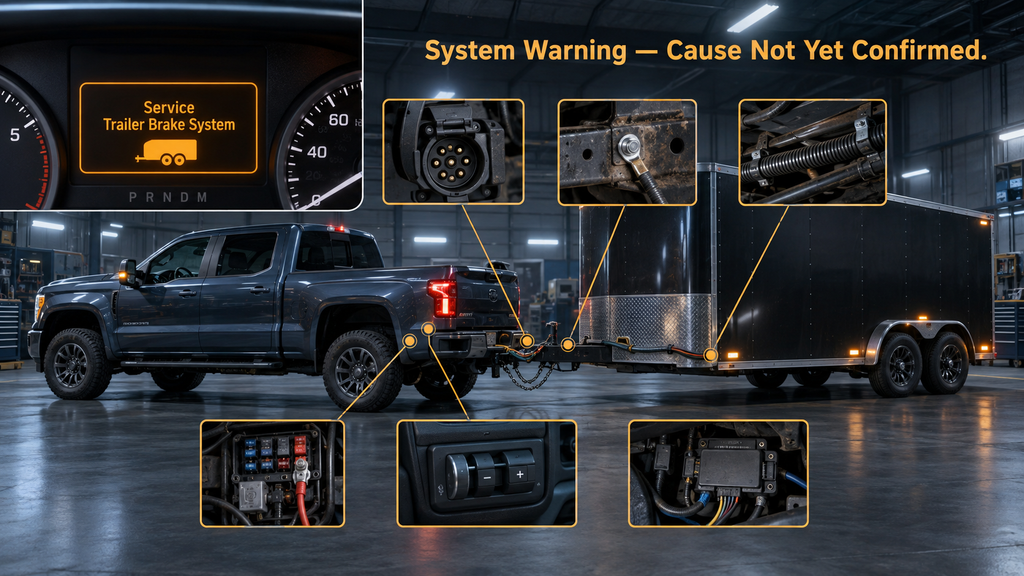
On vehicles with an Integrated Trailer Brake Control system, this message generally means the vehicle detected a problem affecting electric trailer-brake control or a related circuit.
It identifies a system problem—not the failed component.
The same warning can be caused by a trailer plug, a ground, damaged wiring, power supply, controller issue, module communication fault, or another electrical concern. Do not order a brake controller or module based on the warning alone.
Start with safety, then diagnose before replacing
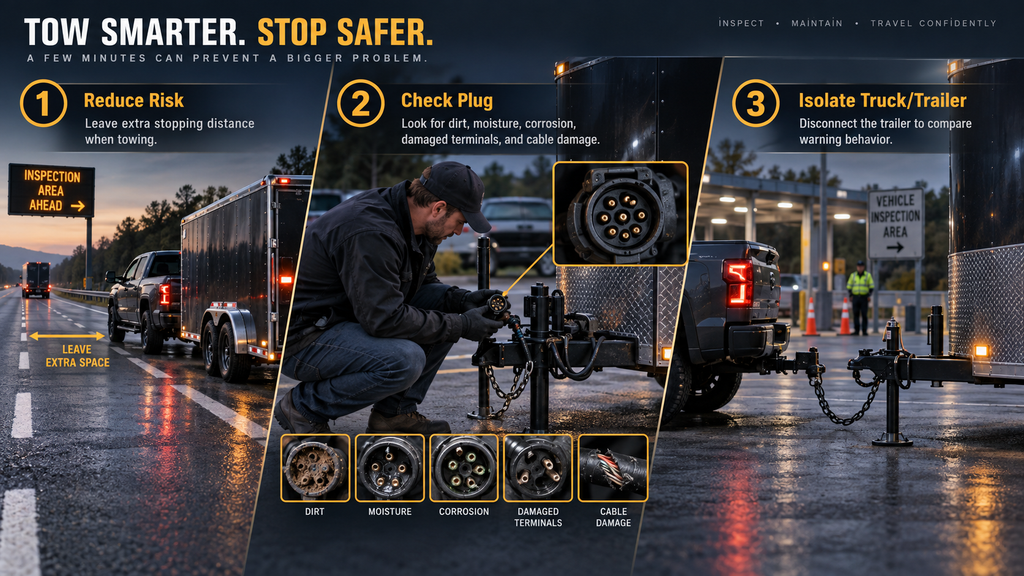
Reduce towing risk
Avoid assuming trailer braking is normal. Increase following distance and find a safe place to inspect the connection.
Check the plug first
Secure the trailer connector, then look for dirt, moisture, corrosion, spread terminals, or cable damage.
Separate truck from trailer
Notice whether the warning changes with the trailer disconnected. That observation can guide the next test.
Use the connection to narrow the search.
The most useful first clue is whether the warning follows the trailer connection. Work carefully and avoid probing terminals or bypassing circuits unless you understand the correct vehicle-specific procedure.
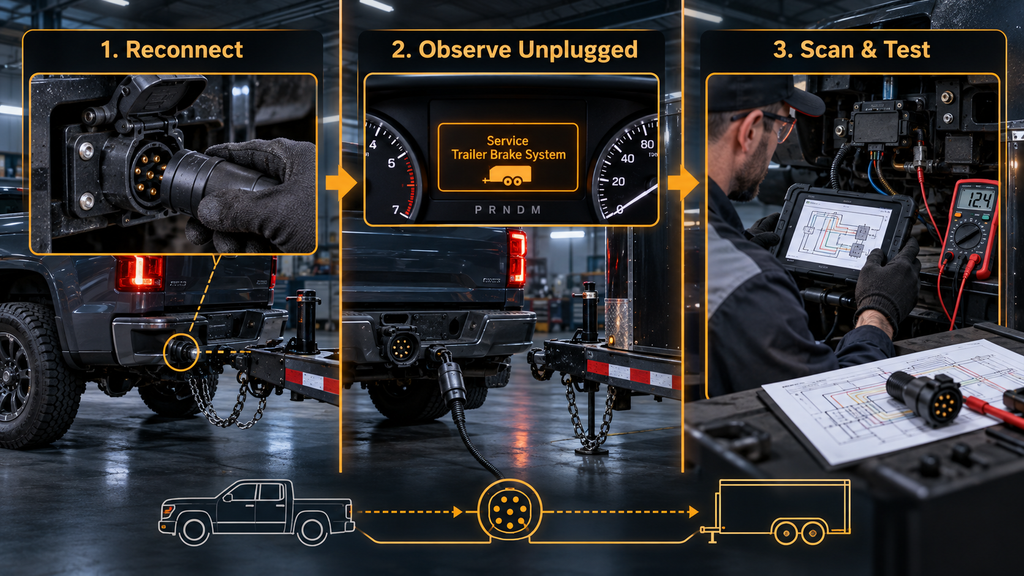
Reconnect with the ignition state your manual specifies.
Make sure the connector is fully seated and latched. A loose plug can momentarily interrupt brake output or ground and trigger an intermittent message.
Observe the message with the trailer unplugged.
If supported by your vehicle’s procedure, this can help distinguish a trailer-connected issue from a warning that remains on the tow-vehicle side.
Use codes and circuit tests to confirm.
A capable scan tool and model-specific wiring information can identify stored codes and help test power, ground, brake output, and communication circuits accurately.
What to check at the trailer connector
A connector problem can mimic a failed brake controller. Start with clean, dry, undamaged connections and inspect the cable strain-relief area where turning and vibration can fatigue wires.
Common causes of a service trailer brake system warning
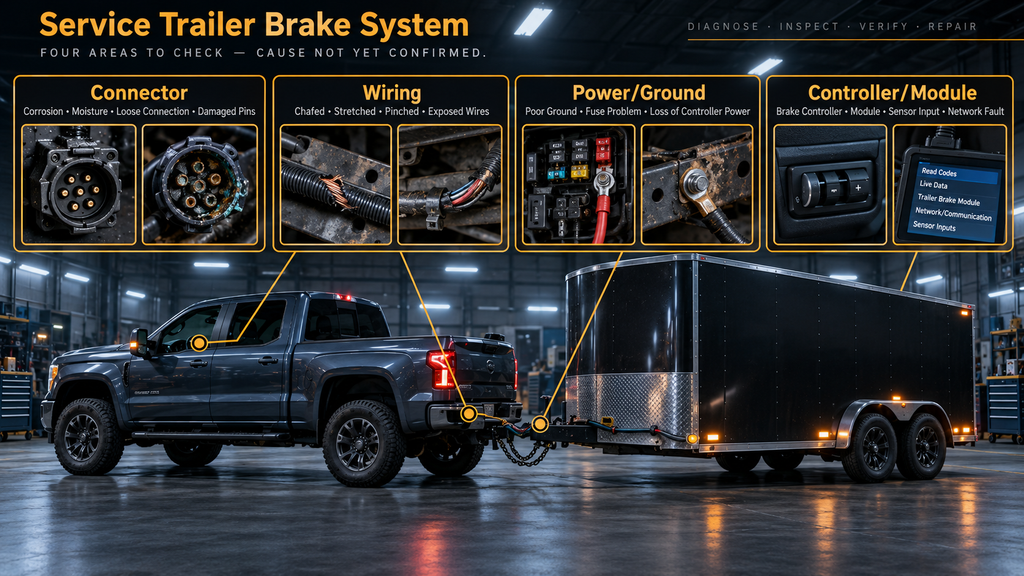
These categories are practical starting points, not a ranking of guaranteed repairs. Begin with accessible connection and wiring checks before moving to modules or controller replacement.
Plug or terminal issue
A loose plug, corrosion, moisture, damaged pin, or poor terminal contact can interrupt the signal between truck and trailer.
Trailer or vehicle wiring damage
Look for pinched, chafed, exposed, or stretched wiring near the hitch, trailer tongue, axle area, and underbody routing points.
Ground, fuse, or power supply fault
Poor grounds, blown fuses, damaged fuse-box connections, or a loss of brake-control power can produce warning messages.
Controller, module, or network fault
The integrated controller, related module, sensor input, or vehicle communication network can set this warning and may require targeted diagnostic testing.
Stop troubleshooting when the next step requires certainty.
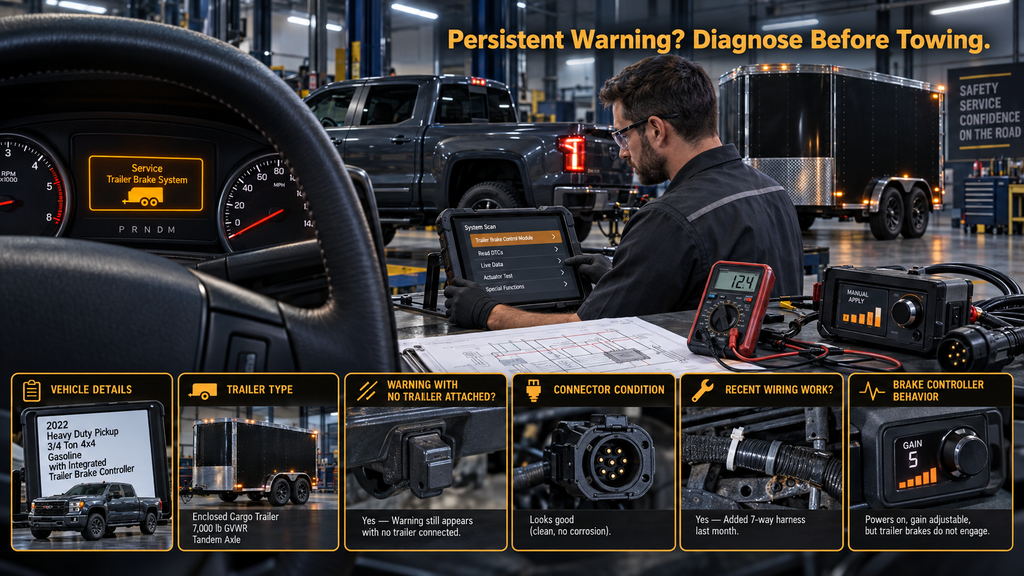
If the warning persists, appears with no trailer connected, returns after basic connection checks, or you are unsure whether trailer brakes are working, arrange qualified diagnosis before relying on the trailer for braking assistance.
Bring useful details to the service appointment
Note the vehicle year and model, trailer type, whether the warning appears with no trailer attached, connector condition, recent wiring work, and any messages or brake-controller behavior you noticed.
Service Trailer Brake System FAQ
Can I drive with the Service Trailer Brake System warning on?
The truck’s normal hydraulic brakes may still work, but towing safety is different: trailer-brake operation may be reduced or unavailable depending on the fault. Follow the instructions in your owner’s manual.
Why does the warning appear when no trailer is connected?
A warning with no trailer attached can indicate a tow-vehicle-side issue such as wiring, connector, power supply, integrated brake controller, module, or communication fault.
Can a loose trailer connector cause this message?
Yes. A loose, corroded, wet, or damaged connector can interrupt the brake-control circuit and trigger a warning. Inspect and secure the plug first, then continue diagnosis if the warning returns.