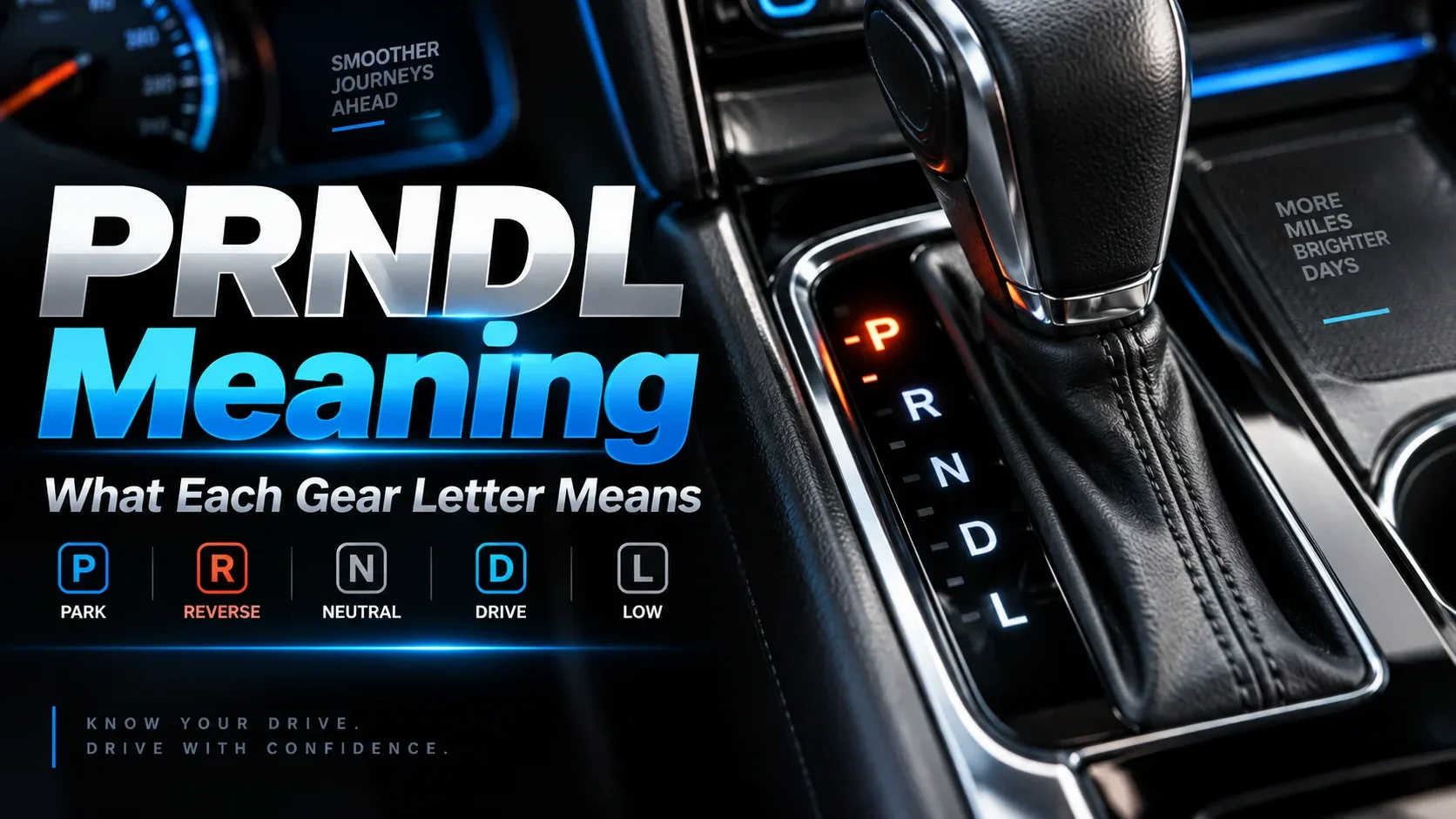
PRNDL stands for Park, Reverse, Neutral, Drive, and Low. Here is what each selector position does, when to use it, and the practical mistakes to avoid in an automatic car.
PRNDL is a shortcut for the five basic automatic gear positions
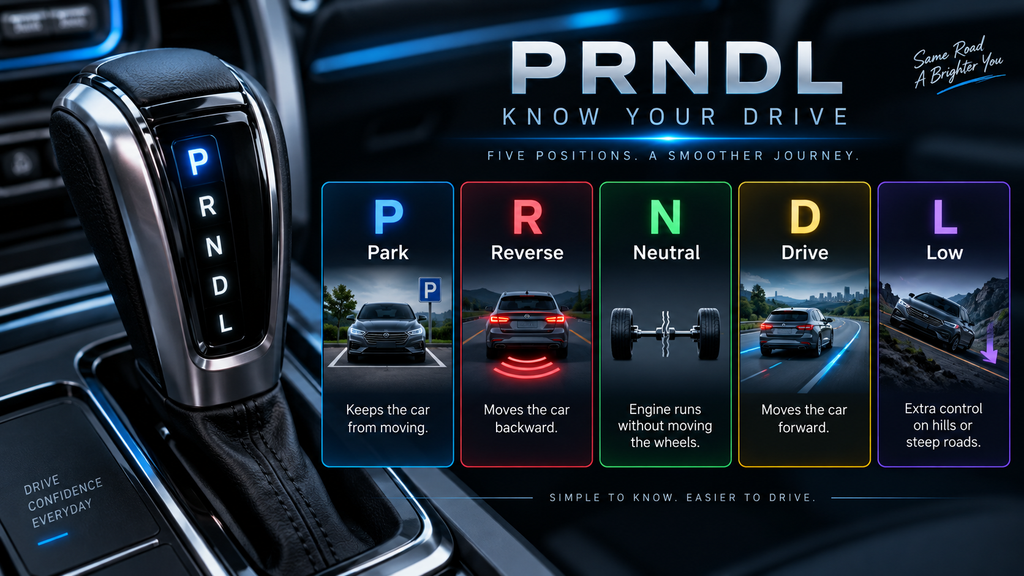
Most drivers use P, R, and D often. Neutral and Low have more specific jobs, so they are where practical questions usually begin.
| Letter | Meaning | Basic use |
|---|---|---|
| P | Park | Secures the transmission after the vehicle is fully stopped. |
| R | Reverse | Moves the vehicle backward. |
| N | Neutral | Disconnects engine drive from the wheels. |
| D | Drive | Normal forward driving with automatic shifting. |
| L | Low | Keeps the transmission in a lower gear range in certain conditions. |
Use the letter that matches what the vehicle needs to do—not just where you want it to go
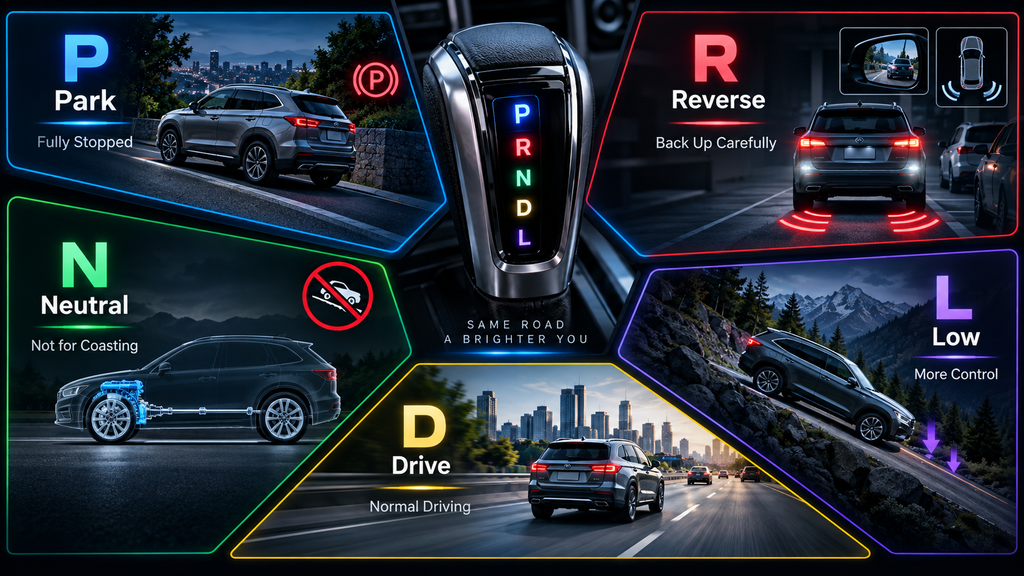
The transmission design behind these labels differs from one car to another, but the practical purpose of the main positions remains broadly consistent. Check your owner’s manual for the exact behavior of your vehicle.
Park
Use Park only after the car has come to a complete stop. It engages a locking mechanism inside the transmission to help hold the vehicle.
Good habit: apply the parking brake too, especially on a hill.
Reverse
Reverse moves the vehicle backward. Select it when stopped, then check mirrors, surroundings, and blind spots before moving.
Cameras and sensors help, but they do not replace looking around.
Neutral
Neutral disconnects the engine from driving the wheels. The engine can run, but the car will not move under engine power.
Do not coast downhill in Neutral; you lose useful engine braking.
Drive
Drive is the normal setting for forward travel. The transmission selects gears automatically based on speed, load, and throttle input.
For everyday city and highway driving, D is usually the right choice.
Low
Low asks the transmission to stay in a lower gear range. It can improve control and increase engine braking in particular conditions.
L is not always identical to first gear—its exact function varies by vehicle.
Low gear is mainly about control, not everyday speed
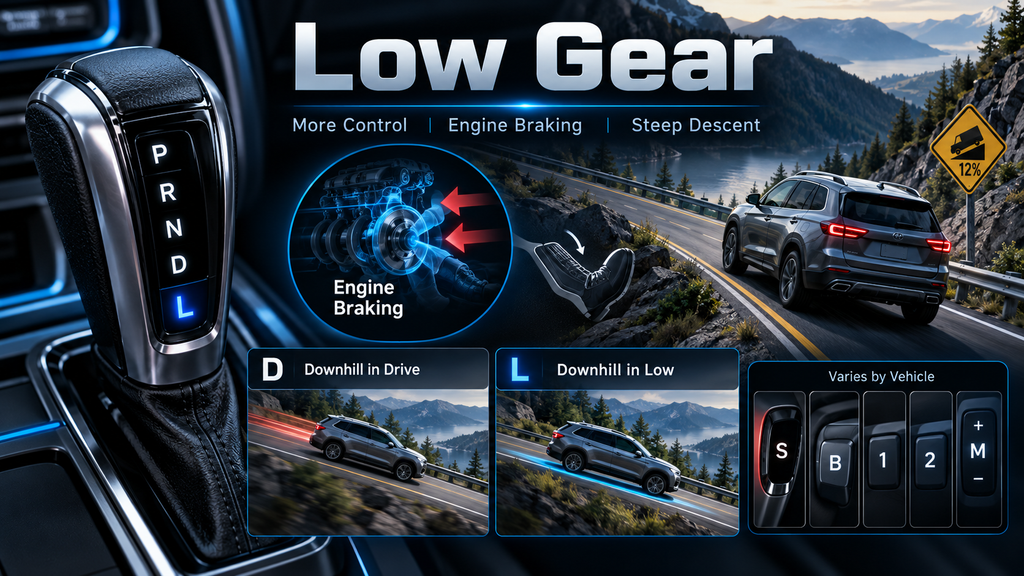
Use Low when your vehicle manual recommends a lower gear range for a steep descent, low-speed control, certain climbs, or an approved towing situation. It generally keeps the engine turning faster than Drive would, which can make the vehicle resist rolling downhill.
Engine braking in plain language
When you lift off the accelerator in a lower range, the engine helps resist the car’s motion. It is not a substitute for the brakes, but it can help you maintain a steadier speed downhill.
Important: do not assume every L setting locks the transmission in first gear. Some vehicles allow more than one lower gear, while others use S, B, numbered ranges, or manual mode instead.
Modern selectors add choices without changing the basics
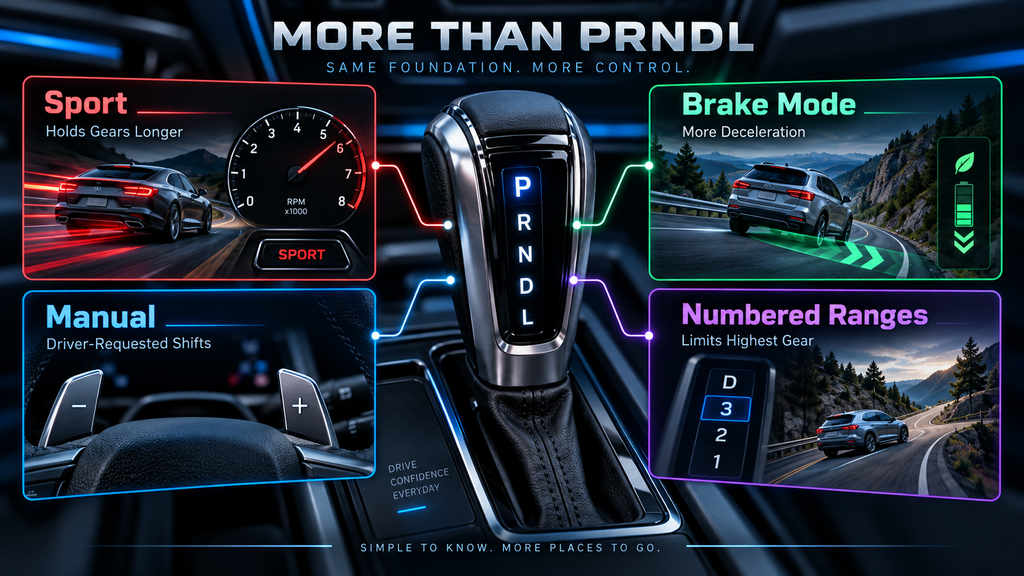
Your shifter may display additional letters or numbers. These often change shift timing, let you request gears, or provide more engine braking.
Sport mode
Usually holds gears longer and may downshift sooner for sharper acceleration or stronger engine braking.
Manual mode
Lets you request an upshift or downshift through the selector or paddle shifters. The car may still protect itself from unsuitable shifts.
Brake mode
Common on some hybrids and EVs. It generally increases deceleration when you release the accelerator, but exact behavior varies.
Numbered ranges
Often limit the highest gear the transmission can use. They are a more specific version of choosing a lower gear range.
Three automatic-transmission mistakes worth avoiding
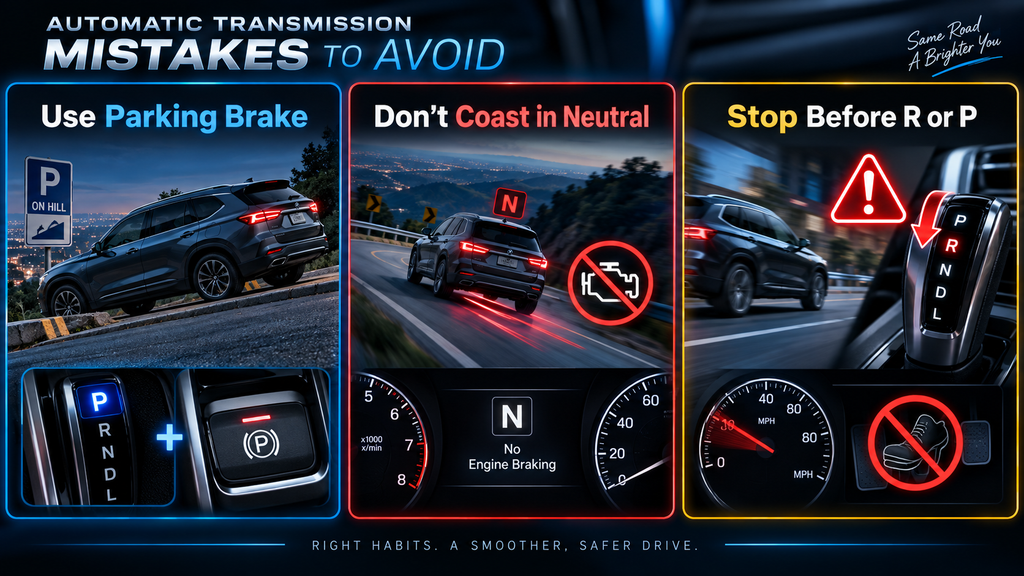
The safest approach is straightforward: stop before choosing a direction, use the parking brake when parked, and follow vehicle-specific instructions for special situations.
Using Park as the only brake on a slope
Park helps secure the transmission, but the parking brake helps hold the vehicle and reduces load on the parking mechanism.
Coasting in Neutral
Coasting removes engine braking and can reduce control. In normal driving, leave the car in Drive unless a vehicle-specific situation requires Neutral.
Selecting R or P before stopping
Always bring the vehicle to a complete stop before choosing Reverse or Park. Forcing a change while moving can damage components.
PRNDL meaning FAQ
Should I put an automatic car in Neutral at traffic lights?
For normal stops, it is generally simplest to remain in Drive with your foot on the brake. Repeatedly moving between Drive and Neutral is usually unnecessary. Follow your owner’s manual if your vehicle has auto-hold, stop-start, or specific instructions.
Can I shift from Drive to Neutral while moving?
Many vehicles allow the selector to move to Neutral while driving, but it is not useful for normal driving and removes engine braking. Do not shift into Reverse or Park while the vehicle is moving. Refer to your owner’s manual for your specific vehicle.
Do I use Neutral in an automatic car wash?
Some conveyor-style car washes require Neutral, but the correct procedure depends on the wash and the vehicle. Electronic parking brakes, auto-hold, and some electronic shifters can behave differently, so follow both the car wash instructions and your owner’s manual.