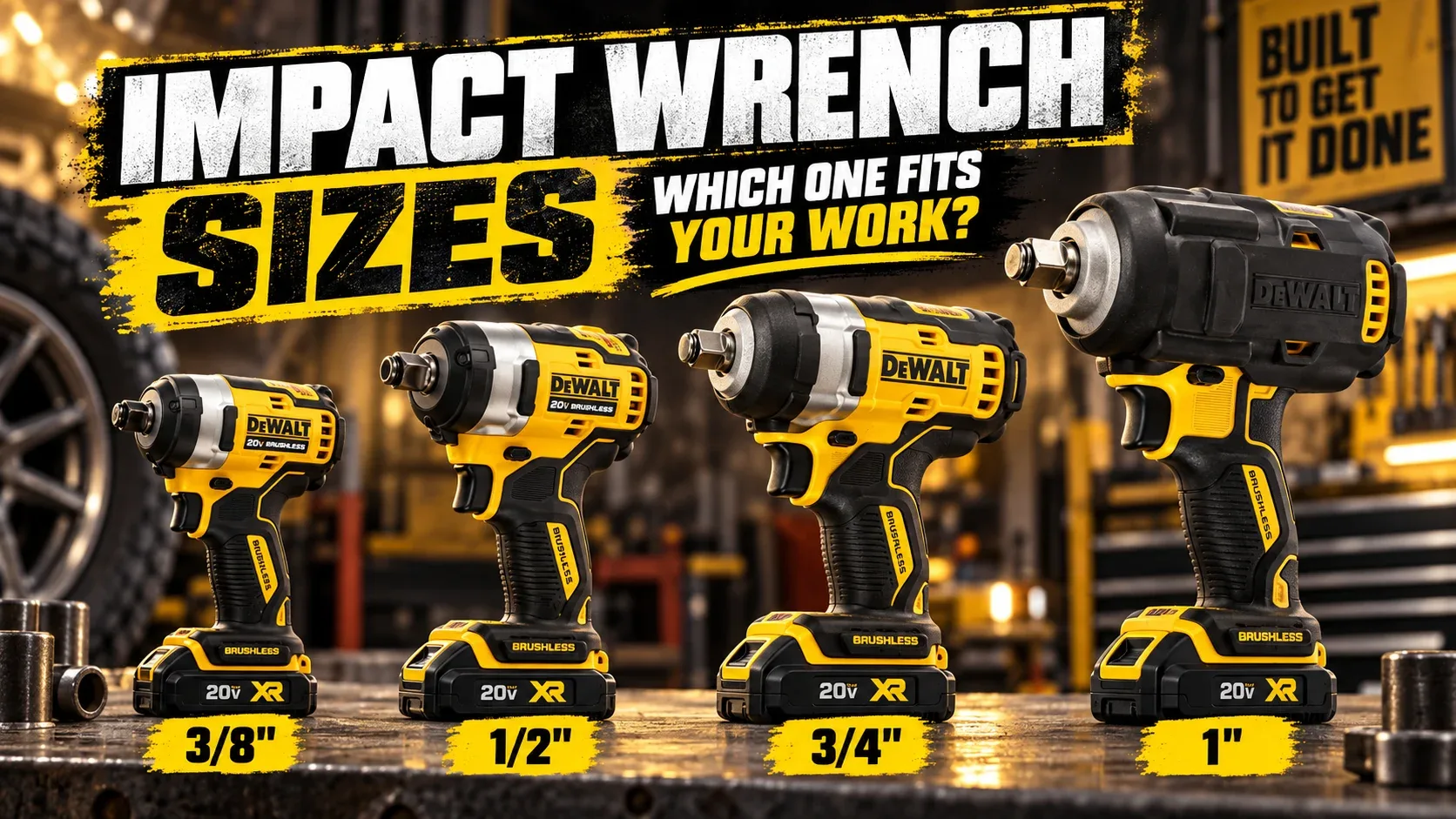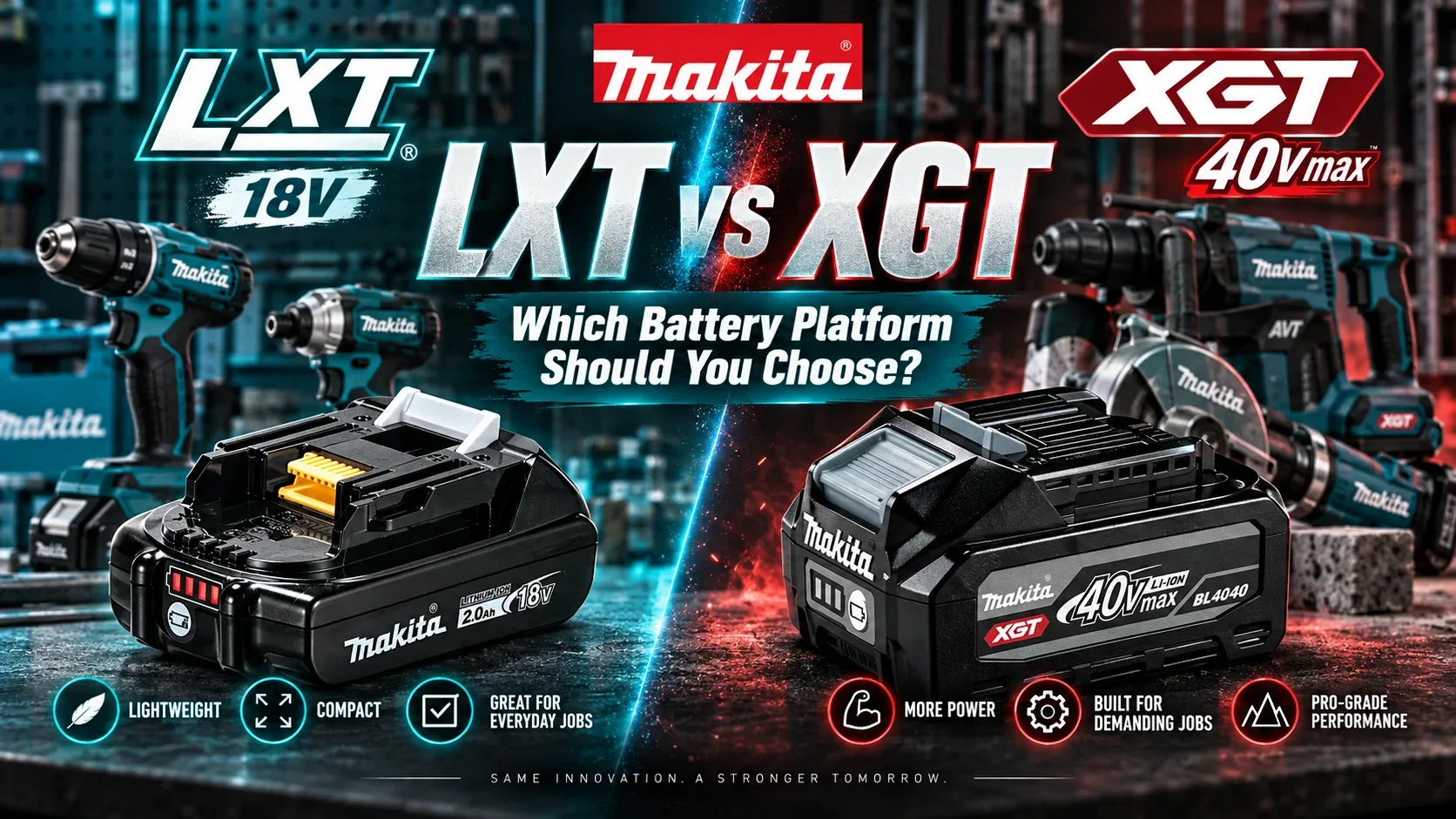

The right Makita battery platform is not automatically the most powerful one. Compare compatibility, workload, cost and future tool needs before you commit.
Choose the platform that matches the work—not the biggest number on the battery
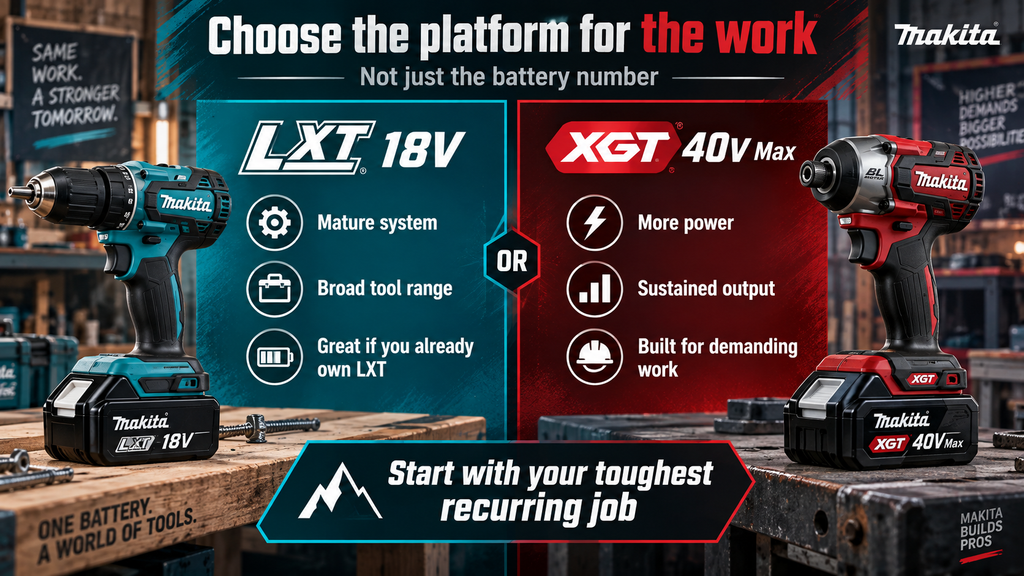
Choose Makita LXT if you value a mature, broad cordless ecosystem or already own LXT batteries. Consider Makita XGT when demanding tools, sustained output and heavier professional workloads are central to your day—not occasional exceptions.
Makita’s LXT and XGT lines can look like a simple old-versus-new comparison, but they solve different buying problems. LXT is Makita’s established 18V platform, with a long-running selection of cordless tools and a large installed base. XGT is Makita’s newer 40V max platform, designed to supply more power for demanding applications.
For a buyer, the practical question is not whether XGT is technically stronger. It is whether that extra capability will improve your own jobs enough to justify buying into a separate battery, charger and tool ecosystem. Start with your most demanding recurring task, then work backward from there.
Makita LXT vs XGT at a glance
The table below separates manufacturer platform facts from the buying implications that matter on site and in a home workshop.
| Buying factor | Makita LXT | Makita XGT |
|---|---|---|
| Battery architecture | 18V LXT; some higher-output tools use two 18V batteries. | 40V max XGT platform, engineered for higher-output cordless tools. |
| Battery compatibility | Works across compatible LXT tools only. | Uses a different battery interface; XGT and LXT batteries do not interchange. |
| Tool ecosystem | Very broad, mature range across trade, workshop, garden and everyday tools. | Growing range, with emphasis on high-demand construction and outdoor equipment. |
| Practical performance focus | Excellent for the majority of drilling, fastening, cutting and trade work. | Best suited where sustained high output can replace petrol or corded equipment. |
| Best starting point for | DIYers, mobile trades and existing Makita LXT owners. | Heavy construction, landscaping and buyers needing maximum cordless headroom. |
Important: “40V max” is Makita’s platform naming. Compare the published specifications of the exact tools you are considering, rather than assuming every XGT tool will outperform every LXT option.
Why LXT still makes sense for most buyers
LXT remains a practical choice because a battery system is more than its peak output. The line has a deep catalogue, widespread availability and plenty of compact tools that make daily work less tiring. For assembly, trim work, electrical installation, plumbing, repairs and home projects, the benefit of a lighter, familiar tool can matter more than extra power you rarely call on.
Practical advantage
For an LXT owner, another compatible bare tool can be the most economical upgrade—provided the existing batteries have enough capacity and remain in good condition.
LXT is especially compelling when you value:
- A large choice of compatible tools for varied jobs, from compact drivers to specialist trade equipment.
- Lower entry cost when you can buy bare tools and continue using batteries and chargers you already own.
- A more compact workflow for overhead work, fitting tasks and frequent short-duration jobs.
That does not mean LXT is a compromise by default. Makita’s 18V tools cover serious professional work. The more useful boundary is this: if you routinely notice a tool bogging down, need twin-battery tools to complete core jobs, or want to replace corded or petrol equipment, then XGT becomes more relevant.
When XGT’s extra capability is worth paying for
XGT is aimed at users who ask more from cordless tools: high-load drilling, large-diameter cutting, concrete work, heavy fastening, landscaping equipment and productivity-sensitive jobs. Its purpose is not just a larger battery label. It is a platform built to support tools that need more sustained electrical output.
XGT deserves a closer look if you need:
- Cordless performance for tools that face consistent load, rather than occasional light-duty use.
- A platform for expanding into high-output outdoor power equipment or heavy construction tools.
- More performance headroom where downtime, slow cuts or repeated stalls cost money.
The trade-off is straightforward: XGT is a separate investment. Batteries and chargers are not cross-compatible with LXT, and higher-capacity packs can add both cost and weight. For someone whose most demanding job happens twice a year, a corded specialist tool or a targeted LXT upgrade may be the better-value answer.
Which Makita platform fits your work?
Use these recommendations as a starting point, then check the exact tools required for your usual jobs and local availability.
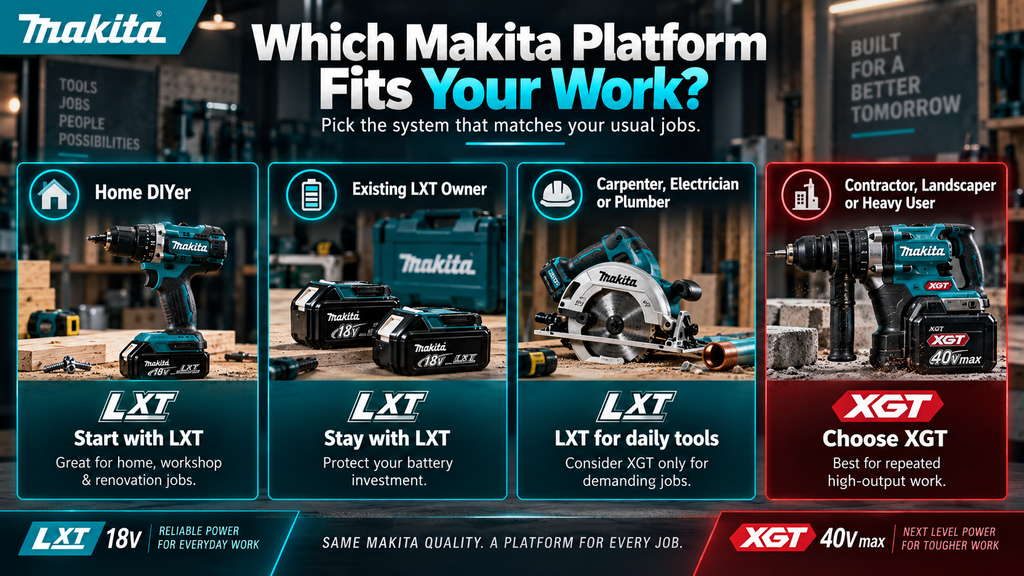
Home DIYer
Start with LXT. It offers a broad route into common household, renovation and workshop jobs without paying for high-output capability you may not use.
Existing LXT owner
Protect your current investment unless a specific core job needs more output. Add XGT selectively rather than replacing a working LXT kit wholesale.
Carpenter, electrician or plumber
LXT is usually the practical default for portable daily tools. Evaluate XGT for the occasional demanding tool category that genuinely limits your workflow.
Contractor, landscaper or heavy user
Prioritise XGT when the work repeatedly involves high load, large materials, outdoor equipment or replacing a corded and petrol workflow.
How to make a decision you will not regret
First, list the next three tools you are likely to buy—not just the one in your basket today. Then identify the task that drains batteries fastest or makes you reach for a cord. That task is a better guide to platform choice than marketing labels, one-off maximum power claims or a single attractive kit price.
Next, compare complete working systems: tool, batteries, charger and spare pack. Battery capacity, ambient temperature, material, accessory choice and working technique all affect runtime. Manufacturer specifications are valuable for comparing published tool details, but real-world runtime should be treated as task-dependent rather than guaranteed.
Frequently asked questions
Can LXT and XGT batteries be used interchangeably?
No. LXT and XGT use different battery interfaces, so batteries and chargers are not interchangeable. Choose the platform around the tools you expect to buy next.
Is XGT always more powerful than LXT?
XGT is designed for higher-output applications, but the exact tool matters. Compare the published specifications of the specific LXT and XGT models rather than relying on platform labels alone.
Should an existing LXT owner switch to XGT?
Usually only when a recurring task genuinely needs more output, runtime or productivity. Keeping LXT for everyday work and adding XGT selectively can be more cost-effective than replacing a working kit.
Which platform is better for DIY and home projects?
LXT is generally the sensible starting point for DIYers because it offers a broad range of compact tools and a lower barrier to building a useful system. XGT makes more sense when heavy-duty work is a regular need.