
Choose a chainsaw chain sharpener by your exact chain specification, your workload, and how much control you want over every cutter, not simply by bar length or the fastest-looking tool.
For occasional use, start with a correctly matched file and guide.
A manual chainsaw sharpening tool removes metal slowly and gives beginners useful feedback. A 2-in-1 guide can improve repeatability. Choose an electric chainsaw sharpener or bench-mounted sharpening machine when you maintain several chains, need to restore damaged cutters, or value speed—while using the manufacturer-specified settings to avoid grinding away unnecessary chain life.
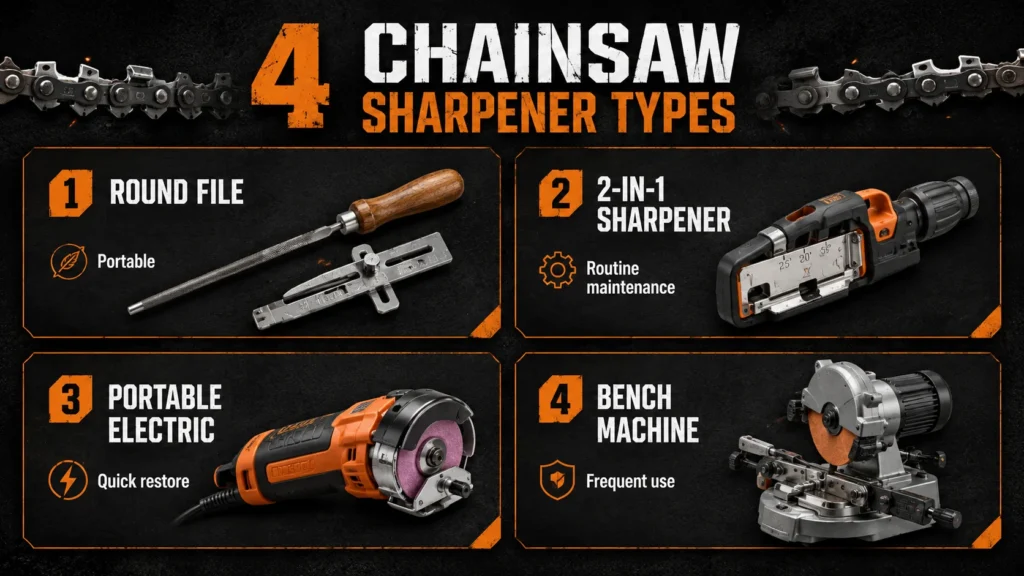
Four chainsaw sharpener types, and who they suit
There is no single best chainsaw blade sharpener for every owner. The right choice depends on how often you cut, whether you sharpen away from a workshop, and how confidently you can keep cutter lengths and filing angles consistent.
Round file and filing guide
The most portable and affordable route. A correct round file, handle, guide, and depth-gauge tool can produce excellent results when used with a light, consistent stroke. Best for occasional homeowners and field touch-ups.
2-in-1 chainsaw sharpener
A guided tool that sharpens cutter edges and lowers depth gauges in the same process when matched to the chain. It can make routine maintenance faster, but it is not universal: confirm the exact chain family and tool version.
Portable electric sharpener
An electric chainsaw chain sharpener can restore a dull chain quickly, especially at home or on a service vehicle. It requires a compatible wheel, correct stops, and a light touch; prolonged grinding can overheat cutters or remove too much metal.
Bench chainsaw sharpening machine
A bench-mounted chainsaw sharpening machine offers repeatable angles and efficient work for multiple chains. It is worthwhile for frequent firewood cutters and professional workloads, but setup discipline matters as much as the machine itself.
Manual vs. electric chainsaw sharpeners at a glance
A well-used hand file is often the gentlest method. Electric sharpening equipment trades some of that margin for speed and repeatability, so its settings and operator technique deserve more attention.
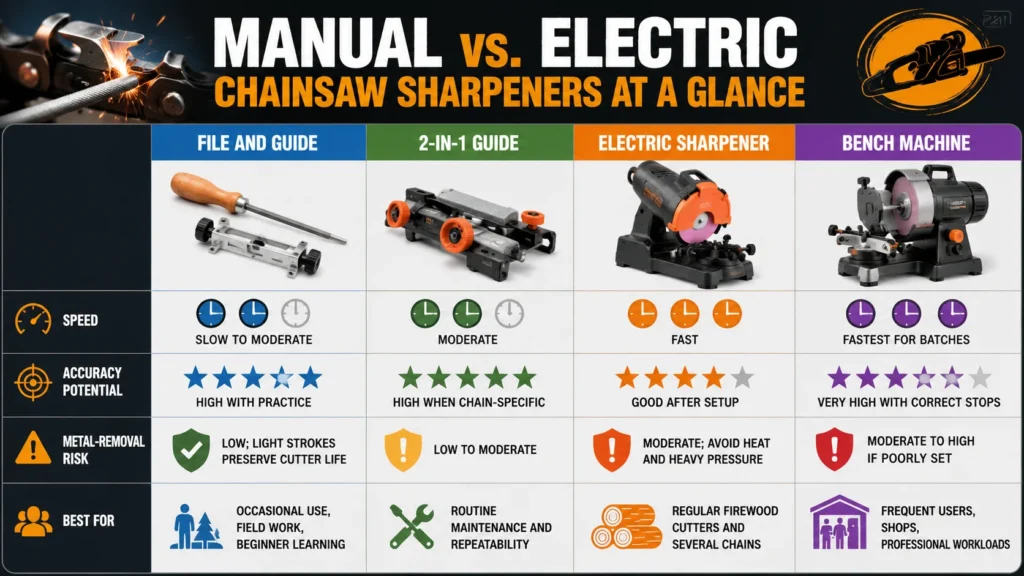
| Sharpener type | Speed | Accuracy potential | Metal-removal risk | Best for |
|---|---|---|---|---|
| File and guide | Slow to moderate | High with practice | Low; light strokes preserve cutter life | Occasional use, field work, beginner learning |
| 2-in-1 guide | Moderate | High when chain-specific | Low to moderate | Routine maintenance and repeatability |
| Electric sharpener | Fast | Good after setup | Moderate; avoid heat and heavy pressure | Regular firewood cutters and several chains |
| Bench machine | Fastest for batches | Very high with correct stops | Moderate to high if poorly set | Frequent users, shops, professional workloads |
Choose a sharpener by chain specification, not bar length
Bar length does not tell you the file size, sharpening angle, grinding wheel, or depth-gauge setting. Read the chain’s identifying marks and compare its pitch, gauge, cutter type, and manufacturer documentation before buying a chainsaw tool sharpener. The chain package, saw manual, or manufacturer lookup is a better compatibility source than a generic listing.
Use only the file diameter, top-plate angle, side-plate angle, and grinding-wheel guidance published for your exact chain. Keep every cutter close to the same length by filing each one until the damaged or dull area is removed, then match the rest to the shortest cutter. Do not treat any single angle or file diameter as universal.
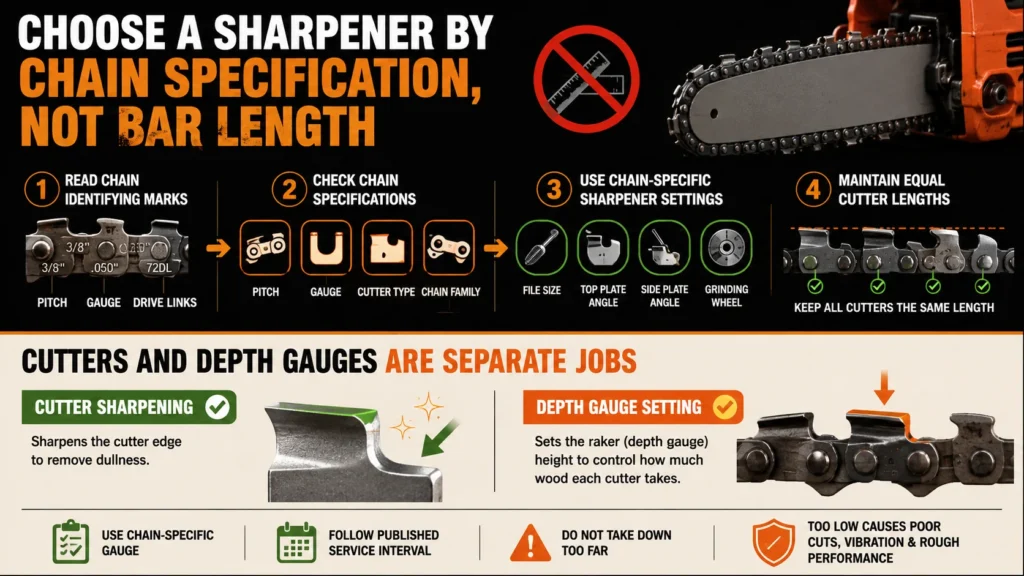
Cutters and depth gauges are separate jobs
Sharpening the cutter edge is not the same as setting the raker or depth gauge. Depth gauges control how much wood each cutter takes. Check them with the chain-specific gauge and follow the published service interval; taking them down too far can make the saw grab, vibrate, and cut roughly.
Stihl chainsaw sharpeners: verify the exact chain family
A Stihl chainsaw sharpener, including a Stihl 2 in 1 chainsaw sharpener, can be a practical option for compatible Stihl chains. It should be selected by the chain’s actual specification and product documentation, not because the saw has a particular bar length or because the tool resembles another model.
About Stihl 2-in-1 tools
A Stihl 2-in-1 sharpener is designed to guide file position while addressing cutters and depth gauges together. That convenience is valuable for regular touch-ups, but choose the correct version for the chain and follow current Stihl instructions. If the chain has severe damage, uneven cutters, or suspected overheating, use professional assessment or replace it instead of forcing a routine tool to correct it.
When to replace a chain instead of sharpening it
Sharpening is normal maintenance, but it cannot make every chain safe. A chain with cracked links, broken or badly damaged cutters, excessive stretch, heat discoloration, damaged tie straps, or cutters worn near the manufacturer’s service limit should be retired. When in doubt, have the chain inspected by a qualified service provider.
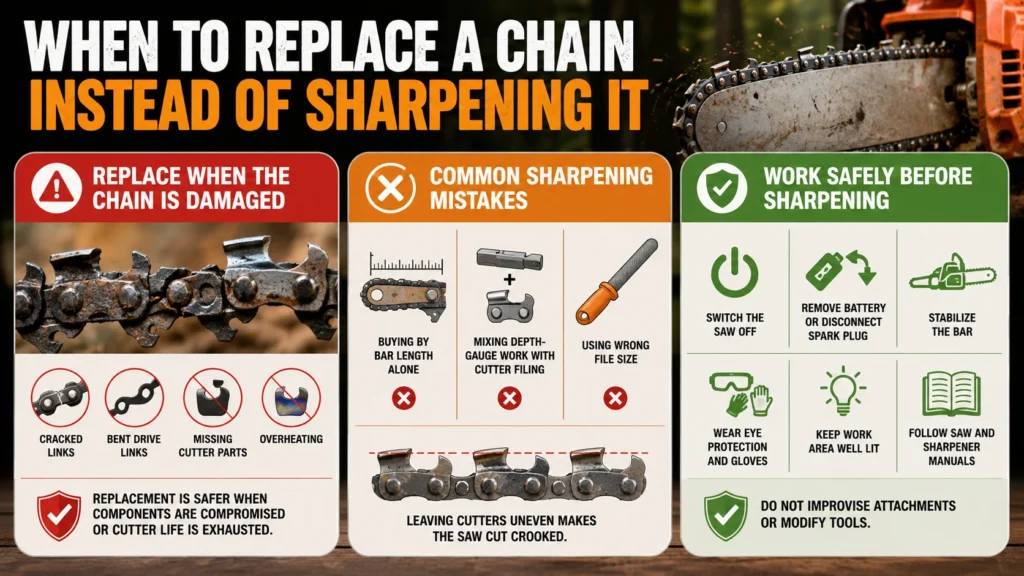
Replace when the chain is damaged
Do not sharpen through cracks, bent drive links, missing cutter parts, or visible overheating. Replacement is the safer decision when structural components are compromised or cutter life is exhausted.
Common sharpening mistakes
Avoid buying by bar length alone, mixing up depth-gauge work with cutter filing, using an unverified file size, pressing hard on a grinder, and leaving one side’s cutters shorter than the other. Small inconsistencies can make a saw cut crooked.
Work safely before sharpening
Switch the saw off, remove the battery or disconnect the spark plug as the manufacturer directs, stabilize the bar, wear eye protection and gloves, and keep the work area well lit. Follow the saw and sharpener manuals; do not improvise grinding attachments or modify tools beyond their stated use.
Frequently asked questions
Is a manual file or electric chainsaw sharpener better?
A manual file is usually the better first tool for occasional users because it is inexpensive, portable, and removes metal gradually. An electric chainsaw sharpener is better when you service multiple chains or need faster restoration, provided you can set it correctly and use light grinding passes.
Can one electric sharpener handle several chain sizes?
Many electric sharpeners can service several chain types, but only with compatible wheel profiles, clamps, stops, and angle settings. Check the sharpener manual and your chain manufacturer’s specification before assuming a machine fits every chain in your shed.
Are Stihl 2-in-1 chainsaw sharpeners worth buying?
They can be worthwhile for owners of compatible chains who want guided, repeatable routine maintenance. Their value comes from correct fit and consistent use, not from being a universal replacement for a dedicated file set or a bench grinder.
How often should I sharpen a chainsaw chain?
Sharpen when cutting starts producing fine dust instead of chips, the saw pulls to one side, cutting takes noticeably more pressure, or the chain contacts dirt, stone, or metal. Light, frequent touch-ups generally remove less metal than waiting for cutters to become severely dull.