Learn which way a chainsaw chain goes, how tight it should be, and how to adjust it safely before cutting.
Top-bar cutters should point forward toward the guide-bar tip.
With the saw switched off, unable to start, and cool, set tension so the chain stays seated in the bar groove but can still move smoothly by hand in the cutting direction. Follow your manufacturer’s exact procedure: tensioner designs and checks vary by model.
Which way does a chainsaw chain go?
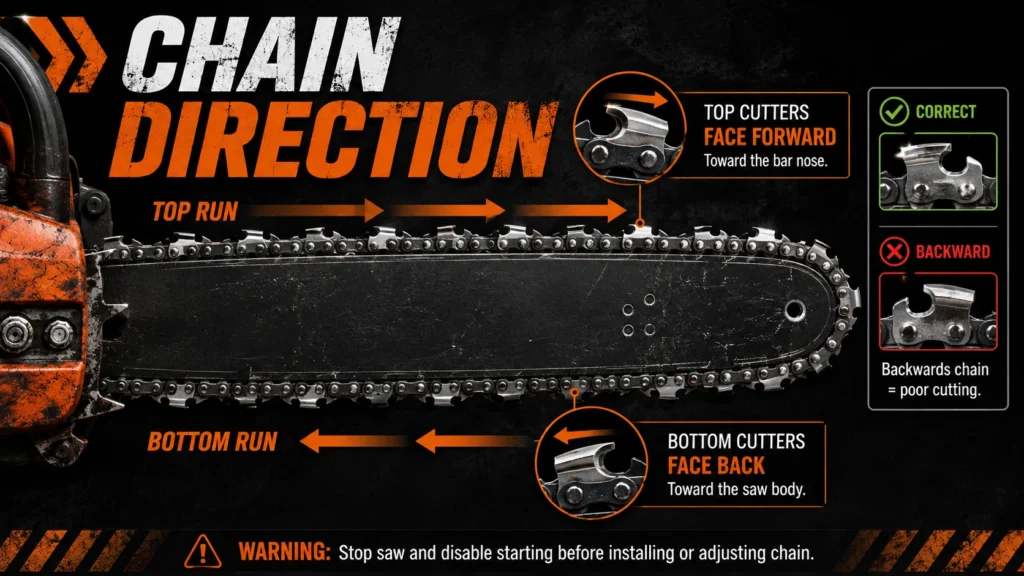
Look at the sharp cutting corners on the chain’s top run. On a correctly installed chain, the cutter points face forward, toward the nose of the guide bar. On the underside of the bar, the cutters travel back toward the saw body.
A backward chain usually will not cut properly. It may rub wood, create dust, or seem blunt immediately. Do not run it to test: switch the saw off, disable starting, and reinstall the chain in the correct direction.
How tight should a chainsaw chain be?
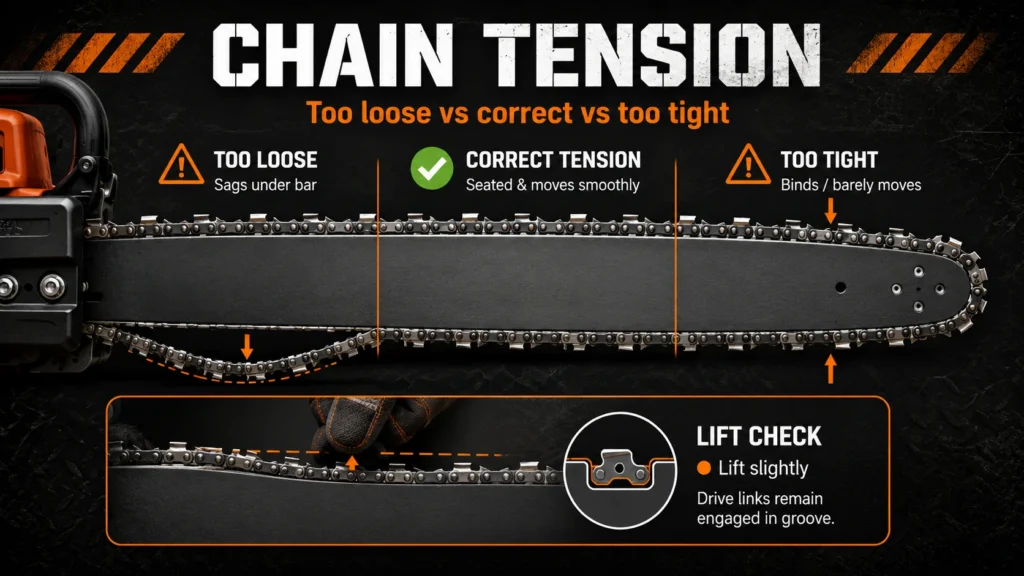
There is no universal measurement for every saw. In general, a correctly tensioned chain sits fully in the guide-bar groove, does not sag below the bar, and still moves smoothly around the bar when you pull it carefully with gloved fingers as your manual directs.
Too loose
The chain sags under the bar or drive links can lift free of the groove. It may derail and should not be operated.
Correct tension
The chain remains seated, follows the bar closely, and can be moved smoothly by hand after the saw is disabled.
Too tight
The chain binds or barely moves. Overtightening can increase heat, wear, and stress on the bar, sprocket, and drive system.
Simple seating check
With gloves on and the saw fully disabled, lift the chain lightly at the middle of the top bar. It should lift slightly while the drive links remain engaged in the groove. Confirm the exact check in your manufacturer manual.
How to tighten a chainsaw chain safely
Most saws use a side cover, bar nuts, and a tensioning screw or tool-free adjuster. Read your saw’s manual first because locations and tightening order differ.
- Switch the saw off completely. Remove the battery, or disable ignition as directed in the manufacturer manual. Let a hot bar and chain cool.
- Wear suitable work gloves. Inspect the chain for damaged cutters, cracked links, bent drive links, or debris in the guide-bar groove.
- Loosen the bar nuts or cover fasteners only enough for the guide bar to move during adjustment. Do not remove them unless your manual says to.
- Lift the guide-bar nose slightly, then turn the tensioner in the tightening direction in small increments. Keeping the nose raised helps set tension accurately on many models.
- Check that the chain is seated in the groove and sprocket, then perform the manufacturer-approved hand movement and lift test.
- Hold the bar nose up while tightening the bar nuts to the specified setting. Recheck chain movement after fastening because tension can change.
Manufacturer-specific instructions matter
Some saws have tool-free knobs, captive bar nuts, or tensioners that work differently. Your model’s manual is the preferred technical source for its adjustment sequence, torque requirements, and cold-versus-warm tension advice.
Why does a chainsaw chain keep becoming loose?
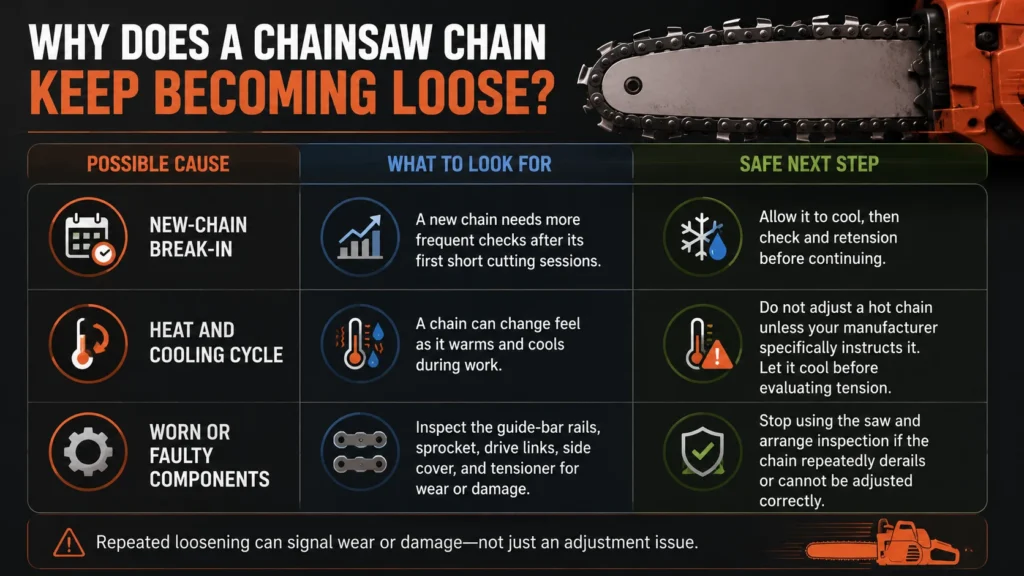
A new chain commonly settles during initial use, but repeated derailment or an inability to maintain tension can indicate worn or damaged parts—not an adjustment problem alone.
| Possible cause | What to look for | Safe next step |
|---|---|---|
| New-chain break-in | A new chain needs more frequent checks after its first short cutting sessions. | Allow it to cool, then check and retension according to the manual before continuing. |
| Heat and cooling cycle | A chain can change feel as it warms and cools during work. | Do not adjust a hot chain unless your manufacturer specifically instructs it. Let it cool before evaluating tension. |
| Worn or faulty components | Inspect the guide-bar rails, sprocket, drive links, side cover, and tensioner for wear or damage. | Stop using the saw and arrange inspection if the chain repeatedly derails or cannot be adjusted correctly. |
Do not keep adjusting a damaged or repeatedly derailing chain
Adjustment cannot correct structural damage or worn parts. Do not operate the saw if any of these conditions are present:
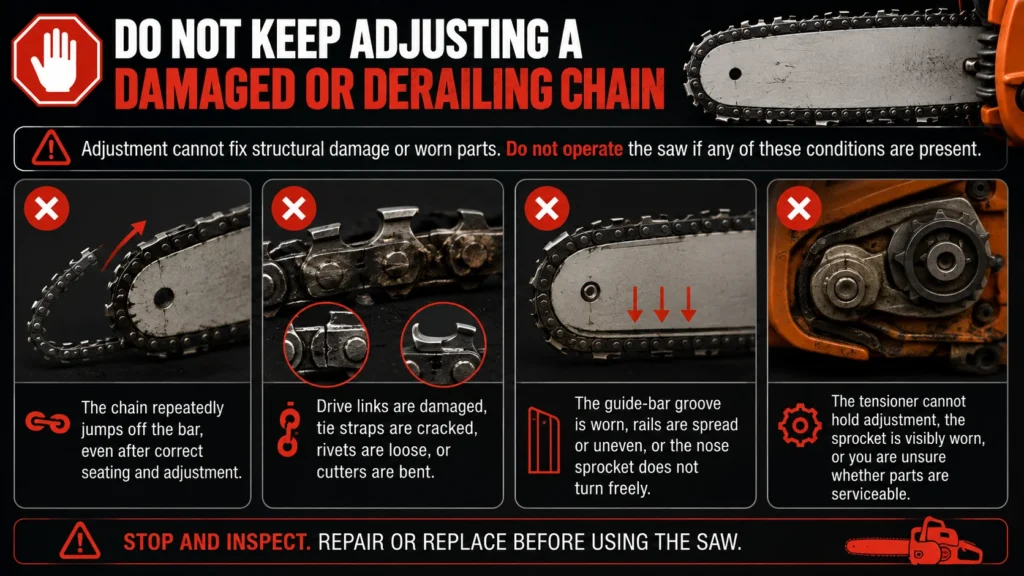
- The chain repeatedly jumps off the bar, even after correct seating and adjustment.
- Drive links are damaged, tie straps are cracked, rivets are loose, or cutters are bent.
- The guide-bar groove is worn, rails are spread or uneven, or the nose sprocket does not turn freely.
- The tensioner cannot hold adjustment, the sprocket is visibly worn, or you are unsure whether parts are serviceable.
Frequently asked questions
Should a chainsaw chain move freely by hand?
Yes, after the saw is switched off, disabled from starting, and cool, a properly tensioned chain should move smoothly around the bar when handled with gloves. If it binds, it may be too tight, improperly seated, dry, or affected by a damaged component.
Can a chainsaw chain be too tight?
Yes. A chain that is too tight can bind, generate excess heat, and accelerate wear. It should remain seated without sagging, but it should not feel locked in place. Use the model-specific check in your manual rather than forcing a universal setting.
How often should I check chainsaw chain tension?
Check before use, after installing a chain, and regularly during cutting—especially with a new chain. Stop and check immediately if the chain sags, behaves differently, or contacts dirt, stones, or other debris.
Why is my correctly tensioned chain still cutting poorly?
Direction and tension are only part of cutting performance. A dull, damaged, dry, or incorrect chain can still cut poorly. Check lubrication, cutter condition, chain specification, bar condition, and sprocket wear. Seek professional help if the issue is unclear.