
You’ve parked your car, switched off the engine, and tried to pull out the ignition key. But the key refuses to move. If your car key is stuck in the ignition, the problem can be frustrating, particularly when you’re running late or parked away from home.
Fortunately, a stuck ignition key does not always mean you need an expensive repair. Sometimes the gear selector has not fully engaged Park, the ignition is still in ACC, or the steering wheel lock is preventing the key from turning. Other situations involve a worn key, damaged ignition cylinder, or a faulty key-release mechanism.
This guide explains why your key is stuck in the ignition, how to remove it safely, and when professional assistance is necessary.
Why Is My Key Stuck in the Ignition?
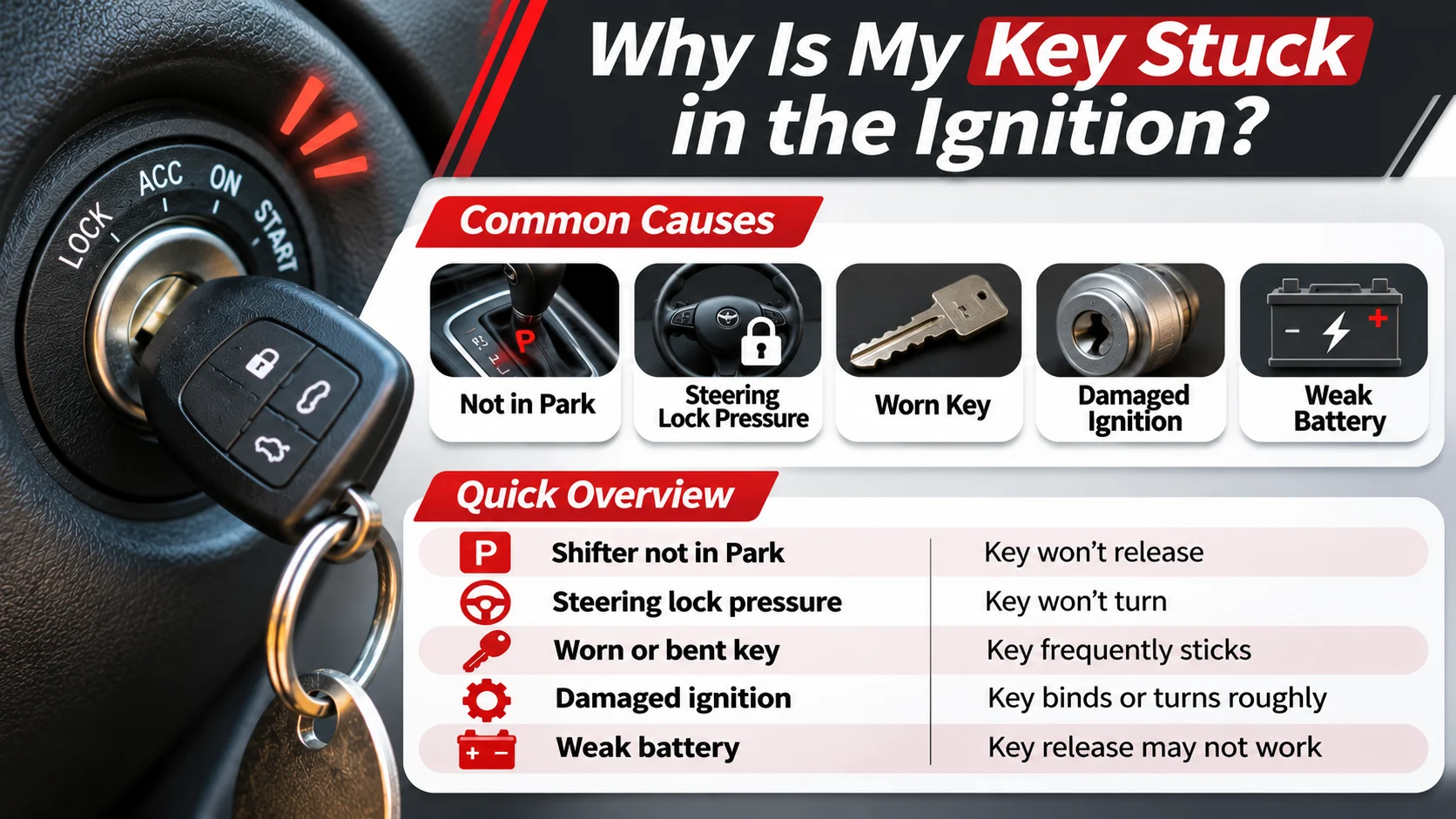
A key becomes stuck when the ignition lock, steering lock, transmission position system, or key-release mechanism prevents it from reaching the position needed for removal.
In many automatic vehicles, the key cannot be removed until Park is correctly engaged. Mechanical steering lock pressure can also prevent a key from rotating. Worn ignition components may create binding that stops normal movement.
The exact cause varies by vehicle make, model, year, and ignition design.
| Possible Cause | Common Symptom | Initial Check |
|---|---|---|
| Shifter not fully in Park | Key won’t reach removal position | Confirm Park engagement |
| Steering wheel lock pressure | Key won’t turn and wheel is stiff | Relieve pressure gently |
| Worn or bent key | Key frequently sticks | Inspect key condition |
| Damaged ignition cylinder | Key binds or turns roughly | Professional inspection |
| Weak vehicle battery | Electronic key release fails on some cars | Check electrical symptoms |
| Faulty shift interlock | Park is selected but key stays trapped | Mechanic diagnosis |
| Debris or internal lock damage | Inconsistent or rough movement | Locksmith inspection |
How to Remove a Key Stuck in the Ignition: Step by Step
Before troubleshooting, park on stable ground, secure the vehicle against rolling, and keep the owner’s manual nearby. Do not attempt key removal while driving.
Step 1: Secure the Vehicle
Apply the Parking Brake
Make sure the vehicle is completely stopped. Apply the parking brake and ensure the vehicle cannot roll while you check the ignition.
Step 2: Check the Gear Selector
Confirm Park (P)
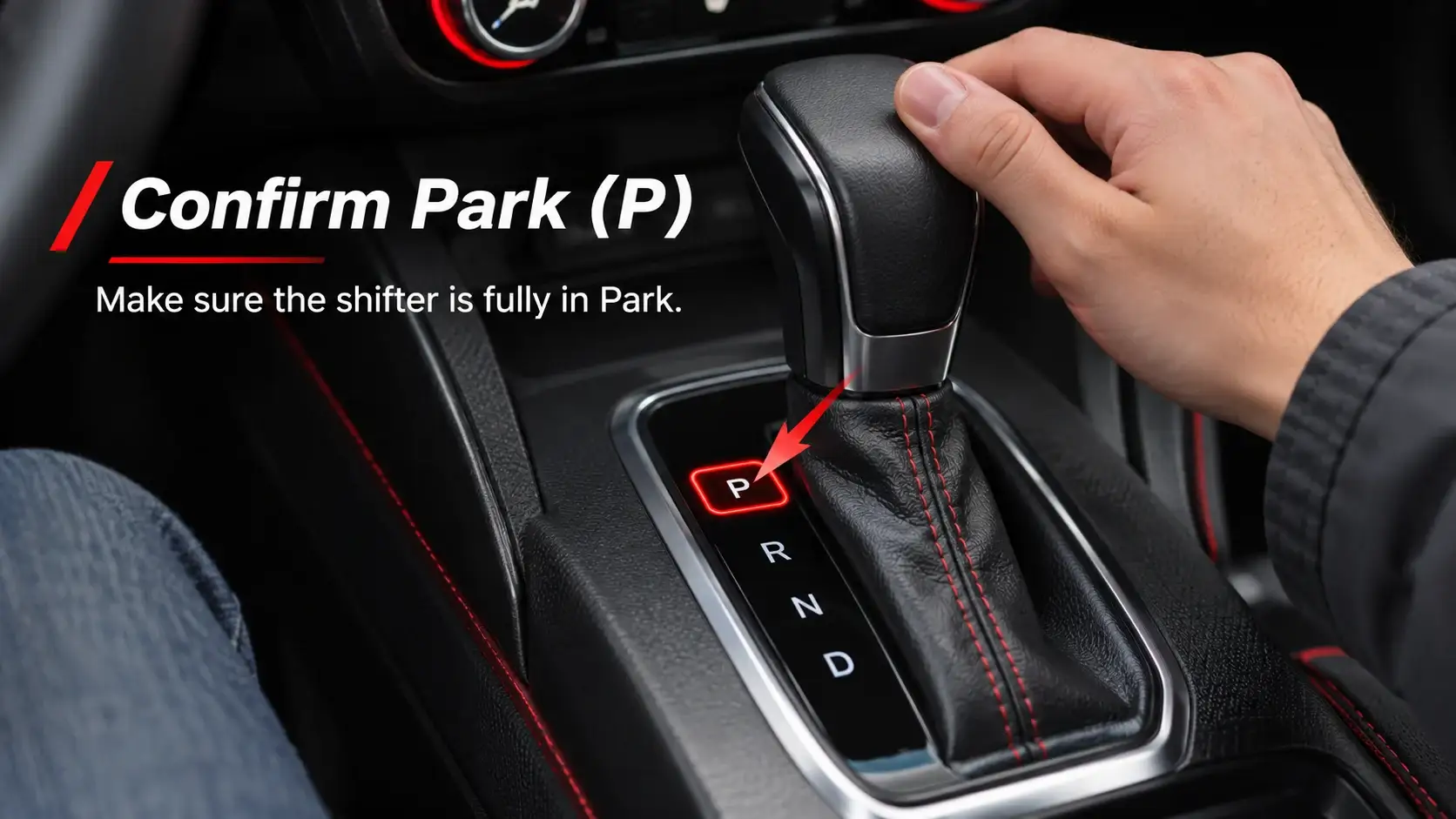
On an automatic-transmission vehicle, ensure the gear selector is properly seated in Park. If the selector appears between positions, follow the manufacturer’s procedure to select Park correctly while holding the brake.
A misadjusted shift linkage or faulty Park-position switch can sometimes prevent the key-release system from recognizing that the vehicle is parked.
Step 3: Check the Ignition Position
Turn the Key to LOCK or OFF
Check whether the ignition remains in ACC or ON. Gently rotate the key to the manufacturer’s designated removal position without forcing it.
Some ignition systems use a push-in or button-release procedure. Consult the owner’s manual rather than attempting unfamiliar release methods.
Step 4: Relieve Steering Lock Pressure
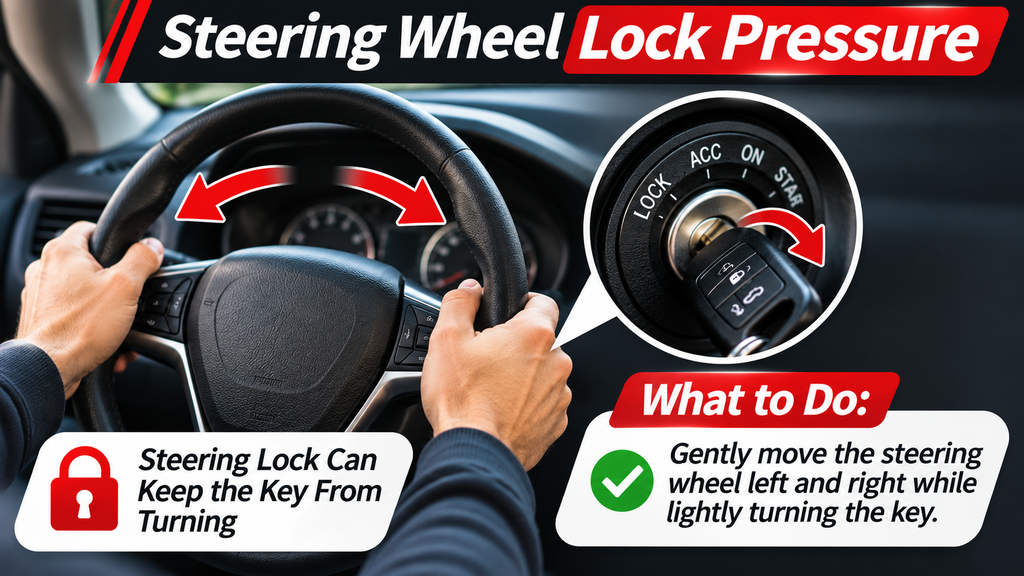
Move the Steering Wheel Gently
If the steering wheel is locked and the key cannot turn, gently move the wheel left and right while applying light pressure to turn the key.

This may help when steering lock pressure is preventing the ignition from rotating. It is less relevant when the key turns normally but cannot be pulled out.
Safety Warning: Stop if the key bends, the ignition makes cracking sounds, or significant force is required. Do not jerk the steering wheel.
Step 5: Check for Battery Problems
Look for Electrical Symptoms
In some vehicles with electronic key-release mechanisms, low battery voltage can interfere with releasing the ignition key. Look for dim lights or electrical accessories that fail to respond.
Many mechanical ignitions do not require electrical power for key removal, so do not assume the battery is responsible without supporting symptoms.
Step 6: Avoid Forceful Removal
Check for Gentle, Free Movement
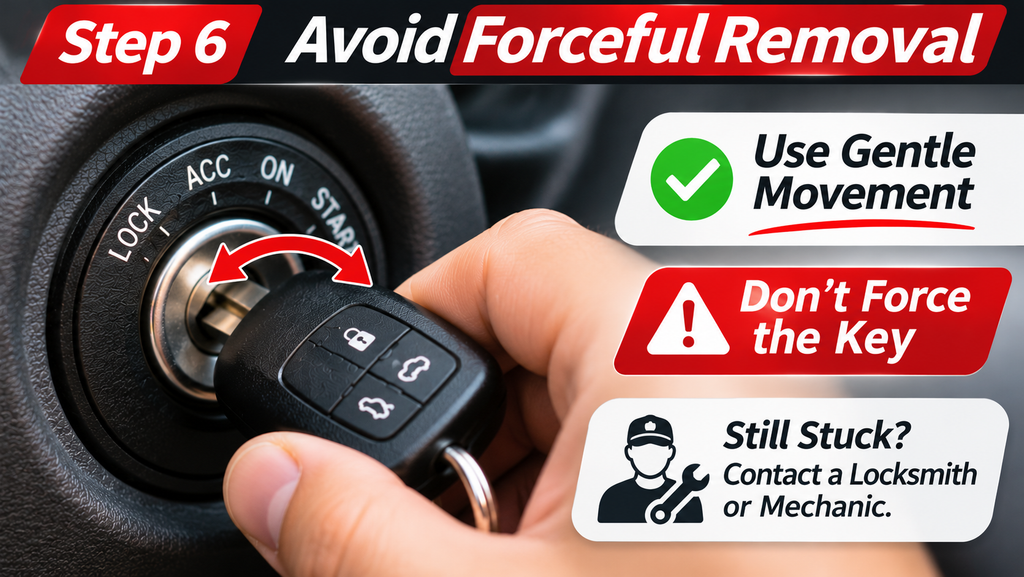
With the ignition in the correct position, use only light, controlled movement to check whether the key releases. Stop if it binds or begins bending.
If the key remains stuck, an automotive locksmith or mechanic may need to inspect the ignition assembly.
7 Common Causes of an Ignition Key That Won’t Come Out
1. Gear Selector Not Fully in Park
Automatic vehicles commonly use a Park-position interlock. If the transmission does not register Park, the key may not rotate to its removal position.
What to do: Verify correct Park engagement. Repeated problems require inspection of the selector, linkage, or related switches.
2. Steering Wheel Lock Pressure
A mechanical steering lock can make the key difficult to turn after parking, particularly when the steering wheel was moved after the engine was switched off.
What to do: Gently relieve steering wheel pressure while applying light turning pressure to the key, where the owner’s manual permits.
3. Worn or Bent Ignition Key
Over time, the grooves and edges of a metal key may wear down. A damaged or bent key can interfere with the internal lock components.
What to do: Have the key inspected once it is safely removed. A locksmith may recommend a correctly cut replacement.
4. Faulty Ignition Lock Cylinder
The ignition cylinder contains locking components that must align with the key. Wear or internal damage can cause sticking, rough turning, or complete binding.
What to do: Arrange professional inspection. The cylinder may require repair or replacement.
5. Low Battery Voltage
Some electronic ignition key-release systems depend on sufficient battery voltage to operate. A weak or discharged battery can affect these designs.
What to do: Check for other electrical symptoms and follow the manufacturer’s battery or key-release instructions.

6. Faulty Shift-Interlock or Key-Release Mechanism
A faulty cable, sensor, actuator, or solenoid may interfere with key removal even when the gear selector appears to be in the correct position.
What to do: Have a qualified mechanic inspect the relevant system.
7. Dirt or Internal Lock Damage
Contamination or damaged internal locking components can cause inconsistent key movement.
What to do: Consult an automotive locksmith. Avoid inserting sharp tools or spraying unsuitable lubricants into the lock.
Key Stuck in Ignition but Car Is Off
If the engine is off but your ignition key will not come out, check whether the key has reached the correct removal position. Some cars allow the engine to be off while the ignition remains in ACC.

Key Still Turns
Check the designated removal position and whether Park is correctly engaged.
Key Won’t Turn
Check for steering lock pressure, key wear, or ignition cylinder binding.
Dashboard Lights Stay On
The ignition may still be in ACC or ON, or an electrical fault may be present.
Key Sticks Repeatedly
Recurring problems may indicate wear or a malfunctioning release mechanism.
If electrical accessories remain powered, arrange assistance before the battery becomes discharged.
Why Won’t My Key Come Out Even When the Car Is in Park?
If your key is not coming out of the ignition even though the shifter is in Park, the car may not be detecting Park correctly. A faulty gear-position switch, linkage problem, or key-release mechanism may be responsible.
A worn key or damaged ignition cylinder can produce similar symptoms. The correct repair depends on identifying the actual problem.
Diagnostic Tip: Tell your mechanic whether the problem occurs every time, whether the gear indicator displays Park correctly, and whether the key can rotate normally.
What Not to Do When Your Car Key Is Stuck
Avoid These Common Mistakes:
- Never use pliers to pull the key aggressively.
- Do not twist the key with excessive force.
- Do not insert screwdrivers, pins, or sharp objects into the ignition.
- Do not spray WD-40 or other general-purpose lubricants unless specifically approved by the vehicle manufacturer.
- Do not bypass ignition or transmission safety interlocks.
- Do not disturb steering-column wiring or airbag-related components.
How to Tell if the Problem Is the Key or Ignition Cylinder
| Symptom | Possible Cause | Recommended Action |
|---|---|---|
| Key visibly bent | Key damage | Locksmith inspection |
| Only one key sticks | Worn or damaged key | Have key checked |
| Multiple keys stick | Lock cylinder or release issue | Professional diagnosis |
| Key binds regardless of steering position | Cylinder or key wear | Ignition inspection |
| Problem occurs when selecting Park | Selector or interlock fault | Mechanic diagnosis |
These observations help narrow the possibilities but cannot confirm a diagnosis without appropriate inspection.
When to Call an Automotive Locksmith or Mechanic
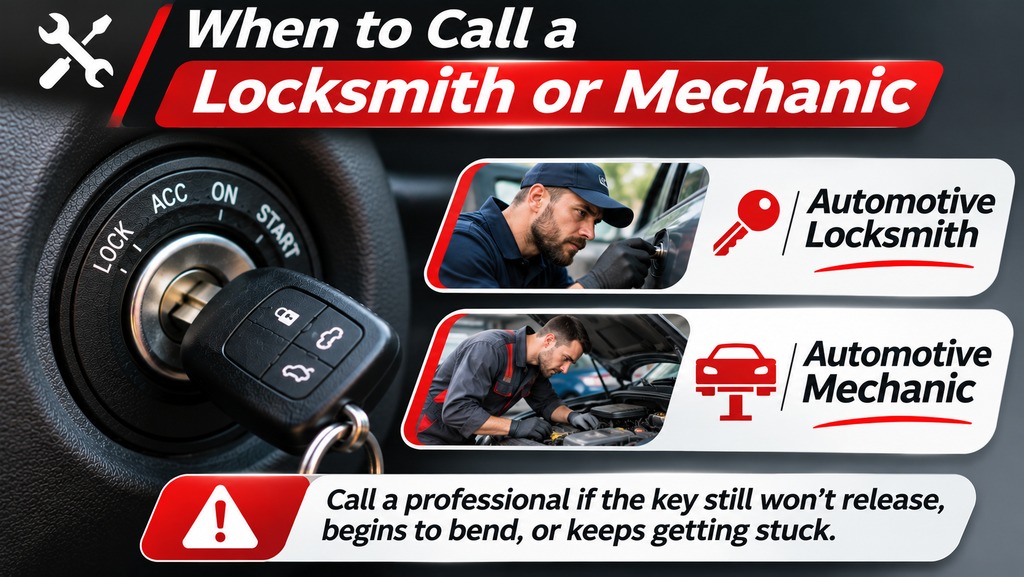
Contact a professional if the key remains stuck after safe troubleshooting, begins to bend, will not rotate, or repeatedly becomes difficult to remove.
Automotive Locksmith
Suitable for many stuck or broken mechanical keys, worn lock cylinders, key extraction, and key replacement problems.
Automotive Mechanic
Suitable for transmission-position issues, interlock systems, electrical release faults, and broader vehicle diagnostics.
How Much Does It Cost to Fix a Stuck Ignition Key?
Costs vary by vehicle, location, diagnosis, parts availability, and labor. Some problems require no replacement parts, while others involve the ignition cylinder or key-release components.
| Potential Repair | Main Cost Factors |
|---|---|
| Simple Park or steering-lock correction | May need no parts |
| Replacement mechanical key | Cutting, key type, programming |
| Ignition cylinder repair | Labor and component condition |
| Ignition cylinder replacement | Parts, labor, possible security programming |
| Shift-interlock repair | Diagnostic work and replacement components |
| Mobile locksmith assistance | Travel, service fees, after-hours charges |
Ask for an itemized repair estimate and verify which component has been diagnosed as faulty before approving replacement.
How to Prevent Ignition Key Problems
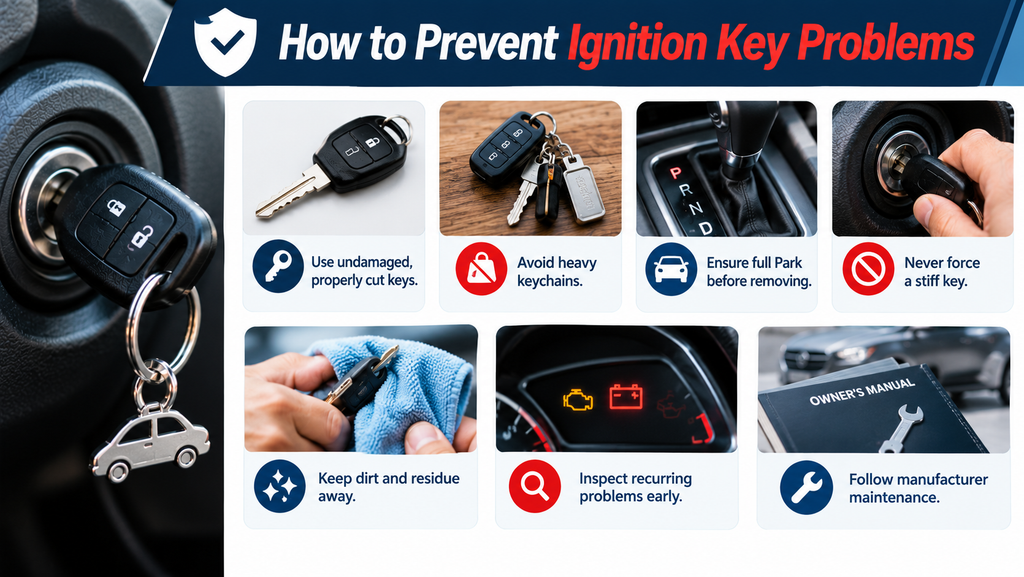
- Use undamaged, properly cut ignition keys.
- Avoid hanging unnecessarily heavy objects from the keychain.
- Confirm the automatic transmission is fully in Park before removing the key.
- Never force a stiff ignition key.
- Keep dirt and sticky residue away from the key and lock.
- Have recurring problems inspected early.
- Follow the manufacturer’s recommended ignition-lock maintenance practices.
Frequently Asked Questions
Why is my key stuck in the ignition?
Possible causes include incomplete Park engagement, steering-lock pressure, a worn key, a faulty ignition cylinder, or a malfunctioning key-release system.
How can I get my key out of the ignition?
Secure the car, apply the parking brake, confirm Park on an automatic, and check the correct ignition-removal position. If the key cannot turn due to steering-lock pressure, gently relieve that pressure. Never force the key.
Why won’t my ignition key come out when the car is off?
The ignition may remain in ACC, the transmission may not register Park, or the ignition cylinder or release mechanism may be faulty.
Can a dead battery cause an ignition key to get stuck?
Yes, on certain vehicles with electronic key-release mechanisms. Traditional mechanical ignition systems may not require electrical power for key removal.
Why is my car key stuck even though it’s in Park?
The Park-position sensor or shift interlock may not be operating correctly. A key or ignition cylinder problem is another possibility.
Can I use WD-40 on a stuck ignition key?
Do not apply WD-40 or another general-purpose lubricant unless your vehicle manufacturer specifically recommends it for that ignition design.
Can a locksmith remove a stuck ignition key?
Many qualified automotive locksmiths can remove stuck keys and service mechanical ignition lock cylinders. Electrical or transmission faults may need a mechanic.
Should I replace the ignition switch if the key won’t come out?
Not without diagnosis. The ignition switch, lock cylinder, and key-release mechanisms can be separate components. Replacing the wrong part may not solve the problem.
Quick Troubleshooting Summary
| Situation | Recommended First Step |
|---|---|
| Key stuck in an automatic car | Confirm Park and ignition position |
| Steering wheel locked | Gently relieve steering-lock pressure |
| Key bent or damaged | Stop forcing it; contact a locksmith |
| Electrical system not responding | Follow manufacturer battery guidance |
| Repeated key sticking | Inspect key, cylinder, and release mechanism |
| Basic checks unsuccessful | Seek professional diagnosis |
Final Thoughts
A key stuck in the ignition can result from a simple issue such as incorrect Park engagement or steering-lock pressure. However, damaged keys, worn ignition cylinders, and faulty release mechanisms sometimes require professional repair.
Start with safe, low-force troubleshooting and follow your owner’s manual. If the ignition key still won’t come out, contact a qualified automotive locksmith or mechanic rather than risking additional damage.