
Worried your tires are wearing thin before a road trip or the rainy season? Here’s a clear, mechanic-friendly guide to checking your tire tread at home, understanding safe depths, and knowing exactly when it’s time for new tires.
The short answer: tire tread is the grooved rubber that grips the road, and its depth is measured in 32nds of an inch — you can check it in your driveway in minutes with a coin or a cheap gauge, and most tires should be replaced at 2/32″.
Tread grooves channel water away so your tires stay in contact with the road, which is what gives you grip, braking power and control — especially in the rain. As tires wear, those grooves get shallower and traction fades. The good news is you don’t need a shop to check them. This guide walks through what tread depth means, how to check it at home with the penny and quarter tests or a gauge, what counts as a safe minimum, the signs it’s time to replace, and what causes uneven wear. It’s general educational guidance — always have borderline or safety-critical tires confirmed by a qualified technician.
What Is Tire Tread Depth and Why Does It Matter?
Tread depth is the height of the rubber grooves that grip the road. As it drops, so does your safety margin. Here’s what tread does for you.
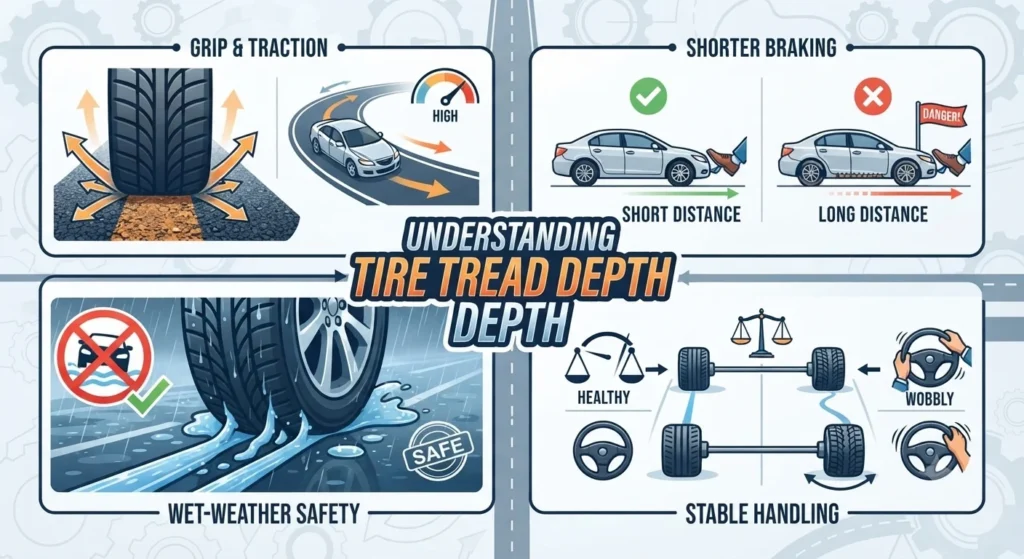
Grip & Traction
Tread blocks bite into the road surface to give you traction for accelerating, cornering and steering. Worn tread means less grip and a longer distance to react.
Shorter Braking
Deeper tread helps your tires stop the car in a shorter distance. On worn tires, wet-road stopping distances can grow dramatically — a real safety risk.
Wet-Weather Safety
Grooves channel water out from under the tire so it doesn’t float on the surface. Low tread greatly increases the risk of hydroplaning in rain.
Stable Handling
Healthy, even tread keeps the car feeling planted and predictable. Uneven or shallow tread can cause vibration, wander and poorer control.
How to Check Tire Tread at Home
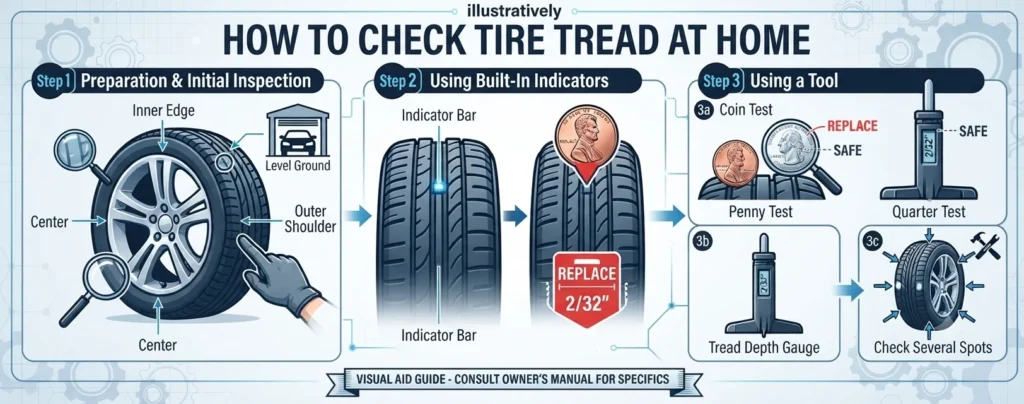
Park on level ground and turn the wheels outward so you can see the tread easily. Look across the whole width of the tire — inner edge, center and outer shoulder — because uneven wear tells its own story. Many tires also have built-in tread wear indicators: small raised rubber bars set into the grooves.
When the surrounding tread wears down flush with those bars, the tire has reached about 2/32″ and it’s time to replace. For a quick reading you can use a coin (the penny or quarter test) or a low-cost tread depth gauge. A tip mechanics use: check several spots around each tire, because one worn patch can reveal an alignment or inflation problem even if the rest looks fine.
The Penny Test vs the Quarter Test
Two simple coin tests give you a fast, no-tools read on tread depth. The penny marks the danger line; the quarter gives an earlier warning.
The Penny Test (2/32″)
- 🔵 Hold a penny with Lincoln’s head pointing down into a tread groove.
- 🔵 If the top of Lincoln’s head disappears into the groove, you still have safe tread.
- 🔵 If you can see all of his head, tread is at or below 2/32″ — replace the tire.
The Quarter Test (≈4/32″)
- ⚪ Insert a quarter head-down into the groove instead of a penny.
- ⚪ Washington’s head sits at about 4/32″, giving you an earlier warning.
- ⚪ If his head is exposed, plan replacement soon — especially for wet or winter driving.
How to Measure Tread With a Depth Gauge
A tire tread depth gauge is the most accurate DIY tool and usually costs only a few dollars. Push the probe into a groove until the base sits flat against the tread surface, then read the depth in 32nds of an inch (many gauges also show millimetres).
Take readings in the inner, center and outer grooves of each tire and compare them — a big difference between edges points to an alignment or inflation issue. As a rule of thumb: 2/32″ means replace now, 4/32″ is the point many experts suggest shopping for new tires, and 6/32″ or more is healthy. A gauge takes the guesswork out of borderline coin tests.
Tire Tread Depth Chart & Safe Minimums
Tread is measured in 32nds of an inch. Here’s what common readings mean and when to act. Wet and winter driving call for more tread than the bare legal minimum.
| Tread Depth | What It Means |
|---|---|
| 8/32″ – 10/32″ (new) | Full tread on a brand-new tire. Excellent grip and wet-weather performance. |
| 6/32″ | Still healthy. Keep checking monthly and rotate on schedule to even out wear. |
| 4/32″ | Legal but reduced. Many safety experts recommend replacing here if you drive in rain or snow. |
| 2/32″ | The legal minimum in most regions and where wear bars appear. Replace the tire now. |
| Below 2/32″ | Unsafe and usually illegal. Greatly increased hydroplaning and long stopping distances. |
Figures are general guidance. Legal minimum tread depth and recommendations vary by country and vehicle — check local regulations and your owner’s manual, and confirm with a professional.
Signs Your Tires Need Replacement
Tread depth isn’t the only clue. Watch for these warning signs that it’s time for new tires — often more than one appears together.
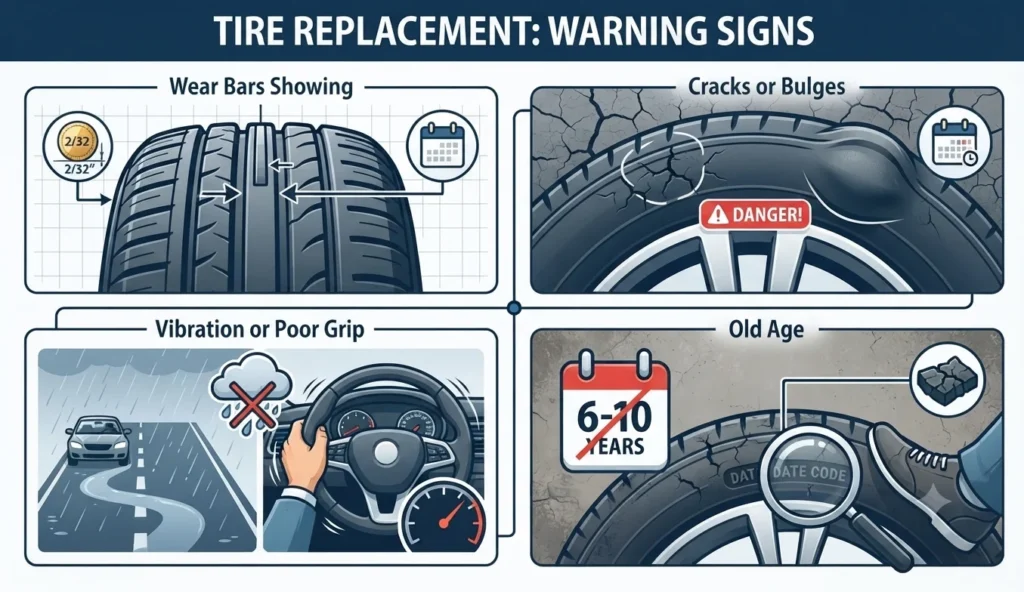
Wear Bars Showing
When the raised tread wear indicator bars sit flush with the surrounding tread, the tire is at about 2/32″ and due for replacement.
Cracks or Bulges
Visible sidewall cracks, cuts or bulges signal aging or damaged rubber and can lead to a blowout — replace regardless of tread depth.
Vibration or Poor Grip
New vibration, slipping in the rain or longer stopping distances can all mean the tread is worn out or the tire is failing.
Old Age
Rubber hardens over time. Many makers suggest replacing tires around 6–10 years old even if tread looks okay — check the date code on the sidewall.
Can You Drive on Low Tire Tread?
You can physically keep driving on low tread, but it’s a real safety risk — grip and braking suffer, and the chance of hydroplaning in the rain climbs sharply. Driving at 2/32″ or less is also illegal in many places. The honest advice: if a tire is at or below the minimum, replace it promptly rather than pushing your luck, especially before a long trip or bad weather. When in doubt, have it checked by a professional.
What Causes Uneven Tire Wear?
Tires shouldn’t wear evenly by accident — uneven patterns usually point to something worth fixing. These are the most common culprits.
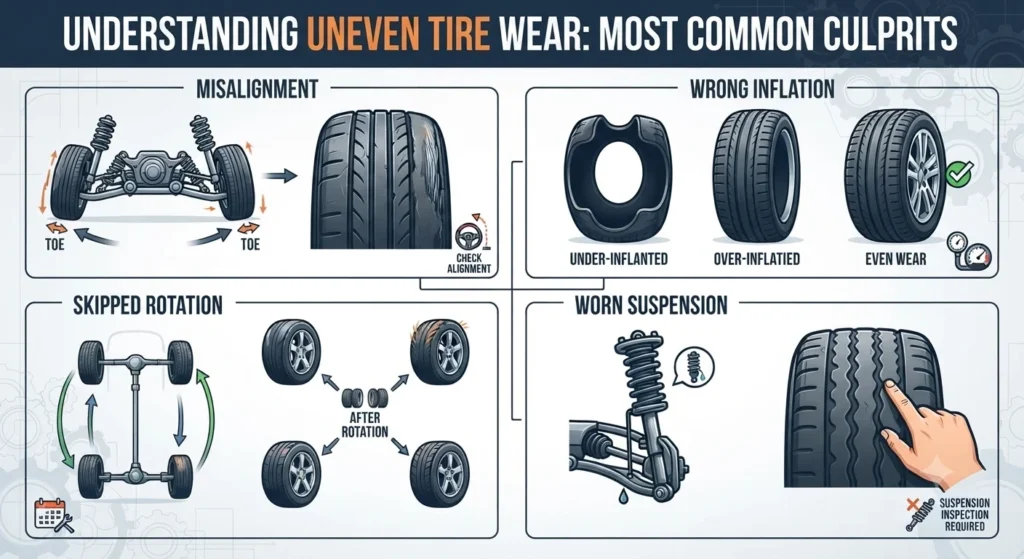
Misalignment
Poor wheel alignment causes one edge of the tire to wear faster than the other. A quick alignment check can save your tread.
Wrong Inflation
Underinflation wears the shoulders; overinflation wears the center. Keeping tires at the recommended pressure evens things out.
Skipped Rotation
Front and rear tires wear differently. Rotating them on schedule spreads the wear and helps all four last longer.
Worn Suspension
Tired shocks, struts or bushings can cause cupping or patchy wear. If wear looks scalloped, have the suspension inspected.
How Often Should You Check Tire Tread?
A quick check about once a month, and always before a long road trip or the change of season, is a good habit. It takes only a few minutes with a coin or gauge and can catch a problem early. Also glance at your tires whenever you fill up with fuel, and have them looked at professionally at every service or tire rotation.
Frequently Asked Questions About Tire Tread
How do I check my tire tread at home?
The easiest way is the penny test: insert a penny head-down into a tread groove. If you can see all of Lincoln’s head, your tread is at or below 2/32″ and it’s time to replace. For an exact reading, use a cheap tread depth gauge and check several grooves across each tire.
Is 4/32″ tire tread still good?
At 4/32″ your tires are still legal but wet-weather grip is noticeably reduced. Many safety experts recommend starting to shop for replacements at this point, especially if you regularly drive in rain or snow.
How low is unsafe tire tread?
2/32″ is the legal minimum in most regions and the point where wear bars appear. Anything below that is considered unsafe and usually illegal, with a much higher risk of hydroplaning and long stopping distances.
Can I drive with 2/32″ tread?
At 2/32″ your tires have reached the minimum and should be replaced right away. It’s best to avoid driving on them, particularly in wet weather or at highway speeds, and to have new tires fitted promptly.
What is the penny test for tires?
The penny test is a quick coin check: place a penny head-down in a groove. If the top of Lincoln’s head is hidden, you have safe tread; if his whole head is visible, tread is 2/32″ or less and the tire needs replacing.
How often should I check my tires?
Check tread and pressure about once a month, and always before a long trip or seasonal weather change. It only takes a few minutes and helps you catch wear or damage before it becomes a safety issue.
Check Your Tread With Confidence
Use the tread checker above to see what your reading means, then take a few minutes to inspect all four tires. When something looks borderline, a trusted tire shop can confirm it fast.
🔵 Check all four tires monthly🛞 Confirm borderline tires with a pro