Noticed fluid spots under your car or heavy, whining steering? Here’s a clear, mechanic-friendly guide to spotting a power steering fluid leak, understanding what causes it, what repairs cost, and whether it’s safe to keep driving.
The short answer: a power steering fluid leak means the hydraulic fluid that helps you turn the wheel is escaping from somewhere in the system — usually a worn hose, seal, pump, or the steering rack — and low fluid makes steering heavy and noisy.
Most modern hydraulic power steering systems use a belt-driven pump to pressurise fluid, which pushes on the steering rack to make turning the wheel easy. When a hose cracks or a seal wears out, that fluid slowly leaks — often leaving red, amber or brown spots under the front of the car. As the level drops, you’ll usually feel heavier steering and hear a whine when turning. This guide walks through the real symptoms, common causes, how mechanics track down the leak, honest repair cost ranges, and whether you can safely keep driving. It’s general educational guidance — symptoms can overlap with other problems, so always confirm with a qualified mechanic.
Common Symptoms of a Power Steering Fluid Leak
A leak rarely shows just one sign. Here are the symptoms owners most often notice — usually a few appearing together.

Fluid Spots Under the Car
Red, pink, amber or brown oily puddles near the front wheels or engine bay are a classic sign. Power steering fluid feels slick and often smells faintly of burnt oil.
Heavy or Stiff Steering
The wheel feels harder to turn, especially at low speed or when parking. This is a key power steering low fluid symptom as pressure in the system drops.
Whining or Groaning Noises
A whine or groan that gets louder as you turn usually means the pump is low on fluid or drawing in air — a common early warning of a leak.
Burning Smell or Low Reservoir
Fluid dripping onto hot engine parts can create a burning oil smell. Checking the reservoir and finding it low confirms fluid is escaping somewhere.
Main Causes of Power Steering Fluid Leaks
Leaks almost always trace back to a worn part somewhere in the hydraulic system. These are the usual culprits.
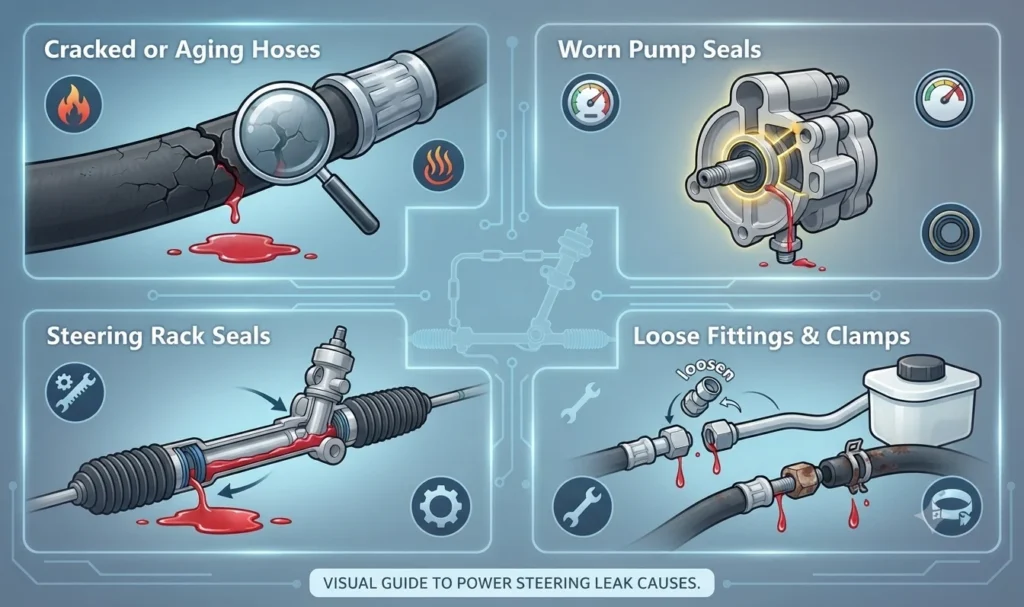
Cracked or Aging Hoses
Rubber lines harden and crack with age and heat. The low-pressure return hose is a very common first place mechanics check for slow weeping.
Worn Pump Seals
The power steering pump has internal seals and a shaft seal that wear over time, letting pressurised fluid escape around the pump.
Steering Rack Seals
Seals inside the steering rack can fail, causing fluid to leak at the rack — often one of the more involved and costly repairs.
Loose Fittings & Clamps
Connections at the pump, hoses and reservoir can loosen or corrode. Sometimes a leak is as simple as a fitting that needs tightening or a clamp replaced.
How to Identify a Steering Fluid Leak
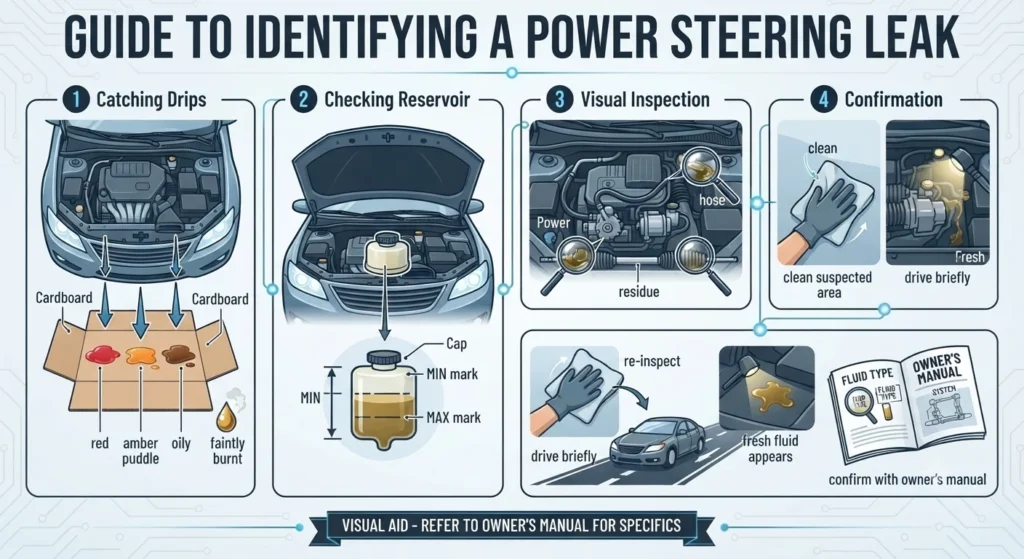
Start by placing clean cardboard under the front of the car overnight to catch drips and note the fluid’s color and smell — power steering fluid is usually red, amber or brown and oily. Next, pop the hood and check the power steering reservoir level against the min/max marks.
Then look for wet, shiny residue along the hoses, around the pump and near the steering rack. A trick mechanics use is to clean the suspected area, drive briefly, then re-inspect to see exactly where fresh fluid appears. Because red fluid can also be transmission fluid, always confirm the fluid type and system in your owner’s manual.
Low Fluid Symptoms vs Signs of a Bad Power Steering Pump
Power Steering Low Fluid Symptoms
- 🟠 Steering feels heavier than usual, especially when parking or turning slowly.
- 🟠 A whining or groaning noise that rises as you turn the wheel.
- 🟠 Reservoir level below the minimum mark, sometimes with foamy or aerated fluid.
Signs of a Bad Power Steering Pump
- 🔴 Persistent whine or squeal even when the fluid level is correct.
- 🔴 Steering that stiffens intermittently or feels inconsistent while turning.
- 🔴 Fluid leaking from around the pump shaft, or metal flakes in the fluid.
How Much Does It Cost to Fix a Power Steering Leak?
Costs vary widely by vehicle, region, parts and labour rates. These are rough ballpark ranges to set expectations — always get a written quote.
| Typical Repair | Rough Cost Range |
|---|---|
| Top-up fluid (temporary) | Low — often the price of a bottle of fluid, but it does not fix the leak itself. |
| Replace a leaking hose | Low to moderate — usually one of the more affordable repairs, depending on the hose and labour. |
| Tighten fittings / seals | Low — sometimes only labour if it’s a loose connection or a minor clamp fix. |
| Replace power steering pump | Moderate to high — parts plus labour make this a bigger job on many vehicles. |
| Rebuild / replace steering rack | High — typically the most expensive fix due to labour and part cost. |
Ranges are illustrative and not a quote. Prices depend heavily on your make, model, year and local labour rates — always confirm with a trusted shop.
Can You Drive With a Power Steering Fluid Leak?
You can usually still steer with low or lost power steering fluid, but the wheel becomes much heavier and harder to control — which is a safety risk, especially in traffic or an emergency. Driving with the pump low can also damage it over time. The honest advice: it’s fine to move the car short distances to reach a mechanic, but don’t ignore the leak or keep topping up indefinitely. Get it inspected soon.
DIY Fixes vs Professional Repairs
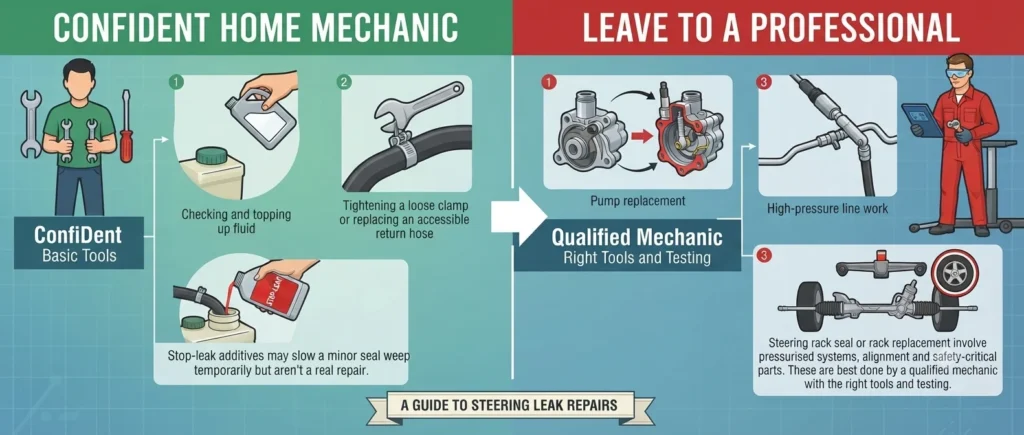
Some steering leaks are within reach of a confident home mechanic; others really do need a professional. Here’s an honest split.
Reasonable DIY Fixes
Checking and topping up fluid, tightening a loose clamp, or replacing an accessible return hose are jobs many owners can handle with basic tools. Stop-leak additives may slow a minor seal weep temporarily but aren’t a real repair.
Leave to a Professional
Pump replacement, high-pressure line work, and steering rack seal or rack replacement involve pressurised systems, alignment and safety-critical parts. These are best done by a qualified mechanic with the right tools and testing.
Power Steering Leak FAQs
How do I know if I have a power steering fluid leak?
The clearest signs are red, amber or brown oily spots under the front of the car, a low reservoir level, heavier steering and a whine when turning. Place cardboard under the car overnight and check the reservoir to confirm.
Is a steering fluid leak dangerous?
It can be. Losing power assist makes the wheel much heavier and harder to control, which is risky in emergencies. It also risks damaging the pump if it runs low. It’s best to fix a leak promptly rather than keep driving on it.
Can I just keep topping up the fluid?
Topping up is only a short-term measure. It masks the problem without fixing the leak, and repeatedly running low can wear the pump. Use it to reach a mechanic, not as a permanent solution.
How do I tell power steering fluid from other leaks?
Power steering fluid is usually red, amber or brown and oily, and leaks near the front of the engine bay. Because transmission fluid can also be red, check the location and confirm the fluid type in your owner’s manual, or ask a mechanic.
What are the signs of a bad power steering pump?
A persistent whine even with the correct fluid level, inconsistent or stiff steering, leaks around the pump shaft, or metal debris in the fluid all point toward a failing pump rather than just low fluid.
How much does fixing a power steering leak cost?
There’s no single price. A hose or fitting repair is usually affordable, a pump replacement is moderate to high, and a steering rack is typically the most expensive. Costs depend on your vehicle, parts and local labour rates — always get a quote.
Diagnose Your Steering Issue With Confidence
Use the finder above to narrow down a likely cause, then take your notes to a trusted mechanic so you can ask the right questions and avoid being overcharged.
🟠 Note the fluid color & symptoms🔧 Confirm the fix with a trusted mechanic