Shopping for new wheels and confused by numbers like ET35? Here’s a plain-English guide to wheel offset, backspacing, and how they decide whether a wheel sits flush, pokes out, or rubs — plus a free calculator to compare your current and new setup.
In plain terms: wheel offset is the distance between the wheel’s mounting face (where it bolts to the hub) and its true centerline, measured in millimetres. It decides how far the wheel sits in or out relative to your car — and that’s what makes a wheel look flush, poke past the fender, or rub on the suspension.
You’ll usually see offset stamped as an ‘ET’ number (from the German Einpresstiefe). This guide covers what positive, negative, and zero offset actually mean, how offset relates to backspacing, how it affects fitment and clearance, and includes an interactive calculator so you can compare a new wheel against your current one before you buy.
Positive, Negative & Zero Offset Explained
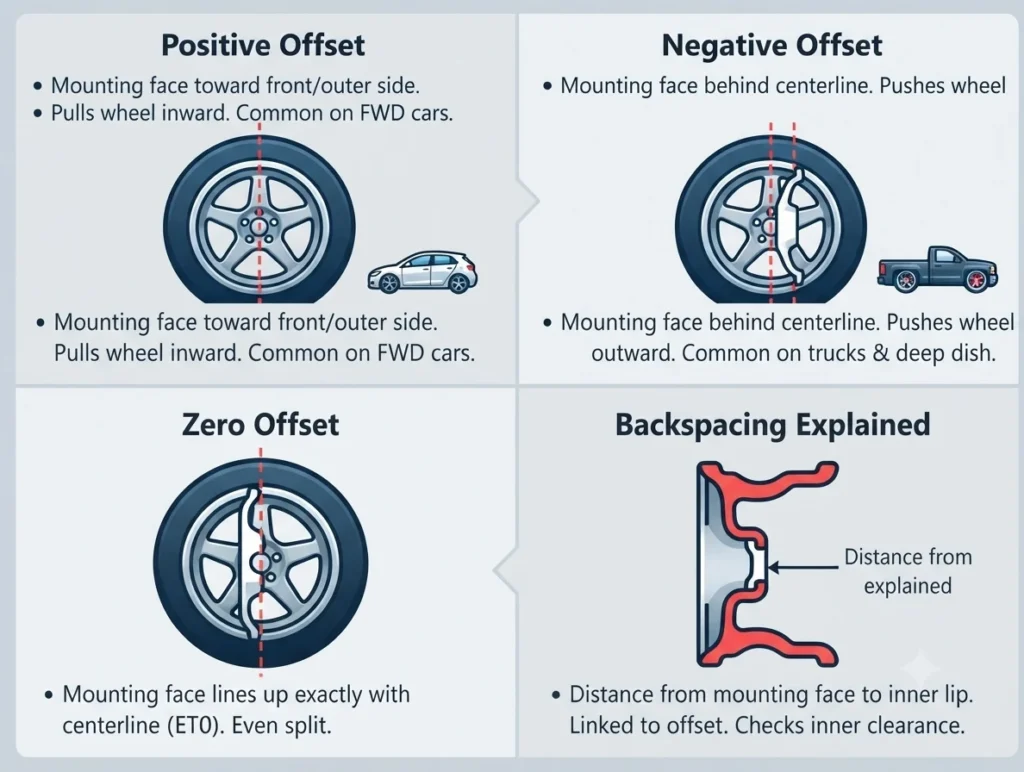
Offset comes down to where the mounting face sits relative to the wheel’s centerline. Here are the three cases — plus backspacing, the measurement they connect to.
Positive Offset
The mounting face sits toward the front (outer) side of the wheel’s centerline. Higher positive offset pulls the wheel inward, tucking it under the fender. Most modern front-wheel-drive cars use positive offset.
Negative Offset
The mounting face sits behind the centerline, pushing the wheel outward for a wider, more aggressive stance. Common on trucks and ‘deep dish’ wheels — but too much can cause poke and fender rub.
Zero Offset
The mounting face lines up exactly with the wheel’s centerline (ET0). The wheel sits evenly, splitting the difference between the positive and negative extremes.
Backspacing
The distance from the mounting face to the wheel’s inner lip, usually in inches. It’s directly linked to offset — change one and the other moves. Backspacing is handy for checking inner suspension clearance.
Why Offset Matters for Your Car
Offset does far more than affect looks. Change it too much and the tire can rub the fender or inner suspension, alter your track width, add stress to wheel bearings, and even upset steering feel and stability. This is why fitting a wheel with the wrong offset — even if the bolt pattern matches — can cause real problems. A safe swap keeps the new offset close to the factory figure unless you’ve planned for wider tires, spacers, or fender modifications. When in doubt, small changes (a few millimetres) are usually low-risk; large jumps deserve a professional’s eye and a test fit before you commit.
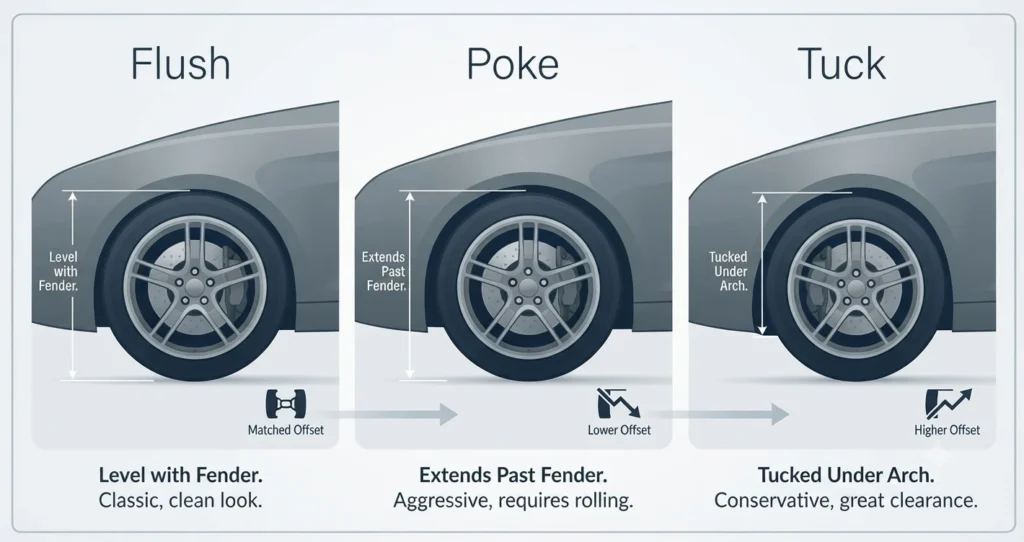
Flush, Poke or Tuck — What the Numbers Do
These are general fitment styles, not fixed rules. The exact result depends on your wheel width, tire size, and body shape — so always verify on your own car.
Flush Fitment
The wheel and tire sit level with the fender edge — the classic clean look. Achieved by matching width and offset so nothing pokes out or tucks under. Usually the safest sporty choice.
Poke (Stance)
Lower offset pushes the wheel outward so it extends past the fender. It looks aggressive but risks rubbing, tire wear, and legality issues in some regions — plan for fender rolling or wider arches.
Tuck (Conservative)
Higher offset pulls the wheel inward, tucking it further under the arch. Great for clearance and comfort, but too much can bring the inner edge close to the strut and brakes.
What to Check Before You Fit
The Clearance Checklist
Before committing to a new offset, confirm four things: the bolt pattern and center bore match your hub; the tire won’t rub the fender at full lock or over bumps; the inner edge clears the strut, brake caliper, and suspension arms; and the change won’t push you outside legal fender coverage where you live. A test fit with the car on the ground is worth more than any spec sheet.
Key Terms That Trip People Up
A few overlapping terms cause most of the confusion. Knowing the difference helps you read a wheel’s specs with confidence.
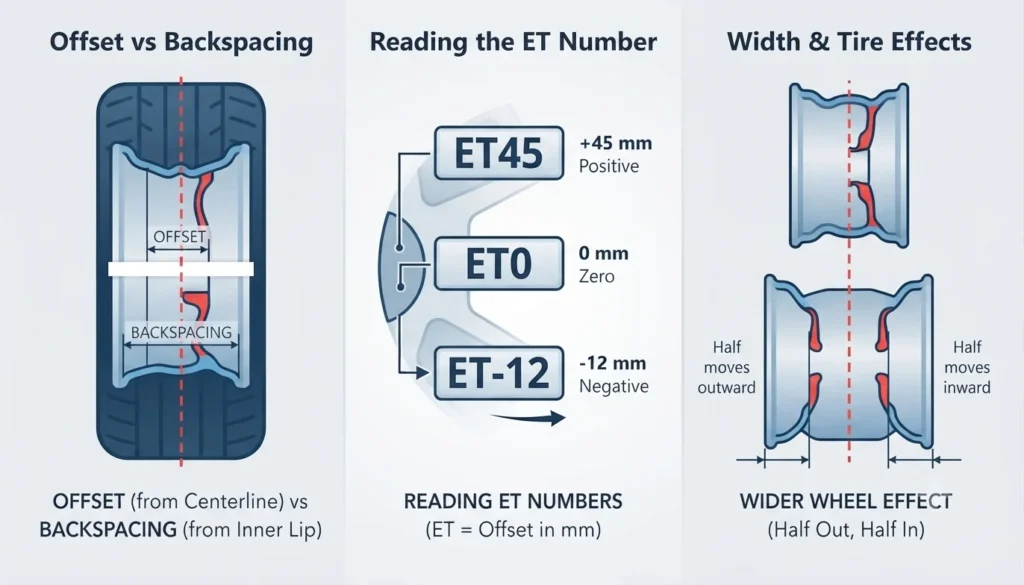
Offset vs Backspacing
Offset is measured from the centerline in mm; backspacing is measured from the inner lip in inches. They describe the same geometry from different reference points — increase offset and backspacing rises too.
Reading the ET Number
‘ET’ plus a number is the offset in mm. ET45 means +45 mm (positive), ET0 is zero, and ET-12 means the mounting face is 12 mm behind the centerline (negative).
Width & Tire Effects
A wider wheel with the same offset spreads its extra width — roughly half moves outward and half inward. That’s why width and offset must always be considered together, not on their own.
The One-Line Takeaway
Offset is simply where the wheel sits in or out relative to your hub: more positive offset tucks the wheel in, more negative offset pushes it out. Keep a new wheel’s offset close to factory unless you’ve planned for the extra width and clearance — and always test-fit before you drive.
Will 17-Inch Wheels Fit My Car?
One of the most common fitment questions: whether 17-inch wheels will work on your vehicle. The answer depends on more than just the diameter — you need to verify bolt pattern, width, offset, tire size, and brake clearance. Here’s what to check.
Wheel Diameter (17″)
17-inch wheels are a popular size that fits many sedans, coupes, hatchbacks, crossovers, and trucks. However, your vehicle’s factory wheel size, suspension geometry, and tire sidewall height all matter. A 17-inch wheel can physically mount to your hub if the bolt pattern and center bore match — but the overall tire diameter must stay close to the factory rolling circumference or you’ll affect your speedometer, odometer, fuel economy, and handling. A 17×8 with a 225/45R17 tire works very differently from a 17×9 with a 265/40R17, even though both are technically 17-inch. Always verify that the complete wheel-and-tire package delivers a similar overall diameter to your original setup.
Wheel Width (8″ vs 9″ vs 10″)
17-inch wheels come in various widths: 7.5″, 8″, 8.5″, 9″, 9.5″, 10″, and wider. Wider wheels can accommodate wider tires and look more aggressive, but they also increase track width and can cause poke or rubbing if the offset is not right for your car. A narrow 17×7.5 paired with a +42 offset will sit quite different from a wide 17×10 paired with +30 offset. Check your factory wheel width first, then decide if going wider is practical for your suspension and fender clearance.
Offset (ET Number)
Even if a 17-inch wheel matches your bolt pattern, the wrong offset will cause it to poke out past your fender or tuck so far in that it rubs your suspension. Your factory offset is the starting point. Small deviations (±5–10 mm) are usually safe, but larger changes require extra planning. If you want to go wider, you typically need a lower (more negative) offset to avoid poke — for example, upgrading from 17×7.5 +42 to 17×9 +35. Use the calculator on this page to compare your current setup against any new 17-inch wheel you’re considering.
Tire Size & Sidewall
A 17-inch rim requires a 17-inch tire, but there are many widths and sidewall heights. Your speedometer, ABS, stability control, and fuel economy all depend on keeping the tire’s rolling diameter close to the factory spec. A lower sidewall (e.g. 40 or 35 series) gives a wider, sportier look but a harder ride and can increase rubbing risk if the wheel pokes out. A taller sidewall (e.g. 50 or 55 series) keeps more cushion but may stick out past your fender on wider wheels. Calculate the overall tire diameter and compare it to factory sizes before committing.
Brake Caliper Clearance
Larger wheels often mean larger brake components. Even if your 17-inch wheel fits the fender, make sure the brake caliper and rotor have enough room. Bigger performance brake kits can protrude further, requiring a wheel with more clearance (higher offset or more ventilation holes) to avoid contact. Before ordering, ask the seller for brake clearance specs or do a test fit with the car on the ground and wheels turned at full lock. A rubbing brake is expensive to fix and dangerous to ignore.
How to Measure Your Wheel’s Offset
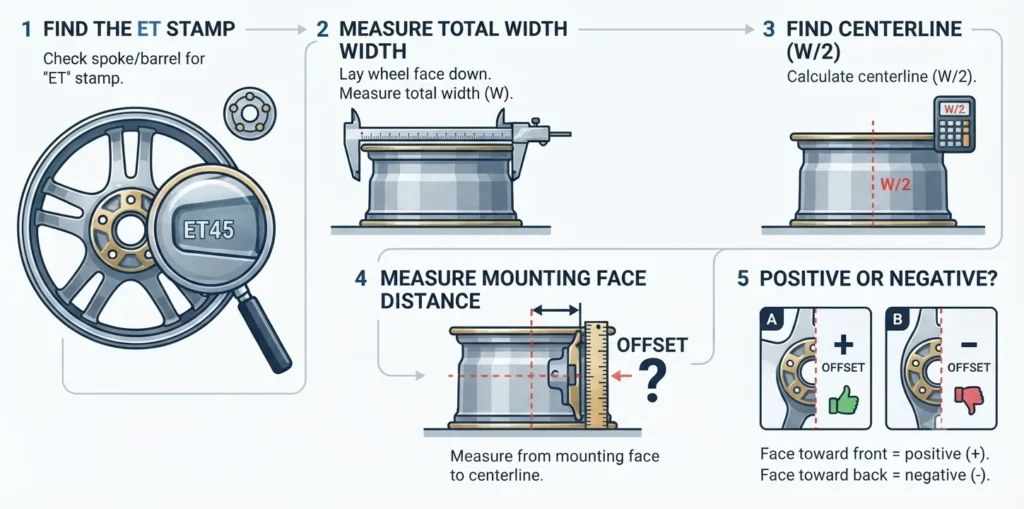
You can find or measure offset yourself with a little care. First, look on the back of the spokes or the barrel — many wheels have the offset stamped as ‘ET’ followed by a number, often near the size and bolt pattern. If it isn’t marked, you can measure it: lay the wheel face down, measure the total width across the barrel and halve it to find the centerline, then measure from the mounting face to that centerline.
The difference is your offset — positive if the face is toward the front, negative if behind. Alternatively, measure backspacing (mounting face to inner lip) and convert. Write down your current wheel width, offset, tire size, and vehicle details before shopping, then use the calculator above to compare any new wheel against what you have. When numbers get tight against the fender or suspension, a professional test fit is the safest final step.
Tips for a Safe Wheel Swap
Changing offset is one of the easiest ways to transform how a car looks and handles — but also one of the easiest ways to create rubbing, wear, or clearance problems. These four habits keep a swap smooth and safe, whether you’re chasing a flush look or just replacing a damaged wheel.
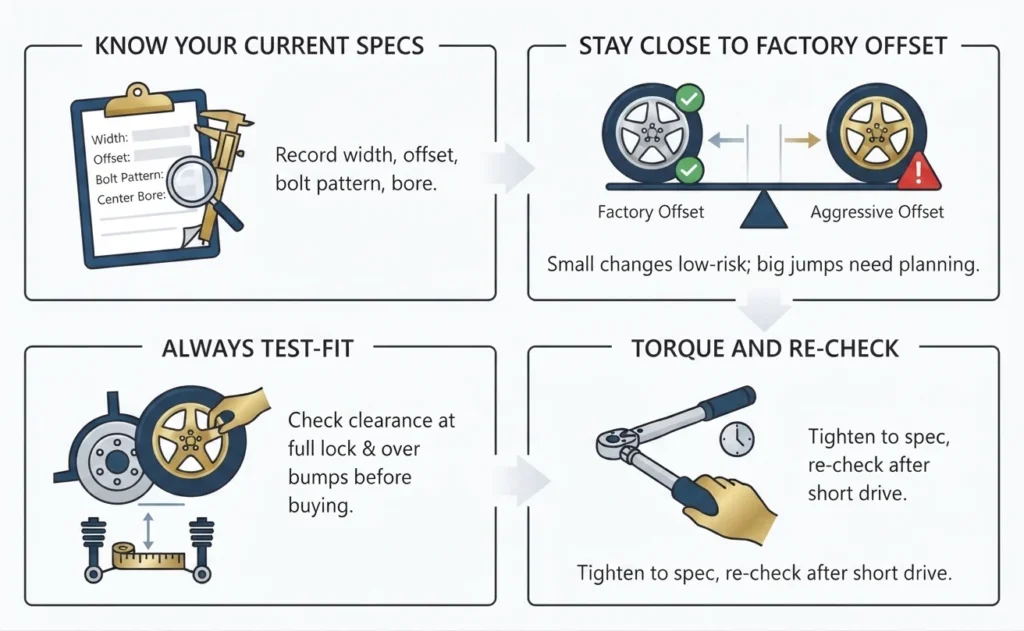
Know your current specs
Record your existing width, offset, bolt pattern, and center bore before shopping. It’s the baseline for every comparison.
Stay close to factory offset
Small changes are usually low-risk. Big jumps in offset need planning for tires, clearance, and possibly spacers or fender work.
Always test-fit
Fit one wheel, lower the car, and check clearance at full lock and over bumps before buying a full set.
Torque and re-check
Tighten lug nuts to spec and re-check after a short drive. Correct fitment means nothing if the wheel isn’t secured properly.
Wheel Offset FAQs
What does offset mean on a wheel?
Offset is the distance in millimetres between the wheel’s mounting face and its centerline. It decides how far in or out the wheel sits relative to the hub, which affects looks, clearance, and handling.
What’s the difference between positive and negative offset?
Positive offset puts the mounting face toward the front of the wheel, tucking it inward. Negative offset puts the face behind the centerline, pushing the wheel outward for a wider stance.
Is higher or lower offset better?
Neither is universally ‘better’ — it depends on your car and goal. The right offset is the one that clears your suspension and fenders while sitting where you want. Staying near the factory figure is safest.
What does ET mean on a wheel?
ET stands for the German ‘Einpresstiefe’ and is simply the offset in millimetres. ET40 means +40 mm of positive offset; a minus sign (e.g. ET-10) indicates negative offset.
How much offset change is safe?
Small changes of a few millimetres are usually low-risk on most cars, but tolerances vary. Larger changes can cause rubbing or clearance problems, so test-fit and ideally consult a specialist before committing.
Is offset the same as backspacing?
They describe the same geometry differently. Offset is measured from the centerline in mm; backspacing is measured from the inner lip in inches. Change one and the other changes with it.
Compare Before You Buy
Don’t guess how a new wheel will sit. Enter your current and proposed setup in the calculator to see exactly how the outer and inner edges shift — and avoid an expensive fitment mistake.
📐 Know your current offset & width🛞 Always test-fit before driving