The washer fluid reservoir is a simple but important part of your vehicle’s windshield cleaning system. It stores the cleaning fluid used to remove dirt, dust, insects, road salt, and other debris from the windshield.
When the reservoir is empty, cracked, or leaking, the washer system may stop working properly. You might notice a low washer fluid warning, fluid collecting beneath the vehicle, or windshield washer nozzles that fail to spray.
However, these symptoms do not always mean the reservoir itself is damaged. A faulty washer pump, disconnected hose, blocked nozzle, frozen fluid, or electrical problem can produce similar results.
This guide explains what a washer fluid reservoir does, where to find it, how the system works, common failure symptoms, troubleshooting steps, replacement costs, and proper maintenance.
Quick Answer: What Is a Washer Fluid Reservoir?
A washer fluid reservoir is a container that stores windshield cleaning fluid. When you activate the washer switch, an electric pump draws fluid from the reservoir and sends it through hoses to spray nozzles. The fluid helps the windshield wipers clean the glass. If the reservoir cracks or its connections leak, fluid may escape and the washer system may stop spraying.
What Is a Washer Fluid Reservoir?
A washer fluid reservoir, sometimes called a windshield washer tank or windshield washer bottle, is a container designed to hold the cleaning solution used by the vehicle’s washer system.
Most passenger vehicles use a molded plastic reservoir positioned inside the engine compartment or behind a front body panel. The container is designed to store washer fluid and accommodate connections for the pump, hoses, and, where equipped, a fluid-level sensor.
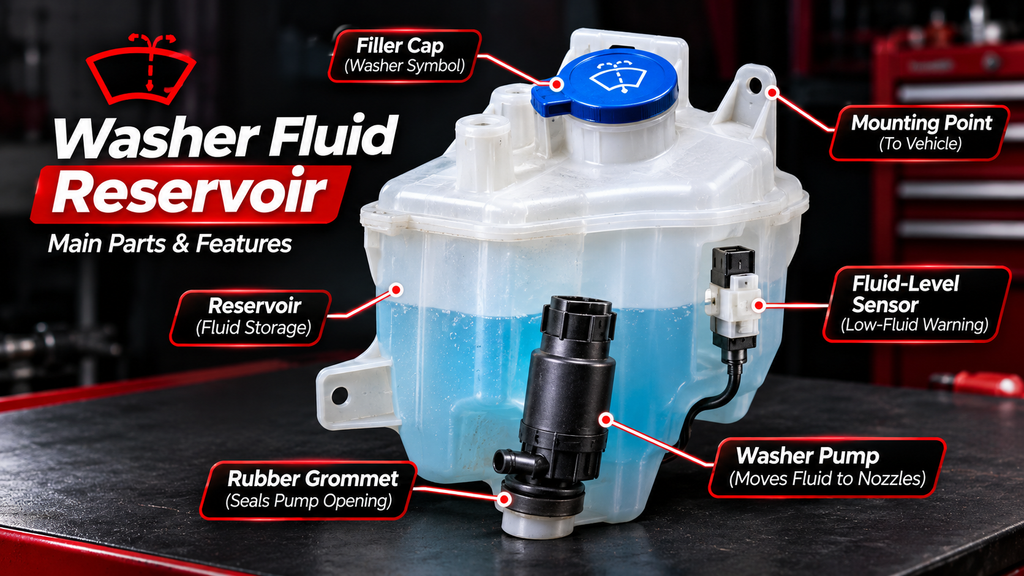
The reservoir itself does not create fluid pressure. It simply stores the cleaning solution until the driver activates the washer system.
An electric pump then moves the fluid toward the windshield nozzles.
Some vehicles have a single reservoir supplying both front and rear washer systems, while others have separate arrangements. Capacity and component locations vary by model.
If you’re learning about basic vehicle maintenance, our guide to checking car fluids explains how washer fluid fits into routine inspections.
How Does a Washer Fluid Reservoir Work?
The windshield washer system uses a small electric pump to deliver cleaning fluid from the reservoir to spray nozzles positioned near the windshield.
When the driver activates the washer control, the vehicle supplies electrical power to the pump. The pump draws fluid from the tank and pushes it through connected hoses.
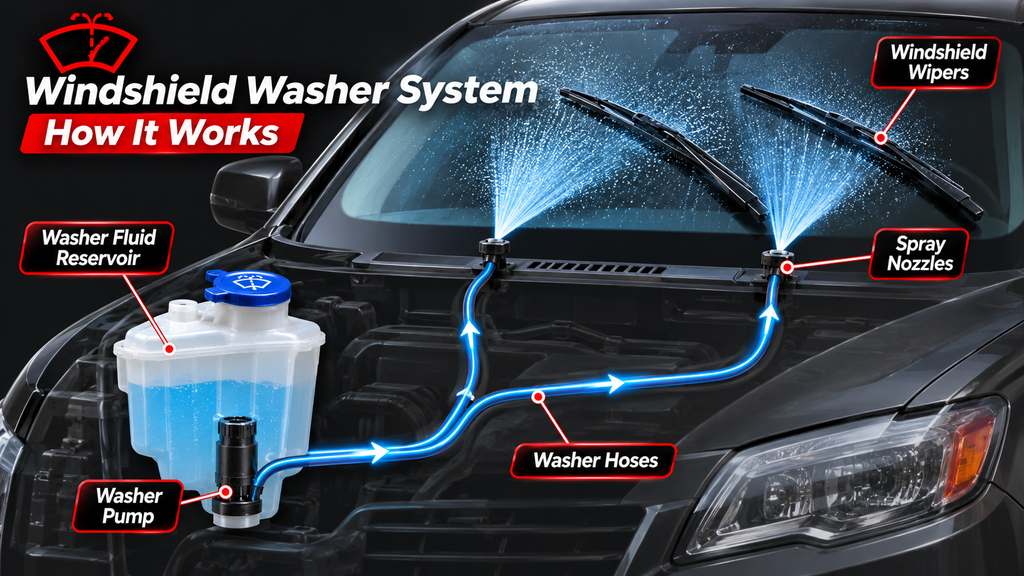
The Washer Fluid Delivery Process
STEP 01
Fluid Is Stored
The reservoir holds windshield cleaning fluid until the washer system is activated.
STEP 02
Pump Activates
An electrical signal activates the washer pump, creating the flow needed to move fluid.
STEP 03
Fluid Travels Through Hoses
Flexible tubing carries the fluid to the front or rear spray nozzles.
STEP 04
Windshield Is Cleaned
The spray nozzles distribute fluid while the wipers remove dirt and loosened debris.
The exact control sequence differs by vehicle. Some systems activate the wipers automatically when washer fluid is sprayed, while others use different timing or operating modes.
If the pump fails, a hose becomes disconnected, or a nozzle becomes blocked, the reservoir may still contain fluid even though nothing reaches the windshield.
Where Is the Washer Fluid Reservoir Located?
On many cars, the washer fluid reservoir is located near the front of the engine compartment. However, much of the tank may be hidden behind a fender liner, bumper cover, or other body components.
Often, only the filler neck and cap are immediately visible when you open the hood.
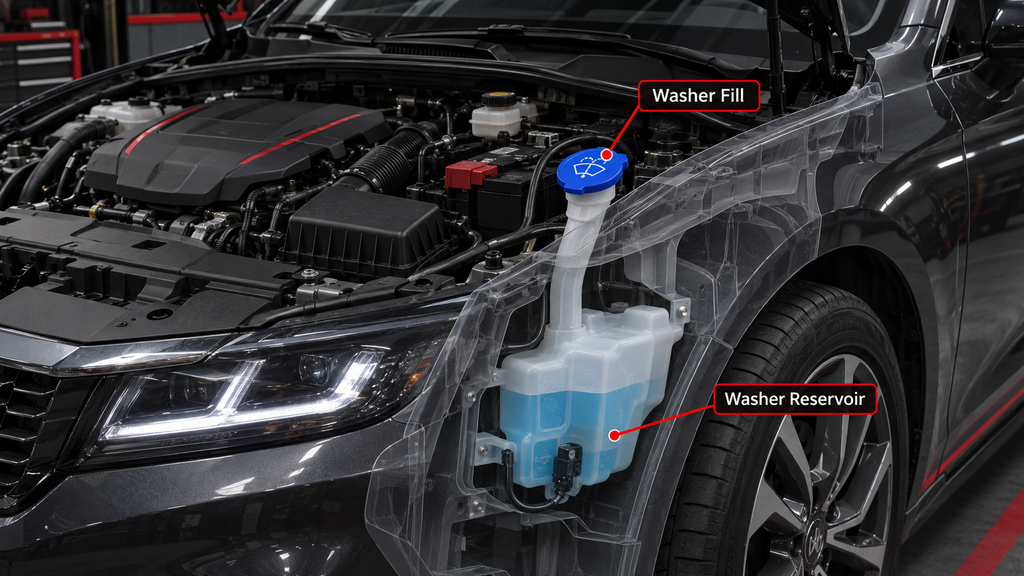
How to Identify the Reservoir Cap
Look for a cap displaying a windshield symbol with spray lines. Many vehicles use a blue cap, but color is not standardized across all manufacturers.
The owner’s manual is the most reliable way to identify the correct location.
Do not confuse the washer fluid filler with the engine coolant reservoir, brake fluid reservoir, or power steering fluid container.
Important
Never pour windshield washer fluid into the engine coolant or brake fluid reservoir. Adding the wrong liquid can damage components and create expensive or potentially unsafe problems.
Main Components of the Windshield Washer System
Although the reservoir is the main storage container, the entire windshield washer system contains several components that must work together.
Understanding these parts helps you identify why washer fluid may leak or fail to reach the windshield.
| Component | Function |
|---|---|
| Fluid Reservoir | Stores windshield cleaning solution |
| Filler Neck and Cap | Allows refilling and helps keep debris out |
| Washer Pump | Moves fluid toward spray nozzles |
| Rubber Grommet or Seal | Seals pump or sensor openings in the tank |
| Washer Hoses | Carry fluid between pump and nozzles |
| Spray Nozzles | Distribute fluid onto the glass |
| Fluid-Level Sensor | Detects low washer fluid where equipped |
| Switch and Electrical Circuit | Controls pump activation and power |
Some vehicles use additional valves, heated washer components, or separate pumps for front and rear washers.
The manufacturer’s wiring diagrams and repair information provide the correct arrangement for a particular model.
5 Signs of a Bad or Leaking Washer Fluid Reservoir
A damaged washer fluid reservoir may cause fluid loss, visible leakage, or repeated washer-system problems.
However, symptoms are clues rather than proof. A hose, pump seal, or other washer component may be responsible instead.
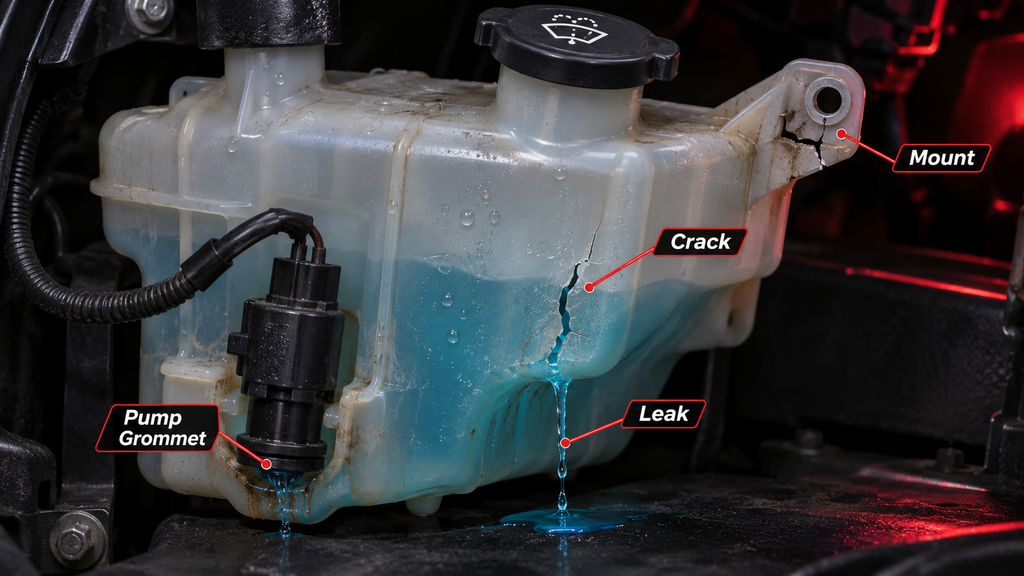
1. Washer Fluid Empties Too Quickly
If you refill the tank and the fluid level falls much faster than expected, a leak may be present.
Heavy washer use can also consume fluid quickly, so consider how often the system has been operated.
2. Fluid Puddle Beneath the Front of the Car
A damaged tank, leaking pump grommet, or disconnected washer hose may cause fluid to collect beneath the front of the vehicle.
Washer fluid may be blue, purple, green, or another color depending on the product. Color alone cannot identify a leak.
3. Low Washer Fluid Warning
A dashboard warning may appear when fluid is low. If the warning remains after filling, the level sensor, float, wiring, or related control circuit may be malfunctioning.
Not all vehicles have a washer fluid level sensor.
4. Visible Cracks or Damage
Some reservoirs develop visible cracks near mounting points, seams, or pump openings.
Because much of the tank may be hidden behind body panels, a full inspection can require professional access.
5. Washer Fluid Stops Spraying
If the reservoir becomes empty because of a leak, the washer pump may no longer deliver fluid to the windshield.
However, this symptom can also result from a damaged pump, failed fuse, blocked nozzle, disconnected hose, or frozen washer fluid.
Washer Reservoir Symptoms and Likely Causes
| Symptom | Possible Cause | Recommended Check |
|---|---|---|
| Tank empties while parked | Crack, pump grommet, seal or connection | Inspect accessible tank and connections |
| Fluid appears under front bumper | Tank or hose leak | Confirm fluid type and leak source |
| Pump runs but no spray | Empty tank, blocked nozzle, detached hose | Check fluid level and visible tubing |
| Pump makes no sound | Electrical fault, pump failure or freezing | Check fuse and seek circuit diagnosis |
| Low-fluid warning stays on | Sensor or circuit problem | Verify level and sensor operation |
What Causes a Washer Fluid Reservoir to Leak?
A washer reservoir may leak because the plastic container has cracked, its seals have deteriorated, or a connected hose or pump has developed a problem.
Understanding the actual cause helps prevent unnecessary replacement of a reservoir that is still in good condition.
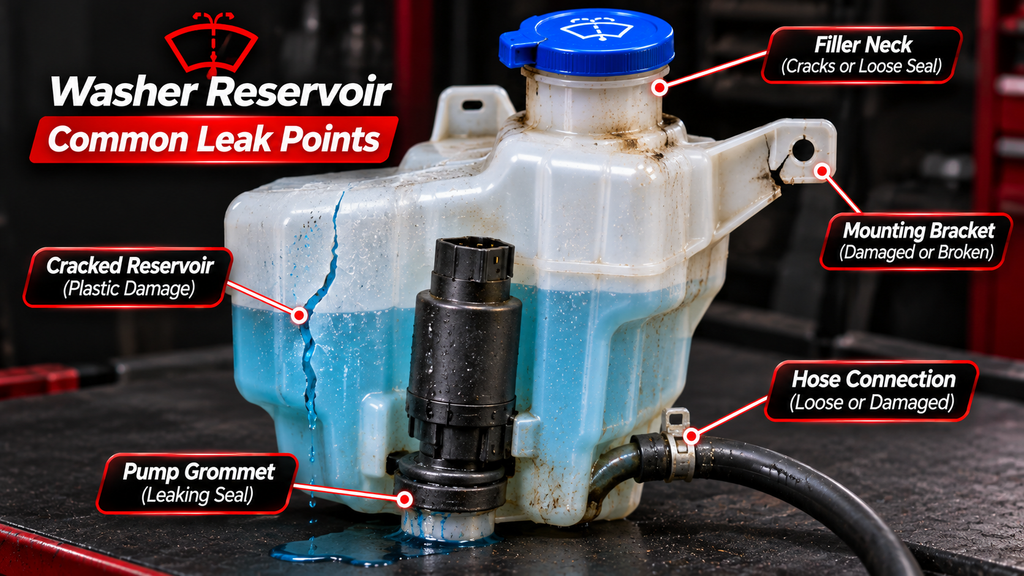
Cracked Plastic Reservoir
Age, impact damage, vibration, or freezing can damage the plastic tank. A crack may allow fluid to escape gradually or rapidly depending on its size and location.
Leaking Pump Grommet
Many pumps fit into the reservoir through a rubber seal or grommet. A damaged or hardened grommet can leak even when the tank itself is intact.
Loose or Damaged Washer Hose
A hose may loosen, split, or become disconnected. If the leak occurs only when the washer pump runs, a downstream hose or connection may be more likely than the tank itself.
Freezing Temperatures
Fluid without adequate freeze protection can freeze and expand inside the reservoir or lines, potentially damaging the system.
Use washer fluid rated for the expected temperatures rather than assuming every product protects against freezing.
Accident or Road Debris Damage
Reservoirs mounted behind front bumpers or wheel-well liners can be damaged during collisions or from road debris.
Hidden damage may involve the tank, mounting brackets, pump wiring, and connected hoses.
For broader fluid identification, see our guide to diagnosing vehicle leaks.
Why Is Washer Fluid Not Spraying Onto the Windshield?
If washer fluid is not reaching the windshield, the problem may involve the reservoir, electric pump, hoses, nozzles, or electrical system.
The best approach is to begin with simple, safe checks before assuming a major component needs replacement.
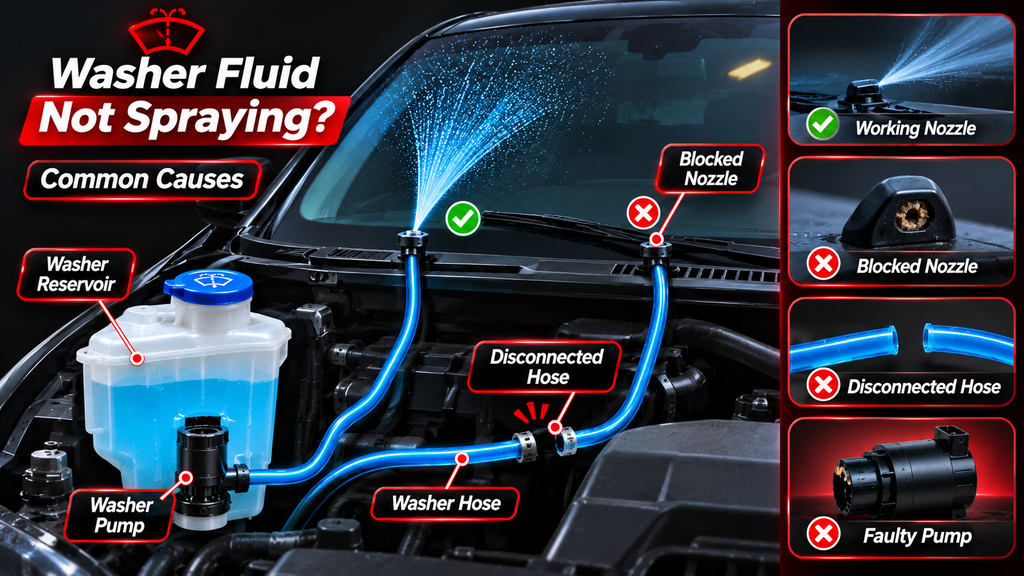
Check the Washer Fluid Level
Confirm that the reservoir contains appropriate fluid. A low or empty tank is one of the simplest possible explanations for missing washer spray.
Listen for the Washer Pump
With the hood closed and the vehicle stationary, a brief washer activation may reveal whether the electric pump is operating. Follow your owner’s manual and avoid repeated operation of an empty or frozen system.
A running pump with no spray suggests a different diagnostic path from a pump that remains silent, although pump noise alone does not prove that the pump is delivering sufficient fluid.
Consider Blocked Washer Nozzles
Dirt, wax, mineral deposits, or ice may obstruct nozzle openings.
Follow manufacturer-approved cleaning guidance. Avoid forcing sharp objects into delicate nozzle openings, especially on vehicles with precision fan-spray systems.
Check for Hose Problems
A visible disconnected or split hose may explain why the pump operates but washer fluid does not reach the windshield.
Some hose connections are hidden beneath body panels or hood insulation and need professional access.
Check Electrical Problems
A failed fuse, wiring fault, damaged connector, switch problem, or defective pump may prevent washer operation.
Use the owner’s manual to identify the correct washer circuit. If appropriate, review our car fuse box testing and replacement guide.
Never install a higher-rated fuse to bypass a recurring electrical fault.
Check for Frozen Washer Fluid
In freezing weather, fluid in the tank, hoses, or nozzles may become blocked by ice.
Do not repeatedly run a stalled or frozen pump. Allow the vehicle to thaw safely in an appropriate environment and use the correct winter-rated fluid.
Workshop Tip
If the reservoir stays full but no fluid reaches the windshield, replacing the tank is unlikely to solve the problem without confirming a tank defect. Check the complete system before purchasing replacement parts
How to Refill the Washer Fluid Reservoir
Refilling washer fluid is a straightforward maintenance task on most vehicles and usually does not require special tools.
The most important details are identifying the correct reservoir and choosing washer fluid suitable for the vehicle and local temperatures.
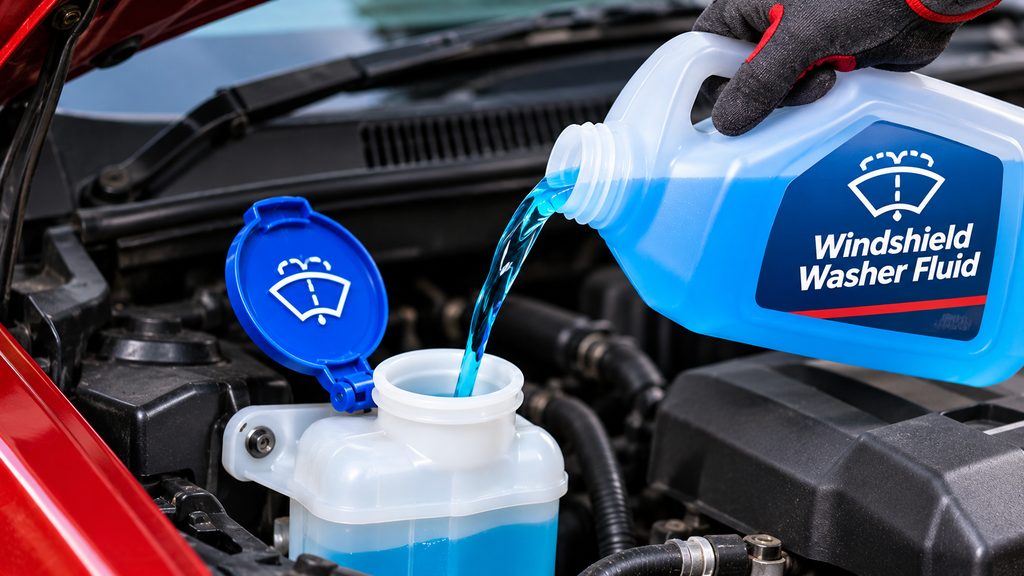
Step-by-Step Refilling Instructions
- Park safely: Stop on level ground, turn off the engine, and secure the vehicle.
- Open the hood: Follow the owner’s manual and locate the windshield washer fluid cap.
- Confirm the reservoir: Look for the washer-fluid symbol rather than relying only on cap color.
- Select the proper fluid: Use a compatible ready-to-use product or a concentrate mixed exactly as directed on the label.
- Open the cap: Keep dirt and debris away from the filler opening.
- Pour carefully: Add fluid slowly and avoid exceeding the manufacturer’s intended fill level.
- Close the cap: Make sure the cap is properly seated.
- Check operation: Once safe, operate the washer system according to the owner’s manual and check whether fluid reaches the windshield.
If fluid immediately leaks after refilling, stop adding more and arrange an inspection to locate the actual problem.
For other routine vehicle checks, see our car maintenance checklist.
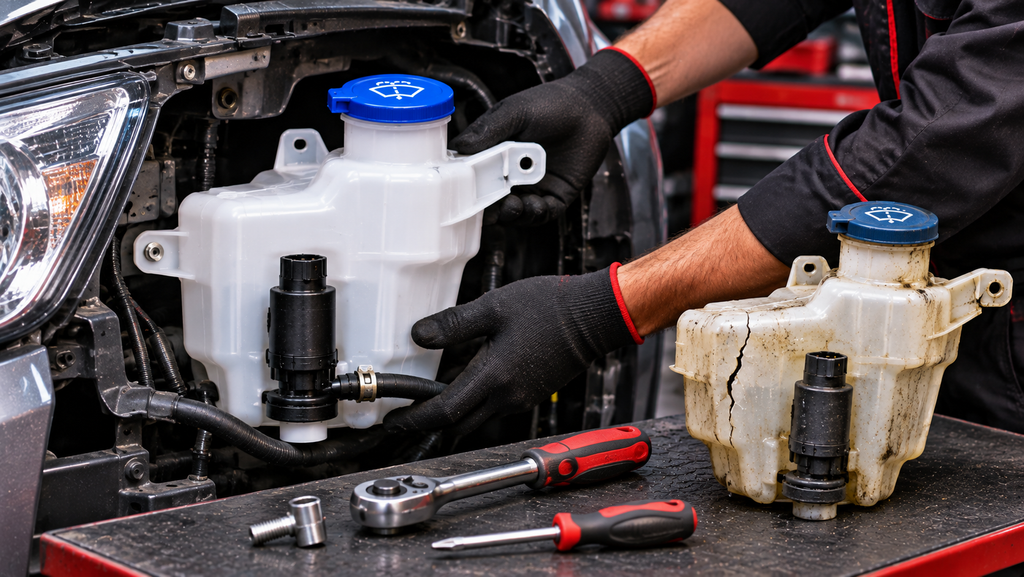
How to Replace a Washer Fluid Reservoir
Washer fluid reservoir replacement may be necessary when the tank is cracked, physically damaged, or cannot be repaired using an approved method.
However, reservoir replacement is not always required when fluid leaks. A damaged pump seal or disconnected hose may be the actual problem
General Replacement Process
- Confirm the defect: Verify that the tank is damaged and not simply leaking at a removable seal or connection.
- Identify the correct part: Match the replacement reservoir to the vehicle make, model, year, trim, and washer-system equipment.
- Prepare the vehicle: Follow the manufacturer’s electrical, lifting, and access procedures.
- Access the reservoir: Some vehicles require removal of a wheel-well liner, trim panel, or bumper cover.
- Disconnect components: Remove electrical connectors, hoses, pumps, and sensors according to the service instructions.
- Remove the damaged reservoir: Release the specified fasteners and mounting brackets.
- Install the replacement: Transfer serviceable components as permitted, using new seals and grommets where specified.
- Refill and test: Add suitable fluid, inspect for leakage, and confirm proper washer operation.
Can You Repair a Cracked Washer Fluid Reservoir?
Some minor damage may have a manufacturer-approved repair option, but many cracked plastic tanks are replaced because fluid compatibility, durability, vibration, and temperature changes can make improvised repairs unreliable.
Household glue or general-purpose sealants may not provide a durable, compatible repair.
If the reservoir is leaking from a removable pump grommet or hose connection, replacing that specific failed component may be sufficient.
Is Washer Reservoir Replacement a DIY Job?
Simple reservoir replacement may be manageable for an experienced DIY owner on vehicles with easy access.
Other designs require removing body panels, working near electrical components, or lifting the vehicle. These jobs may be better handled professionally.
Use vehicle-specific instructions and never work beneath a car supported only by a jack.
How Much Does Washer Fluid Reservoir Replacement Cost?
Replacement costs vary depending on the vehicle, reservoir size, component availability, and labor required to reach the tank.
A basic reservoir may be relatively affordable, while assemblies with integrated sensors, pumps, specialized mounting arrangements, or difficult access can cost significantly more.
| Service or Component | Illustrative US Cost |
|---|---|
| Replacement reservoir part | $30–$180+ |
| Pump or grommet replacement | $75–$250+ installed |
| Reservoir replacement, parts and labor | $130–$450+ |
| Complex reservoir assembly replacement | $300–$650+ |
Cost note: These are broad illustrative US budgeting ranges, not verified quotes or guaranteed market prices. Model-specific part prices, dealership rates, labor requirements, taxes, and additional repairs can change the actual total.
What Affects Replacement Cost?
- Vehicle design: Hidden reservoir mounting can increase labor time.
- Parts included: Some assemblies include pumps or sensors, while others do not.
- OEM vs aftermarket: Part specifications, quality, and availability affect price.
- Additional damage: Broken hoses, mounts, or wiring may require extra work.
- Labor rates: Repair costs differ by region and service provide
Money-Saving Tip
Before approving reservoir replacement, ask the mechanic to confirm whether the fluid is leaking from the tank, pump grommet, filler neck, or hose connection. Replacing a good tank will not solve a leak elsewhere in the system.
What Type of Washer Fluid Should You Use?
Windshield washer fluids are available in different formulations designed for ordinary cleaning, insect residue, road grime, and cold-weather operation.
Choose a product approved for your vehicle and suitable for the temperatures you expect to encounter.
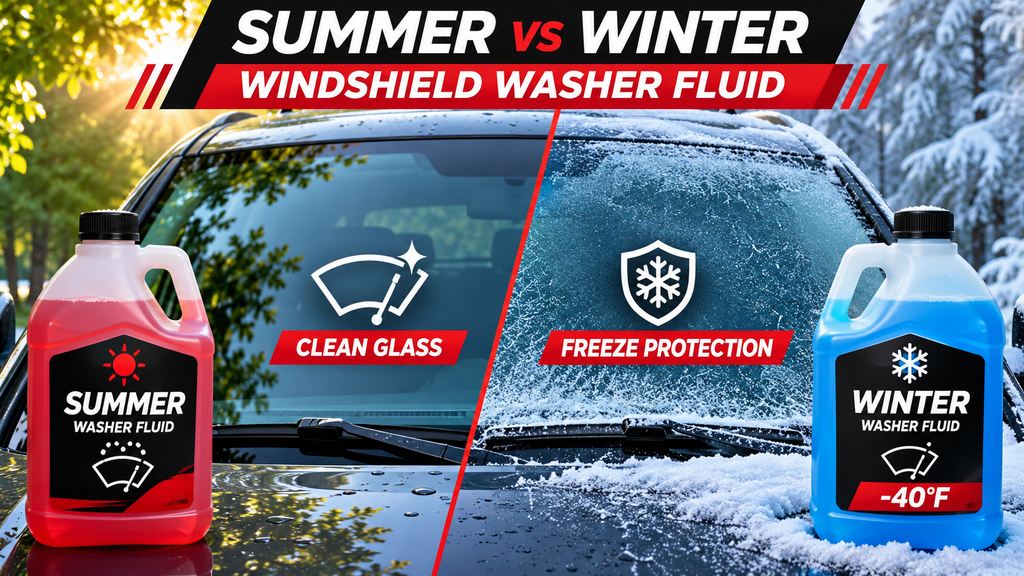
| Fluid Type | Typical Purpose | Important Consideration |
|---|---|---|
| Summer Washer Fluid | Removes insects, dust, and road grime | May have limited freeze protection |
| Winter Washer Fluid | Cleaning in freezing conditions | Check product’s stated temperature rating |
| All-Season Formula | Year-round use in suitable climates | Protection varies by product |
| Concentrated Fluid | Mixed according to label instructions | Incorrect dilution may reduce protection |
Can You Put Water in the Washer Fluid Reservoir?
Plain water may temporarily rinse light dirt under mild conditions, but it does not provide the cleaning performance or freeze protection of purpose-made washer fluid.
Water can freeze in the reservoir, pump, hoses, or nozzles, potentially damaging the system.
Use the manufacturer’s recommended washer fluid rather than relying on water alone.
Can You Use Engine Antifreeze in the Washer Reservoir?
No. Engine coolant and windshield washer fluid serve different purposes and use different formulations.
Adding engine coolant to the washer reservoir can contaminate the cleaning system and leave undesirable residue on the windshield.
Never treat engine antifreeze as a substitute for winter windshield washer fluid.
What Happens if Washer Fluid Freezes?
Frozen washer fluid may block the pump or hoses and prevent fluid from reaching the windshield.
Expansion can also damage the tank or connections. Avoid repeated pump activation when you suspect the system is frozen.
Allow the system to thaw safely and follow manufacturer instructions before restoring operation. Do not pour boiling water onto the reservoir or windshield.
Washer Fluid Safety
Many windshield washer fluids contain chemicals that can be toxic if swallowed. Keep products in their original labeled containers, avoid skin and eye exposure, follow the label, and store them securely away from children and pets.
Washer Fluid Reservoir Maintenance and Prevention Tips
Routine windshield washer maintenance is relatively simple. Periodic checks help ensure the system is available when road grime, rain spray, or other contamination reduces visibility.
Many reservoir problems can be identified early by watching for unusual fluid loss and using the correct seasonal fluid.
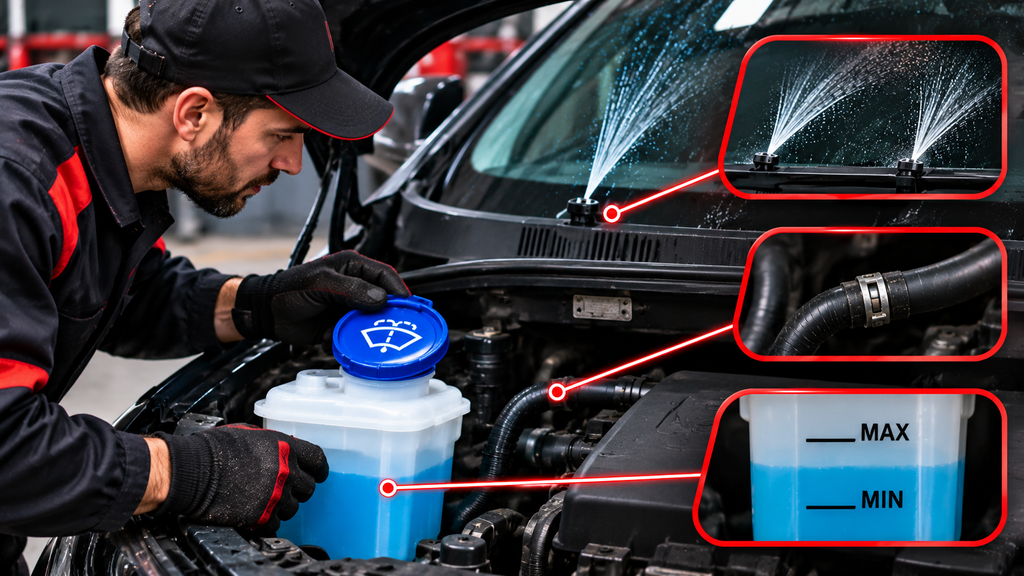
Check the Fluid Level Periodically
Check the washer reservoir during routine vehicle maintenance and before longer trips, particularly in poor-weather seasons.
Use the Correct Seasonal Fluid
Select a washer fluid suitable for the forecast temperatures. Before winter, make sure the fluid already in the system provides adequate freeze protection.
Keep the Filler Cap Closed
A missing or damaged cap can allow debris to enter the reservoir. Replace damaged caps with compatible parts.
Inspect for Unusual Fluid Loss
If the tank becomes empty without much washer use, check accessible areas for leakage and arrange further diagnosis where necessary.
Maintain Windshield Wiper Blades
Worn wipers may smear washer fluid and leave streaks even if the reservoir, pump, and nozzles operate correctly.
Inspect wiper blades for damaged rubber and replace them according to their condition and the vehicle manufacturer’s guidance.
Address Washer Problems Before a Trip
Good windshield visibility is essential for safe driving. Repair a malfunctioning washer system before traveling in conditions where dirt, salt, insects, or road spray can obscure the glass.
Frequently Asked Questions About Washer Fluid Reservoirs
What does a washer fluid reservoir do?
It stores windshield cleaning fluid. An electric washer pump moves the fluid through hoses to the spray nozzles when the driver activates the washer system.
Where is the washer fluid reservoir located?
It is commonly located near the front of the engine compartment, sometimes behind a fender liner or bumper. The filler cap is usually accessible under the hood.
How do I know if my washer fluid reservoir is leaking?
Common clues include rapid fluid loss, visible damage, and fluid collecting beneath the vehicle. Pump grommets and hoses can also leak, so the exact source should be confirmed before replacing the reservoir.
Can a cracked washer fluid reservoir be repaired?
Some minor damage may have an approved repair option, but many cracked reservoirs require replacement. General-purpose adhesives may not withstand washer fluid, vibration, and temperature changes reliably.
How much does washer fluid reservoir replacement cost?
As a broad US budgeting estimate, replacement may cost approximately $130–$450 or more, including parts and labor. Complex vehicles can cost more, and an accurate quote requires identifying the exact repair.
Can I drive with an empty washer fluid reservoir?
A vehicle may still operate normally, but an empty washer system can compromise windshield visibility when road spray or debris obscures the glass. Restore washer operation before driving in conditions where clear visibility cannot be maintained.
Why does my washer fluid reservoir keep emptying?
Possible causes include frequent washer use, a cracked tank, leaking pump seal, disconnected hose, or other washer-system leaks. Diagnose the source before replacing parts.
Why is washer fluid not spraying onto the windshield?
Possible causes include an empty tank, failed pump, blocked nozzle, blown fuse, disconnected hose, electrical fault, or frozen washer fluid.
Can I put water in my washer fluid reservoir?
Plain water does not provide the same cleaning performance or freeze protection as purpose-made washer fluid. Use an approved fluid suitable for your climate.
What happens if windshield washer fluid freezes?
Frozen fluid can prevent washer operation and may damage the reservoir, pump, hoses, or connections. Allow the system to thaw safely and use appropriately rated fluid.
Is the washer fluid reservoir the same as the coolant reservoir?
No. The washer reservoir stores windshield cleaning solution, while the coolant reservoir is part of the engine cooling system. They require different fluids and serve different purposes.
How long does a washer fluid reservoir last?
There is no universal replacement interval. Many reservoirs last for years, but impact damage, freezing, mounting problems, and material deterioration can shorten service life. Replace the tank when a confirmed defect requires it.
Conclusion
The washer fluid reservoir may be a relatively simple component, but it plays an important role in maintaining clear windshield visibility.
It stores the cleaning solution used by the windshield washer system, while the electric pump, hoses, and spray nozzles deliver fluid to the glass.
If the reservoir begins leaking or washer fluid stops spraying, inspect the complete system rather than assuming the storage tank is faulty. Cracked plastic, damaged seals, disconnected hoses, blocked nozzles, and electrical problems can all produce similar symptoms.
Regular fluid checks, suitable winter formulations, correct replacement parts, and timely repairs can help keep the system working reliably.