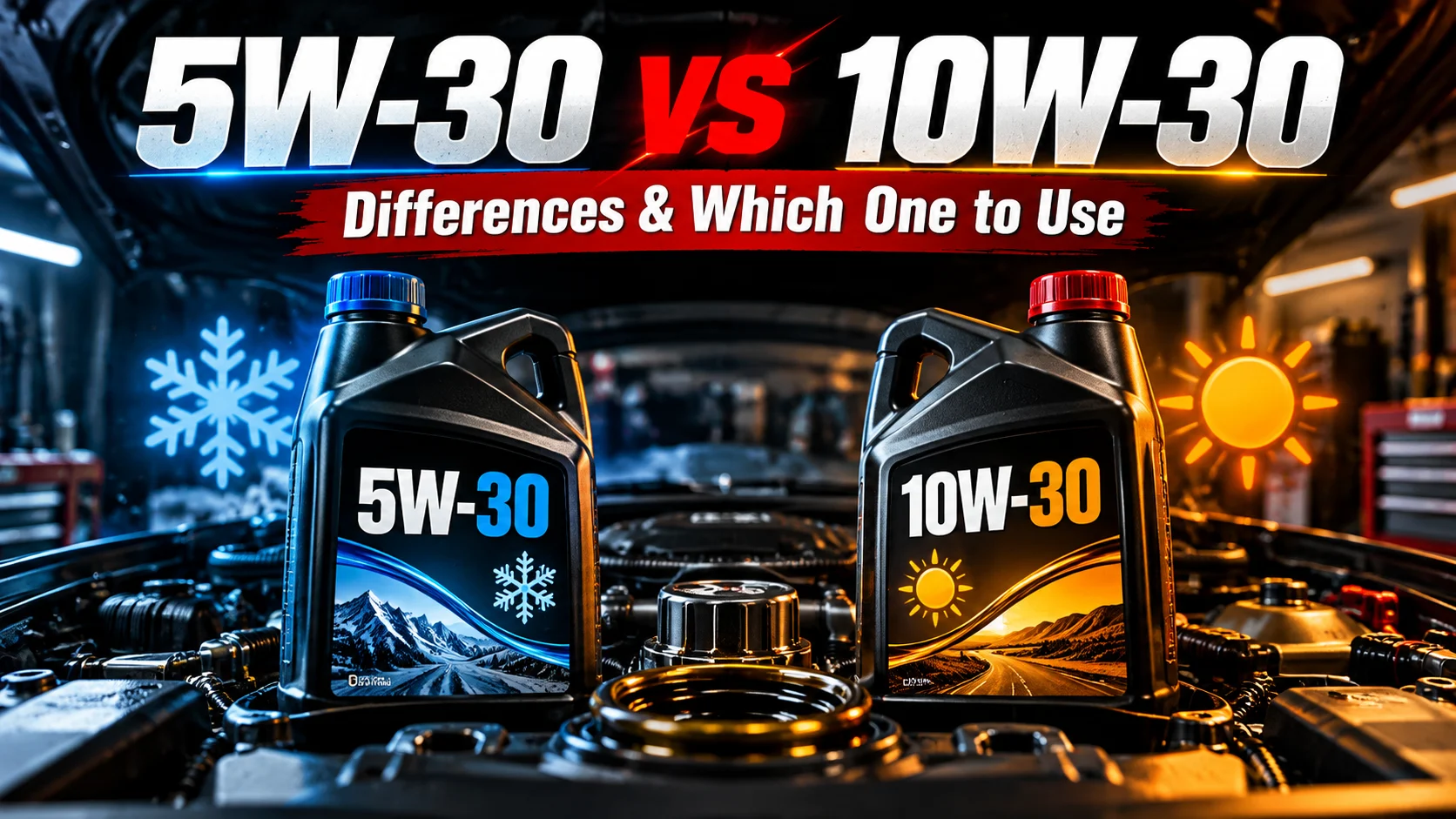

Choosing between 5W-30 vs 10W-30 can be confusing because both oils share the same “30” viscosity grade at higher operating temperatures. The biggest difference appears during colder conditions, but climate is only one part of choosing the correct motor oil. Your engine design, owner’s manual, required oil specification, mileage, and driving conditions all matter.
Quick Answer: 5W-30 vs 10W-30
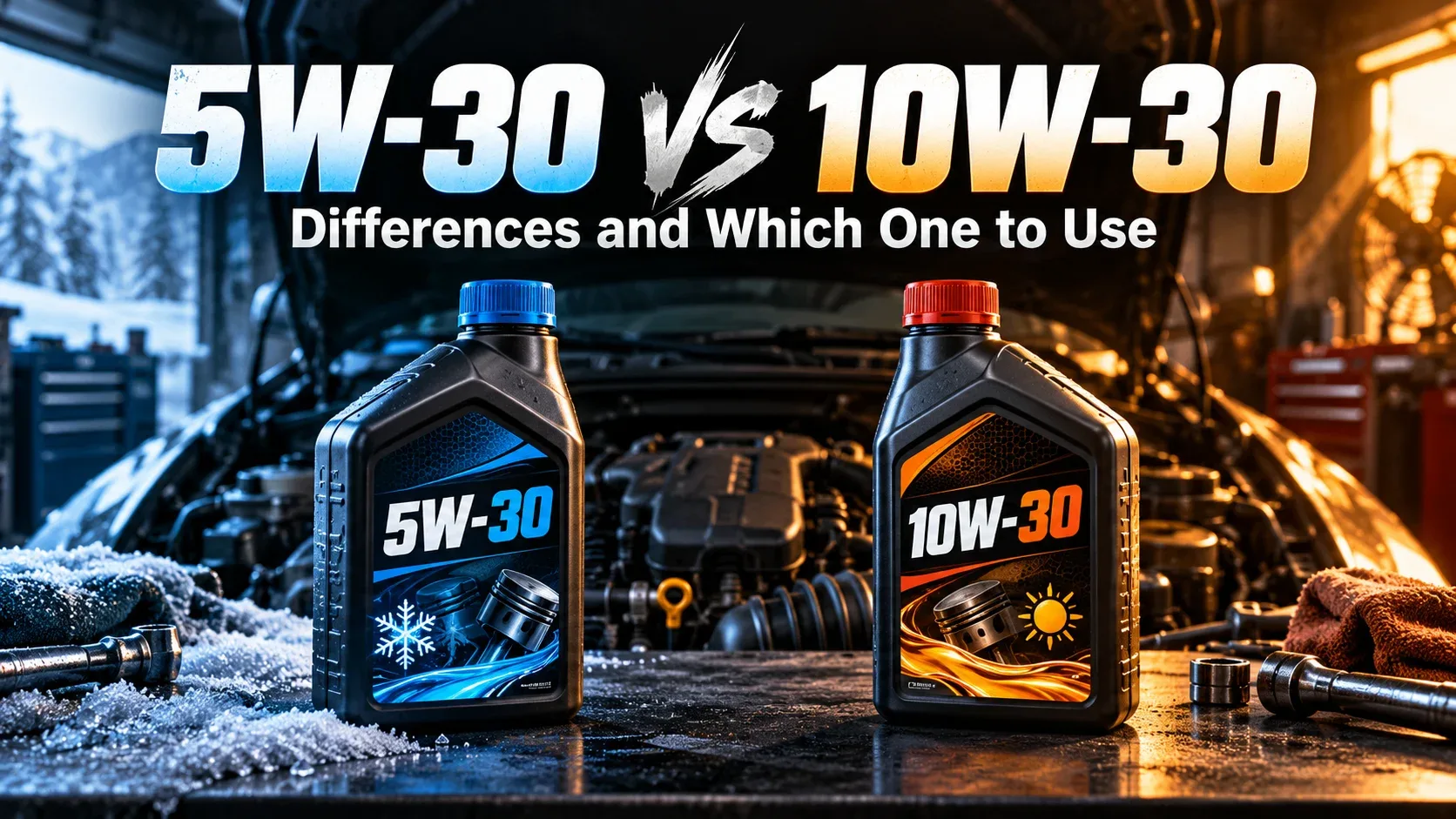
5W-30 generally performs better than 10W-30 during cold starts because it meets a lower winter viscosity classification. Both are SAE 30-grade oils at normal high-temperature viscosity testing conditions.
However, that does not mean 5W-30 is always better. The safest choice is the viscosity and oil specification recommended by your vehicle manufacturer. If your owner’s manual allows both oils, climate and operating conditions can help determine which one makes more sense.
What Does 5W-30 Mean?
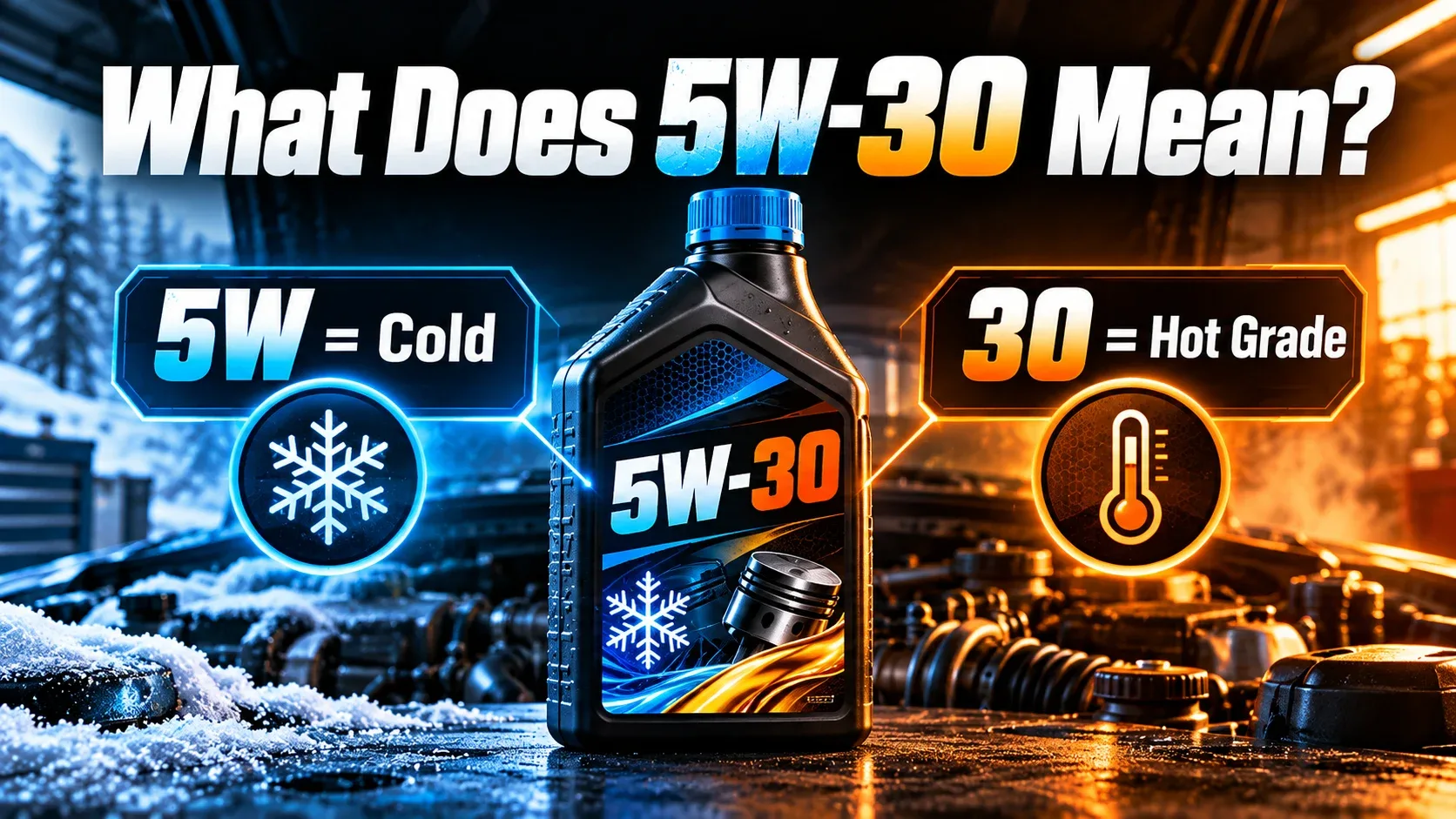
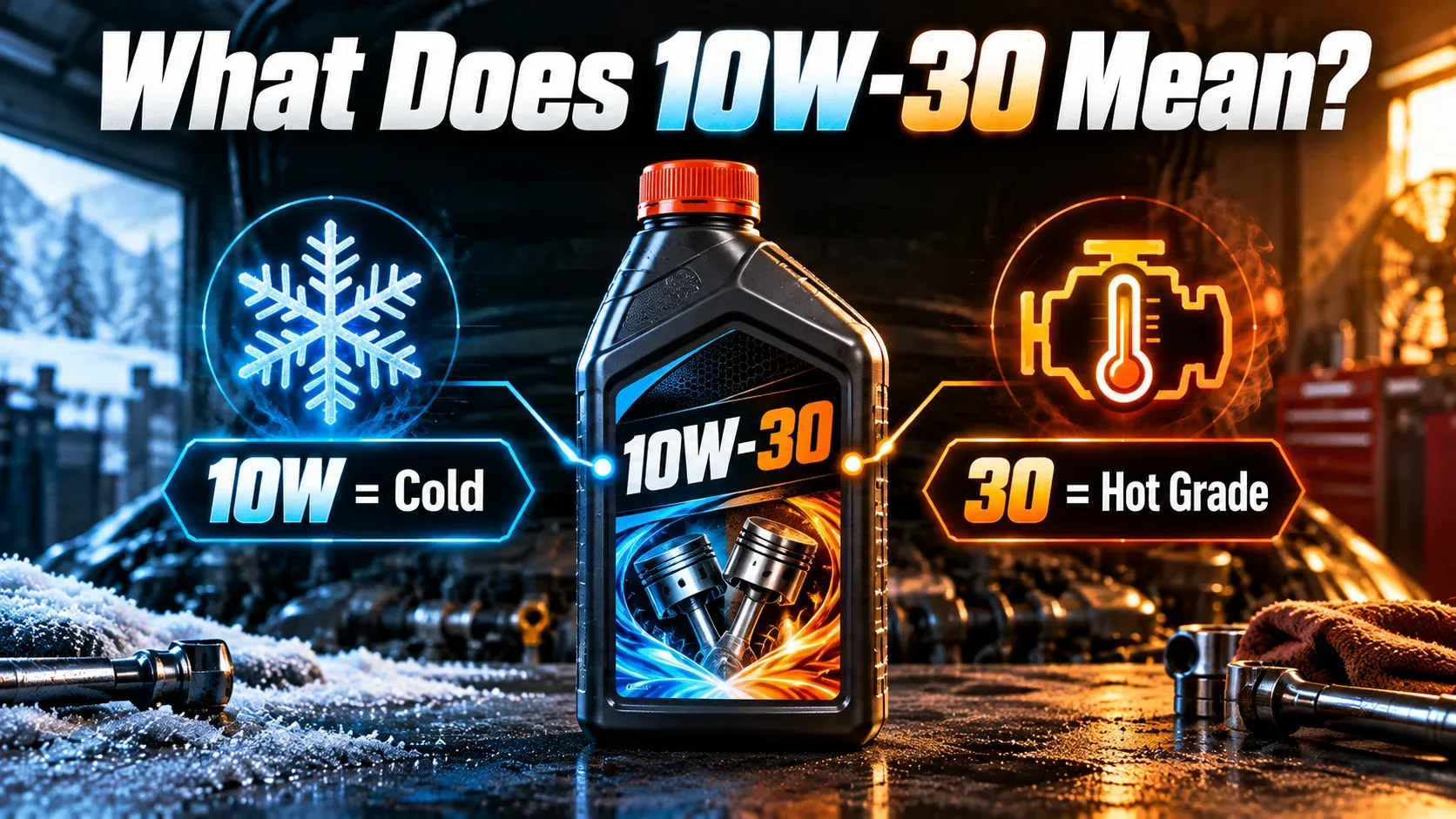
The numbers in 5W-30 describe how the oil behaves under different temperature conditions.
The 5W portion represents the oil’s winter or low-temperature viscosity classification. The “W” stands for winter. A lower winter number generally means the oil can meet viscosity requirements at lower temperatures.
The 30 refers to the oil’s SAE high-temperature viscosity grade. This describes its viscosity range under specified testing conditions once the engine and oil are hot.
What Does 10W-30 Mean?
10W-30 follows the same basic naming system. The 10W rating represents its low-temperature viscosity classification, while 30 is its high-temperature SAE viscosity grade.
Because 10W-30 has a higher winter rating than 5W-30, it does not meet the same lower-temperature viscosity limits as 5W-30. This difference is especially important during cold starts, when oil must move quickly through the lubrication system.
5W-30 vs 10W-30: Main Differences
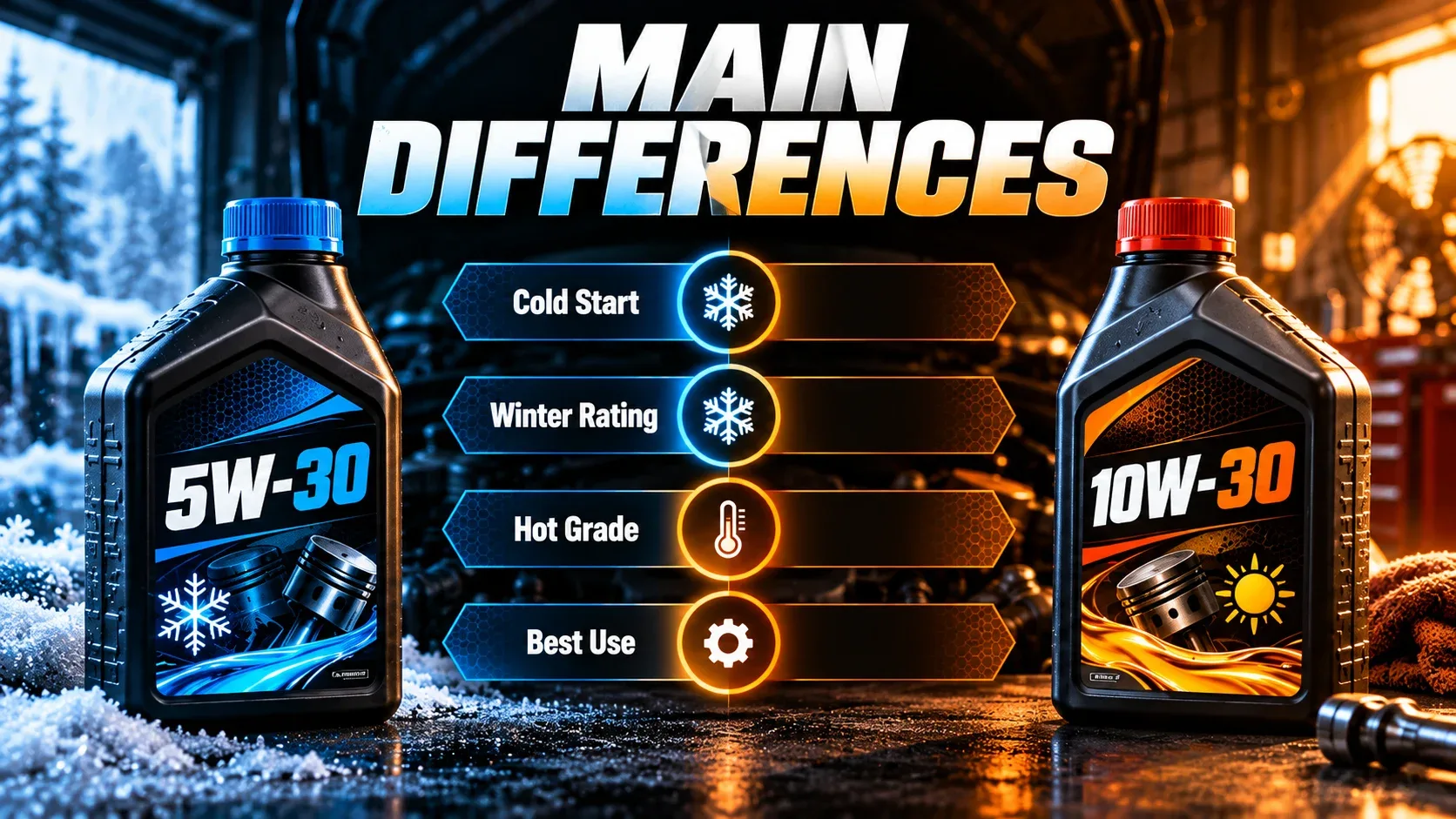
| Comparison | 5W-30 | 10W-30 |
|---|---|---|
| Winter rating | 5W | 10W |
| Cold-start performance | Better low-temperature classification | Higher winter viscosity classification |
| High-temperature SAE grade | 30 | 30 |
| Cold climates | Often preferred when manufacturer-approved | May be less suitable in very cold temperatures |
| Warm climates | Can still be fully appropriate | Can also be appropriate |
| Older engines | Depends on manufacturer requirements and engine condition | Depends on manufacturer requirements and engine condition |
| Best choice | Use the viscosity and oil specification approved for your vehicle | |
Which Is Thicker: 5W-30 or 10W-30?
The answer depends on the temperature being discussed.
When the engine is cold, 10W-30 falls into a higher winter viscosity classification than 5W-30. This means 5W-30 is designed to meet more demanding low-temperature flow and cranking requirements.
Once the oils are hot, however, both are classified as SAE 30-grade oils. This does not mean they are chemically identical or have exactly the same viscosity at every operating temperature. It means both fall within the required range for the SAE 30 high-temperature grade.
Avoid thinking of 5W-30 as simply a “thin oil” and 10W-30 as a “thick oil.” Multigrade oils change viscosity with temperature, and their SAE grades describe specific performance ranges.

5W-30 vs 10W-30 in Cold Weather
Cold starts are where the difference between these two grades becomes most important.
When an engine has been sitting overnight in cold temperatures, engine oil becomes more resistant to flow. The oil pump must circulate lubricant through bearings, camshafts, timing components, and other moving parts as quickly as possible after the engine starts.
Because 5W-30 has a lower winter rating, it generally offers better low-temperature performance than 10W-30.

Why Cold-Start Flow Matters
During a cold start, oil must begin circulating quickly through the engine’s lubrication system. Using the correct manufacturer-approved viscosity helps oil reach critical components as intended.
That does not mean every cold-climate vehicle automatically requires 5W-30. Some engines are designed for oils such as 0W-20, while others may specify different grades entirely.
5W-30 vs 10W-30 in Hot Weather
A common assumption is that 10W-30 should automatically be used in hot climates because its first number is higher.
That is not the correct way to interpret the viscosity grade.
Both oils carry a 30 high-temperature viscosity grade. The 5W and 10W ratings mainly distinguish their cold-temperature classifications.

If you drive in a very hot climate, check the temperature-viscosity chart in your owner’s manual rather than assuming that a higher winter number provides better hot-weather protection.
Does 10W-30 Protect an Engine Better?
Not automatically.
Engine protection depends on far more than the viscosity number printed on the bottle. Oil quality, additive formulation, manufacturer approvals, API or ILSAC requirements, engine design, oil-change intervals, contamination, operating temperature, and driving conditions all influence protection.
Using a viscosity that is not suitable for the engine can also create problems. Modern engines may rely on specific oil-flow characteristics for variable valve timing systems, hydraulic tensioners, turbochargers, fuel-economy targets, and tight internal clearances.

5W-30 vs 10W-30 for Older Engines
Many drivers have heard that an older or high-mileage engine should automatically switch to thicker oil.
Mileage alone is not enough reason to change oil viscosity.
An engine with 150,000 miles that has been maintained properly and shows normal oil pressure and oil consumption may still operate best with the viscosity recommended by its manufacturer.
When Engine Condition Matters
If an older engine has excessive oil consumption, leaks, low oil pressure, unusual noises, or other lubrication-related symptoms, the underlying cause should be investigated rather than simply changing viscosity.
Some manufacturers may allow alternative viscosity grades for certain climates or operating conditions. High-mileage oil formulations are also available, but “high mileage” and “higher viscosity” are not the same thing.
Low oil pressure, oil burning, leaks, or mechanical noise can have multiple causes. Changing from 5W-30 to 10W-30 may mask some symptoms without correcting the actual problem.
Can You Use 10W-30 Instead of 5W-30?
You should first check the vehicle manufacturer’s recommendations.
Some engines may permit both 5W-30 and 10W-30 depending on ambient temperature. Others may specifically require 5W-30 and provide no recommendation for 10W-30.
If your owner’s manual specifies only 5W-30, routinely replacing it with 10W-30 simply because the oils share a “30” rating is not the best approach.

Can You Use 5W-30 Instead of 10W-30?
The same rule applies in the opposite direction.
If an engine is designed to use 10W-30, check whether 5W-30 is listed as an acceptable alternative. In some applications, especially where colder starts are expected, manufacturers may approve more than one viscosity.
Vehicle-specific information is more reliable than assuming the substitution is safe for every engine.
Can You Mix 5W-30 and 10W-30?
If you need to top up an engine and the exact viscosity already in the engine is unavailable, adding a compatible engine oil may sometimes be preferable to operating the engine with dangerously low oil.
However, intentionally mixing different viscosities should not become your normal maintenance strategy.
Different oils can contain different additive packages and viscosity characteristics. For a routine oil change, use the correct viscosity and specification recommended for the vehicle.
Does 5W-30 Improve Fuel Economy?
Lower-viscosity oils can reduce pumping and friction losses in some engine designs, which is one reason modern manufacturers carefully specify oil viscosity.
However, you should not switch to 5W-30 from 10W-30 solely to chase better fuel economy unless the engine manufacturer approves that viscosity.
Real-world fuel consumption depends on many factors, including engine design, driving style, tire pressure, traffic, temperature, vehicle load, and maintenance condition.
5W-30 vs 10W-30: Which One Should You Use?
Instead of choosing oil based on a simple “5W-30 versus 10W-30” winner, use a decision process that starts with your vehicle.
- Check your owner’s manual.
Find the recommended SAE viscosity for your engine. - Check the oil-fill cap.
Many vehicles print the recommended viscosity directly on the engine oil cap. - Look for permitted alternatives.
Some manuals provide different viscosity options based on ambient temperature. - Check the required oil specification.
The correct API, ILSAC, ACEA, or manufacturer-specific approval can be just as important as viscosity. - Consider your climate.
Lower winter ratings can be advantageous in colder conditions, but stay within manufacturer-approved grades. - Consider engine condition.
High oil consumption, low oil pressure, leaks, or engine noise should be diagnosed rather than treated only by changing viscosity.
Common 5W-30 vs 10W-30 Mistakes
Assuming 10W-30 Is Always Better in Hot Weather
Both oils are SAE 30 high-temperature grades. The main difference between their labels is the winter classification.
Assuming Older Engines Automatically Need 10W-30
Mileage by itself does not determine viscosity. Follow manufacturer guidance and investigate abnormal oil consumption or pressure separately.
Ignoring Oil Specifications
Two bottles can both say 5W-30 while meeting different performance specifications. Always verify that the oil meets the requirements listed for your engine.
Choosing Oil Based Only on Internet Advice
Advice that works for one engine may not apply to another. Engine clearances, oil pumps, variable valve timing systems, turbochargers, emissions systems, and manufacturer testing all influence viscosity recommendations.
Frequently Asked Questions
Is 5W-30 better than 10W-30?
Not universally. 5W-30 generally has better low-temperature performance, while both oils carry an SAE 30 high-temperature grade. The better oil is the one that meets your engine manufacturer’s viscosity and specification requirements.
Is 10W-30 thicker than 5W-30?
At lower temperatures, 10W-30 belongs to a higher winter viscosity classification. At higher operating-temperature testing conditions, both are classified as SAE 30 oils.
Is 10W-30 better for summer?
Not automatically. Both oils have the same SAE 30 high-temperature grade. Check your owner’s manual for the viscosity grades approved for your climate.
Is 5W-30 better for winter?
When both viscosities are approved for the vehicle, 5W-30 generally offers better low-temperature starting characteristics than 10W-30.
Can I put 10W-30 in an engine that recommends 5W-30?
Check the owner’s manual before making the substitution. Some manufacturers permit 10W-30 under certain temperature conditions, while others specify 5W-30 only.
Can I use 5W-30 in an engine that calls for 10W-30?
Only if 5W-30 is approved for that engine or operating-temperature range. Do not assume interchangeability simply because both oils end in 30.
Can I mix 5W-30 and 10W-30?
An emergency top-up may be preferable to running an engine with critically low oil, but routinely mixing viscosities is not ideal. Use the correct manufacturer-approved oil for a complete oil change.
Should a high-mileage car use 10W-30 instead of 5W-30?
Not simply because the vehicle has high mileage. Engine condition, manufacturer recommendations, climate, oil consumption, and approved viscosity ranges should guide the decision.
Final Thoughts: 10W-30 vs 5W-30
The main difference in the 10W 30 vs 5W 30 comparison is their low-temperature viscosity classification. 5W-30 generally provides better cold-start performance, while both oils belong to the SAE 30 high-temperature viscosity grade.
That does not make one oil universally better. The correct choice depends on what your engine manufacturer specifies.
Before changing viscosity, check the owner’s manual, oil-fill cap, permitted temperature ranges, and required oil performance specifications. If your manufacturer approves both 5W-30 and 10W-30, your climate and operating conditions can then help determine which option makes the most sense.